Spotting Scopes for Hunting, Bird Watching, and Target Shooting
SVBONY spotting scopes offer a range of magnification options for outdoor observation, from casual bird watching to long-distance hunting and target viewing. Choose a spotting scope based on your primary activity, desired magnification, objective lens size, and portability.
NEW
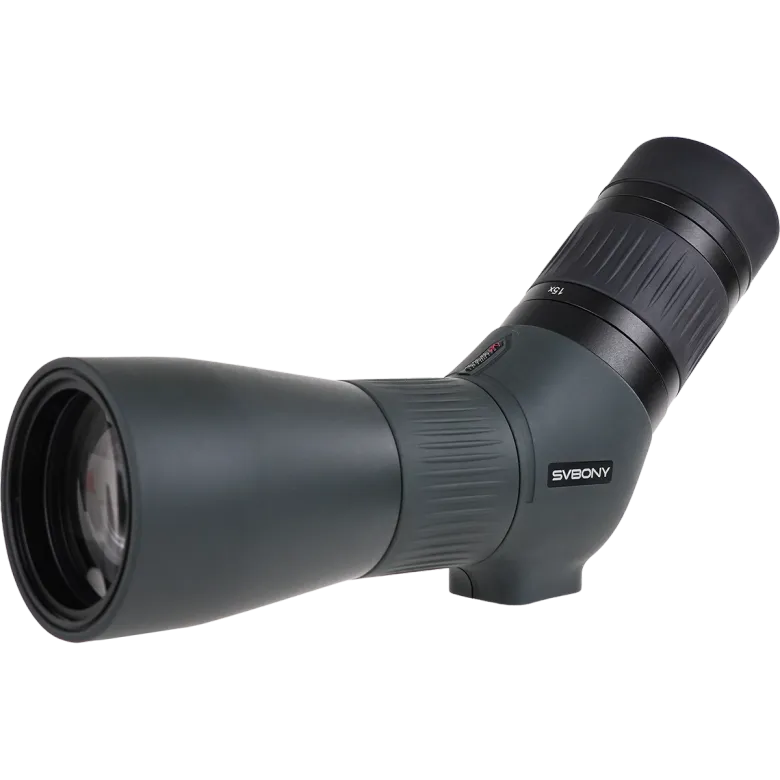
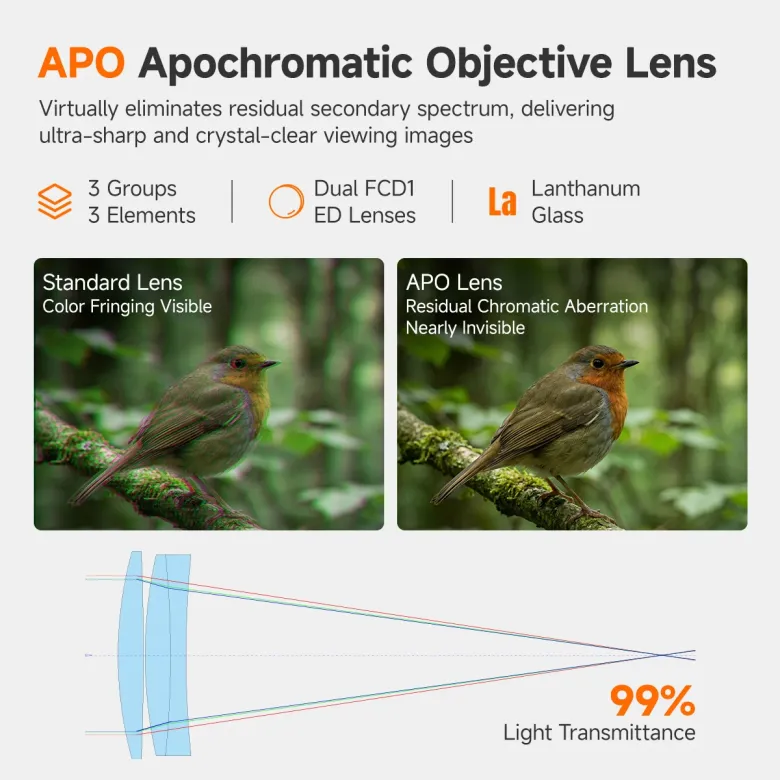
SA401 Pro APO Scope 15-35x for Birding
[{"Title":"APO Optical Excellence","Content":"A 3-element APO optical design with dual ED elements and lanthanum glass effectively eliminates chromatic aberration for exceptionally sharp, crisp images."},{"Title":"75\u00B0 Ultra-Wide Zoom","Content":"Smooth 15\u201335x continuous zoom with an impressive 75\u00B0 apparent field of view delivers a stunning, immersive panoramic viewing experience."},{"Title":"Lightweight Magnesium Alloy Body","Content":"The one-piece magnesium alloy body is rugged, impact-resistant, and remarkably lightweight, built for confident exploration in temperatures from -20\u00B0C to 50\u00B0C."},{"Title":"Comfortable Large Exit Pupil","Content":"Featuring a premium 11-element, 7-group eyepiece design and a generous 17mm eye relief, it offers a full field of view with clear, comfortable viewing even for eyeglass wearers."},{"Title":"Dual Oversized Control Wheels","Content":"Large, easy-to-operate focus and zoom wheels allow smooth blind operation and more precise focusing for fast outdoor viewing and subject capture."}]
NEW
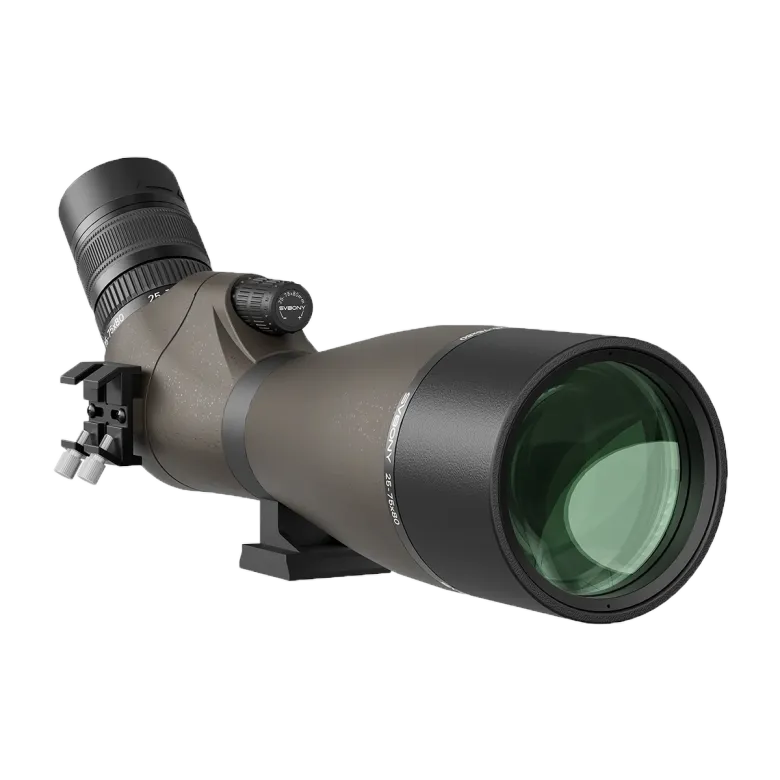
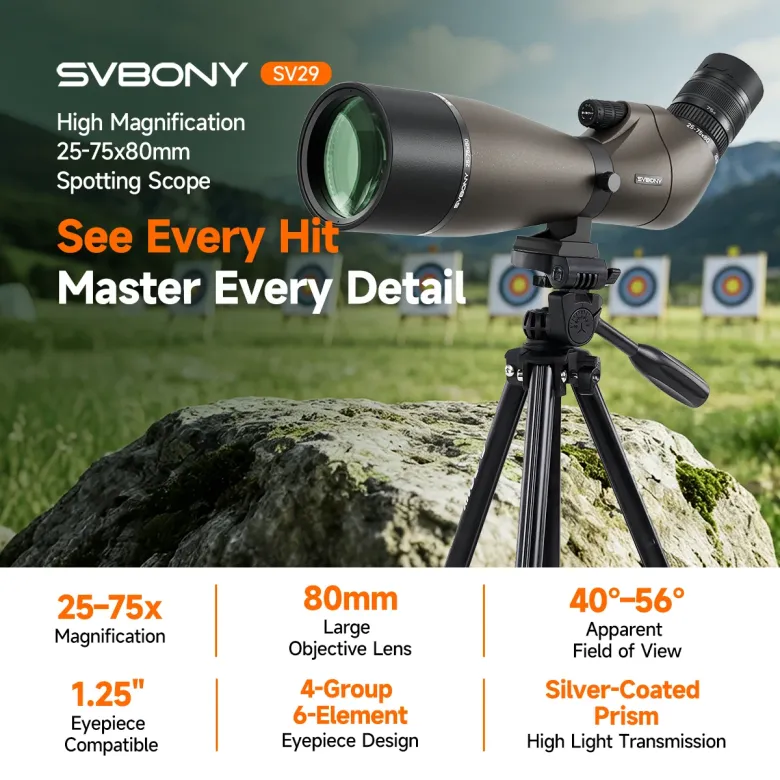
SV29 High Power Spotting Scope
[{"Title":"Upgraded Screw Design for Precision","Content":"Adopt an upgraded triangular screw structure to lock the optical path, ensuring stable alignment, improving calibration accuracy, and delivering consistent performance in laser collimation."},{"Title":"Stable Connection \u0026 Gap-Free Assembly","Content":"Equipped with dual rubber rings to compensate for manufacturing tolerances, eliminate gaps in assembly, and maintain coaxial alignment for reliable and accurate collimation."},{"Title":"High-Precision Alignment Assistance","Content":"Features a 45\u00B0 aluminum scale plate, uses laser reflection technology to check mirror alignment, ensuring clear and round laser spots for efficient calibration."},{"Title":"User-Friendly Operation","Content":"Offers 3-level brightness adjustment, adapts to different lighting environments, and realizes quick and convenient collimation without complicated settings."},{"Title":"Durable \u0026 Versatile Compatibility","Content":"Made of high-quality materials, corrosion-resistant and wear-resistant; compatible with refracting telescopes and various models, suitable for different observation scenarios."}]
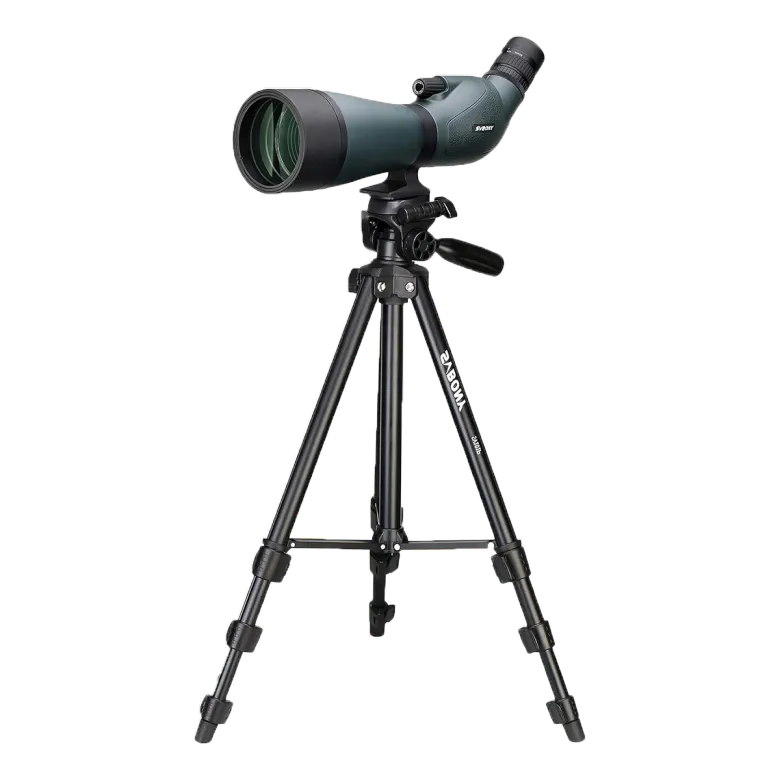
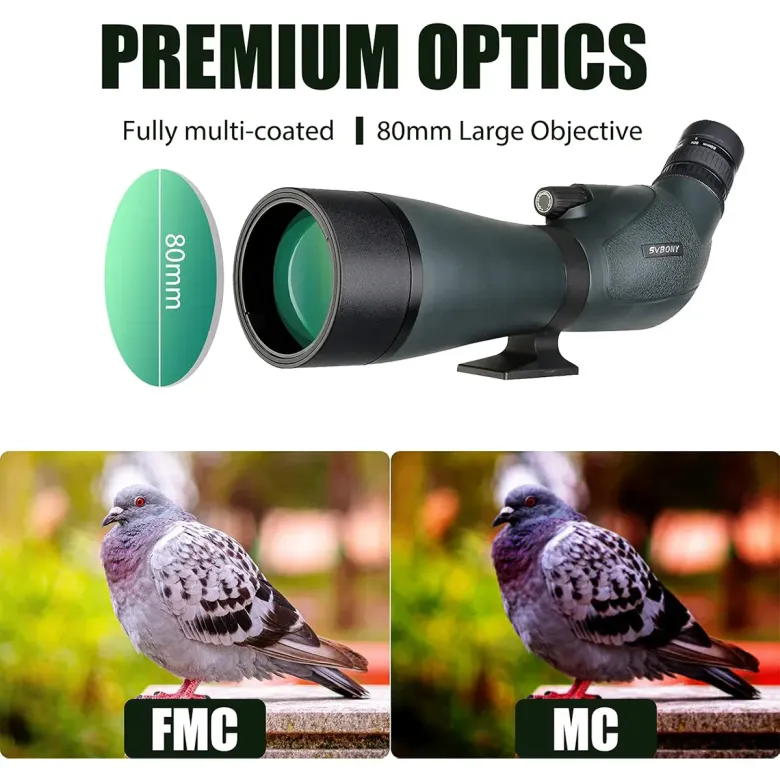
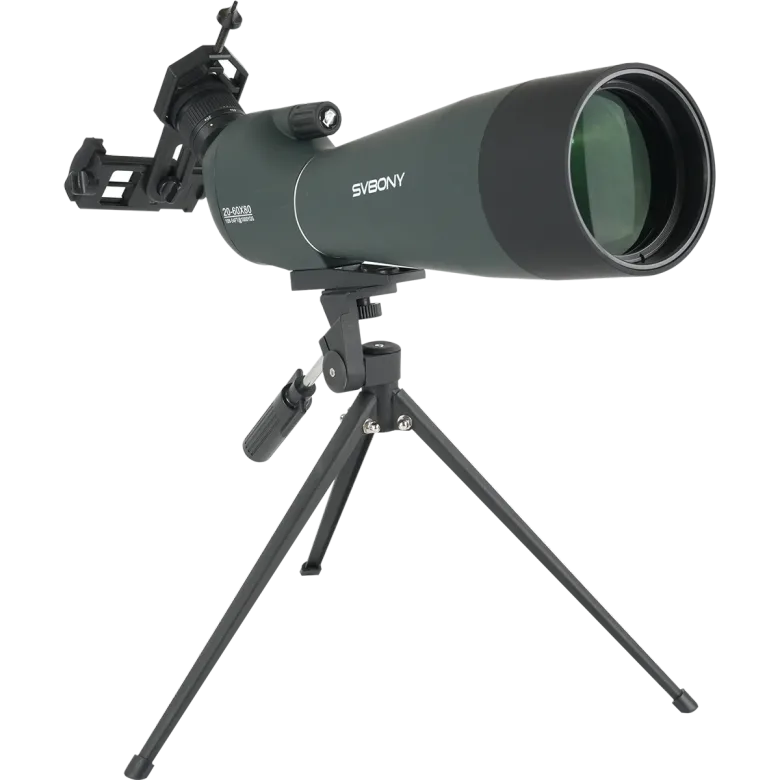
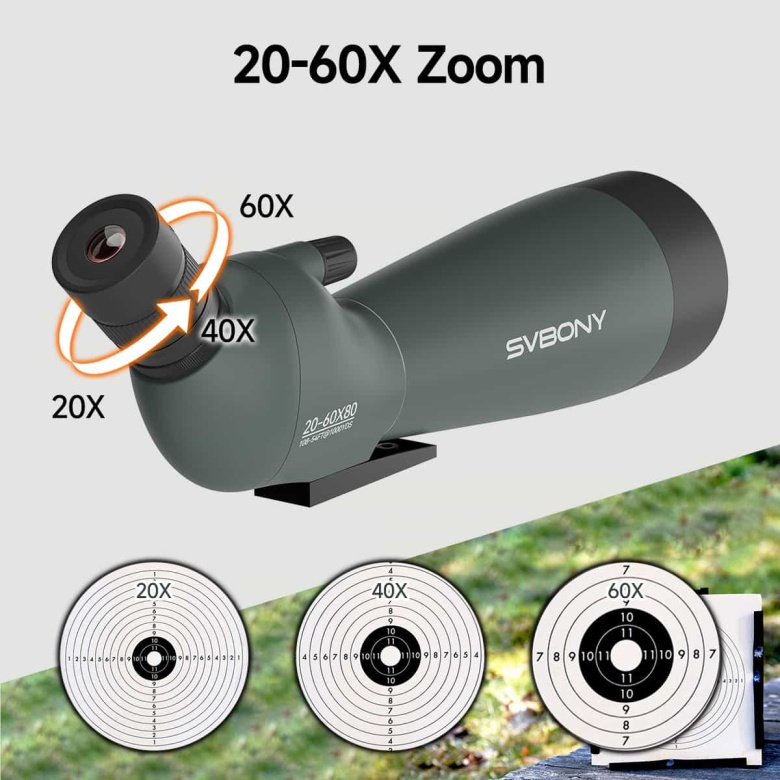
20-60X80 Spotting Scope with Tripod | Svbony SV19
[{"Title":"Powerful Zoom \u0026 Large Objective","Content":"20-60x zoom eyepiece with 6-element/4-group optics and 80mm objective lens-delivers clear, bright views even at high magnification."},{"Title":"Superior Optical Coatings","Content":"Fully multi-coated with silver coating, minimizing light loss for sharp, high-contrast images-perfect for birdwatching."},{"Title":"Rugged \u0026 Durable","Content":"Rubber-armored, shockproof, and drop-resistant housing for reliable outdoor use and long-lasting performance."},{"Title":"Eyeglass-Friendly Comfort","Content":"Twist-up eyecup with 16mm eye relief ensures comfortable viewing for eyeglass wearers."},{"Title":"Complete Portable Kit","Content":"Includes SV101P tripod and soft case-lightweight and easy to carry, ideal for shooting training and outdoor observation."}]
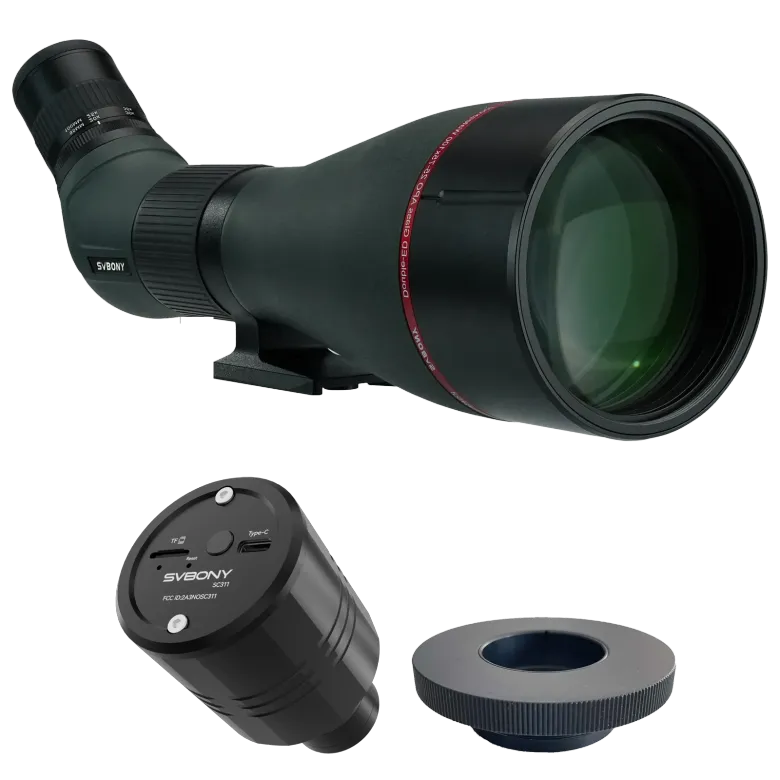
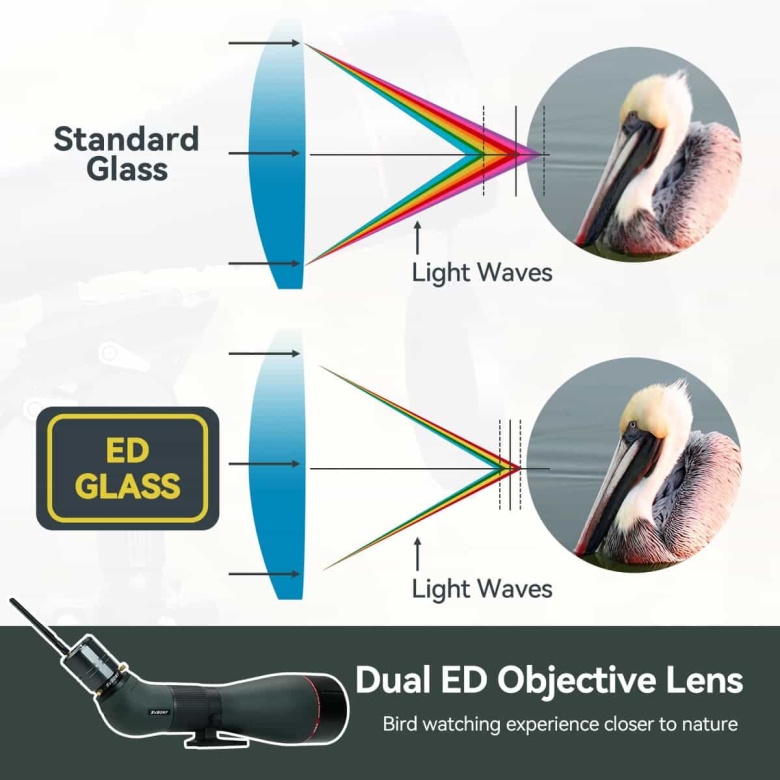
Spotting Scope | SVBONY SA401 25-75x100
[{"Title":"APO Double ED Optics","Content":"Apochromatic 100\u202Fmm double ED objective delivers high\u2011contrast, low\u2011chromatic views with crisp detail."},{"Title":"Flexible 25\u201375\u00D7 Zoom","Content":"Wide magnification range supports both broad scenic viewing and detailed distant observation."},{"Title":"Integrated Wi\u2011Fi Capture","Content":"SC311 Wi\u2011Fi camera streams and records 1080p photos/videos to your phone via app."},{"Title":"Fully Multi\u2011Coated Lenses","Content":"FMC coatings boost light transmission and enhance brightness and clarity."},{"Title":"Rugged All\u2011Weather Build","Content":"Rubber armor and IPX5 waterproof/fog\u2011proof sealing ensure reliable performance outdoors."}]
NEW
Spotting Scope | SVBONY SV28A 20-60X80
[{"Title":"FMC Multi-Coated Optics","Content":"Offers sharp, clear images with high contrast and minimal glare."},{"Title":"Large 80mm Objective Lens","Content":"Captures more light for exceptional brightness and clarity in various lighting conditions."},{"Title":"20-60x Versatile Zoom Range","Content":"Offers flexible magnification for both broad overviews and detailed distant observation."},{"Title":"Complete Kit Included","Content":"Provides a spotting scope, tripod, and phone adapter as a ready-to-use observation solution."},{"Title":"Universal Tripod Compatibility","Content":"Features a standard threaded base for stable mounting on most tripods."}]
NEW
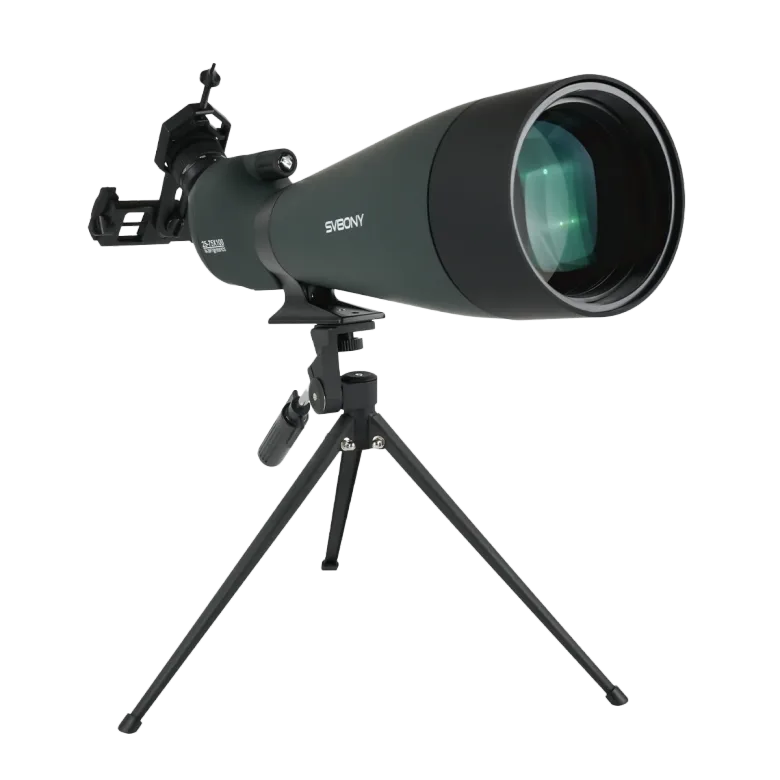
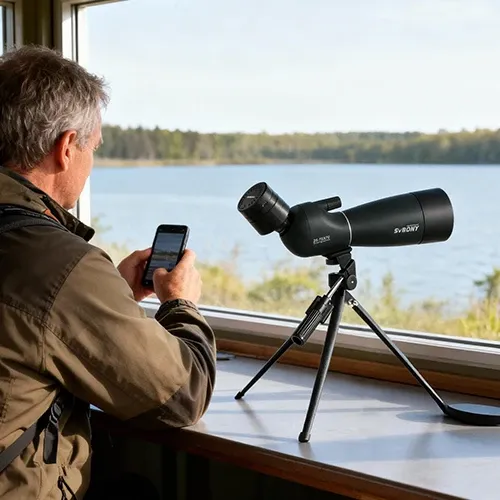
Digital Birdwatching | SVBONY SV28A 25-75X100
[{"Title":"Large 100mm Objective Lens","Content":"Delivers superior light capture for exceptionally bright and detailed long-range observation."},{"Title":"Powerful 25-75x Zoom","Content":"Enables precise viewing of distant targets, from archery bullseyes to celestial bodies."},{"Title":"Complete All-in-One Kit","Content":"Includes scope, tripod, and phone adapter for immediate, versatile setup and use."},{"Title":"FMC Multi-Coated Optics","Content":"Provides excellent clarity and resolution with minimal glare for accurate viewing."},{"Title":"Adjustable Rotating Eyecup","Content":"It can be adjusted to accommodate eyeglass wearers."}]
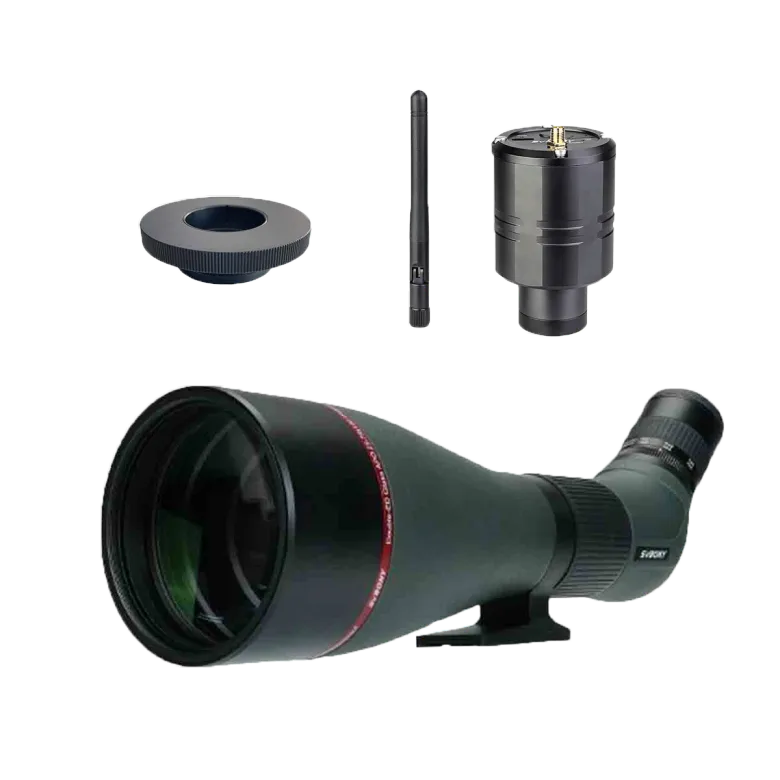
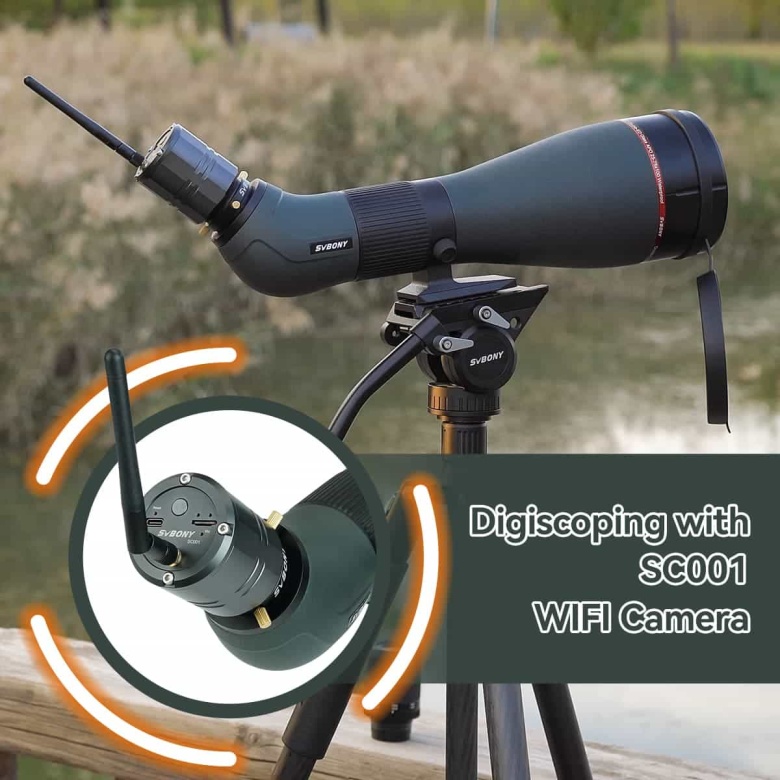
APO Digiscoping | SVBONY SA401
[{"Title":"Apochromatic ED Optics","Content":"Large 100 mm double-ED objective and APO design deliver sharp, color-accurate views with minimal chromatic aberration."},{"Title":"25\u201375\u00D7 Zoom Range","Content":"Versatile magnification covers wide scenic viewing and detailed long-distance observation up to 75\u00D7."},{"Title":"Durable Outdoor Construction","Content":"Fully multi-coated lenses, rubber armor, and IPX5 waterproof/fog-proof build handle field conditions reliably."},{"Title":"Integrated Wi-Fi Camera","Content":"Built-in SC001 Wi-Fi camera streams and captures 1080p images/video to your phone via app."},{"Title":"Generous Field of View","Content":"Wide field from ~31 m to ~16 m at 1 000 yds supports comfortable tracking of birds and wildlife"}]
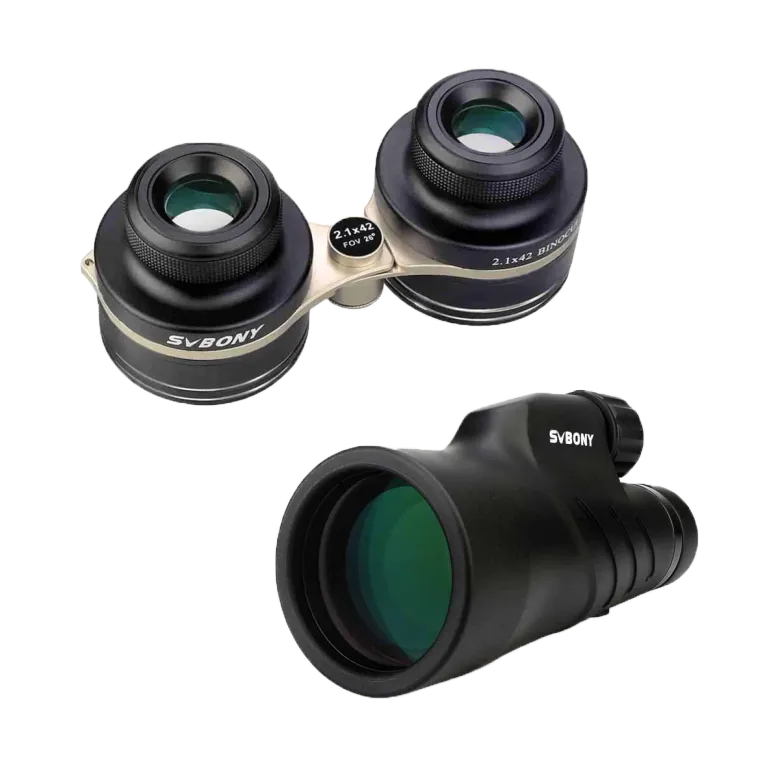
Binocular & Monocular Set | SVBONY SV407
[{"Title":"42mm Optics","Content":"A large 42mm objective lens delivers an immersive stargazing experience."},{"Title":"26\u00B0 Ultra-Wide Angle Binoculars","Content":"Reveals expansive star fields and constellations beyond the capability of the naked eye."},{"Title":"2.1x Fixed-Focus Ease of Use","Content":"Provides instant, immersive viewing of celestial wonders with no focusing required."},{"Title":"Fully Multi-Coated Optical Clarity","Content":"Ensures bright, sharp, and high-contrast images in both the binoculars and monocular."},{"Title":"Compact \u0026 Educational Astronomy Set","Content":"Offers a portable and engaging introduction to astronomy for learners of all ages."}]
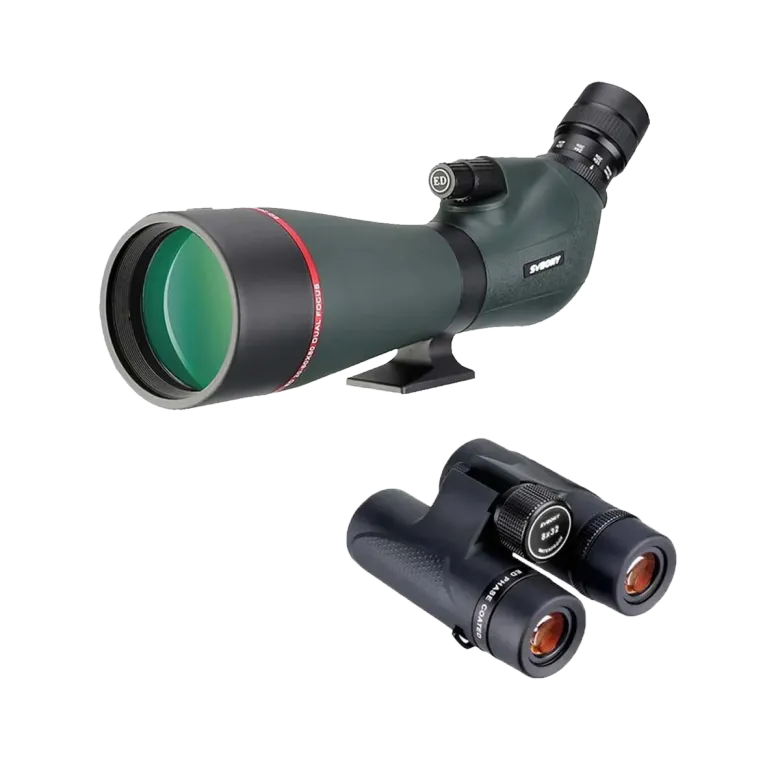
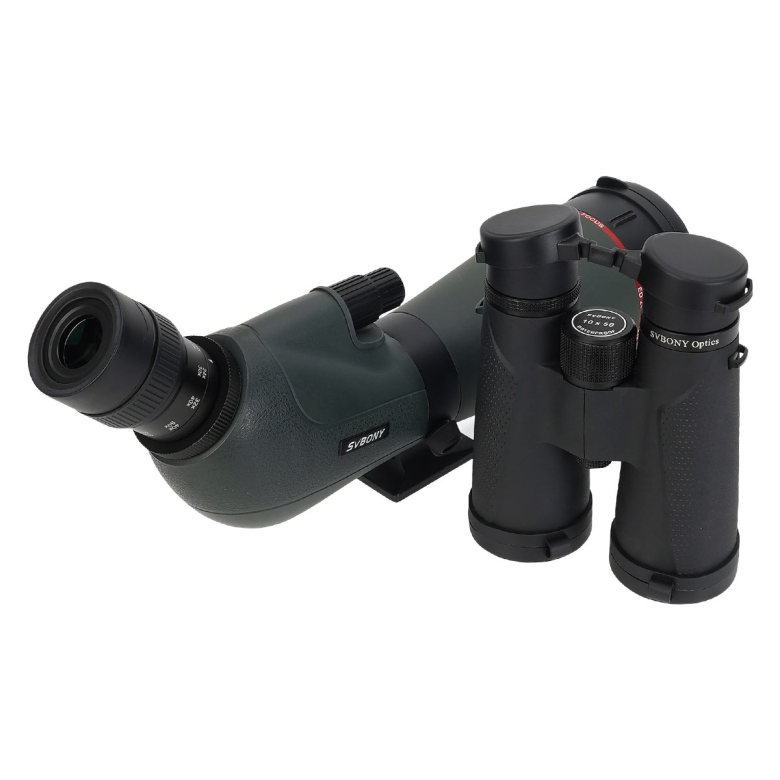
Spotting Scope & Binocular | SVBONY SV406P
[{"Title":"Professional ED Optics Combo","Content":"Combines a powerful ED spotting scope with versatile ED binoculars for comprehensive birding."},{"Title":"20-60x80 ED Spotting Scope","Content":"Provides high-magnification, color-accurate viewing for detailed long-distance observation."},{"Title":"Choice of SV202 ED Binoculars","Content":"Offers multiple binocular configurations (8x32, 10x42, etc.) to match specific viewing preferences."},{"Title":"FMC \u0026 BAK4 Prism in Both","Content":"Ensures superior brightness, clarity, and contrast across all optical devices."},{"Title":"All-Weather IPX7 Waterproof","Content":"Guarantees reliable performance in rain, humidity, and harsh outdoor environments."}]
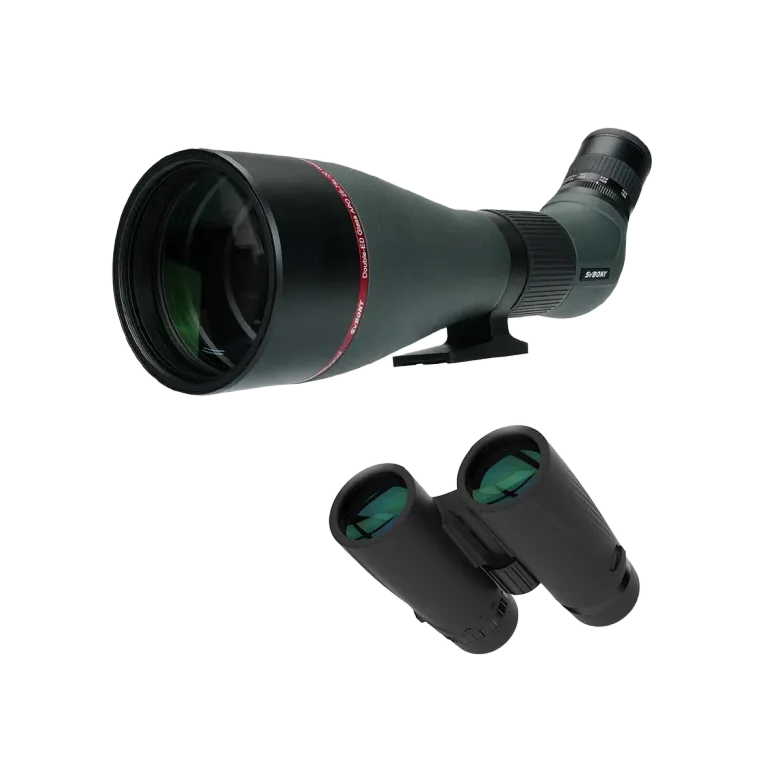
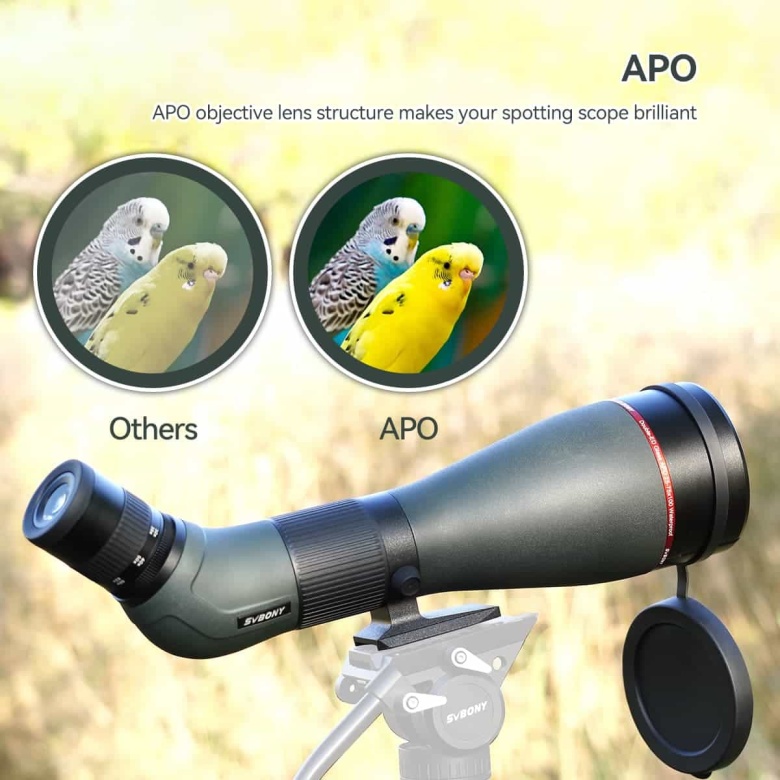
Spotting Scope & Binocular | SVBONY SA401
[{"Title":"APO Spotting Scope Optics","Content":"SA401 uses 25\u201175\u00D7 zoom and 100\u202Fmm double ED apochromatic glass for sharp, low\u2011CA bird views"},{"Title":"Wide Field Observation","Content":"Large 100\u202Fmm objective delivers bright, expansive views for long\u2011distance birding and nature scenes."},{"Title":"Detachable Eyepiece Design","Content":"Universal 1.25\u2033 eyepiece interface supports interchangeable optics and camera adapters."},{"Title":"Comfortable Field Use","Content":"Large focus wheel and twist\u2011up eyecup enable fast focus and comfortable viewing with or without glasses."},{"Title":"ED Binocular Companion","Content":"Includes SA205 ED flat\u2011field 10\u00D742 binoculars for complementary birding with edge\u2011to\u2011edge sharpness."}]
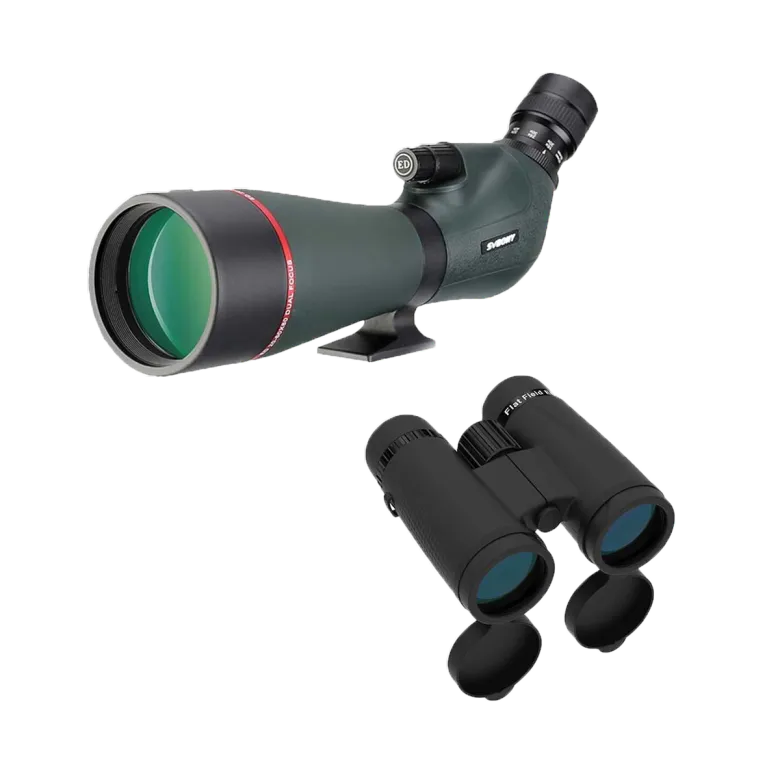
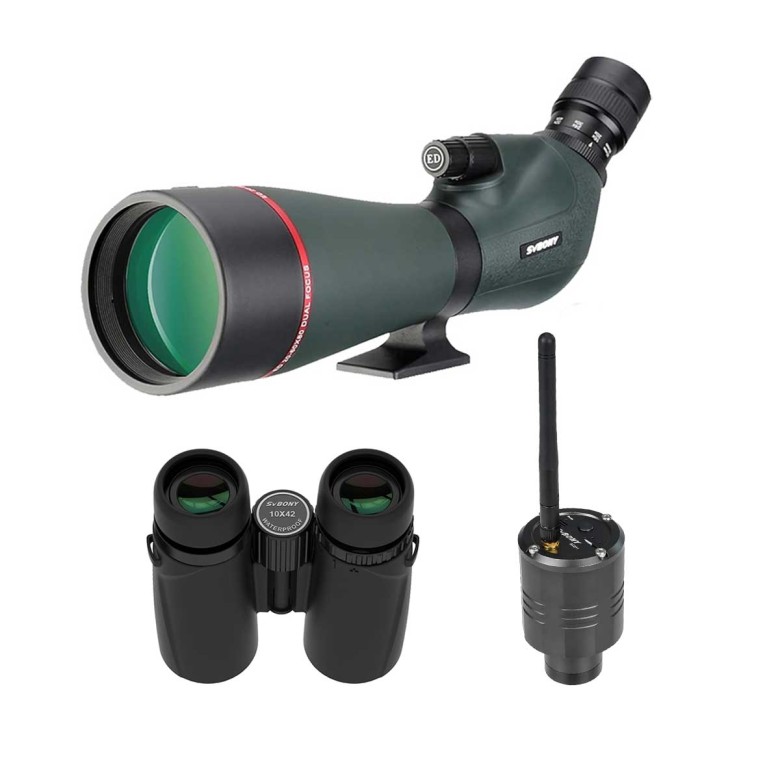
Spotting Scope & Binocular | SVBONY SV406P
[{"Title":"Extra-Low Dispersion ED Glass","Content":"Features extra-low dispersion glass for true color reproduction and sharp, high-contrast images."},{"Title":"Angled Eyepiece \u0026 Dual Focus System","Content":"Provides comfortable viewing angles and precise coarse/fine focusing for optimal clarity."},{"Title":"FMC Optics\u0026BAK4 Prism","Content":"Maximizes light transmission to deliver bright, crisp views even in challenging lighting."},{"Title":"Nitrogen-Filled \u0026 Waterproof","Content":"Ensures fog-proof and waterproof performance for reliable use in all weather conditions."},{"Title":"Versatile for Birding \u0026 observation wildlife","Content":"Ideal for nature observation, offering clear, detailed views of distant wildlife and targets."}]
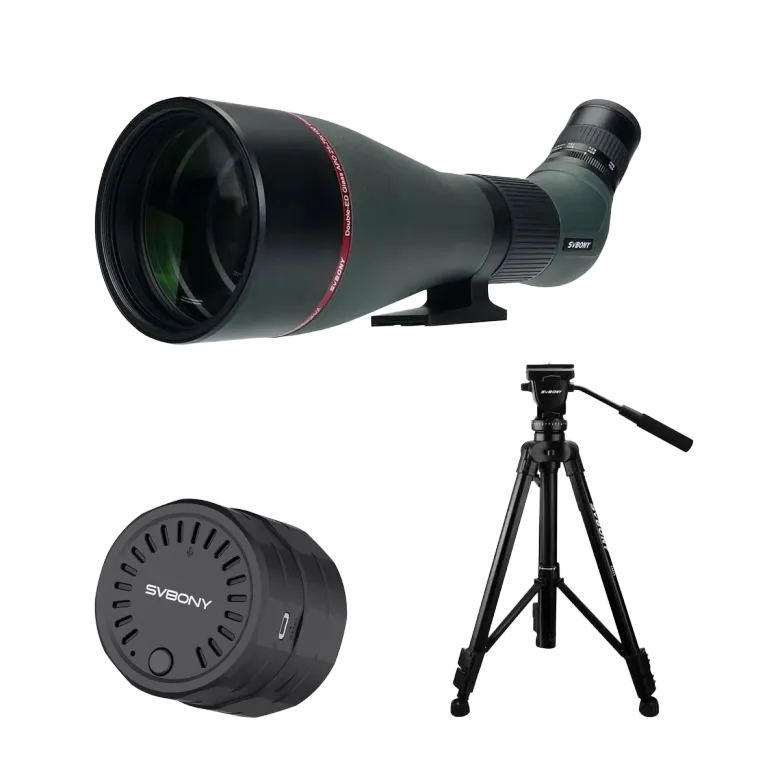
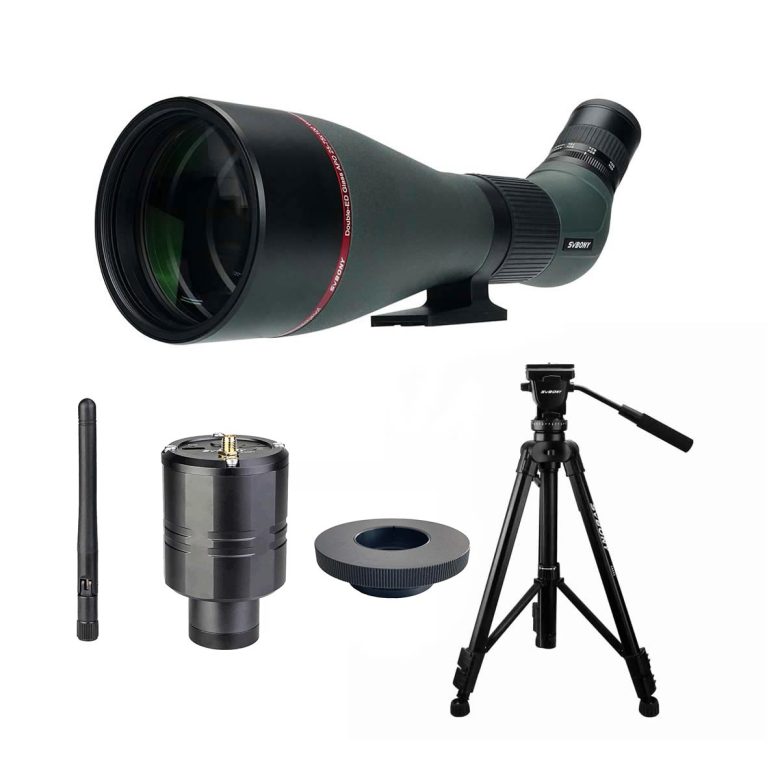
APO Digiscoping | SVBONY SA401 25-75X100
[{"Title":"APO Double ED Optics","Content":"Apochromatic double extra\u2011low dispersion glass yields sharp, high\u2011contrast views with minimal chromatic aberration."},{"Title":"25\u201375\u00D7 Zoom Range","Content":"Versatile magnification supports wide scenic observation and detailed long\u2011distance birding or wildlife viewing."},{"Title":"Integrated Wi\u2011Fi Camera","Content":"Built\u2011in Wi\u2011Fi camera streams and captures 1080p photos/video to your smartphone via free app for easy sharing."},{"Title":"Large 100\u202Fmm Objective","Content":"Generous 100\u202Fmm lens diameter gathers abundant light for bright, clear performance even in lower light."},{"Title":"Weather\u2011Resistant Build","Content":"Fully multi\u2011coated lenses with IPX5 waterproof/fogproof construction stand up to varied outdoor conditions."}]
Compact and Portable Spotting Scopes
For travel, hiking, and casual bird watching, compact models like the SV410 9–27×56 offer a lightweight, easy-to-carry option. It is an ideal lightweight and affordable spotting scope for outdoor trips.
Versatile ED Spotting Scopes
For more detailed views of birds, wildlife, and distant targets, the SV406P 20–60×80 ED spotting scope combines variable magnification with ED glass to help reduce chromatic aberration. Its 80mm spotting scope design gathers more light than smaller apertures, making it a versatile option for a range of outdoor viewing conditions.
High-Power Spotting Scopes with Large Apertures
For long-distance observation and target shooting, a high-power spotting scope with greater magnification and a larger objective lens can help reveal more detail when viewing conditions allow. The SA401 25–75×100 APO spotting scope features a 100mm spotting scope objective lens, variable magnification, and APO optics for demanding observation needs.
How to Choose the Right Spotting Scope
When comparing spotting scopes for different budgets and viewing needs, consider your typical viewing distance, lighting conditions, magnification needs, and budget. Compact models are easier to carry, while large-aperture spotting scopes can gather more light but are generally bulkier.
Comparing these factors will help you find a spotting scope for hunting, bird watching, target shooting, or other outdoor activities.
Faqs About Spotting Scope
When choosing a spotting scope, consider your main activity, magnification, objective lens size, optical quality, and portability. For travel and casual bird watching, the SVBONY SV410 9–27×56 offers a compact design and a versatile zoom range.
For target shooting and long-distance wildlife observation, the SV403 20–60×60 provides higher magnification in a portable setup, while the SV406P 20–60×80 ED combines an 80mm objective lens with ED glass to help reduce chromatic aberration. Choose a model that balances viewing performance, size, and budget for your needs.
Yes. A spotting scope can be used to observe the Moon, star fields, and some bright celestial objects, making it a versatile option for both daytime and occasional nighttime viewing. The SVBONY SV410 9–27×56 is a portable choice for casual observations, while models with larger objective lenses, such as the SV406P 20–60×80 ED, can gather more light.
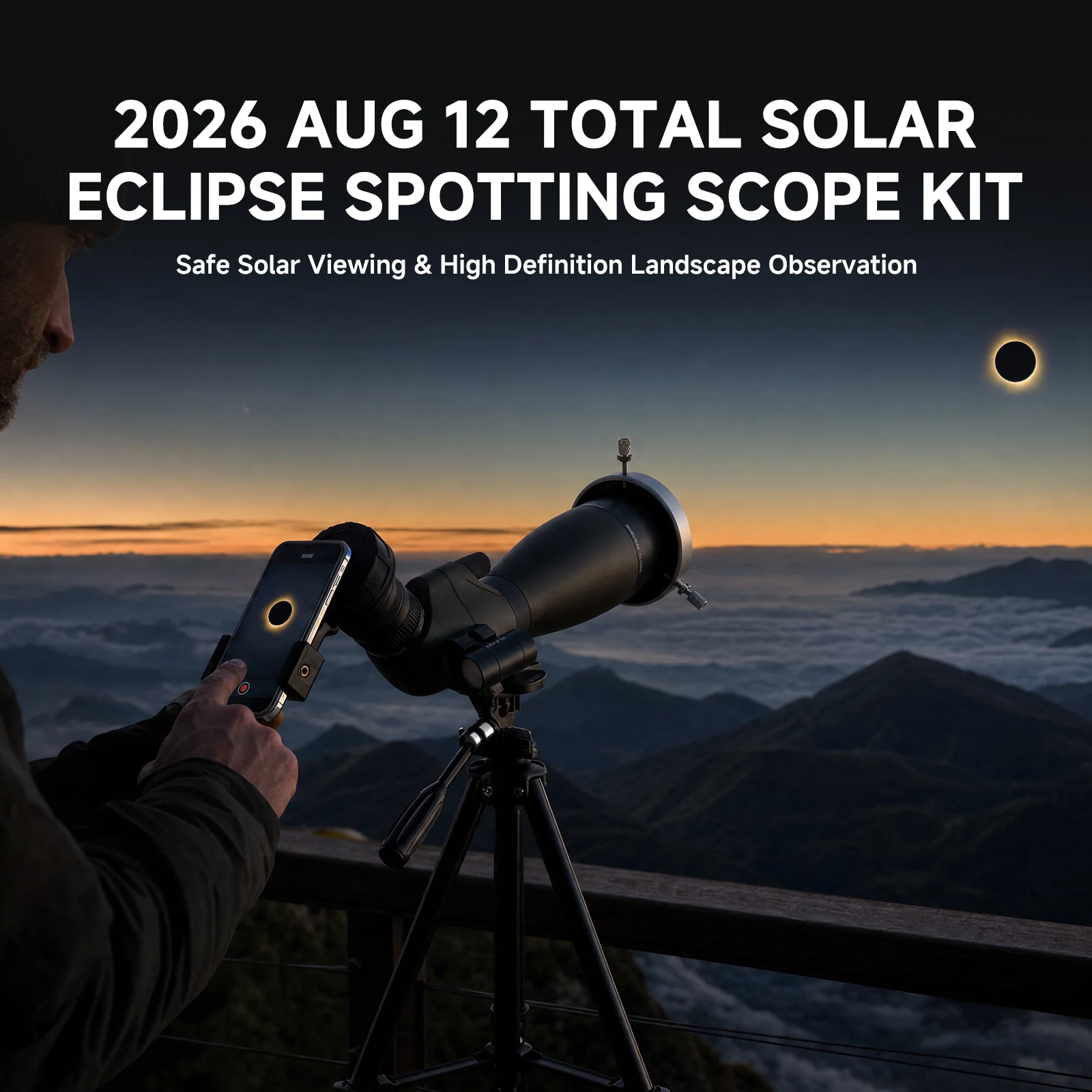
However, spotting scopes are primarily designed for terrestrial viewing and may not offer the same capabilities as dedicated astronomy telescopes for observing faint deep-sky objects. Never point a spotting scope at the Sun without a properly designed solar filter installed over the front aperture.
The viewing distance of a spotting scope depends on the size of the target, atmospheric conditions, lighting, magnification, and optical quality. There is no single maximum distance that applies to every situation. For example, the SVBONY SV403 20–60×60 offers adjustable magnification for viewing distant targets at a shooting range, while the SV406P 20–60×80 ED provides a larger objective lens for gathering more light.
You may be able to see a distant object well before you can distinguish its fine details. For the clearest view, use a stable tripod and adjust the magnification to suit the viewing conditions.
The best magnification depends on what you want to observe and how far away it is. Lower magnification provides a wider field of view, making it easier to locate moving birds and scan landscapes. Higher magnification helps you examine distant subjects in greater detail, although it can make image shake and atmospheric distortion more noticeable.
SVBONY models such as the SV403 20–60×60 and SV406P 20–60×80 ED offer a versatile 20–60× zoom range for bird watching, wildlife observation, and target shooting. Start at a lower setting to locate your subject, then increase magnification as needed.
A 60mm spotting scope is generally more compact and easier to carry, while an 80mm model gathers more light and can provide a brighter view in suitable conditions. For example, the SVBONY SV403 20–60×60 is a portable option for target shooting and outdoor observation.
The SV406P 20–60×80 ED has a larger objective lens and ED optics that help reduce chromatic aberration, making it a good option for more detailed wildlife viewing and bird watching. Both offer a 20–60× zoom range, so your choice comes down to portability, viewing conditions, and optical preferences. If you prioritize a lighter setup, consider 60mm; if light gathering and detailed observation matter more, consider 80mm.
 Google
 Amazon