


 2
2
2
2
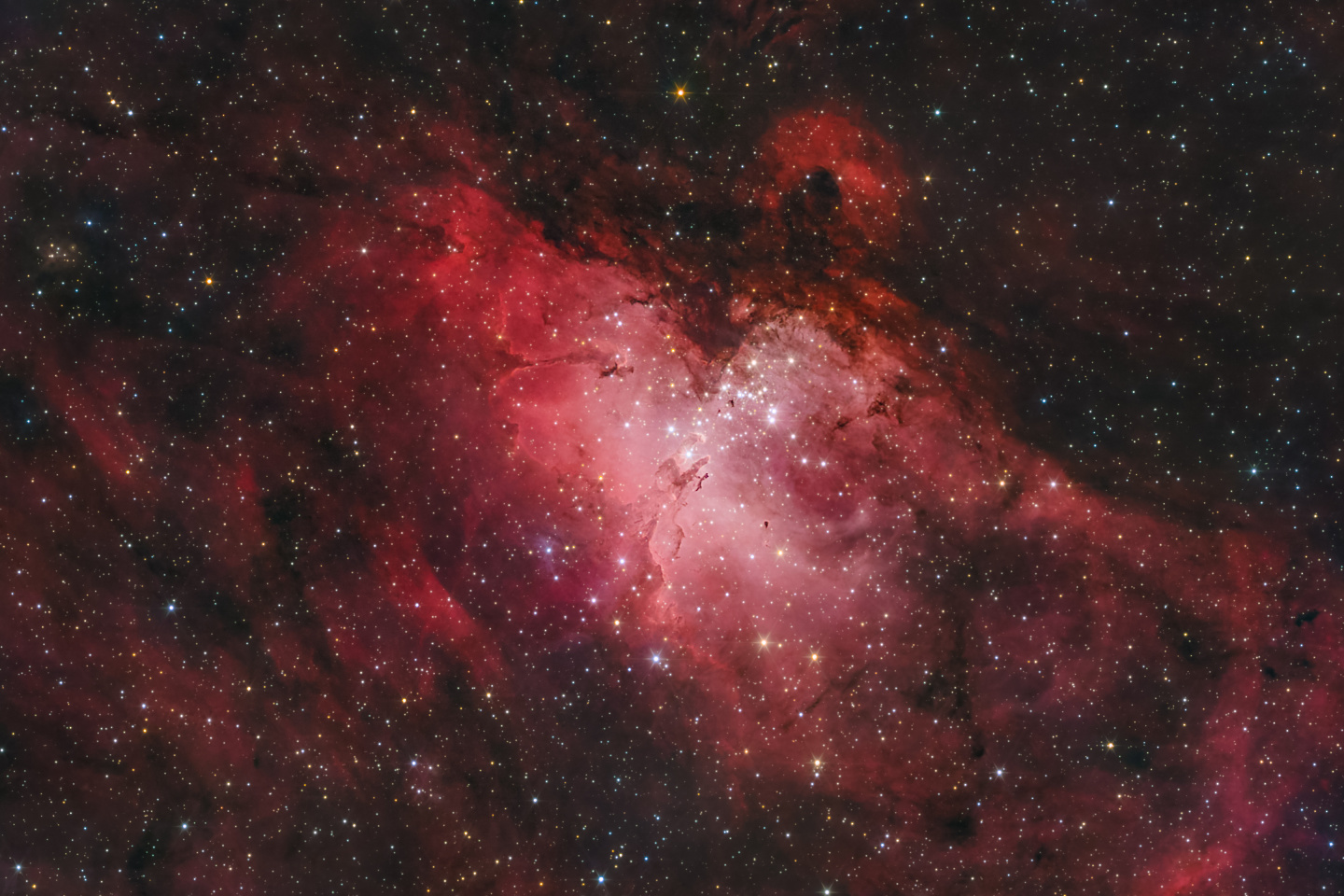
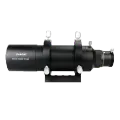
This image captures the Eagle Nebula (M16), one of the most iconic star-forming regions in our Galaxy. At its core lie the legendary Pillars of Creation, towering columns of dense molecular gas gradually shaped and eroded by the intense ultraviolet radiation from the young, massive stars of NGC 6611. The surrounding nebula reveals a rich interplay of ionized hydrogen, dark dust lanes, and faint filaments sculpted by stellar winds. This is the image I am most proud of. For many years, I admired the Pillars of Creation through the incredible photographs taken by the Hubble Space Telescope, never imagining that one day I would be able to capture them myself with my own equipment. Achieving this result with a modest Newtonian telescope makes this project deeply meaningful and personally special. Acquisition Details Telescope: 114/900 mm Newtonian (parabolic primary mirror, modified cell and focuser) Mount: EQ5 with OnStep Guiding: SV106 (50 mm) + SVBony 905C Imaging camera: SVBony 405C (gain 120, offset 30) Filter: SvBony UV/IR-cut Location: Guapimirim, Rio de Janeiro, Brazil Exposure Frames: 276 × 180 s Total integration: 828 minutes (13:48hours) Acquisition period: Captured over 3 nights Date: 05/07/2024, 06/13/2024 and 06/15/2024 Software Acquisition: NINA + PHD2 Stacking: Siril Processing: PixInsight, GraXpert (background extraction), Siril (colour calibration and stretching), Lightroom (final adjustments) Notes Collecting data over three consecutive nights allowed consistent depth, signal quality, and excellent detail in both the pillars and the surrounding emission regions. Even with a small 114 mm Newtonian, careful technique, long integration, and refined processing make it possible to approach a level of structure I once believed achievable only from space-based telescopes. Center RA: 18h18m50s.4 Center DEC: -13°49′15″ Pixel scale: 1.054 arcsec/pixel Orientation: 359.378 degrees Field radius: 0.668 degrees
 Google
 Amazon
No data Yet