
 Roberto Cenci
 11
Roberto Cenci
11
11
Roberto Cenci
11
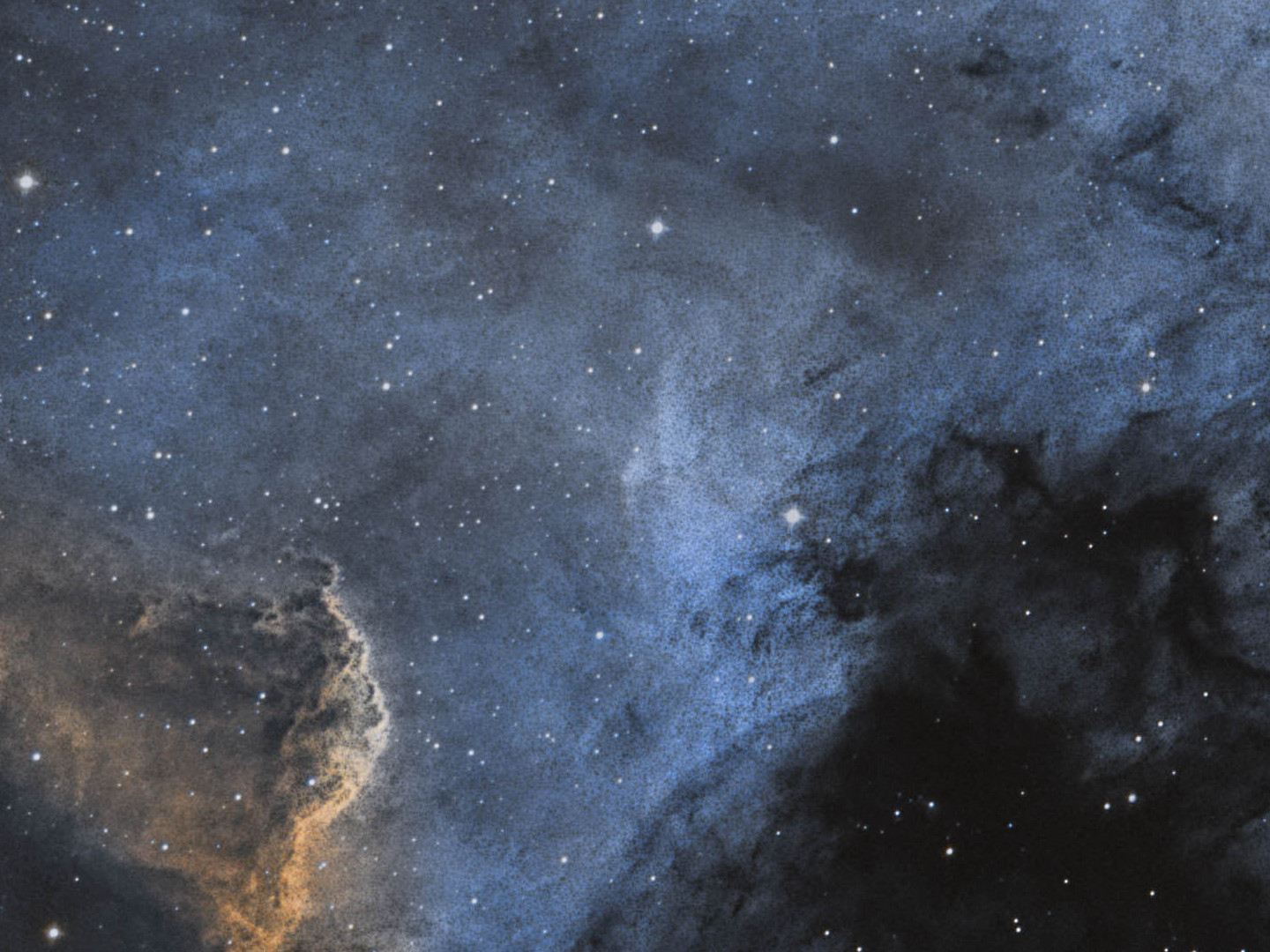
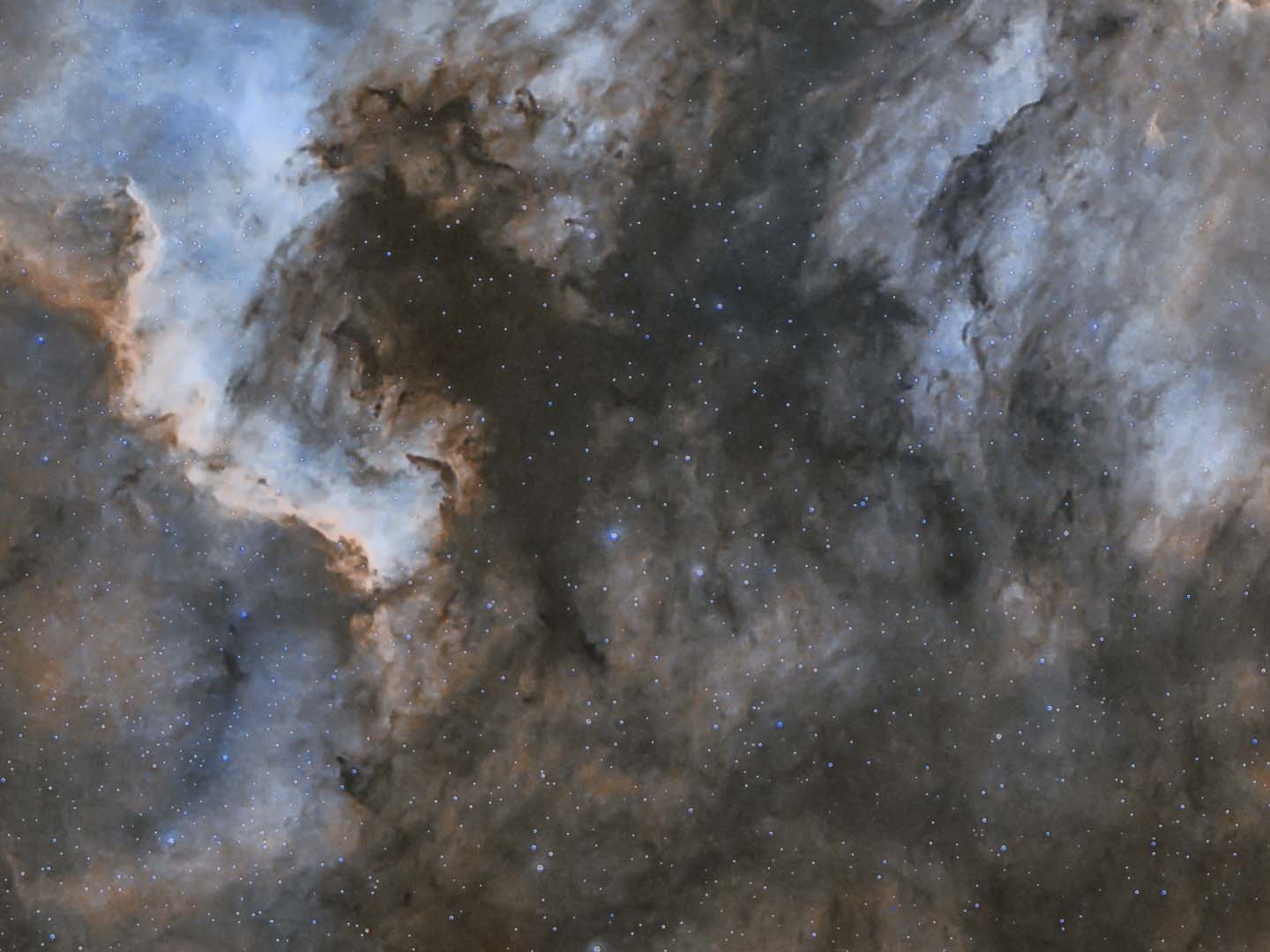
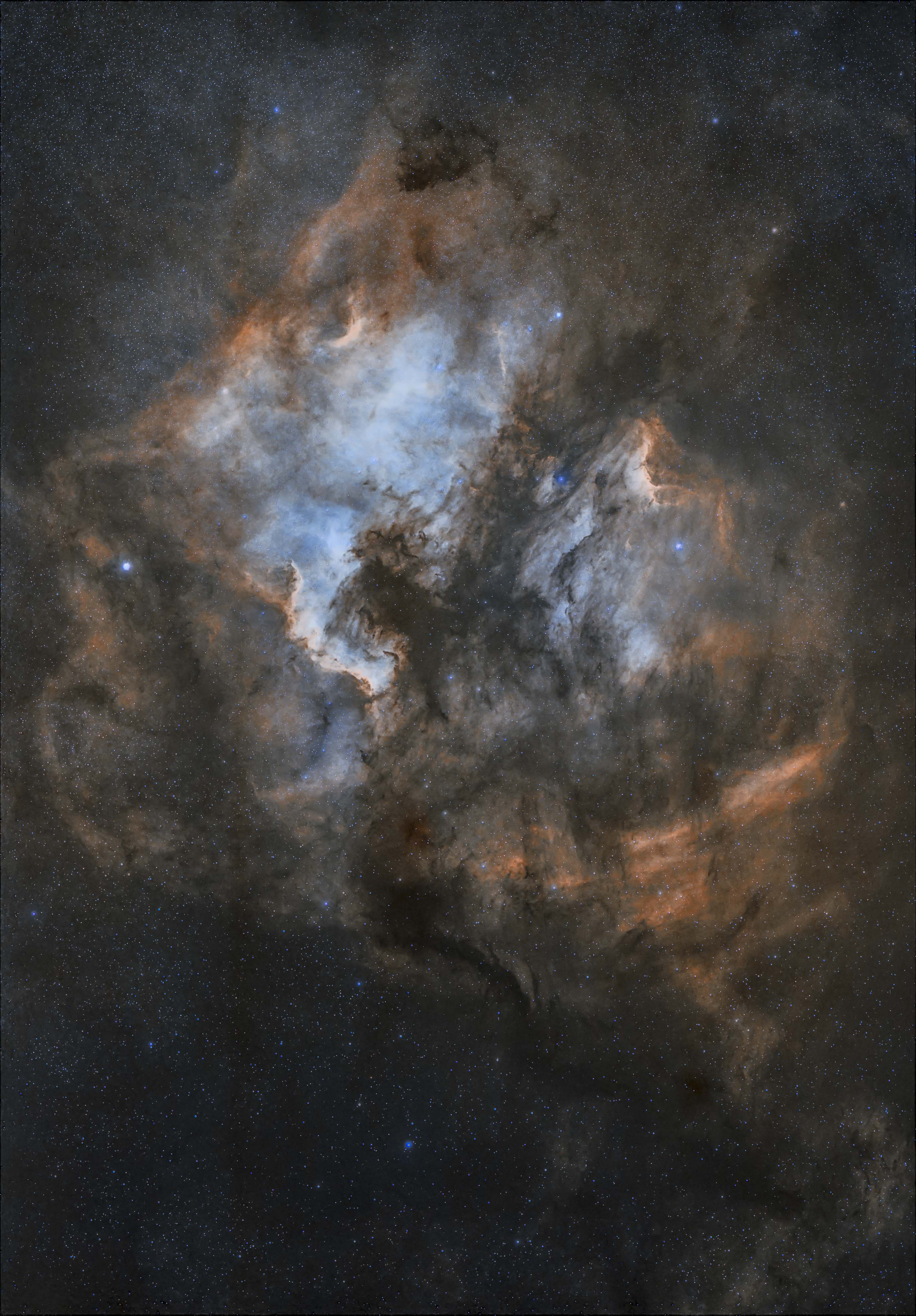
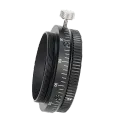
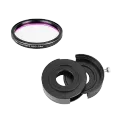
### NGC 7000 – North America Nebula This time I chose a great summer classic: **NGC 7000, the North America Nebula**, one of the most spectacular emission regions in the constellation of Cygnus. My goal was to make the most of narrowband imaging, using two SVBONY dual narrowband filters to separately capture the main emission lines of the nebula and build a richer final palette. ### The Setup **Telescope:** Sky-Watcher Newton 150/600 f/4 **Camera:** Modified Nikon D600 for astrophotography **Filters:** SVBONY SV220 Ha/OIII 7 nm + SVBONY SV220 SII/OIII 7 nm **Filter drawer:** SVBONY SV226 **Mount:** ML Astro SAL 33 **Guide scope:** 30 mm f/4 + ZWO ASI120 Mini **Control:** ZWO ASIAIR **Sub-exposures:** 300 seconds **ISO:** 1600 I dedicated **2 hours to the Ha/OIII filter and 2 hours to the SII/OIII filter**, for a total of **4 hours of integration**, using 300-second exposures throughout. ### The Advantage of the SV226 For a project like this, where two different filters need to be switched during the imaging session, the **SVBONY SV226 filter drawer** proved to be extremely practical. Having the filters already mounted in their respective holders and being able to switch between them simply by removing and inserting the drawer makes changing from **Ha/OIII to SII/OIII extremely quick**, without having to disassemble the optical train or unnecessarily disturb the telescope configuration. For me, this was particularly useful during this imaging session. When working with a DSLR and an equatorial mount, every intervention on the optical train can mean wasted time, a possible change in focus, or the need to check the framing again. With the **SV226**, switching between the two filters became a very simple and fast procedure, allowing me to make the most of the available imaging time under the night sky. ### The Real Test: Heat, Noise and Halos This session turned out to be interesting not only because of the final image, but also from a technical point of view. The unusually high nighttime temperatures affecting Italy this summer, with temperatures **well above 20 °C even during the night**, are far from ideal conditions for an uncooled DSLR. Despite this, the **modified Nikon D600 handled the noise much better than I expected**. Thanks to proper calibration and four hours of total integration, thermal noise remained sufficiently under control to allow me to work on the faintest structures without relying on particularly aggressive noise reduction. This is probably one of the aspects that satisfied me most: once again, a simple modified DSLR, used carefully and with a good acquisition and calibration workflow, can still produce extremely good results even under difficult environmental conditions. Another aspect I wanted to test was the management of the **halos produced by dual narrowband filters**. During processing, they proved to be much easier to handle than I had initially expected. With careful calibration, proper background management and separate processing of the individual channels, I was able to reduce them without compromising the most delicate structures of the nebula. ### Processing The data were calibrated and stacked in **Siril**, working separately on the two imaging sessions carried out with the SVBONY filters. From the Ha/OIII and SII/OIII data, I extracted the respective components and processed them individually before recombination. This gave me much greater control over the contribution of the different emission lines and allowed me to create a richer palette than a simple HOO composition. The **Ha** component provided most of the nebular structure, while **SII** helped reveal additional details in some of the deeper emission regions. **OIII** added the cooler color components. Separating the nebula from the stars also allowed me to work on contrast and nebular details without making the stellar field unnecessarily dominant. My main goal was to keep the processing balanced: no extreme color saturation or excessive star reduction, but rather a result that preserved as much of the information contained in the original data as possible. ### The Result NGC 7000 is relatively easy to recognize, but it is far from easy to render well. The huge hydrogen structures, dark regions and delicate oxygen and sulfur emissions create an enormous amount of detail throughout the field. This project left me with one main conclusion: **you don't necessarily need a cooled astronomical camera to achieve good results**. A modified DSLR such as the Nikon D600, used carefully and with proper data calibration, can still be surprisingly capable. And achieving this under Italian skies, with nighttime temperatures above 20 °C, while keeping the noise sufficiently controlled to recover faint details, makes the result even more satisfying. At the same time, using the **SVBONY SV220 filters together with the SV226 Filter Drawer** made it much easier to manage a session requiring two different narrowband configurations. In the end, this became more than just a photograph of the North America Nebula. For me, it was a real-world test of how much can be achieved with a relatively simple setup, a modified DSLR and a well-organized imaging workflow. **NGC 7000 – North America Nebula** Sky-Watcher Newton 150/600 f/4 Modified Nikon D600 SVBONY SV220 Ha/OIII 7 nm SVBONY SV220 SII/OIII 7 nm SVBONY SV226 Filter Drawer ML Astro SAL 33 ZWO ASIAIR 30 mm f/4 guide scope + ZWO ASI120 Mini 300 s – ISO 1600 2 h Ha/OIII + 2 h SII/OIII **Total integration: 4 hours**
My name is Roberto Cenci, and I am an Italian photographer and astrophotographer based in northern Italy. I have been passionate about photography since my teenage years, working both in traditional and digital photography, with a particular interest in landscapes and the night sky. I have been exploring deep-sky astrophotography for several years, gradually developing a setup based on a modified DSLR and a fast Newtonian telescope. For this project, I wanted to challenge a relatively simple, non-cooled camera under the demanding conditions of Italian summer nights, where temperatures can remain well above 20°C. This NGC 7000 project was also an opportunity to explore a full narrowband workflow using SVBONY filters and the SV226 filter drawer. Combining two 7 nm dual-narrowband filters and a total of four hours of integration allowed me to experiment with Ha, SII and OIII data while keeping the setup simple, flexible and efficient.

 Google
 Amazon
No data Yet