


 0
0
0
0
Evel Meckarov
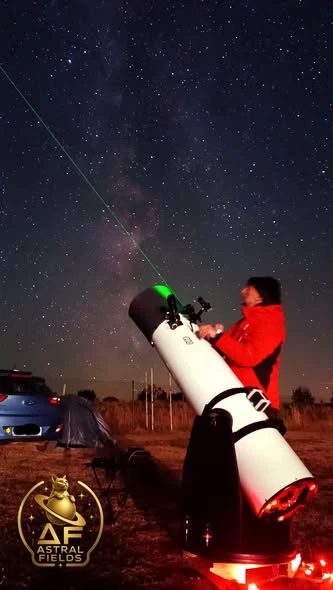
For every stargazer, the deep dark skies hidden toward the Alps are a constant temptation. Every year during family vacations to Italy, driving through the mountains while knowing that pristine dark skies are right above—yet lacking the time or gear to stop—has always been frustrating. I always told myself, "One day, I’ll go and observe from the Alps from the darkest sky I have ever seen!"
At first, I considered renting a nearby pension, but the thought of leaving my expensive gear unattended in a street-parked car killed the appeal. Then, about a week ago, a better idea struck: What about camping? I could literally sleep right next to my car and telescope!
Though my last camping experience 20 years ago in the Czech wilderness almost ended in a freezing disaster, I figured outdoor gear and clothing have evolved. Being the ultimate value hunter, I logged onto Decathlon from my phone and ordered the most popular, budget-friendly tent, sleeping bag, and self-inflating mattress for about $80 USD total. No Alaskan expedition gear needed—just a few hours of sleep in a mid-summer camp!
With a moonless weekend and an awesome weather forecast approaching fast, the clock was ticking. Finding a legal, astronomy-friendly camp in a Bortle 2–3 zone without overnight parking bans or local hunting hazards proved surprisingly difficult.
After much searching, I found Camp Velo, located right at the Austrian border amidst historical Iron Curtain bunkers. It checked every single box:
Free passage in and out during the night
Safe, fenced, and equipped with water, toilets, a fridge, and a kitchen
Officially Bortle 2–3 at the zenith, pushing toward Bortle 2 in the direction of the Alps
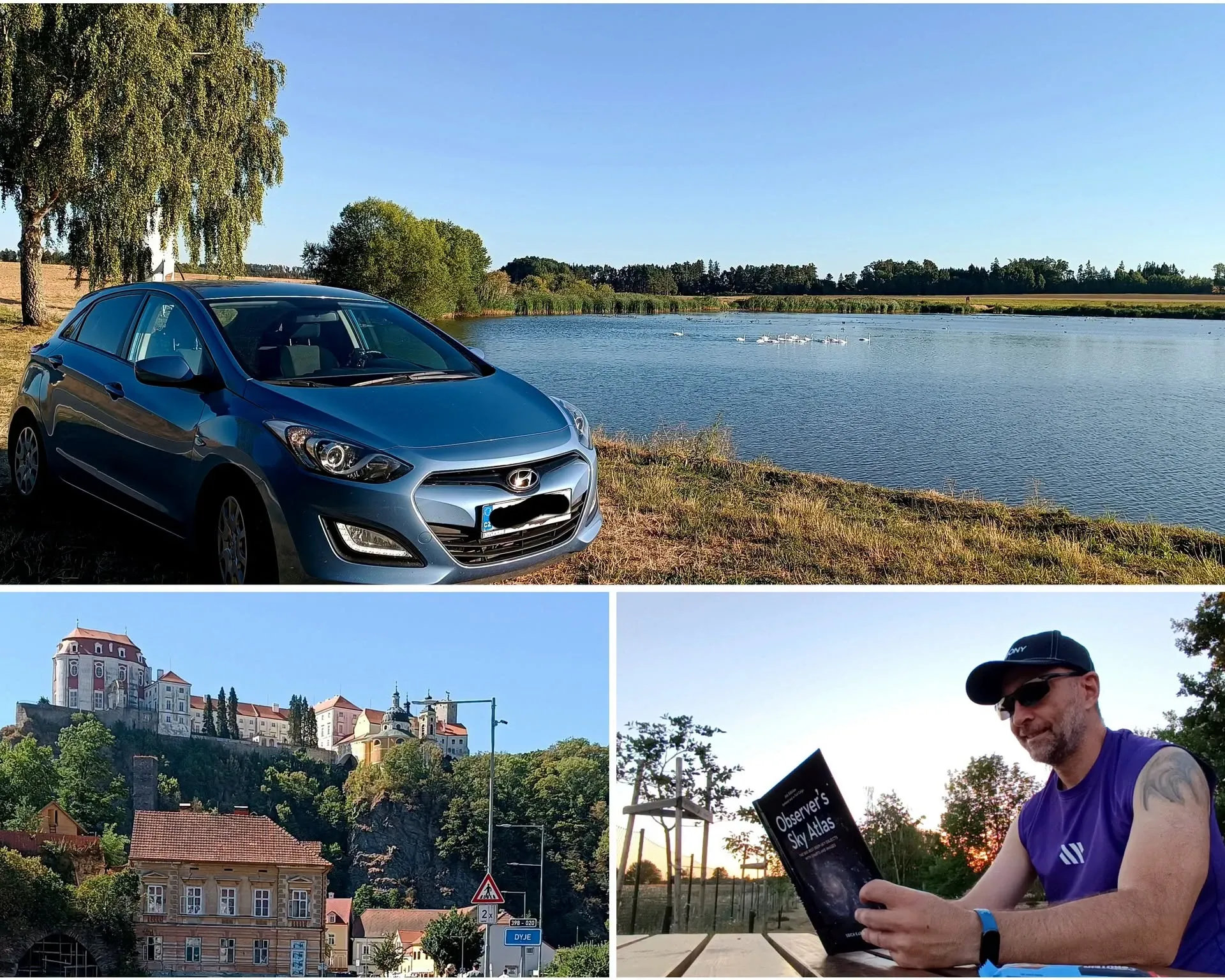
The 1-hour and 40-minute drive flew by, past the scenic Bitov castle. Upon arrival, the camp owner greeted me warmly, remembering the stargazer who wrote in advance.
I set up my budget tent in about 10 minutes—surprisingly easy and sturdy. After chasing away a swarm of mosquitoes with a heavy dose of bug spray, the temperature dropped rapidly from 30°C down toward 15°C. I suited up in full ski gear (four layers on top, two on the bottom).
Just as Venus blazed low in the West, a late-arriving camper set up right opposite my spot with bright cold lights and loud kids, though things thankfully quieted down by 22:30, leaving the rest of the night undisturbed.
Once my night vision fully adapted, the sheer number of visible stars and deep-sky objects was mind-blowing. Using my SVBony 8x32 ED binoculars, the night sky felt like a live version of Stellarium.
The Milky Way: A long, dense ribbon stretching from South to North with striking clarity.
The Veil Nebula: Easily visible even without a filter, but with the SVBony SV240 Narrowband filter and my 12-inch mirror, it looked like an exquisite painting in space with incredible structure and contrast.
M81 & M82: Sharp, high-contrast, and deeply structural features.
The Swan Nebula & Ring Nebula: Massive gains in visible size and surrounding nebulosity compared to city-edge viewing.
Andromeda (M33 & M31): Spanning roughly five full moons across, glowing brilliantly alongside the easily spotted M33.
The Pleiades (M45): To my absolute astonishment, even with a UHC filter attached, the true nebulosity surrounding the cluster was clearly visible to the naked eye and eyepiece—proving that visual observation can match astrophotography magic under the right skies.
My optical lineup—featuring SkyRover 9mm 100°, 30mm UFF 70° eyepieces, and a GSO coma corrector—performed like absolute champions.
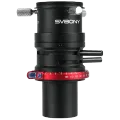
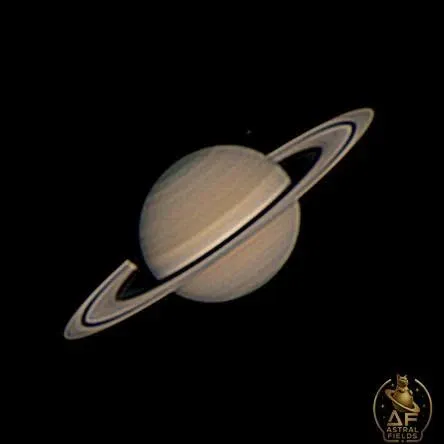
As dawn approached around 4:00 AM, I turned my attention to Saturn. Using my new SVBony SV705C camera, an atmospheric dispersion corrector (ADC), and a 2x Barlow lens, I captured clean data via Firecapture.
Finally, I swapped the camera for an AngelEyes 4mm 82° eyepiece (pushing magnification past 700x–1000x with the ADC barrel). Expecting a blurry, waving mess at such extreme power, I was instead greeted by a stunning, razor-sharp, rock-steady view:
"The innermost dark region of the ring had gradient details resembling the bottom of a mushroom. The moons were easily visible. Looking at Saturn in this huge, sharp magnification was easily one of the highlights of my entire astronomical career."
At 5:00 AM as the sun rose, I packed up my gear in 10 minutes and crawled straight into my cozy tent for a solid 4-hour sleep before heading home.
Years of fine-tuning equipment and honing skills finally paid off in one perfect, uninterrupted session. Was the drive and setup worth it? Absolutely. Dark skies are not mandatory, but they are infinitely rewarding—and I will definitely be back!
 Google
 Amazon
No data Yet