


 0
0
0
0

Anonymous
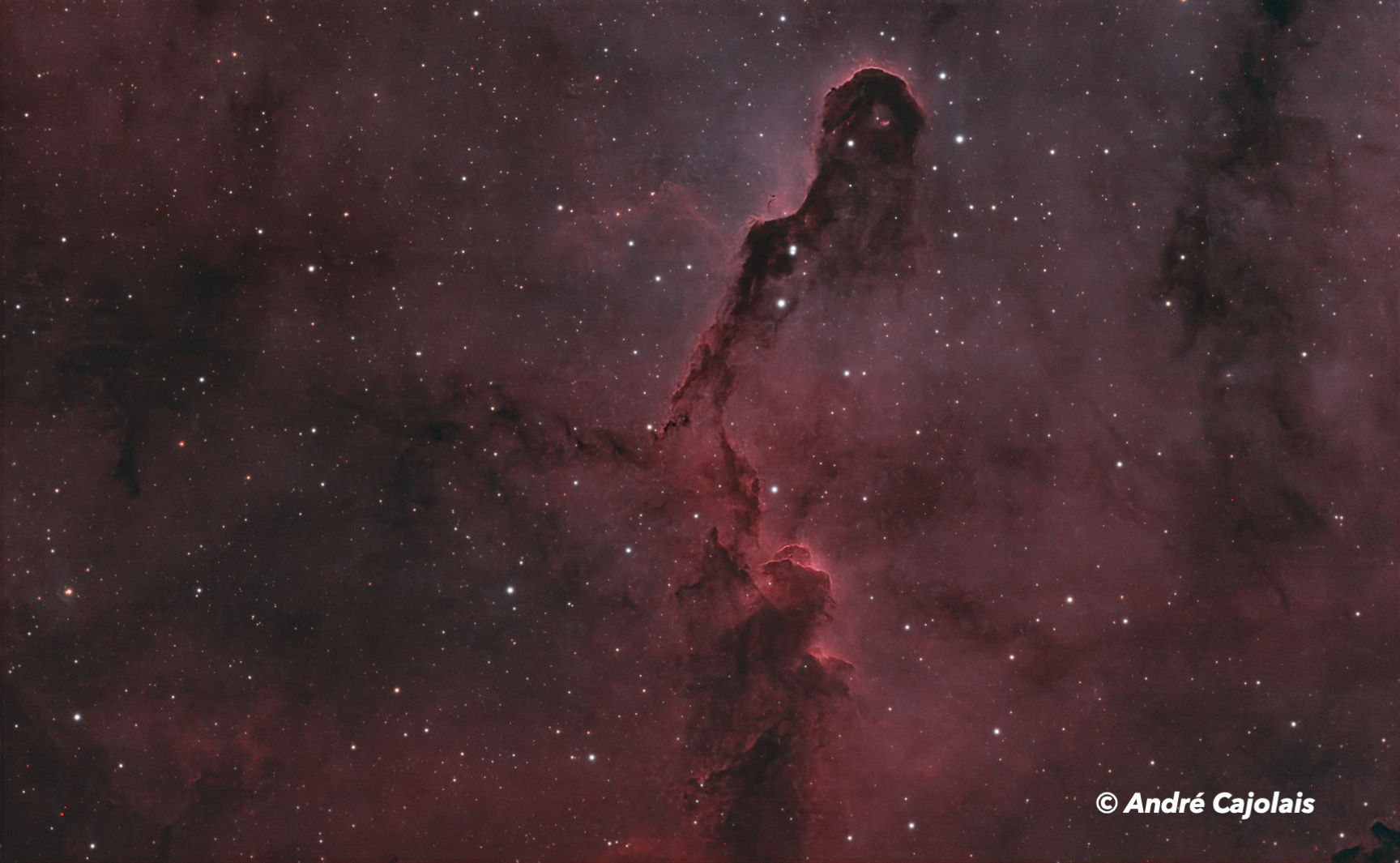
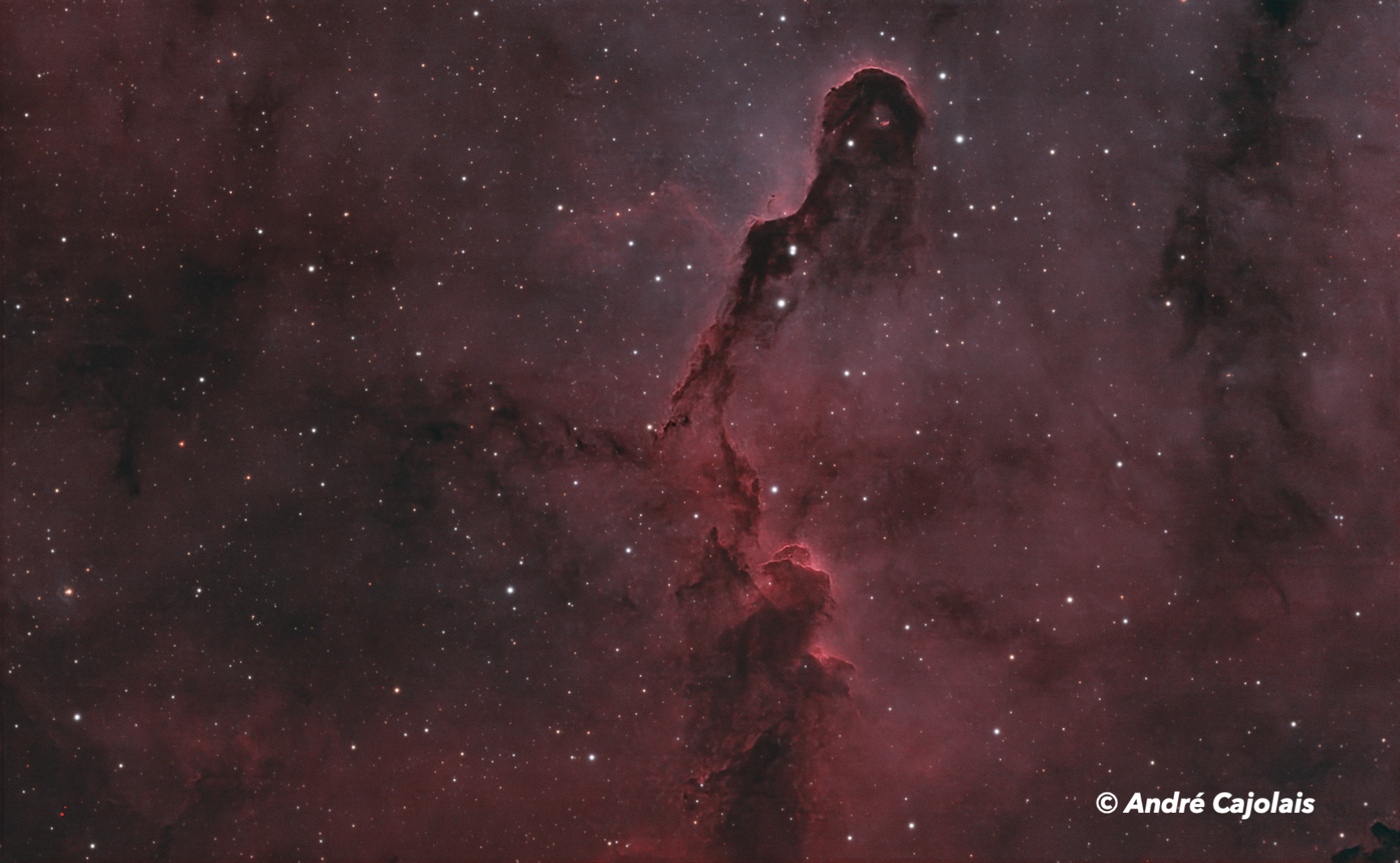
A user story by Andre Cajolais — amateur astronomer, 35+ years under the sky, 10 years behind the camera.
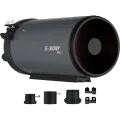
After three and a half decades in astronomy and a decade deep into astrophotography, I've learned to recognize the difference between a telescope that's merely *good* and one that genuinely fills a gap in a working setup. The SVBONY MK127 is the latter — the kit I didn't know I was missing until I had it on the mount.
My system lives in the suburbs of Montreal, under Bortle 6 skies. Like many urban imagers, I've had to become creative: intelligent exposure management, quality light-pollution filters, and a color camera approach that rewards patience. Within that context, the MK127 arrived not as a replacement for anything, but as the missing link — a compact tube that could chase planets one night and reach for galaxies the next, without asking me to reconfigure the entire rig.
The MK127 is built on the classic Rumak design — a meniscus corrector, a primary mirror, and crucially, an *independent* secondary mirror. This is where it diverges from the ordinary.
In a conventional Mak, the secondary is simply an aluminized spot deposited on the inner face of the meniscus. Functional, yes — but it locks you into whatever figure the manufacturer baked in. The MK127's separate secondary mirror allows for finer collimation control and superior aberration correction, which matters more than it sounds when you're trying to squeeze every photon into a tight, round star profile.
Paired with dielectric coatings rated above 99% reflectivity, the instrument minimizes light loss and preserves color rendering that feels honest to the eye. This is a real step up from entry-level Maks, where an uncoated secondary alone can quietly eat 10–15% of your light flux. That's the difference between a faint galaxy arm emerging from the noise and... not.
If there's a single feature that defines this scope for an imager, it's this.
At its native f/11.8, the MK127 is a formidable planetary and lunar instrument — more than enough focal length to exploit whatever seeing cooperates with you on a given night. Jupiter's belts, Saturn's rings, lunar terminator shadows — all delivered with the crisp, high-contrast punch that Maks are known for.
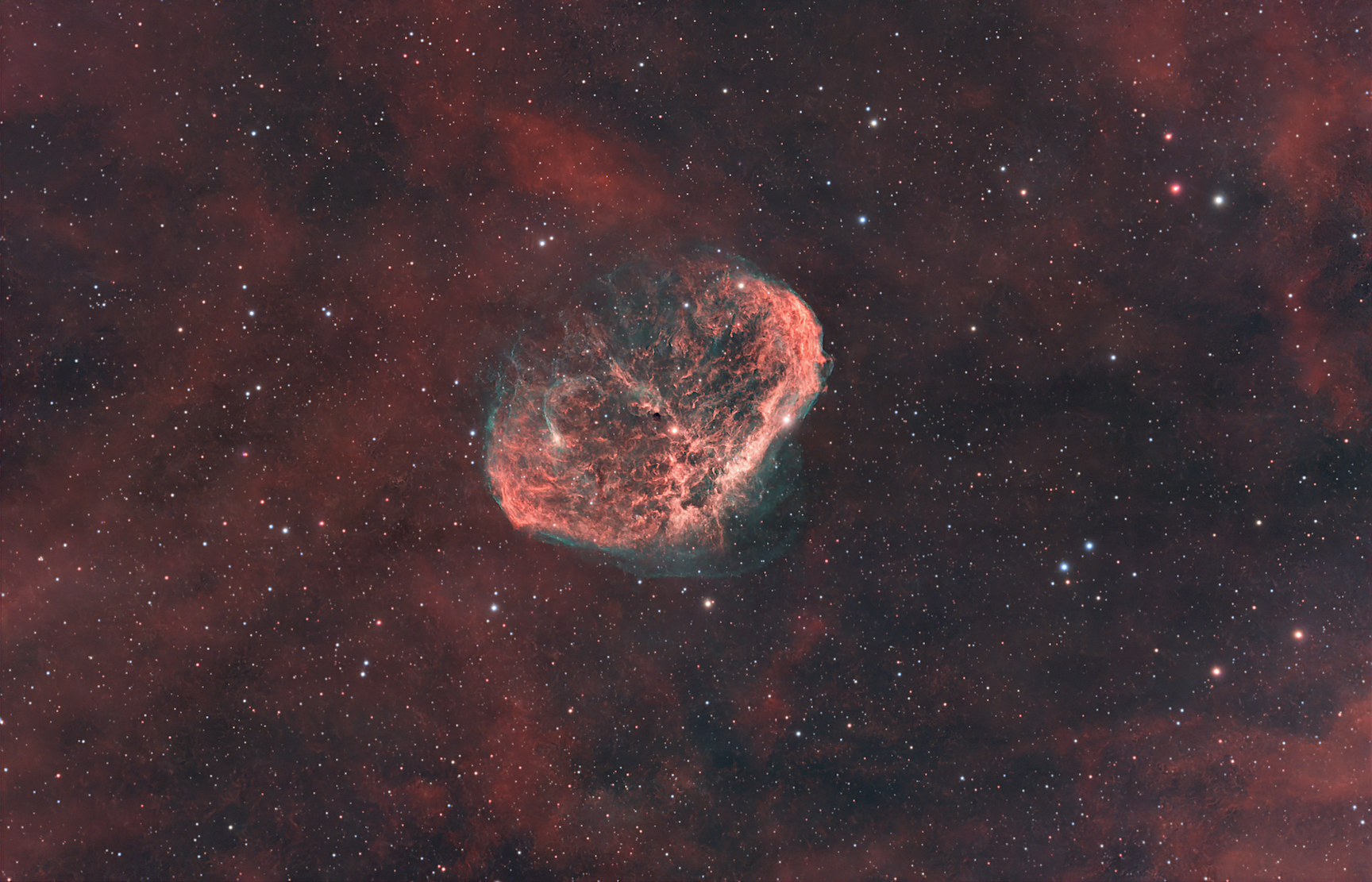
But here's where it gets interesting: with the dedicated 0.65x reducer, you drop to f/7.8, and the entire character of the scope changes. The field widens. Required exposure times drop by roughly 40%. Suddenly you're in deep-sky territory — nebulae, clusters, and galaxies that were previously off-limits to a Mak of this aperture become viable targets in a single evening's session.
Historically, this was the Achilles' heel of the Maksutov design — too slow for deep-sky, too narrow in field. The MK127 tackles this problem head-on, not with a generic, poorly-matched third-party reducer bolted on as an afterthought, but with a purpose-built optic designed to work *with* the system.
The MK127 carries a 40.6mm secondary, bringing the obstruction ratio to roughly 31% — noticeably lower than many Maks of comparable aperture.
In practice, this translates to less diffraction and better contrast on fine detail. Think spiral arms resolving on a small galaxy, or filaments threading through a planetary nebula — the kind of delicate structure where other Maks in the same price segment begin to struggle and smudge.
One of the most quietly significant features of the MK127 is its flat-field design, which corrects coma and astigmatism across the entire field of view.
The result: pinpoint stars all the way into the corners. This is a detail too often overlooked in older-generation Maks, where only the center of the field was truly usable for imaging and the edges degraded into streaks and comatic wings. For anyone framing wide deep-sky targets on a sensor with any real width, the difference is immediately visible — and immediately appreciated.
Optics are only half the story. The MK127's dual-speed focuser is a genuine asset during high-resolution planetary imaging. Atmospheric turbulence is unforgiving — focus drifts, seeing shifts, and the ability to fine-tune without inducing flexure or image shift makes a real, practical difference in the final stack.
Add to that the triple 1.25" / 2" / T-mount compatibility — a combination that's genuinely rare in this segment, where most Maks force you to pick one and live with it — and you have a tube that adapts equally well to a classic visual eyepiece setup or a dedicated imaging camera. No adapters jury-rigged, no compromises forced.
The MK127 isn't reinventing the Maksutov-Cassegrain. What it does is more subtle and, honestly, more useful: it intelligently fixes the formula's historical shortcomings — slow speed, narrow field, high obstruction — while preserving everything that makes the Mak strong in the first place: long focal length in a compact tube, high contrast, and genuine portability.
For me, it rounded out an existing wide-field setup with an instrument capable of tackling galaxies, globular clusters, and planets on the same mount — all without asking me to change mounts, change locations, or change the way I work. That coherence is what makes it not just a good scope, but the right scope.
I didn't know I was missing it. Now I can't imagine the rig without it.
Andre Cajolais is an amateur astronomer with more than 35 years of experience in astronomy, the last 10 of which have been devoted mainly to astrophotography. His system is installed at home in the suburbs of Montreal, Quebec, Canada, under Bortle 6 skies. Through intelligent exposure management and high-quality anti-pollution filters, he achieves surprising results with his color cameras. The recent acquisition of SVBONY's MK127 was, in his words, a real revelation.
 Google
 Amazon
No data Yet