


Table of Contents
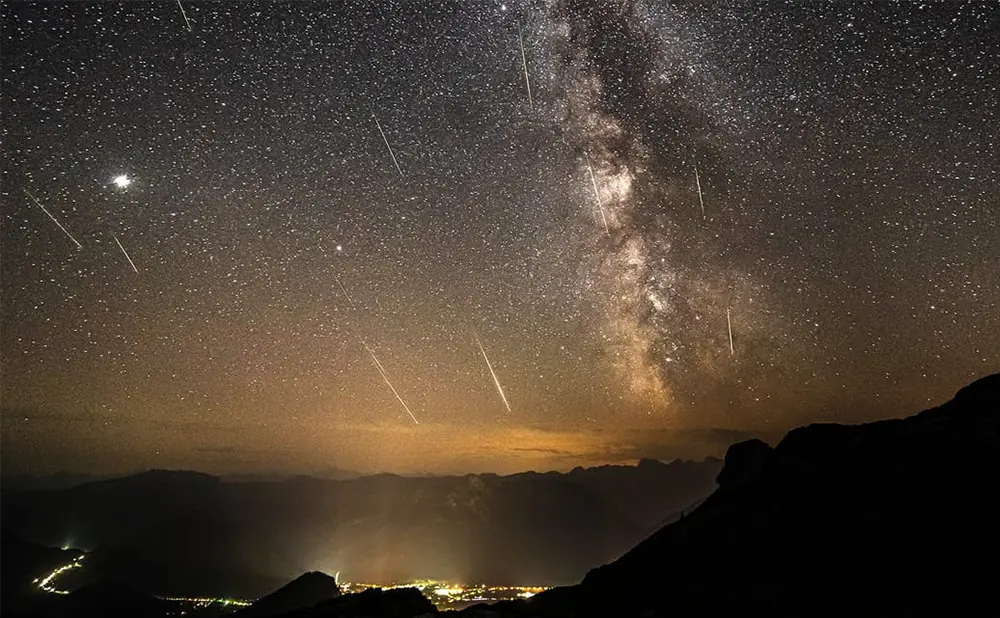
Meteor Shower Guide 2026
A meteor shower is an astronomical phenomenon that occurs when Earth, during its orbit around the Sun, periodically passes through dense clouds of debris left behind by specific comets (or asteroids). The key elements and formation process are as follows:
- Origin and Cause
- The "precursor" of a meteor shower is typically a comet (e.g., Halley's Comet).
- Comets are primarily composed of ice and dust. As they approach the Sun, their surface materials sublime (transition directly from solid to gas) due to heating, releasing vast amounts of dust and rocky particles into space, forming a cloud of debris that orbits the Sun.
- Mechanism of Occurrence
When Earth's orbit intersects these debris clouds left behind by comets, countless tiny fragments (meteoroids) enter Earth's atmosphere at extremely high speeds.
- What We Observe
- These fragments "burn up" (actually vaporize and ionize due to intense heat) through friction with the atmosphere, creating bright streaks of light known as meteors.
- Because the debris cloud is relatively concentrated, when Earth passes through it, we observe significantly more meteors than usual (ranging from dozens to tens of thousands per hour) within a short period. These meteors appear to radiate from a single point in the sky, known as the radiant.
- Periodicity
Since Earth passes through the same debris cloud region at fixed dates each year, major meteor showers (such as the Orionids, Perseids, etc.) occur annually on a regular schedule.
Simple Analogy
Think of a comet as a dump truck traveling through space, constantly leaking "sand" (debris) as it moves. The scattered "sand" forms a dusty ring around the Sun. Each year, Earth passes through this "dusty ring" at the same time, resulting in a spectacular "meteor shower."
The January 2026 Quadrantid Meteor Shower (QUA)
Active Period: Annually from December 28 to January 12 of the following year.
Peak Time: Predicted around 21:00 UT on January 3, with a very short duration of only about 6 hours.
Parent Body: Asteroid 2003 EH1 (an extinct comet), possibly belonging to the same cometary debris complex as Comet 96P/Machholz.
Speed: Medium (approximately 41 km/s).
Brightness: Known for producing bright fireballs, which are its signature feature.
ZHR (Zenithal Hourly Rate): The theoretical peak can exceed 120, making it one of the strongest meteor showers of the year. However, due to its extremely short peak and harsh winter weather, actual observations often fall short of expectations.
Radiant Point:
- Location:Located in the obsolete constellation Quadrans Muralis (now between Boötes and Draco), near the Big Dipper and the bright star Arcturus. Due to its high declination, it is a typical Northern Hemisphere meteor shower, with poor observing conditions in the Southern Hemisphere.
- How to Find the Radiant (During Observation): Locate the Big Dipper (shaped like a ladle). Follow the arc of its handle to find Arcturus (the brightest orange-yellow star in Boötes). The radiant point lies in the area below the Big Dipper and to the left of Arcturus. If it's difficult to clearly distinguish the outlines of constellations with the naked eye, you can use binoculars to quickly locate bright stars and see details in the sky area, making it easier to find the radiant point
Observing Conditions: January 3, 2026, is a full moon. The bright moonlight will wash out most faint meteors, reducing the actual number of visible meteors to fewer than 10 per hour.
Observing Tips:
- Focus on Bright Meteors: Prioritize watching for its signature bright fireballs, which can penetrate the moonlight.
- Block the Moon: Try to block the moon itself with buildings or trees to improve the contrast of the surrounding sky.
- Northern Hemisphere Advantage: High-latitude regions such as Canada, Northern Europe, and Scandinavia offer relatively better observing conditions due to the radiant's higher position in the sky.
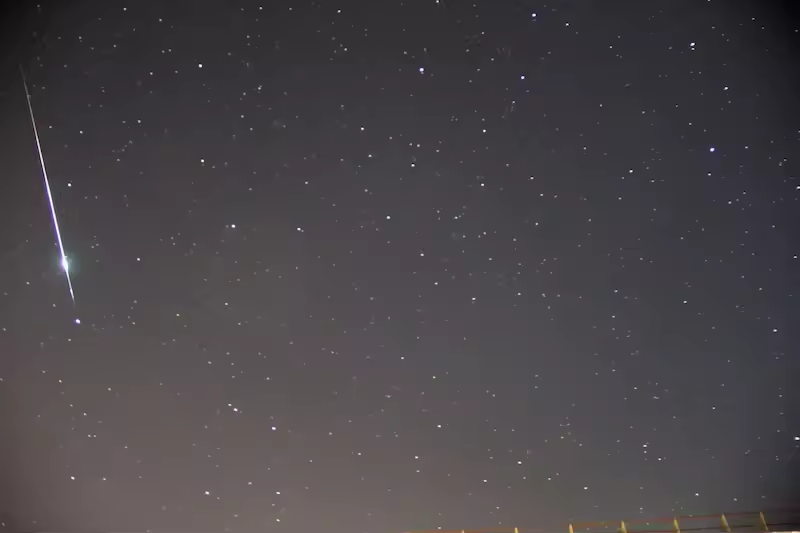 This photograph was taken by Filipp Romanov of Russia on January 3, 2025.
Lyrid Meteor Shower in April 2026
Activity Period: April 14 - 30.
Peak Time: Predicted around 19:15 UT on April 22. Under a dark, moonless sky, observers can expect an average of 10–15 meteors per hour during the peak.
Peak Characteristics: Relatively narrow (concentrated on the night of maximum activity).
Parent Body: Comet C/1861 G1 (Thatcher). This is a long-period comet with an orbital period of approximately 415 years. The dust trail it leaves in its orbit intersects Earth’s path each year, producing the Lyrid meteor shower.
Speed: Medium-fast, about 49 km/s.
ZHR (Zenithal Hourly Rate): Typically 18. The shower is known for occasional outbursts (roughly every 60 years), during which the ZHR can surge to around 100 meteors per hour. The next predicted outburst is around 2042.
Radiant Point: Located in the constellation Lyra, near the bright star Vega (Right Ascension 18h04m, Declination +34°).
Meteor Characteristics: Meteors are generally bright and may produce fireballs. Some meteors can leave persistent trains.
Observing Conditions:
- Lunar Interference:Minimal to none. The peak in 2026 occurs before dawn on April 22. The Moon will be a waning crescent (about 27% illuminated) and will set before midnight for mid-northern latitudes, leaving a dark, moonless sky ideal for pre-dawn observation.
- Best Observing Window: After midnight until dawn on April 22, 2026. The radiant reaches its highest point just before dawn.
- Best Viewing Regions: Northern Hemisphere. The radiant climbs high in the pre-dawn sky, offering optimal conditions. The shower is also visible from the Southern Hemisphere, but meteor rates are significantly lower.
Observing Tips:
- Location:Observers in the Northern Hemisphere should choose dark sites with minimal light pollution. Southern Hemisphere observers should look low toward the northeast before dawn.
- Viewing Direction: Although meteors appear to radiate from near Vega, they can appear anywhere in the sky. The best approach is to lie back and take in as much of the sky as possible. The higher Vega is in your sky, the more meteors you are likely to see.
- Key Time: The best observing period is when the radiant is highest, i.e., a few hours before dawn.
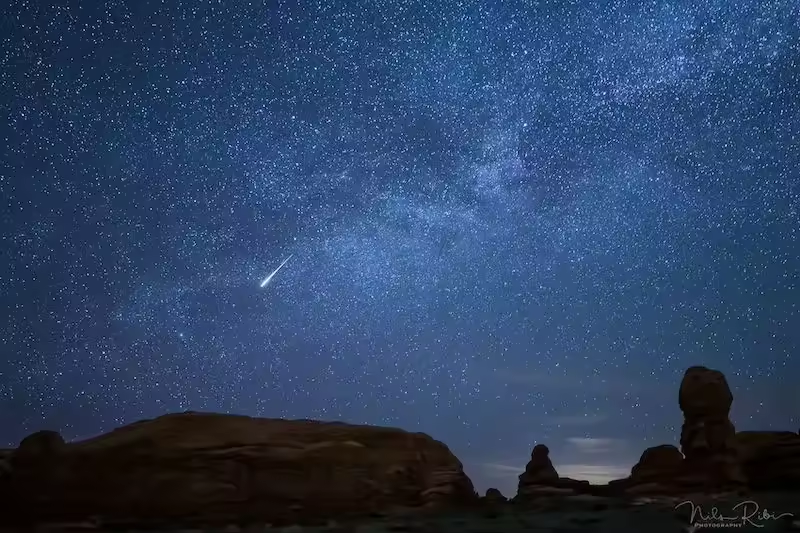 This photo was taken by Nils Ribi on April 17, 2023, in Utah.
Eta Aquariid Meteor Shower in May 2026
Activity Period: April 19 - May 28.
Peak Time: Predicted around 03:51 UT on May 5, though the peak activity spans several days.
Parent Body: The famous Halley’s Comet (1P/Halley). The Eta Aquariids occur each year in early May when Earth passes through the outer dust trail of Halley’s orbit, while the Orionid meteor shower in October results from Earth crossing its inner dust trail.
Radiant Point: Located in the constellation Aquarius, near the star Eta Aquarii (Right Ascension 22h32m, Declination -1°), close to the Y-shaped "Water Jar" asterism in Aquarius.
Best Viewing Regions: Southern Hemisphere and low northern latitudes (e.g., the southern United States). The radiant rises higher before dawn in these regions, offering far better viewing conditions than mid-to-high northern latitudes. It is often regarded as one of the best annual meteor showers for the Southern Hemisphere.
Speed: Extremely fast, about 65.4 km/s - one of the fastest among major meteor showers.
ZHR (Zenithal Hourly Rate): Theoretical peak around 50.
Meteor Characteristics: Meteors are very swift, with a high percentage leaving persistent trains. Fireballs are relatively rare.
Typical Observed Rates: Under ideal conditions, dozens per hour may be visible from the Southern Hemisphere or tropical regions. From mid-northern latitudes, rates are typically only 10-30 meteors per hour before dawn.
Observing Conditions:
- Lunar Interference: Extremely severe. During the peak on May 5-6, 2026, the Moon will be a waning gibbous phase, 84% illuminated.
- Impact:Bright moonlight will dominate the sky all night, especially during the best observing hours from midnight to dawn, washing out most faint meteors. The actual number of visible meteors is expected to drop to fewer than 10 per hour.
- Strategy:Observers in the Southern Hemisphere and low latitudes, though affected by moonlight, still have the best chance due to the radiant’s higher elevation. Finding ways to block the Moon is essential. For mid-to-high northern latitude observers, conditions are poor (low radiant altitude) and further worsened by the bright Moon, making this shower not recommended as a primary target.
Observing Tips:
- Best Time: Local midnight to dawn, when the radiant is at a higher elevation.
- Recommended Dates: The hours before dawn on May 4, 5, and 6, 2026. The peak period is narrow but extends slightly over these days.
- Viewing Direction: There is no need to look directly at the radiant. Meteors may appear anywhere in the sky. Lie back and observe as wide an area as possible, preferably in a direction away from the Moon.
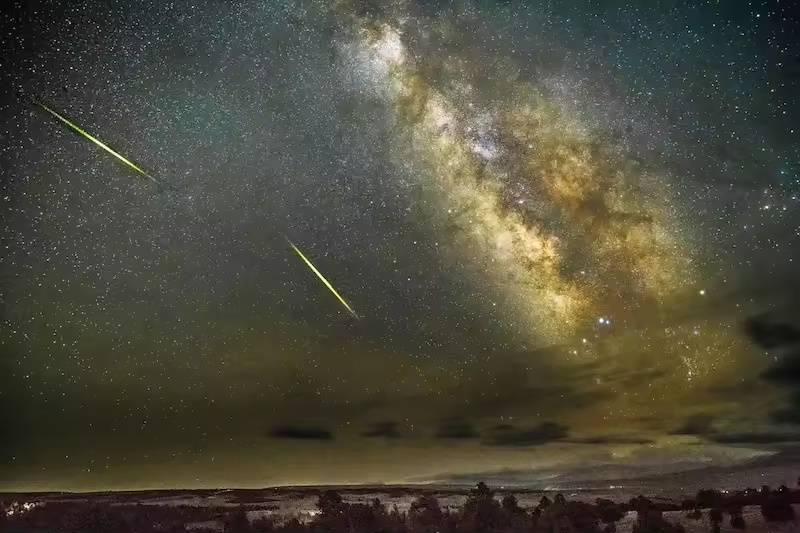 Eta Aquariid meteors captured by Christoph Stopka near Westcliffe, Colorado, on May 5, 2024.
Delta Aquariid Meteor Shower from Late July to Mid-August 2026
Active Period: July 12 to August 23, 2026. The shower lacks a sharp, distinct peak, instead remaining steadily active from late July to early August, overlapping with the Perseid meteor shower.
Parent Body: Part of the 96P/Machholz Comet Complex. The dust that creates this meteor shower is believed to have left the comet's nucleus around 20,000 years ago.
Radiant Point: Located in the constellation Aquarius (Right Ascension 22h40m, Declination -16.4°), positioned in the southern part of the sky.
Speed: Medium, approximately 41 km/s.
ZHR (Zenithal Hourly Rate): Theoretical peak around 25.
Meteor Characteristics: Meteors are generally faint, lacking persistent trains and fireballs. About 5-10% may leave brief, short-lived trains.
Typical Observed Rates: Under a dark, moonless sky, expect 15-20 meteors per hour. Since this shower overlaps with the Perseids, meteors from both showers will often appear together.
Best Viewing Regions:
- Southern Hemisphere observers always enjoy the natural advantage of a high radiant point, allowing them to see more meteors even outside the peak period.
- Observers at low to mid-northern latitudes can attempt to watch during the recommended window.For mid- to high-northern latitudes, the radiant remains too low in the sky for optimal viewing, and observers are better off focusing on the upcoming Perseid meteor shower.
Observing Conditions:
- Lunar Interference: On the peak night (July 30-31), the Moon will be 98% illuminated-bright and high in the sky all night. This strong moonlight will almost completely wash out the already faint Delta Aquariids, making observation very challenging.
- Key Recommendation: Avoid the peak night. Instead, use the week before the peak (roughly July 22-28) for observing. During these nights, moonlight is absent or minimal after midnight, and the radiant is already reasonably high.
Observing Tips:
- Main Window: From July 22 to July 28, observe after midnight until dawn. Lunar interference decreases night by night during this period.
- Avoid These Nights: The period around the Full Moon on July 29 (approx. July 28 - August 1), when moonlight is strongest and most disruptive.
- Viewing Direction: Face the southern sky.
- Distinguishing from the Perseids: Both showers are active simultaneously in late July/early August.
- Delta Aquariids: Appear from the south, medium speed, fainter.
- Perseids: Appear from the northeast or north, faster, brighter, and often leave trains.
- Preparation: A dark, moonless sky is essential. Because these meteors are faint, any light pollution or moonlight will significantly reduce the number visible.
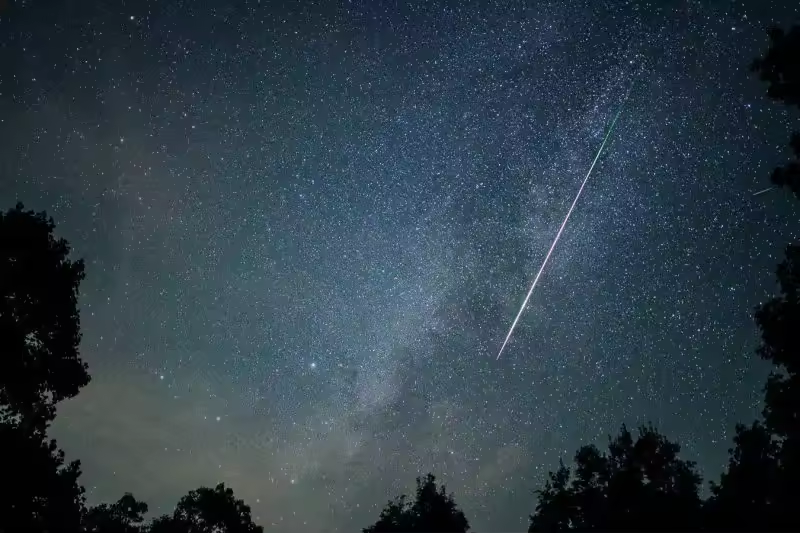 Meteor captured by James Reynolds in Asheville, North Carolina, on August 11, 2021.
Perseid Meteor Shower from Mid-July to Mid-August 2026
Activity Period: July 17 to August 24, 2026.
Peak Time: Predicted peak at 14:53 UT on August 13, 2026.
Parent Body: Comet 109P/Swift-Tuttle, a large comet with an orbital period of approximately 133 years.
Radiant Point: Located in the constellation Perseus (Right Ascension 03:12, Declination +58.1°), rising in the northeast after midnight and reaching its highest point before dawn.
Best Viewing Regions: Northern Hemisphere (warm summer nights and a high radiant point). Visible from the Southern Hemisphere, but rates are lower.
Speed: Fast, about 59 km/s (37 mph).
ZHR (Zenithal Hourly Rate): Theoretical peak can reach 100. Under truly dark skies, observers often report 90 or more meteors per hour.
Meteor Characteristics: Meteors are colorful, many are very bright, and they frequently leave persistent trains. Fireballs are also relatively common.
Activity Profile: Rates rise and fall relatively quickly around the peak, but activity remains high throughout early August up to the peak.
Observing Conditions:
- Lunar Interference: None. The 2026 peak coincides with a New Moon (August 12 at 17:37 UT).
- Impact: There will be absolutely no moonlight interference during the peak observation period, resulting in extremely dark skies - perfect conditions for viewing the Perseids.
- Key Advantage: The dark sky maximizes the number of visible meteors, especially fainter ones, providing the best possible observing experience.
Observing Tips:
- Best Nights: The mornings of August 12, 13, and 14.
- Optimal Time: From local midnight until dawn (especially between 2 a.m. and sunrise), when the radiant is highest and meteor rates are greatest.
- Viewing Direction: There is no need to look directly at the northeastern radiant. Lie back and observe the widest possible area of the sky, particularly around the zenith.
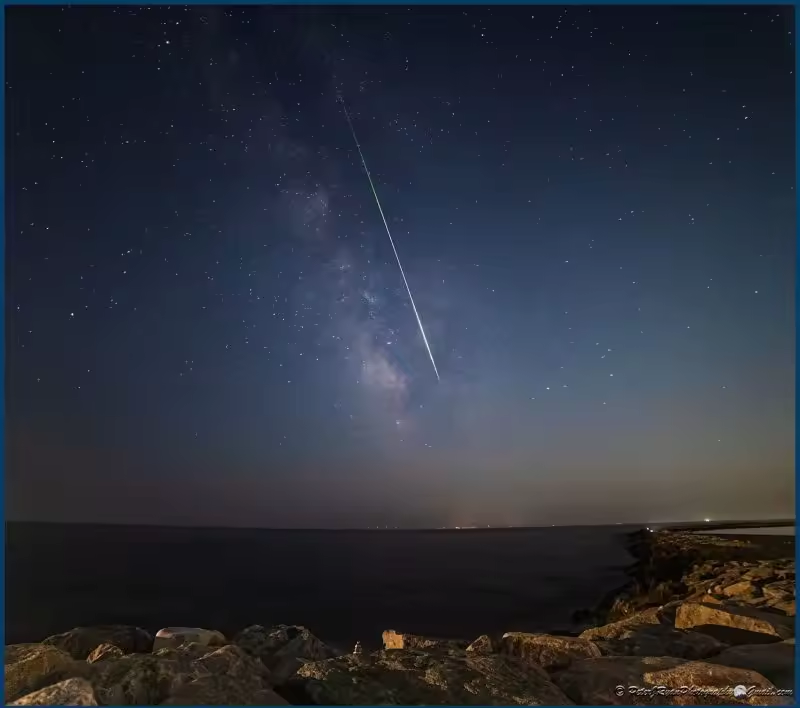 A Perseid meteor alongside the Milky Way, captured by Peter Ryan in Point Judith, Rhode Island, on August 13, 2021.
Late October - Orionid Meteor Shower
Active Period: September 26 to November 22, 2026, with core activity from October 2 to November 7.
Peak Time: Predicted at 06:54 UT on October 23. The best viewing window is during the early hours of October 23 (after midnight until dawn).
Parent Body: Halley's Comet (1P/Halley). Sharing its origin with May's Eta Aquariids, the Orionids result from Earth passing through the debris trail left by Halley's Comet as it enters the inner solar system (the inbound leg of its orbit).
Radiant Point: Located in the constellation Orion, north of the bright star Betelgeuse (Right Ascension 06:20, Declination +15.8°). It rises in the east before midnight, reaching its highest point around 2 a.m.
Best Viewing Regions: Visible worldwide, with optimal conditions in the Northern Hemisphere.
Speed: Extremely fast, about 66 km/s (41 mph), making it one of the fastest meteor showers.
ZHR (Zenithal Hourly Rate): Typically around 20. Under an ideal moonless sky, observers can expect about 10–20 meteors per hour.
Meteor Characteristics: Meteors produce bright, sharp flashes. Most appear white or pale yellow, with occasional fireballs showing green or orange hues. About half leave brief persistent trains (ionized gas trails).
Outburst Potential: Historically (e.g., 2006-2009), outbursts with ZHRs of 50-75 have occurred, though recent activity levels have been "low to average."
Observing Conditions:
- Lunar Interference: The peak on October 23 coincides with a Waxing Gibbous Moon. The moon rises after midnight, brightening the sky from late night until early morning and significantly reducing meteor visibility.
- Favorable Window: The moon sets several hours before dawn, creating a dark "golden period" for observation.
- Key Strategy: Focus on the pre-dawn hours after moonset for the darkest skies.
Observing Tips:
- Best Date: October 23.
- Optimal Time: The fully dark period between local moonset and sunrise. This is the best window to avoid moonlight interference.
- Alternative Time: If observing after moonset isn't feasible, try before moonrise (early evening), though the radiant will be lower in the sky.
- Viewing Direction: The radiant lies in the east/southeast. There's no need to stare directly at it - lie back and gaze at the open sky, especially toward the zenith and eastern regions.
- Managing Moonlight: If observing while the moon is up, try to block the moon itself using buildings, trees, or terrain to improve local sky darkness.
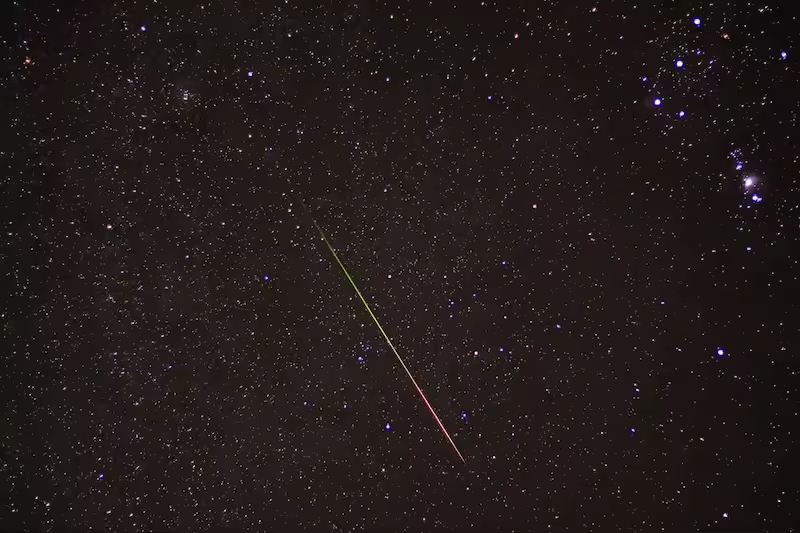 An Orionid meteor captured by James McCue in Jemez Springs, New Mexico, on October 22, 2023.
Southern and Northern Taurid Meteor Showers (October to Early November)
Overall Characteristics
- Parent Body: Comet 2P/Encke and the fragmented "Encke Complex," which includes the comet, several asteroids (e.g., 2004 TG10), and at least four meteor showers.
- Activity Profile:
- Low rates but exceptionally long duration (spanning months throughout autumn).
- Slow-moving meteors (approx. 28 km/s), making them ideal for observation and photography.
- Known for producing notable fireballs, especially during "fireball swarm" years.
- Special Advantage in 2026: No lunar interference. The peak periods align with a New Moon (November 9), providing perfectly dark skies for observing both faint meteors and bright fireballs.
Southern Taurids (STA)
- Active Period: September 20 to November 20, 2026.
- Peak Time: Predicted at 00:22 UT on November 5, 2026. This shower has a dual-peak structure: an "annual" peak around October 14 and a "fireball swarm" peak around November 5. 2026 is noted as a fireball swarm year, so November 5 is regarded as the primary peak.
- Radiant Point: Located in Taurus (Right Ascension 03:28, Declination +14.5°), rising in the evening and reaching its highest around midnight.
- ZHR (Zenithal Hourly Rate): 5.
- Features: A major source of fireball reports, especially from September through November.
Northern Taurids (NTA)
- Active Period: October 20 to December 10, 2026 (broadly from October 13 to December 2).
- Peak Time: Predicted at 06:59 UT on November 12, 2026.
- Radiant Point: Located in Taurus (Right Ascension 03:52, Declination +22.2°), slightly higher in the sky than the southern branch.
- ZHR (Zenithal Hourly Rate): 5.
- Features: Similar to the Southern Taurids but active slightly later.
Observing Conditions
- Best Observing Period: Late October to early November, when both showers overlap. Combined ZHR may reach around 10, and the chance of seeing fireballs is highest.
- Best Time of Night: Around midnight, when the radiant is near its highest point.
- Lunar Conditions: Excellent. The peak periods (November 5-12) coincide with a New Moon (November 9), meaning no moonlight interference all night - an ideal year for observation.
- What to Expect: Under a dark, moonless sky, observers may see around 10 meteors per hour combined from both showers. There is a high probability of spotting slow, bright, and colorful fireballs, and possibly even meteor fragmentation.
- Fireball Swarm Year: 2026 is not predicted to be a major fireball outburst year (the last was 2022, the next is expected in 2032). However, the moonless conditions provide an excellent opportunity to see more bright fireballs than usual.
Observing Tips
- Location: Find a dark site with minimal light pollution. A truly dark sky is essential for spotting faint meteors and fully appreciating fireball colors.
- Viewing Direction: The radiant lies in the east/southeast (Taurus). There's no need to look directly at it - lie back and observe the wide area of the sky around the zenith and eastern horizon.
- Patience is Key: Due to low meteor rates, longer observing sessions (1 hour or more) are recommended for the best results. Focus on waiting for and enjoying the sudden appearance of bright fireballs.
Mid-November - Leonid Meteor Shower
Active Period: November 6-30, 2026 (broadly from November 3 to December 2).
Peak Time: Predicted at 00:00 UT on November 18, 2026. The best viewing window is from after midnight on November 17 until dawn on November 18.
Parent Body: Comet 55P/Tempel-Tuttle, with an orbital period of about 33 years.
Radiant Point: Located in the constellation Leo, near the "Sickle" asterism (Right Ascension 10:08, Declination +21.8°). It rises in the east around local midnight and reaches its highest point before dawn.
Best Viewing Regions: Visible worldwide.
Speed: Extremely fast, about 70 km/s (43.5 mph), making it one of the fastest meteor showers.
ZHR (Zenithal Hourly Rate): Typically 15. Under an ideal moonless sky, observers can expect 10-15 meteors per hour.
Meteor Characteristics: Meteors are very fast, bright, often with a greenish tint, and some may leave persistent trains.
Observing Conditions:
- Lunar Interference: The peak (November 17-18) occurs just after the First Quarter Moon, with the Moon about 45% illuminated.
- Impact: The Moon sets in the early evening, so the best observing period - from midnight to dawn - is largely free of direct moonlight, offering relatively dark skies. However, observations before moonset (early evening) may be affected.
- Key Advantage: The absence of moonlight during the optimal observing window (after midnight) is the biggest advantage for 2026.
Observing Tips:
- Best Nights: After midnight on November 17 until dawn on November 18. The night of November 16-17 is also worth trying.
- Optimal Time: From midnight to sunrise, especially between 2 a.m. and 5 a.m., when the radiant is highest.
- Viewing Direction: The radiant lies in the east (Leo). There’s no need to look directly at it - lie back and gaze at the wide expanse of the sky toward the zenith, east, and south.
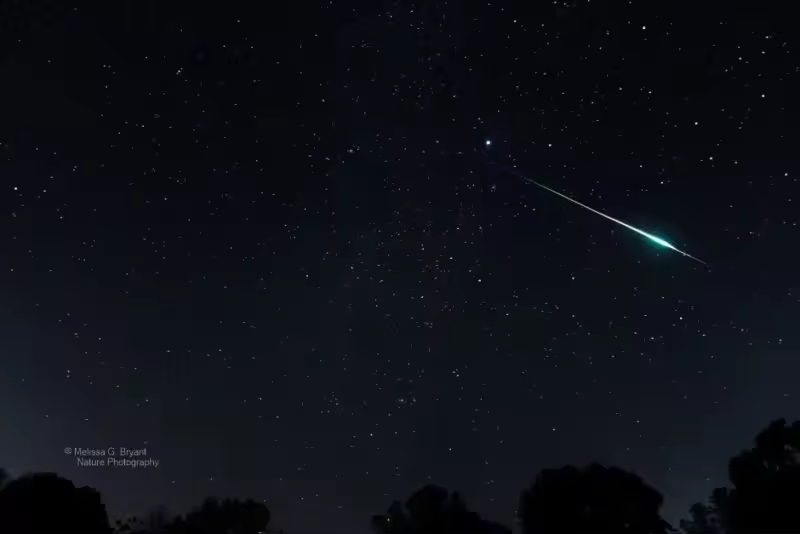 Melissa Bryant of Bowman, Georgia, watching the meteor shower on November 17, 2020.
Early to Mid-December - Geminid Meteor Shower
Active Period: December 4 - 17.
Peak Time: Predicted at 05:44 UT on December 14, 2026. Optimal viewing covers the entire night from evening on December 13 until dawn on December 14, with good activity also likely on surrounding days (December 11-16).
Parent Body: Asteroid 3200 Phaethon, a unique object possibly classified as a "dormant" or "extinct" comet. This is the only major meteor shower originating from an asteroid rather than a comet.
Radiant Point: Located in the constellation Gemini, near the bright star Castor (Right Ascension 07:28, Declination +33°). It rises in the northeast in the evening, remains visible all night, and reaches near the zenith around 2 a.m.
Best Viewing Regions: Visible worldwide, with superior conditions in the Northern Hemisphere. The Southern Hemisphere can also observe after midnight, though at lower rates.
Speed: Medium-slow, about 35 km/s (22 mph), making the meteors easier to observe and photograph.
ZHR (Zenithal Hourly Rate): The theoretical peak is exceptionally high, up to 150. It is one of the strongest and most reliable annual meteor showers, often surpassing even the Perseids.
Meteor Characteristics: High and steady rates with a prolonged peak period. Meteors are bright and colorful - commonly yellow or white, sometimes appearing green, red, or blue.
Observing Conditions:
- Lunar Interference: Minimal. During the peak (December 13-14), the Moon will be a Waxing Crescent at 21% illumination.
- Impact: The Moon will set early in the evening, leaving the entire midnight-to-dawn golden observing window completely dark. Even evening observations are largely unaffected.
- Key Advantage: All-night, moon-free viewing combined with the shower’s high and consistent rates makes 2026 an exceptional year for Geminid observations.
Observing Tips:
- Best Observing Window: From evening on December 13 until dawn on December 14.
- Session 1 (Evening/Early Night): A few hours after sunset until midnight. Ideal for spotting rare Earth-grazing meteors and enjoying greater comfort.
- Session 2 (Late Night/Early Morning): Midnight until sunrise, especially around 2 a.m., when the radiant is highest and meteor rates peak.
- Viewing Direction: The radiant is in the east/northeast (Gemini). No need to stare directly at it - lie back and look toward the most open area of the sky. Meteors can appear in any direction.
- Patience is Key: Although rates are high, meteors may arrive in clusters with intermittent lulls. Observe for at least one hour for the best experience.
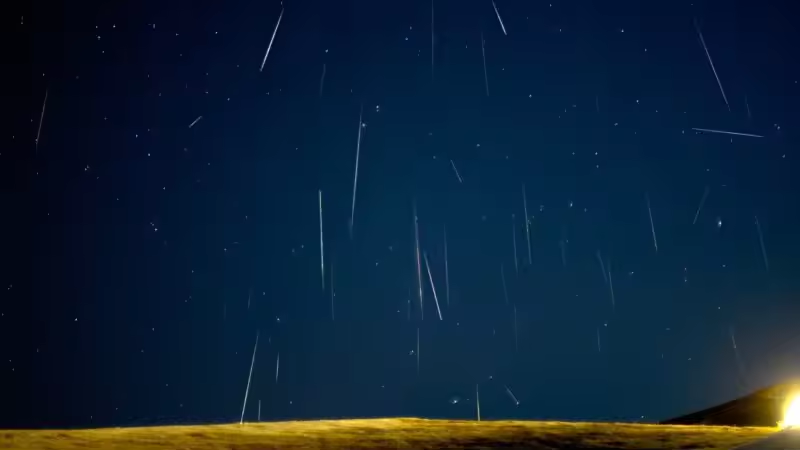 Composite image shared by Jan Curtis of Cheyenne, Wyoming, taken on the morning of December 14, 2023 - the day after the Geminid meteor shower peak.
 Google
 Amazon
There are no customer reviews yet . Leave a Reply !