


Table of Contents
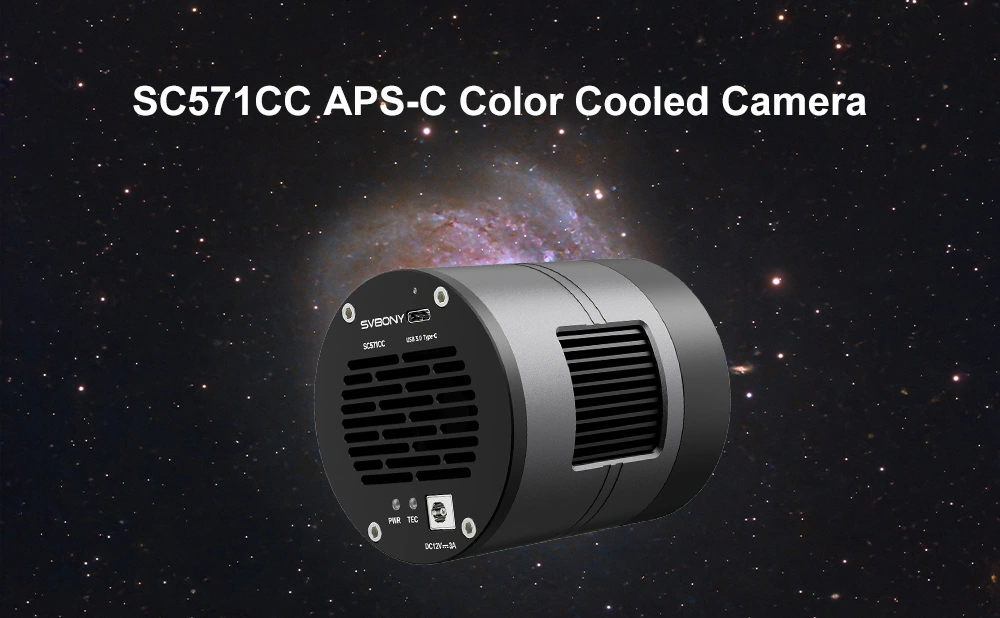
SC571CC APS-C Color Cooled Camera for Astrophotography
As deep-sky photography continues to evolve, our pursuit of equipment has never ceased - cleaner signals, a wider field of view, and a more relaxed creative experience.
Today, we are pleased to officially introduce to all astrophotography enthusiasts: the SC571CC color cooled camera.An APS-C format camera meticulously designed for deep-sky photography, incorporating a large sensor, back-illuminated sensor, and a highly efficient cooling system.
Sensor and Imaging
At the heart of the SC571CC is a large APS-C back-illuminated CMOS sensor. This sensor size was intentionally chosen to strike an ideal balance between common one-inch sensors and full-frame devices. It offers a wide field of view while remaining relatively friendly to the accuracy requirements of telescope optics and equatorial mounts.
The sensor has 6244 × 4168 pixels, with a pixel size of 3.76 micrometers. This combination is suitable for wide-field imaging as well as medium-focal-length telescope systems. The smaller pixels help preserve fine structural details, while the large sensor size easily frames large areas of deep-space targets, such as emission nebulae, large molecular clouds, and galaxy clusters.
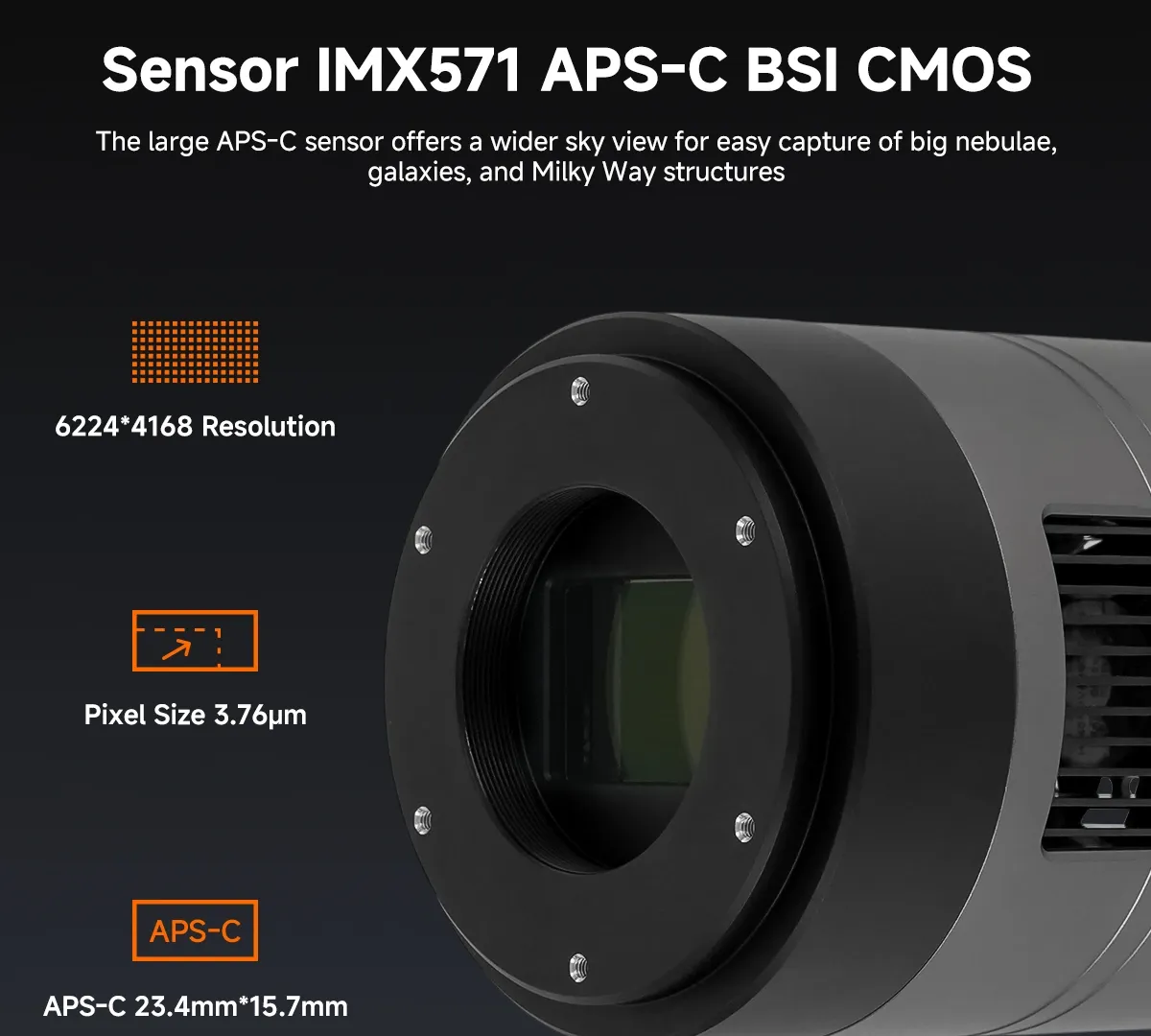
The back-illuminated structure further enhances the sensor's light sensitivity. By moving the circuitry behind the photosensitive layer, more photons are effectively captured by each pixel. This design directly benefits deep-sky photography, where signal levels are generally low.
The SC571CC boasts a quantum efficiency exceeding 80%, further reinforcing the camera's efficient light-capturing capabilities. High quantum efficiency translates to superior signal-to-noise ratio performance, which is particularly crucial when photographing faint nebula structures or galaxies with low surface brightness.
Cooling Design and Noise Control
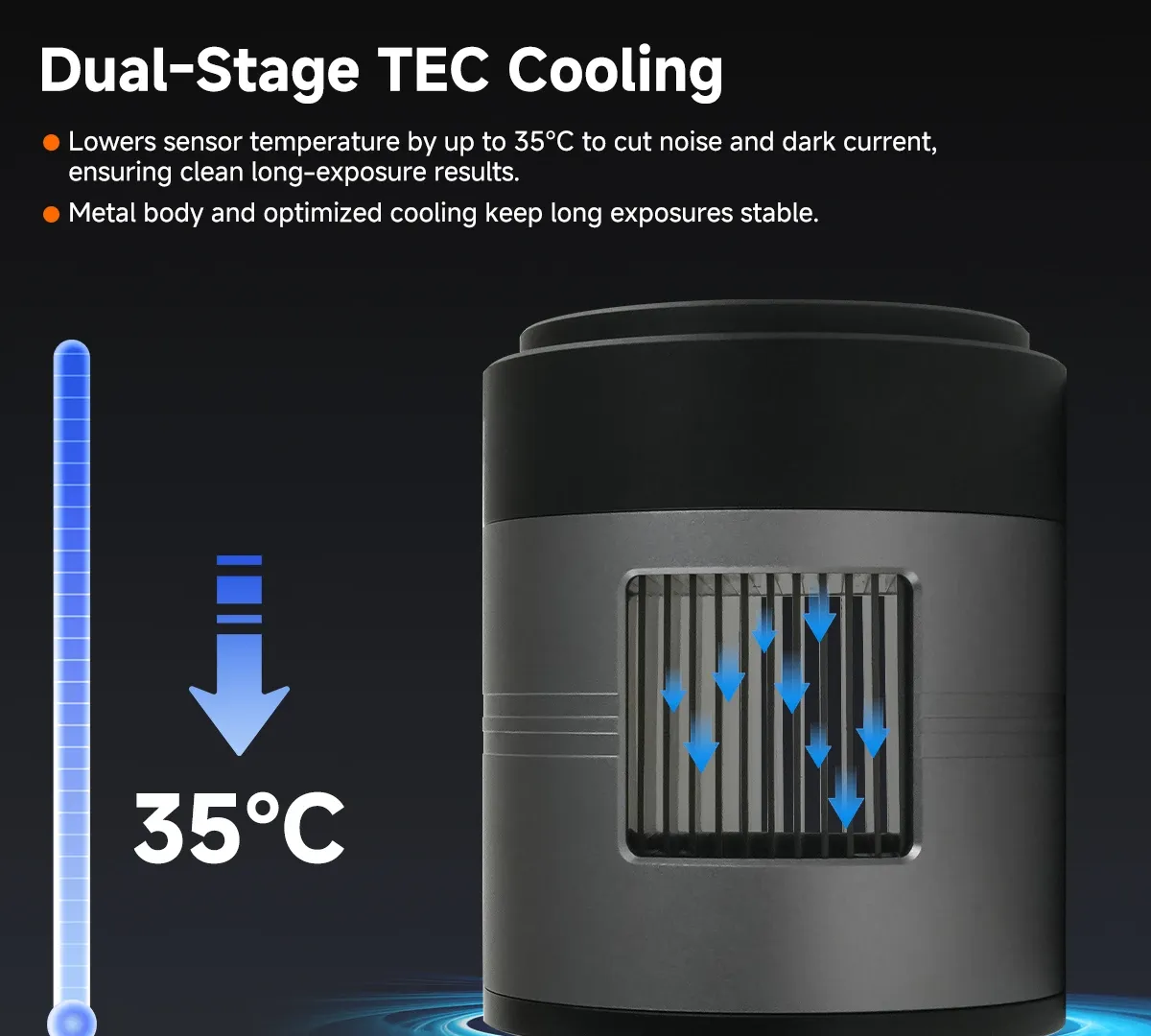
Thermal noise is one of the main limiting factors in long-exposure astrophotography. As exposure time increases, sensor temperature becomes the primary source of noise. To address this, the SC571CC employs a two-stage thermoelectric cooling system.
This system can reduce the sensor temperature to 35°C below ambient temperature. Precise temperature control stabilizes dark current and improves the consistency of individual frames during long exposures. From a practical perspective, this allows photographers to more reliably capture calibration frames and reduce residual artifacts during post-processing stacking.
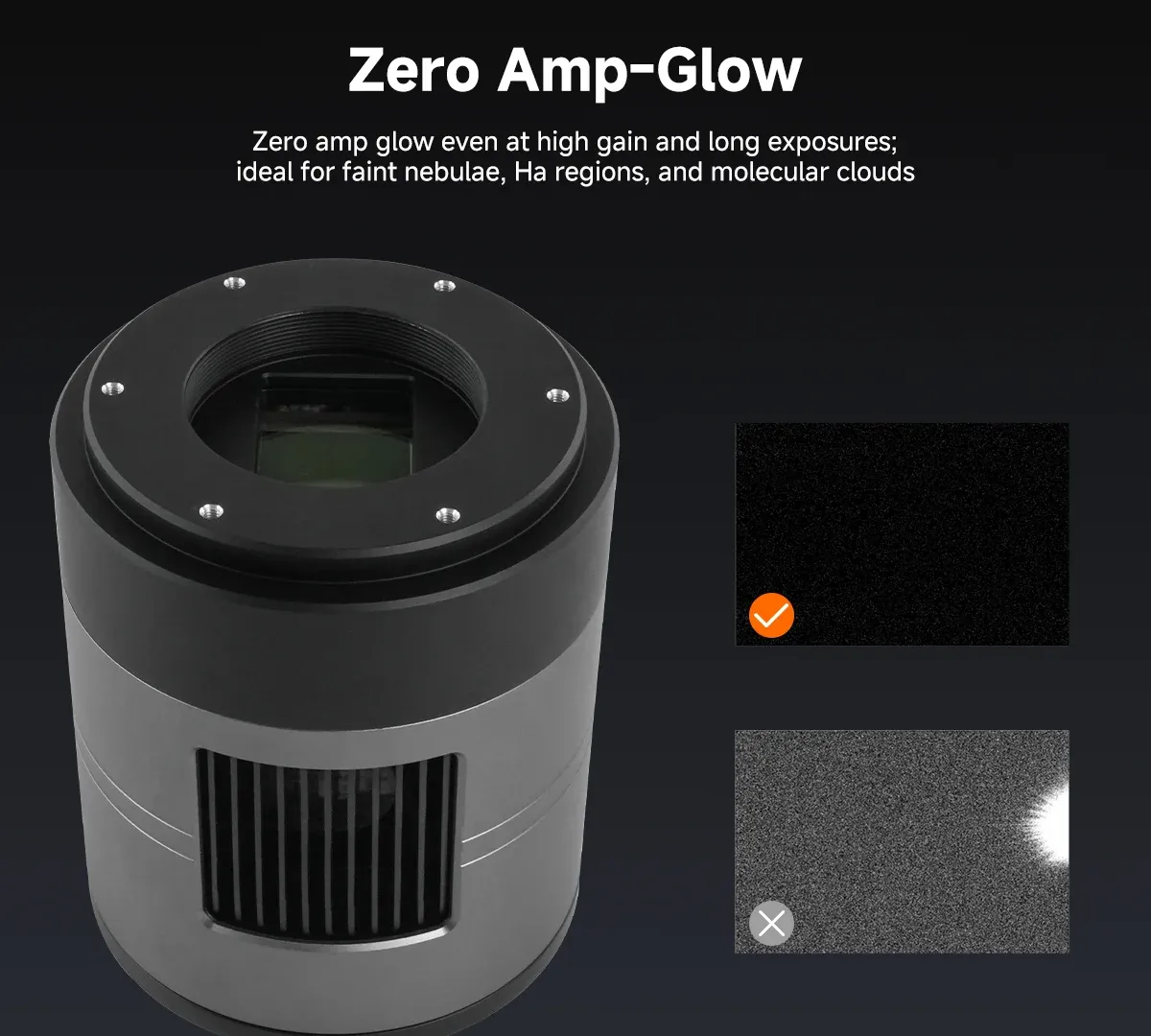
Simultaneously, the camera features a zero-glow design. During long exposures, glow often appears at the edges of the CMOS sensor due to readout circuitry. The SC571CC solves this problem at the hardware level, reducing reliance on post-processing corrections, preserving a cleaner raw signal, and simplifying the data processing workflow.
Dynamic Range and Bit Depth
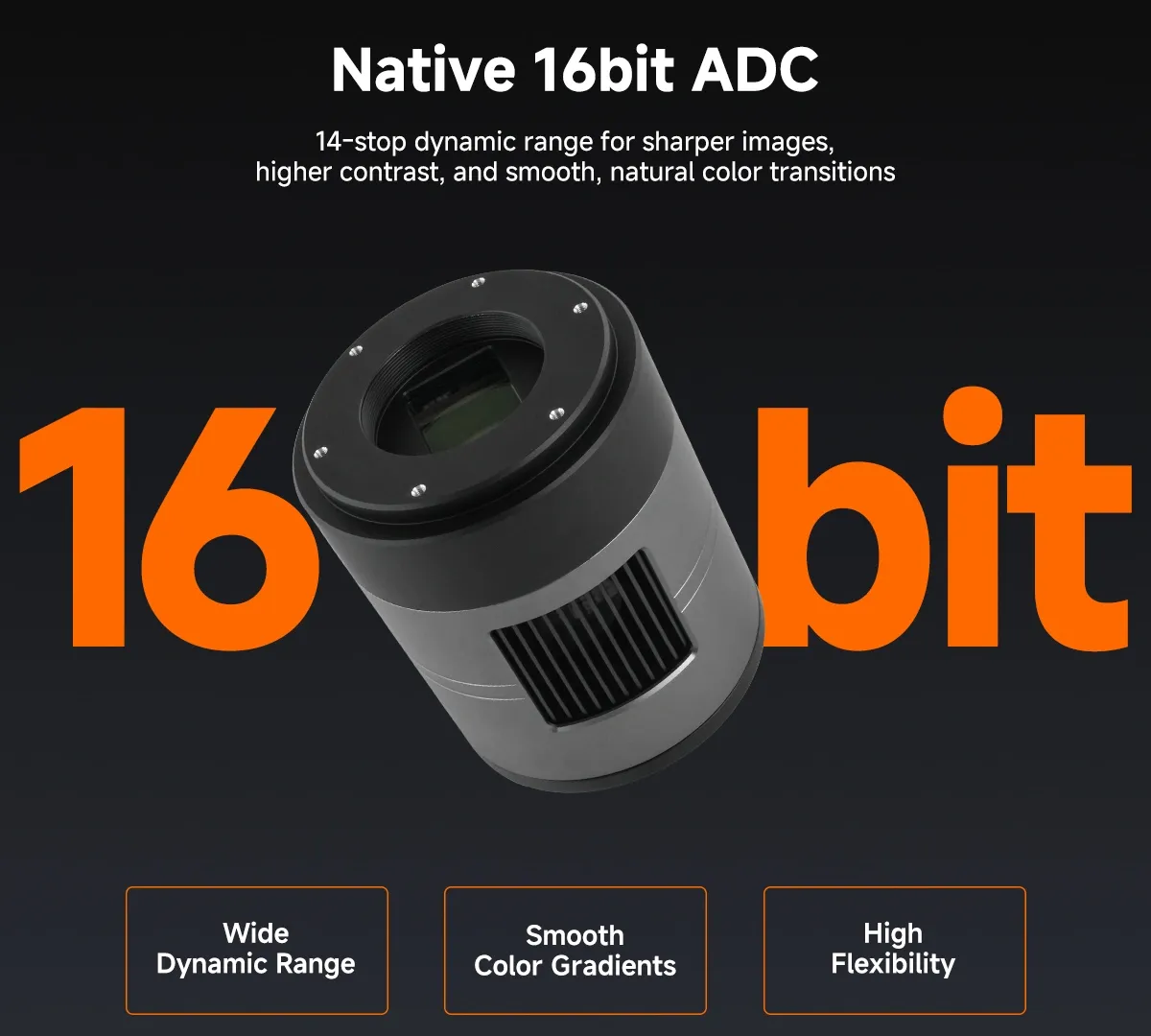
The SC571CC utilizes a 16-bit analog-to-digital converter, enabling it to record extremely subtle differences in brightness across a wide tonal range. High bit depth is crucial in astrophotography because a single image may contain both extremely faint nebulae and extremely bright stellar cores.
16-bit data captures smoother gradations and reduces quantization artifacts. This is particularly useful in post-processing stages such as stretching, color calibration, and background extraction. Higher data depth allows photographers to fully extract shadow information without sacrificing highlight detail.
This design reflects the camera's focus on deep-sky photography workflows, where data integrity and processing flexibility are as important as raw sensitivity.
Optical Path and Color Imaging
As a One-Shot Color (OSC) camera, the SC571CC integrates a color filter array onto the sensor. This simplifies the shooting process, eliminating the need for filter wheels and sequentially shooting different filters. For many users, this translates to faster setup and more efficient data acquisition, particularly suitable for working within limited clear night windows.
Svbony has equipped the sensor with a carefully designed protective window to ensure optical sharpness and color accuracy. Maintaining a clean optical path is crucial when using fast optical systems or shooting wide-field applications, as even minor imperfections can introduce halos or flare.
The camera's color response is optimized for astronomical targets, accurately rendering emission lines and broadband characteristics. When used with filters such as dual narrowband filters, the SC571CC also performs exceptionally well in light-polluted environments.
Mechanical Design, Connectivity, and Software Integration
From a mechanical design perspective, the SC571CC follows the classic design of modern cryogenic astronomical cameras. Its compact housing houses the cooling system, electronics, and sensors, making it suitable for both refracting and Newtonian telescope systems.
The camera connects via a USB-C interface, ensuring stable, high-speed data transfer during extended shooting sessions. As sensor resolution and file sizes increase, reliable connectivity becomes increasingly important. USB-C also simplifies cable management and improves compatibility with newer control computers. Its power supply design supports the cooling system without over-reliance on external power, making it ideal for mobile shooting and remote stations.
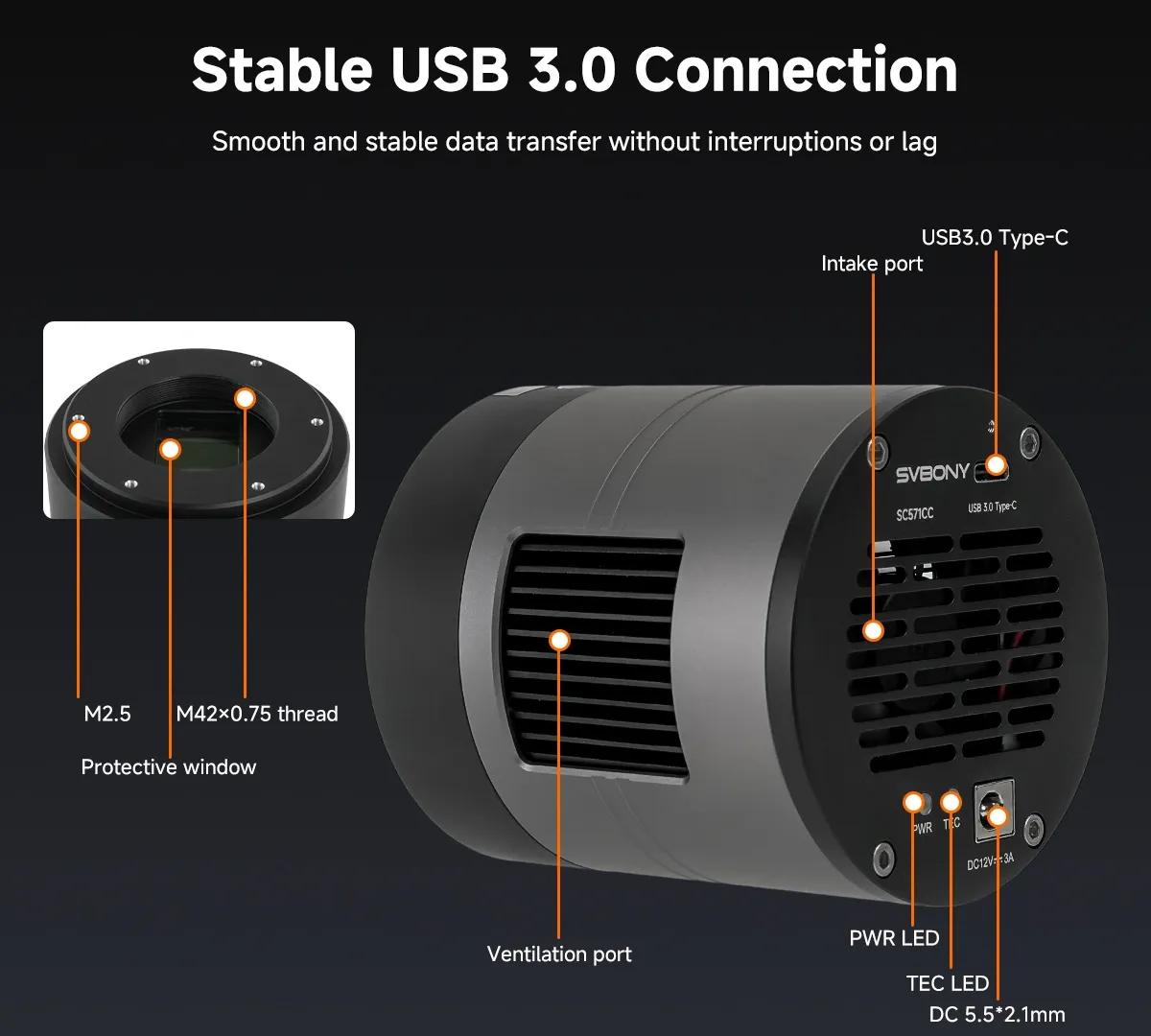
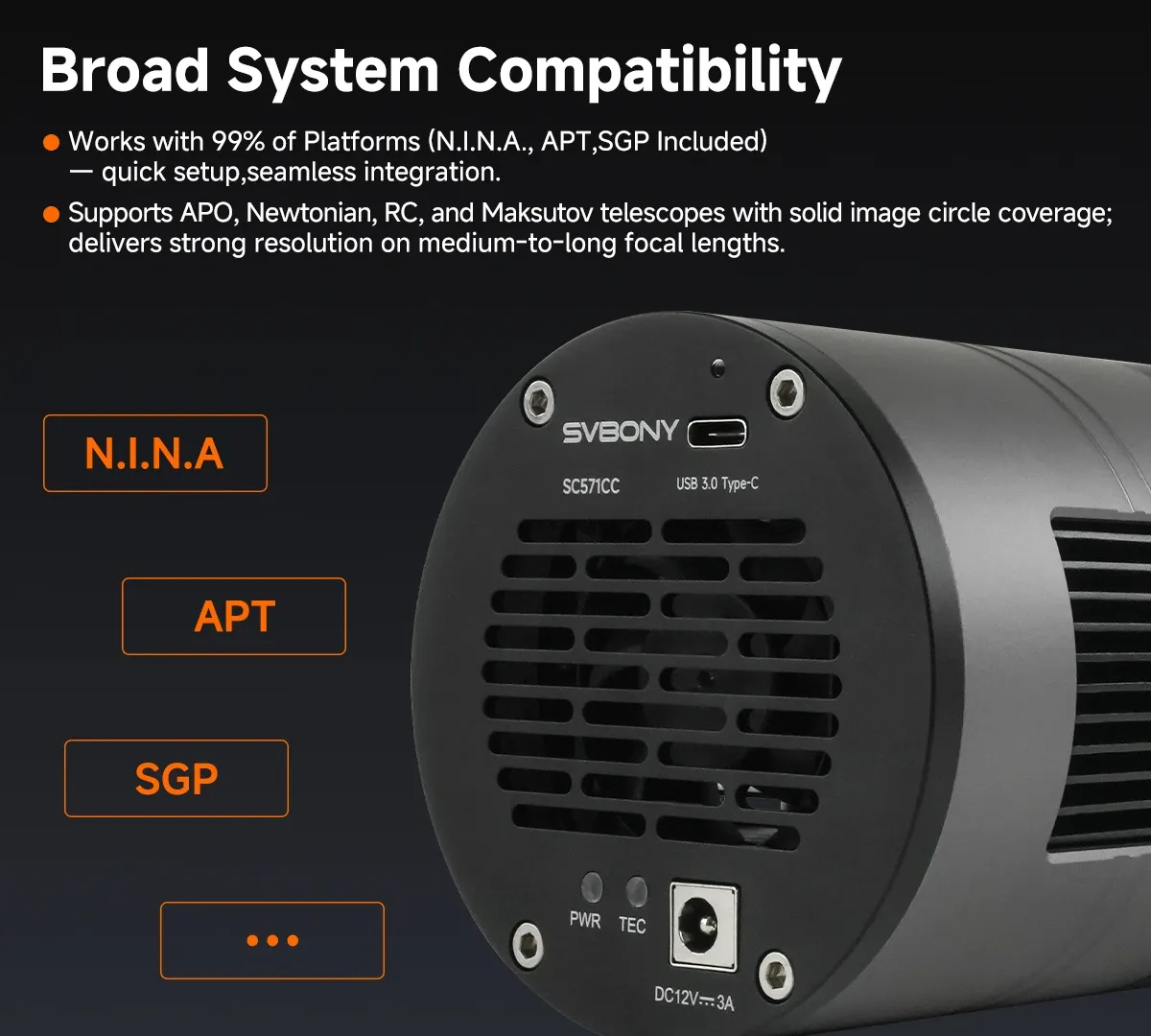
The SC571CC integrates seamlessly with mainstream astrophotography software platforms, supporting control via applications such as N.I.N.A., APT, and Sequence Generator Pro. Users can manage exposure sequences, temperature adjustments, dithering, and guiding coordination through these platforms. The camera's cooling system and sensor settings can be easily integrated into automated workflows without relying on dedicated software.
Born for Deep-Sky Imaging
The SC571CC's design choices are closely aligned with the needs of deep-sky photographers:
- Large nebulae: Benefiting from the sensor's wide field of view.
- Galaxy imaging: Benefiting from a balance between pixel size and resolution.
- Long exposure projects: Fully utilizing stable cooling and low-noise characteristics.
Because the SC571CC prioritizes data quality and sensor efficiency, it supports various imaging methods, including:
- Wideband RGB color photography
- Narrowband photography with dual narrowband filters
- Stitching projects requiring consistent frame characteristics
For deep-sky photographers looking to upgrade from an entry-level device or seeking a cost-effective, high-performance color cooled camera, the Svbony SC571CC is undoubtedly a new option worth considering.
Enjoy your stargazing!
Comments (0 )
Leave a Reply
 Google
 Amazon
There are no customer reviews yet . Leave a Reply !