
Table of Contents
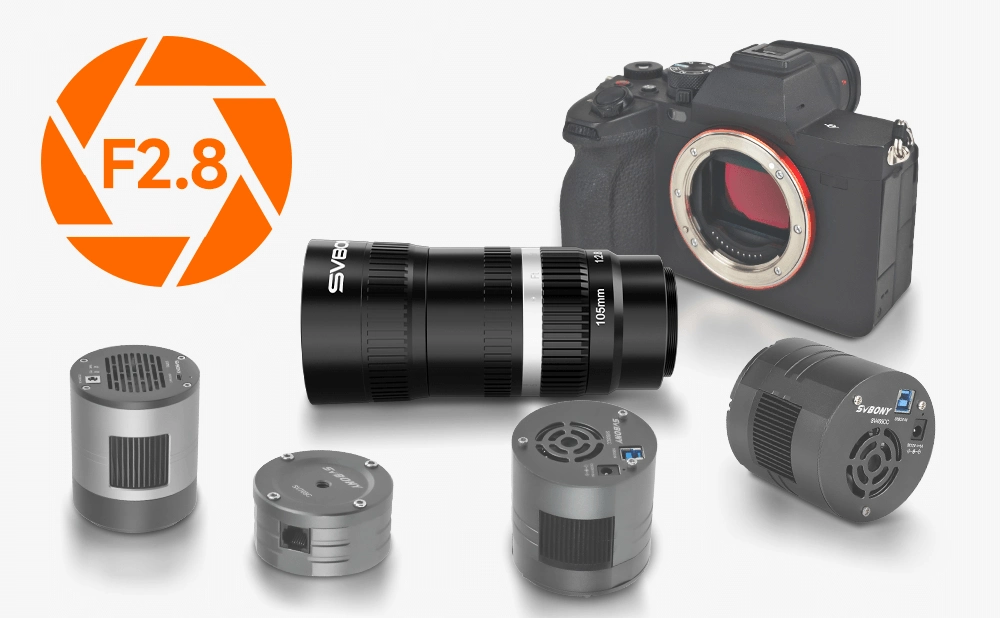
SV535 F2.8 APO Astro Camera Lense Performance Review
In the traditional world of astrophotography, high performance is often balanced by bulkiness and complex operation. The SVBONY SV535 was born to completely overcome these limitations. Its consistent design philosophy is to make professional astrophotography simple, lightweight, and accessible to everyone.
The SV535 is an innovative, full-frame, ultra-lightweight astrograph. Weighing just 482g, it packs professional-grade optical performance into a compact body comparable to a regular camera lens. With an ideal 105mm f/2.8 lens and an APO achromatic optical system consisting of seven elements in five groups, including one ED lens, it delivers stunning astrophotography with edge-to-edge sharpness, clean star images, and rich colors. It easily fits into your everyday camera bag, bringing astrophotography from professional observatories to your balcony, garden, or any travel destination.
From enthusiasts trying astrophotography for the first time to experienced astrophotographers looking for the ultimate lightweight solution, the SV535 will be the ideal partner for your space exploration. This is more than just a telescope, it's a complete portable astrophotography solution.
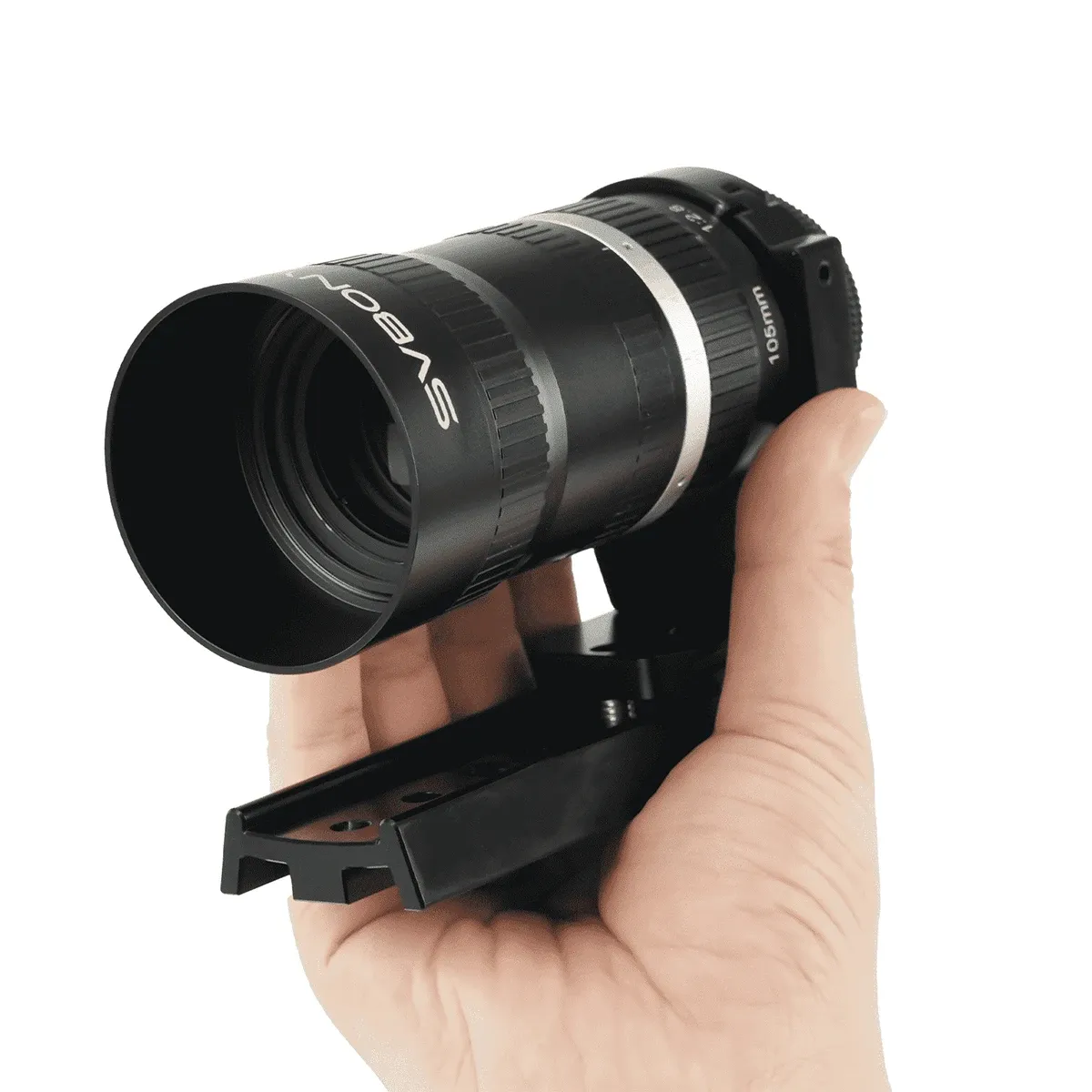 SV535 Ultra-Compact Astronomical Telescope (Front-Mounted Sunshade)
Innovative Lightweight Design - 482g Palm-Sized, Powerful Performance
Professional Equipment in the Palm of Your Hand: How an Ultra-Light 482g Body Brings Professional Astro Photography into Everyday Life
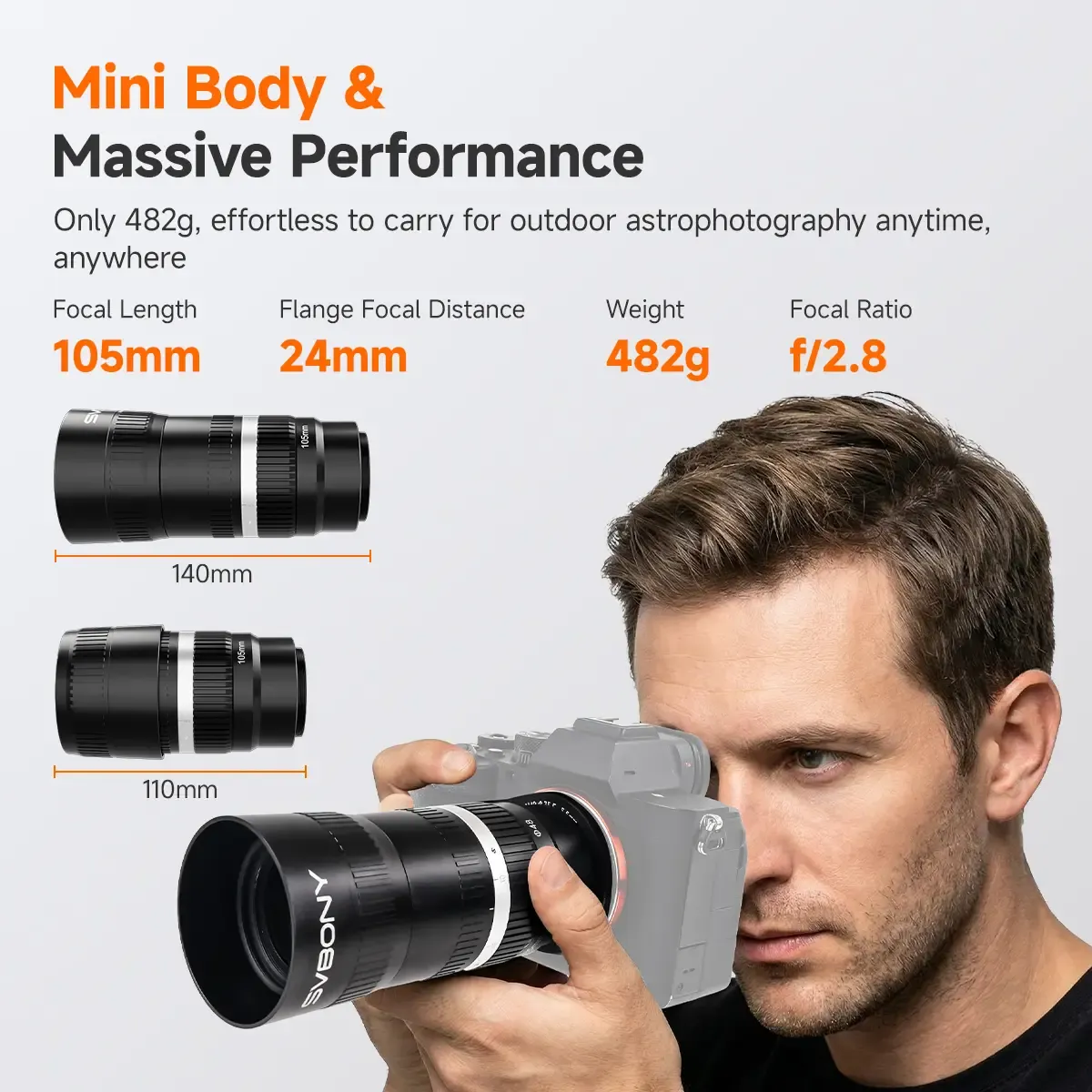 SV535 Ultra-Lightweight Design
Traditional astrophotography equipment has been intimidating for many people due to its size and weight. The SV535 completely changes this - weighing just 482g, it's lighter than a 500ml water bottle. Thanks to its all-in-one compact design, the overall size is comparable to that of a typical medium telephoto lens, making it easy to store in the side pocket or compartment of any camera bag.
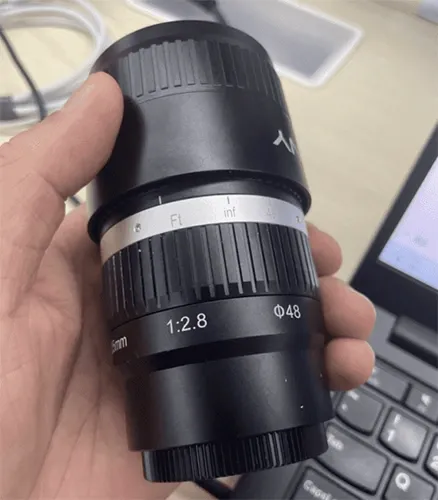 SV535 fits comfortably in the palm of your hand.
The detachable hood design is a major factor in portability: it effectively blocks stray light and improves contrast during shooting. When storing, the hood can be attached backwards to reduce the lens's volume by approximately one-third, allowing it to easily fit into the included soft case. This design not only saves space but also makes it compatible with a variety of camera bags. 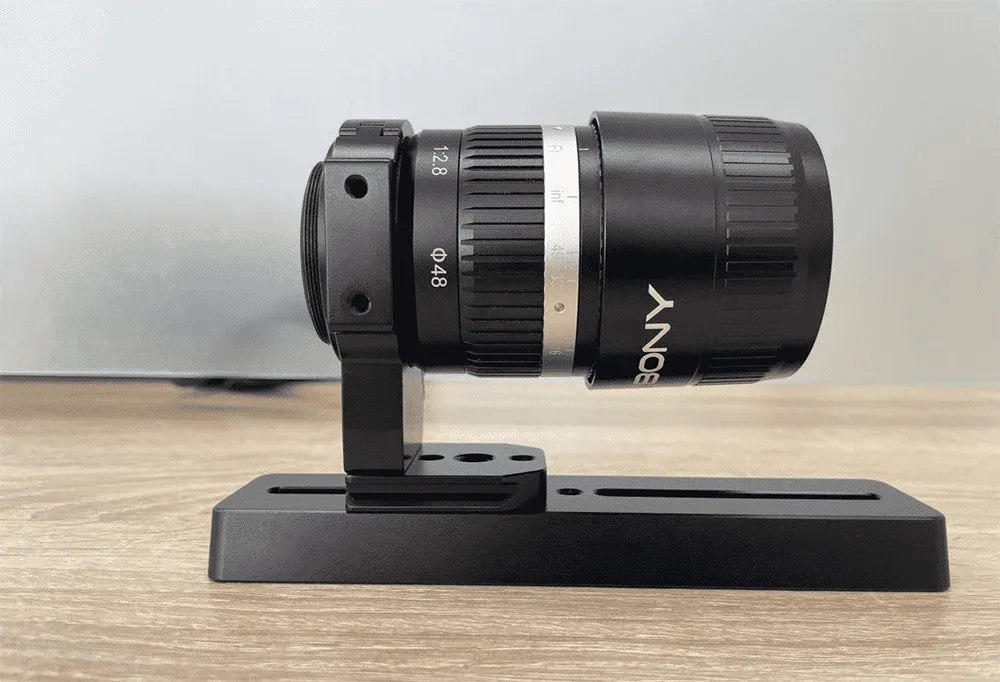
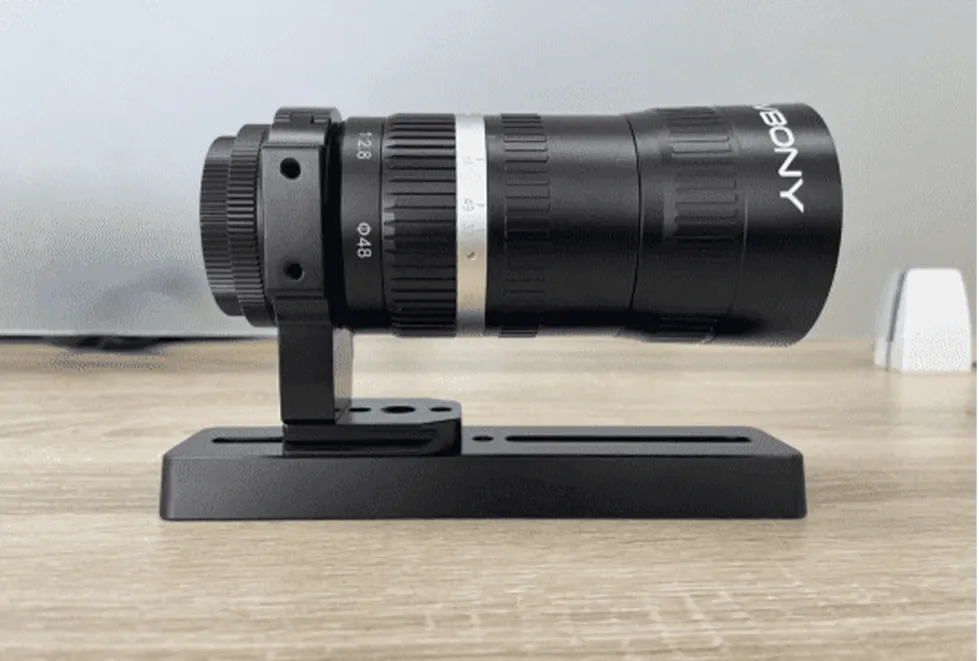 SV535 Hood Installed Reversely SV535 Hood Installed Forward
This lightweight design completely removes limitations on astrophotography. There's no need to carry heavy equipment, and you're no longer tied to a fixed observation location. Whether you're taking spontaneous photos on your balcony, serious observations in your suburban garden, or encountering the Milky Way while traveling, the SV535 lets you take it out, set it up quickly, and start shooting right away. Capturing fleeting astronomical phenomena like comets and meteor showers has never been easier, truly enabling the free-flowing experience of "astrophotography, whenever you think of it."
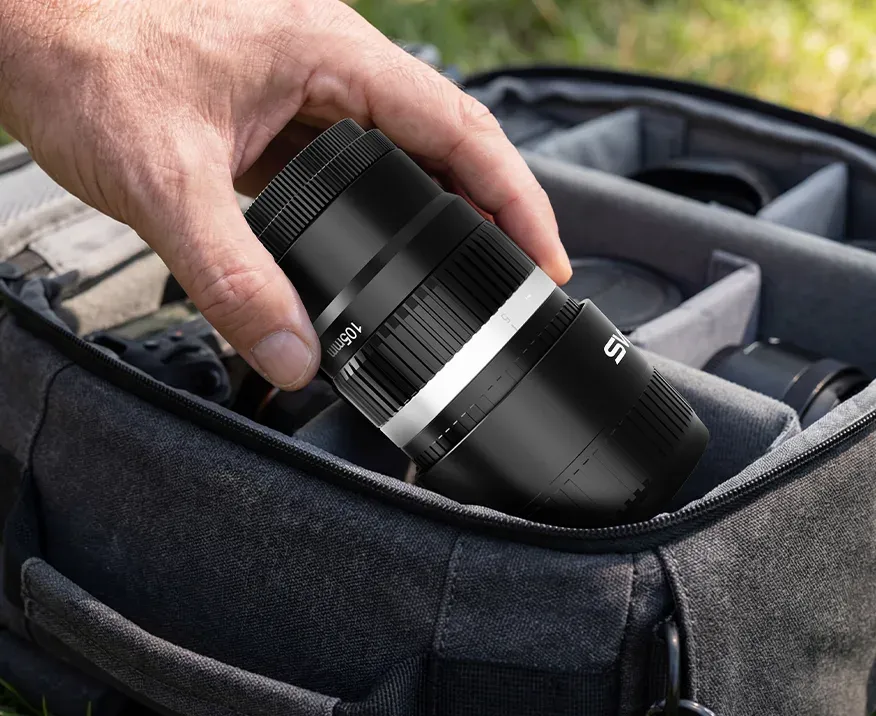 SV535 Camera Bag
Professional Optical Core Analysis and Scientific Verification - APO Lens Configuration of 7 Elements in 5 Groups, Including 1 ED lens
"An optical miracle hidden in a compact body: How an optical system with 7 elements in 5 groups, including 1 ED lens, achieves professional-grade image quality"
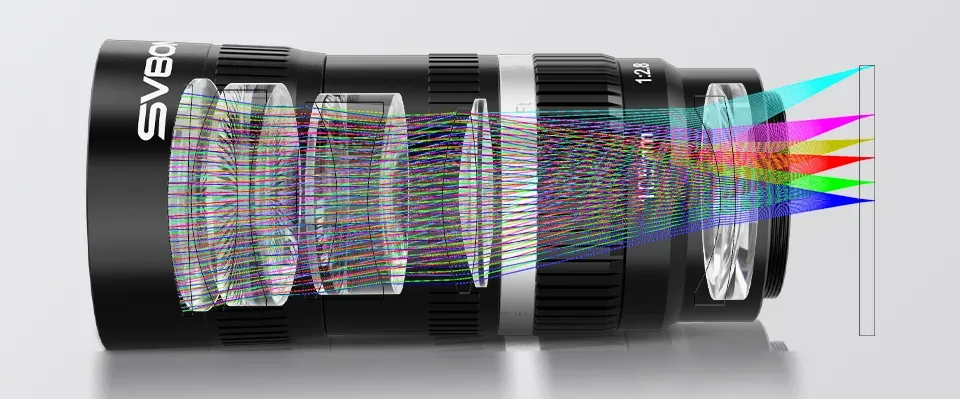 SV535 Optical Configuration
The SV535's mere 57mm diameter lens barrel houses a precision optical system: a 5-group, 7-element lens structure, including one extra-low dispersion (ED) lens, forming an apochromat (APO) optical system. Below are five optical performance verification charts that scientifically verify its outstanding performance:
Scientific Validation and Evaluation Chart for Optical Performance
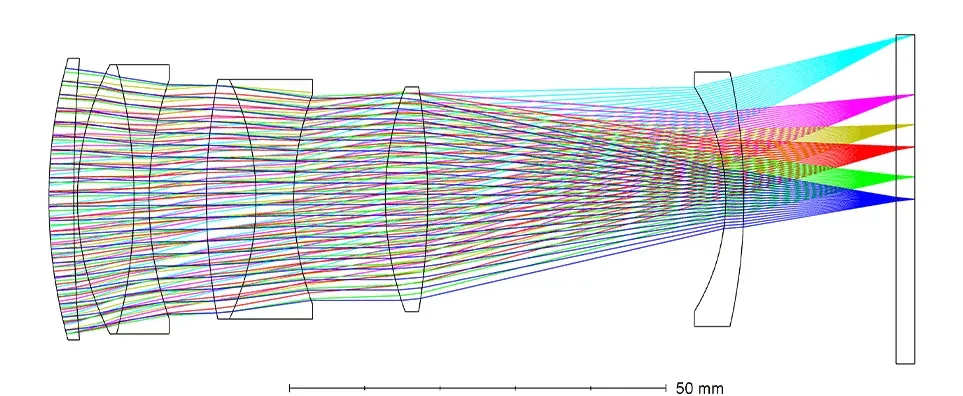
SV535 Optical Path Diagram with 5 Groups and 7 Lenses
It shows how light rays passing through a precisely calculated optical surface converge onto a flat focal plane.
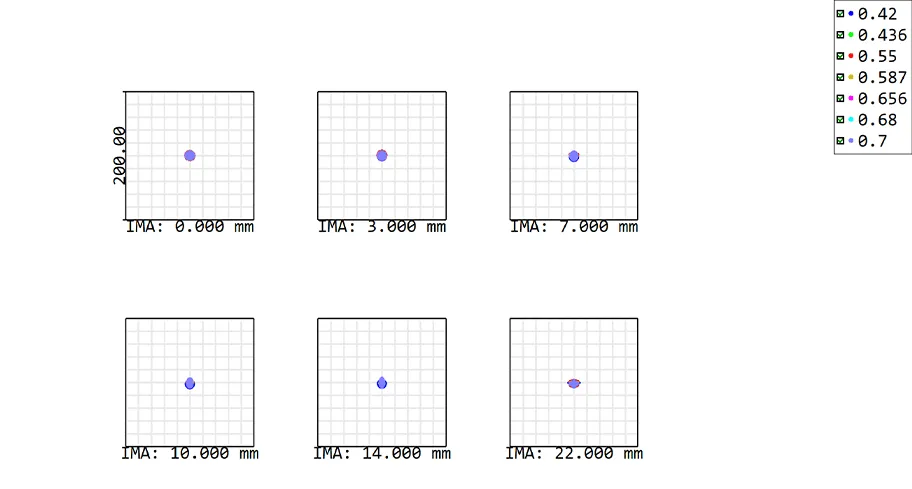
SV535 Spot Diagram
It describes how star images are distributed on the sensor: the more concentrated and smaller the spots, the sharper and more detailed the image.
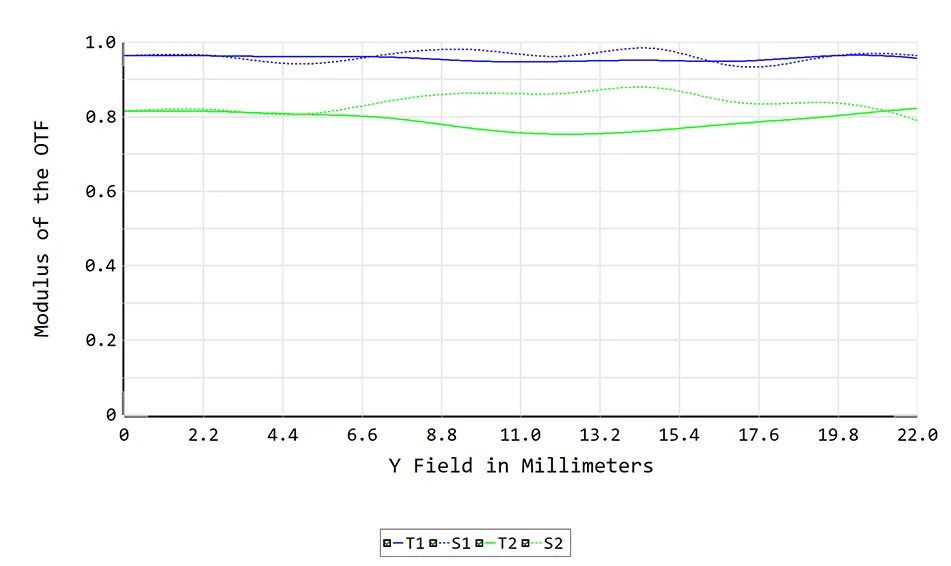
SV535 MTF VS FOV curve
This shows the lens resolution at each viewing angle. The smoother and higher the curve, the better and more uniform the resolution.
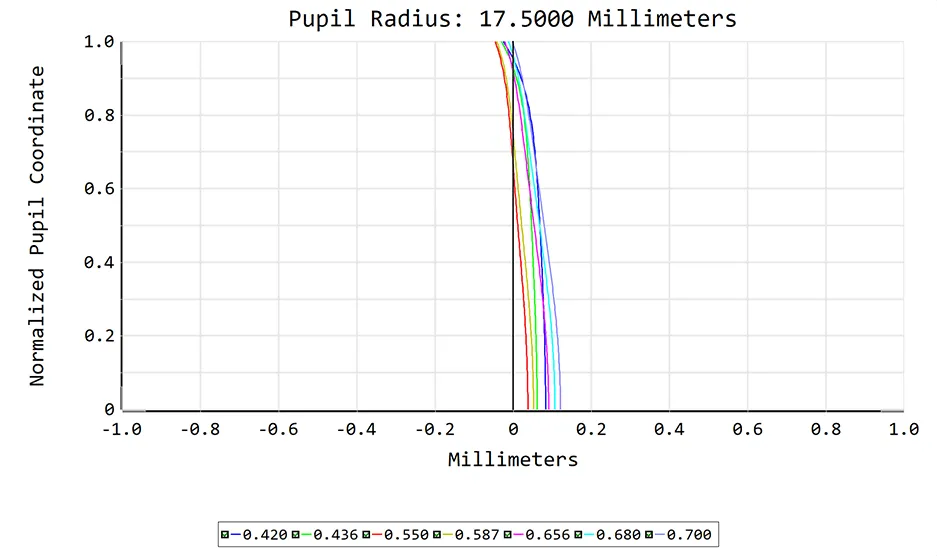
SV535 axial chromatic aberration curve
This shows the defocusing of light rays of different wavelengths.
- The horizontal axis is the amount of defocusing (smaller is better), and the vertical axis is the entrance pupil position.
- Each line represents a different wavelength of light. The flatter the curve and the closer the lines of different colors are, the better the chromatic aberration is controlled.
The SV535's on-axis chromatic aberration is almost always less than 0.1mm, demonstrating excellent chromatic aberration control.
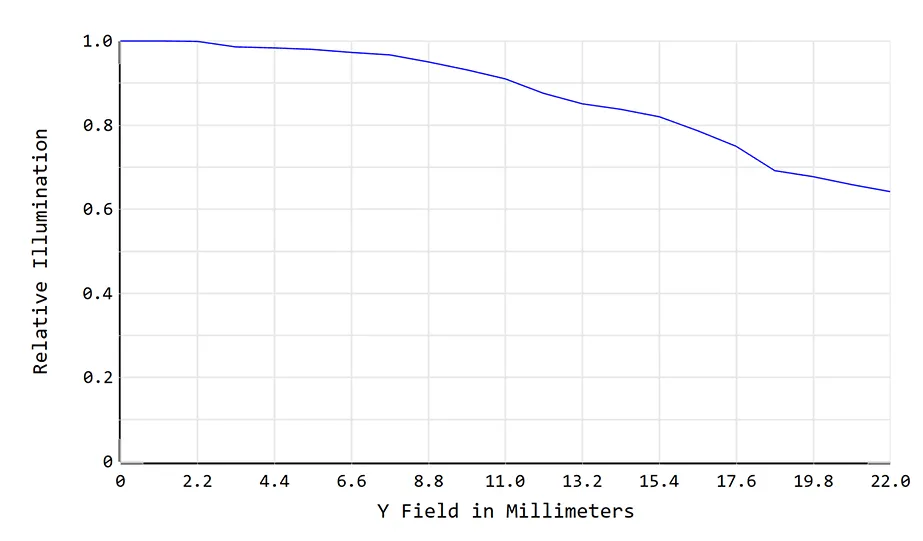
SV535 Relative Illuminance Chart
This graph shows the relative brightness distribution from the center to the edge of the image. The gradual dropoff and high brightness maintained even at the edges effectively control vignetting.
The core value of this optical system lies in its excellent aberration correction capabilities. The ED lens works in conjunction with other lens elements to significantly reduce chromatic aberration (color fringing), maintaining pure star colors from center to edge, providing excellent material for post-processing.
All lens surfaces are fully multi-coated (FMC), improving transmittance and significantly suppressing stray light reflections and ghosting within the lens. This flare suppression is particularly important when photographing subjects including a bright moon or bright stars, enhancing image contrast and preventing subtle details from being obscured by light fringing.
Ideal Parameter Combination - The Perfect Balance of a Large F2.8 Aperture and a 105mm Focal Length
"The perfect combination of efficiency and field of view: Why an F2.8 aperture and a 105mm focal length are the ideal combination for astrophotography."
The SV535's fixed F2.8 aperture is one of its core advantages. In astrophotography, the F-number determines light-gathering power. Compared to a typical F5.5 lens, it requires a quarter of the exposure time to achieve the same signal-to-noise ratio and detail level. This not only captures more faint details in a single frame and reduces the risk of stellar blurring, but also enables deep space photography in urban light-polluted environments - sufficient signal collection time is required, reducing the impact of light pollution.
The 105mm focal length was chosen to complement the large aperture. It provides a full-frame, wide field of view, considered the "sweet spot for wide-field deep space photography," achieving the perfect balance between field of view and subject detail:
- Sufficiently wide field of view: Easily captures large subjects such as the Orion Nebula (M42) and its surrounding Barnard's Loop, the combination of the North American Nebula (NGC7000) and the Pelican Nebula (IC5070), and the dense star fields of the Milky Way.
- Sufficiently focused field of view: Captures medium-sized objects such as the Andromeda Galaxy (M31) and the Trifid Nebula at a reasonable size, clearly revealing the details of their central structures rather than just being dots in the sky.
This balance makes the SV535 a highly efficient lens, allowing users to capture most popular deep space objects without frequently changing equipment, greatly simplifying shooting planning and equipment preparation.
Full System Compatibility - Seamless Connection from Mirrorless Camera to Equatorial Mount
"Connect to your photography world with one lens: Building a barrier-free compatibility ecosystem from mirrorless cameras to equatorial mounts."
The SV535's design philosophy is to minimize user barriers, as reflected in its comprehensive compatibility design.
High Camera Compatibility
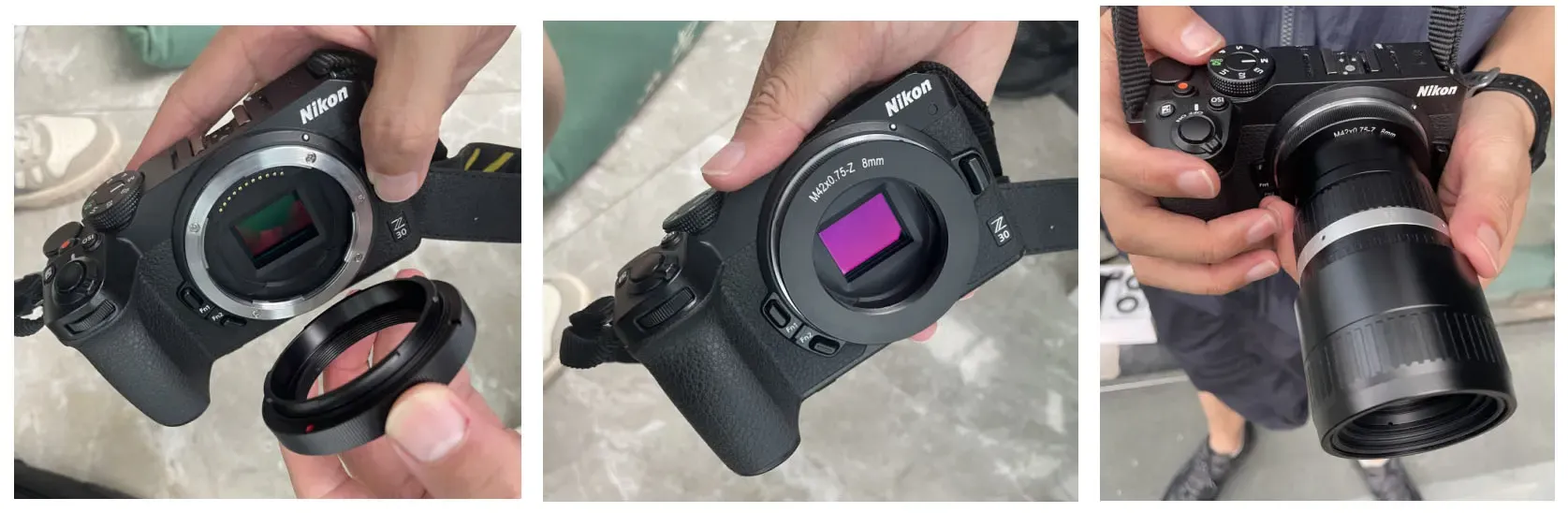
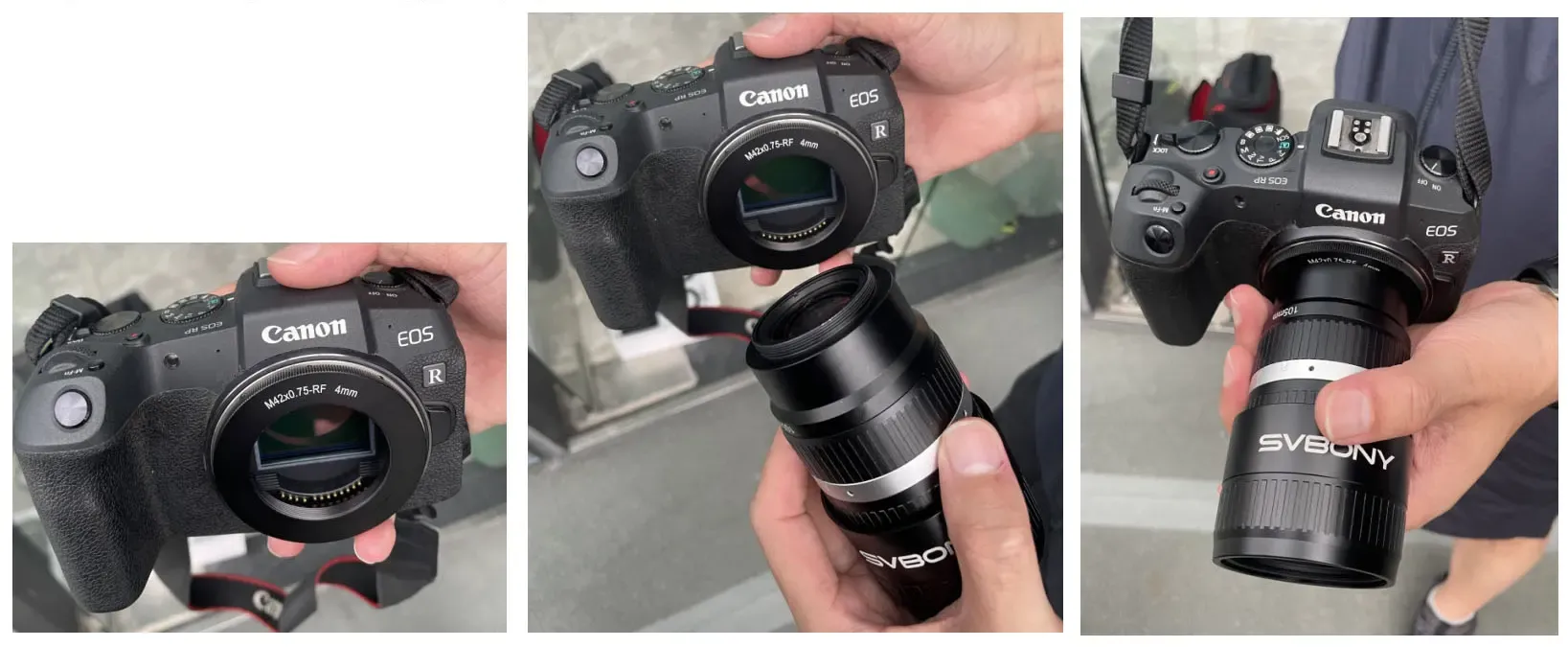
The rear end of the lens features an M42 x 0.75 external thread, a standard feature in the astronomy field, making it compatible with all astronomy cameras. The product comes standard with a Sony E-mount adapter ring, allowing for instant connection to all Sony mirrorless cameras. Optional adapter rings for Canon RF mount and Nikon Z mount are also available to meet the needs of a wider range of users.
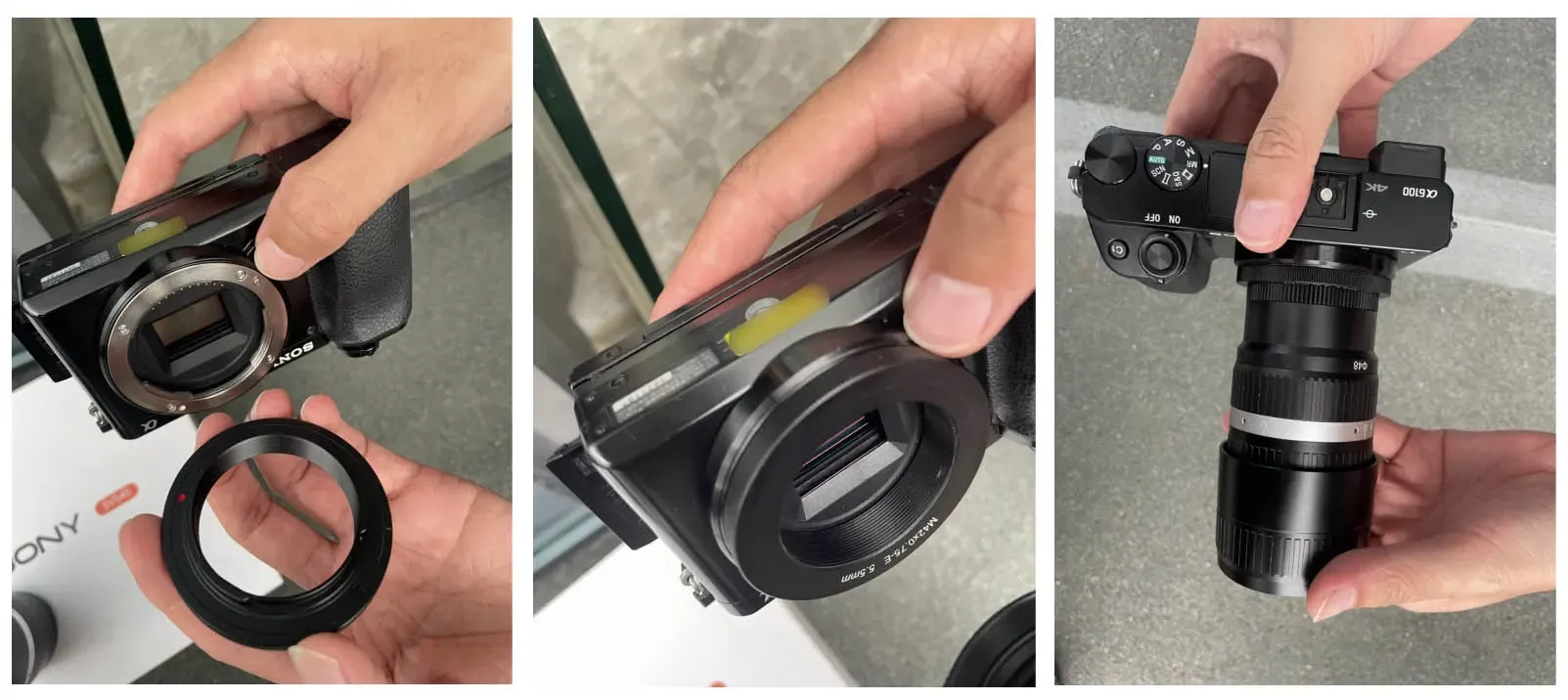
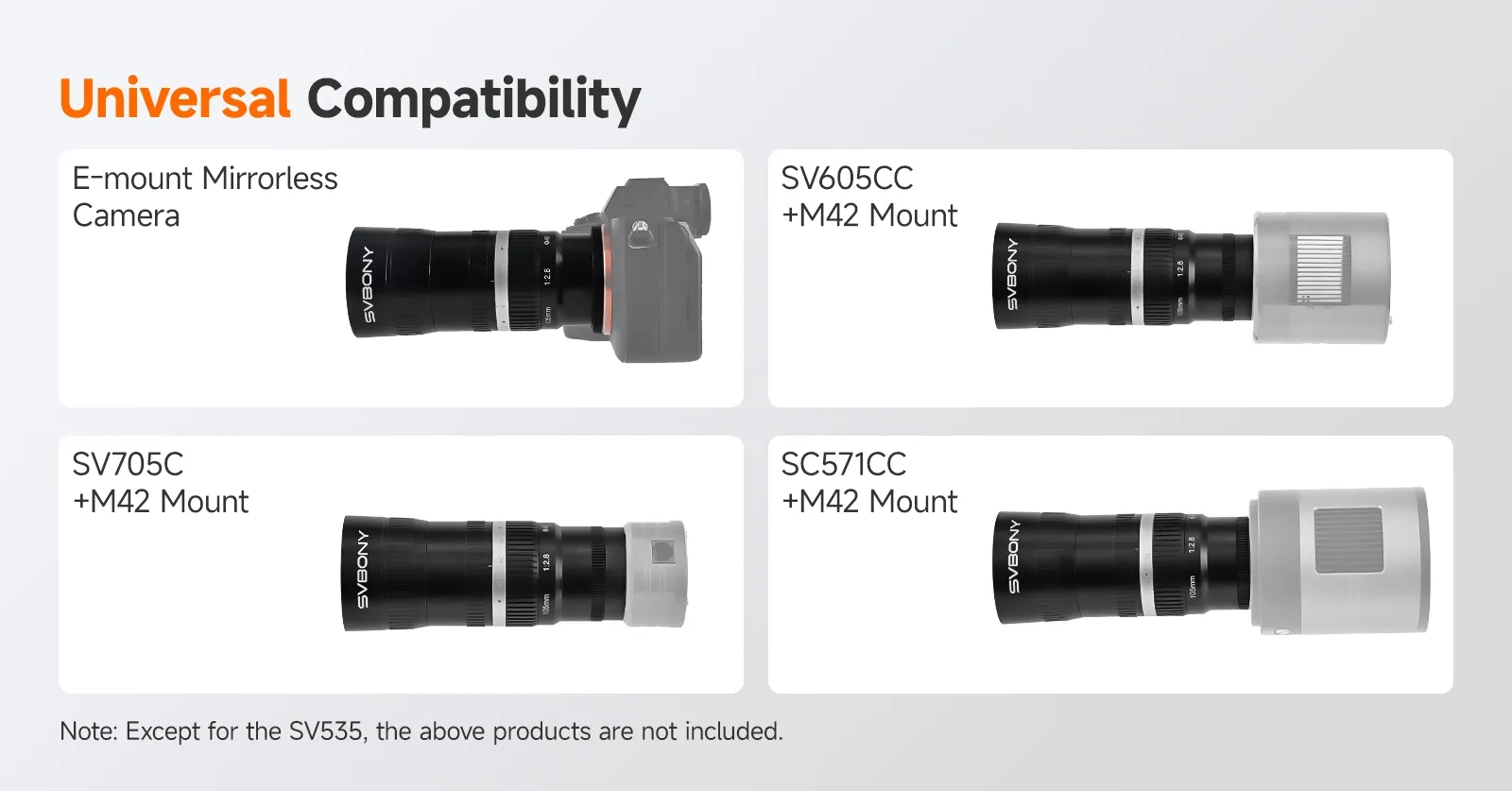 Demonstration of how to connect the SV535 camera
The SV535 Astrograph has a back focus of 24mm.
When combined with a planetary or cooled camera: the standard M42 extension tube (6.5mm) + the extension tube (11mm) that normally comes with the planetary or cooled camera + the flange focal distance of the camera itself (usually 6.5mm) = 24mm.
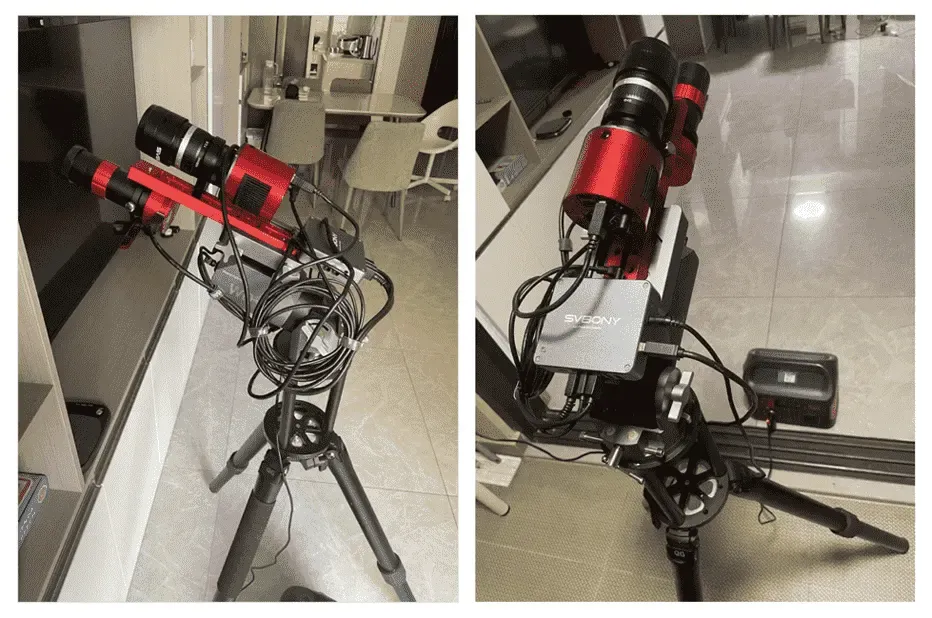
SV535 Astrograph and Astronomical Camera Combination
When used with a mirrorless camera:
- Sony mirrorless cameras: (E-mount adapter ring included) The standard Sony E-mount adapter ring (5.5mm) + the flange focal distance of the Sony mirrorless camera itself (18.5mm) = 24mm.
- Nikon mirrorless cameras: (Z-mount adapter ring must be purchased separately)
- Canon mirrorless cameras: (RF mount adapter ring must be purchased separately)
High Mount Compatibility
The SV535 comes standard with two types of dowel tail plates: a standard Arca-Swiss quick-release plate and a Vixen dowel tail plate. This allows you to do the following without the need for an additional adapter plate:
- Directly attach and secure to the Arca quick-release clamps on most photographic tripods and panoramic heads.
- Directly attach to the Vixen dowel tail groove on astronomical and large equatorial mounts.
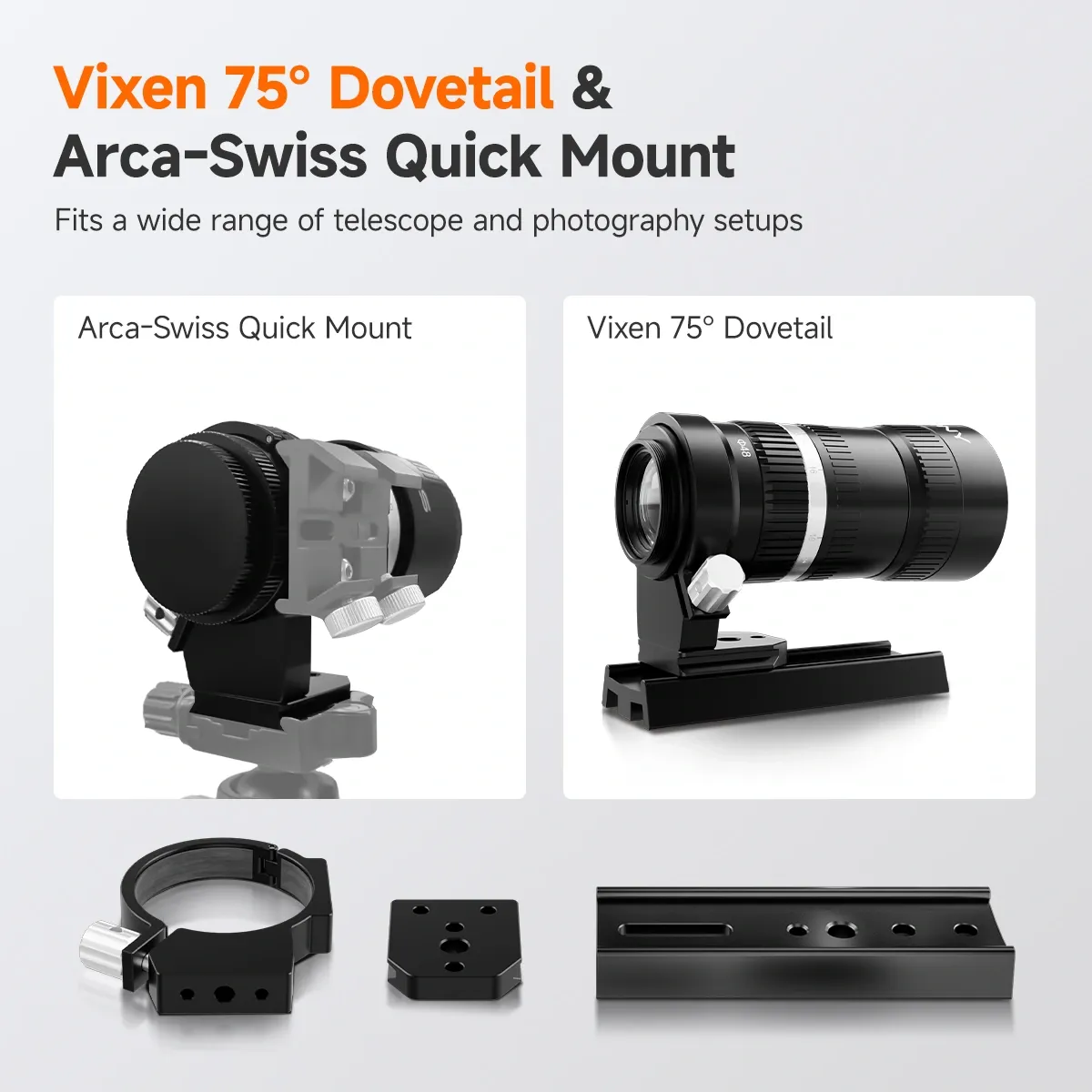 Two types of mounting plates
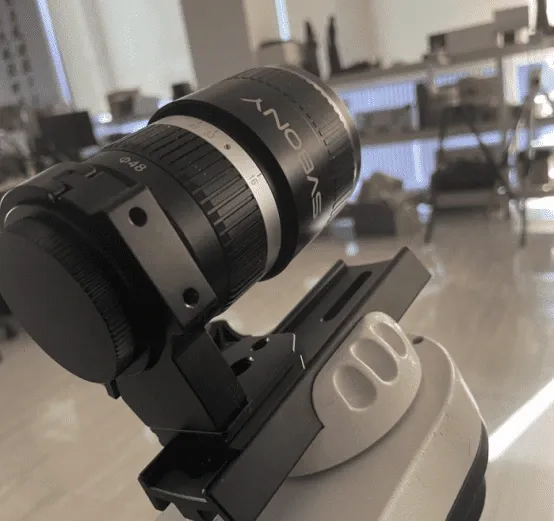
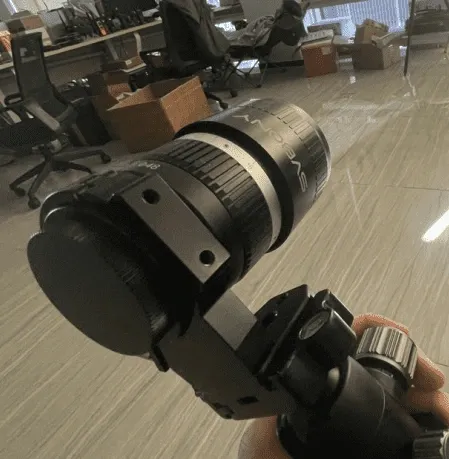
Example of using a Vixen standard Doberman tail plate Example of using an Arca quick shoe plate
This design completely eliminates the hassle of searching for compatible accessories and adjusting the balance, allowing you to instantly switch from terrestrial to celestial tracking photography.
Built-in Helical Focuser and Filter Mounting Design
Built-in helical focuser: Allows for fine adjustments and is compatible with EAF electronic focuser systems, providing a smooth and precise focusing experience.
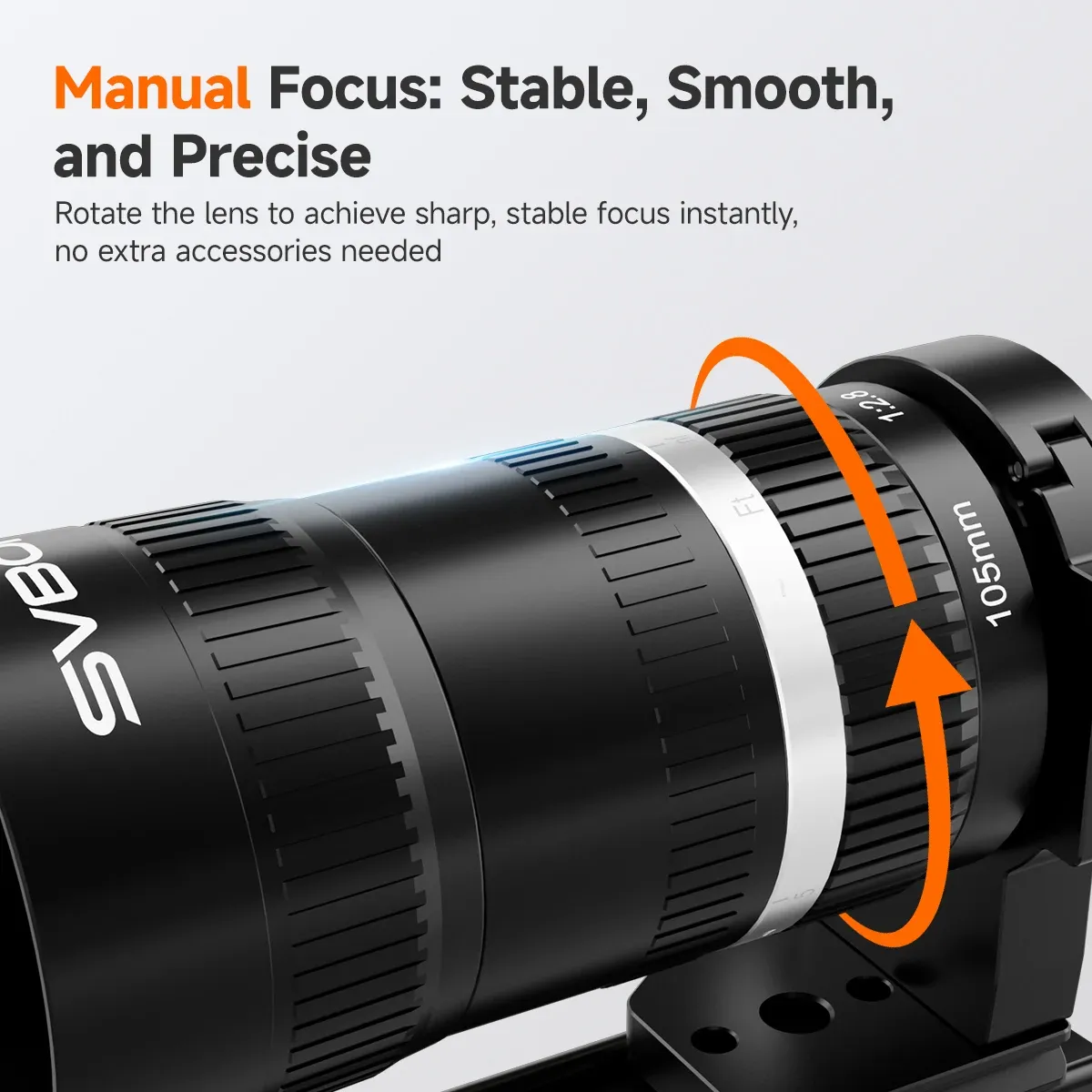 Helical Focuser
2-inch astronomical filter mounting on the objective lens: Standard 2-inch filters can be mounted directly onto the M48x0.75 internal thread on the front of the lens, giving users a wealth of creative control:
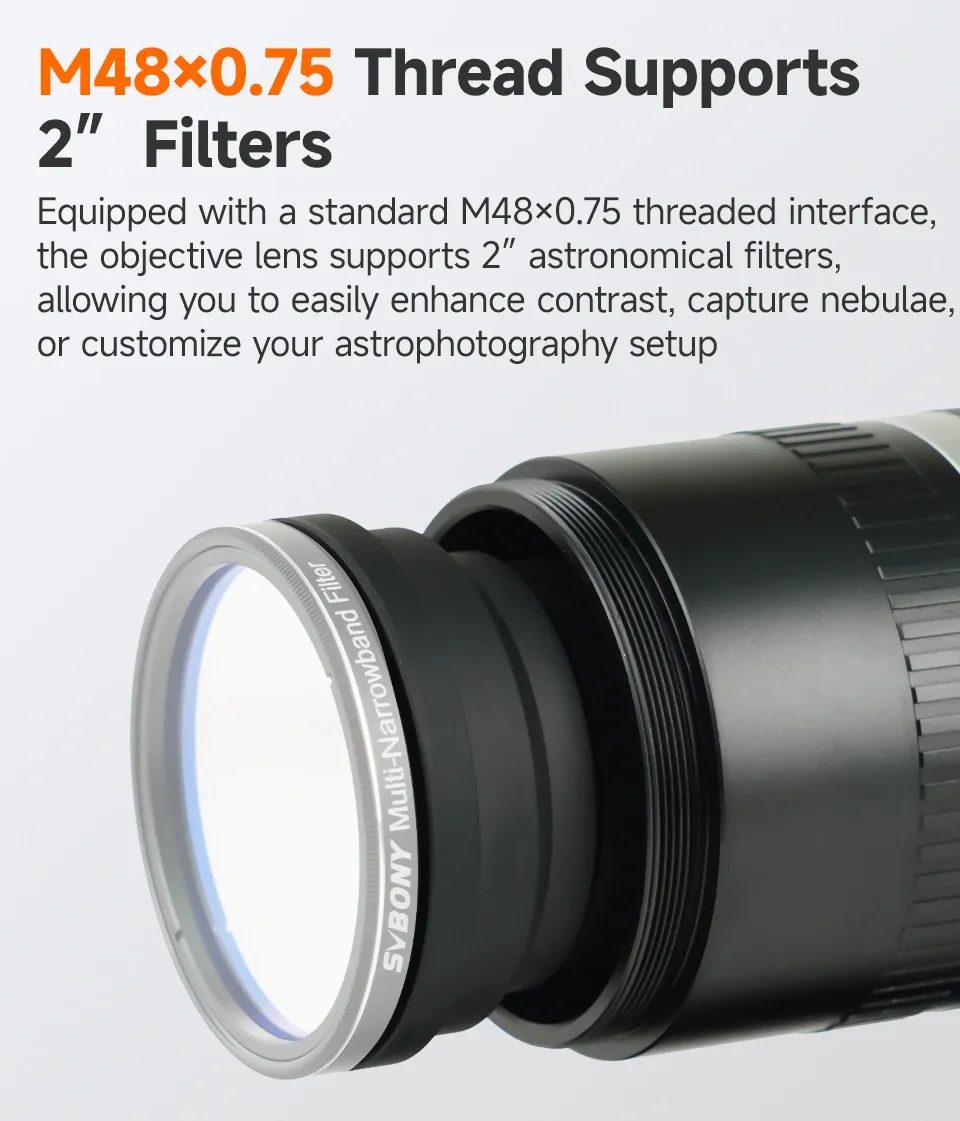 2-inch filter installation
In urban environments, light pollution filters can be used to effectively suppress specific wavelengths from artificial light sources such as sodium vapor lamps, improving contrast.
Under clear night skies, narrowband filters (e.g., the SV220 HA&OIII 3nm Dual Narrowband Filter) can be used to specifically capture hydrogen ionized regions, revealing the striking structural details of nebulae.
When used as a telephoto lens during the day, you can also attach an ND neutral density filter to create long exposures. This design greatly expands your photographic possibilities, adding more character and artistic depth to your deep space photography.
Live-action Photography in a Variety of Scenes - from Deep Space Objects to Landscapes
From nebulae to epic landscapes: the SV535 demonstrates exceptional imaging in three core scenes.
The SV535 is a truly all-around optical tool, suited to a wide range of photography needs. The following images, taken by users around the world, show its diverse creative capabilities, complete with equipment and parameters.
Scene 1: Professional Wide-Field Deep Space Photography & Wide-Angle EAA (Electronic Astronomical Observation)
This is the core stage of the SV535. Its large f/2.8 aperture efficiently collects the faint light of distant celestial objects, while its 105mm focal length and full-frame flat-field optimization make it ideal for capturing spectacular subjects across the celestial sphere. From diffuse nebulae, open clusters, supernova remnants, and distant galaxies, the SV535 delivers images rich in detail and natural colors. For EAA observers, its bright field of view allows you to see more faint objects on the screen in real time, enhancing your observing experience.
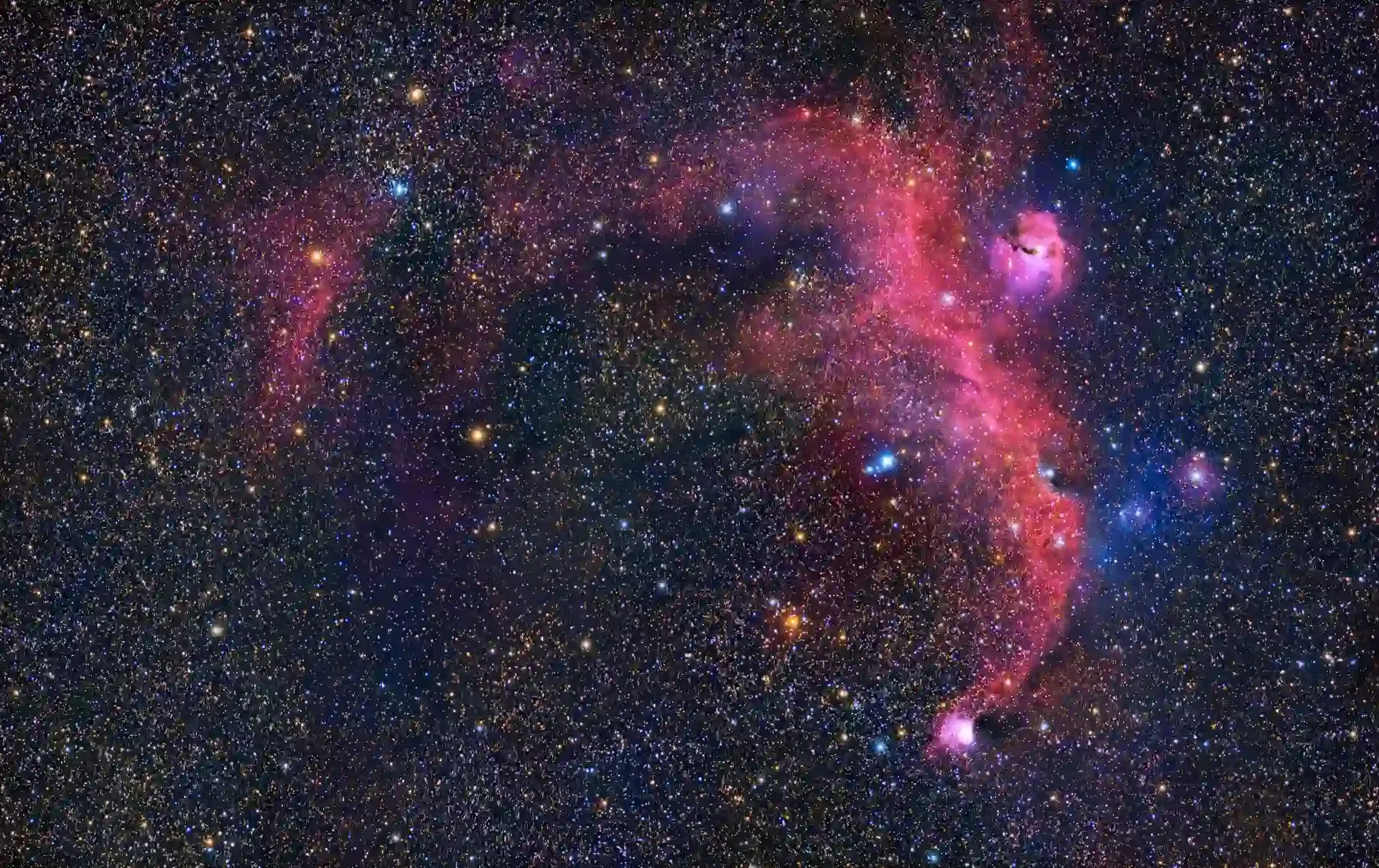 Seagull Nebula - Hiroaki Waki | Seagull Nebula | SV535 + ASI585MCP + UV/IR cut filter | Gain 252, -5℃, 60 seconds x 99 shots + 180 seconds x 25 shots (177 minutes) | Processing: PixInsight (using BXT/NXT), Luminar 4, slight cropping | Miura Peninsula | November 21, 2025
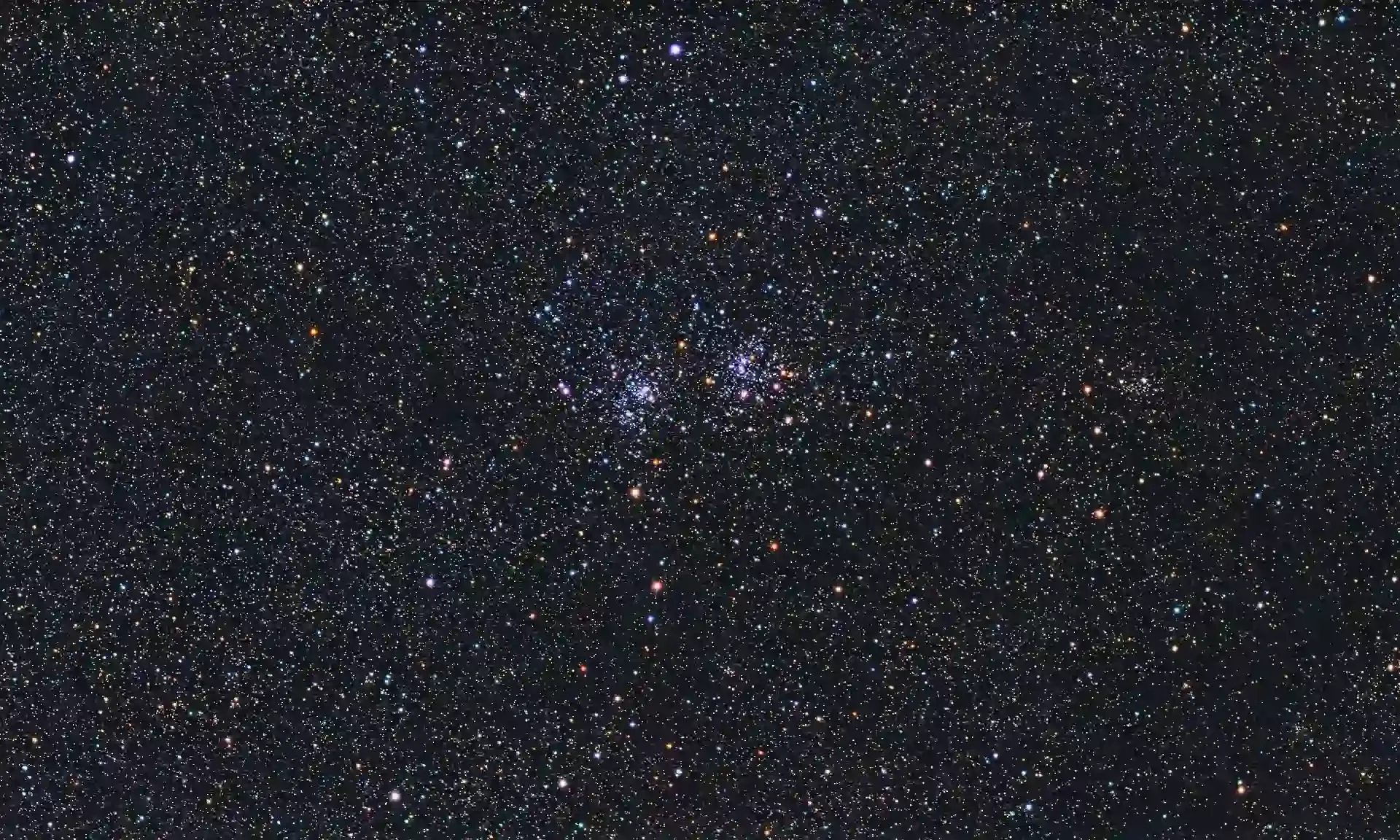 Cassiopeia's Double Star Cluster hχ - Hiroaki Waki | Cassiopeia's Double Star Cluster hχ | SV535+ASI585MCP+UV/IRcut | Gain 252, -5℃, 30 seconds x 5 shots + 60 seconds x 14 shots (16.5 minutes) | Processing: PixInsight, Luminar 4
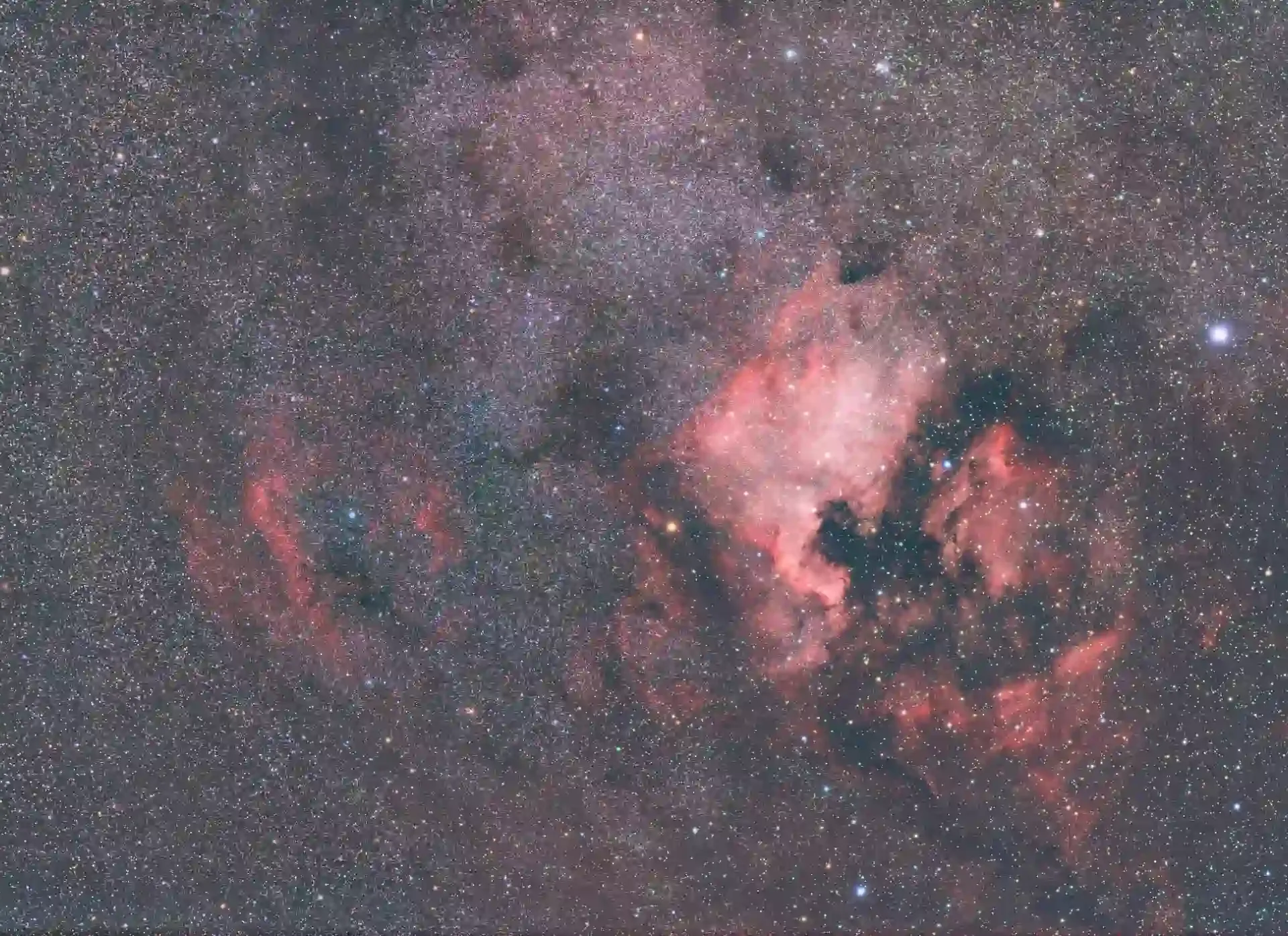 North America (NGC7000), the Pelican Nebula (IC5067-70), and the Clamshell Nebula (SH2-119) - Hiroaki Waki | North America (NGC7000), the Pelican Nebula (IC5067-70), and the Clamshell Nebula (SH2-119) | SV535+SV405CC+SV220_3nm | 120-second x 7 shots + 180-second x 18 shots (138 minutes) | Stacked and processed in PixInsight, adjusted in Luminar 4
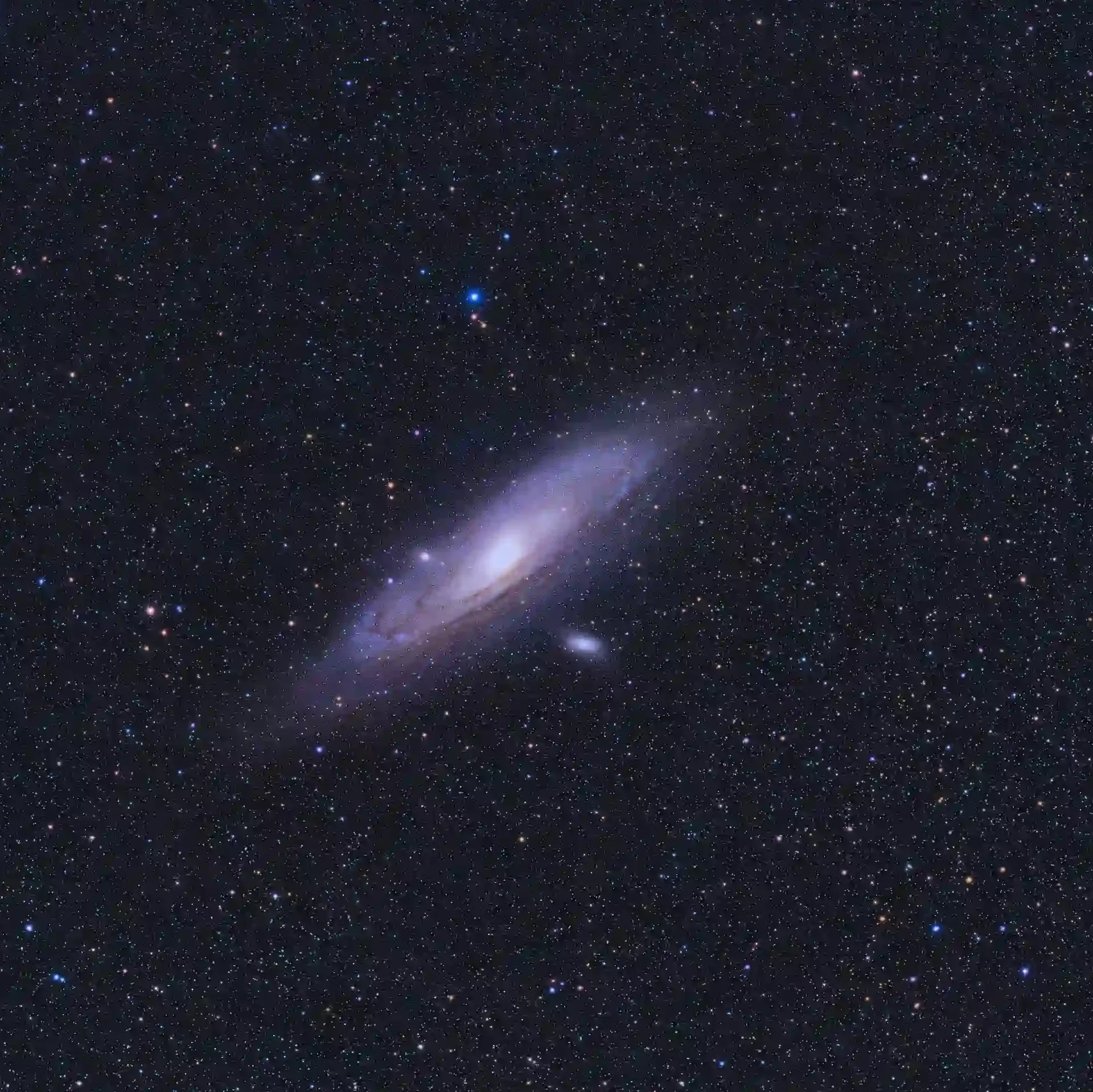 M31 - Hiroaki Waki | Seagull Nebula | SV535 + SV605CC + UV/IR cutoff filter | Gain 300, -5℃, Exposure time 120 sec x 30 images (60 minutes) | Processing software: PixInsight (WBPP/x1drizzle/BXT/SPFC/MGC/SPCC/AS/GHS/GraXpert/Starnet2/CT/SCNR/HDRMT, etc.), Luminar 4 | Miura Peninsula | November 24, 2025
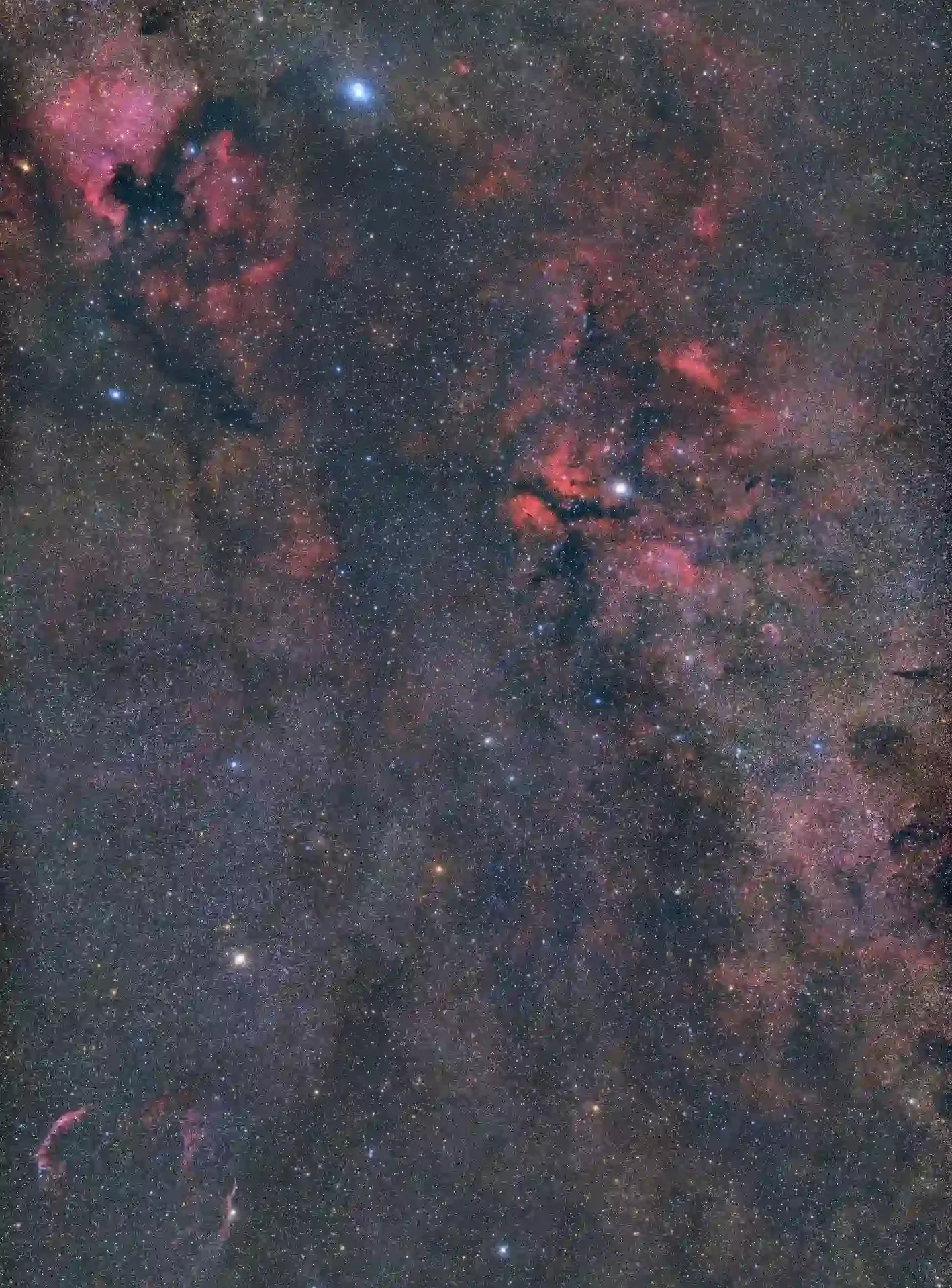 Near Cygnus - Hiroaki Waki | Near Cygnus | SV535 + UV/IRcut filter, full-frame α7R, ISO 3200 | 30 seconds x 29 frames, touchless shooting guide, PixInsight correction processing
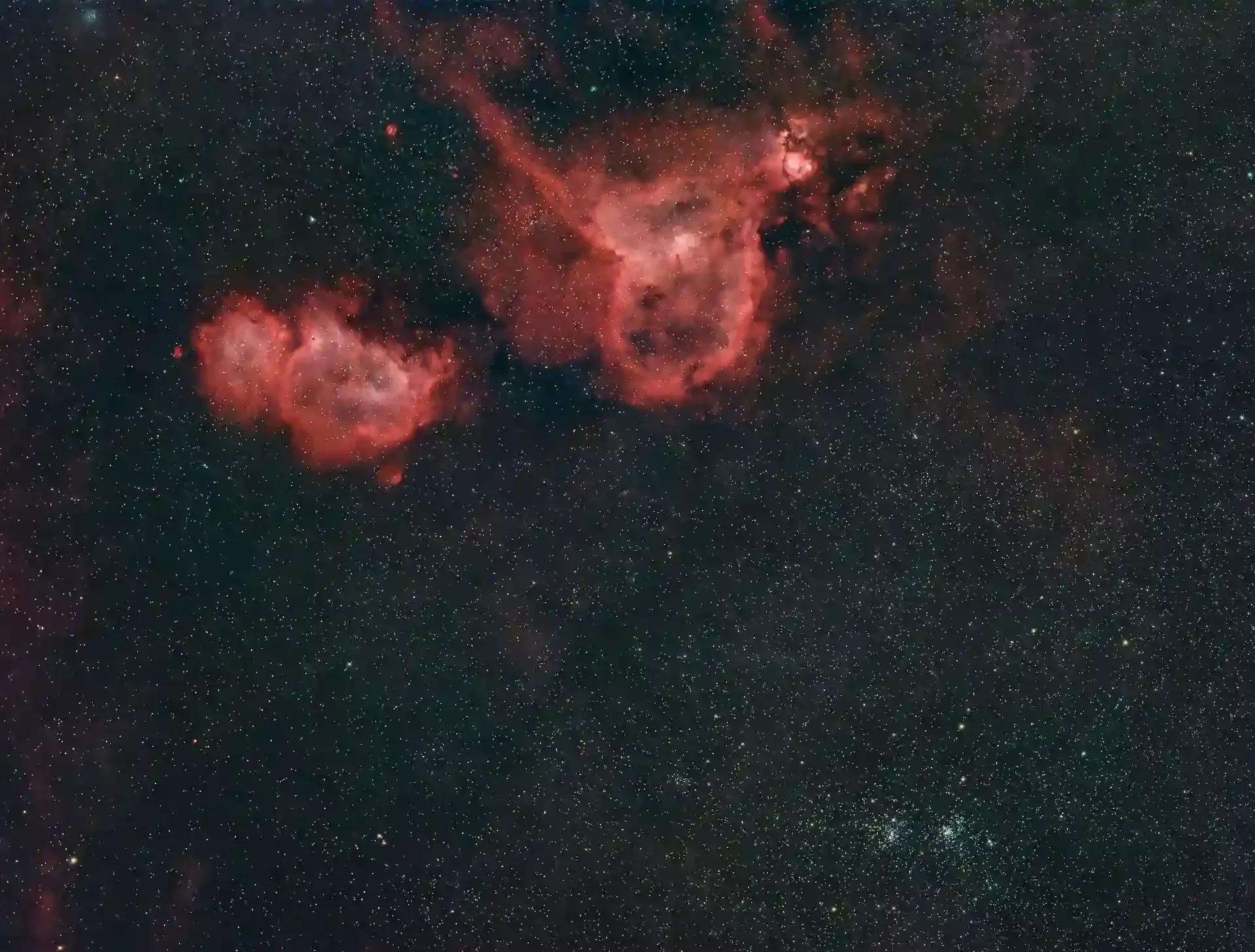 Heart Chakra Nebula (IC1805) & Soul Chakra Nebula (IC1848) + Binary Cluster h-chi (NGC869,884) - Hiroaki Waki | Heart Chakra Nebula (IC1805) & Soul Chakra Nebula (IC1848) + Binary Cluster h-chi (NGC869,884) | SV535 + SV405CC + SV220_3nm | 180 seconds x 5 shots, 15 minutes
User Review:
"Due to its high-speed characteristics, this lens can collect a large amount of light, producing clear images of the starry sky with no visible optical distortion, and for its size, the detail is exceptionally rich."
-Francisco Javier Pérez Olvera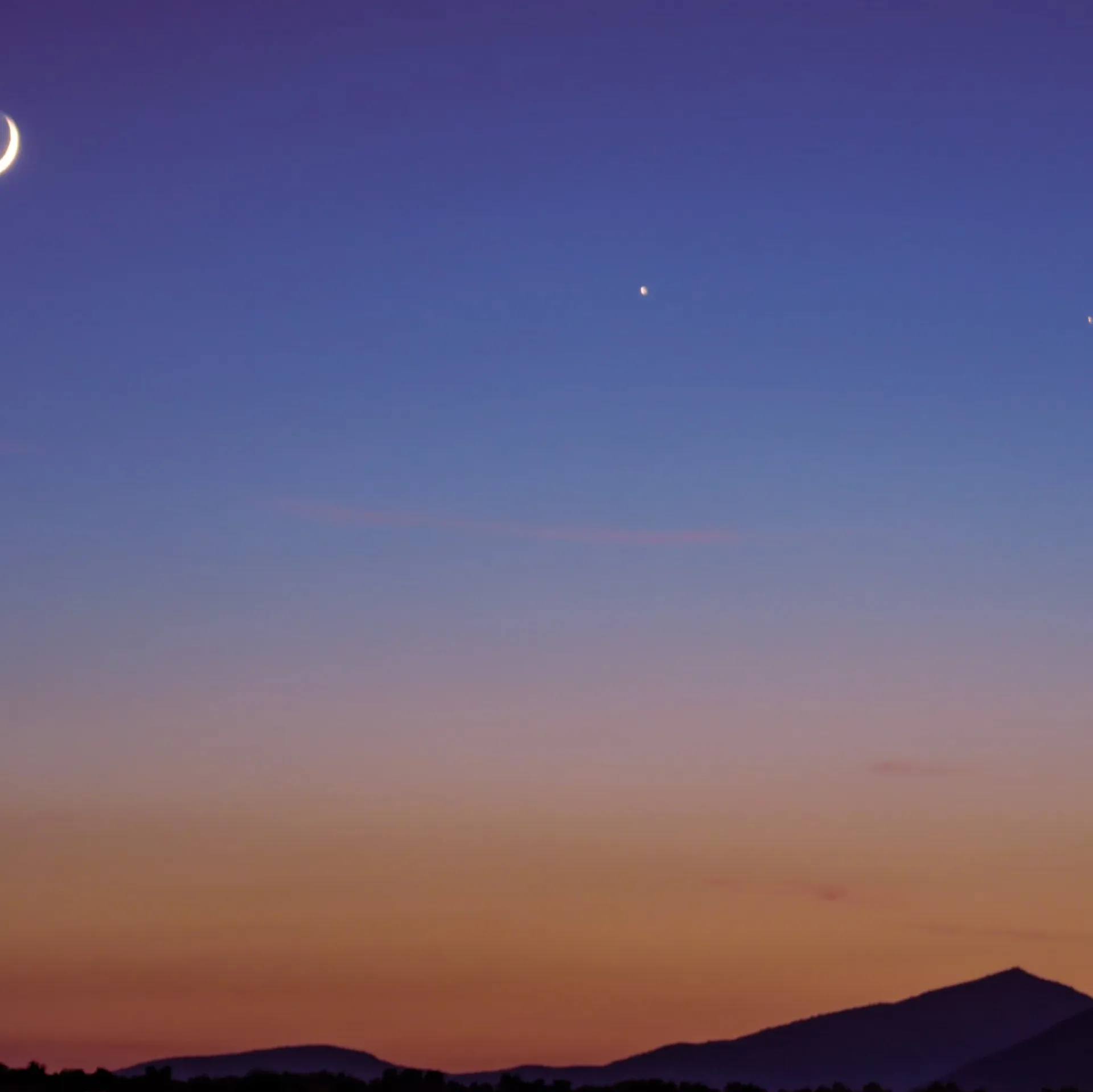
Francisco Javier Pérez Olvera | Conjunction of the Moon, Mercury, and Mars | SV535 Telescope + ASI585MC Atmospheric Telescope + SV220 Ha/O3 3nm Telescope
Scene 2: Astronomical Photography (Milky Way, Star Trails, Comets, Meteor Showers, etc.)
Capturing the Milky Way arch, star trails, and tracking comets and meteor showers requires a lens with excellent wide-angle performance and peripheral image quality. The SV535's field of view is sufficient to capture the magnificent spectacle of the Milky Way, and its superior astronomical image quality can render delicate and smooth star trails. When shooting comets, the large aperture of F2.8 helps to record the subtle details of the comet's coma and tail within the limited tracking time.
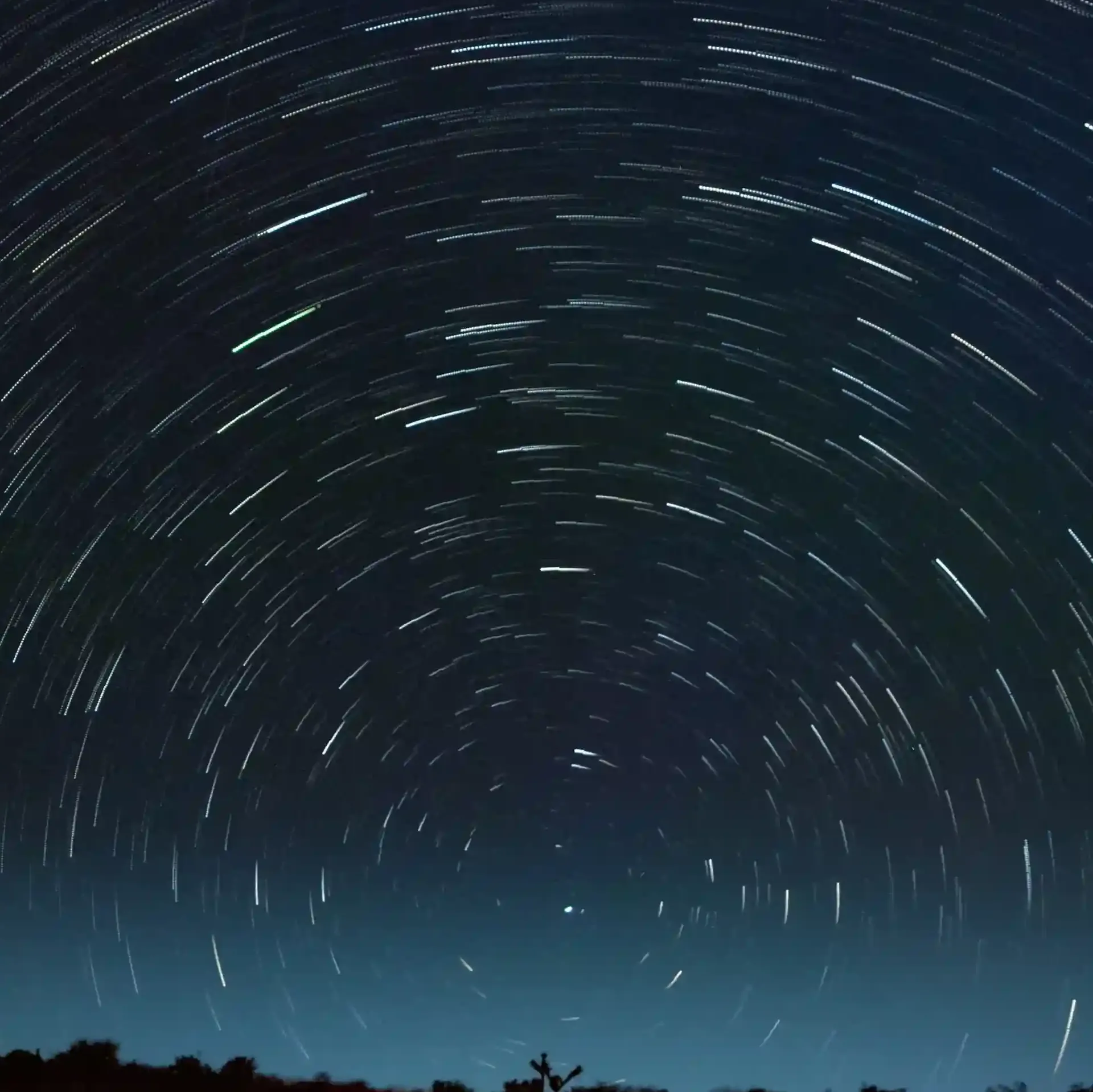 Star Trails - Francisco Javier Pérez Olvera | Star Trails | SV535 + Micro Four Thirds Sensor + Optolong L-Pro Filter
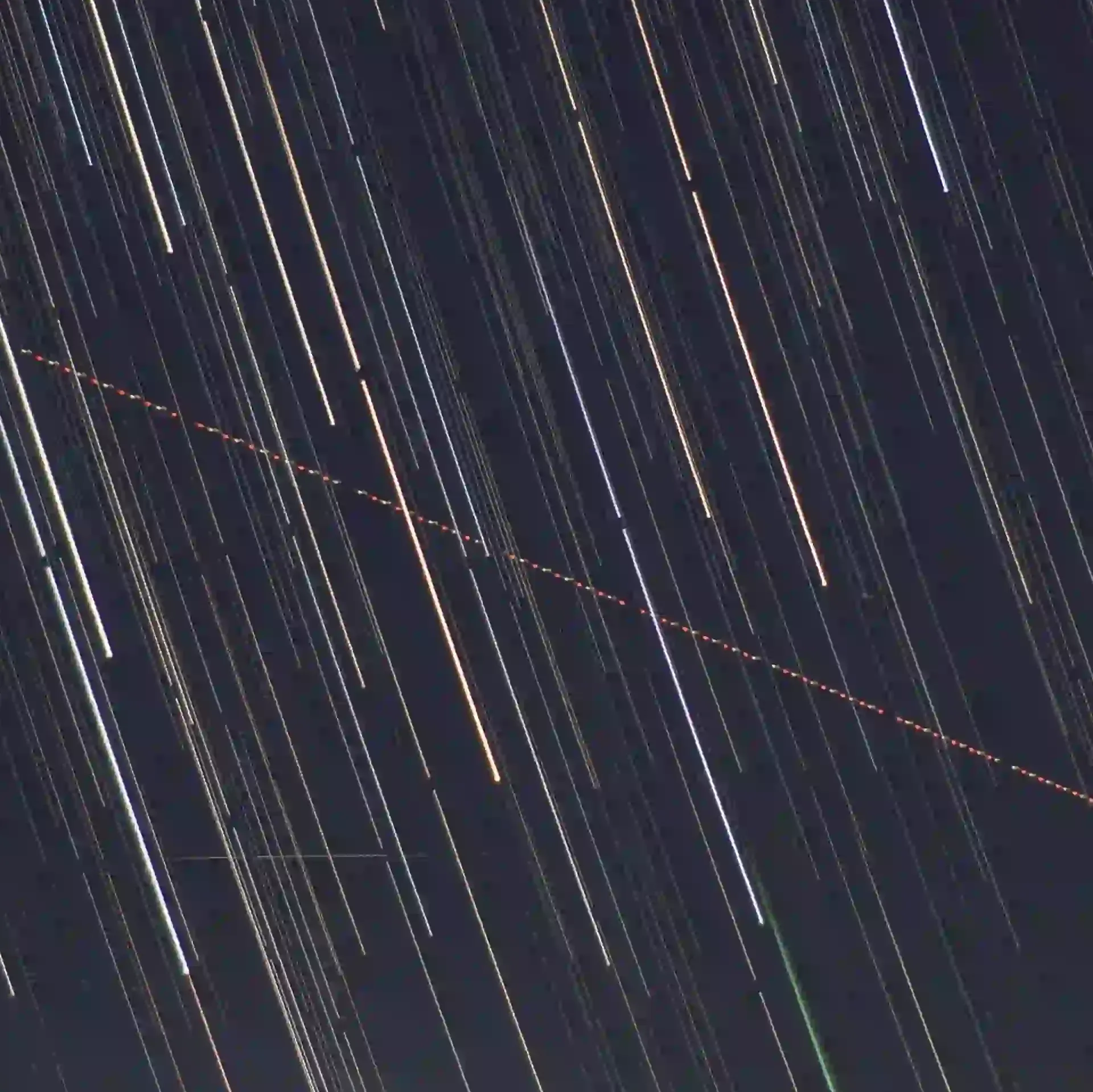
Star Trails - Francisco Javier Pérez Olvera | Star Trails | SV535 + Micro Four Thirds Sensor + Optolong L-Pro Filter
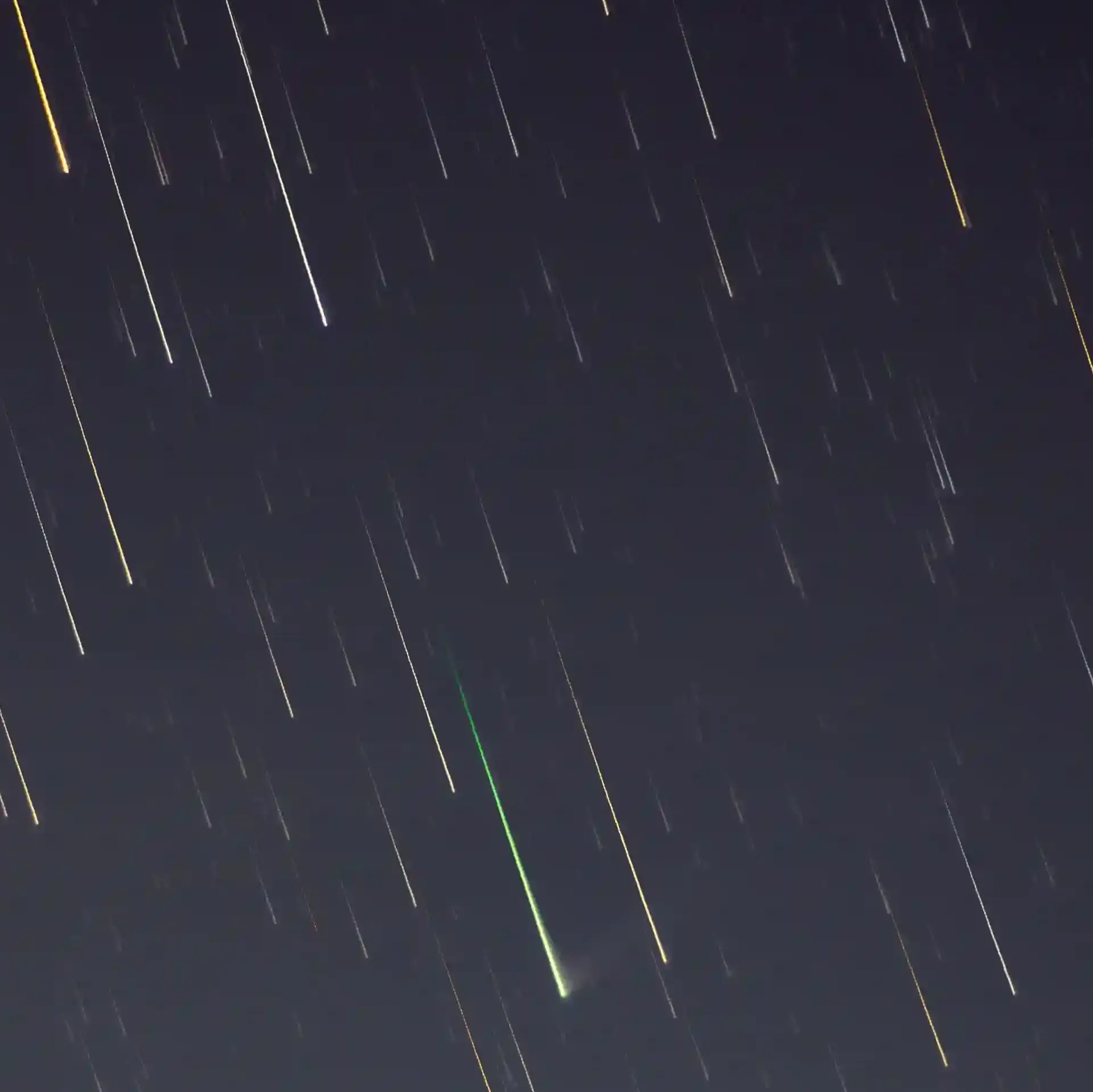
Star Trails - Francisco Javier Pérez Olvera | Star Trails | SV535 + Micro Four Thirds Sensor + Optolong L-Pro Filter
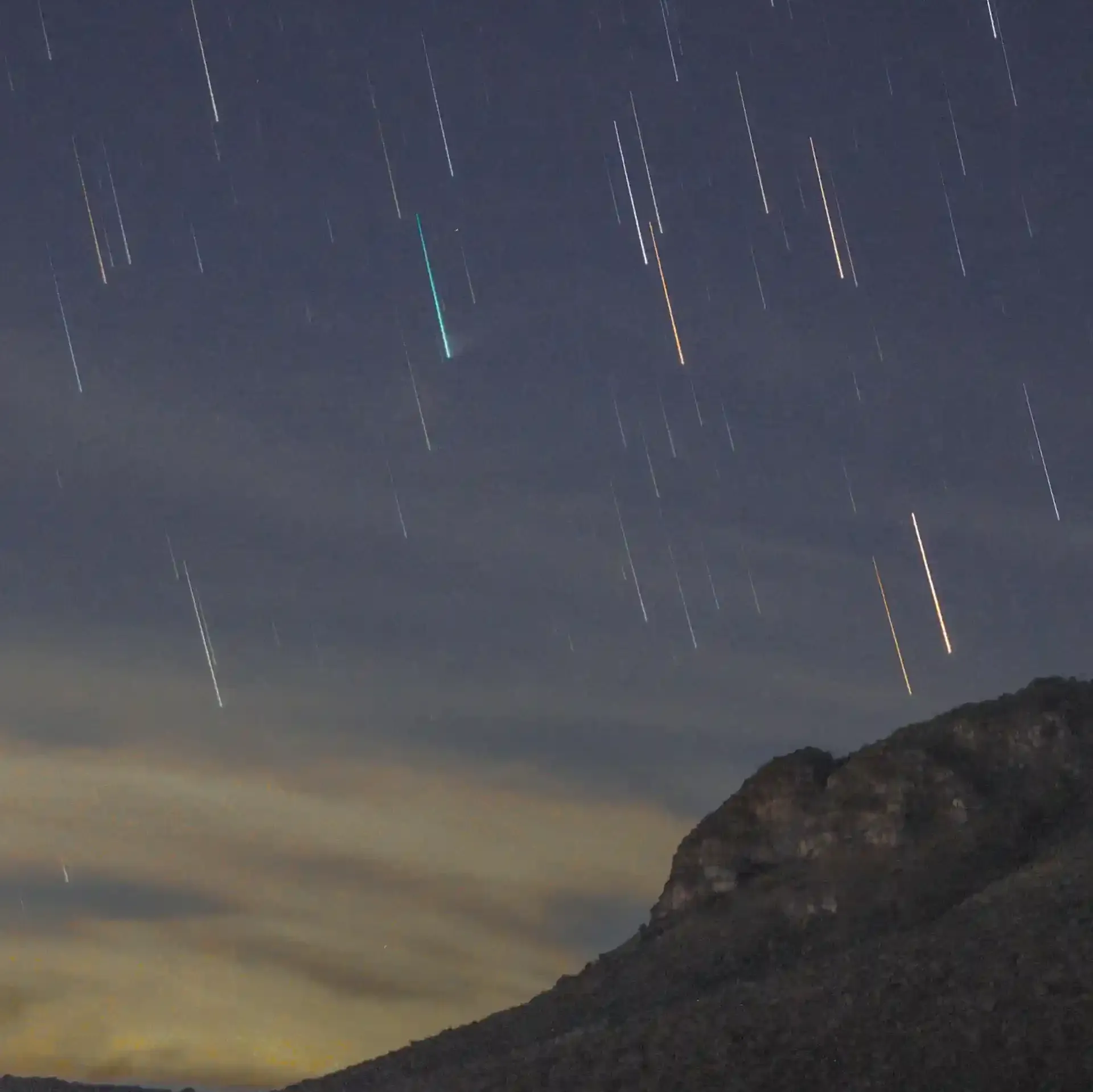
Star Trails - Francisco Javier Pérez Olvera | Star Trails | SV535 + Micro Four Thirds Sensor + Optolong L-Pro Filter
User Review:
"Because of this lens's large aperture, short exposure times or low gain/low ISO are needed to preserve the colors of the stars. The star shapes are very beautiful, and the vignetting is also very small."
-Francisco Javier Pérez Olvera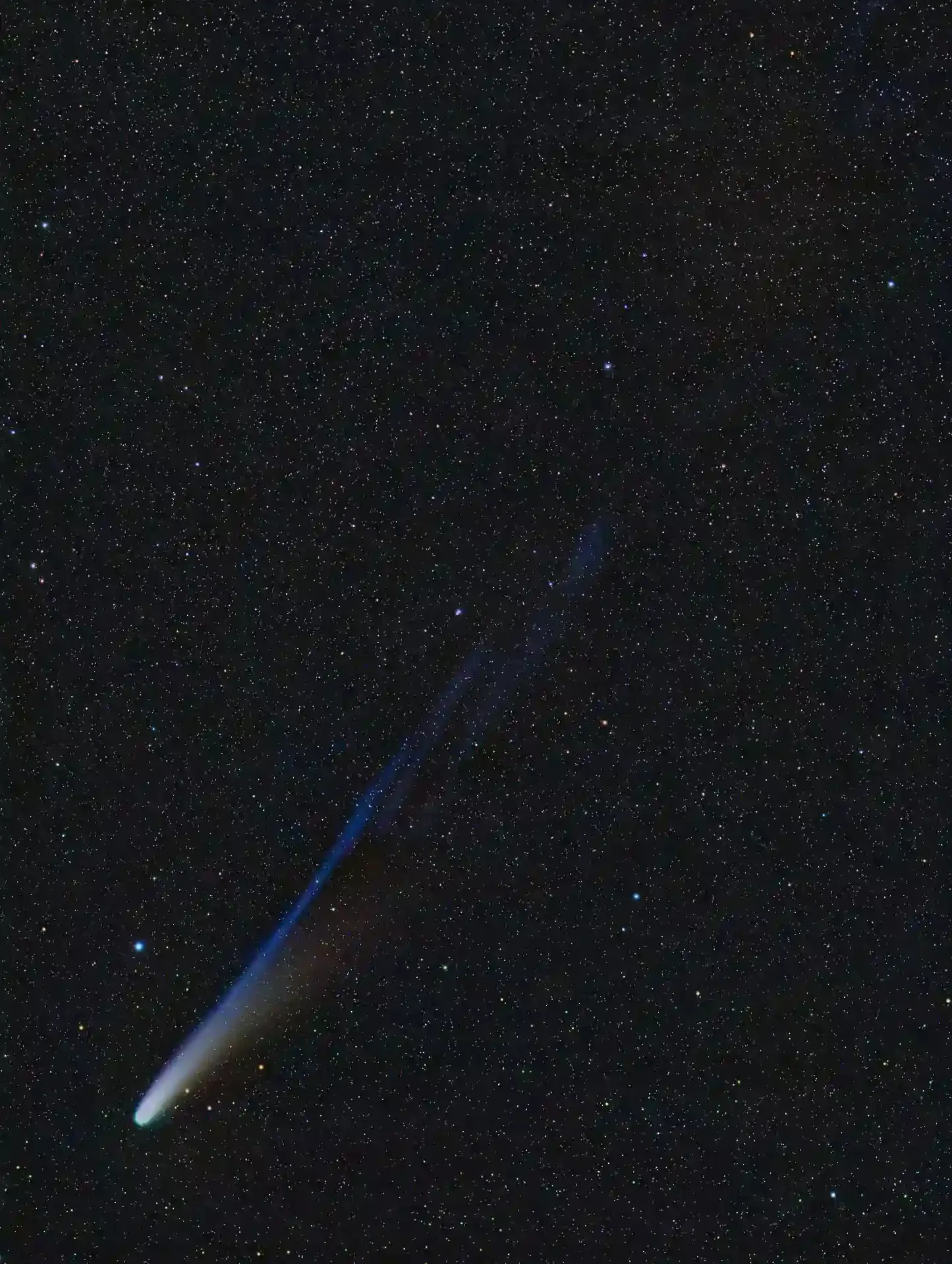
Comet C/2025 A6 Lemon - Hiroaki Waki | Comet C/2025 A6 Lemon | SV535 + SV405CC + UV/IRcut filter | Gain 120, -5℃, 60 sec x 27 frames (Comet standard) | Processing software: PixInsight (WBPP/BXT/SPFC/MGC/SPCC/NXT/AS/GHS/CometAlignment/Starnet2, etc.), Luminar4
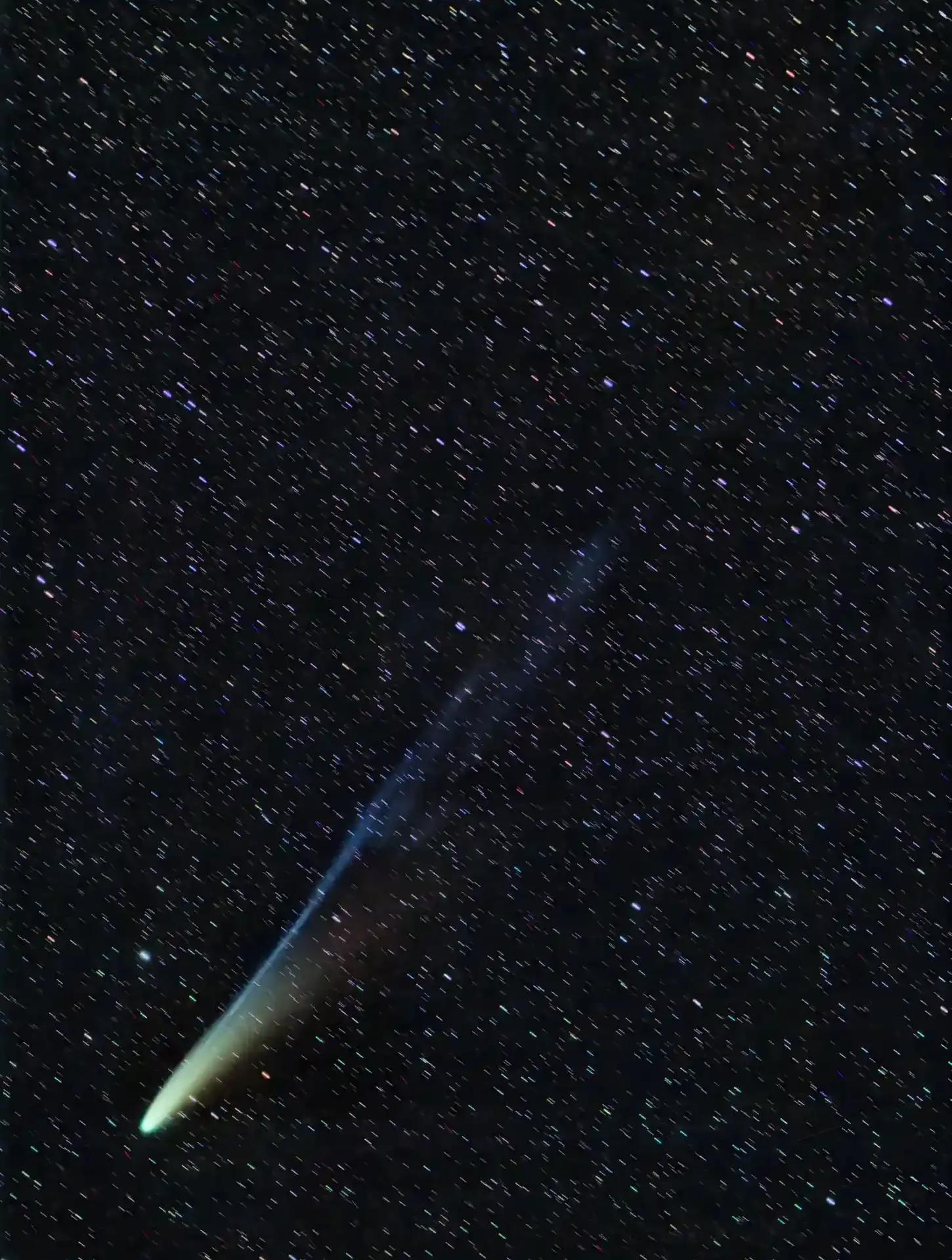 Comet Lemon C/2025 A6 - Hiroaki Waki | Comet Lemon C/2025 A6 | SV535 + SV405CC + UV/IRcut filter | Gain 120, -5℃, 60 sec exposure x 32 images (stellar standard) | Processing software: PixInsight (WBPP/BXT/SPFC/MGC/SPCC/NXT/AS/GHS/CometAlignment/Starnet2, etc.), Luminar4
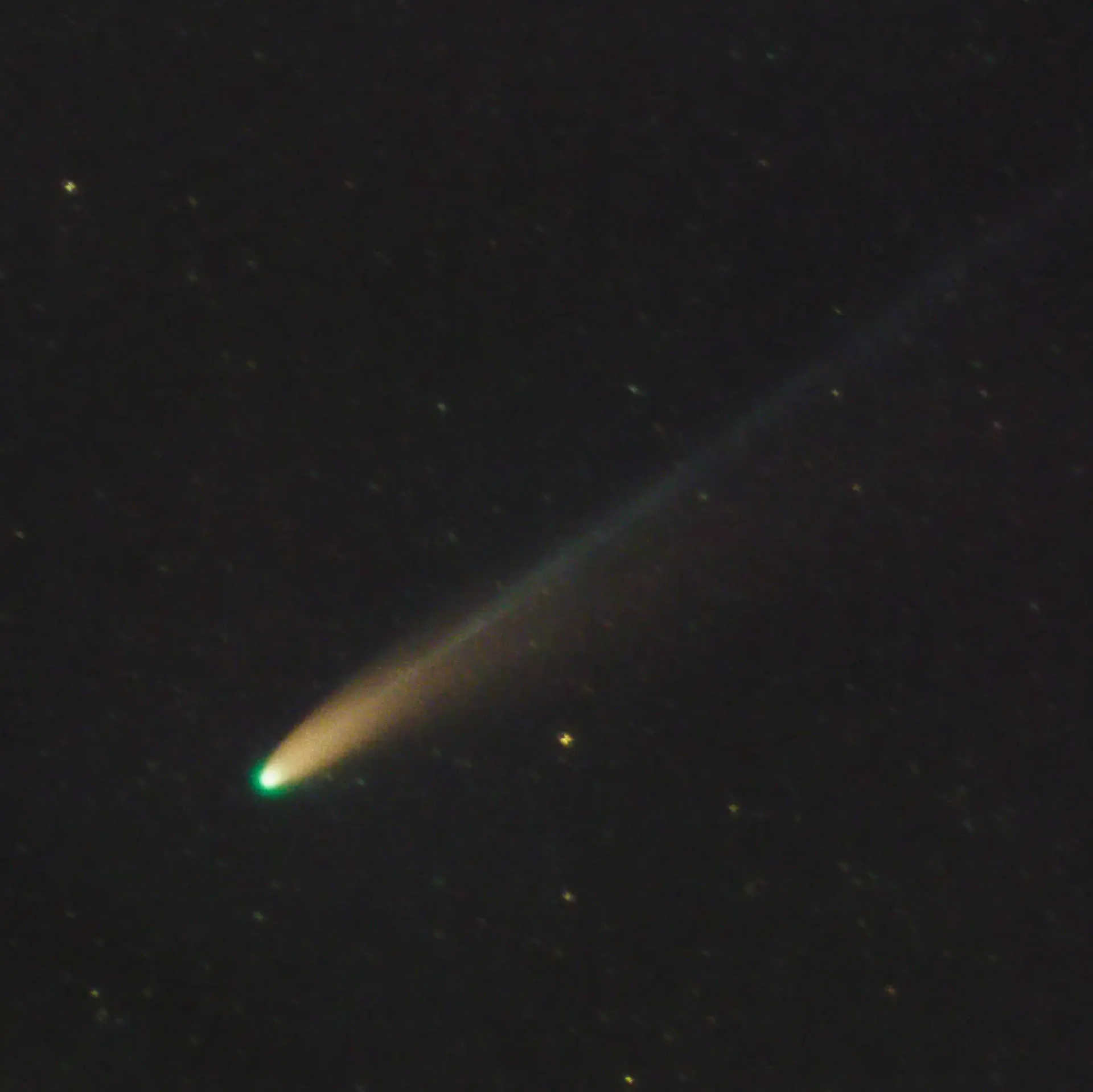 Comet C/2025 A6 Lemmon - Francisco Javier Pérez Olvira | Comet C/2025 A6 Lemmon | SV535 Planetarium
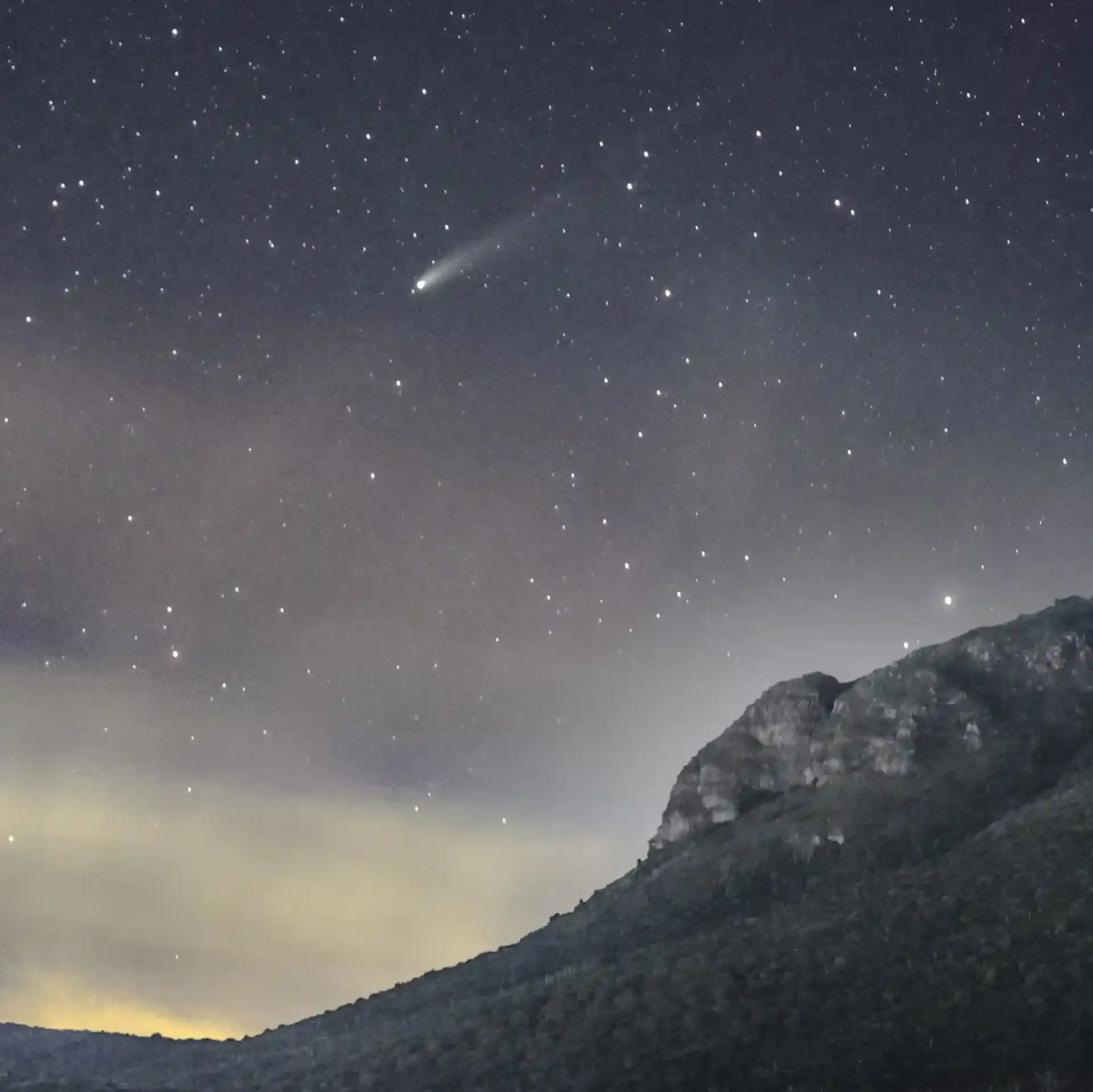
Comet C/2025 A6 Lemmon - Francisco Javier Pérez Olvira | Comet C/2025 A6 Lemmon | SV535 Planetarium
Scene 3: Landscapes and Special Effects
With its APO achromatic design and excellent center-to-edge sharpness, the SV535 also performs well in daylight and can be used with ND filters for long exposure photography or for sun photography (requires a dedicated sun filter).
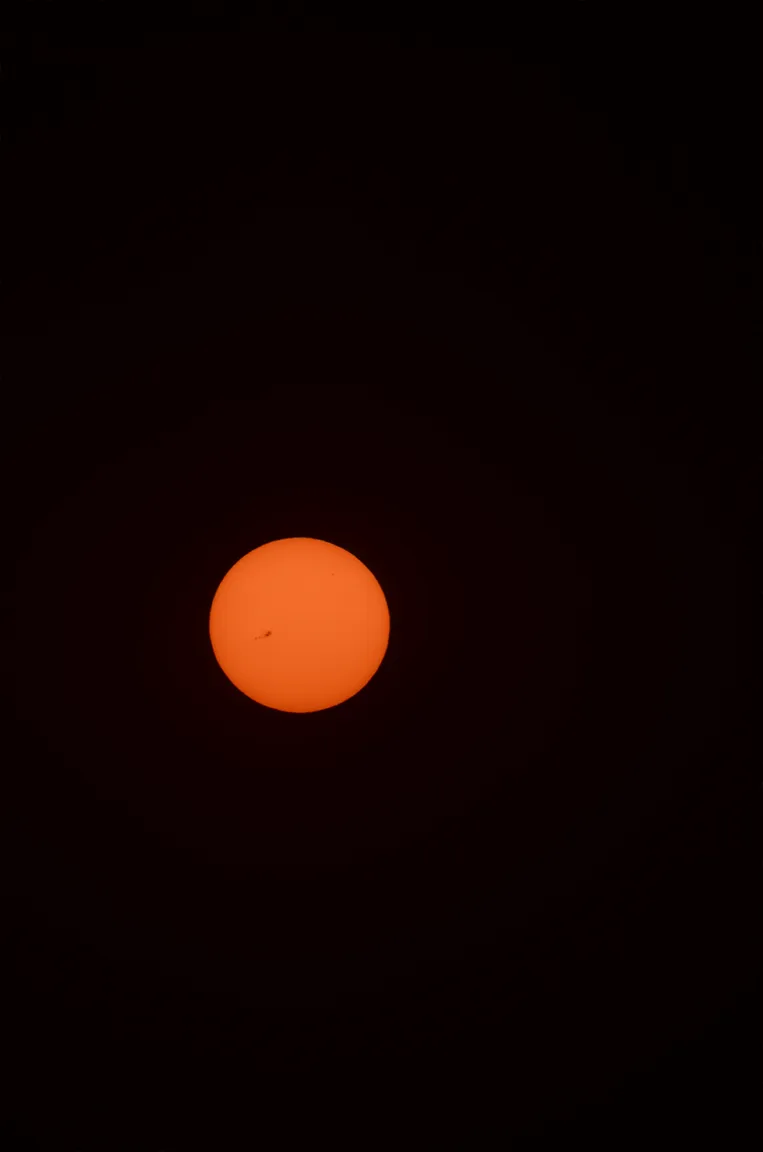
Sun - Francisco Javier Pérez Olvera | Sun | SV535 + Sun Filter
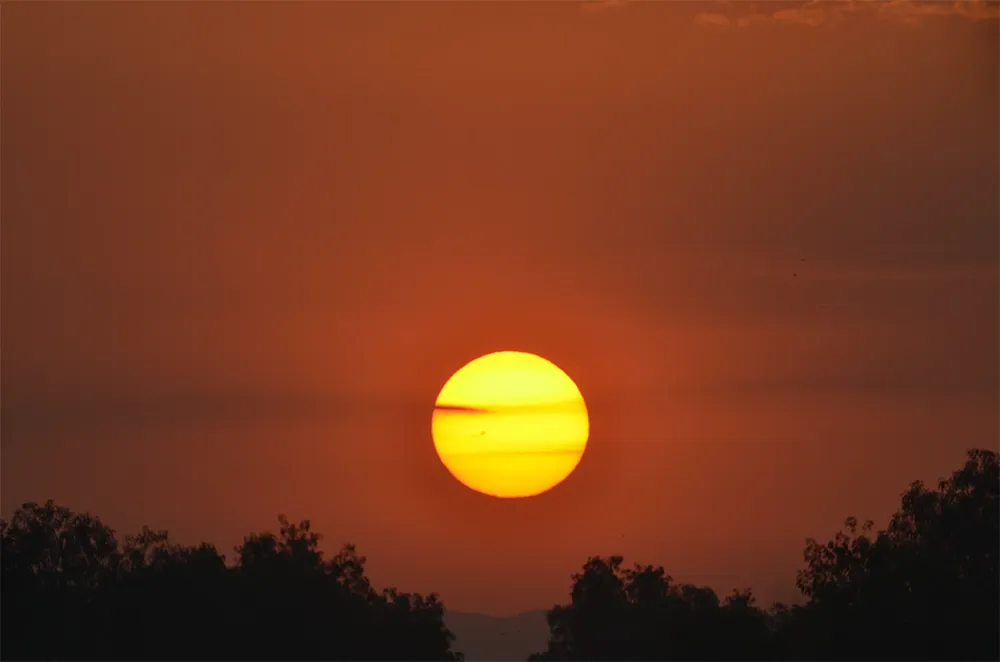
Sun - Francisco Javier Pérez Olvera | Sun | SV535 + Sun Filter
Note: Due to the back focus limitation, it is not recommended to use this lens with a long flange focal length SLR camera. However, it may be possible to achieve focus at extremely close distances, so it may be possible to use it for macro photography.








 Macro Photography Samples
Francisco Javier Pérez Olvera | SV535 + Canon SLR camera (Focused at a distance of approximately 60-80cm from the subject)
Detailed technical specifications and complete packing list
Core specification parameters
| Brand/Model | SVBONY SV535 |
| Lens Construction | 5 Groups, 7 Elements (1 ED Lens) |
| Focal Length | 105mm |
| Aperture Ratio | F2.8 (Fixed, Non-Adjustable) |
| Coating Type | Fully Multi-Coated |
| Image Field Coverage | Full Frame |
| Filter Thread | M48x0.75 (Compatible with standard 2-inch filters) |
| Camera End Connection | M42x0.75 Male Thread |
| Focusing Method | Helical Focusing |
| Mount Plate Type | Integrated Arca/Vixen Dovetail Plate |
| Maximum Diameter | Approx. 57mm |
| Weight | Approx. 482g |
| Minimum Focus Distance | Approx. 4m |
Complete Packing List
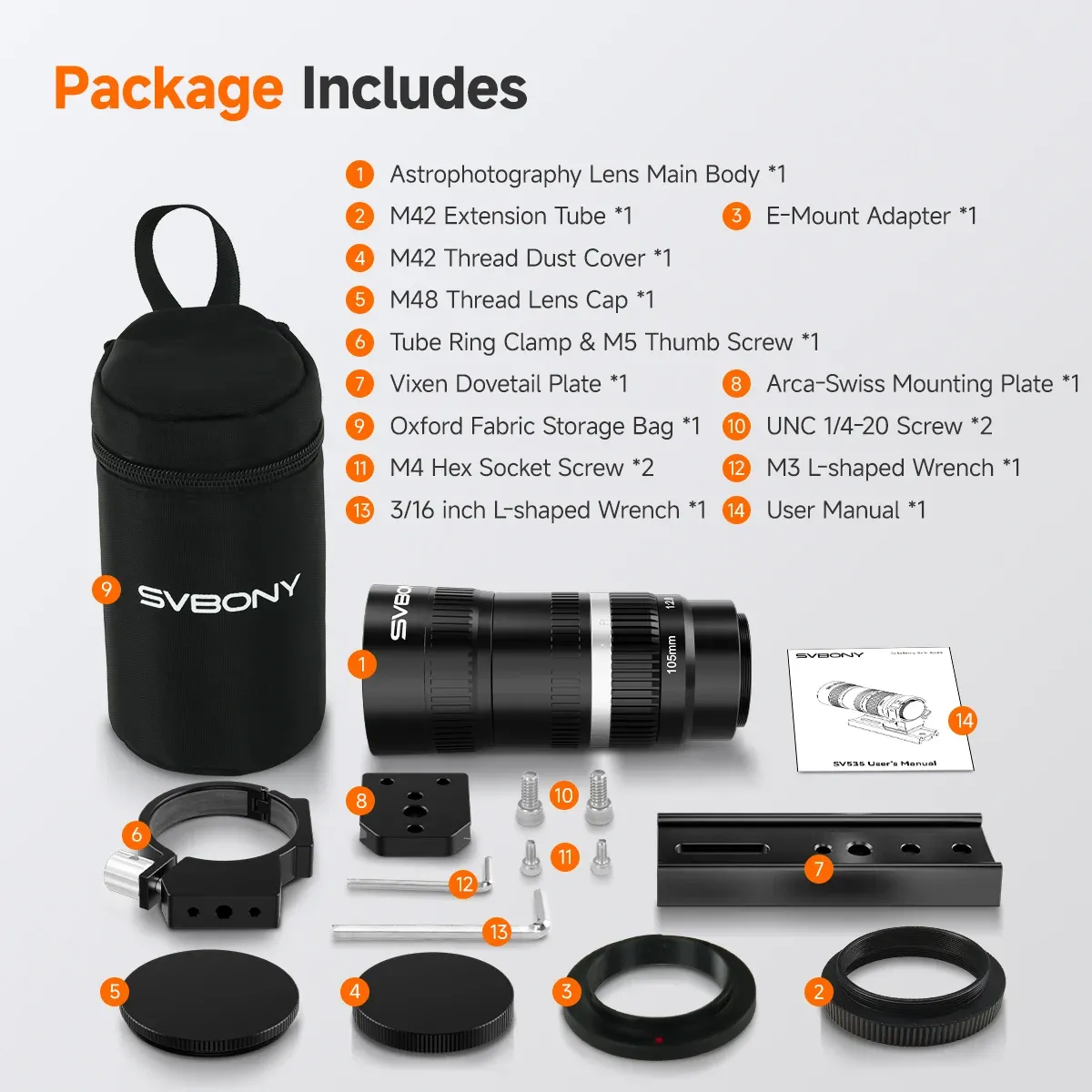 Astrograph Body x 1
M42 Extension Tube x 1
Sony E-Mount Adapter Ring x 1
M42 Threaded Dust Cover x 1
M48 Threaded Lens Cover x 1
Telescope Ring Clamp & M5 Thumb Screw x 1
Vixen Dovetail Plate x 1
Arca-Swiss Quick Release Plate x 1
Oxford Cloth Storage Bag x 1
UNC 1/4-20 Screw x 2
M4 Hex Socket Head Screw x 2
M3 L-Wrench x 1
3/16" M3 L-Wrench x 1
User Manual x 1
Complete Installation and Usage Guide
Back Focal Length and Camera Mounting
- Basic Principle: The lens's back focal length (the distance from the rear screw surface to the focal plane of the camera sensor) is 24mm.
- Connection to an astronomical camera: Accurate back focal length can be achieved by combining the 6.5mm M42 extension tube included as standard with the lens, the 11mm M42 extension tube typically included with your astronomical camera, and the camera's flange focal length (typically 6.5mm).
- Connection to a Sony mirrorless camera: Direct compatibility is possible by combining the 5.5mm Sony E-mount adapter ring included as standard with the Sony E-mount system's specific 18.5mm flange focal length.
- Important Note: Due to back focal length limitations, the SV535 is not compatible with SLR camera systems with long flange focal lengths. It is optimized for mirrorless cameras and astronomical cameras.
Filter Mounting
The objective lens side of the product has an M48 x 0.75 standard thread interface. To attach a filter, simply screw a 2-inch astronomical filter (such as a light pollution filter or narrowband filter) directly onto this screw and tighten. We recommend performing precision focusing again after installing the filter.
Precision Focusing Operation
The SV535 features manual focusing with a high-precision helical focus ring.
- Daytime/Landscape Photography: Turn the focus ring until the subject in the viewfinder or on-screen image is at its sharpest.
- Night Sky/Starry Sky Photography: This is a critical step. We recommend the following:
- Aim the camera at a bright star.
- Enable your camera's "Live View" mode and use the digital zoom function (usually providing 5-10x magnification).
- Very slowly, fine-tune the focus ring left and right, observing how the star image changes on the screen.
- When the star image reaches its smallest and sharpest point, this indicates precise focus.
- Lock the focus ring (if applicable) and avoid touching it for subsequent shots.
Using the Hood
The hood is included as standard and is used to protect the front lens element and prevent stray light from the sides. To use it, screw the hood forward onto the screw at the front of the lens. To store it, attach the hood backwards so that it fits snugly against the lens barrel, significantly reducing the overall length and making it easier to store.
Attaching the Dobertie Plate
The bottom of the lens is equipped with an integrated Arca plate and a Vixen-standard Dobertie plate.
- Connecting to the Arca quick shoe clamp: Loosen the tripod head's quick shoe clamp and slide the Arca plate at the bottom of the lens into place to secure it.
- Connecting to the Vixen standard groove: Align the Vixen plate at the bottom of the lens with the Dobertie groove on the equatorial mount or astronomical equatorial mount, insert it, and tighten with the fixing screw.
Frequently Asked Questions (Q&A)
Q1: What was SVBONY's inspiration for developing the SV535?
A1: Our inspiration came from a simple desire to simplify astrophotography. We believe that professional equipment shouldn't be an excuse for being large, heavy, and inconvenient to carry. We want to develop an astronomical lens that users can easily carry, and that will become a powerful ally, not a burden, on their creative journey.
Q2: What scenes is the SV535 primarily suitable for?
A2: The product primarily covers three core scenes: 1) professional wide-field deep space photography; 2) EAA (Electronically Assisted Observation); and 3) astrophotography (including the Milky Way, comets, and star trails). At the same time, it can also be used as a telephoto landscape lens with excellent imaging performance (we recommend using it with a variable ND filter during the day).
Q3: What camera interfaces does the SV535 support?
A3: As an astronomy brand product, the lens supports all mainstream astronomy cameras via the M42 interface and the included T-mount adapter. At the same time, it fully supports mainstream mirrorless cameras from Sony, Canon, Nikon, and others via standard and optional adapter rings (E/RF/Z mount). For specific compatible models, please refer to the official website.
Q4: Can the SV535 be used with SLR cameras?
A4: No. Due to back focus limitations in the optical design, the SV535 cannot be used with SLR camera systems with long flange focal lengths, which will result in the design's image plane being inaccurate and affect image quality. It is designed specifically for mirrorless cameras and astronomy cameras.
Q5: Can the lens aperture be adjusted?
A5: No. The SV535 has a fixed f/2.8 aperture design and the aperture is not adjustable. This design is intended to provide maximum light and optimal imaging efficiency in the specific field of astronomy photography.
Summary: Start your portable stargazing journey.
The SV535 105mm F2.8 APO astrograph is more than just a product; it represents a new astrophotography lifestyle.
Weighing just 482g, it features a professional 5-group, 7-element APO optical system;
From deep-space nebulae to spectacular landscapes, it offers limitless views in a palm-sized package;
A seamless compatibility ecosystem connects you to all your imaginations of sky and earth.
It removes the last physical barrier between enthusiasts and the twinkling stars - heavy equipment.
Now, your space exploration journey can begin from your most familiar balcony, fit in any travel bag, and begin anytime.
Whether you're a stargazing beginner or a seasoned photographer seeking minimalist gear,
The SV535 is ready to become your most reliable and lightweight creative partner.
Tonight, the Milky Way shines as brightly as ever.
And this time, capturing it is easier than ever.
 Google
 Amazon
There are no customer reviews yet . Leave a Reply !