
Table of Contents
Visible Planets and Night Sky Guide for December
The 2025 December solstice arrives at 9:03 CST (15:03 UTC) on Sunday, December 21. Why does this day exert such a hold on the human psyche? Join SVBONY to find out more about the December solstice, and hear about what you can look for in the sky to help you connect to this special day.
Venus is Nearly Behind the Sun
Venus and Mars are the planets next-inward (Venus) and next-outward (Mars) in orbit around our sun. Venus is the brightest planet visible from Earth! We miss it in our skies! But both Venus and Mars are now traveling across the sky with the sun each day. This view is from the sun-observing SOHO spacecraft. Here the sun is behind an occulting disk, blocking out the central glare. The superior conjunction of Venus, when it will be most directly aligned behind the sun from Earth, will come on January 6. It’ll return to visibility in our evening sky in February 2026. Mars will reach its superior conjunction on January 9. Southern Hemisphere viewers might glimpse it before dawn in February, but we in the Northern Hemisphere probably won’t see it until March.
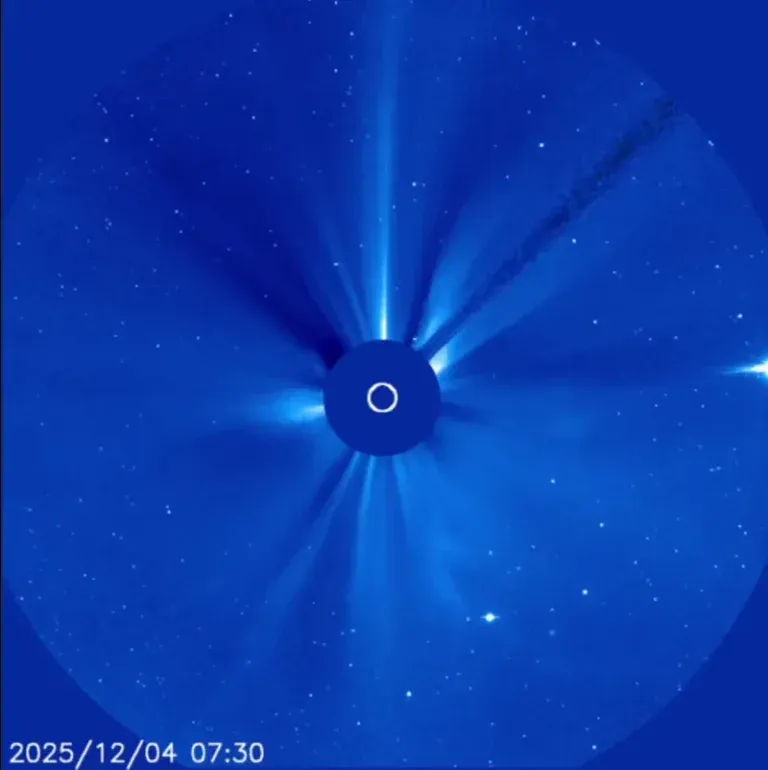 Images via NASA/ SOHO.
December Evening Planets
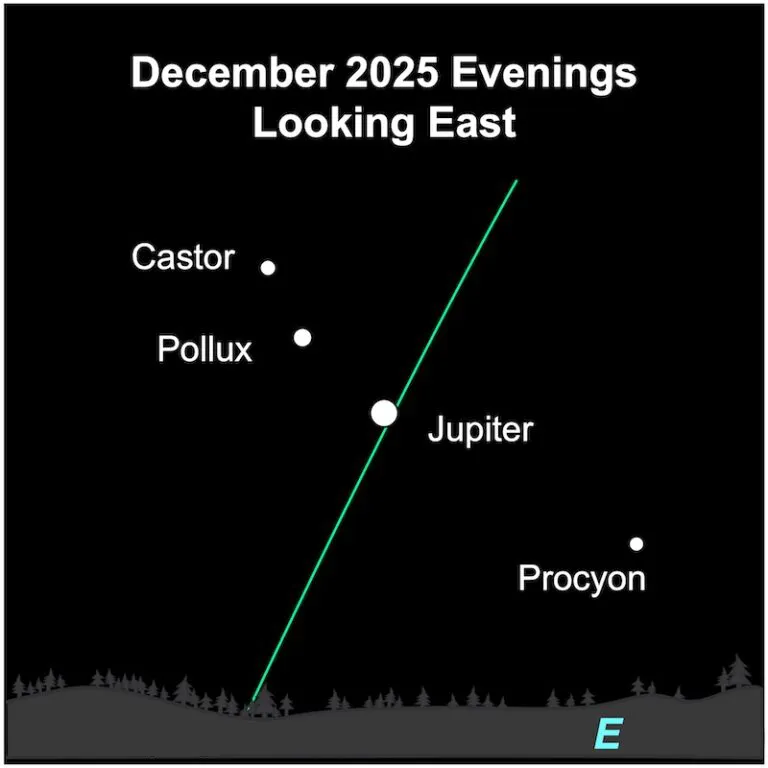
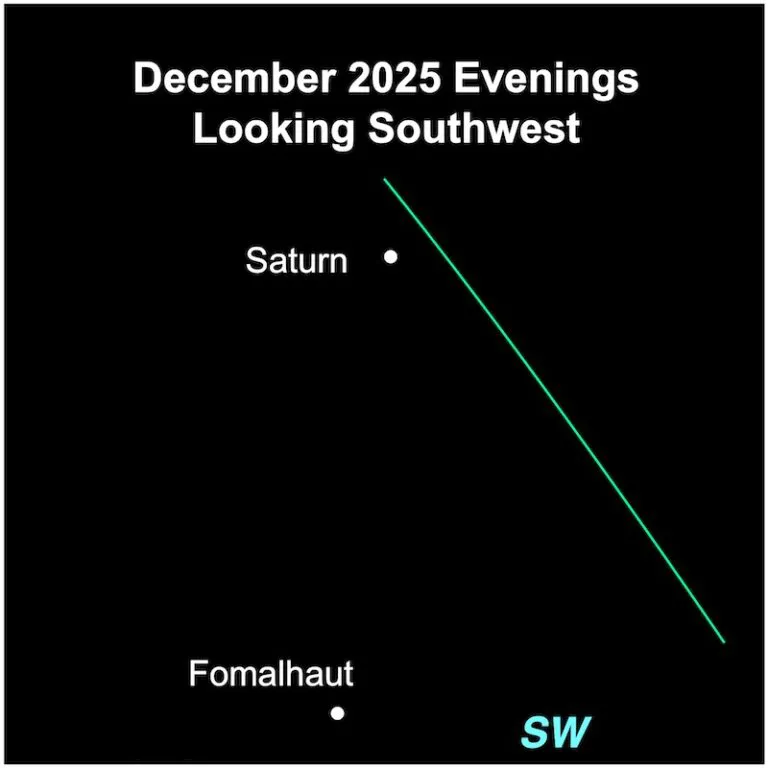
Here’s an overhead chart depicting 2 bright planets visible in the December evening sky from the Northern Hemisphere. Jupiter will rise in the eastern evening sky and remain visible through dawn. Meanwhile, Saturn will shine brightly in the western sky and set before midnight by the month’s end. The 2 planets lie along the path the sun travels in the daytime (the green line on our chart).

December Morning Planets
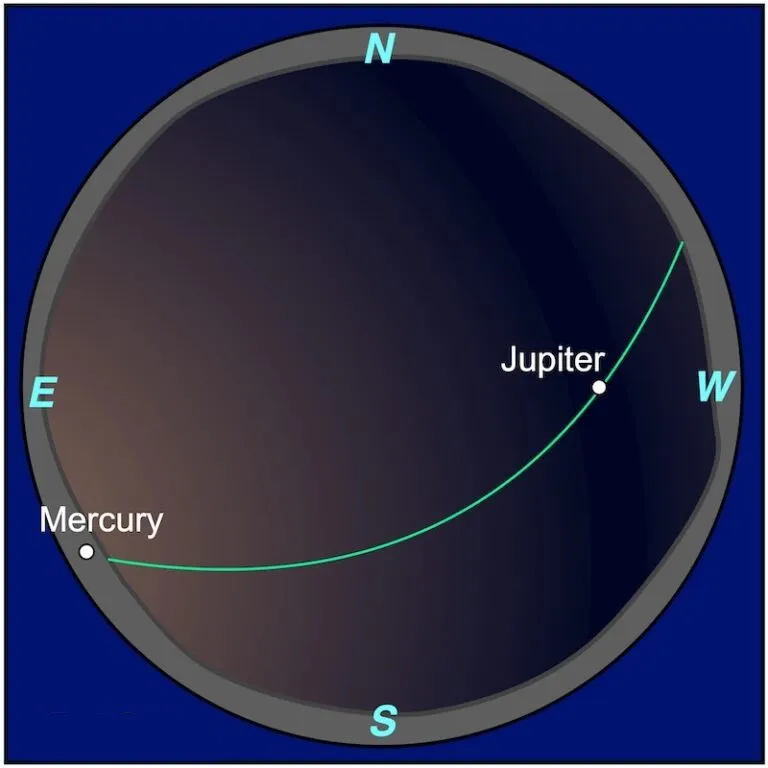
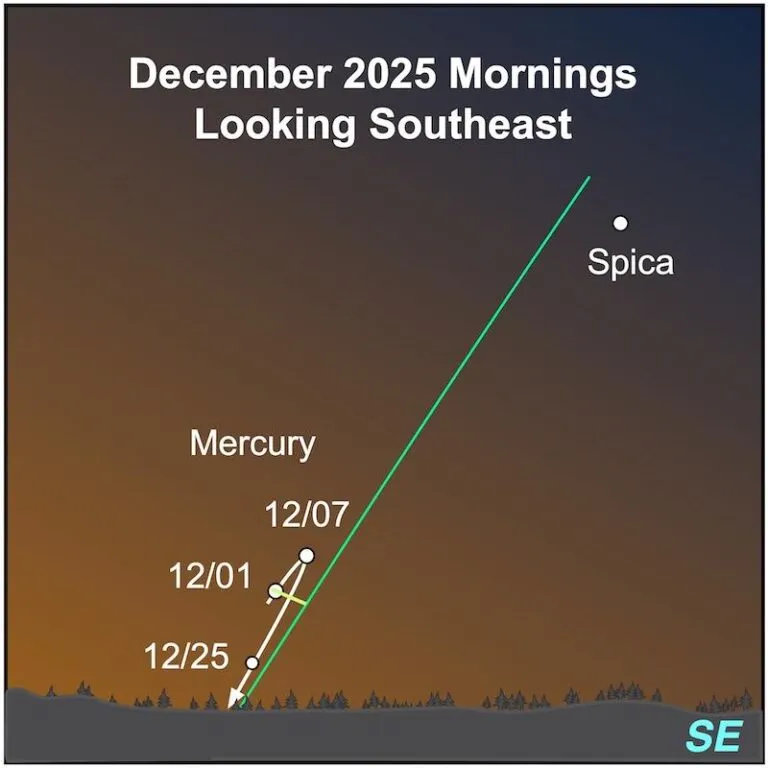
Here’s an overhead chart depicting 2 bright planets in the December morning sky as observed from the Northern Hemisphere. Jupiter will be prominently positioned high in the western morning sky. Mercury will be shining low in the eastern morning twilight. This is Mercury most favorable morning apparition of 2025 for the Northern Hemisphere. But look soon! The elusive planet will gradually disappear from view and be gone sometime around Christmas. Note that the 2 planets lie along the path the sun travels in the daytime (the green line on our chart).
December 20: New moon
The moment of new moon will fall at 1:43 UTC on December 20, 2025. That’s 7:43 p.m. CST on December 19. New moons rise and set with the sun. Plus, this is the 3rd of 3 new micromoons – or most distant new moons – in 2025. Nights around the new moon are perfect for stargazing, and this one is near the peak of the Ursid meteor shower.
December 21 solstice
The 2025 December solstice will happen at 15:03 UTC. That’s 9:03 a.m. CST in North America. For us in the Northern Hemisphere, the December solstice marks the longest nights and shortest days of the year. For the Southern Hemisphere, it marks the shortest nights and longest days. After this solstice, the sun will begin moving northward in our sky again. Happy solstice to all!
December 21, 22, 23 and 24 evenings: Looking at holidays lights? Watch for the young moon!
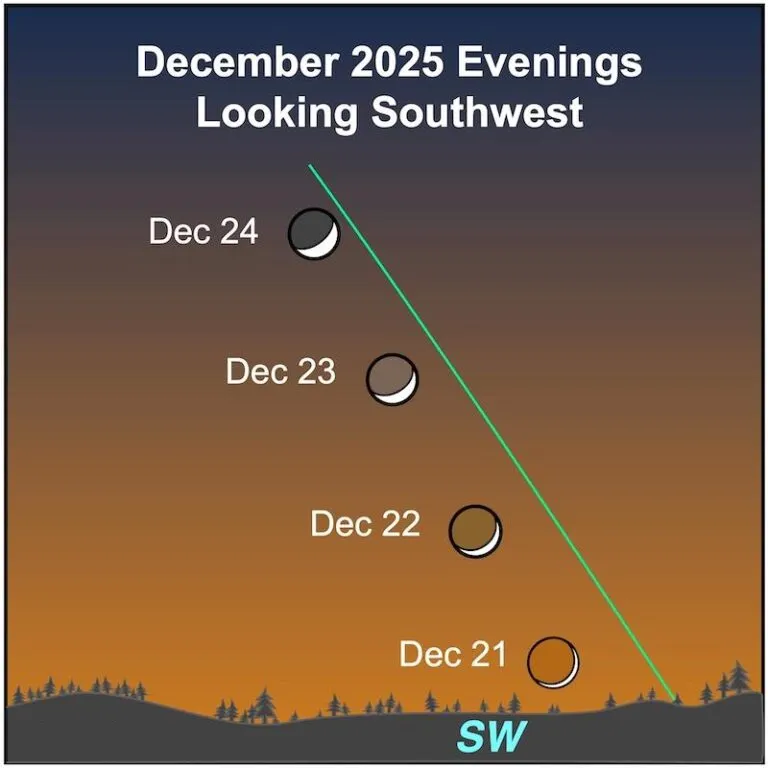
If you’re out looking at holiday lights, check out the pretty young moon. The waxing crescent moon will hang low in the western sky about 30 minutes after sunset on December 21, 22, 23 and 24. It’ll set later each night, but you can start looking for it soon after sunset. Try to catch it during the evening twilight, when it’ll be shining in a colorful sky.
Ursid Meteor Shower Overnight December 22
The best time to watch for Ursids is before dawn on December 22. In 2025, the new moon occurs a few days before the Ursids peak, so you can watch for them in a dark sky. For the best view, find a dark country site to watch the starry sky. Under ideal conditions you might see 5-10 meteors an hour.
December 26 Evening: Moon Slips by Saturn
The waxing crescent moon will pay a close visit to the steady golden light of Saturn on the evening of December 26. They’ll set a little before midnight. The moon will also be near Saturn the night before and after the 26th.
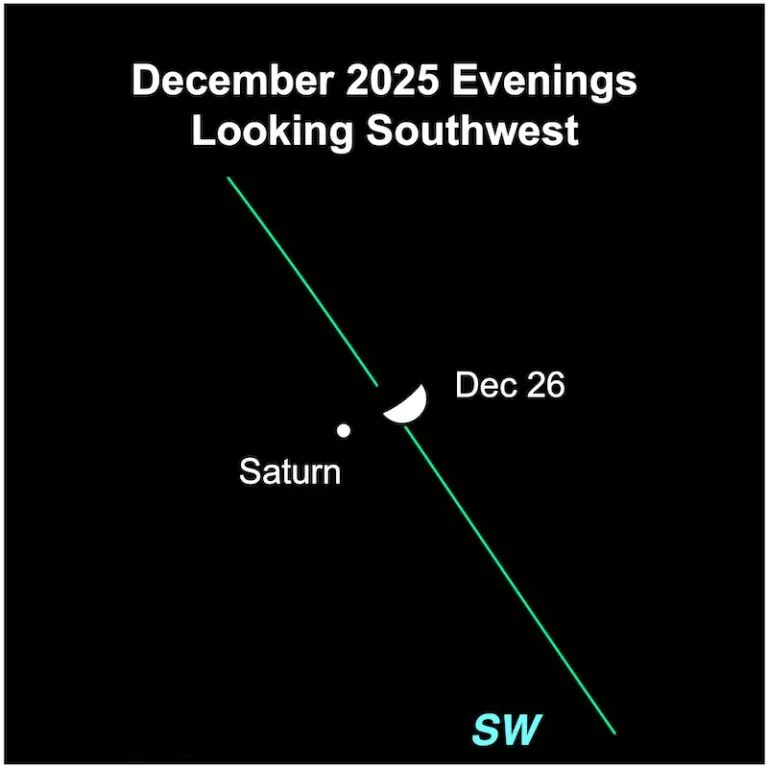 December 27: 1st quarter moon
The moment of 1st quarter moon will fall at 19:10 UTC on December 27, 2025. That’s 1:10 p.m. CST. Did you know you can see an X and V on the 1st quarter moon? A 1st quarter moon rises around noon your local time and sets around midnight. Watch for a 1st quarter moon high in the sky at sundown.
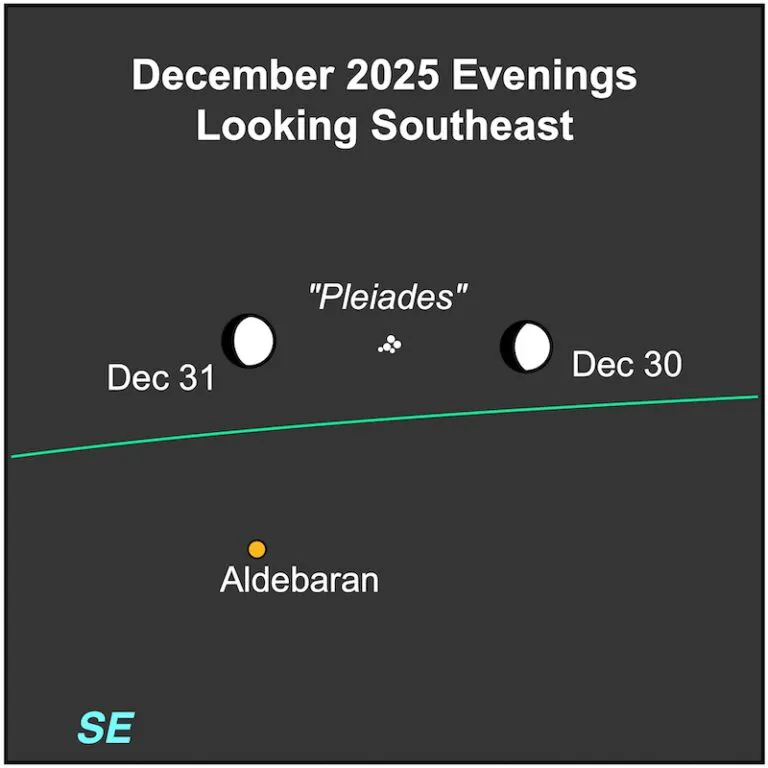
December 30 and 31 evenings: Moon, Pleiades and Aldebaran
On the evenings of December 30 and 31, the waxing gibbous moon will be visible near Aldebaran and the Pleiades star cluster. Aldebaran is the fiery eye of Taurus the Bull. They’ll be visible for a few hours past midnight.
 December stars and constellations
If you’re out stargazing on any December evening, look for these stars and constellations high overhead in the evening sky. Give your eyes time to adjust to the darkness. And consider heading to a dark-sky site for the best views of the stars.
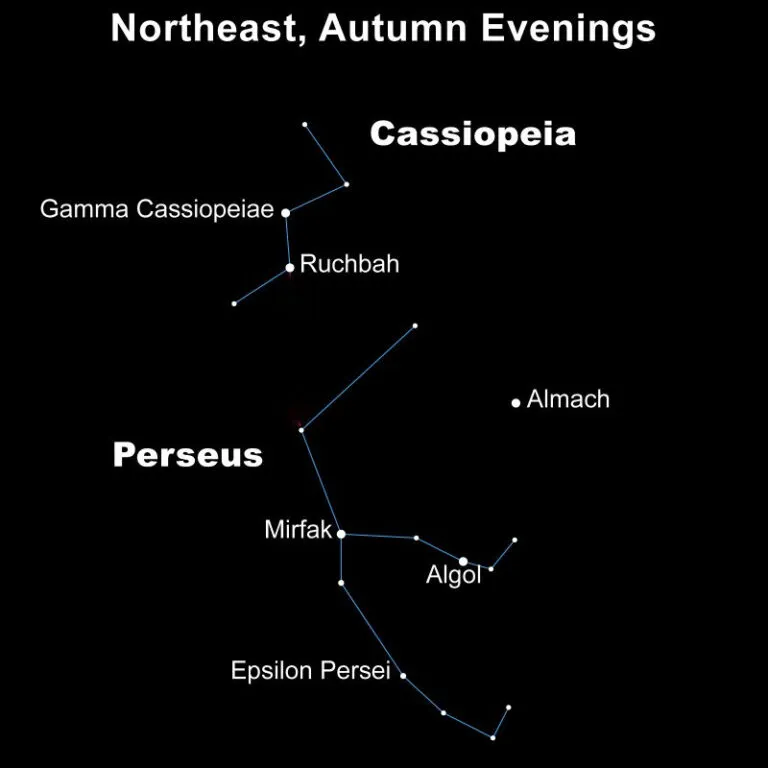 In December, look overhead and northward for the M- (or W-) shaped constellation Cassiopeia the Queen. Then, look nearby for the graceful shape of the constellation Perseus and its bright star Mirfak. Plus, Perseus contains the star Algol – known as the Demon Star – because it changes in brightness roughly every 3 days.
 Cassiopeia can also help you find the Double Cluster in Perseus. It consists of 2 open star clusters near each other on the sky’s dome. The 2 clusters reside in the northern part of the constellation Perseus, quite close to the constellation Cassiopeia the Queen. Just scan that area with your binoculars for 2 glittering groups of stars. The breathtaking Double Cluster will be there.
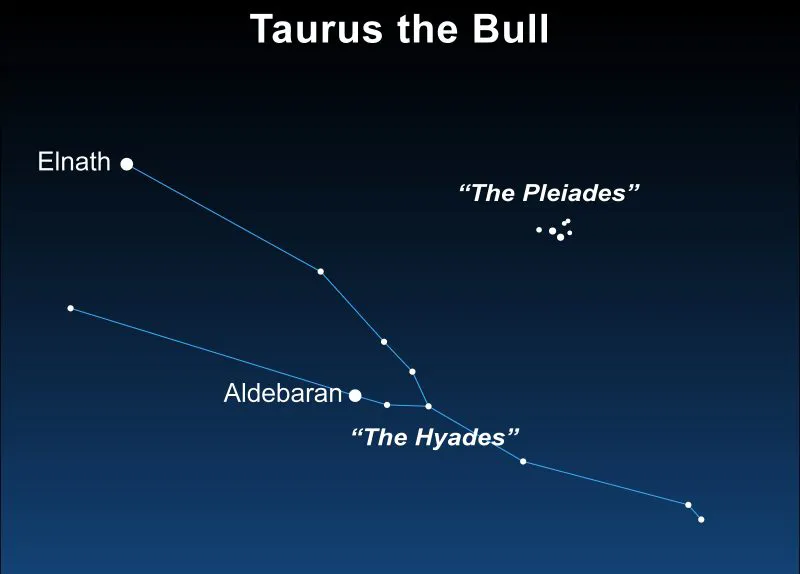 The constellation Taurus the Bull is visible in the evening sky now and is close to the easy-to-see constellation Orion the Hunter. It’s home to 2 favorite star clusters and a famous supernova remnant. The Hyades open star cluster forms the V-shaped face of the Bull in Taurus with the bright red star Aldebaran as the fiery eye of the Bull. Another open star cluster, the Pleiades, is nearby.
December evening planets
Bright Jupiter will rise in the east soon after sunset this month. And it’ll be near the twin stars of Gemini, Castor (the slightly dimmer one) and Pollux (the slightly brighter one). Also, the bright star Procyon is not far away. Jupiter is visible through dawn and will reach opposition – when we fly between it and the sun – on January 10, 2026. It’ll be biggest and brightest then. The moon visits Jupiter around December 7.
Saturn lies in the west in the evening hours of December. It’s the brightest object in that part of the sky, other than the passing moon. And Saturn lies far above a star of similar brightness, Fomalhaut. Saturn reached opposition - when Earth flew between Saturn and the sun - on September 21. The ringed planet rises well before sunset and will set after midnight around December 1st, and then, by month’s end, it’ll set before midnight. Saturn will shine at 1.2 magnitude by month’s end as it lies among the stars of Aquarius the Water Bearer. The rings of Saturn open back up a little this month, going from -0.6 degrees to -1.5 degrees. The moon visits Saturn on December 26 and 27. Saturn will remain visible in the evening sky through February 2026.
 December morning planets
For Northern Hemisphere viewers, Mercury will shine in the bright morning twilight low on the eastern horizon from December 1 until around December 25. It’ll reach its greatest distance from the sun on December 7. This will be the best morning apparition of Mercury for the Northern Hemisphere in 2025.
 Bottom line: The December solstice is coming! Find out what you can look for in the sky to help you connect to this special day.
 Google
 Amazon
There are no customer reviews yet . Leave a Reply !