

 @AstroBassDee
 71
@AstroBassDee
71
71
@AstroBassDee
71

March 2026
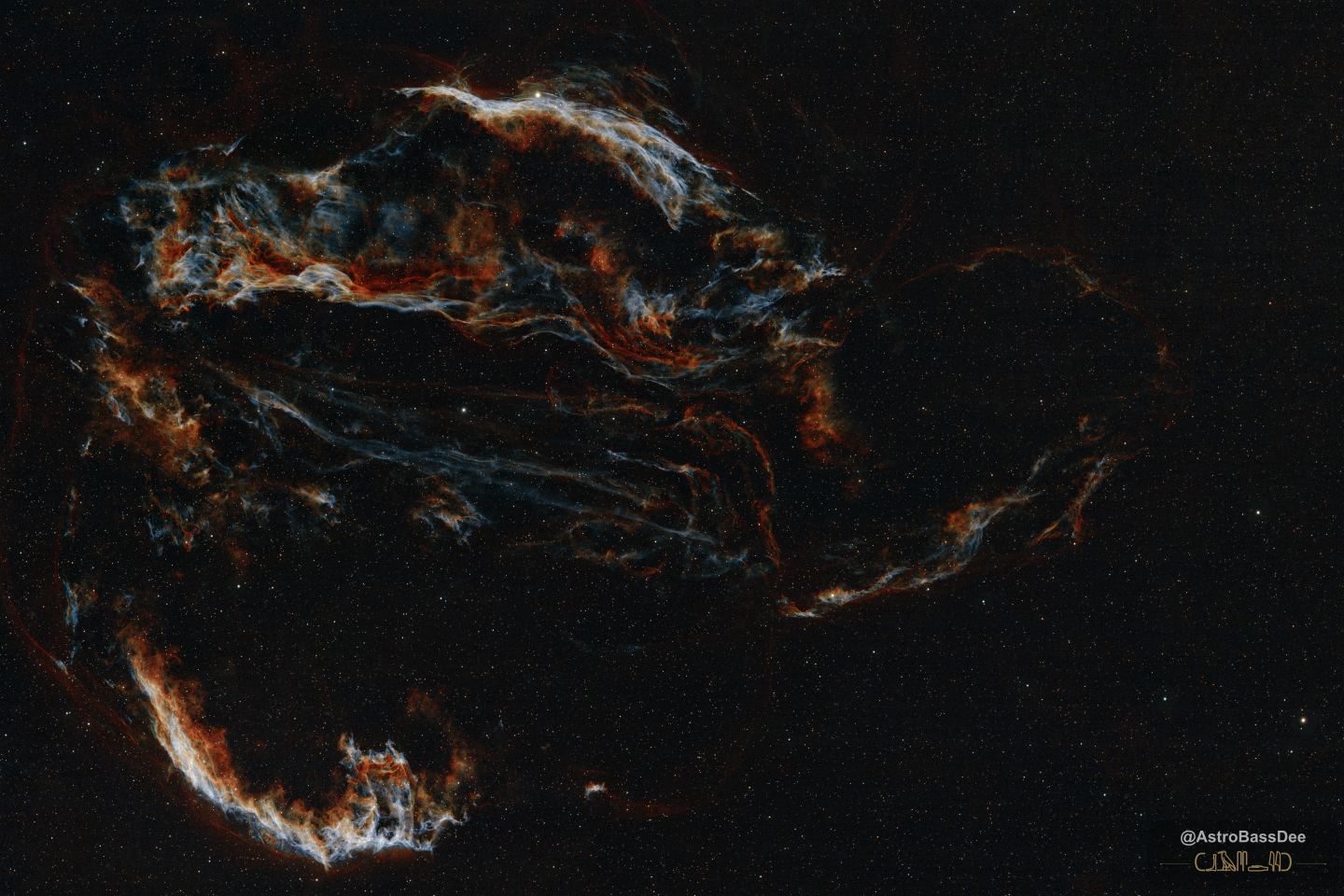
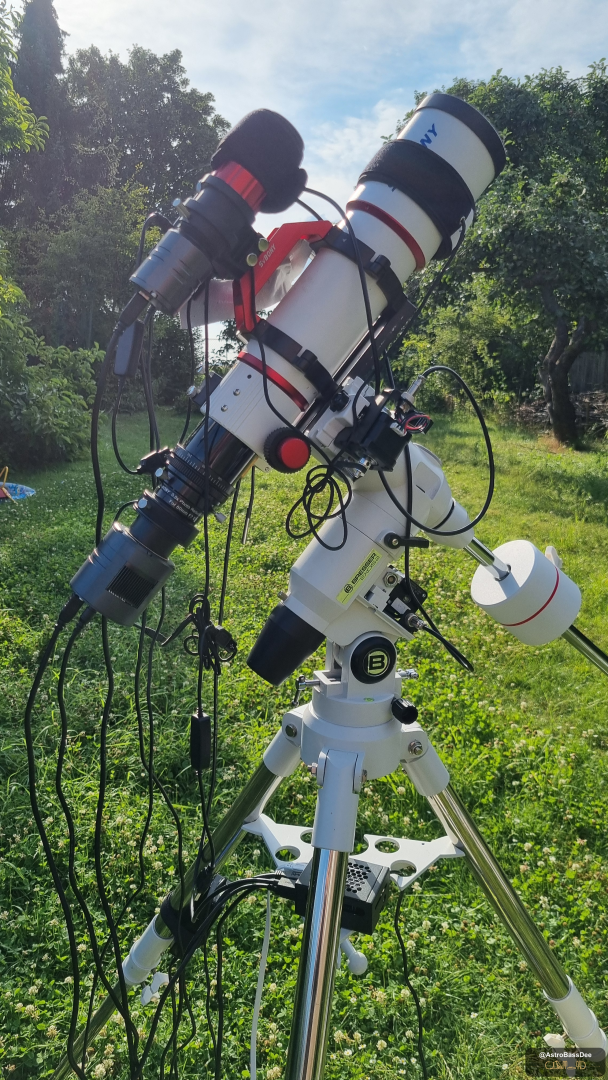
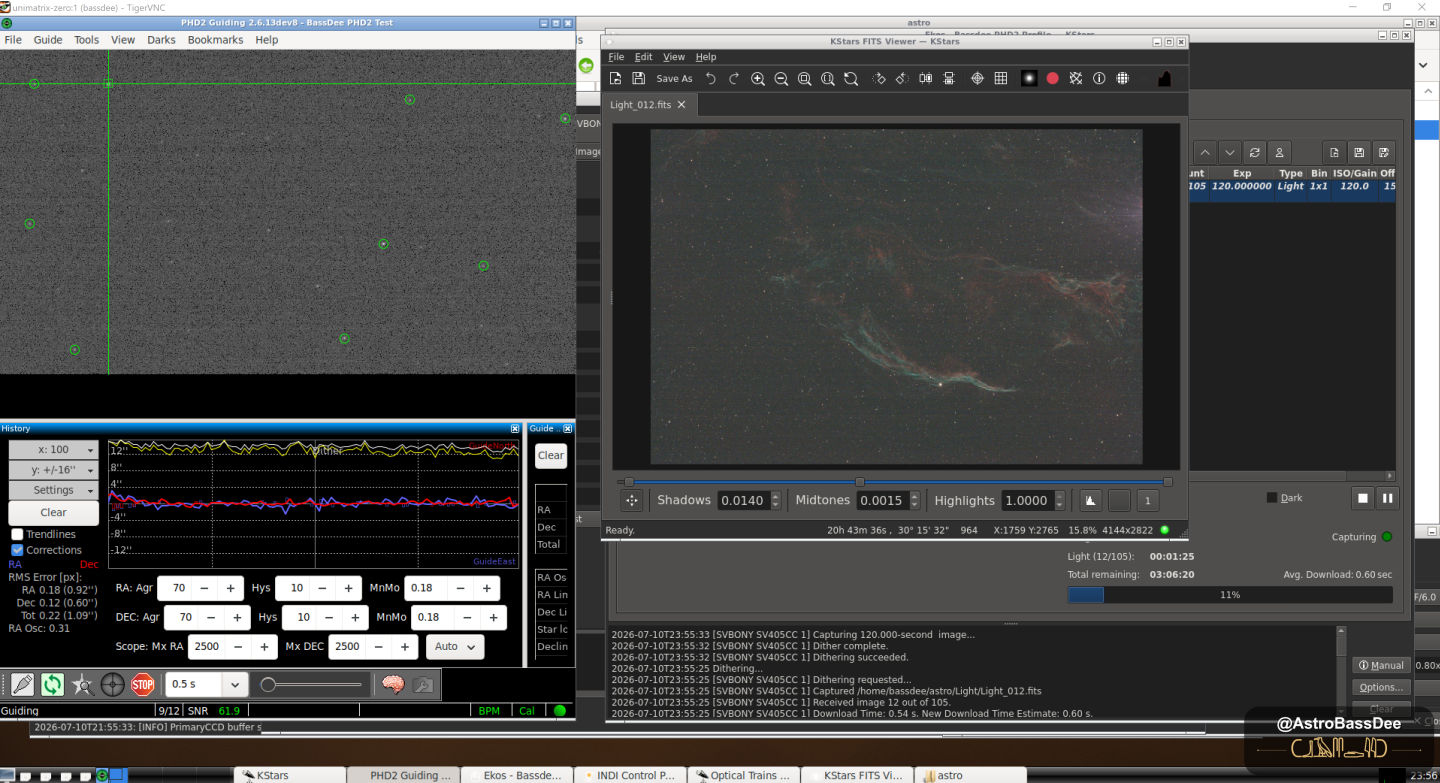
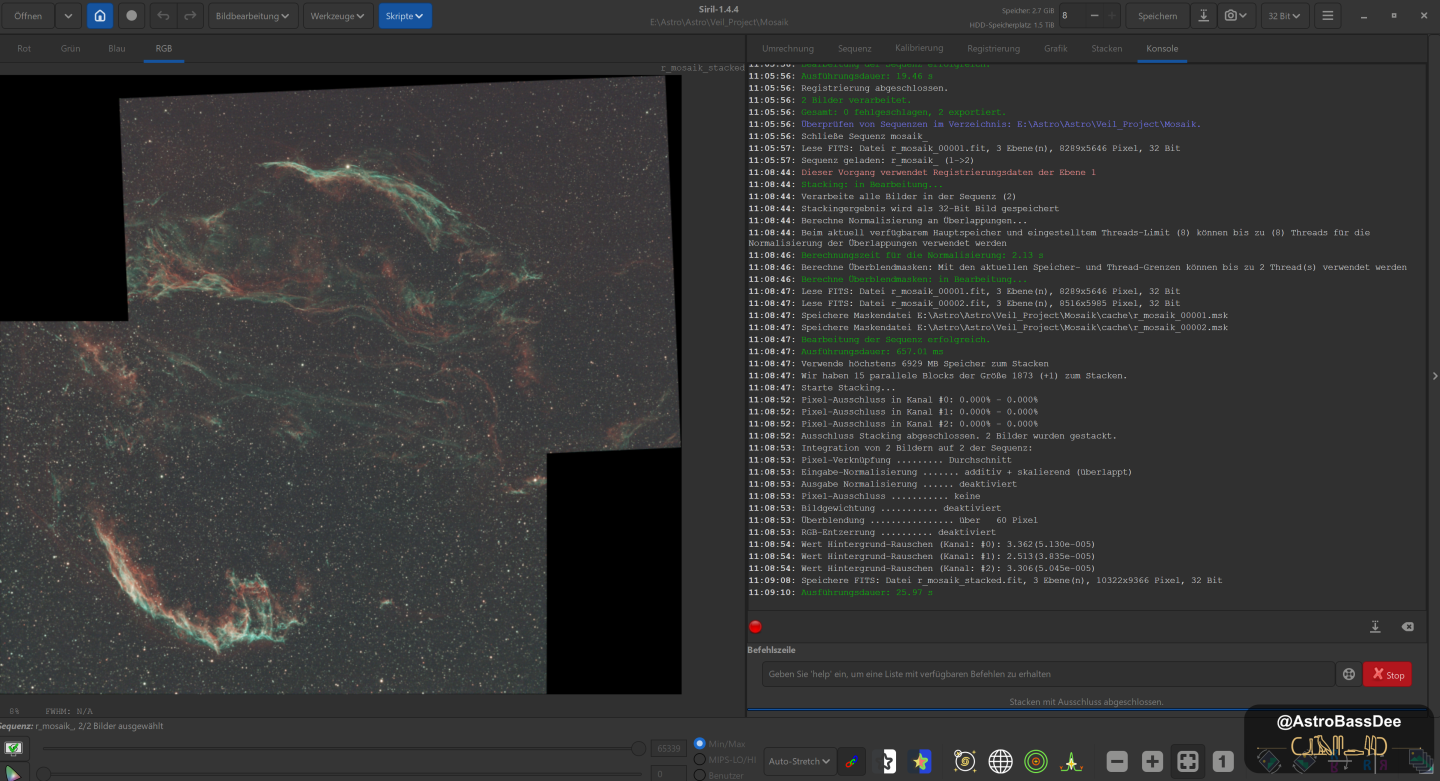
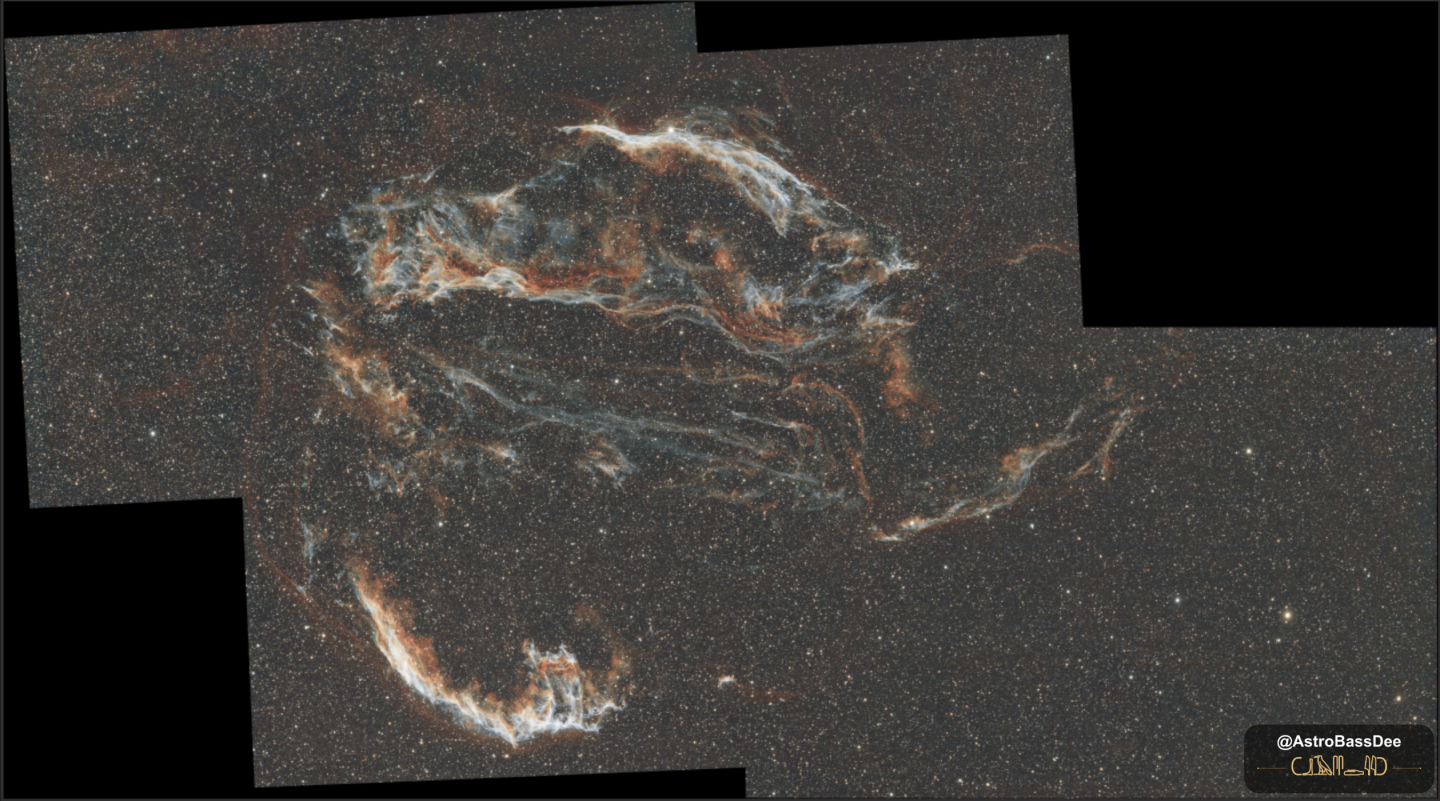
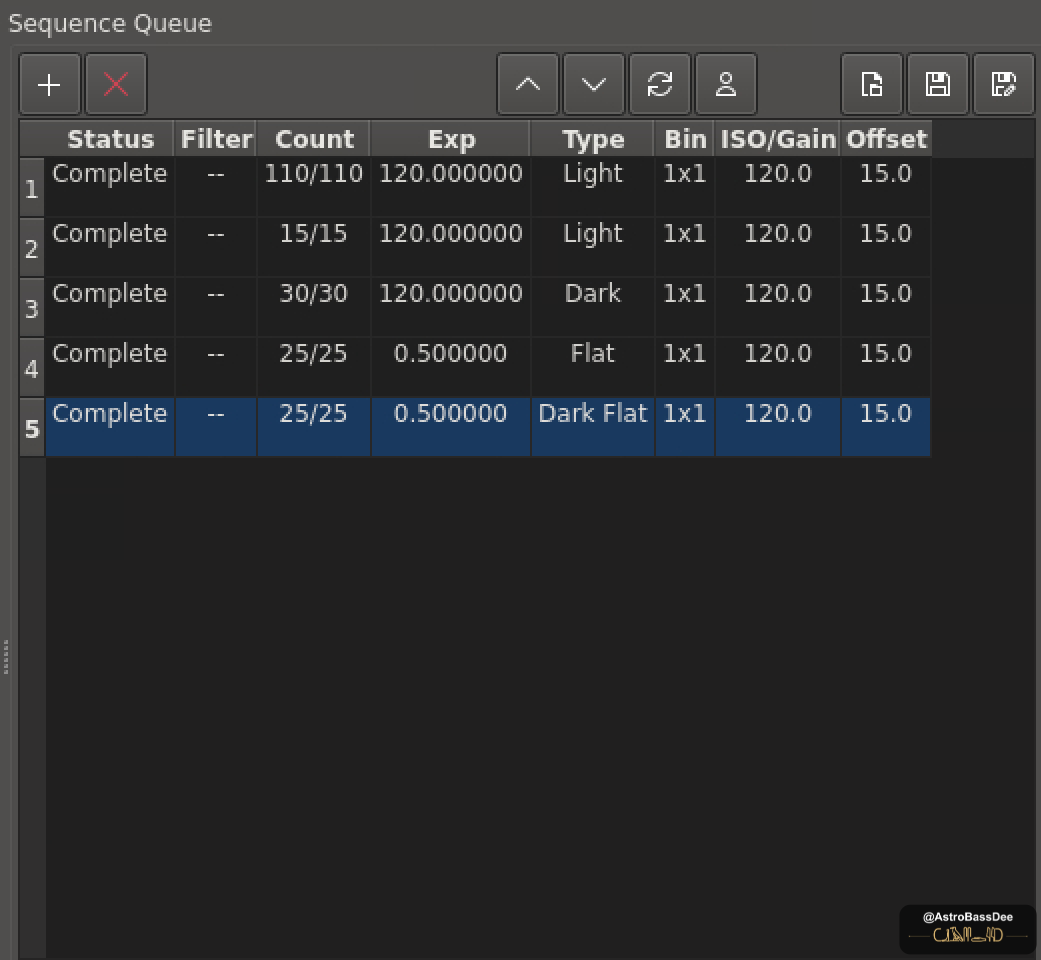
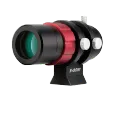
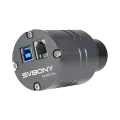
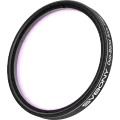
I'd planned to finish in four nights. In the end it took seven, and two mosaic tiles turned into five. The plan was the SVBONY Veil Nebula Challenge: capture both the Eastern Veil (NGC 6992) and the Western Veil, the Witch's Broom (NGC 6960), the two brightest arcs of this supernova remnant in Cygnus, in one wide mosaic. My setup Telescope: SVBONY SV550 80ED (80/480 apo triplet, f/6) with SV193 0.8× reducer, so 384 mm at f/4.8Camera: SVBONY SV405CC (Sony IMX294 OSC), cooledFilter: SVBONY SV220 Dual Narrowband, 3 nm H-alpha / OIIIMount: Bresser EXOS-2 with OnStep kitGuiding: SVBONY SV165 guide scope with SV305C ProFocuser: Gemini autofocuserControl: Raspberry Pi 5 running EKOS / KStarsAcquisitionThe whole complex is about three degrees across, quite a bit more than my 80ED covers in a single frame, so it had to be a mosaic. I shot 120-second subs at gain 120 with the sensor cooled to -10 °C, each through the 3 nm narrowband filter. Every session was calibrated with its own darks, flats and dark-flats. The SV220 3 nm really impressed me here. Until now I'd only worked with the SV240 or a plain UV/IR-cut filter. Moving to 3 nm made a bigger difference than I'd expected: the narrow passband keeps light pollution and moonlight out, and the OIII structure and Ha filaments come through much cleaner than I ever got with the wider filters. Frame counts: NGC 6992 (Eastern Veil): 135 lights across 2 sessions (55 + 80)NGC 6960 (Western Veil): 144 lights across 2 sessions (41 + 103)Additional panel, east side: 86 lightsAdditional panel, west side: 99 lightsFifth panel, west side: 73 lightsThat comes to 537 subs in total, so just under 18 hours. How 2 tiles became 5 I started with two panels, east and west. On their own each nebula was fully framed, nothing cut off. But once I combined the two tiles into a mosaic, the corners of the overall image were left empty. It didn't look good, and I couldn't crop it out without cutting into the nebula. So I re-planned and added two more panels, one on the east side and one on the west, to fill the corners. When I stitched it again, a piece was still missing, so I went out once more for a fifth panel. Annoying in the moment, but looking back I'm glad I did it. Processing The base stacking was done in Siril 1.4.4: each panel calibrated and registered separately (global star alignment, two passes), then stacked with sigma clipping (3.0 / 3.0 low/high) in 32-bit. I did experiment with drizzle, but it didn't make it into the final image. From there the workflow went in a few stages. Per panel, before stitching: remove the green cast, run the Aberration Remover, then AutoGradientRemoval and a GraXpert background extraction, so every tile went into the mosaic clean and flat. Mosaic: once the panels were combined, I cropped the edges, ran SPCC for the colour calibration, denoised with GraXpert and sharpened with the Cosmic Clarity sharpening tool. Then StarNet++ twice, first to desaturate the stars, then to separate them from the nebula. That left me with a starless image and a star mask to work on independently. Starless: stretched with GHS (Generalised Hyperbolic Stretch), then shaped with VeraLux Curves. Stars: stretched separately (a light Asinh, then a histogram stretch) and recombined with the starless image at the end.
My name is Sebastian, and online I go by @AstroBassDee. I've been doing deep-sky astrophotography for about a year now, imaging from Lower Saxony in Germany. I started out with a DSLR and a cheap achromat, and have since moved to a cooled, narrowband setup built around SVBONY gear. I shoot pretty much everything in the deep sky, from nebulae to galaxies, and the Veil had been on my list for a while.


 Google
 Amazon
No data Yet