


Table of Contents
March 2026 Total Lunar Eclipse: A Guide to the 'Blood Moon'
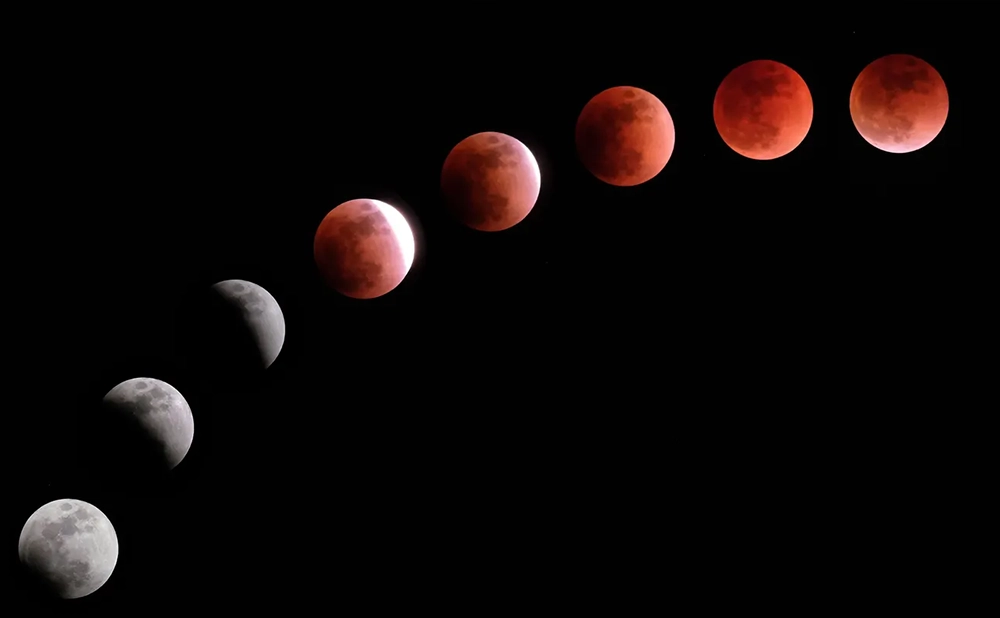
On March 3, 2026, Earth will slide between the Sun and the Moon, casting our planetary shadow across the lunar surface and painting it the color of deep sunset. This total lunar eclipse - aptly called a "Blood Moon", offering one of our last chances to witness this phenomenon until the final nights of 2028. Whether you're an avid stargazer or just enjoy looking up on a clear night, here's everything you need to make the most of this month's cosmic spectacle.
What is a Total Lunar Eclipse?
A total lunar eclipse is a breathtaking celestial event that occurs when the Earth moves directly between the Sun and the Moon, casting its shadow upon the lunar surface.
The Science Behind the "Blood Moon":This alignment is also called a syzygy, and it can only happen during a full moon. During totality, when the Moon is completely within Earth's darkest shadow (the umbra), it doesn't disappear entirely. Instead, it often turns a dramatic reddish-orange or copper color. This phenomenon, popularly called a "Blood Moon," happens because sunlight passing through Earth's atmosphere is filtered and scattered. The shorter blue wavelengths are scattered away, while the longer red and orange wavelengths are bent (refracted) towards the Moon, bathing it in a haunting crimson glow. The exact color can vary from deep red to orange or even brown, depending on the amount of dust and clouds in Earth's atmosphere at the time.
Unlike a solar eclipse, observing a lunar eclipse is perfectly safe - you don't need any special equipment or filters to enjoy this cosmic spectacle with your naked eye.
When is the Total Lunar Eclipse 2026?
Mark your calendars globally:
TheMarch 2026 Total Lunar Eclipsespans two calendar dates across time zones:
- UTC Date: Tuesday, March 3, 2026
- UTC Time Range: 08:44 UTC (Penumbral Eclipse begins) to 14:23 UTC (Penumbral Eclipse ends). The key total eclipse phase lasts 58 minutes.
Here's the complete timeline in Coordinated Universal Time (UTC): - Penumbral Eclipse begins: March 3, 08:44
- Partial Eclipse begins: March 3, 09:50
- Total Eclipse begins: March 3, 11:04
- Maximum Eclipse: March 3, 11:34
- Total Eclipse ends: March 3, 12:03
- Partial Eclipse ends: March 3, 13:17
- Penumbral Eclipse ends: March 3, 14:23
Overall Duration:The entire event, from the first hint of shadow to the last, takes about 5 hours and 39 minutes.
When is the Next Total Lunar Eclipse?
The upcoming March 3, 2026, eclipse holds special significance. It will be the last total lunar eclipse visible from Earth until December 31, 2028. That next "New Year's Blood Moon" will be a spectacular way to ring in the new year nearly three years from now.
To set your long-term astronomical calendars, here are the total lunar eclipses following the 2028/2029 event:
- December 31, 2028 - January 1, 2029
- June 25-26, 2029
- December 20-21, 2029
- April 25-26, 2032
Where to See a Total Lunar Eclipse?
This eclipse offers a fantastic viewing opportunity for billions of people. Here’s the visibility breakdown:
Regions that will see at least part of the eclipse include:East in Europe, Asia, Australia, North America, South America, over the Pacific, Atlantic, and Indian Oceans, as well as the Arctic and Antarctica.
Here’s what different observers can expect across key time zones(during the totality phase):
- Eastern Asia & Australia: It will be evening, shortly after moonrise. In Nanjing, for example, totality runs from 19:04 to 20:03 local time.
- The Pacific Ocean: This is the epicenter! The eclipse will be overhead around midnight local time.
- North & Central America & Western South America: It will be visible in the pre-dawn to early morning hours before moonset. In parts of the Western U.S., totality occurs between roughly 03:00 and 05:00 local time.
- Africa and most of Europe: Unfortunately, this eclipse will not be visible as it occurs during their daytime or when the Moon is below the horizon.
For Your Exact Location:The best way to plan your viewing is to use aninteractive eclipse map. Websites like TimeandDate.com offer tools where you can zoom in, search for your town or city, and get precise start/end times, an animation of what you'll see, and visibility conditions (like whether the Moon will rise or set during the eclipse).
Top Tips for the Best Viewing Experience
- No Gear Needed, But… Binoculars or a telescope will dramatically enhance the view, allowing you to see the subtle colors and details of the lunar surface during totality.
- Seek Darkness. While visible from cities, getting away from bright lights will improve contrast and allow you to see more stars emerge as the moonlight dims. The Moon will be in the constellation Leo, making for a beautiful backdrop.
- Check the Weather. Lunar eclipses are only visible under clear skies. Consult your local forecast a few days before. Studying your location's average cloud cover for early March can also help you plan a trip to a more reliable spot.
- Dress Warmly & Be Patient. The event unfolds over several hours. Find a comfortable spot, bring a chair and warm drinks, and enjoy the slow, majestic celestial dance.
- What Else to Watch For: Around March 8, look west after sunset for a beautiful close conjunction (apparent meeting) of Venus and Saturn in the twilight sky - a lovely post-eclipse treat!
This March's total lunar eclipse is a prime astronomical event. With a great forecast, simple preparation, and this guide, you're all set to witness the Moon transform under Earth's shadow. Don't miss it - the next chance is nearly three years away.
Clear skies!
 Google
 Amazon
There are no customer reviews yet . Leave a Reply !