Astronomy Telescopes Designed for Stargazing
Whether you’re a beginner to astronomy or upgrading your stargazing equipment, our astronomical telescopes are engineered to deliver clarity, stability, and precision. Each astronomy telescope features high-quality optics, durable construction, and user-friendly controls that make it easier to locate stars, planets, nebulae, and deep-sky objects. Lightweight models are available for those seeking the best travel telescope, while advanced designs provide high-resolution viewing for experienced observers.
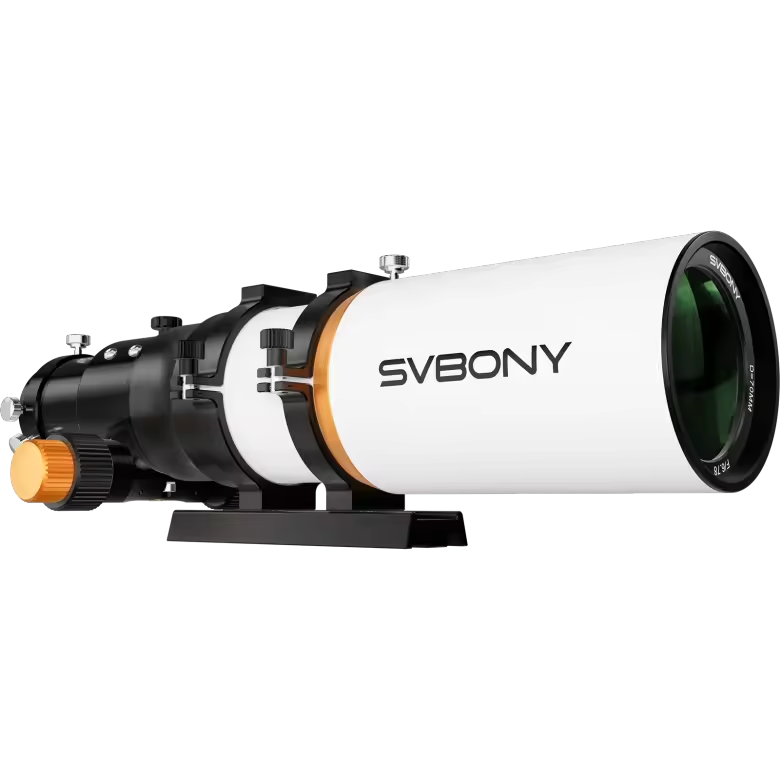
HOT
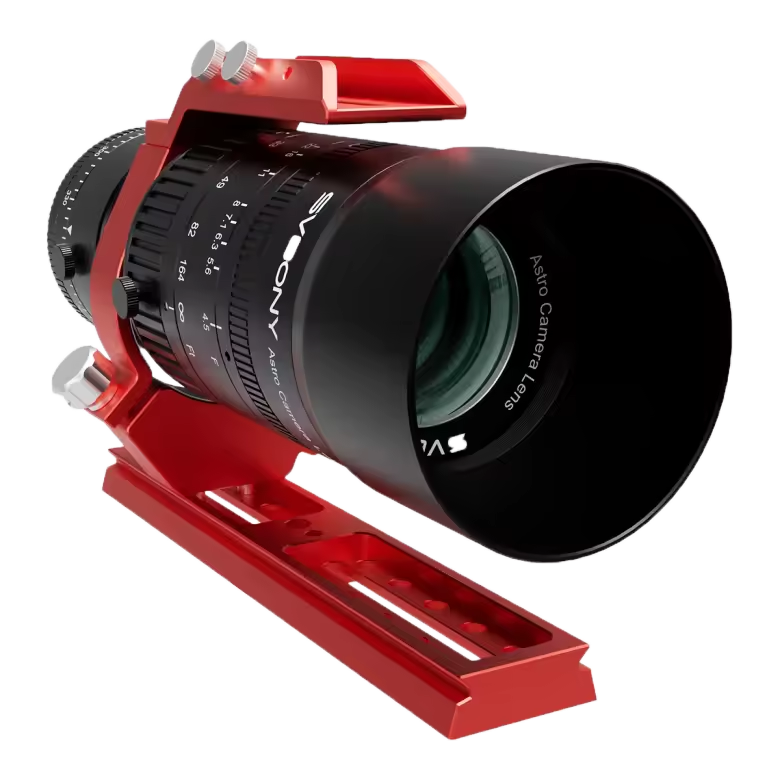
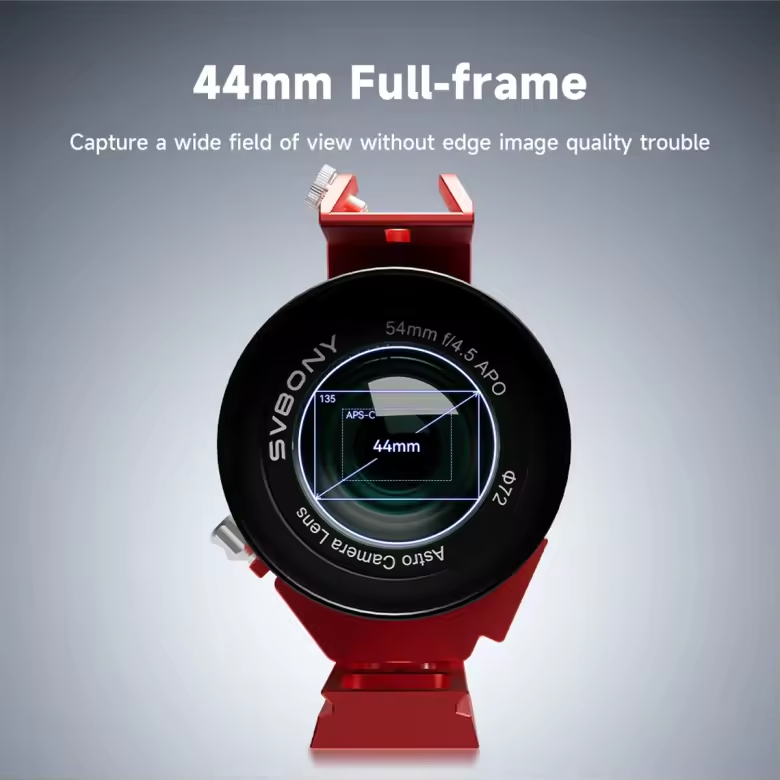
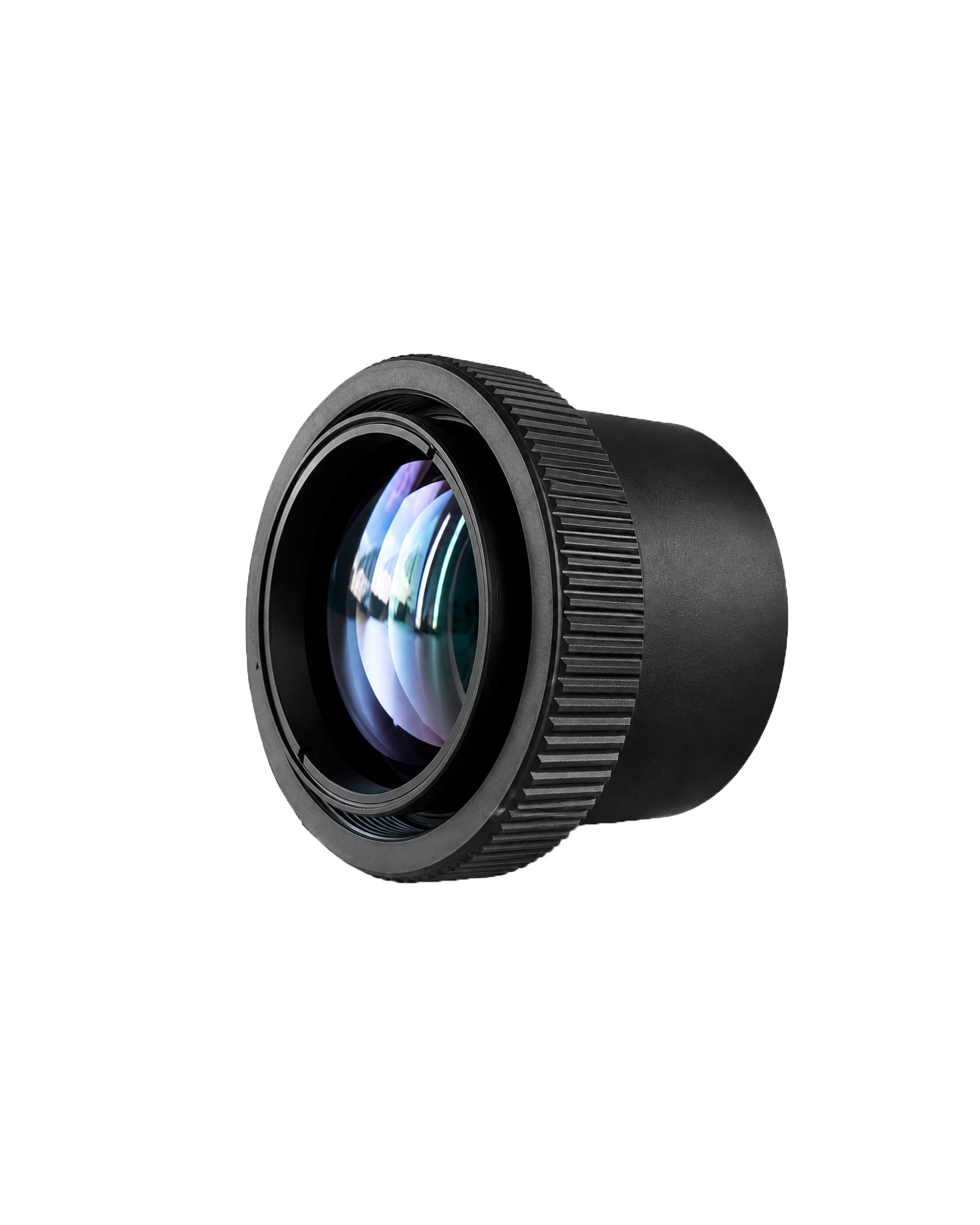
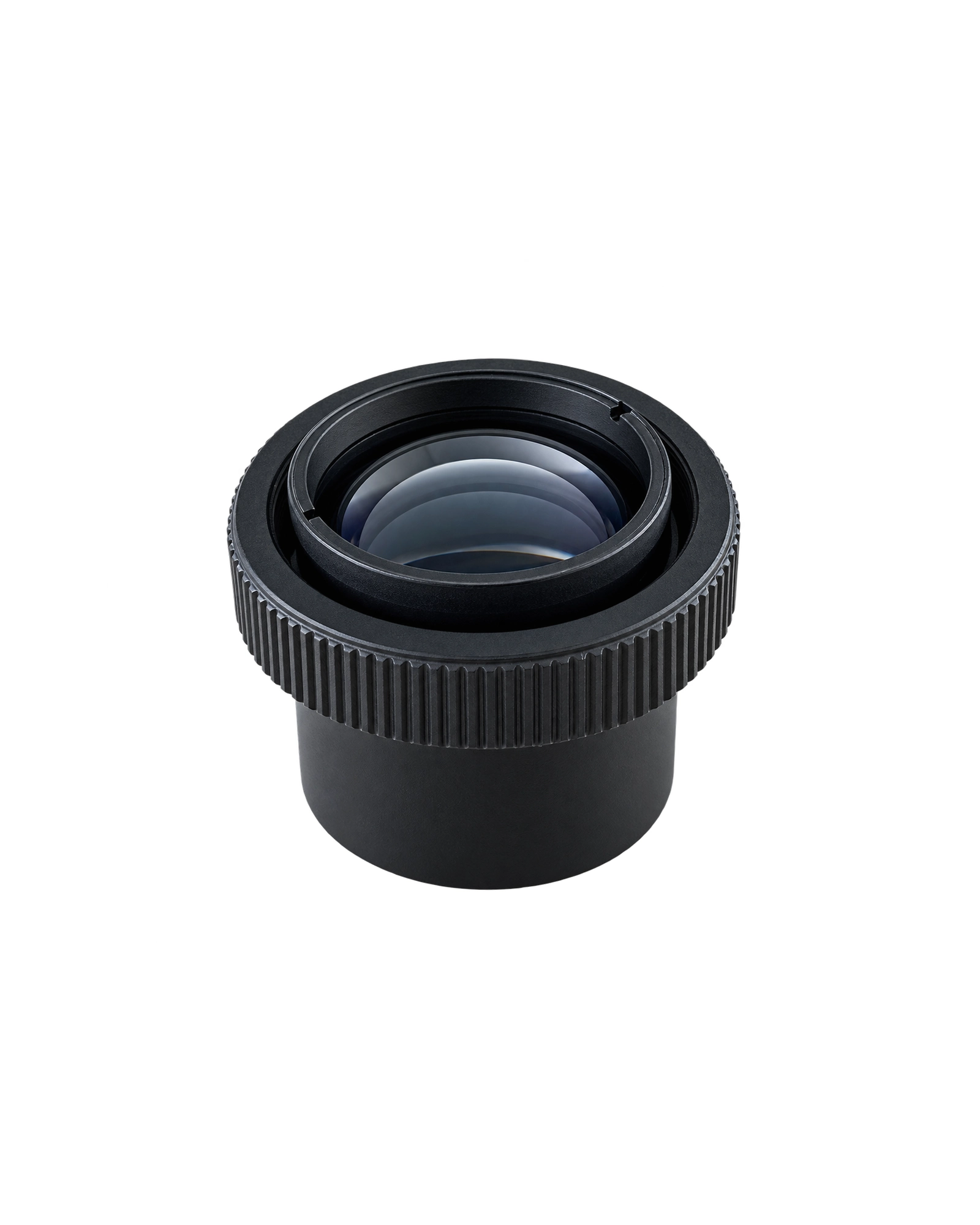
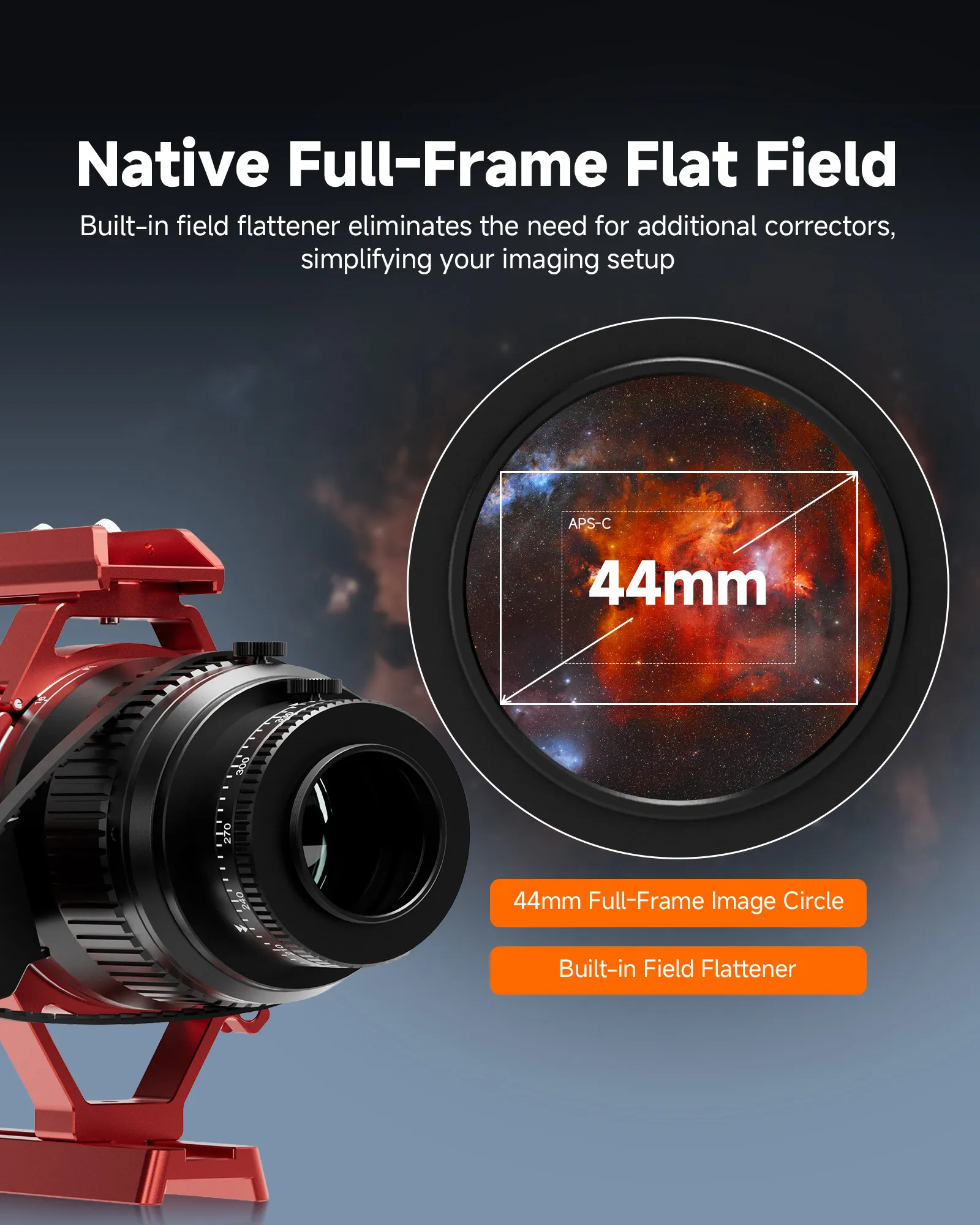
APO Petzval Astrograph Lens | SVBONY SV555
[{"Title":"Lightweight and Durable Design","Content":"The SV555 Astrograph Lens features a surface finish upgrade and a 90g weight reduction, offering enhanced portability and improved durability for easy handling during long observation sessions."},{"Title":"Upgraded Lens Hood \u0026 Precise Focus","Content":"With the lens hood reduced from 97mm to 93mm, the compact design helps reduce stray light, while the increased focus travel from 2.67mm to 3.22mm provides more precise focusing, ensuring sharp, clear images."},{"Title":"Advanced Petzval Optical System","Content":"Equipped with a 3-group, 5-piece Petzval lens structure, the SV555 delivers a wide, distortion-free field of view, ensuring crisp, detailed images for both planetary and deep-sky astrophotography."},{"Title":"Full-Frame Compatibility \u0026 Wide Aperture Range","Content":"The 44mm full-frame design avoids aperture blockage, providing a clear, wide view, while the aperture range from F22 to F4.5 allows flexible light gathering for various celestial objects."},{"Title":"Broad Compatibility with Accessories","Content":"Featuring an M48x0.75 filter thread and a 186mm dovetail plate, the SV555 Astrograph Lens is compatible with various filters and mounts, ensuring easy integration with a wide range of astrophotography setups."}]
NEW HOT
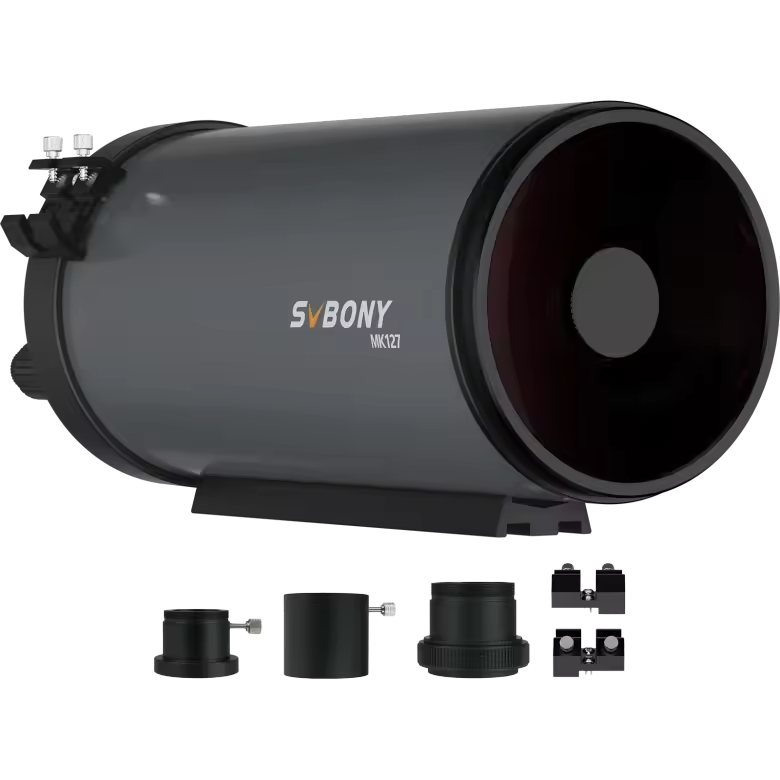
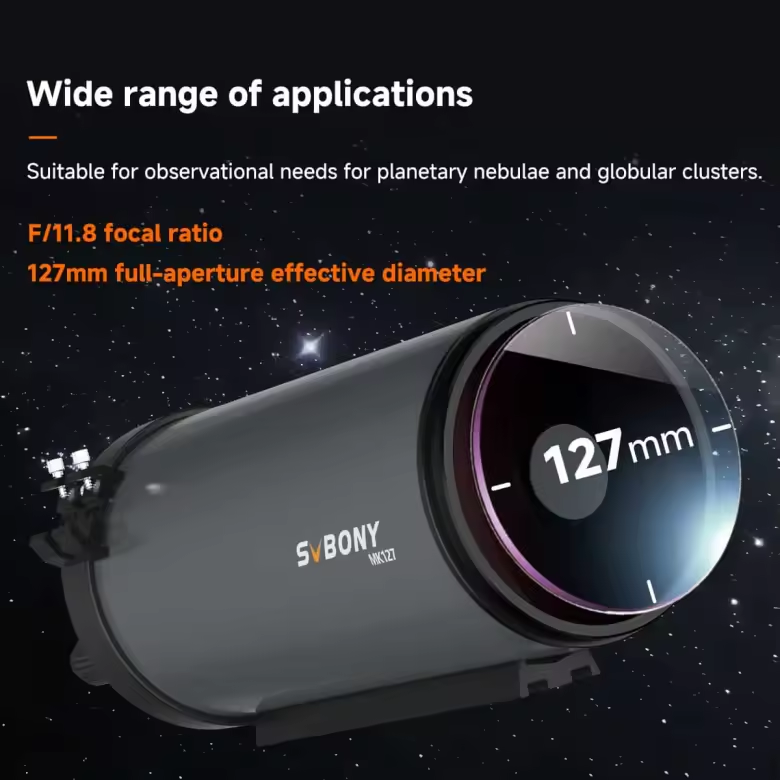
Maksutov-Cassegrain Telescope | SVBONY MK127
[{"Title":"High-Performance Optics","Content":"Mk127 built-in flat-field design and 3-mirror Mak structure with a separate secondary mirror, this combination corrects for coma and astigmatism, \u00A0delivering tack-sharp images with exceptional contrast and clarity.The mirror reflectivity over 99%, which significantly enhances contrast, you can get the detailed views of planetary nebulae and globular clusters;"},{"Title":"0.65X Focal Reducer","Content":"The 0.65x Focal Reducer can reducing the focal ratio of the MK127 from F11.8 to F7.68. This makes it easier to capture larger celestial targets and expands the telescope\u0027s imaging \u00A0field, making it right for capturing expansive skyscapes;"},{"Title":"127mm Aperture","Content":"The telescope features a large aperture of 127 mm and a focal ratio of F11.8. It balances light-gathering capability and field of view,delivering exceptional performance for both planetary and deep-sky observations;"},{"Title":"Dual-Speed Focuser Design","Content":"Coarse adjustment knob, enables rapid movement of the optical system to achieve a rough focus. Fine adjustment knob is used for minute adjustments to obtain optimal image clarity, enhancing your viewing experience;"},{"Title":"1.25\u0022 and 2\u0022 interfaces","Content":"The telescope features 2\u0022 and 1.25\u0022 eyepiece interfaces, offering compatibility with a wide range of eyepieces and allowing you to customize your observing setup for optimal performance."}]
NEW HOT
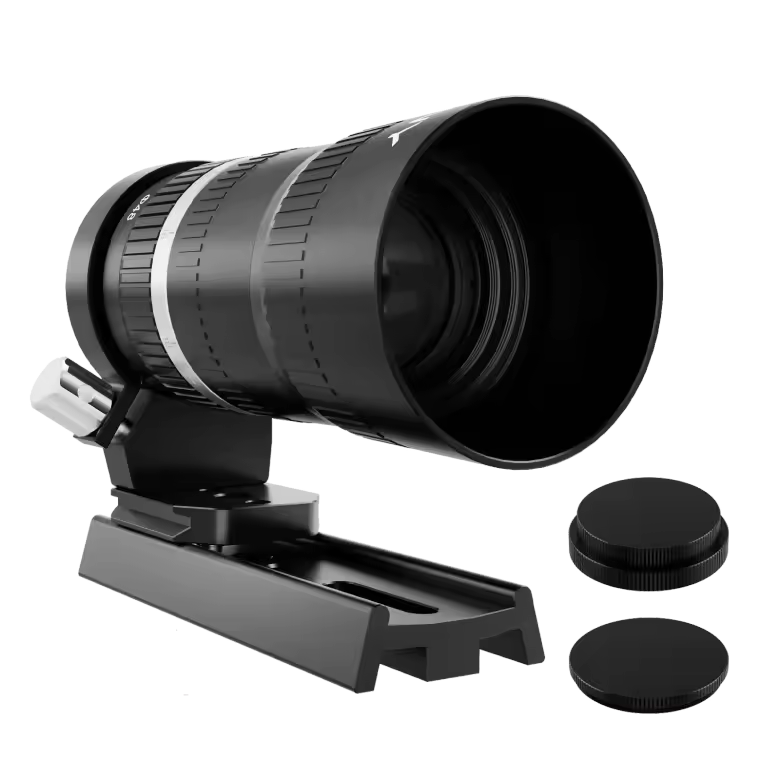
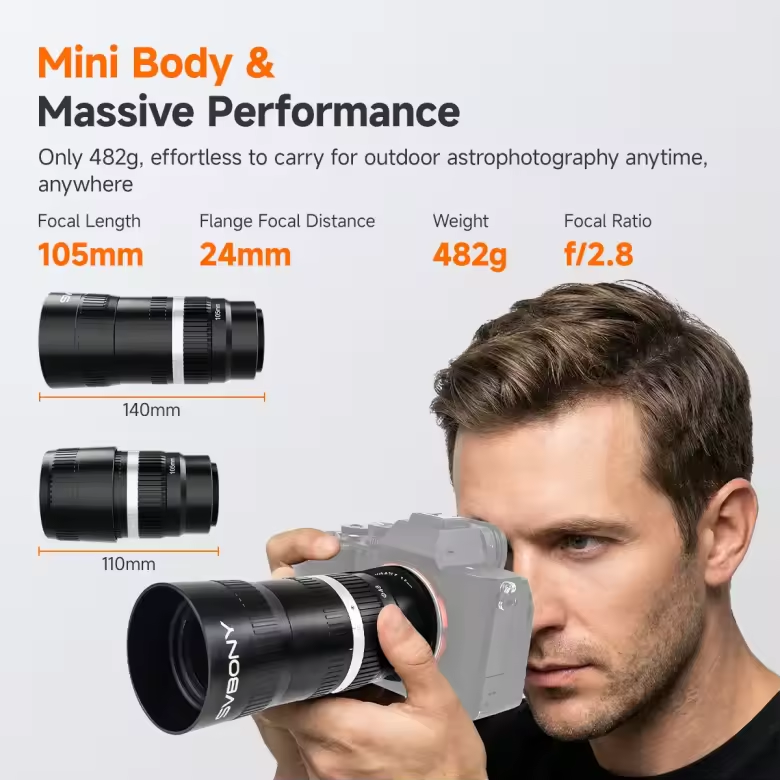
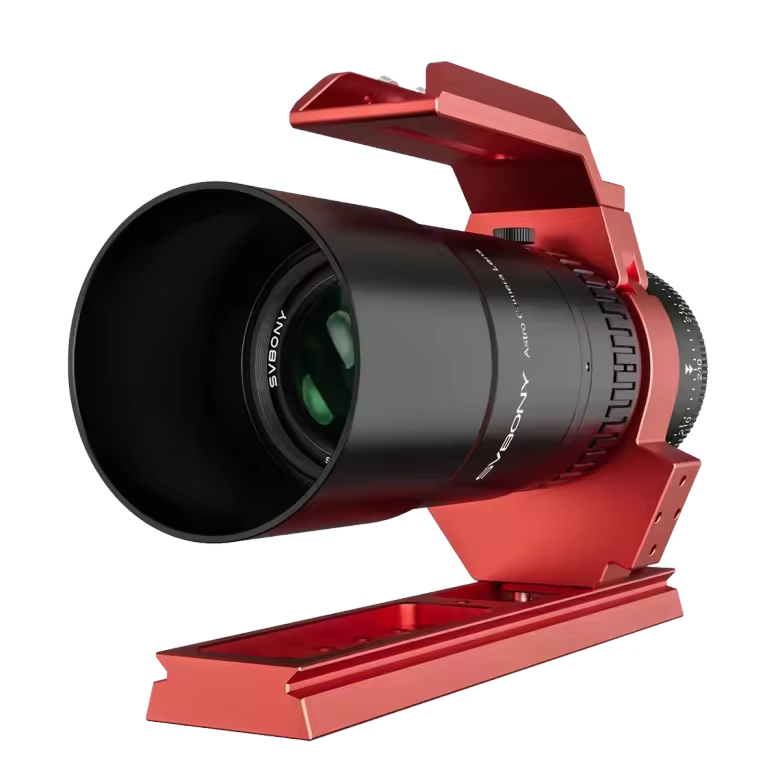
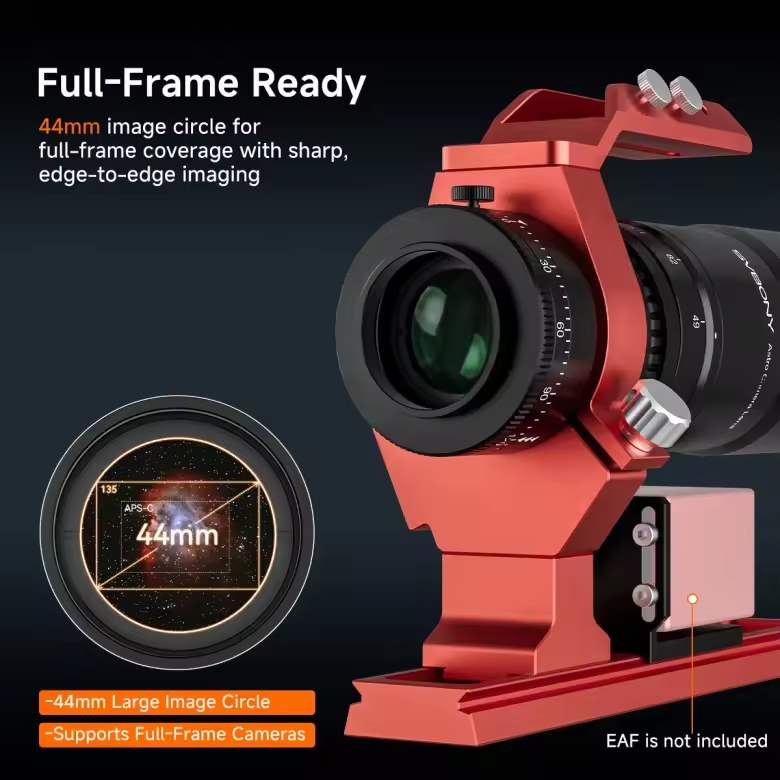
APO Astro Camera Lense | SVBONY SV535
[{"Title":"Compact \u0026 Lightweight","Content":"Lightweight and portable, weighing approximately 482g, making it highly convenient for field use."},{"Title":"Bright F2.8 Aperture","Content":"Features a large aperture F2.8 design, enabling bright and high-contrast astrophotography."},{"Title":"High-Performance 105mm APO Optics","Content":"Offers a 105mm focal length combined with an APO optical system for wide-field views and high-resolution image quality."},{"Title":"Versatile Compatibility","Content":"Provides high versatility with full-frame compatibility, support for various lens mounts, and a 2-inch filter thread."},{"Title":"Dual Plate Compatibility","Content":"Designed with multi-standard compatibility for both Vixen and Arca-Swiss plates, ensuring easy integration with various tripods and equatorial mounts."}]
NEW HOT
Petzval Astrograph Lens | SVBONY SV545
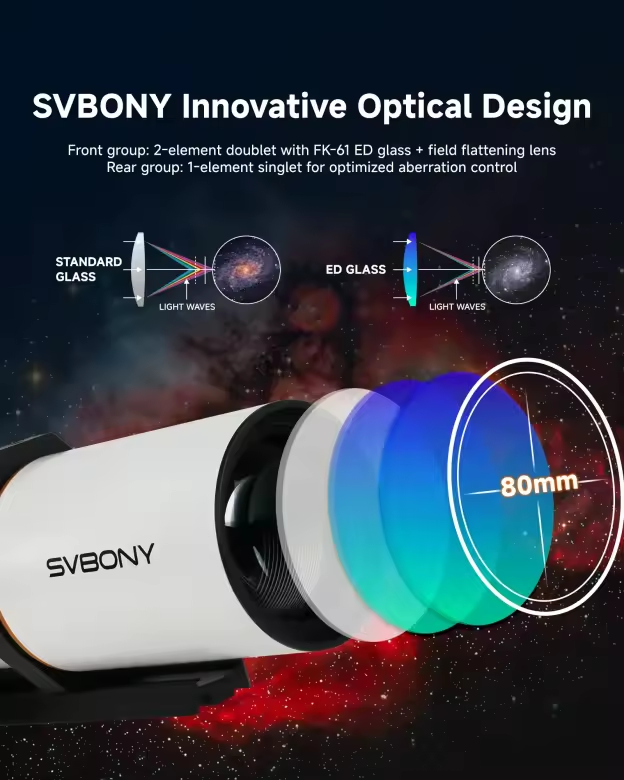
[{"Title":"Advanced 3G5E Petzval APO Design","Content":"Our 3-group, 5-element triplet Petzval APO structure ensures superior optical consistency and portability compared to complex 6-group all-separated designs\u2014delivering exceptional sharpness with a simpler, more reliable form."},{"Title":"Built-in Flat Field for Perfect Frame","Content":"Featuring a native flat-field design, it eliminates the need for external correctors\u2014saving cost and setup time while providing edge-to-edge star clarity right out of the box."},{"Title":"Integrated Focus with EAF Readiness","Content":"The one-piece helical focuser comes pre-equipped for Electronic Auto Focuser (EAF) mounting\u2014enabling smooth, automated fine-tuning during imaging, unlike separate manual focus systems."},{"Title":"Universal Compatibility \u0026 Easy Integration","Content":"Designed with standard threaded interfaces and ample back focus, it seamlessly connects to DSLRs, astronomy cameras, and filter wheels\u2014streamlining your imaging train without adapters."},{"Title":"Robust Build for Demanding Conditions","Content":"With an all-metal body, protective lens coatings, and sealed construction, it performs reliably in humid or dusty environments\u2014made for lasting performance under the stars."}]
HOT
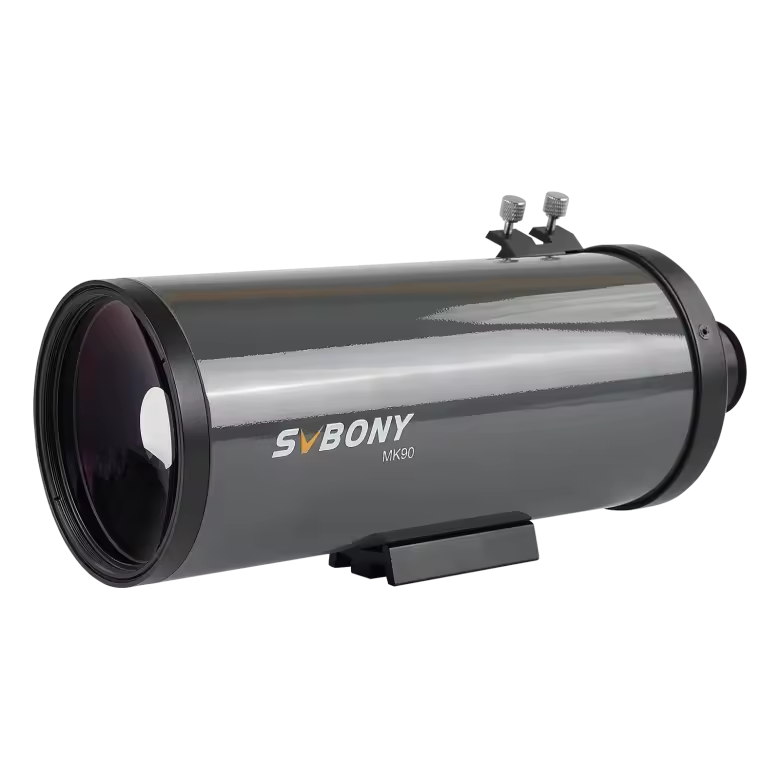
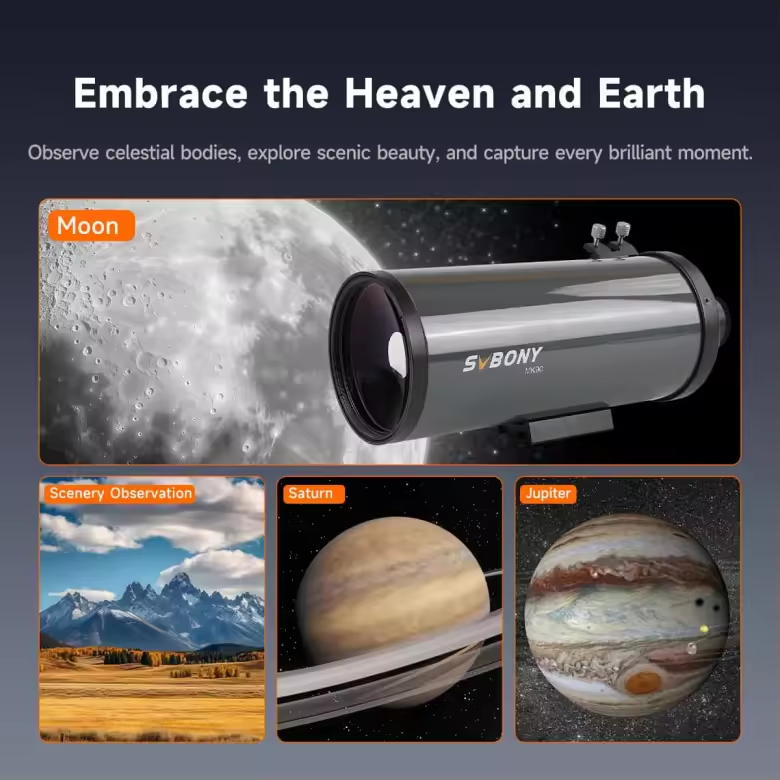
Maksutov-Cassegrain Telescope | SVBONY MK90
[{"Title":"No Periodic Collimation","Content":"Convex meniscus lens replaces Schmidt plate, boosts contrast \u0026 skips calibration"},{"Title":"High-Performance Optics","Content":"90mm aperture \u002B 1250mm focal length, delivers crisp celestial/terrestrial views."},{"Title":"Versatile Observation","Content":"Ideal for lunar/planetary viewing \u0026 nature observation, fits astronomers/enthusiasts."},{"Title":"Durable \u0026 Portable","Content":"Sturdy metal construction withstands travel, 2-year warranty assured."},{"Title":"Practical Design \u0026 Accessories","Content":"Vixen dovetail mount \u002B conical extinction tube \u002B complete accessory set."}]
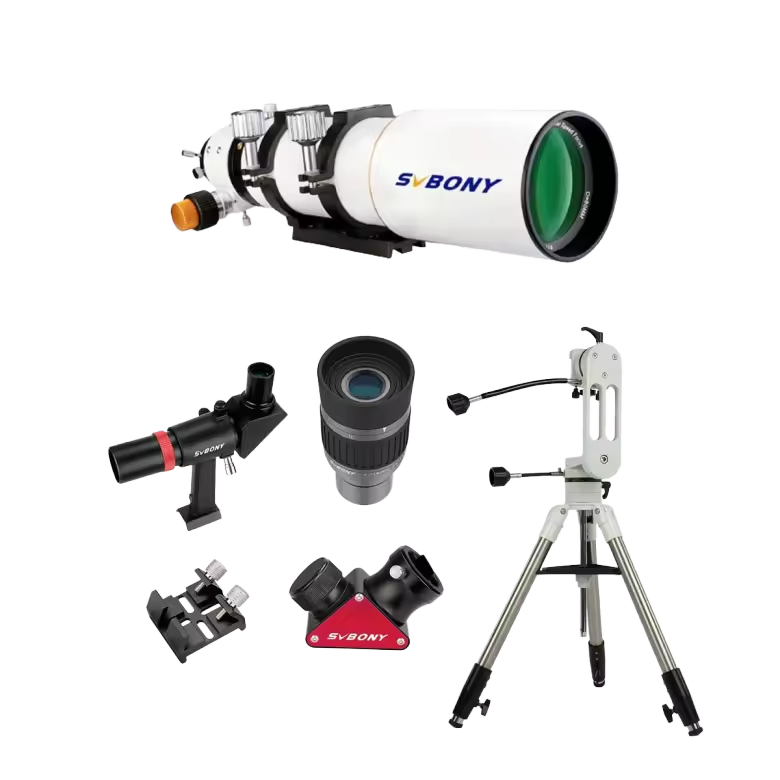
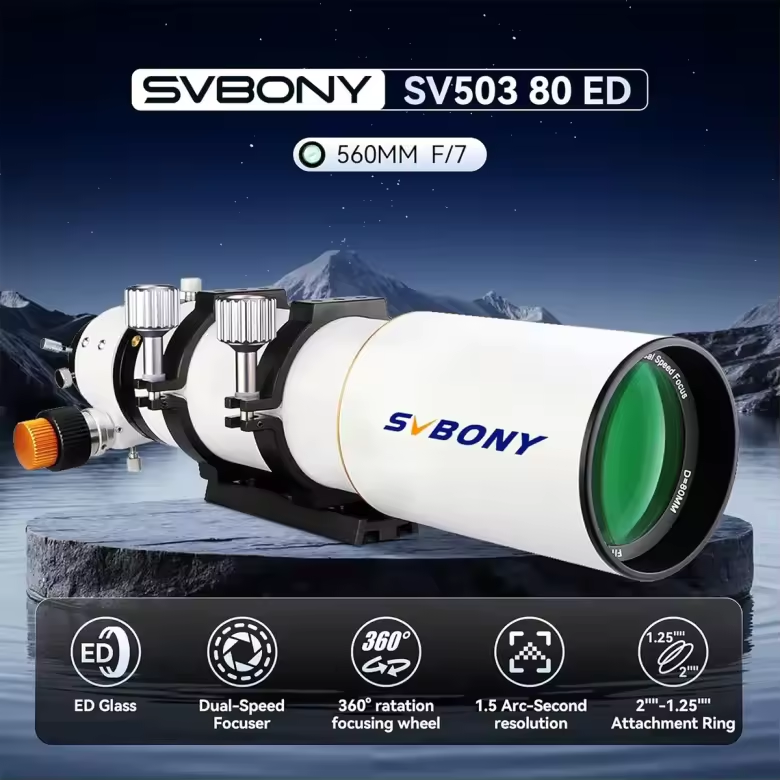
Visual Observation Kit | SVBONY SV503 80
[{"Title":"Complete Beginner Bundle","Content":"Includes SV503 80ED OTA, AZ mount, tripod, diagonal, zoom eyepiece, and finder for ready-to-use setup."},{"Title":"Multi-Coated Optics","Content":"Fully multi-coated lenses deliver bright, crisp images of celestial and terrestrial objects."},{"Title":"Wide Zoom Eyepiece","Content":"Supplied 7\u201321 mm zoom eyepiece offers flexible magnification without extra purchases."},{"Title":"Easy Finder Scope Alignment","Content":"SV182 finder helps locate targets quickly and accurately for novice observers."},{"Title":"Portable \u0026 Tool-Free Setup","Content":"Lightweight design with backpack and tool-free assembly for quick outdoor use."}]
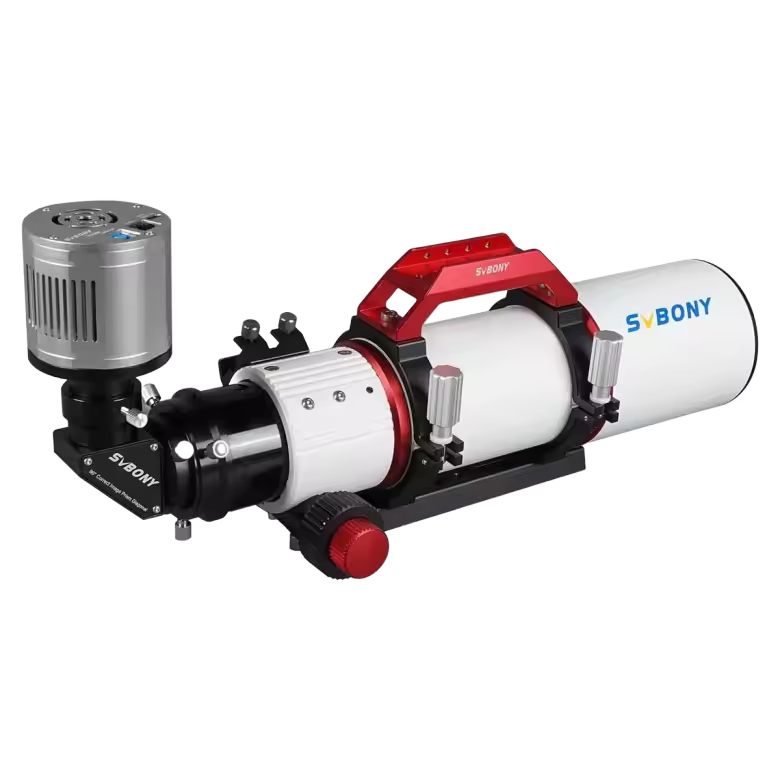
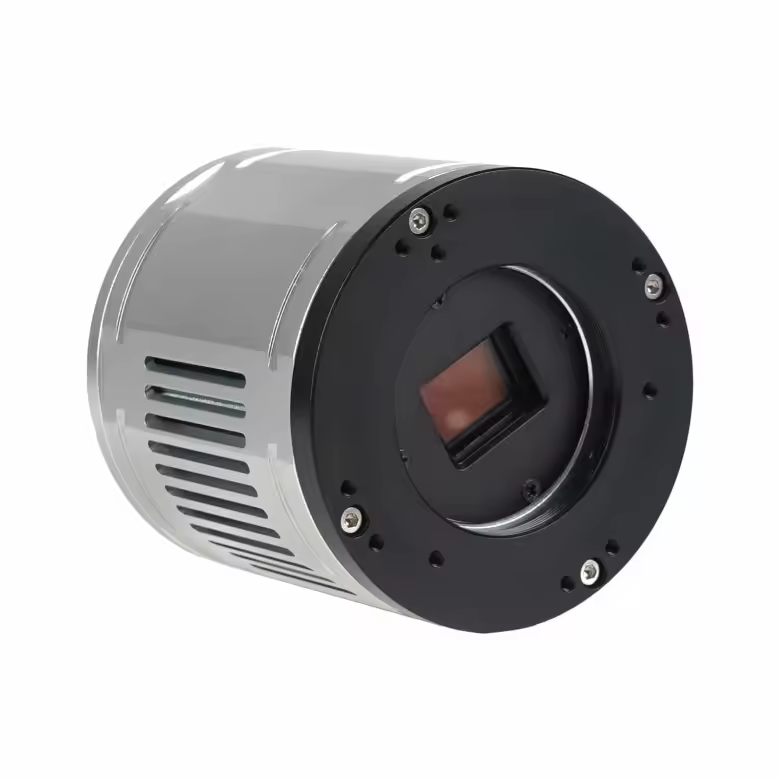
Eclipse Photography Set | SVBONY SV550 80
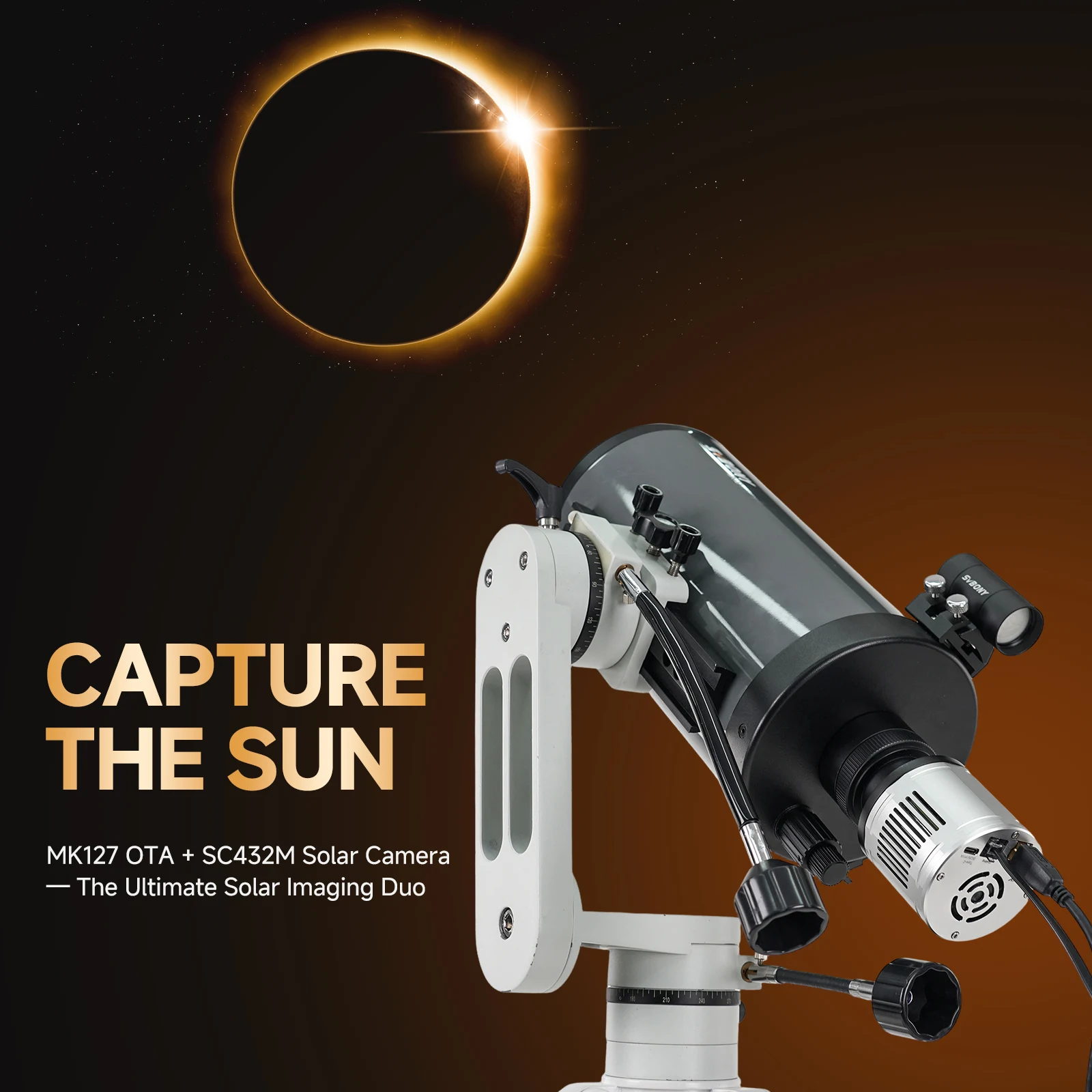
[{"Title":"Complete Solar Imaging Set","Content":"Includes SV550 80\u202FAPO refractor, SC432M mono sun camera, 2\u2033 diagonal, plus solar filter for safe sun capture."},{"Title":"APO Triplet Telescope Optics","Content":"80\u202Fmm FPL51 apochromatic design with FMC coatings delivers sharp, high\u2011contrast views."},{"Title":"Mono Solar Camera with Global Shutter","Content":"SC432M uses a SONY IMX432 mono sensor with global shutter and 120\u202Ffps for detailed eclipse and sunspot imaging."},{"Title":"Large Pixel \u0026 High Sensitivity","Content":"9\u202F\u00B5m pixel size and high QE enable sensitive capture of solar features and fine surface detail."},{"Title":"Safe Solar Observation","Content":"Includes SV229 solar filter sized for 80\u202Fmm OTA, ensuring safe sunlight attenuation for imaging sessions."}]
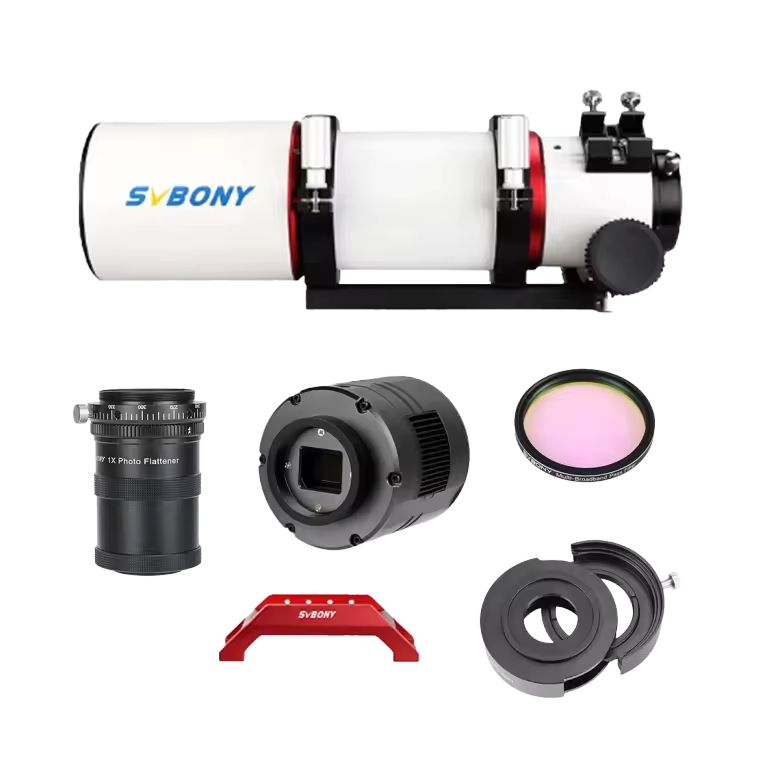
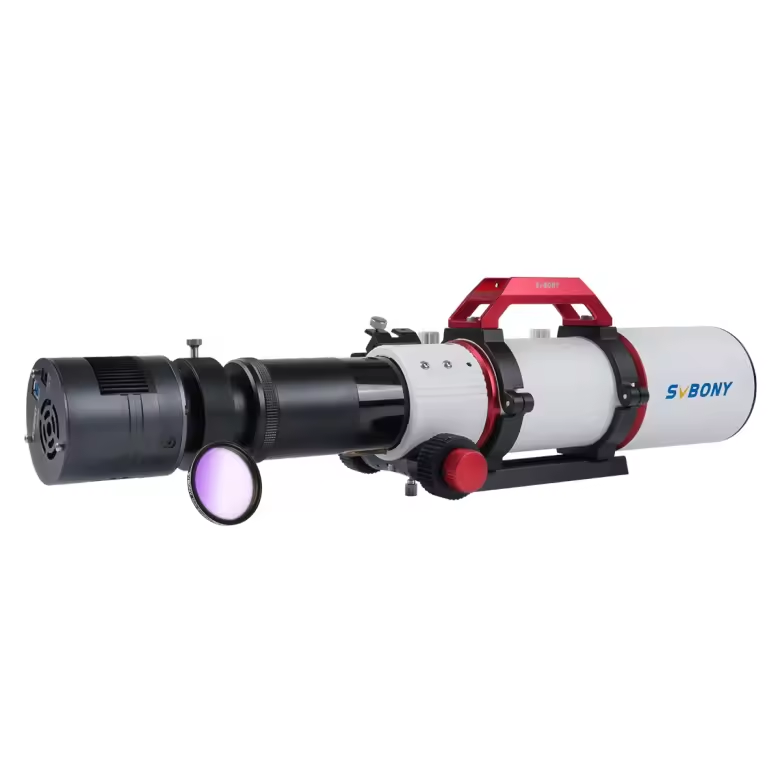
Deep-Sky Astrophotography Set | SVBONY SV550 80
[{"Title":"Apochromatic Triplet Optics","Content":"80\u202Fmm triplet APO with FPL51 ED glass delivers sharp, high\u2011contrast views and minimal chromatic aberration."},{"Title":"Deep\u2011Sky Focal Length","Content":"480\u202Fmm focal length at f/6 is optimized for wide\u2011field imaging of galaxies, nebulae, and clusters."},{"Title":"Precision Dual\u2011Speed Focuser","Content":"2.5\u2033 rack\u2011and\u2011pinion dual\u2011speed focuser (1:10) allows fast and fine focusing for astrophotography."},{"Title":"Stray Light Suppression","Content":"Internal extinction bars and knife\u2011edge baffles reduce stray light for improved contrast."},{"Title":"Astro\u2011Ready Imaging Setup","Content":"Bundled design supports field flattener use (SV209) to correct edge curvature for full\u2011frame sensors."}]
NEW
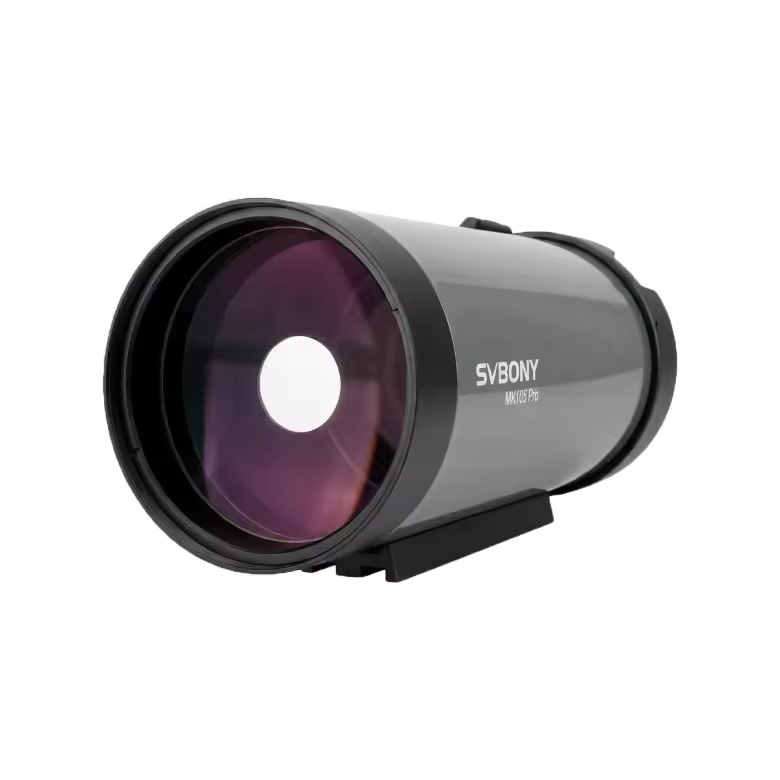
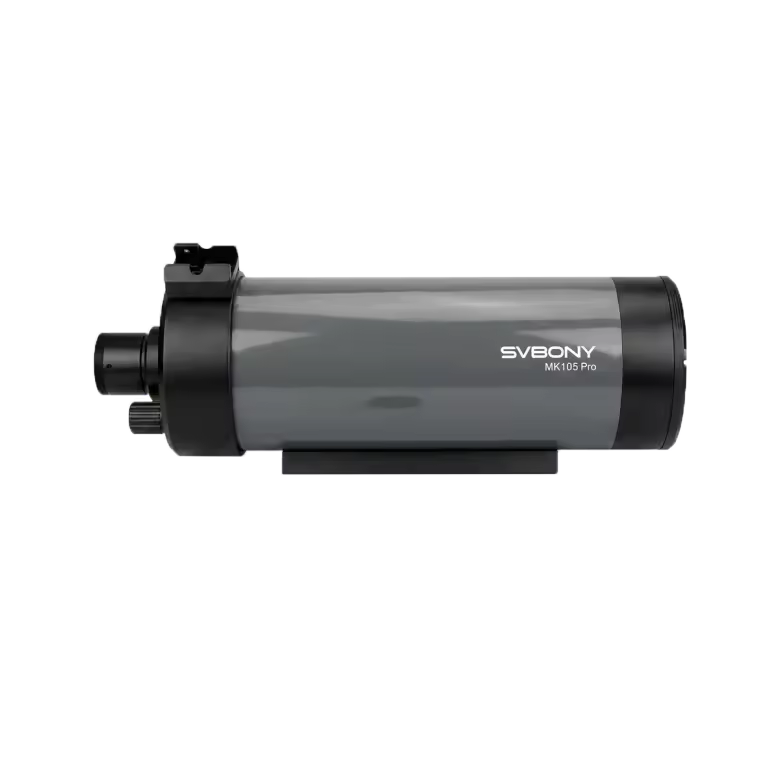
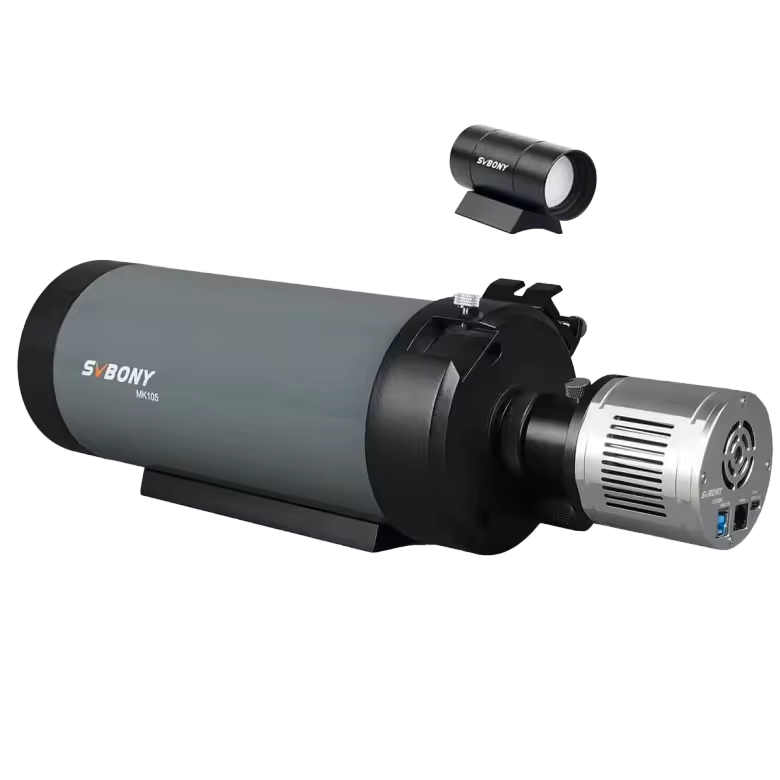
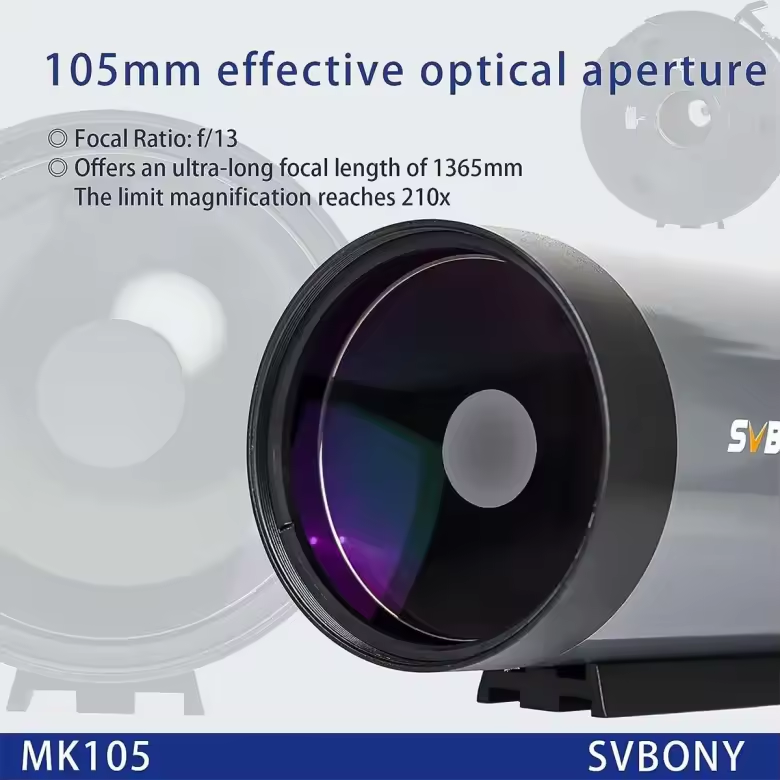
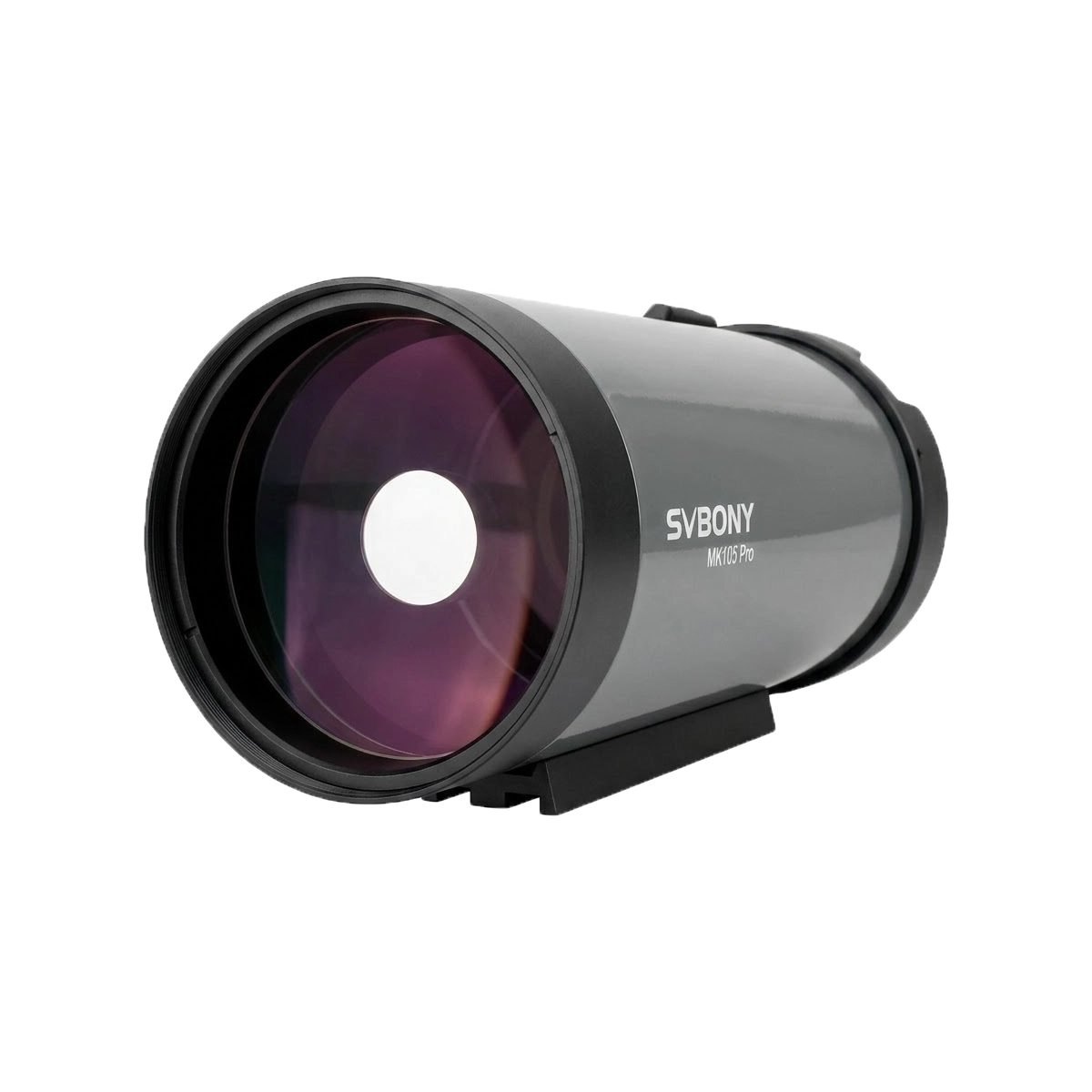
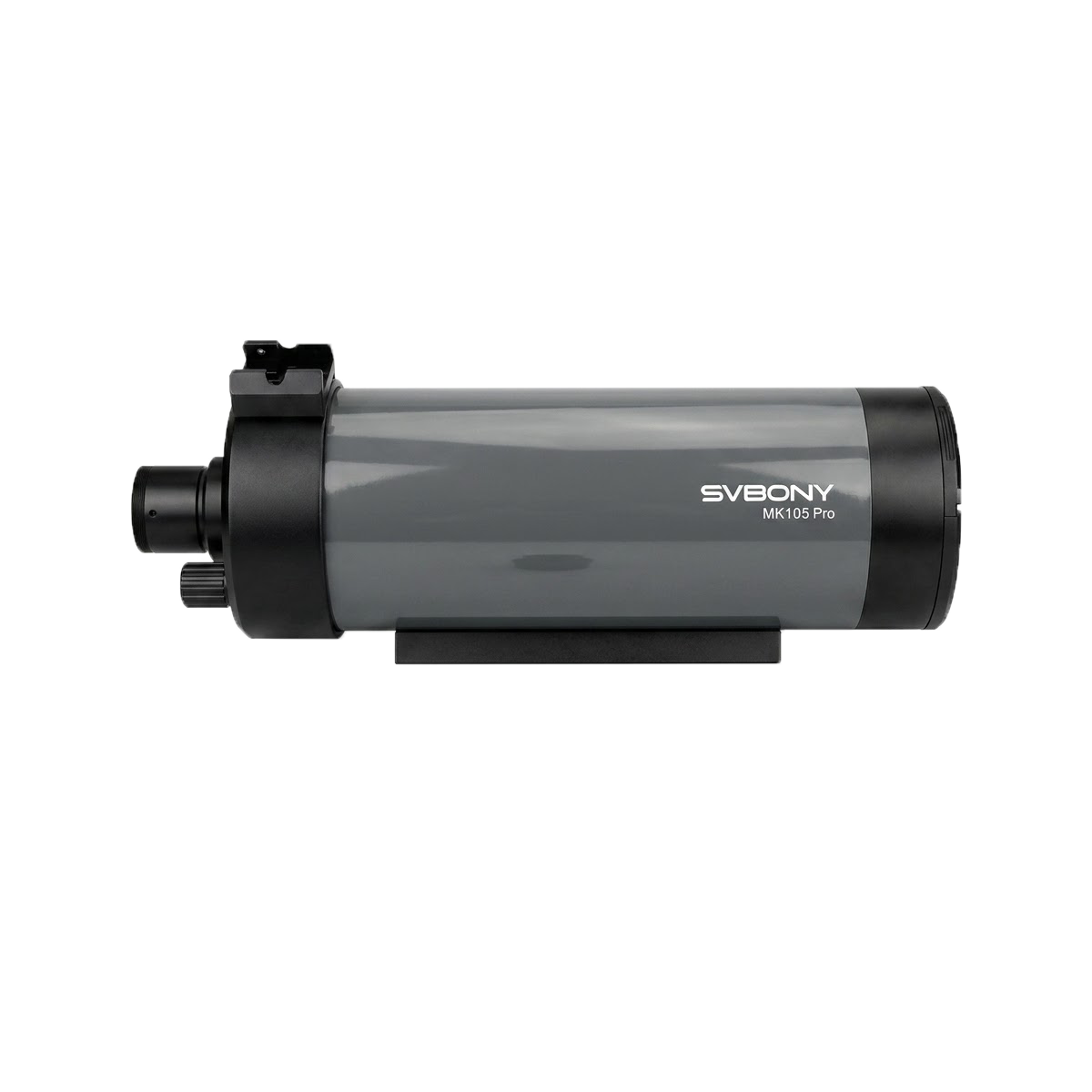
MK105 Pro 105mm Astro Telescope
[{"Title":"High-Mag Clarity","Content":"105mm aperture and 1400mm focal length deliver crisp, 210x magnified views, eliminating blurry images."},{"Title":"Bright \u0026 Vivid Views","Content":"Advanced FMC \u0026 \u003E99% reflective coatings maximize light intake, solving the pain point of dim night-sky views."},{"Title":"Rock-Solid Build","Content":"Made of heavy-duty 6061T aluminum alloy, eliminating the shaky, cheap plastic feel of budget scopes."},{"Title":"Razor-Sharp Details","Content":"Features a precise 1.1-arcsec resolution to easily capture fine planetary structures without distortion."},{"Title":"Compact Powerhouse","Content":"At just 385mm long and 2200g, it offers professional deep-sky performance in a highly portable size."}]
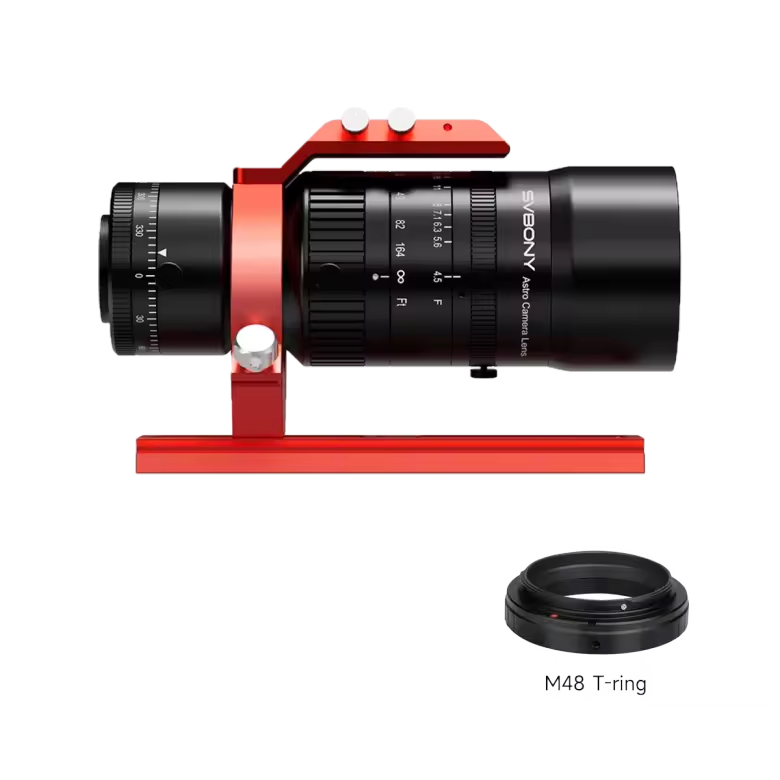
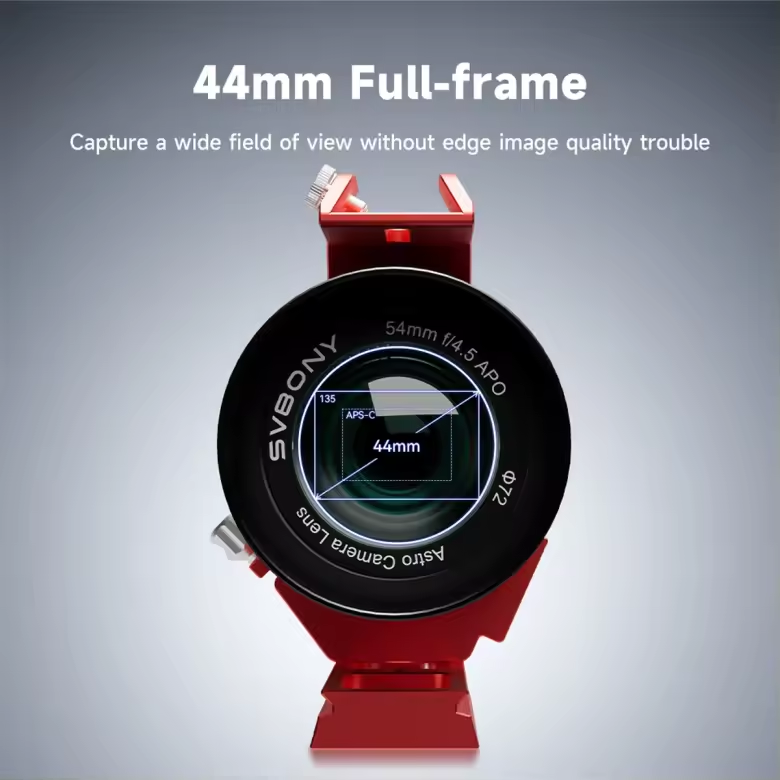
Astrograph Lens w/ T-Ring | SVBONY SV555
[{"Title":"Optimized for Astrophotography","Content":"The SV555 DSLR camera lens is designed specifically for astrophotography, offering exceptional clarity and high resolution, perfect for capturing detailed images of celestial objects."},{"Title":"Wide Field of View \u0026 Petzval Design","Content":"Featuring a wide-field Petzval optical design, this lens ensures sharp, distortion-free images across the entire frame with almost zero chromatic aberration, ideal for photographing expansive deep-sky targets."},{"Title":"Precise Focus for Accurate Shots","Content":"The SV555 comes with a finely adjustable focus system, allowing precise control over the focal length to ensure crystal-clear images even during long exposure sessions."},{"Title":"Full-Frame Compatibility","Content":"With a 44mm full-frame design, the SV555 ensures full compatibility with DSLR cameras, allowing you to capture wide, clear images without issues of aperture blockage, even at high resolutions."},{"Title":"Versatile and Convenient Compatibility","Content":"The lens includes an M48x0.75 filter thread for easy filter attachment and is compatible with V-style \u0026 Arca-Swiss quick-release systems, making it simple to set up with various mounts and accessories."}]
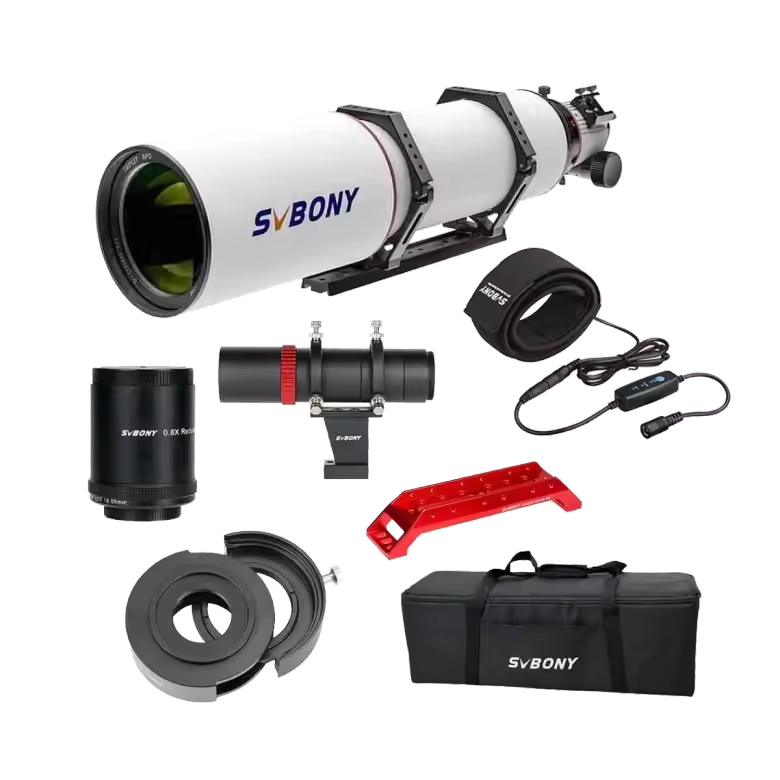
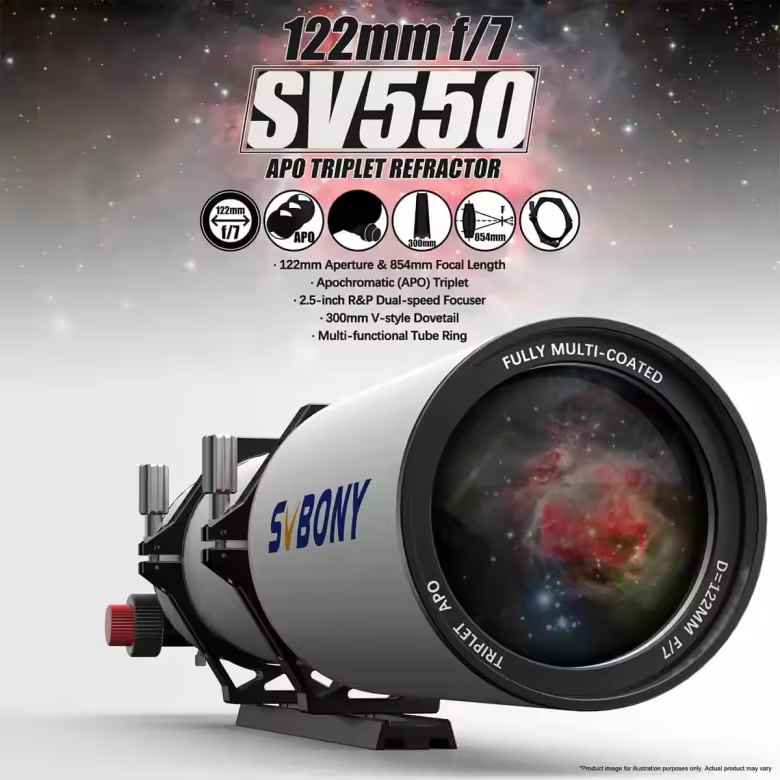
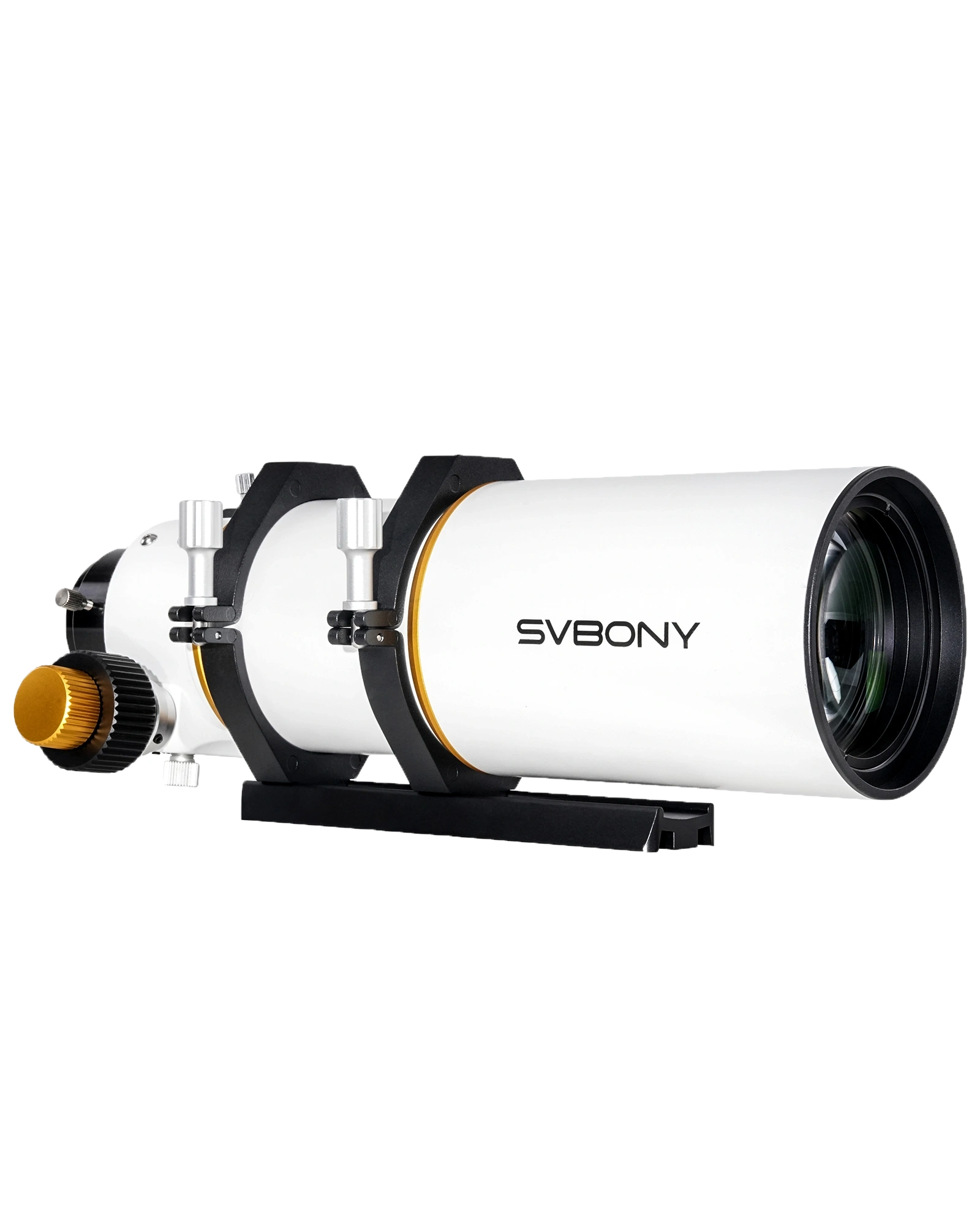
Deep-Sky Photography Kit | SVBONY SV550 122
[{"Title":"Optimized for SV550\u202F122 APO","Content":"Specifically matched 0.8\u00D7 reducer/flattener for the SVBONY SV550\u202F122\u202Fmm f/7 apochromatic refractor."},{"Title":"Faster, Wider Field","Content":"Reduces the 854\u202Fmm focal length to ~683\u202Fmm at f/5.6 for broader deep\u2011sky views and shorter exposure times."},{"Title":"Sharp Edge\u2011to\u2011Edge Imaging","Content":"Field flattener corrects curvature for well\u2011focused stars across the entire frame."},{"Title":"Standard Back Focus","Content":"55\u202Fmm back focus matches common DSLR/CCD sensor spacing for reliable prime\u2011focus results."},{"Title":"Secure Telescope Fit","Content":"Threads directly into the focuser with M63\u00D71 interface for stable, repeatable photography setups"}]
HOT
Eclipse Photography Set | SVBONY MK105
[{"Title":"Crystal-Clear Sunspot Viewing","Content":"Resolves solar observation blur, capturing fine sunspot details accurately."},{"Title":"Solar-Specific Sensor","Content":"Specialized sensor optimized for safe, high-precision solar imaging."},{"Title":"Indoor \u0026 Outdoor Use","Content":"Operates seamlessly on balconies or field sites, simplifying solar photography."},{"Title":"SVBONY Reliability Commitment","Content":"2-year warranty with professional technical support."},{"Title":"Official Standard Bundle","Content":"Includes essential components for solar observation."}]
Choose an Astronomy Telescope by Observing Goal
For lunar and planetary observation, a telescope with strong resolution and a longer focal length can help reveal lunar craters, planetary features, and other bright targets in greater detail. Maksutov-Cassegrain telescopes, such as the MK90, MK105, and MK127, offer compact optical designs well suited to observing the Moon and planets.
Refractor telescopes also provide a versatile option for clear views of bright celestial objects and everyday stargazing.
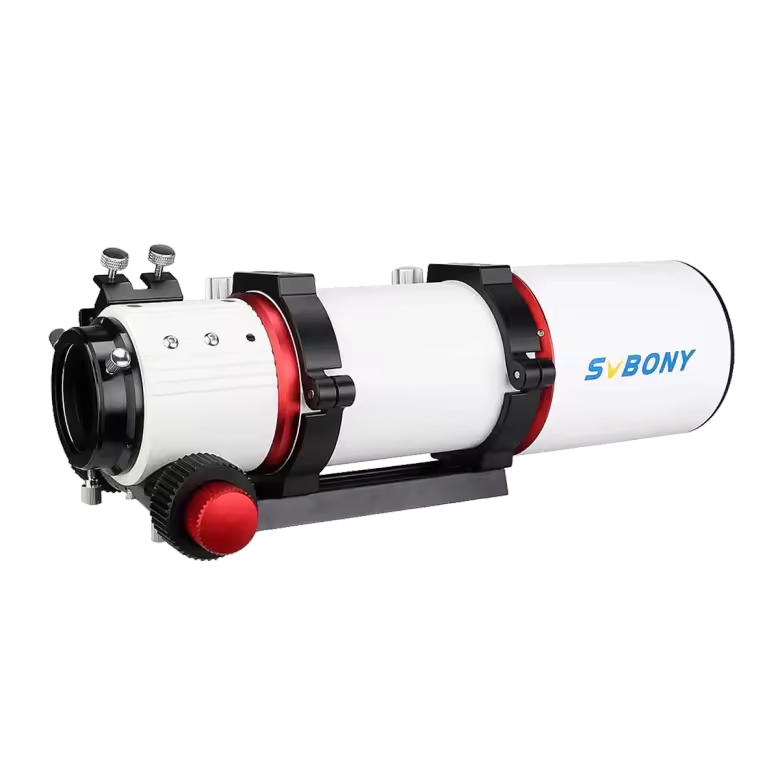
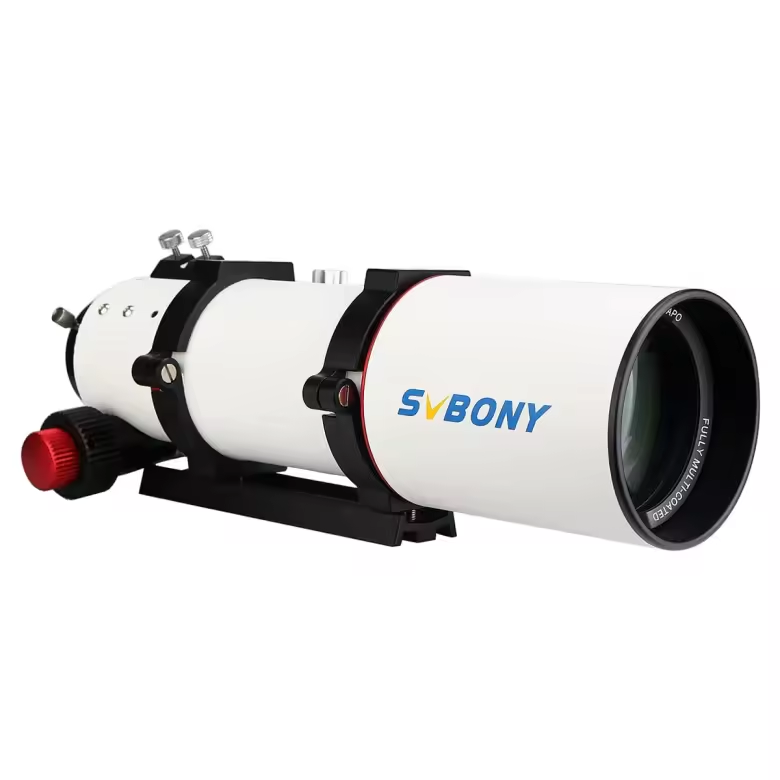
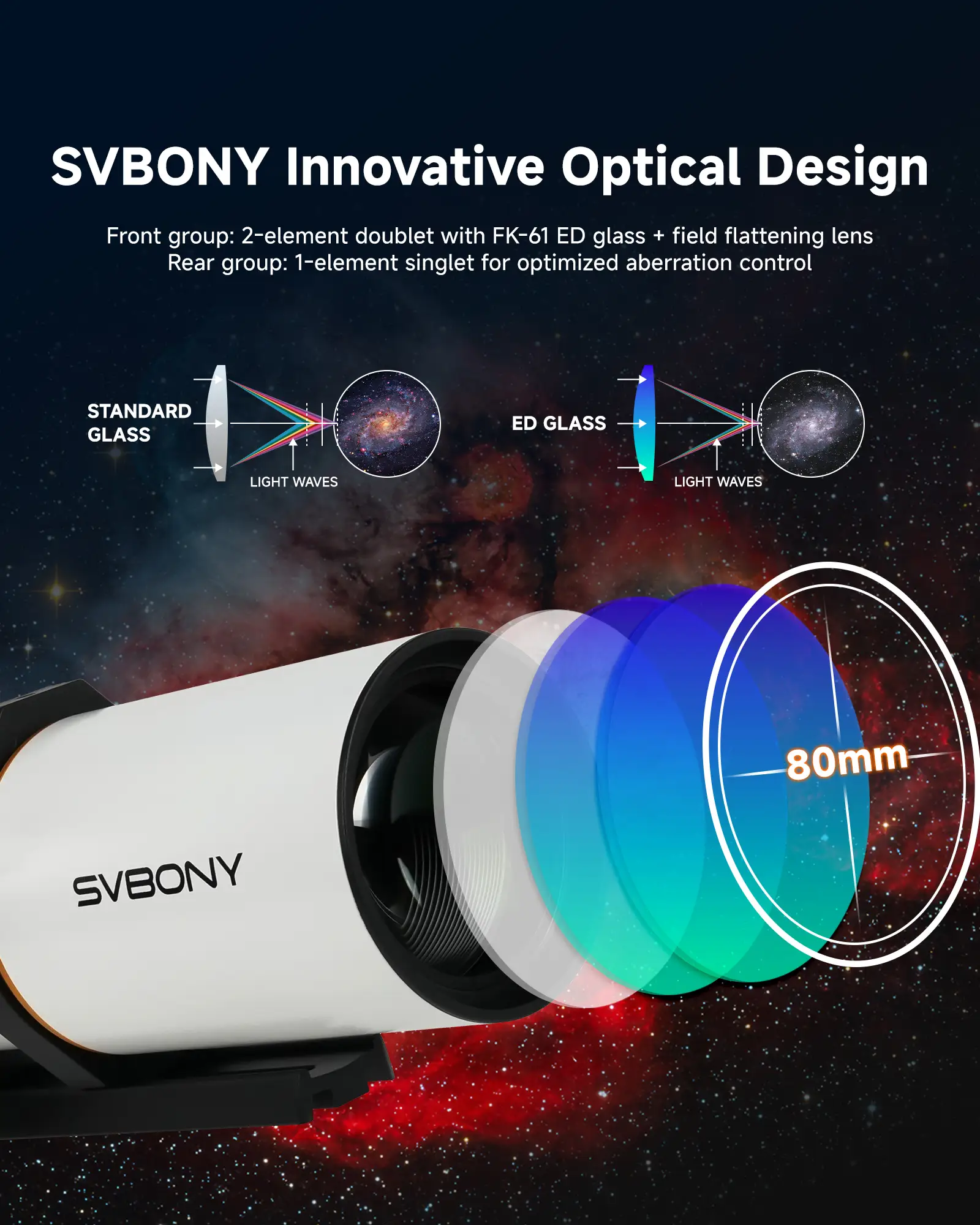
For deep-sky observation and astrophotography, wider-field optical designs can help capture star fields, nebulae, galaxies, and star clusters. ED and APO refractors, including the SV530 80mm ED refractor, SV503 flat-field refractors, and SV550 APO refractors, provide options for detailed observation and imaging. <
Their optical designs make them suitable for users who want to move beyond basic stargazing and explore more demanding deep-sky targets.
For advanced astrophotography, specialized astrographs are designed around the needs of imaging rather than visual observation alone. The SV580 80mm f/4.5 Petzval APO astrograph combines a fast optical design with a wide field for deep-sky imaging, while compact models such as the SV555 and SV535 offer flexible options for astro imaging and wide-field photography.
Whether you are observing planets, exploring deep-sky objects, or building a dedicated imaging setup, SVBONY offers astronomy telescopes for different observing and imaging needs.
Faqs About Astronomy Telescope
A good astronomy telescope depends on your observing goals. Aperture, focal length, optical design, mount, portability, and budget can all affect the viewing experience.
Refractor telescopes are versatile for general stargazing and lunar observation, while Maksutov-Cassegrain telescopes are commonly used for lunar and planetary observation.
For planetary observation, aperture, focal length, and optical resolution are important factors. The MK90, MK105, and MK127 Maksutov-Cassegrain telescopes are designed for lunar and planetary observation.
The MK105 features a 105mm aperture and 1365mm focal length, while the MK127 has a 127mm aperture and 1500mm focal length. A stable mount can also help when observing at higher magnifications.
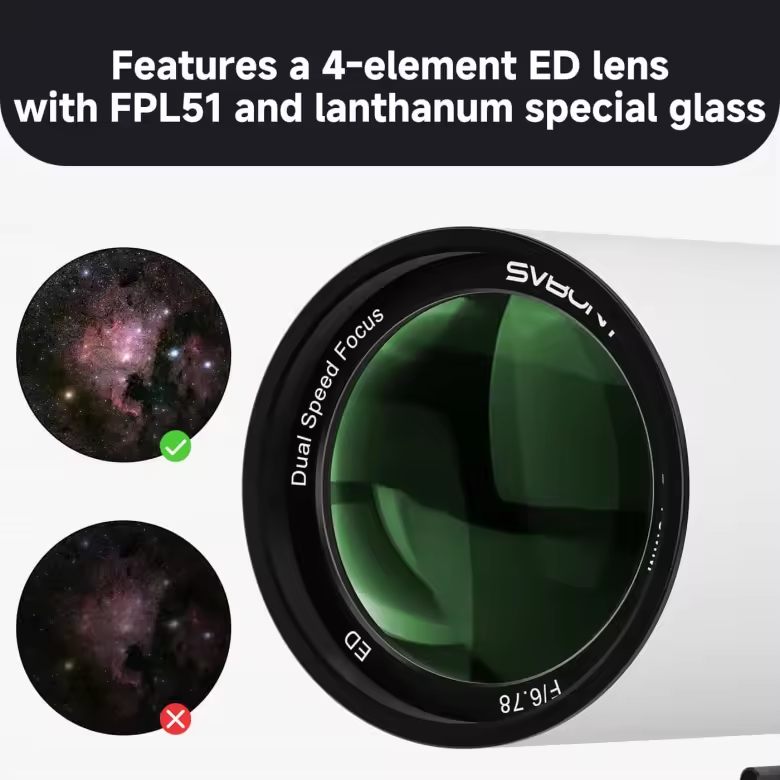
For deep-sky astrophotography, a wider field of view and well-corrected optics are important. The SV530 80mm ED refractor features an 80mm aperture and 480mm focal length.
For wider-field imaging, the SV580 80mm f/4.5 Petzval APO astrograph combines an 80mm aperture with a 360mm focal length and built-in field flattener for full-frame imaging. A tracking mount is important for keeping targets centered during longer exposures.
Not necessarily. For deep-sky astrophotography, aperture is only one factor to consider. Focal ratio, optical correction, field of view, and the mount can also affect imaging performance. .
Many 80mm ED and APO refractors are used for astrophotography because they offer a practical balance of aperture, focal length, and portability. For long exposures, mount performance is also an important consideration alongside aperture.
There is no single best telescope size for stargazing. Smaller apertures around 70–90mm are generally easier to transport, while larger apertures can collect more light for fainter targets but may require a heavier setup. The right size depends on the objects you want to observe, where you observe, and whether the telescope will also be used for astrophotography.



 Google
 Amazon