
Table of Contents
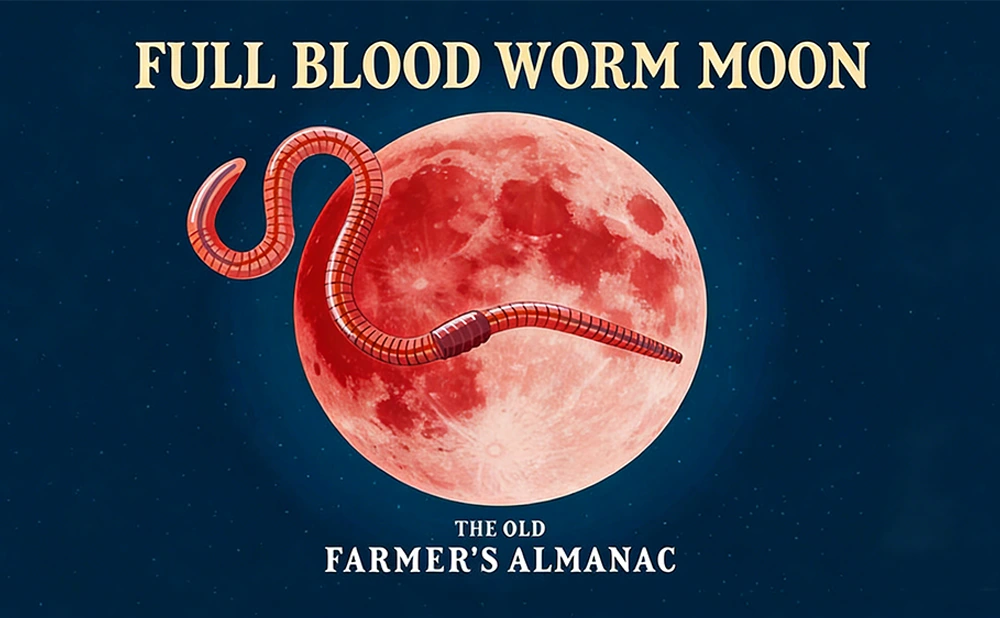
Worm Moon - The Full Moon in March
Have you ever stepped outside on a crisp spring night and wondered, "Is tonight a full moon?" or "When is the next full moon?" For sky-watchers, the full moon is a monthly highlight, each with its own unique name and folklore.
Today, we're focusing on one of the most anticipated events of 2026: the March Full Worm Moon, which this year brings a rare and stunning bonus - a total lunar eclipse, transforming it into a so-called"Blood Moon."
What is a Worm Moon?
First,what is a Worm Moon?It's the traditional name given to the full moon that occurs in March. These names, used by The Old Farmer's Almanac, originate from Native American, Colonial American, and European sources. They typically reflect the seasonal changes happening in nature at that time.
The Worm Moon has long been viewed as a turning point in the calendar, symbolizing the end of winter's grip and the first subtle signs of spring's return.
Why Is It Called a Worm Moon?
So,why is it called a Worm Moon?For generations, the most common explanation was that it refers to earthworms emerging from the thawing soil, drawing birds like robins - a classic sign of spring. However, historical research offers another fascinating theory: the name might actually refer to beetle larvae (another kind of "worm") emerging from tree bark and winter hideouts as temperatures rise.
Whether it's earthworms or beetle larvae, the core idea is the same: the land is waking up.
What is a Worm “Blood” Moon?
Now, what makes the 2026 Worm Moon extra special? This year, it coincides with a total lunar eclipse. During this event, Earth moves directly between the Sun and the Moon, casting its shadow on the lunar surface. As the Moon enters Earth's shadow, it doesn't go completely dark. Instead, sunlight filtering through our planet's atmosphere casts a warm, coppery-red glow on the Moon. This dramatic transformation is why a fully eclipsed Moon is often poetically called a"Blood Moon."
Therefore, the 2026 March Full Moon is a "Worm Blood Moon" - a fascinating blend of seasonal tradition and celestial mechanics.
Key Details for the 2026 Worm Moon & Eclipse
- Date & Peak: The Full Worm Moon reaches peak illumination on Tuesday, March 3, 2026, at 6:38 A.M. Eastern Time (ET).
- Eclipse Visibility: The total lunar eclipse will be visible across North America and can be easily viewed with the naked eye. For a clearer view, binoculars or a astronomical telescope will be recommended.
- Best Viewing: Look east on the evening of Monday, March 2, to see the nearly full Moon rise. The eclipse itself will unfold in the early morning hours of March 3rd.
When is the Next Full Moon?
While we eagerly await the 2026 spectacle, you might be curious aboutwhen the next full moonis on your personal horizon.The full moon occurs approximately every 29.5 days.To find the exact date for your location, you can consult a reliable moon phase calendar.
Conclusion
The Full Moon is more than just a bright light in the night sky; it's a cultural timekeeper and a celestial event that connects us to the rhythms of nature.
The March 3, 2026, Worm "Blood" Moon is a prime opportunity to witness this connection. Mark your calendars, step outside, and enjoy the show as winter's last full moon ushers in spring with a coppery-red glow.
 Google
 Amazon
There are no customer reviews yet . Leave a Reply !