

 @AstroBassDee
 23
@AstroBassDee
23
23
@AstroBassDee
23
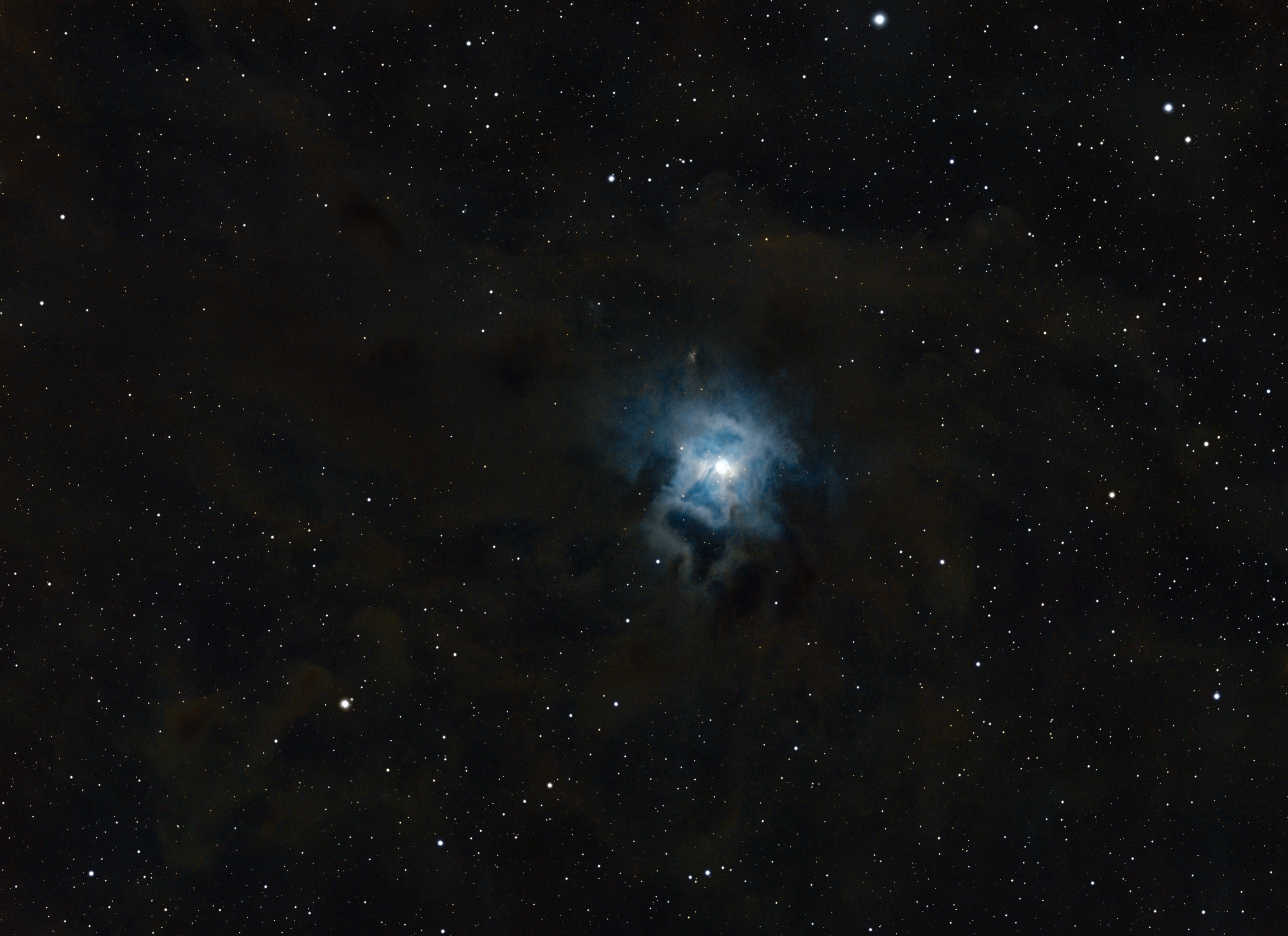
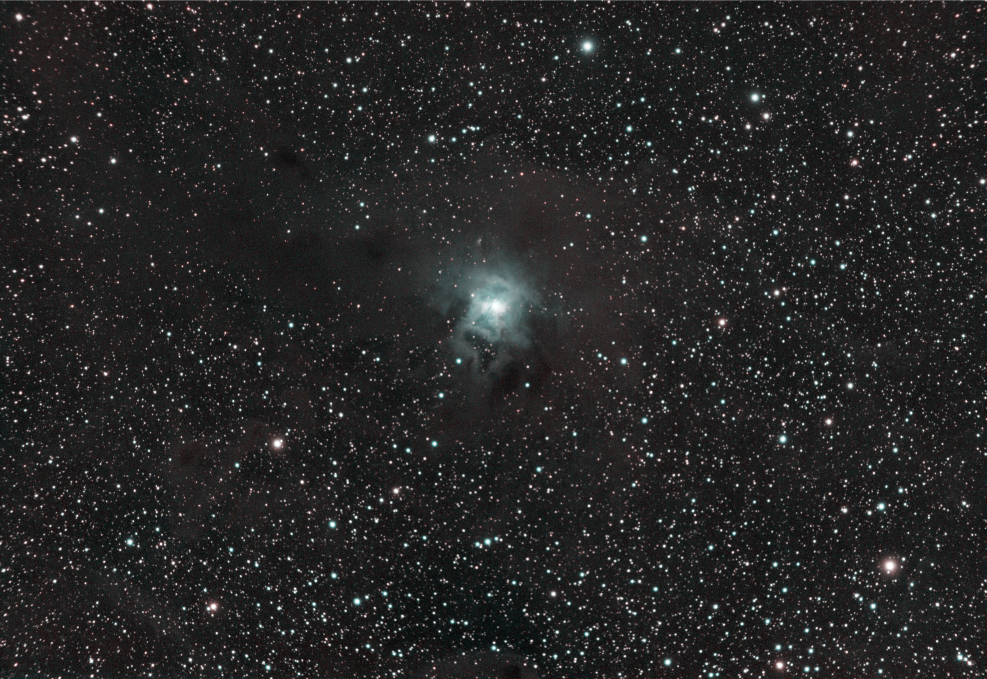
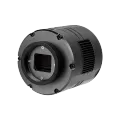
The Iris Nebula – First Light for the SVBONY Setup (and Why Old Data Deserves a Second Look) Some 1,300 light-years away in the constellation Cepheus blooms one of the sky's prettiest reflection nebulae: the Iris Nebula, NGC 7023 (Caldwell 4). Unlike emission nebulae, the Iris doesn't glow on its own. Its blue petals are starlight, the light of the young, hot star HD 200775 at its center, scattered by the surrounding dust. The dust reflects blue light more efficiently than red, which gives the nebula its distinctive color, the same physics that paints our daytime sky blue. The bright core spans about six light-years, embedded in a much larger field of faint, brownish molecular dust. A double premiere This image is special to me for two reasons. It was the first nebula I ever shot with my SVBONY setup: the SV550 80ED (80/480 mm, f/6) paired with the SV405CC cooled color camera and a SVBony UV/IR-cut filter. No narrowband here, a reflection nebula shines in broadband starlight, so an OSC camera with a UV/IR cut is exactly the right tool. And it was captured entirely unguided. My EXOS-2 (converted with an OnStep kit) was tracking on its own, no guide camera, no corrections. That 60-second subs still came out with round stars is no accident, it's geometry. NGC 7023 sits at a declination of +68°, close to the north celestial pole. Stars there travel on much smaller circles across the sky, so any tracking error in right ascension (like the mount's periodic error) only shows up scaled by the cosine of the declination. At +68° that factor is about 0.37: barely more than a third of the trailing you'd get on a target at the celestial equator. Drift from imperfect polar alignment is reduced near the pole as well. In short: the far north is friendly territory for unguided imaging, and the Iris made the most of it. Capture details Object: Iris Nebula (NGC 7023 / Caldwell 4), reflection nebula in Cepheus Total integration: 3 h 44 min (224 x 60 s) Camera: SVBony SV405CC (Sony IMX294, cooled OSC) + UV/IR-cut filter Telescope: SVBony SV550 80ED (80/480 mm, f/6) Mount: Bresser EXOS-2 with OnStep kit, unguided Calibration: darks, flats, dark flats Software: EKOS/KStars, PHD2, Siril 1.4.2 Old data, new image The second picture tells the other half of the story. It shows my first processing attempt from April: same data, but without star removal via StarNet++ and without any deeper understanding of stretching. The result was decent for a first try, but the nebula sat behind a curtain of bloated stars and the faint dust never stood a chance. The main image is the current version, reprocessed from exactly the same subs, this time with star separation, more careful stretching, and everything I've learned since spring. No new photons, just new skills. If there's one takeaway from this project, it's this: your old data is a treasure chest. Every few months of learning turns the same raw frames into a better image. It's always worth going back. IG: @AstroBassDee
My name is Sebastian, and online I go by @AstroBassDee. I've been doing deep-sky astrophotography for about a year now, imaging from Lower Saxony in Germany. I started out with a DSLR and a cheap achromat, and have since moved to a cooled, narrowband setup built around SVBONY gear. I shoot pretty much everything in the deep sky, from nebulae to galaxies, and the Veil had been on my list for a while.

 Google
 Amazon
No data Yet