


Table of Contents
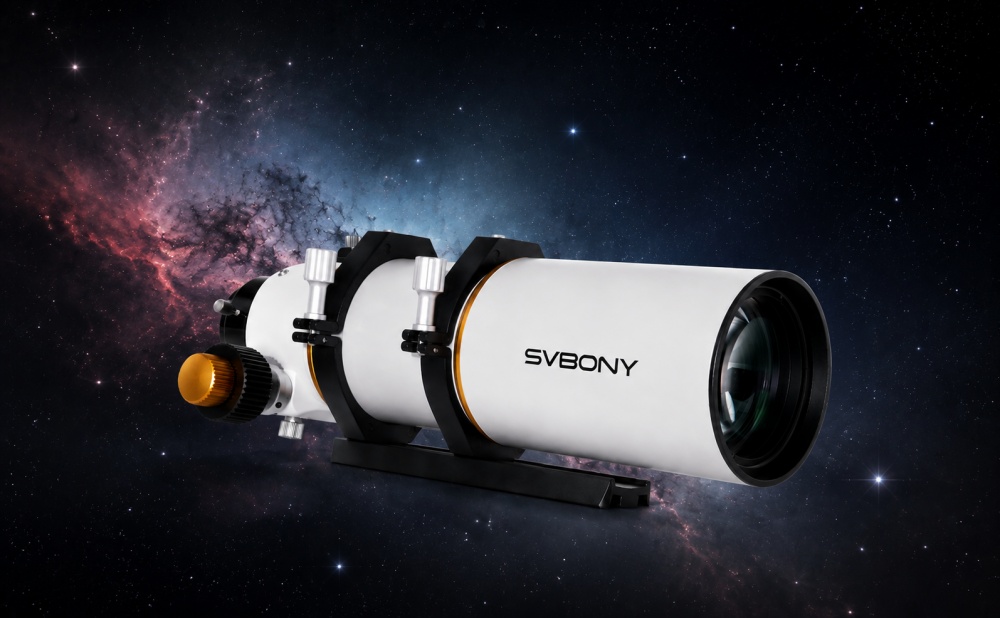
The Optical Design Secret Behind SVBONY SV530: Why APO Refractor Telescopes Use Air-Spaced Triplet Optics
When we designed the SVBONY SV530 APO refractor telescope, we focused on one key question: how can an advanced optical system deliver reliable performance for both beginners and experienced astrophotographers?
The answer led us to a design philosophy that separates advanced apochromatic refractors from ordinary telescope designs: the Air-Spaced Triplet optical system.
We did not choose this approach simply because it looks impressive in a specification list. We chose it because your first serious telescope should be more than short-term hobby equipment. It should be a reliable instrument that supports your astronomy journey and continues delivering quality results as your skills grow.
why APO Telescopes Deliver Sharper Images and Better Color Correction ?
The world of astronomy offers many types of refractor designs, but optical design plays a major role in determining image quality.
ED doublet refractors have become popular because they provide a practical balance between performance, portability, and cost. For many beginners, they offer an excellent introduction to observing the Moon, planets, and brighter deep-sky objects.
However, when comparing advanced APO designs, the optical system becomes one of the most important factors affecting color correction, contrast, and imaging performance. The SVBONY SV530 APO Refractor Telescope follows this approach by combining advanced optical technology with a design focused on cleaner images and improved color control.
The world of astronomy offers many types of refractor designs, but optical design plays a major role in determining image quality.
ED doublet refractors have become popular because they provide a practical balance between performance, portability, and cost. For many beginners, they offer an excellent introduction to observing the Moon, planets, and brighter deep-sky objects.
However, when comparing advanced APO designs, the optical system becomes one of the most important factors affecting color correction, contrast, and imaging performance. The SVBONY SV530 APO Refractor Telescope follows this approach by combining advanced optical technology with a design focused on cleaner images and improved color control.
How APO Optical Design Helps Control Chromatic Aberration?
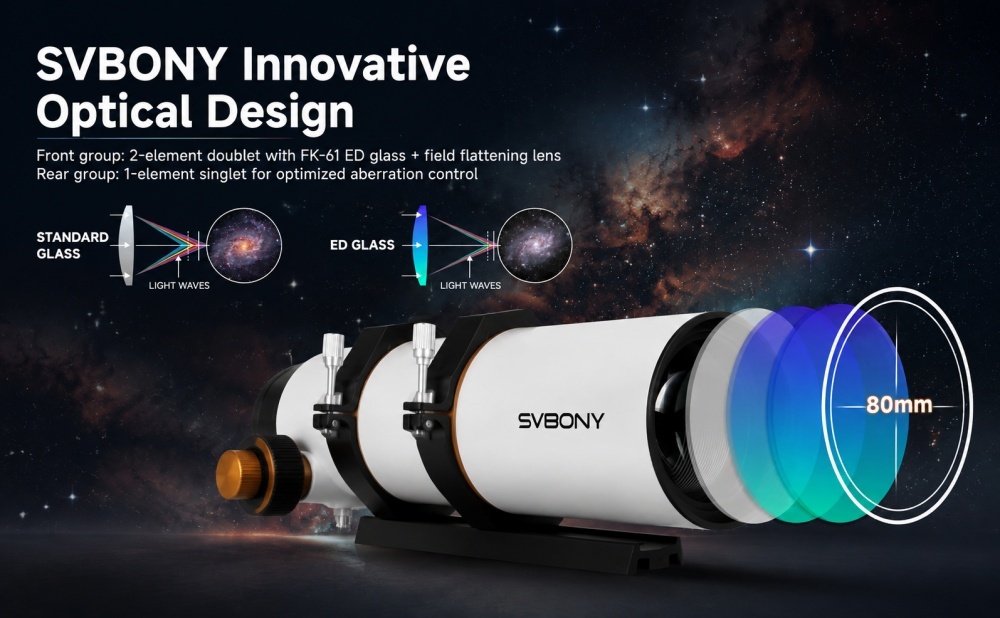
A refractor must control how different wavelengths of light travel through the optical system. Red, green, and blue wavelengths naturally focus at slightly different positions, and without proper correction, this can create chromatic aberration around bright objects.
For visual observation, minor color differences may not always be noticeable. However, during astrophotography, cameras capture much more detail, making optical precision increasingly important.
Why Color Correction Matters for Astronomy and Astrophotography?
Excellent color correction allows stars to appear cleaner and more natural while improving contrast across the entire image.
This is one reason experienced observers often look beyond basic specifications and consider the optical design behind a high-quality refractor telescope when choosing equipment.
For the SVBONY SV530, the combination of APO optical design and ED glass helps reduce unwanted color effects while supporting both visual observation and astrophotography applications.
A well-designed optical system does not simply reduce color issues—it creates a more balanced viewing and imaging experience.
Why Air-Spaced Triplet Optics Matter for Better Astrophotography Images?
For the SV530 , we selected Air-Spaced Triplet Optics because this structure provides greater control over light correction and overall image quality.
Unlike simpler two-element designs, a triplet system uses three optical elements working together to manage different wavelengths more precisely.
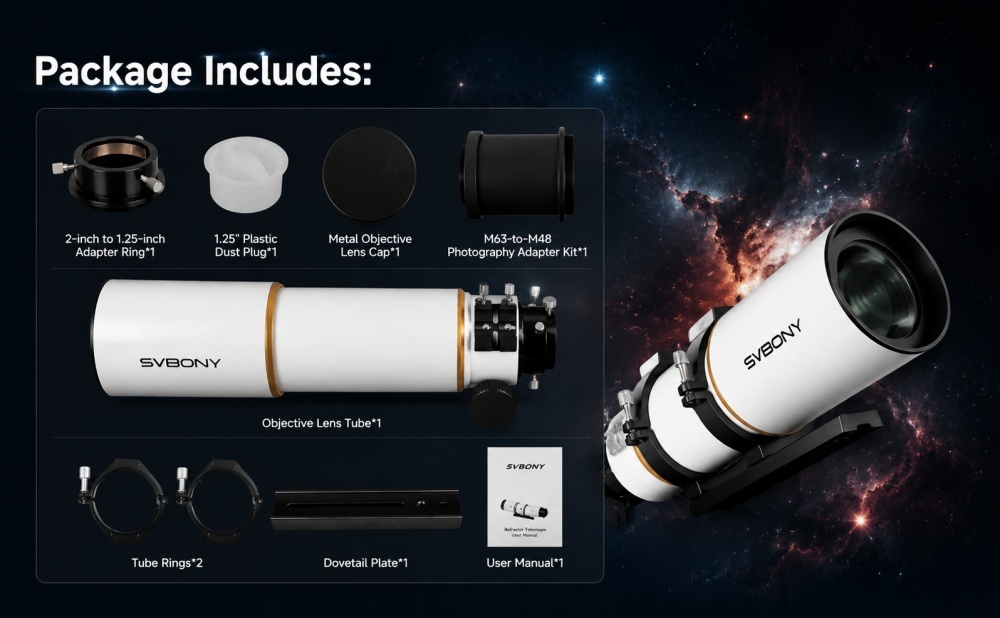
The SV530 features a doublet front group combined with a separate rear corrective lens, creating a carefully engineered optical system designed for both visual astronomy and imaging applications.
By using FK-61 ED glass, the system helps bring red, green, and blue wavelengths closer together at the same focal point.
The result is improved color correction, higher contrast, and sharper star profiles across a wide range of astronomical targets.
Three Optical Elements for Sharper Stars and Better Color Control
The advantage of Air-Spaced Triplet Optics is not simply the addition of another lens element.
The real benefit comes from the increased optical control available through a carefully calculated three-element system.
Each optical element contributes to correcting specific challenges, allowing the telescope to produce cleaner images with reduced unwanted color effects.
For users interested in astrophotography, this advanced design helps create more natural star colors and reduces the amount of correction required during image processing.
Doublet vs Triplet Refractors: Which Optical Design Offers Better Color Correction?
Choosing between a doublet and triplet refractor depends on the balance between performance, complexity, and long-term reliability.
Doublet systems remain a popular choice because they can deliver impressive results in a compact format. However, correcting multiple wavelengths across the visible spectrum becomes more challenging when fewer optical elements are available.
Another important consideration is how lens elements are assembled.
Some traditional designs use optical cement to bond glass elements together. While this approach can simplify manufacturing, glass and cement respond differently to temperature changes.
The Hidden Impact of Optical Cement on Long-Term Performance
A telescope may experience significant environmental changes during normal use, moving from indoor storage to outdoor observing locations with different temperatures.
Over time, maintaining stable optical performance becomes an important factor for serious astronomy users.
The SV530 avoids relying on cemented lens connections by using an air-spaced design, which helps reduce potential stress within the optical system and supports consistent performance in changing conditions.
The use of Air-Spaced Triplet Optics reflects a focus on long-term reliability rather than only short-term specifications.
How SV530 Makes Astrophotography Easier for Beginners with a Built-In Field Flattener?
A modern imaging setup requires more than excellent color correction. Maintaining sharp stars across the entire camera sensor is equally important.
The SV530 integrates a rear corrective lens into its optical system, helping create a flatter field for astrophotography without immediately requiring an additional accessory.
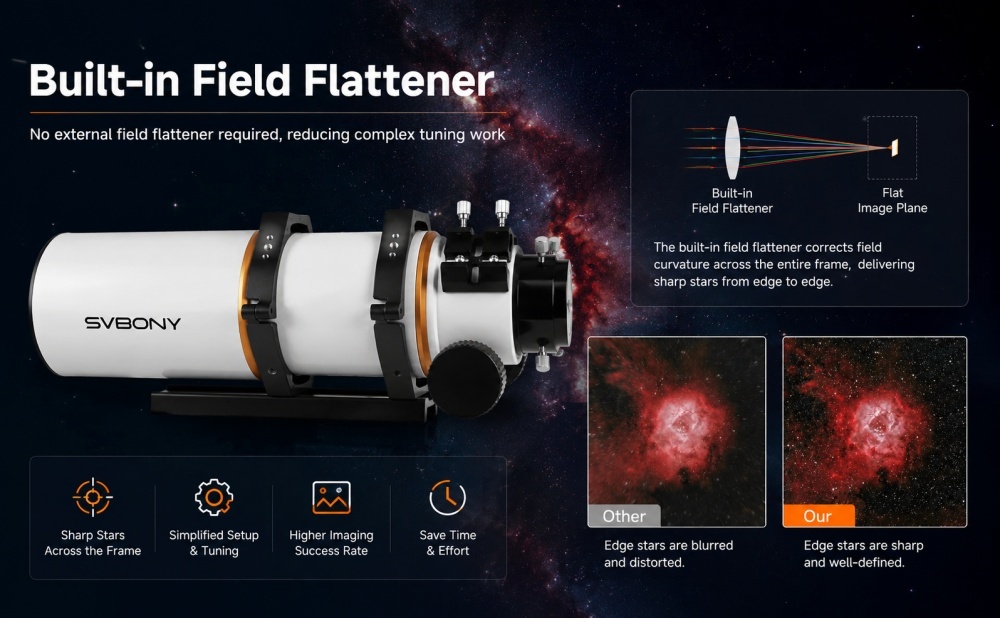
Sharp Stars from Center to Edge for Better Deep-Sky Images
As an astrophotography telescope , the SV530 is designed to provide consistent image quality across APS-C and full-frame sensors.
This means photographers can capture deep-sky objects with better edge performance and more balanced star shapes throughout the frame.
With an 80mm aperture and f/6.5 focal ratio, the SV530 provides a practical combination of speed, portability, and optical performance.
Its compact design makes it suitable for travel while still offering the capabilities expected from a serious imaging instrument.
Why SV530 Is One of the Best Refractor Telescopes for Beginners Starting Astrophotography?
Choosing a refractor telescope for your first astrophotography journey is not only about your first night under the stars. It is about selecting a long-term tool that can continue supporting your development as an observer and astrophotographer.
The SV530 was designed around the idea that beginners should have access to advanced optical technology without immediately needing to upgrade.
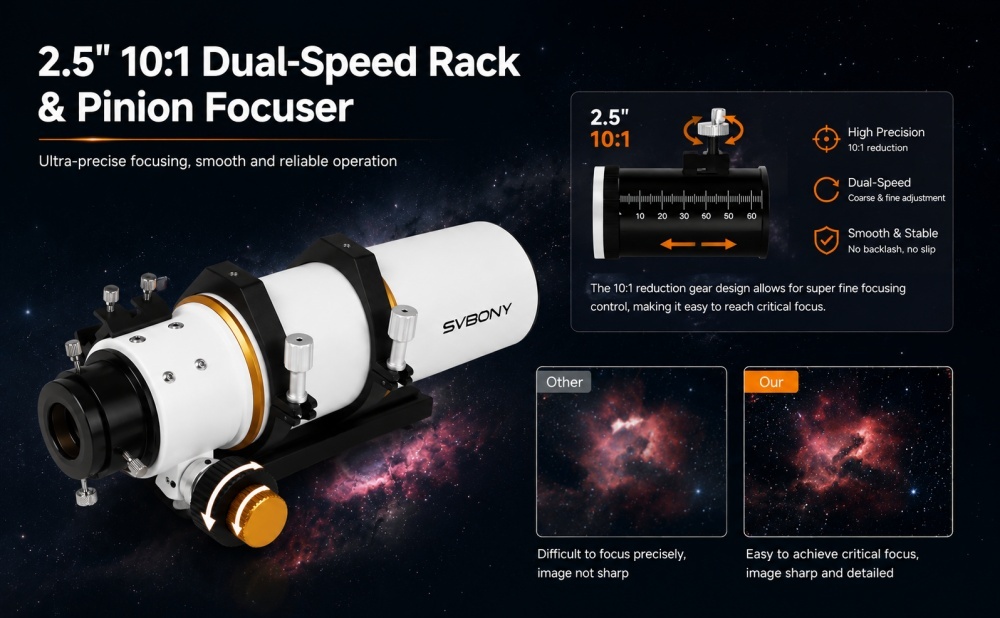
With its compact optical tube, retractable dew shield, and precision dual-speed focuser, the SV530 provides a balanced experience for both newcomers and experienced users looking for a portable setup.
Why Optical Design Matters for Long-Term Exploration
For anyone searching for a reliable Refractor Telescope, optical design is often the factor that determines long-term satisfaction.
A well-designed telescope should provide consistent performance, accurate images, and the confidence to continue exploring the universe.
The SV530 represents this philosophy: combining advanced Air-Spaced Triplet Optics, thoughtful engineering, and practical usability into a telescope designed to grow with your astronomy journey.
Whether you are beginning astrophotography or looking for a compact travel instrument, the SV530 offers the optical foundation of a high-quality APO refractor Telescope, helping you capture more detailed views of the night sky.
Comments (0 )
Leave a Reply
 Google
 Amazon
There are no customer reviews yet . Leave a Reply !