Close
Astronomical Filters are an Essential for Amateur Astronomers

Astronomical Filters are an Essential for Amateur Astronomers

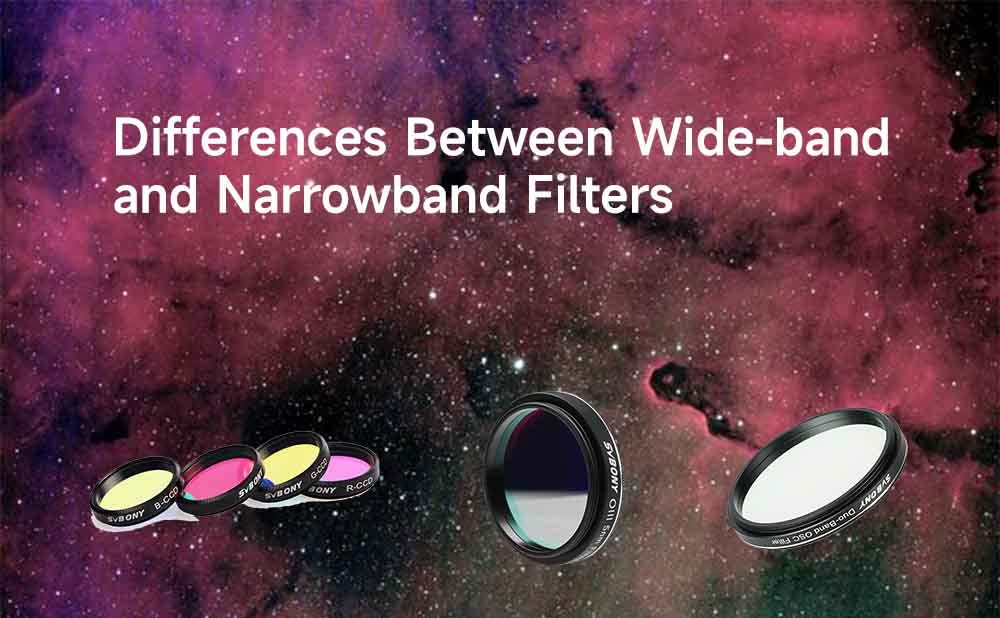
Astronomical filters are the preferred method to enhance contrast. These filters work by selectively transmitting light at certain wavelengths while blocking others. There are three main types of telescope filters: nebula filters for deep-sky observation, planetary filters, and solar filters. It's important to note that astronomy filters reduce the amount of light passing through the telescope, resulting in dimmer overall images. Read More

Best Telescope Eyepiece Reviews of SVBONY Astronomy

Best Telescope Eyepiece Reviews of SVBONY Astronomy

For astronomy enthusiasts, an eyepiece is a crucial tool to unravel the mysteries of the universe. However, an eyepiece that offers exceptional field of view or flexible zoom capabilities is truly exciting. Whether you're a beginner or an experienced astrophotographer, it promises an incredible observing experience. In this blog post, we'll delve into the unique features of the SVBONY five styles of eyepieces and how to make the most of its advantages. Read More

Capture Bold Moments with SVBONY Act20 Action Camera!

Capture Bold Moments with SVBONY Act20 Action Camera!

Are you an adventure seeker, a sports enthusiast, or just love capturing life's most exciting moments? If so, we have an incredible new product --SVBONY Act 20 that will let you experience the joy of recording in motion. Just imagine, those brave and crazy moments will be easily recorded by Act20. Whether you are recording those adventures or those beautiful trivial moments during the journey, Act20 will be the best photographer to accompany you. Read More

Why is it that the recent aurora borealis has been seen in areas that do not see them?

Why is it that the recent aurora borealis has been seen in areas that do not see them?

In recent days, there has been intense solar activity with consecutive coronal mass ejections (CMEs), resulting in significant and severe geomagnetic storms. During this period, the influx of charged particles from the solar wind into the polar regions has significantly increased, expanding the latitude range affected by Earth's magnetic field. As a result, the Northern Lights have become more intense and have been observed at lower latitudes. Read More