

Table of Contents
Astronomy Day 2026: A Festival of Eclipses, Meteor Showers, and Planetary Conjunctions
Astronomy Day 2026 is a global celebration that brings astronomy closer to everyone through telescope observations, public events, and educational activities.
During Astronomy Day, people can explore the night sky and observe celestial objects such as the Moon, planets, stars, galaxies, and nebulae.
With exciting astronomical events in 2026, September will be a highlight for skywatchers, featuring the Conjunction of Venus and the Moon, planetary encounters, and other celestial events.
The year will also bring a total lunar eclipse, giving astronomy enthusiasts even more opportunities to explore the night sky.
These September sky events make Astronomy Day 2026 a great opportunity for beginners and astronomy enthusiasts to explore the night sky.
Bringing Astronomy to Everyone: The Story of Astronomy Day
Astronomy Day was created to make astronomy more accessible to the public. The event began in 1973 when Doug Berger introduced the idea of bringing telescopes directly to communities instead of asking people to visit observatories.
This approach transformed public astronomy, allowing people to explore the Moon, planets, stars, and other celestial objects through telescope observations at parks, museums, and community events.:
* The Moon’s craters and surface details
* Bright planets in the solar system
* Stars and constellations
* Galaxies and nebulae
Because of its popularity, a second annual celebration was introduced in 2007, creating spring and fall Astronomy Day events. Today, International Astronomy Day, has become a worldwide astronomy outreach activity supported by astronomy organizations across many countries.
When Is Astronomy Day 2026?
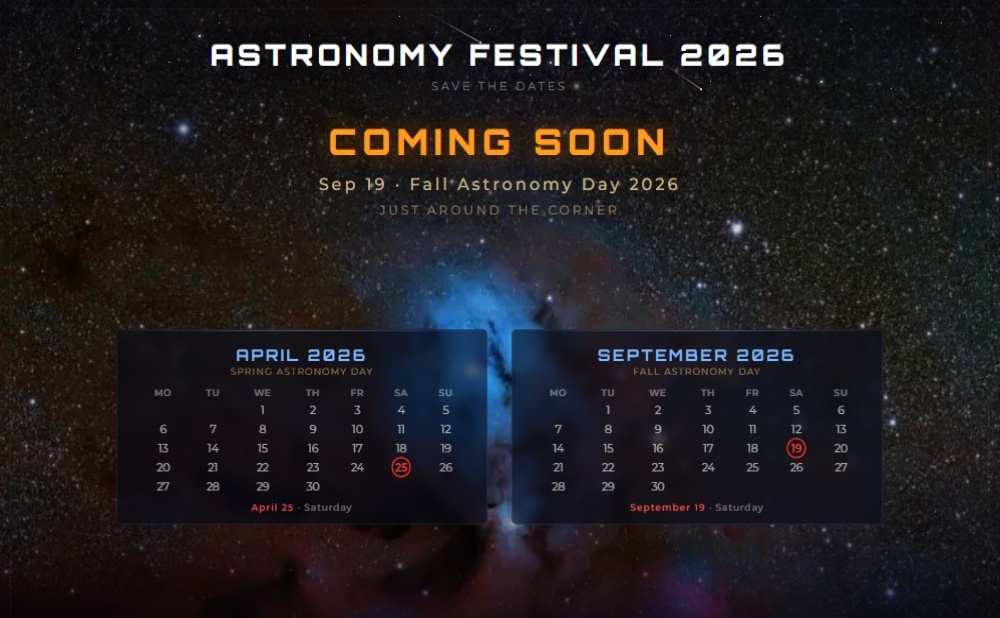
Unlike holidays with a fixed date, Astronomy Day 2026 is held on Saturdays selected around favorable Moon phases for public stargazing and telescope observation.
The celebration takes place twice a year, with separate spring and fall events.
The first-quarter Moon is often a good target for telescope observation because its angled sunlight creates strong shadows along craters, mountains, and other lunar features.
Spring Astronomy Day 2026
Date: April 25, 2026
Astronomy Week: April 20–26, 2026
Fall Astronomy Day 2026
Date: September 19, 2026
Astronomy Week: September 14–20, 2026
The fall Astronomy Day 2026 celebration is especially interesting for skywatchers, as September offers several opportunities to observe the Moon, planets, and other celestial objects.
Astronomical Events 2026: Major Celestial Events to Watch
The 2026 astronomical calendar offers a range of skywatching opportunities, from meteor showers and planetary conjunctions to lunar events.
Whether you are a beginner stargazer or an experienced observer, these events provide plenty of opportunities to explore the night sky with or without a telescope.
If you're planning ahead for fall stargazing, don't miss the SVBONY Astronomy Day Festival Deal, running September 7–22.
Enjoy up to 45% off sitewide and limited-time flash sales on popular telescopes and astrophotography gear like the SC571CC camera, with free gifts on eligible orders. Visit the official page for full details on available promotions.
Perseids Meteor Shower: A Skywatching Highlight of the Year
The Perseids meteor shower is one of the most popular annual meteor showers and a favorite among beginner stargazers.
In 2026, it is expected to peak around August 12–13, when Earth passes through debris left behind by Comet Swift-Tuttle.
The Perseids are easy to enjoy because they can be seen without a telescope, often produce bright, fast-moving meteors, and are ideal for a night of family stargazing.
While a telescope is not needed to watch the meteor shower, binoculars or a telescope can be useful for exploring the Moon, planets, and other celestial objects before or after the peak.
Conjunction of Venus and the Moon: A September Skywatching Highlight
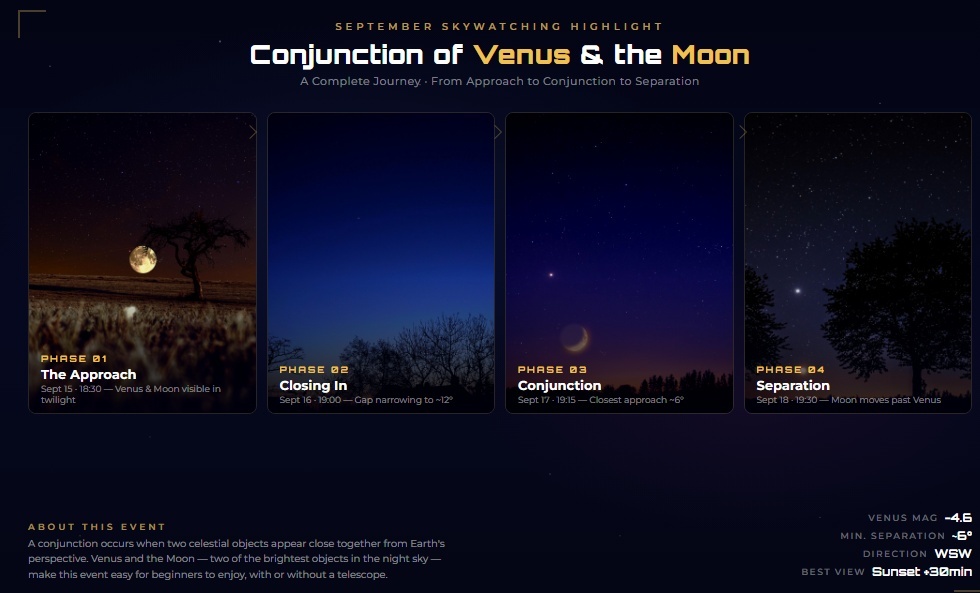
The Conjunction of Venus and the Moon will be one of the most eye-catching skywatching events in September 2026. A conjunction occurs when two celestial objects appear close together in the sky from Earth's perspective.
Because Venus and the Moon are among the brightest objects visible in the night sky, this event is easy for beginners to enjoy. With a telescope, observers can take a closer look at Venus's phases and the Moon's craters and surface features.
The Venus and Moon conjunction will be a notable target for stargazers exploring the September night sky around Fall Astronomy Day 2026.
Total Lunar Eclipse 2026: A Spectacular Lunar Event
A lunar eclipse occurs when Earth moves between the Sun and the Moon, casting its shadow across the lunar surface. In 2026, a total lunar eclipse will occur on March 2–3, giving observers in some regions the chance to see the Moon take on a reddish appearance.
Unlike a solar eclipse, a lunar eclipse can be safely viewed with the naked eye. A telescope can also provide a closer look at the changing lunar surface and the movement of Earth's shadow during different stages of the eclipse.
September Night Sky Guide: What to See Around Astronomy Day 2026
September 2026 offers plenty to explore in the night sky around the fall Astronomy Day 2026 celebration. From close encounters between the Moon and bright planets to the Conjunction of Venus and the Moon, skywatchers will have a variety of easy-to-spot celestial targets throughout the month.
For beginners, the September night sky is a great place to start stargazing. Many bright objects can be seen with the naked eye, while a beginner telescope can reveal more detail on the Moon and planets, along with brighter star clusters and selected deep-sky objects.
How to Celebrate Astronomy Day: Stargazing With a Telescope
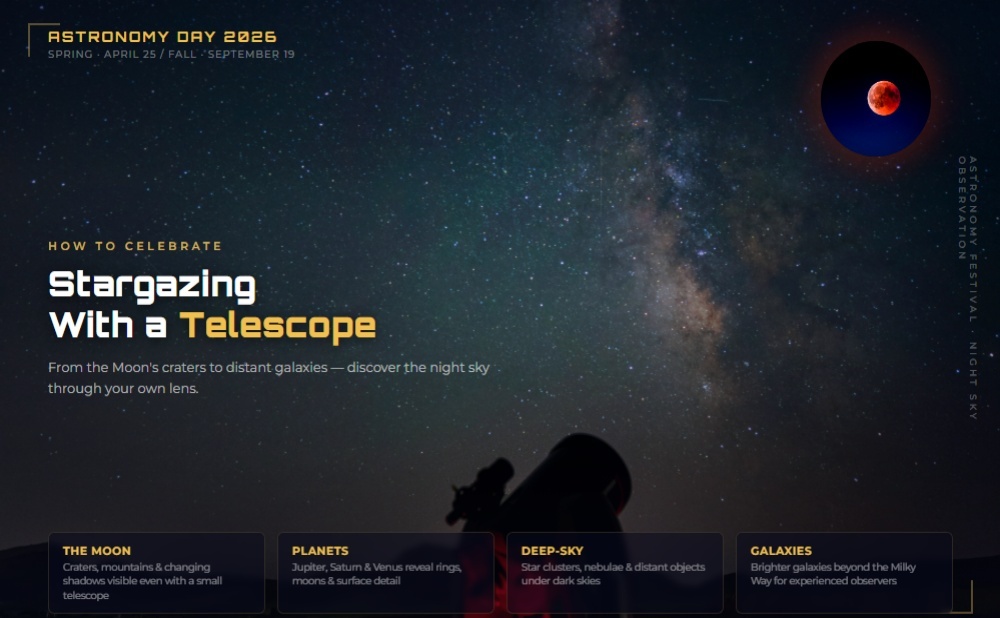
One of the best ways to enjoy Astronomy Day 2026 is to spend time exploring the night sky with a telescope. For beginners, the Moon is an ideal place to start, as even a small telescope can reveal craters, mountains, and changing shadows across its surface.
Once you are comfortable observing the Moon, you can explore other popular telescope targets:
Planets
Bright planets such as Jupiter, Saturn, and Venus can reveal more detail through a telescope, making them excellent targets for beginner stargazing.
Star Clusters and Deep-Sky Objects
Under darker skies, a telescope can help observers explore bright star clusters, nebulae, and other deep-sky objects that are difficult to see with the naked eye.
Galaxies
With suitable observing conditions and the right telescope, more experienced observers can also explore brighter galaxies beyond the Milky Way.
The best telescope for stargazing depends on your experience, observing goals, and local sky conditions. For beginners, choosing a beginner telescope that is easy to set up and use can make Astronomy Day an easier and more enjoyable introduction to the night sky.
Explore the Night Sky on Astronomy Day 2026
Astronomy Day 2026 offers a simple way to discover astronomy through public events, telescope observations, and stargazing. From major astronomical events in 2026 to the many highlights of the September night sky, there are plenty of opportunities for beginners and experienced observers to explore the Moon, planets, stars, and deep-sky objects.
Whether you join a local event or observe from home, Astronomy Day is a chance to discover the night sky and take the first step toward a deeper interest in astronomy.
Ready to start your own stargazing journey? Explore 2026 SVBONY Astronomy Day Festival Deal and discover special offers on astronomy gear for your next night under the stars.
Comments (0 )
Leave a Reply
 Google
 Amazon
There are no customer reviews yet . Leave a Reply !