


Table of Contents
How to Build an Astronomy Setup: A Guide to Telescopes and Astrophotography
Discover how to build the right astronomy setup for your goals. From beginner telescopes and planetary observation to deep-sky astrophotography cameras and essential accessories, this guide covers the equipment you need to explore and capture the night sky.
Building an astronomy setup starts with deciding what you want to observe. Some people enjoy viewing the Moon and planets. Others want to photograph nebulae, galaxies, and star fields. Each goal requires different equipment.
You don't need a complicated setup to get started. A suitable telescope, camera, and a few accessories are often enough. You can also upgrade your equipment as your interests grow. This guide covers beginner telescopes, astrophotography setups, and useful accessories to help you choose the right gear.
The products below are examples from the SVBONY lineup. Choose based on your observing goals and equipment compatibility. You may also need additional components to complete your setup.
Start with Your Astronomy Goals
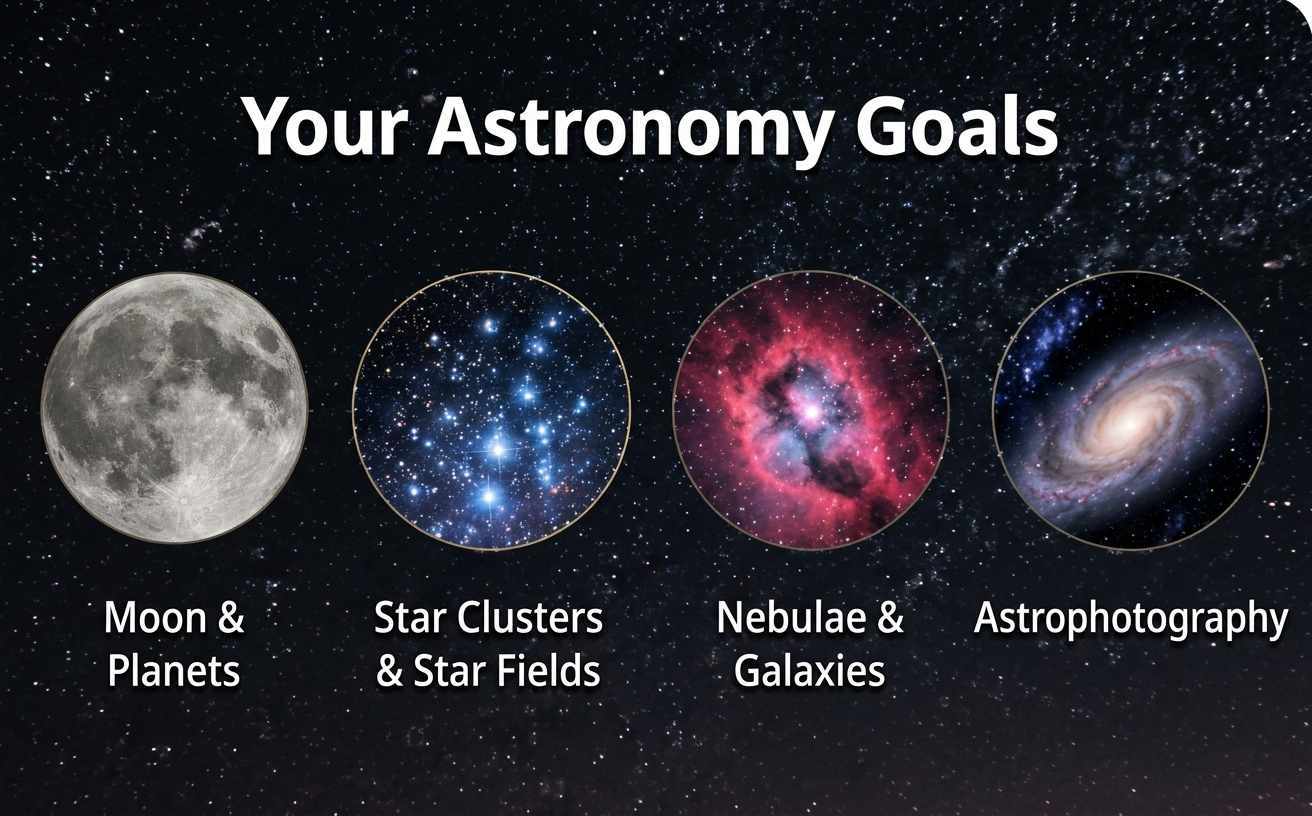
Before choosing equipment, think about what you want to do.
- Visual astronomy: Observe the Moon, planets, star clusters, and other bright objects through an eyepiece.
- Lunar and planetary imaging: Capture detailed photos or videos of the Moon and planets.
- Deep-sky astrophotography: Photograph nebulae, galaxies, and star fields. This usually requires a telescope, camera, tracking mount, and supporting accessories.
Your observing goals will help you choose the right telescope. They can also help you avoid buying equipment you don't need.
Beginner Astronomy Setup: Choosing Your First Telescope
A beginner astronomy setup should be easy to use and suit your observing interests. A visual telescope is a practical place to start. You can add a camera later when you're ready to try astrophotography.
SV520 Entry-Level Telescope Kit
The SV520 is an entry-level option for exploring the night sky. It offers a straightforward way to learn how to use a telescope and enjoy casual observations.
SV48P 102mm Telescope Set
The SV48P features a 102mm aperture, which gathers light for viewing the Moon, bright star clusters, and other visible targets. As an achromatic refractor, it may show some color fringing around bright objects. It is an appealing choice for a first visual telescope.
SV503 80ED Beginner Kit
The SV503 80ED is a versatile option for a telescope setup for beginners. Its 80mm ED doublet optics help reduce chromatic aberration. This produces cleaner views of the Moon, planets, and brighter deep-sky objects. The kit includes visual accessories and an AZ mount, making it suitable for backyard stargazing and general observation.
MK127 Maksutov-Cassegrain Telescope
The MK127 has a 127mm aperture and a 1500mm focal length. Its long focal length makes it well suited to viewing the Moon and planets. However, its narrower field of view is less suitable for large nebulae and wide star fields. It's a better choice if lunar and planetary observation are your main interests.
Building an Astrophotography Setup
The best astrophotography setup depends on what you want to photograph. Large nebulae need a different setup from galaxies or planets.
A good astrophotography setup involves more than a telescope. Your camera, tracking mount, focal length, and accessories all affect the final image.
Here are three important factors to consider:
- Focal length: Shorter focal lengths capture wider areas of the sky. Longer focal lengths bring smaller targets into greater detail.
- Focal ratio: A lower f-number generally allows you to capture images faster under similar conditions.
- Camera sensor: Sensor size affects your field of view. Make sure it matches your telescope's image circle.
Backyard Astrophotography Setup: SV503 102ED Deep-Sky Set
The SV503 102ED Deep-Sky Set is worth considering for a backyard astrophotography setup.
It features a 102mm S-FPL51 ED doublet with a 714mm focal length and an f/7 focal ratio. The set also pairs the telescope with imaging accessories, depending on the selected configuration.
These components provide a starting point for deep-sky imaging. You'll still need a compatible main imaging camera and equatorial tracking mount. Check the exact configuration, as the included accessories may vary.
Wide-Field Astrophotography Setup: SV580 + SV605CC
If you want to photograph large nebulae and star fields, consider a wide-field astrophotography setup.
The SV580 is an 80mm f/4.5 Petzval APO with a 360mm focal length. It features a built-in field flattener and a 44mm image circle for full-frame imaging. Its short focal length provides a wide field of view, making it suitable for larger deep-sky targets.
The cooled SV605CC camera makes a suitable partner for this telescope. Together, they form a convenient wide-field imaging kit. You'll still need a compatible tracking mount and any required guiding equipment.
Longer-Focal-Length Imaging: SV550 122 APO
For smaller galaxies and other targets that need more image scale, consider the SV550 122 APO.
It has a 122mm aperture and an 854mm focal length at f/7. You can also pair it with the SV209 0.8x reducer. This brings the focal length down to approximately 683mm and changes the focal ratio to f/5.6.
This combination offers more reach than a short-focal-length refractor. Photography bundle pricing and configurations may differ, so check the selected setup.
Planetary Astrophotography Setup: MK127 + SC715C
Planetary imaging works differently from deep-sky photography. The Moon and planets are relatively bright, so video capture is a common approach.
The MK127 has a 127mm aperture and a 1500mm focal length. These features make it suitable for lunar and planetary imaging. Pair it with the SC715C planetary camera to record videos and select sharp frames for stacking.
A Barlow lens can also increase image scale. The results depend on viewing conditions and camera sampling. Short planetary video captures usually don't require a guiding system.
Choosing an Astrophotography Camera Setup
The camera is an important part of any astrophotography camera setup. Sensor size, resolution, and cooling all affect your imaging results.
Keep these points in mind when choosing a camera:
- Sensor size: A larger sensor captures a wider field of view, as long as your telescope supports it.
- Resolution: Pixel count and pixel size affect image detail and sampling.
- Cooling: Cooled cameras help reduce thermal noise during long-exposure deep-sky imaging.
- Camera type: Dedicated astronomy cameras are designed for different targets, including deep-sky objects and planets.
There is no single best camera setup for astrophotography. Cooled cameras such as the SV605CC and SC571CC are suitable for deep-sky imaging. The SC715C, on the other hand, is designed for lunar and planetary photography. Choose a camera that matches your telescope and imaging targets, rather than focusing on resolution alone.
Looking to upgrade an existing imaging system?
The SC571CC APS-C cooled color camera is worth considering.
Accessories That Complete Your Astronomy Setup
The right accessories can improve image quality and make imaging sessions easier. They can also help you manage your equipment during longer sessions.
- Guiding system: The SV106 guide scope and SV905C guide camera work together to help track small mount errors during long-exposure deep-sky imaging.
- Filter drawer: The SV226 makes it easier to install and change compatible filters.
- Dual narrowband filters: The SV220 7nm Dual Narrowband Filter isolates selected wavelengths to help capture emission nebulae.
- Power and dew control: The SV241 Pro and SV172 support equipment power management and dew heating during imaging sessions.
Before ordering, check the selected configuration and the accessories included with it. These accessories, along with the telescopes and cameras mentioned above, are part of our current Black Friday offers.
Black Friday Deals on Astronomy Gear
Here is a quick overview of selected SVBONY astronomy and astrophotography offers:
| Product / Setup | Black Friday Discount |
|---|---|
| SV48P 102mm Telescope Set | 30% OFF |
| SV503 80ED Beginner Kit | 35% OFF |
| MK127 Planetary Observation Kit | 28% OFF |
| Selected SV503 Deep-Sky Sets | Up to 43% OFF |
| SV580 + SV605CC Imaging Kit | 16% OFF |
| SV550 122 APO Visual Set | 35% OFF |
| SC715C Planetary Camera | 29% OFF |
| SC571CC Deep-Sky Accessories Kit | 20% OFF |
| SV106 + SV905C Guiding System | 31% OFF |
| SV226 Filter Drawer | 39% OFF |
| SV220 7nm Dual Narrowband Filter | 30% OFF |
| SV241 Pro + SV172 | 30% OFF |
With the right gear in mind, here's how to put together an astronomy setup that matches your observing or imaging goals.
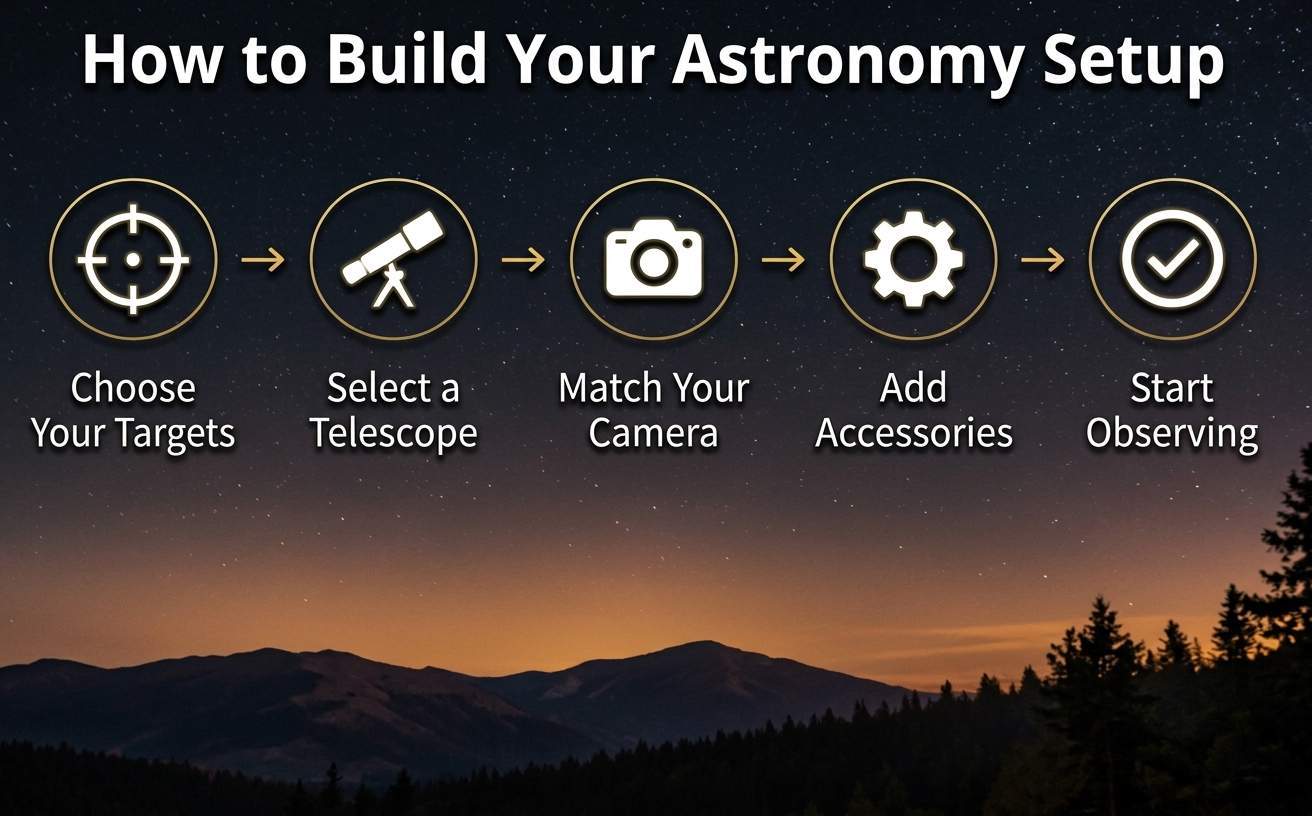
How to Build Your Astronomy Setup Step by Step
You don't need to buy everything at once. Start with the essentials and add equipment as you gain experience.
- Choose your main targets. Decide whether you want to observe visually, photograph planets, or capture deep-sky objects.
- Select a suitable telescope. Consider aperture, focal length, and focal ratio based on your targets.
- Choose your camera. You may not need one for visual observation. For imaging, match the sensor size to your telescope's image circle and field of view.
- Check the mount. Deep-sky imaging usually requires a compatible equatorial tracking mount. Make sure its payload capacity can support your full setup.
- Add supporting accessories. Guiding, filters, power, and dew control can improve your imaging workflow.
- Start simple. Learn how each component works before adding more equipment.
Build a Setup That Grows with You
The right astronomy setup depends on your observing and imaging goals. Whether you're interested in visual astronomy, planetary photography, or deep-sky imaging, choose equipment that works well together.
Ready to build your next astrophotography setup?
Compare SVBONY telescopes, cameras, and accessories to find the right combination for your goals. Take advantage of selected Black Friday discounts before the sale ends on December 6, 2026.
Offers are subject to change. Check each product page for current pricing and bundle details.
Comments (0 )
Leave a Reply
 Google
 Amazon

There are no customer reviews yet . Leave a Reply !