


Table of Contents
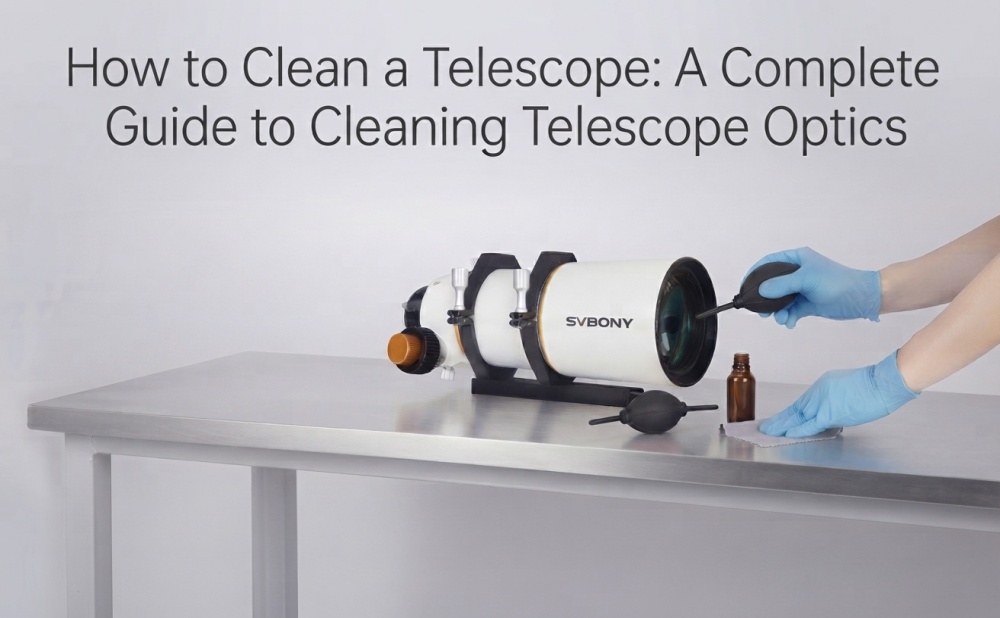
How to Clean a Telescope: A Complete Guide to Cleaning Telescope Optics
A telescope does not need to be cleaned every time you see a little dust. In fact, unnecessary or improper cleaning can cause more harm than the dust itself. Telescope mirrors, lenses, eyepieces, and filters are precision optical surfaces, often protected by delicate coatings.
Good cleaning telescope optics is about knowing when cleaning is necessary, removing loose particles safely, and minimizing contact with the optical surface.
Whether you need to clean telescope mirror surfaces on a reflector or clean telescope lens on a refractor, the safest approach is usually the simplest.
When Should You Clean Your Telescope?
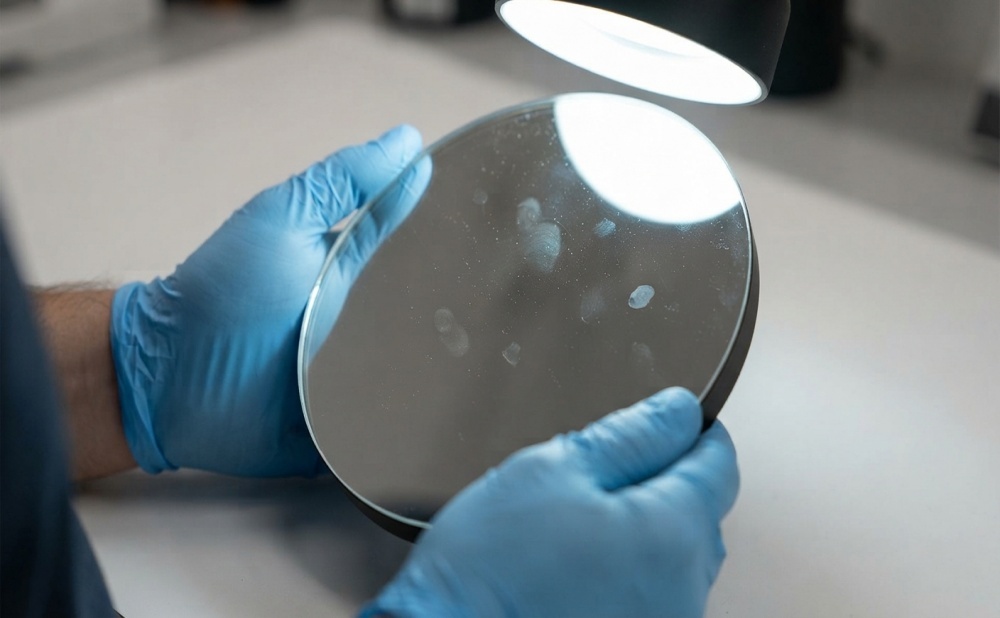
Not every trace of dust means your telescope needs cleaning. A small amount of loose dust on a mirror or lens usually has little effect on image quality, while fingerprints, skin oils, water spots, and other residue are more likely to interfere with the view.
Before cleaning, inspect the optical surface under good lighting. If you see only loose dust, a clean air blower may be all you need. If there is visible residue, clean the surface only when necessary and use the least aggressive method appropriate for the optics.
The basic rule of cleaning telescope optics is simple: remove loose particles before touching the surface, minimize contact, and avoid unnecessary pressure or rubbing.
How to Clean a Telescope Mirror?
How to Clean a Telescope Primary Mirror?
If you need to clean telescope mirror surfaces, start by inspecting the primary mirror without removing it.
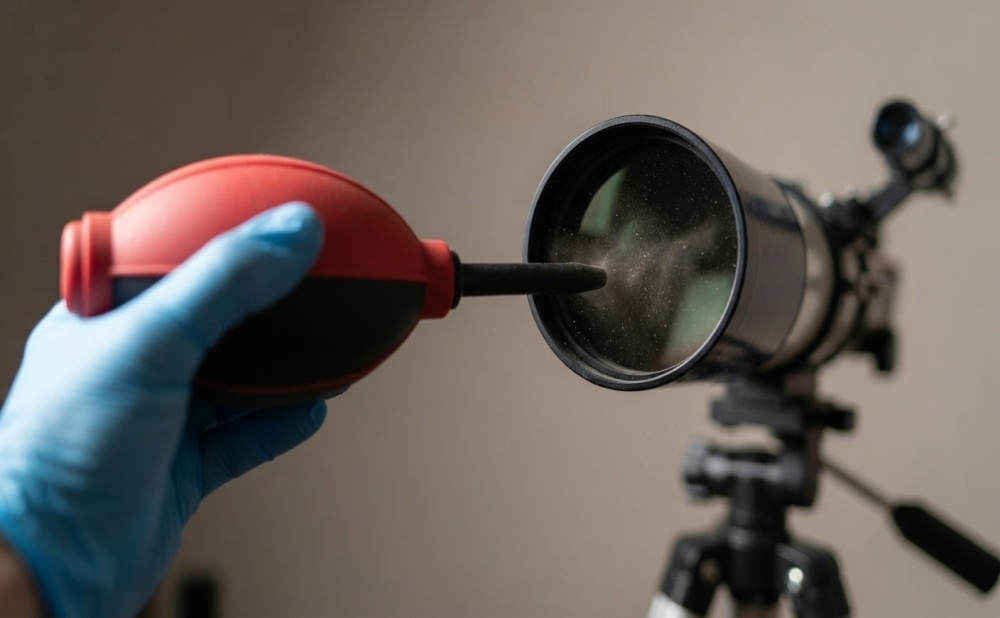
Use a clean air blower to gently remove loose dust. Do not wipe a dry mirror, as dust particles can be dragged across the surface and potentially cause fine scratches.
For fingerprints, oily residue, or other contamination, use cleaning materials and methods suitable for the mirror's optical coating. Follow the telescope or mirror manufacturer's recommendations whenever possible.
When you clean reflector telescope mirror surfaces, remember that the reflective coating is delicate. Harsh chemicals, excessive rubbing, or frequent cleaning can cause more harm than the dust itself.
The goal is not to make the mirror perfectly spotless. Clean it when contamination is significant enough to affect performance, and keep physical contact with the optical surface to a minimum.
How to Clean a Telescope Secondary Mirror?
A secondary mirror requires extra care because it is smaller, exposed within the optical tube, and important for the telescope's alignment.
Start with an air blower to remove loose dust. Avoid touching the surface unless there is visible contamination that cannot be removed this way.
If you need to clean telescope secondary mirror surfaces more thoroughly, use an optical cleaning method recommended for the mirror's coating.
Avoid removing the secondary mirror unless necessary, since disassembly can affect its alignment and make collimation more difficult.
How to Clean a Telescope Lens?
Refractor telescopes have exposed objective lenses that can collect dust, fingerprints, pollen, or moisture over time.
How to clean a refractor telescope lens?
First, inspect the lens and use an air blower to remove loose particles. If fingerprints or oily residue remain, use an appropriate optical cleaning solution and a clean optical cloth or other manufacturer-approved material. Work gently and avoid applying unnecessary pressure.
Can I use isopropyl alcohol to clean a telescope lens? In some optical-cleaning applications, isopropyl alcohol may be suitable, but it should not be treated as a universal cleaner for every telescope lens.
Different optical coatings may have different cleaning requirements, so follow the manufacturer's recommendations for your specific lens.
Never use household glass cleaner, paper towels, tissues, or abrasive materials on telescope optics. Also avoid spraying or pouring excessive liquid directly onto the lens.
How to Clean a Telescope Eyepiece?
Eyepieces are frequently handled and are positioned close to your face, so fingerprints, skin oils, and dust can build up more easily than on other optical surfaces.
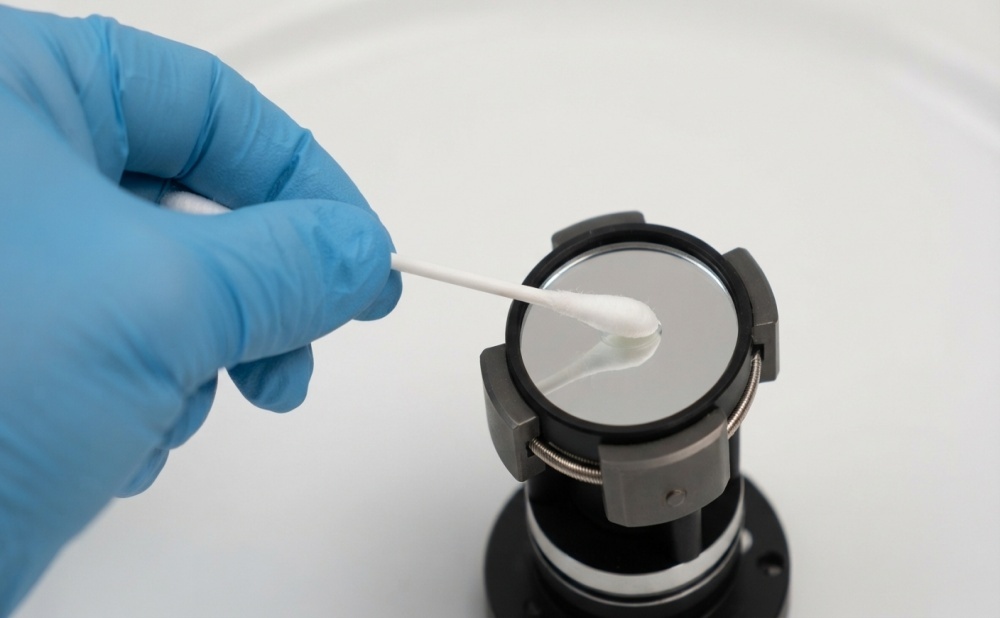
To clean telescope eyepiece surfaces, start with an air blower to remove loose dust. For fingerprints or oily residue, use a suitable optical cleaning method and clean only the affected surfaces.
A telescope eyepiece cleaning kit can be useful for keeping the basic tools needed for routine eyepiece and optical care together. As with other optics, avoid cleaning an eyepiece simply because you can see a small amount of dust.
How to clean telescope filters?
Telescope filters also have delicate optical surfaces and coatings. Before cleaning, inspect the filter and use an air blower to remove loose particles.
If fingerprints, oil, or other residue remain, use a cleaning method appropriate for the filter's coating. Avoid excessive rubbing, repeated cleaning, or harsh household cleaners.
What Should Be in a Telescope Cleaning Kit?
A basic Telescope Cleaning Kit does not need to be complicated. Useful items include:
- An air blower for removing loose dust
- A soft lens brush for appropriate optical surfaces
- A clean microfiber or optical cloth
- An optical cleaning solution suitable for the equipment
The most important part of a cleaning kit is not how many tools it contains, but whether the tools are designed for delicate optical surfaces. More cleaning tools should not mean more frequent cleaning.
Cleaning vs. Recoating a Telescope Mirror
Cleaning and recoating are two very different forms of telescope maintenance.
Cleaning removes dust, fingerprints, oil, water spots, and other surface contamination. Recoating addresses deterioration of the reflective coating itself. Cleaning cannot restore a mirror whose coating has become significantly degraded.
So, How to recoat a telescope mirror?
Mirror recoating is a specialized process that requires the old coating to be removed and a new reflective coating to be applied under controlled conditions.
It is not a routine cleaning task and is generally not something to attempt as a simple DIY maintenance procedure.
If a mirror appears unusually dull even after proper cleaning, or the reflective coating shows visible deterioration, professional assessment may be more appropriate than repeated cleaning.
Common Telescope Cleaning Mistakes to Avoid
Even careful telescope owners can damage optics through overly aggressive cleaning. Avoid these common mistakes:
- Wiping loose dust directly across a dry optical surface
- Cleaning optics more often than necessary
- Using household glass cleaners
- Applying too much cleaning solution
- Pressing hard while wiping
- Removing mirrors unnecessarily
- Using dirty or abrasive cloths and brushes
When in doubt, stop after removing loose dust and check the manufacturer's cleaning instructions.
SVBONY Telescope Cleaning Kit for Everyday Optics Care
For routine optical maintenance, a dedicated cleaning kit can make it easier to use the right basic tools.
The SVBONY Professional Lens Cleaning 3-piece Set includes a dust blower, lens brush, and microfiber cloth for cleaning telescope lenses and other optical surfaces.
The basic workflow is straightforward: blow away loose dust first, then use the appropriate tool gently if further cleaning is needed.
Keeping the tools together also makes routine maintenance easier without encouraging unnecessary cleaning.
A Safer Approach to Telescope Cleaning
Good cleaning telescope optics does not mean keeping every optical surface perfectly spotless. A small amount of dust is usually less concerning than repeated improper cleaning.
Inspect first, remove loose particles before making contact, and clean only when contamination actually needs attention.
With the right technique and a few suitable tools, you can keep your clean telescope mirror and clean telescope lens surfaces in good condition while minimizing unnecessary wear on their optical coatings.
Comments (0 )
Leave a Reply
 Google
 Amazon
There are no customer reviews yet . Leave a Reply !