


Table of Contents
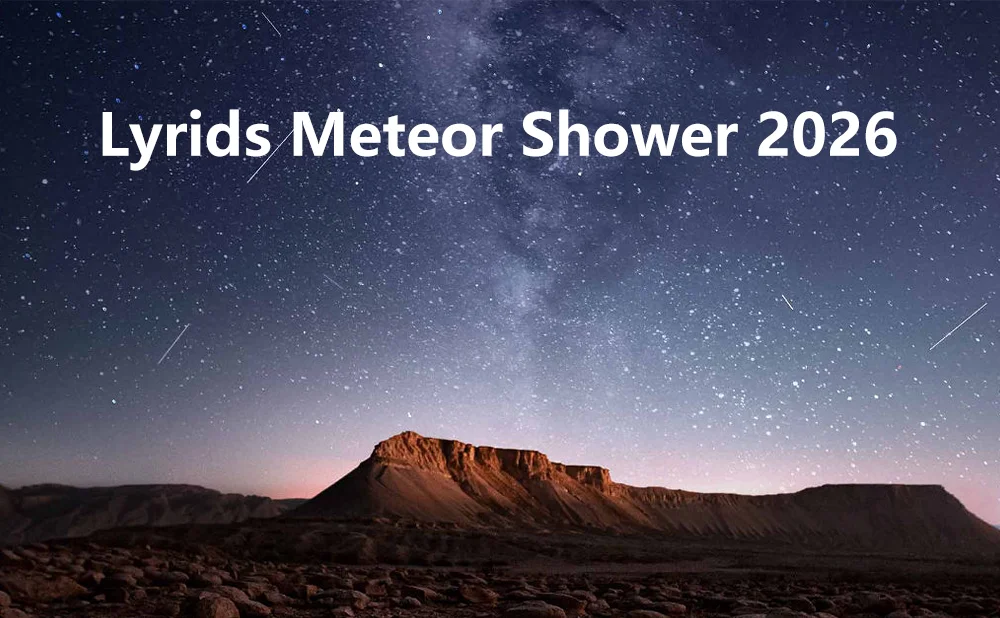
Lyrids Meteor Shower 2026
As spring settles in, many gaze up and wonder: Is there a meteor shower tonight? For April 2026, the answer is a resounding yes! The annual Lyrid meteor shower, one of the oldest celestial events known to humanity, is about to begin.
What is a Lyrid Meteor Shower?
The Lyrids are one of the oldest recorded meteor showers, with observations dating back over 2,700 years. They are caused by Comet C/1861 G1 (Thatcher). When Earth passes through the trail of dust and debris left by this comet, the particles burn up in our atmosphere at 49 km per second, creating the "shooting stars" we see. While not as prolific as the famous August Perseids meteor shower, the Lyrids are known for producing bright fireballs and have surprised observers with occasional outbursts in the past.
When is the Lyrids Meteor Shower?
- Active Period: April 14 to 30 each year.
- Peak Date (Lyrids Peak): April 22, 2026. This is the night of maximum activity.
- Peak Time: The peak is expected around 19:40 GMT on April 22. However, the exact timing can vary by several hours (between ~16:40 GMT April 22 and 00:00 GMT April 23).
Important Note: For much of the Americas, this peak occurs during daylight hours. Therefore, the best viewing rates will be seen before dawn on April 22 or after midnight on April 23 (local time).
Where is the Lyrid Meteor Shower Visible?
The Lyrids are visible from both hemispheres, but conditions strongly favor the Northern Hemisphere.
- Radiant Location: The meteors appear to radiate from a point in the constellation Lyra, near the brilliant star Vega.
- Northern Hemisphere: The radiant rises around 20:30 local time and climbs high in the sky by late night/early morning, offering the best views.
- Southern Hemisphere: The radiant rises later and stays lower in the sky, resulting in a lower meteor rate, but it's still possible to see them.
How Can I See the Lyrid Meteor Shower?
To maximize your chances of seeing these swift meteors, follow these tips:
- Find Dark Skies: Get away from city lights. Find an open area with an unobstructed view of the sky. Meteors can appear anywhere, so the more sky you see, the better.
- Adapt Your Eyes: Allow at least 15-20 minutes for your eyes to fully adjust to the darkness. Avoid looking at bright lights, phone screens, or flashes during this time.
- Be Patient and Comfortable: Meteor watching is a waiting game. Plan to observe for at least one full hour. Bring a reclining chair or blanket, dress warmly, and pack a hot drink for comfort.
- Use Technology:The higher the radiant is, the more meteors you are likely to see. If you're interested in exploring the night sky beyond meteors, consider using binoculars or a telescope to view planets, star clusters, and other deep-sky objects.
Observation Conditions in 2026
The outlook for 2026 is favorable:
- Expected Rate: Around 18 meteors per hour under perfect, dark-sky conditions.
- Moon Interference: Low. The Moon will be only 34% illuminated (a waxing crescent) during the peak, causing only mild interference.
- Outburst? No major outburst is predicted for 2026, but the reliable performance and excellent viewing conditions make it a classic spring event not to be missed.
Summary
The Lyrids peak on April 22, 2026. So if you ask "Is there a meteor shower tonight?" during mid-to-late April, the answer is likely yes. Find a dark spot, get comfortable, look up, and enjoy a light show that has dazzled humans for millennia.
 Google
 Amazon
There are no customer reviews yet . Leave a Reply !