


Table of Contents
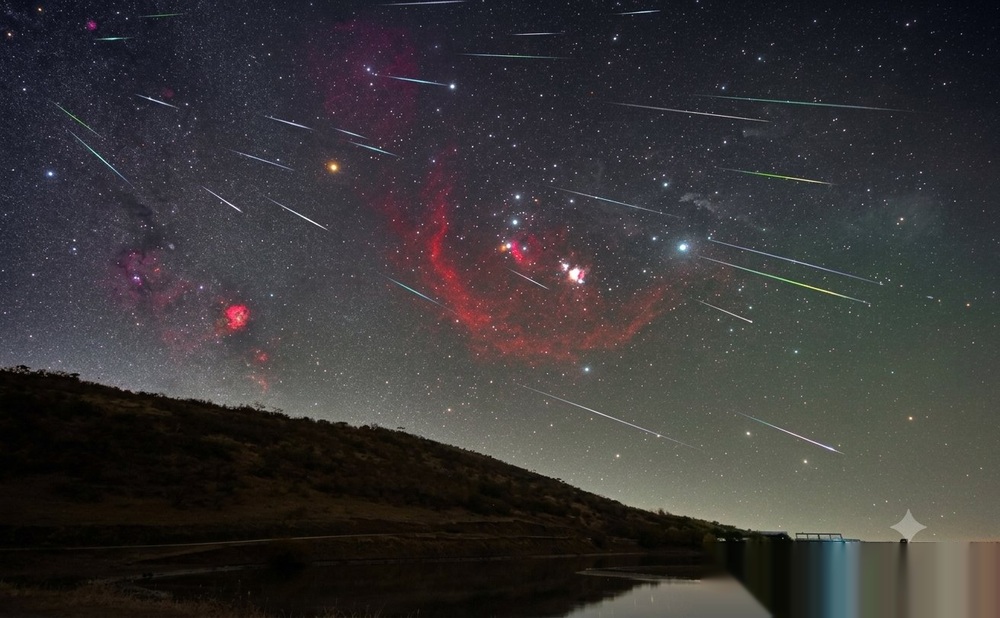
Orionid Meteor Shower 2026: Peak Time, Where to Look, and Viewing Tips
Every October, Earth passes through debris left behind by Halley's Comet, creating the annual Orionid meteor shower. In 2026, the shower peaks overnight around October 21–22, giving skywatchers in both hemispheres a chance to see fast-moving meteors streak across the night sky.
This year's display comes with a challenge: the Moon will be about 74% illuminated on the peak night, making fainter meteors harder to see. For a better view, plan to observe after the Moon sets and before dawn, when the sky is darker.
Whether you're planning your first meteor-watching session or looking for the best time to see the Orionids, this guide covers the peak date, visibility, observing direction, and tools that can help you plan.
What Is the Orionid Meteor Shower?
The Orionid meteor shower is an annual celestial event caused by debris from Halley's Comet. As the comet travels around the Sun, it leaves dust and small rocky particles along its orbit. When Earth crosses this debris stream, some particles enter our atmosphere and produce bright streaks of light known as meteors, or shooting stars.
The Orionids are known for their speed. Their particles enter Earth's atmosphere at approximately 66 kilometers (41 miles) per second, equivalent to about 238,000 kilometers (148,000 miles) per hour. Some meteors leave glowing trails that linger briefly after the streak disappears.
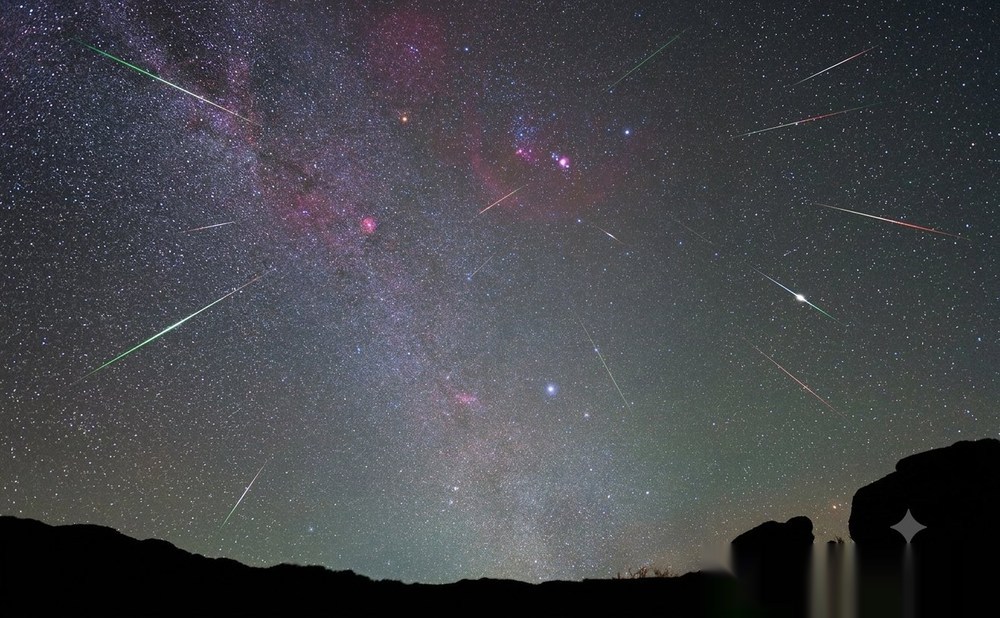
The shower gets its name from the constellation Orion. Its meteors appear to radiate from a point near the bright star Betelgeuse, known as the radiant. However, meteors can streak across many parts of the sky, so you don't need to look directly at Orion to see them.
Halley's Comet takes roughly 76 years to orbit the Sun. Although the comet itself is not visible every October, the debris it leaves behind creates this annual meteor shower.
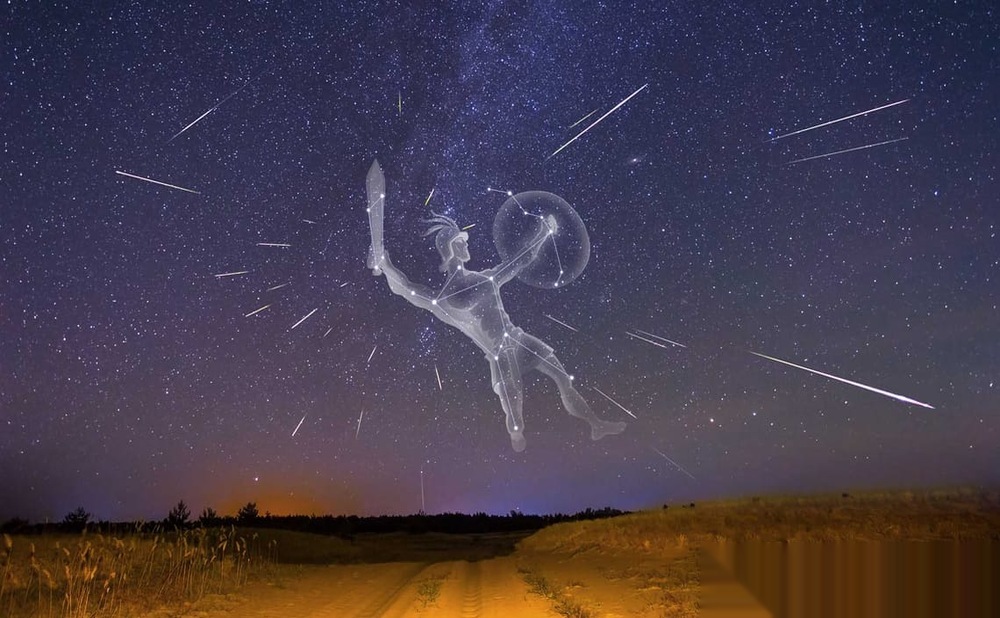
When Is the Orionid Meteor Shower in 2026?
The Orionid meteor shower peak is expected overnight on October 21–22, 2026. The shower is active from October 2 through November 7, so you may also see meteors on nights around the peak.
Key dates and viewing expectations:
Active period: October 2–November 7, 2026
Peak: Around the night of October 21–22
Expected activity: Approximately 10–20 meteors per hour under ideal dark-sky conditions
Best general viewing period: After midnight and before dawn, especially after local moonset
The hourly rate is an estimate under favorable conditions, not a guarantee. Cloud cover, light pollution, moonlight, and the radiant's position all affect how many meteors you can see.
Keep local dates in mind when planning. The peak is commonly listed as October 21–22, but the most suitable observing hours may fall on October 22 in your time zone. In some locations, the best window may extend into the morning of October 23 if you're observing on a later night in the shower's active period.
What Time Is Best to See the Meteor Shower Tonight?
There is no single start time that applies worldwide. Orionid meteors can appear after dark, but the radiant rises higher as the night progresses, making the later hours generally more favorable.
For the 2026 peak, aim for the hours after midnight, particularly the period after the Moon sets and before morning twilight begins.
The Moon will be approximately 74% illuminated on the peak night. Its light can wash out fainter meteors while it remains above the horizon, so waiting for moonset may improve visibility. The length of the darker viewing window varies by location; some places may have several hours, while others have much less.
How to Check Your Local Viewing Time
Instead of relying on a time listed for another city or time zone, use these tools to plan your session:
Timeanddate (https://www.timeanddate.com/astronomy/): Check local moonset, sunrise, twilight, and the meteor shower's peak information.
Stellarium (https://stellarium.org): Identify Orion and see how the night sky will look from your location.
SkySafari (https://skysafariastronomy.com): Explore a mobile sky map and locate constellations.
Clear Outside (https://clearoutside.com): Check cloud cover and other observing conditions.
Enter your location and select the night you plan to observe. Remember that the relevant local date may differ from the date shown in a forecast using another time zone. The peak period is around October 21–22 worldwide, but your best local observing window may fall on a different calendar date.
Where Will the Orionid Meteor Shower Be Visible?
The Orionids can be seen from both the Northern and Southern Hemispheres, provided the radiant rises above the horizon and the sky is clear. Your location doesn't have to be near a particular country or region; dark skies and favorable weather are more important.
Northern Hemisphere
Observers in the United States, Canada, the United Kingdom, other parts of Europe, and much of Asia can look for Orionid meteors during the peak period.
For a better view, move away from city lights if possible. Rural areas, open fields, and designated dark-sky locations often offer better conditions than brightly lit urban areas.
Southern Hemisphere
The shower is also visible from Australia, New Zealand, South Africa, and parts of South America. The same general advice applies: choose a dark location, check the weather, and find out when Orion rises at your location.
The radiant's height and the duration of darkness vary with latitude and season, so the best viewing window won't be identical everywhere.
Tip: Use a local sky map to confirm when Orion will be above your horizon, and check moonset and morning twilight times before heading outside.
What Direction Should You Face to Watch the Orionid Meteor Shower?
The Orionids appear to originate near Orion, but you don't need to stare directly at the constellation throughout the night.
Locate Orion if possible, then look across a broad area of sky. For longer-looking meteor trails, try observing roughly 45–90 degrees away from the radiant. Meteors can appear across much of the sky, so keeping your field of view wide gives you more chances to spot one.
You don't need to know every constellation to enjoy the display. Find a safe location with an unobstructed view and let your eyes take in as much of the sky as possible.
How to Get the Best View of the Orionid Meteor Shower
You don't need expensive equipment to watch a meteor shower. A few simple preparations can make your observing session more comfortable and improve your chances of spotting meteors.
Find a Dark Location
Artificial light makes faint meteors harder to see. If possible, move away from streetlights, illuminated buildings, and other sources of light pollution. A rural area or dark-sky park is often a better choice than a city center.
If you can't travel, choose the darkest safe location available near your home.
Let Your Eyes Adjust
Allow around 20–30 minutes for your eyes to adapt to the darkness. Avoid looking at bright phone screens or using white flashlights while observing. A dim red light can help you see without disrupting your night vision as much.
Dress for the Weather
Temperatures can drop before dawn, even when the evening feels mild. Bring warm layers, a blanket, and a reclining chair so you can look upward comfortably for an extended period.
Be Patient
Meteor activity is unpredictable. Several meteors may appear close together, followed by a quiet period. Staying outside for a while gives you more opportunities to catch one.
Check the forecast before leaving home, and choose a safe place where you can comfortably remain throughout your planned viewing window.
Do You Need Binoculars or a Telescope to Watch the Orionids?
No. The naked eye is generally the best way to watch a meteor shower because it provides a much wider field of view than binoculars or a telescope.
Meteors can streak across the sky in a fraction of a second, making them easy to miss if you're looking through a narrow field of view. Instead, look upward and let your eyes take in as much of the sky as possible.
Binoculars and telescopes are still useful for exploring the night sky before or after the shower. You can use them to observe the Moon, star clusters, and other celestial objects, then return to naked-eye viewing to watch for meteors.
Watch the Orionid Meteor Shower in 2026
The Orionid meteor shower peaks around October 21–22, 2026, and is visible from many locations in both hemispheres. The Moon will be about 74% illuminated on the peak night, so some fainter meteors may be difficult to see.
For the best chance of spotting meteors, find a dark location and plan your session around local moonset and morning twilight. Use a reliable astronomy app or sky map to check the timing for your location, dress warmly, and give your eyes time to adjust.
You don't need specialized equipment to enjoy the Orionids—just a clear view of the night sky and a little patience.
Comments (0 )
Leave a Reply
 Google
 Amazon

There are no customer reviews yet . Leave a Reply !