
Table of Contents
What About the Solar Eclipse? Types, Causes, Facts, and Future Events
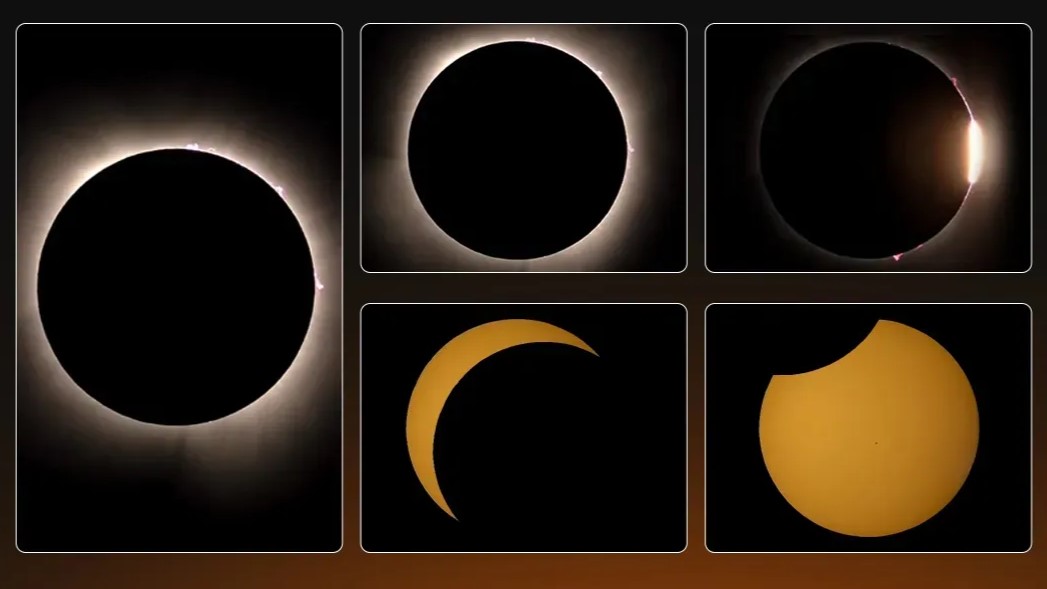
A solar eclipse is a rare astronomical phenomenon. During a solar eclipse, for a short period of time, the daytime sky darkens, temperatures may drop, and the sun appears as a luminous ring or a hidden disk surrounded by a bright corona. This rare alignment creates a spectacular natural spectacle.
For astronomers, photographers, and amateur astronomers, a solar eclipse offers a unique opportunity to observe the relationship between the Earth, the Moon, and the Sun. Understanding what a solar eclipse is helps us comprehend the causes of these astronomical phenomena and prepare for observation.
What is a solar eclipse?
What is a solar eclipse? A solar eclipse occurs when the moon passes between the Earth and the sun, blocking some or all of the sunlight. The moon's shadow is cast onto the Earth, and this happens. Because the moon is much smaller than the sun, it cannot completely block sunlight. Therefore, its shadow forms a narrow channel on the Earth's surface, within which observers can see a solar eclipse of varying degrees.
Four types of solar eclipses
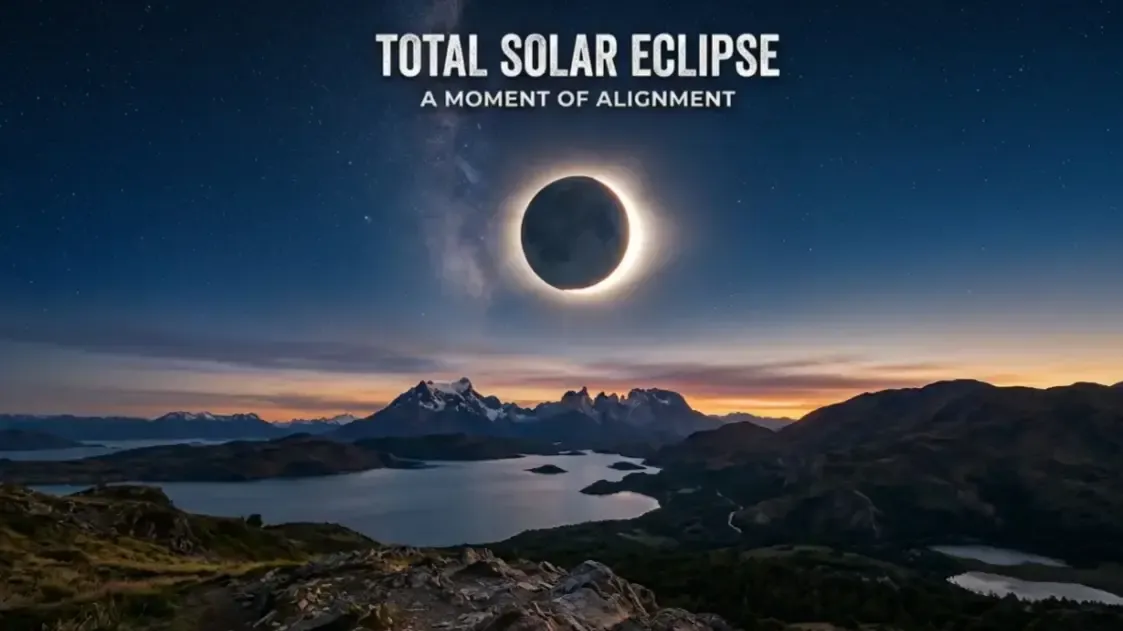
Based on the relative positions of the moon, the sun, and the earth, solar eclipses can be divided into four main types.
Annular solar eclipse
A annular solar eclipse occurs when the moon blocks the center of the sun, but leaves a bright ring of light around it, often referred to as the "ring of fire."
This is because the moon is farther from Earth in its orbit, so it appears smaller than its actual size. Unlike a total solar eclipse, the sun is never completely blocked, so viewers must always take precautions against sunburn.
Hybrid solar eclipse
A hybrid solar eclipse is one of the rarest types of solar eclipse. It varies between a total solar eclipse and an annular solar eclipse depending on the observer's location.
In some regions, the moon completely blocks the sun, creating a total solar eclipse. In other regions, the moon appears slightly smaller, creating an annular solar eclipse.
Partial solar eclipse
Observers outside the path of totality may see the sun appear to be partially obscured. A partial lunar eclipse is more common than a total lunar eclipse because the moon's shadow covers a wider area. However, viewers still need to protect their eyes, as direct sunlight can damage vision.
Total solar eclipse
A total solar eclipse is the most spectacular type of solar eclipse. A total solar eclipse occurs when the moon completely blocks the sun's bright surface, making the sun's outer atmosphere (called the corona) visible.
During a total eclipse, the sky becomes so dark that stars and planets can be seen. Temperatures may drop, and some animals may react as if night has fallen.
Eclipse facts you should know
Solar eclipses are fascinating because they combine the movements of the sun, moon, and earth. Here are some facts about solar eclipses:
- The shadow cast by the moon on Earth is divided into two main parts: the umbra and the penumbra.
- A total solar eclipse can only be observed within a narrow area—the path of totality.
- Although the Sun is much larger than the Moon, with a diameter of about 1,392,700 km (approximately 400 times the Moon's diameter of 3,474 km ), and the Sun is about 93 million miles from Earth while the Moon is about 238,855 miles away, the Sun is also about 400 times the distance from Earth. Therefore, they appear to be similar in size in the sky.
- A total solar eclipse can only be observed along a narrow path known as the "path of totality".
Although solar eclipses occur several times a year in some parts of the world, a total solar eclipse at the same location is extremely rare and may not happen again for hundreds of years.
what are the causes of solar eclipse?
To understand the causes of solar eclipses, we need to observe the precise movements of the Earth, Moon, and Sun.
The moon revolves around the Earth, and the Earth revolves around the sun. Most of the time, from our perspective, the moon is slightly above or below the sun. A solar eclipse only occurs when these three celestial bodies align in a straight line.
When is the solar eclipse be visible?
A solar eclipse occurs depends on the moon's orbit and the observer's position. A solar eclipse can only be seen under the following conditions:
- The moon orbits between the Earth and the sun.
- The moon's shadow will be cast onto the Earth.
- The observer is located within the shadow path.
Because the moon's shadow is very small relative to Earth, each solar eclipse can only be seen in certain regions.
In which phase of the moon does a solar eclipse occur?
The solar eclipse occurred during the new moon.
During a new moon, the moon is positioned between the Earth and the sun. Normally, due to the moon's slightly tilted orbit, its shadow does not fall on the Earth. A solar eclipse occurs when the moon and sun are directly between the Earth and the sun.
How often does a solar eclipse occur?
Solar eclipses are fascinating to humankind, and ancient civilizations often considered them mysterious phenomena. So how often do these rare solar eclipses occur?
Solar eclipses occur two to five times a year somewhere on Earth. However, observing a solar eclipse from a specific location is extremely rare. People living in a city may experience multiple partial solar eclipses, but may not see a total solar eclipse for many years. This rarity is because during each eclipse, the moon's shadow covers only a small portion of the Earth. Astronomers also use the Saro scycle (a pattern that repeats approximately every 18 years) to study eclipse patterns, which helps predict similar eclipse events.
When is the next solar eclipse?
The visibility time of the next solar eclipse depends on where you live, as each eclipse is visible in different regions.
According to astronomical forecasts, multiple solar eclipses will occur around the world in the coming years. For observers in the United States, upcoming viewing opportunities include:
The next solar eclipse in the United States
August 12, 2026 – Total Solar Eclipse
A total solar eclipse will occur on August 12, 2026. The path of totality will pass through Greenland, Iceland, Spain, and other regions. Some areas in the northeastern United States may see a partial solar eclipse.
The total solar eclipse in August 2026 will have its most spectacular total phase lasting approximately 2 minutes and 18 seconds. This is the theoretical maximum; the actual duration depends entirely on your observation location. The total duration of the entire eclipse, from the first contact to the last contact, is approximately 4 hours, 23 minutes, and 46.5 seconds. The theoretical maximum of approximately 2 minutes and 18 seconds occurs along the path of the moon's shadow from Greenland to the North Atlantic.
In Iceland: At the westernmost point of the Westfjords, the longest total eclipse visible from land can reach 2 minutes and 13 seconds. However, in the capital, Reykjavík, totality will only last about 1 minute. In Spain: Totality will last between 1 minute and 37 seconds and less than 1 minute and 50 seconds.
February 6, 2027 – Annular Solar Eclipse
An annular solar eclipse will occur in February 2027. Although the path of eclipse will not pass through most of the United States, eclipse enthusiasts can travel abroad to experience this spectacular "ring of fire."
January 26, 2028 – Annular Solar Eclipse
Another annular solar eclipse will occur in 2028, providing more opportunities for solar observation.
For many Americans, the next eclipse viewing will require careful planning and travel. Since eclipse visibility depends on location, weather, and time, it's crucial to consult official astronomical resources beforehand.
How to safely watch a solar eclipse
Can you see a solar eclipse with a telescope?
Many beginners ask, can I use a telescope to watch a solar eclipse? The answer is yes, but only if the correct solar observation equipment is used. Observing the sun directly through a telescope without any protective measures can cause permanent damage to the eyes because the telescope focuses sunlight.
Ordinary telescopes are not designed for direct observation of the sun. You will need a certified solar filter, which must be properly mounted on the front of the telescope.
Select solar eclipse kit observation equipment
The solar eclipse telescope kit are specifically designed for safe observation of the sun. These telescopes typically include a built-in solar filter system that reduces the intensity of harmful sunlight.
For telescope users, an eclipse filter is an essential accessory. Make sure to install the filter before pointing your telescope at the sun.
When viewing a solar eclipse using binoculars, choose certified binocular filters. Never use ordinary sunglasses, camera filters, or homemade filters, as they do not provide adequate protection.
Many eclipse observers also use eclipse glasses for direct observation. These glasses allow you to safely view the sun during partial and annular eclipses, as the bright surface of the sun is still visible at these times.
Capturing a solar eclipse through astrophotography
A solar eclipse is one of the most anticipated astronomical events for astrophotographers. With proper preparation, it is possible to capture clear photos of the transit of the moon.
A successful photograph of a solar eclipse needs to meet the following conditions:
- Camera or astronomical camera.
- Telescope or telephoto lens.
- Suitable solar filters.
- A stable tripod or tracking bracket.
During a total solar eclipse, photographers can capture images of the sun's corona; while during a partial solar eclipse, they can observe the moon's gradual movement across the sun's disk.
Please always remember that solar imaging requires the same safety precautions as visual observation. Protect your eyes and equipment.
A wondrous journey to experience a solar eclipse
A solar eclipse is not only a beautiful natural spectacle, but it also reminds us of the precise kinetic relationship between the Earth, the Moon, and the Sun.
From understanding what a solar eclipse is to learning about its types, causes, timing, and safe viewing methods, anyone can appreciate this incredible astronomical phenomenon.
Whether you view it using eclipse glasses, a telescope with filters, or capture images through astrophotography, witnessing a solar eclipse in person is an unforgettable experience. With proper preparation, you can safely explore one of nature's most spectacular celestial phenomena.

 Google
 Amazon
There are no customer reviews yet . Leave a Reply !