
Table of Contents
What Is a Supernova? How Does It Occur?
For astrophotographers, there are few sights as thrilling as a supernova. Imagine a lone star suddenly lighting up so bright it outshines an entire galaxy for a blink. That flash, travelling millions of light-years, finally lands on a telescope here on Earth.
A supernova signals the violent finale of certain massive stars. These explosions don't just end a star's life; they seed the cosmos with the raw materials for planets, new stars, and even life. The elements forged and hurled into space make the building blocks of everything that follows.
Knowing precisely what a supernova is and why it happens gives photographers context that turns a snapshot into a story. It explains why these infrequent fireworks are prized among astronomers and why every frame captured demands careful study.
What Is a Supernova?
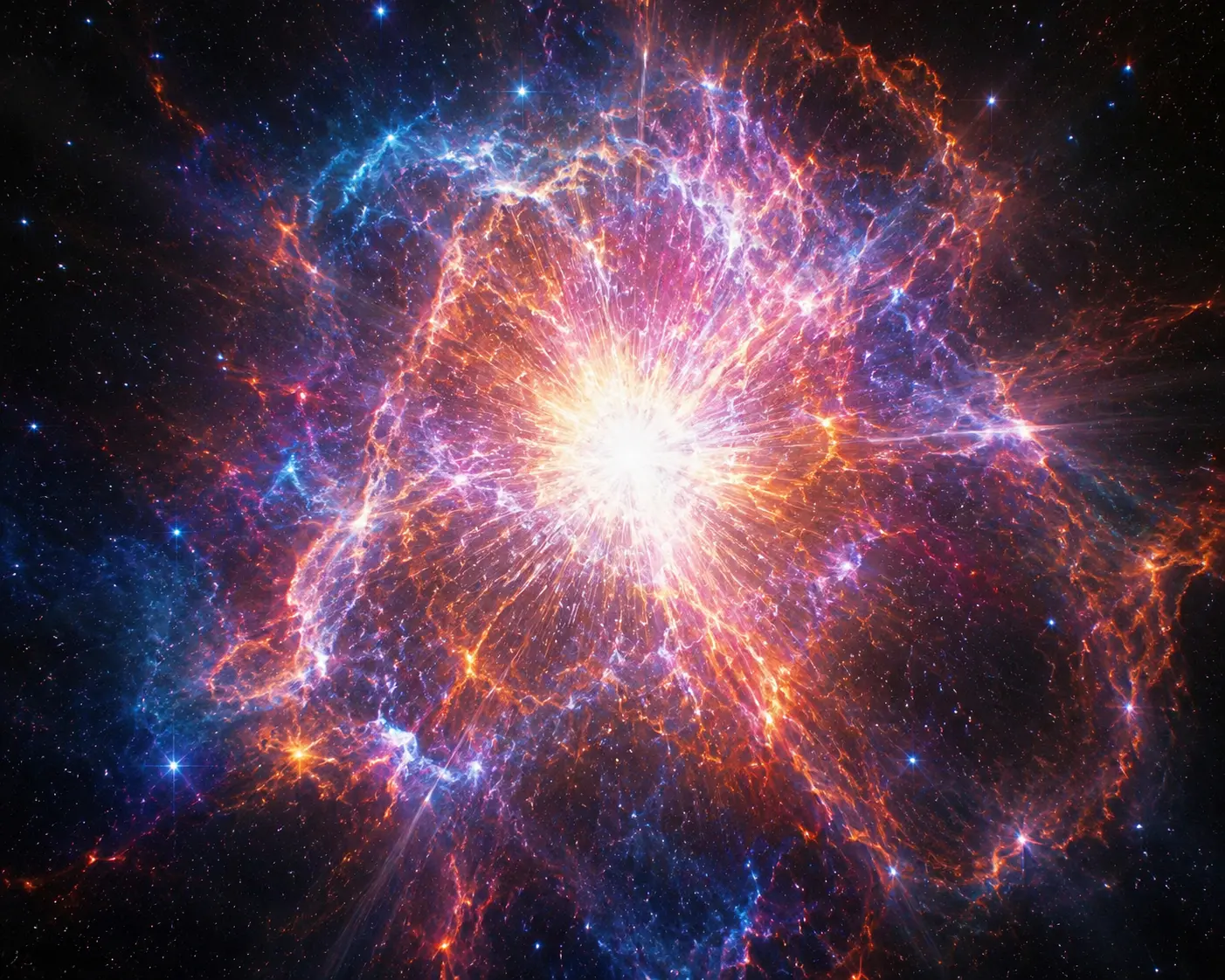
A supernova is a catastrophic explosion occurring at the end of a star’s life. During this event, the star releases enormous amounts of energy, radiation, and matter into space.
Within a very short time, a supernova can become one of the brightest objects in the universe. Some supernovae outshine the combined light of billions of stars in their host galaxies.
From an astrophotography perspective, a supernova is a transient astronomical event—its brightness changes after appearance and eventually fades away. Unlike permanent deep-sky objects such as galaxies and nebulae, a supernova may remain visible for only weeks or months.
Supernovae are important because they:
- Synthesize heavy elements like iron, nickel, and other metals.
- Influence the formation of future stars and planetary systems.
- Help astronomers measure distances across the cosmos.
- Provide insights into stellar evolution and galactic development.
How Does a Supernovae Happen?
A supernova occurs when a star can no longer maintain equilibrium between gravity and internal pressure. For most of its lifetime, a star remains in balance: outward pressure from nuclear fusion in its core counteracts inward gravitational pull. This equilibrium allows stars to remain stable for millions—or even billions—of years.
Eventually, a massive star exhausts its available nuclear fuel. As fusion reactions slow, gravity dominates, triggering the collapse of the star’s core.
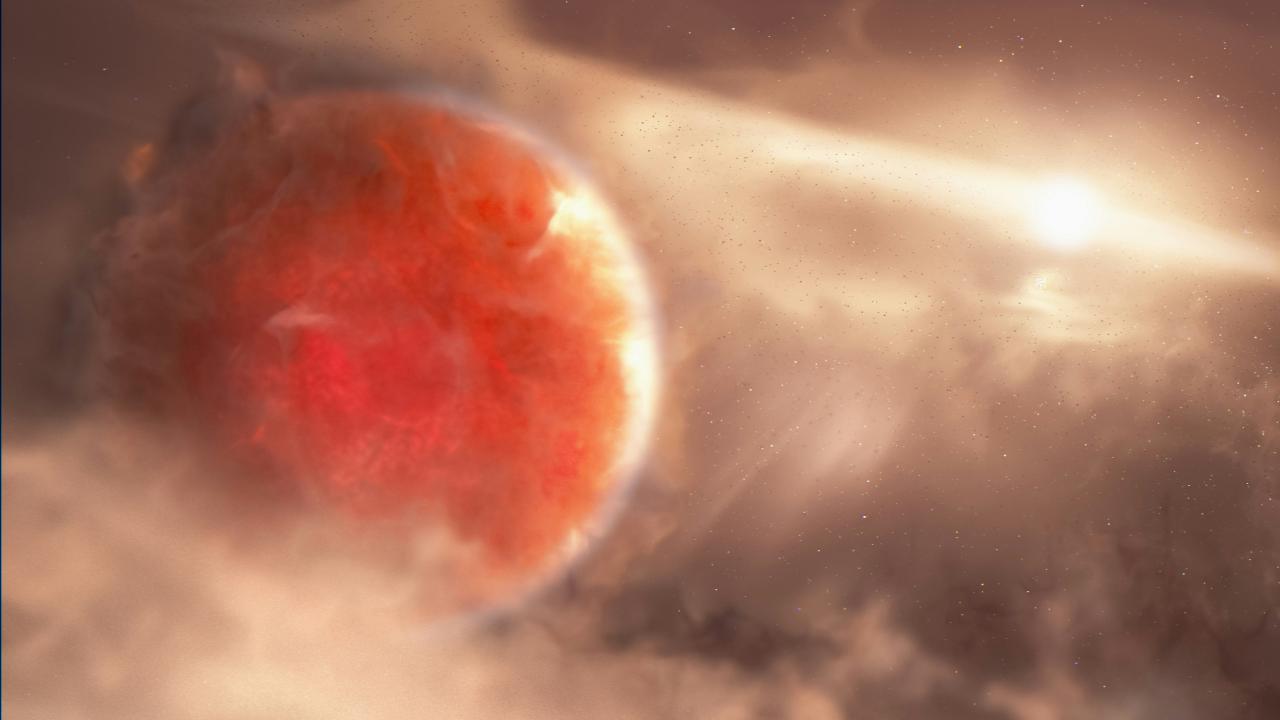
The precise process depends on the star’s type and the underlying explosion mechanism.
The Final Stage of a Massive Star’s Life
Compared to lower-mass stars like the Sun, massive stars have relatively short lifespans. Stars several times more massive than the Sun burn through their fuel faster due to much higher core pressures and temperatures.
Throughout its life, a massive star fuses progressively heavier elements:
- Hydrogen fuses into helium.
- Helium fuses into carbon and oxygen.
- Carbon and oxygen fuse into even heavier elements.
- The core continues producing elements until iron forms.
Iron fusion marks a critical turning point—unlike lighter elements, fusing iron consumes energy rather than releasing it.
Once the core becomes predominantly iron, it loses its ability to resist gravitational collapse.
What Is a Core-Collapse Supernova?
A core-collapse supernova is an explosion triggered by the gravitational collapse of a massive star’s core.
This process typically occurs in stars significantly more massive than the Sun. When nuclear fusion can no longer support the core, gravity forces it to collapse catastrophically within seconds.
During this collapse:
- The core compresses rapidly.
- Electrons combine with protons to form neutrons.
- An extremely dense, neutron-rich core forms.
- A powerful shockwave propagates outward through the star.
- Outer layers are ejected into space.
The result is a colossal explosion releasing immense energy.
Depending on the remnant core’s mass, the star may leave behind:
– A neutron star.
– A rapidly rotating pulsar.
– A black hole.
Core-collapse supernovae rank among the most energetic events in the universe—and are responsible for synthesizing many elements heavier than iron.
Different Types of Supernovae
Astronomers classify supernovae based on their physical characteristics and formation mechanisms.
Type II Supernovae
Type II supernovae are the most common examples of core-collapse explosions.
They occur when a massive star exhausts its fuel and collapses under its own gravity.
Key features include:
– Presence of hydrogen in the explosion spectrum.
– Origin in massive, young stars.
– Association with star-forming regions in galaxies.
For astrophotographers, Type II supernovae are especially exciting—they frequently appear in visible spiral galaxies and can be captured using amateur equipment.
Type Ia Supernovae
Type Ia supernovae have a different origin.
They occur when a white dwarf accretes excessive mass from a companion star. Once the white dwarf exceeds its stability limit—the Chandrasekhar limit—runaway nuclear fusion triggers total detonation.
Unlike core-collapse supernovae, Type Ia explosions do not involve the collapse of a massive star.
They hold profound scientific significance: their predictable peak brightness makes them “standard candles,” enabling astronomers to estimate cosmic distances.
How Long Does a Supernova Last?
One of the most frequently asked questions among amateur astronomers is: How long does a supernova last?
The answer depends on which aspect of the event is being measured.
The actual explosion happens extremely quickly. Core collapse itself may take only seconds, followed shortly thereafter by the shockwave traversing the star.
Yet the visible supernova remains observable for much longer.
A typical timeline includes:
Initial Explosion
The explosive event unfolds in seconds to minutes—releasing vast energy and material.
Peak Brightness
The supernova reaches maximum brightness days or weeks after the explosion. This period is often ideal for astrophotographers seeking detailed imagery.
Fading Phase
After peak brightness, the supernova gradually dims over months.
Some supernova remnants remain visible for thousands of years—as expanding clouds of gas and dust.
How Astrophotographers Capture Supernovae?
Capturing a supernova demands preparation and patience. Unlike fixed deep-sky objects, supernovae appear unexpectedly—requiring rapid response.
Monitoring Active Galaxies
Many amateur astronomers regularly image galaxies, as these are common sites for supernova explosions.
Popular targets include:
– Spiral galaxies.
– Nearby galaxy groups.
– Star-forming regions.
Repeated imaging enables astrophotographers to compare frames and identify new point sources.
Using Image Comparison Techniques
Since supernovae appear as new objects within existing galaxies, comparative imaging proves highly effective.
Astrophotographers commonly:
– Compare newly acquired images with archival ones.
– Apply image subtraction techniques.
– Consult astronomical alert databases for confirmation.
A small bright spot near a galaxy’s spiral arms may signal a newly discovered stellar explosion.
Recommended Equipment Considerations
Capturing a successful supernova image doesn’t always require professional observatory-grade equipment.
Practical tools include:
– A tracking equatorial mount.
– A cooled astronomy camera or DSLR/mirrorless camera.
– A telescope with sufficient focal length.
– Precise calibration frames.
– Image stacking software.
Long exposures help reveal surrounding galaxy structure while preserving the supernova’s brightness.
Famous Supernova Examples
Supernova 1987A
SN 1987A ranks among the most significant astronomical events of the modern era.
It occurred in the Large Magellanic Cloud—a nearby dwarf galaxy visible from the Southern Hemisphere.
Thanks to its relative proximity, astronomers studied the explosion in extraordinary detail—and continue monitoring its expanding remnant decades later.
The Crab Nebula
The Crab Nebula is the remnant of a supernova observed by Chinese astronomers in 1054 CE.
Today, astrophotographers can image this ever-expanding debris field using backyard telescopes.
At its center lies a pulsar—a rapidly spinning neutron star born from the original star’s collapse.
What Happens After a Supernova Explosion?
The star’s destruction does not mark the end of its influence.
Ejected material expands into surrounding space, forming a supernova remnant.
These remnants contain:
– Gas clouds enriched with heavy elements.
– Shockwaves interacting with ambient interstellar material.
– Magnetic fields and high-energy particles.
Over time, this material may coalesce into new stars, planets, and other cosmic structures.
Many atoms around us—including elements found on Earth—were forged inside previous generations of stars.
Why Supernovae Matter to Astronomy?
Supernovae provide astronomers with invaluable information about the cosmos.
They help researchers understand:
– How stars evolve and die.
– How galaxies recycle matter.
– How elements are distributed across space.
– How the universe expands.
For astrophotographers, observing a supernova offers a rare opportunity to record a fleeting moment in cosmic history.
A single photograph preserves evidence of a star’s final moments—millions of years after its explosion.
Conclusion
Supernovae rank among astronomy’s most powerful and compelling phenomena. Star collapse or white-dwarf detonation - and the universe goes bang. Whenever a massive star crashes or a white dwarf explodes, the cosmos erupts with proof that everything is tied together.
Knowing exactly what a supernova is, why it bursts, the clues that flag it as a core-collapse event. And how long the fireworks burn, lets astrophotographers see each shot in a richer context. It deepens their appreciation for every photo.
Every supernova image is more than a bright dot; it's a star's final goodbye and the spark that can light up new stars, planets, and perhaps life. Watching it feels like witnessing the universe's very own curtain call.

 Google
 Amazon
There are no customer reviews yet . Leave a Reply !