


Table of Contents
What Is a Wolf-Rayet Star? A Guide to the Universe's Most Powerful Stars
When we look into the night sky, most stars look calm and steady. But a handful are in a far more dramatic phase, spewing huge energy and material. Wolf-Rayet stars are among these. They are massive objects that have shed most of their outer hydrogen, revealing heavier fusion products. This makes them blisteringly hot and powerful. They blow fierce winds, shine intensely, and can trigger certain supernovae.
What exactly is a Wolf-Rayet star? It is a rare, hot, massive star that has lost its hydrogen envelope. The layers beneath - rich in helium, carbon, nitrogen, or oxygen - are now exposed. These layers give the star its characteristic spectrum. The winds it produces are so strong that they carve out bright nebulae around it.
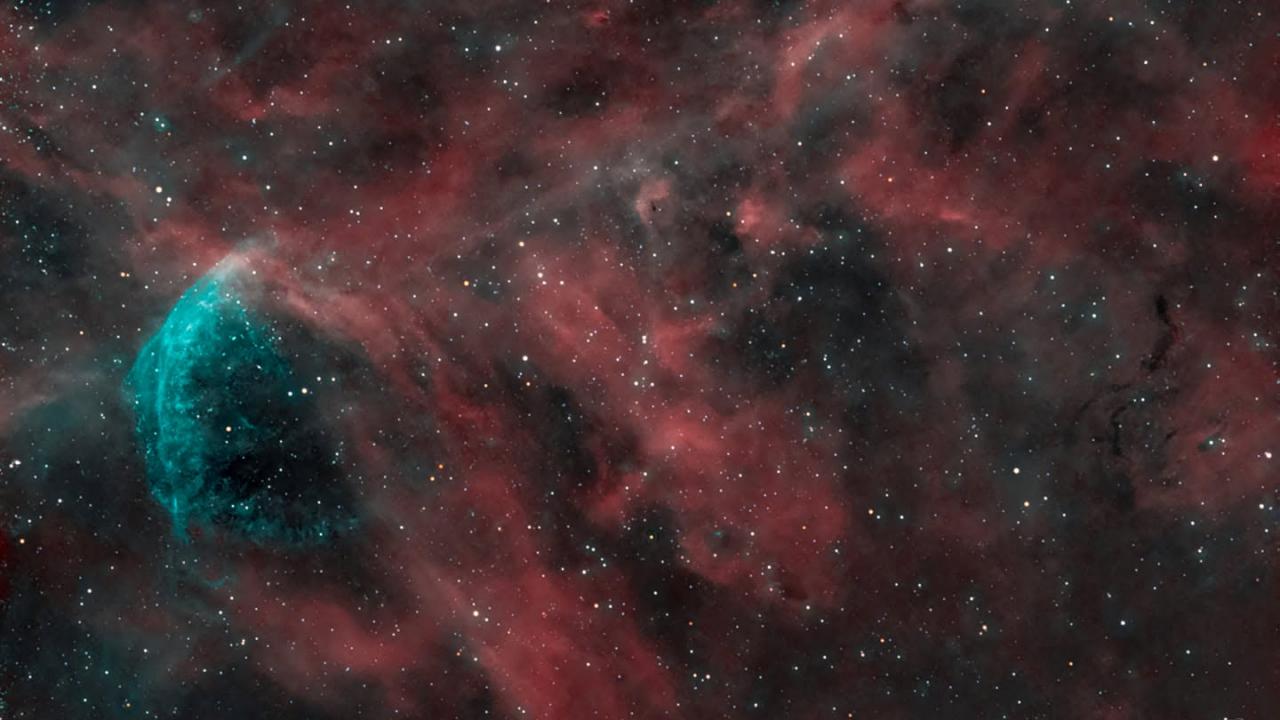
Astrophotographers love Wolf-Rayet stars because the nebulae they create are impressive targets. The glowing gas shows how the star's wind reshapes the surrounding interstellar medium. Capturing that dance offers a glimpse into a dying star's final act.
What Is a Wolf-Rayet Star?
A Wolf-Rayet star (WR star) is a type of evolved massive star with an exceptionally strong stellar wind and a surface dominated by elements such as helium, carbon, nitrogen, and oxygen rather than hydrogen.
Unlike normal stars that quietly burn hydrogen in their cores for millions or billions of years, Wolf-Rayet stars are undergoing rapid transformation.
Key characteristics include:
- Extremely high surface temperatures
- Powerful mass loss through stellar winds
- Strong emission-line spectra
- High luminosity
- Short evolutionary timescales
A typical Wolf-Rayet star can lose material at rates millions of times faster than the Sun. These powerful stellar winds can blow material away from the star, creating expanding shells of gas and dust that become stunning targets for astrophotographers to capture.
How Do Wolf-Rayet Stars Form?
From Massive Main Sequence Stars
Wolf-Rayet stars do not form directly like ordinary stars. Instead, they are the evolutionary result of extremely massive stars.
The process usually begins with an O-type star, one of the hottest and most massive stars on the main sequence.
A simplified evolutionary pathway looks like this:
Massive O-type star → Red supergiant or luminous blue variable phase → Wolf-Rayet star → Supernova → Neutron star or black hole
Because these stars begin with masses typically greater than 20–25 times the mass of the Sun, they evolve much faster than smaller stars.
Are Wolf-Rayet Stars in the Main Sequence?
No. Wolf-Rayet stars are not main-sequence stars. During the main sequence, stars burn hydrogen into helium inside their cores. That's where they get their light and heat. Wolf-Rayet stars are beyond that. They've used up most of their hydrogen and are now in a later phase. With their outer layers stripped, we can see the nuclear-burning products that once lay hidden under their surfaces.
Depending on their composition, Wolf-Rayet stars are classified into several categories:
WN Stars (Nitrogen Sequence)
These stars show strong nitrogen emission lines and are often in an earlier Wolf-Rayet phase.
WC Stars (Carbon Sequence)
These stars show strong carbon and oxygen features, indicating more advanced evolution.
WO Stars (Oxygen Sequence)
The rarest class, WO stars represent an extremely evolved stage before a possible supernova.
Wolf-Rayet Star Temperature: Why Are They So Hot?
One of the defining features of Wolf-Rayet stars is their extreme temperature.
A typical Wolf-Rayet star may have:
- Surface temperatures of 50,000–200,000 Kelvin
- Luminosities tens of thousands to millions of times greater than the Sun
For comparison:
- Sun surface temperature: about 5,800 K
- Hot O-type stars: around 30,000–50,000 K
- Wolf-Rayet stars: often above 100,000 K
Because they are so hot, most of their energy is emitted in ultraviolet wavelengths. This makes them difficult to observe visually but extremely important for scientific studies.
Wolf-Rayet Star vs. O-Type Star: What Is the Difference?
Wolf-Rayet stars and O-type stars are closely related, but they represent different evolutionary stages.
|
Feature |
O-Type Star |
Wolf-Rayet Star |
|
Evolution stage |
Main sequence |
Late evolutionary stage |
|
Hydrogen |
Mostly present |
Often depleted |
|
Temperature |
Very hot |
Extremely hot |
|
Stellar winds |
Strong |
Much stronger |
|
Surface composition |
Hydrogen-rich |
Helium/carbon/nitrogen-rich |
|
Lifespan |
Few million years |
Hundreds of thousands of years |
An O-type star may eventually become a Wolf-Rayet star after losing its outer layers through powerful radiation and stellar winds.
How Long Do Wolf-Rayet Stars Live?
Wolf-Rayet stars have extremely short lifetimes compared with ordinary stars.
The Wolf-Rayet phase usually lasts only:
Several hundred thousand years to around one million years
This may sound like a long time, but astronomically it is very brief.
For comparison:
- Sun lifespan: about 10 billion years
- Massive O-type star lifespan: a few million years
- Wolf-Rayet phase: less than a million years
Because this stage is so short, Wolf-Rayet stars are rare. Astronomers estimate that only a few hundred are known in the Milky Way.
How Many Wolf-Rayet Stars Are There?
The exact number is uncertain because many Wolf-Rayet stars are hidden behind interstellar dust.
Current estimates suggest:
- Around 600–700 confirmed Wolf-Rayet stars in the Milky Way
- Possibly thousands more remain undiscovered
Because these stars are extremely bright in infrared wavelengths, modern infrared surveys continue to reveal new candidates.
Do Wolf-Rayet Stars Go Supernova?
Yes, many Wolf-Rayet stars are expected to end their lives as supernovae.
Because they are massive stars, they eventually run out of fusion fuel. Their cores collapse under gravity, creating a powerful explosion.
Possible outcomes include:
- Core-collapse supernova
- Formation of a neutron star
- Formation of a black hole
Some Wolf-Rayet stars are considered possible progenitors of Type Ib and Type Ic supernovae, which occur when massive stars lose their hydrogen envelopes before exploding.
In rare cases, rapidly rotating Wolf-Rayet stars may produce long gamma-ray bursts, among the most energetic events in the universe.
Famous Wolf-Rayet Stars Astronomers Study
Wolf-Rayet Star WR 102
WR 102 is one of the hottest known Wolf-Rayet stars.
Estimated characteristics:
- Temperature: over 200,000 K
- Distance: several thousand light-years away
- Classification: WO-type star
Its extreme temperature makes it an important target for studying the final stages of massive stellar evolution.
WR 124: A Wolf-Rayet Star Surrounded by Nebula
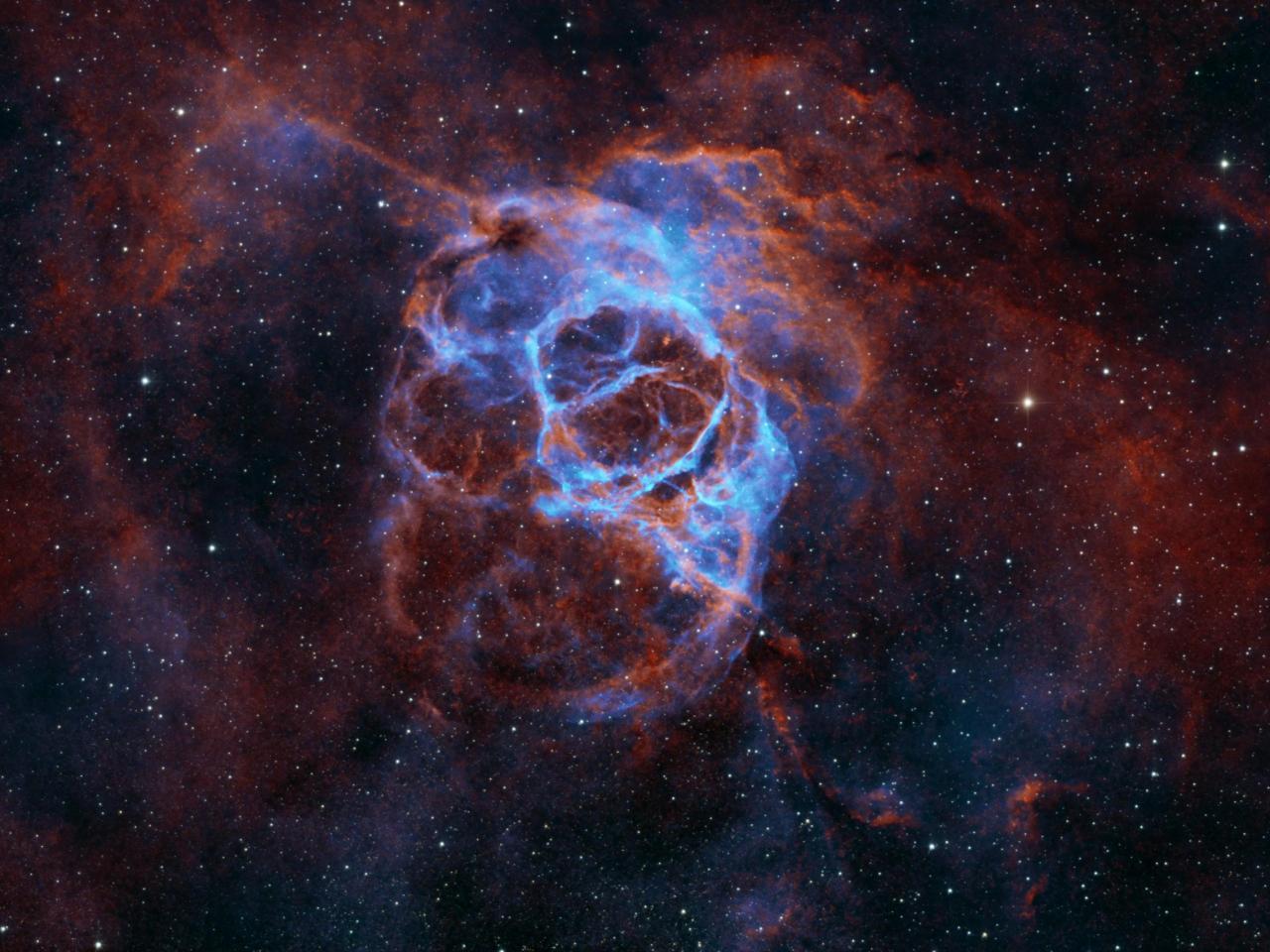
WR 124 is one of the most famous Wolf-Rayet stars for astrophotographers.
It is surrounded by the spectacular M1-67 nebula, a cloud of material expelled by the star during its evolution.
This target demonstrates how Wolf-Rayet stars shape their surroundings through powerful winds.
WR 134: A Brilliant Wolf-Rayet Star in Cygnus
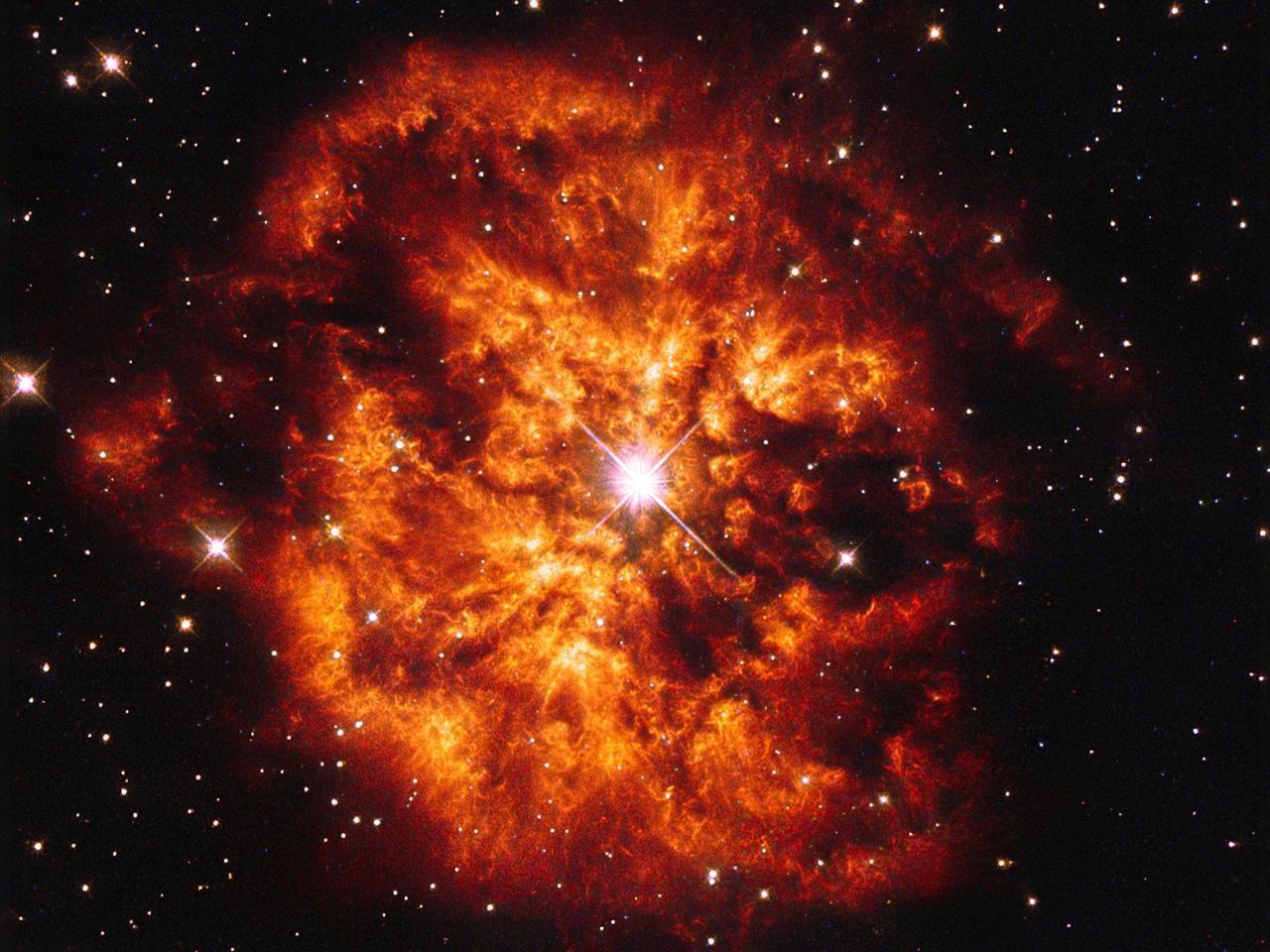
WR 134 is a Wolf-Rayet variable star located about 6,000 light-years away in the constellation Cygnus. With temperatures above 63,000 K, it shines nearly 400,000 times brighter than the Sun and releases powerful stellar winds that create a faint bubble nebula around it. This extreme star offers astrophotographers a glimpse into the final stages of massive stellar evolution.
Gamma Velorum
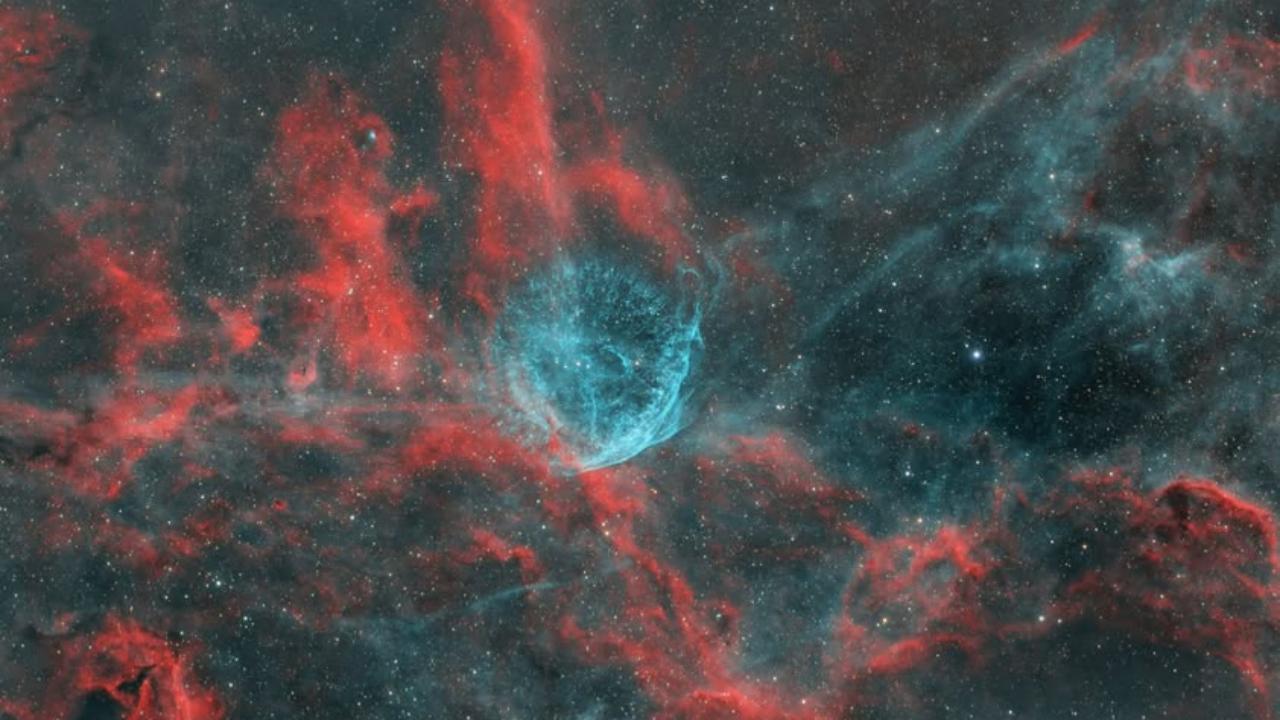
Gamma Velorum is one of the closest known Wolf-Rayet systems.
Located approximately 1,000 light-years away, it is a binary system containing a Wolf-Rayet star and a massive companion star.
Because of its relative closeness, it has been extensively studied by astronomers.
Largest Wolf-Rayet Star: How Big Are They?
Wolf-Rayet stars are not always physically large compared with red supergiants.
Their defining feature is not size but:
- Mass
- Temperature
- Stellar winds
- Luminosity
Some Wolf-Rayet stars may have radii only a few times larger than the Sun, while others are larger. However, their masses can still exceed 20–50 solar masses.
Their compact appearance hides an enormous amount of energy production.
Astrophotography Tips for Capturing Wolf-Rayet Stars
Wolf-Rayet stars themselves are challenging targets because many are visually faint despite their extreme brightness.
Astrophotographers often focus on their surrounding nebulae.
Recommended Equipment
A suitable setup includes:
- Small to medium aperture refractor telescope
- Cooled astronomy camera
- Equatorial tracking mount
- Narrowband filters
Useful filters:
- Hydrogen-alpha (Ha)
- Oxygen III (OIII)
- Sulfur II (SII)
Imaging Techniques
Because many Wolf-Rayet nebulae are faint, photographers commonly use:
- Long exposure imaging
- Image stacking
- Calibration frames
- Narrowband processing
A monochrome astronomy camera is particularly effective because it can capture individual emission wavelengths with high sensitivity.
Frequently Asked Questions About Wolf-Rayet Stars
Are Wolf-Rayet stars bigger than the Sun?
Wolf-Rayet stars are usually much more massive than the Sun, but they are not always physically larger. Their extreme temperatures and stellar winds are more important characteristics than their radius.
Which Wolf-Rayet star is closest to Earth?
One of the closest known Wolf-Rayet stars is Gamma Velorum, located roughly 1,000 light-years away.
Can planets orbit Wolf-Rayet stars?
In theory, planets could orbit Wolf-Rayet stars, but none have been confirmed. Their intense radiation, strong stellar winds, and short lifetimes make them difficult environments for planetary systems.
Why are Wolf-Rayet stars important?
Wolf-Rayet stars help astronomers understand:
- Massive star evolution
- Formation of heavy elements
- Supernova explosions
- Black hole formation
- Chemical enrichment of galaxies
Wolf-Rayet Stars Reveal the Violent Beauty of Stellar Evolution
A Wolf-Rayet star marks a dramatic phase in a massive star's life. These giants burn with fierce intensity, shed mass at extraordinary rates, and gear up to become either supernova remnants or black holes.
Knowing what a Wolf-Rayet star is lets astronomers trace how the universe forges and spreads the elements that future stars, planets, and maybe life need.
Astrophotographers find Wolf-Rayet stars a striking glimpse into stellar evolution. Their surrounding nebulae expose the powerful dance between a dying star and the space around it, making them some of the most alluring targets in the night sky.

Comments (0 )
Leave a Reply
 Google
 Amazon
There are no customer reviews yet . Leave a Reply !