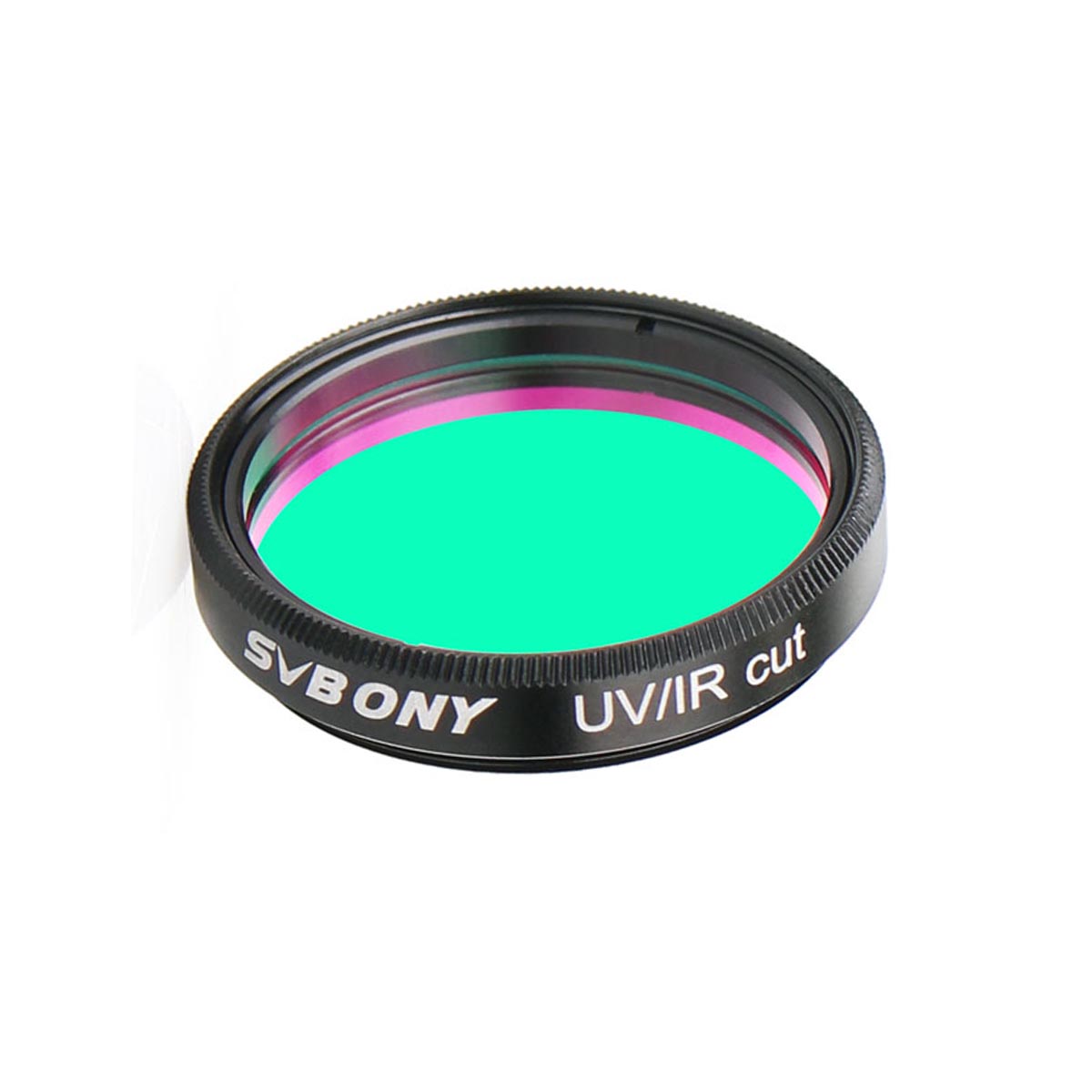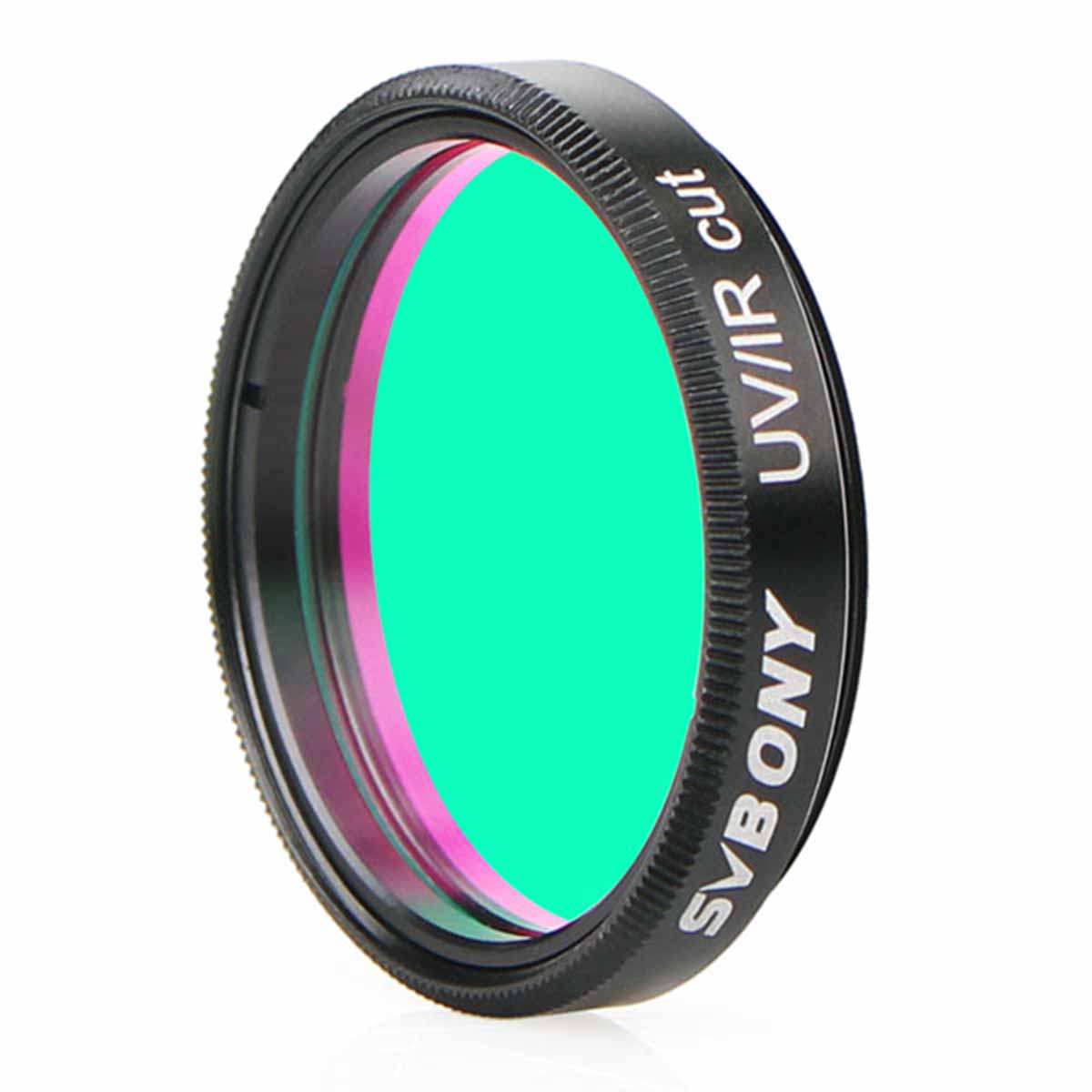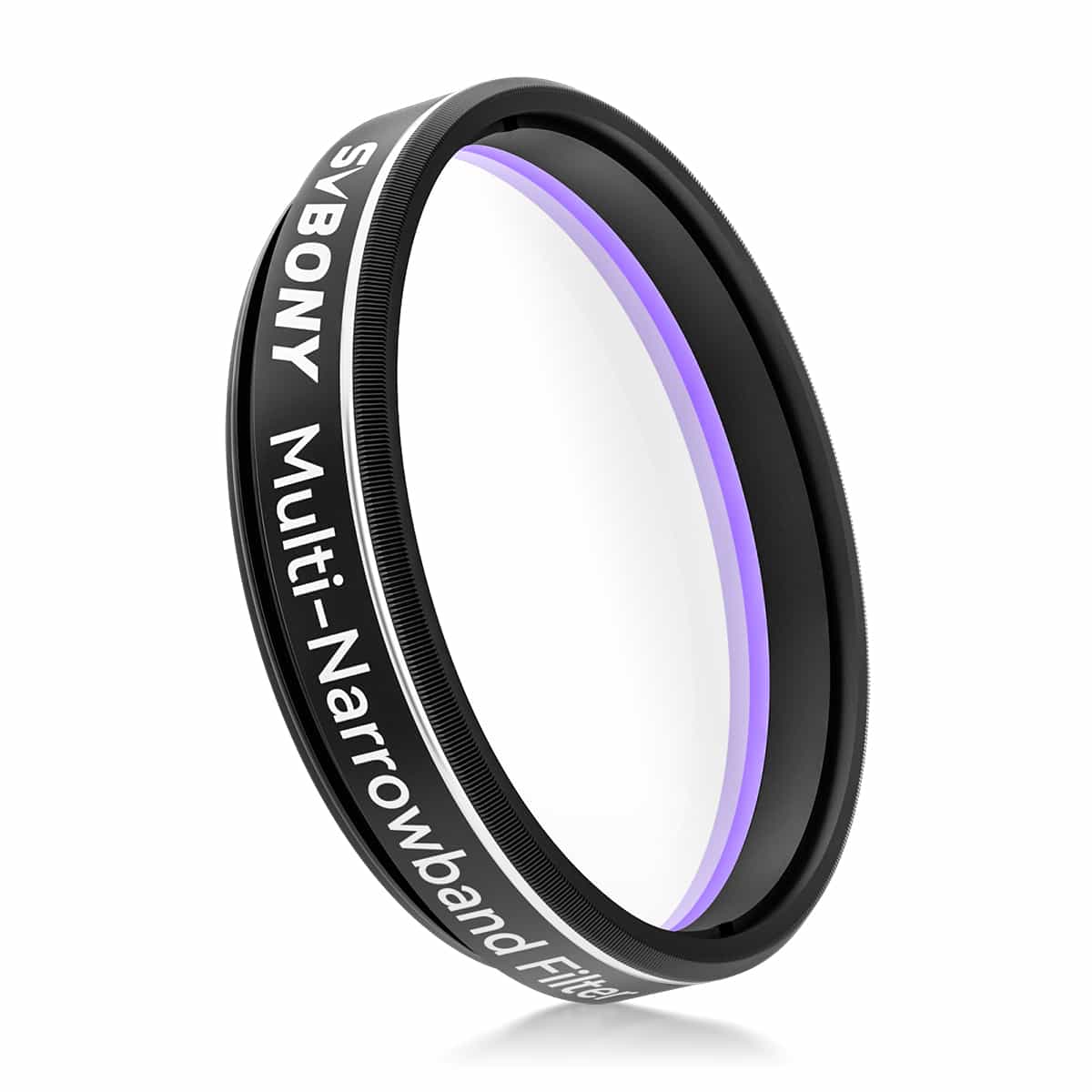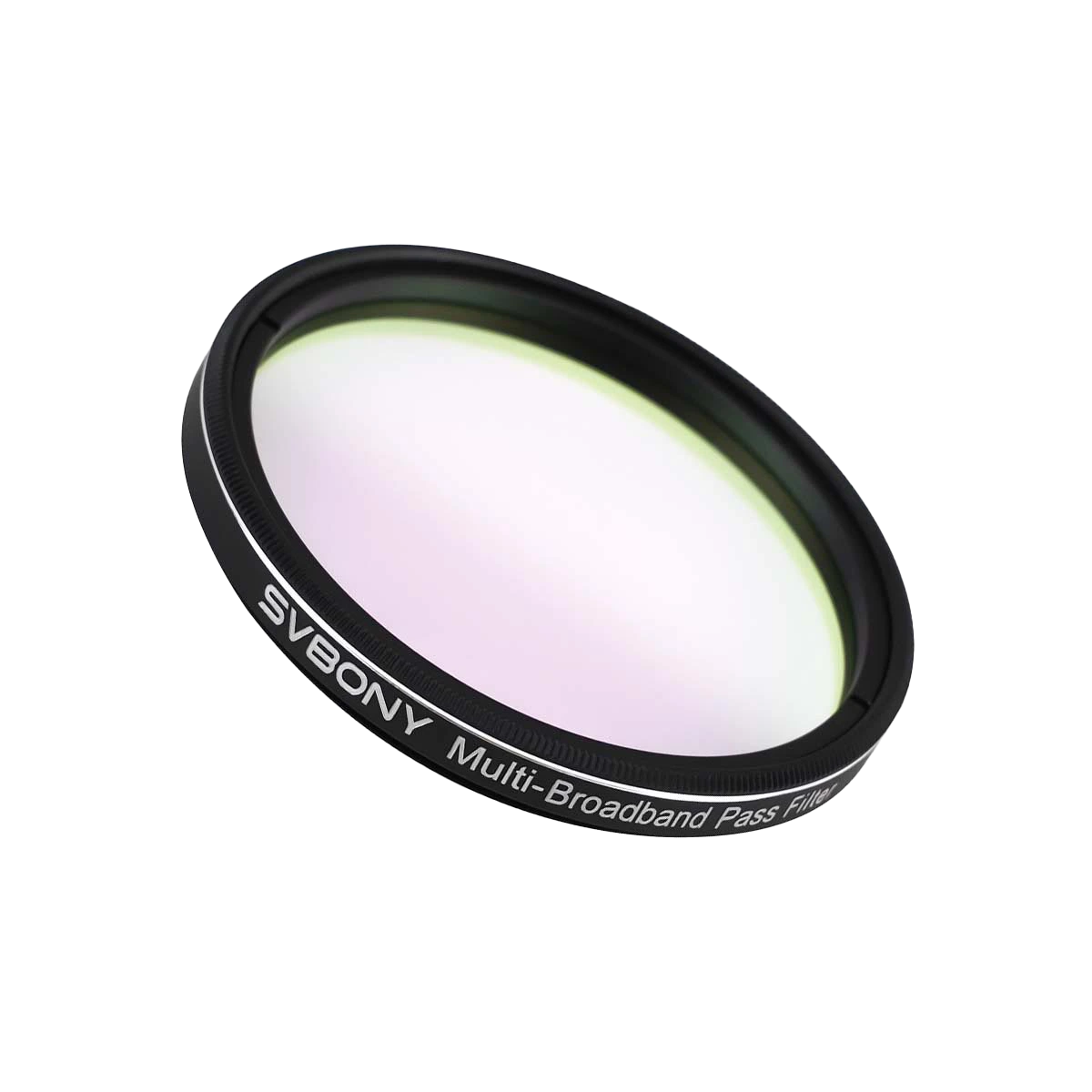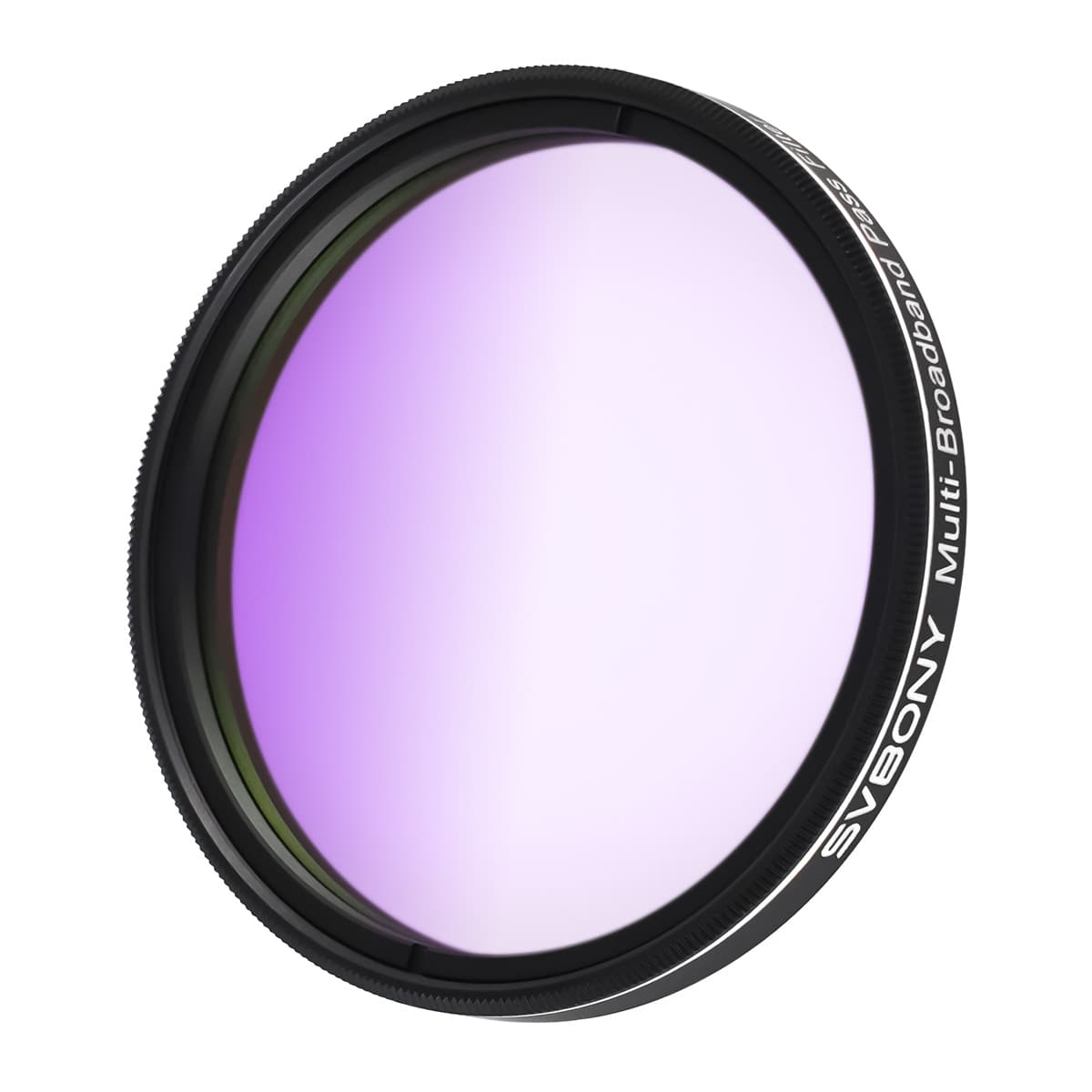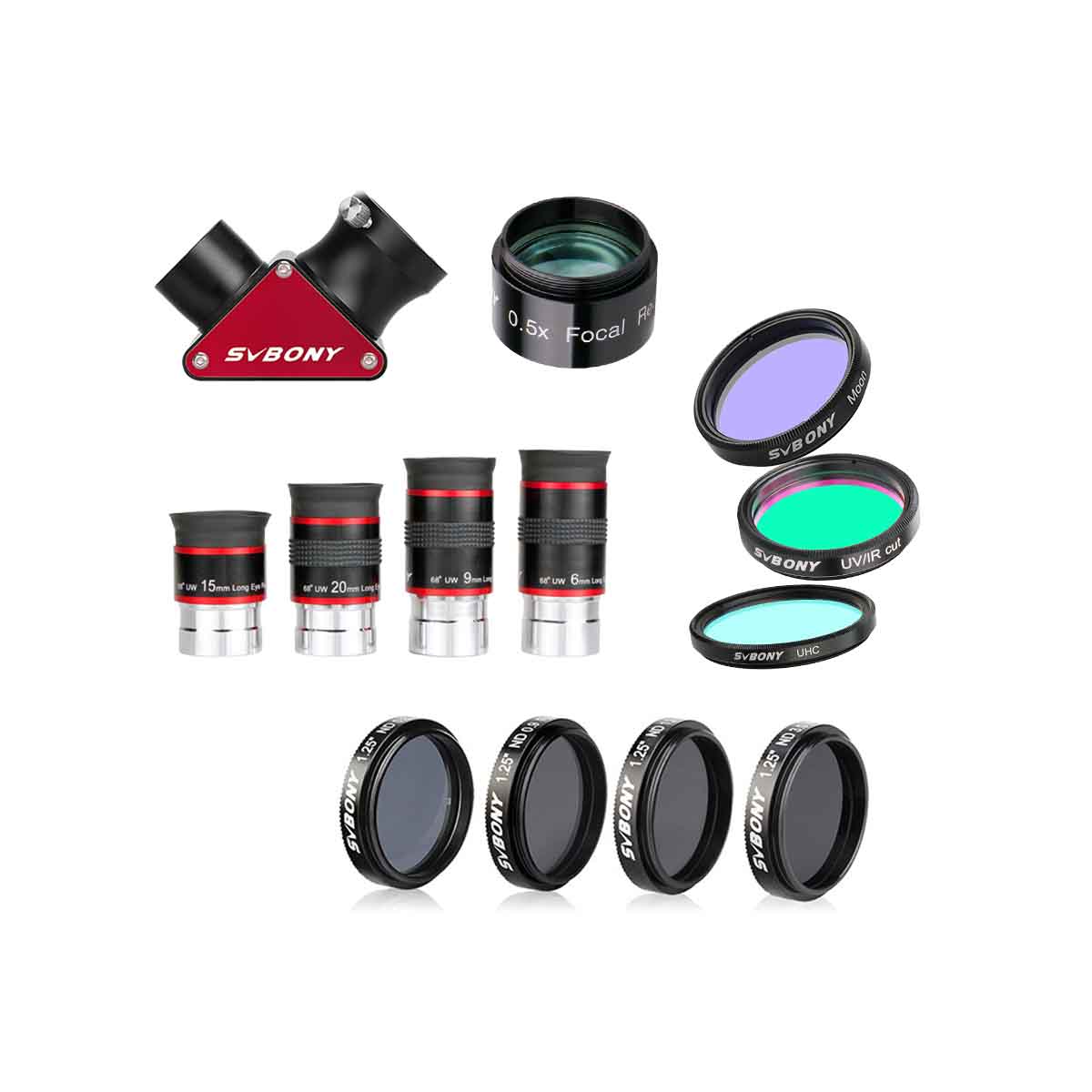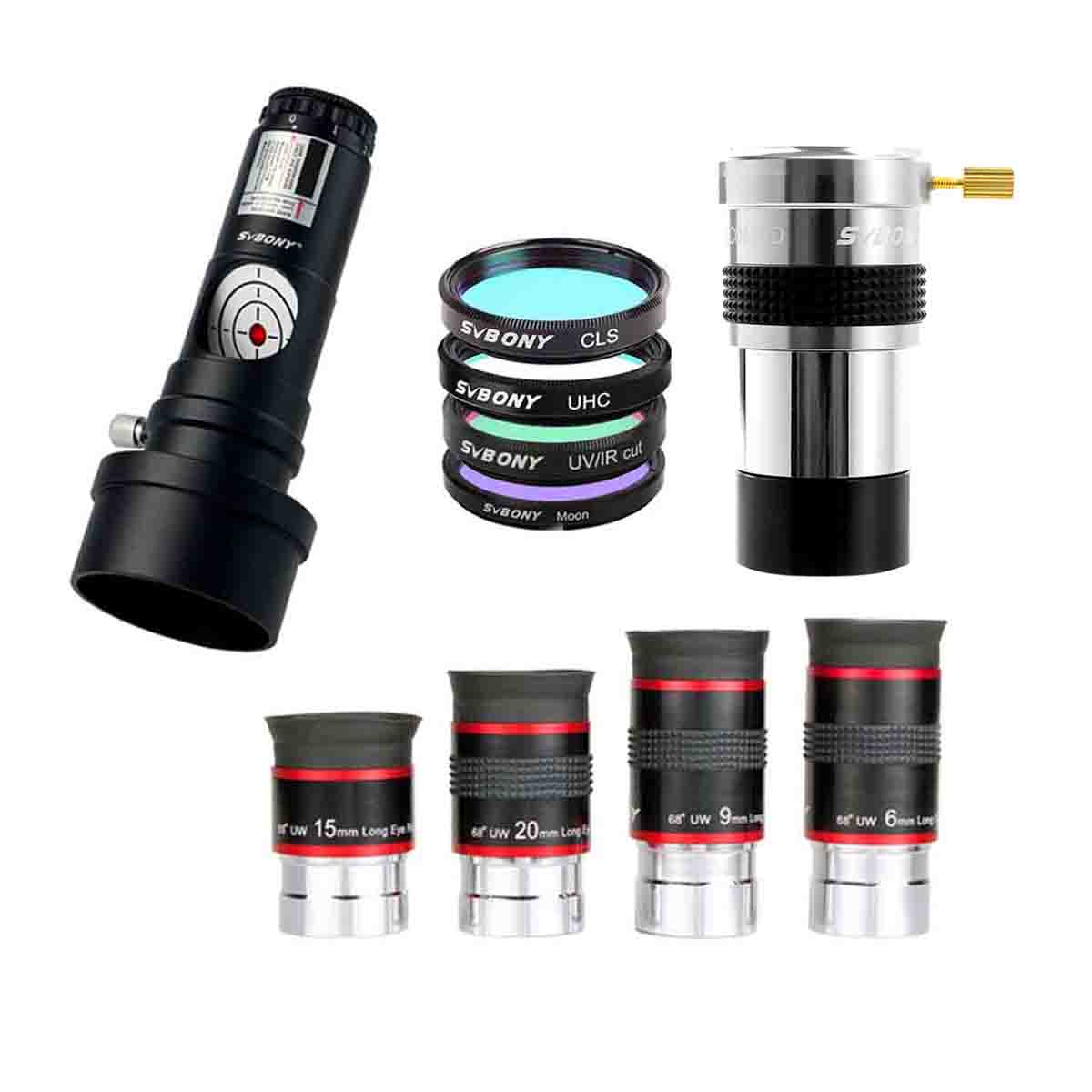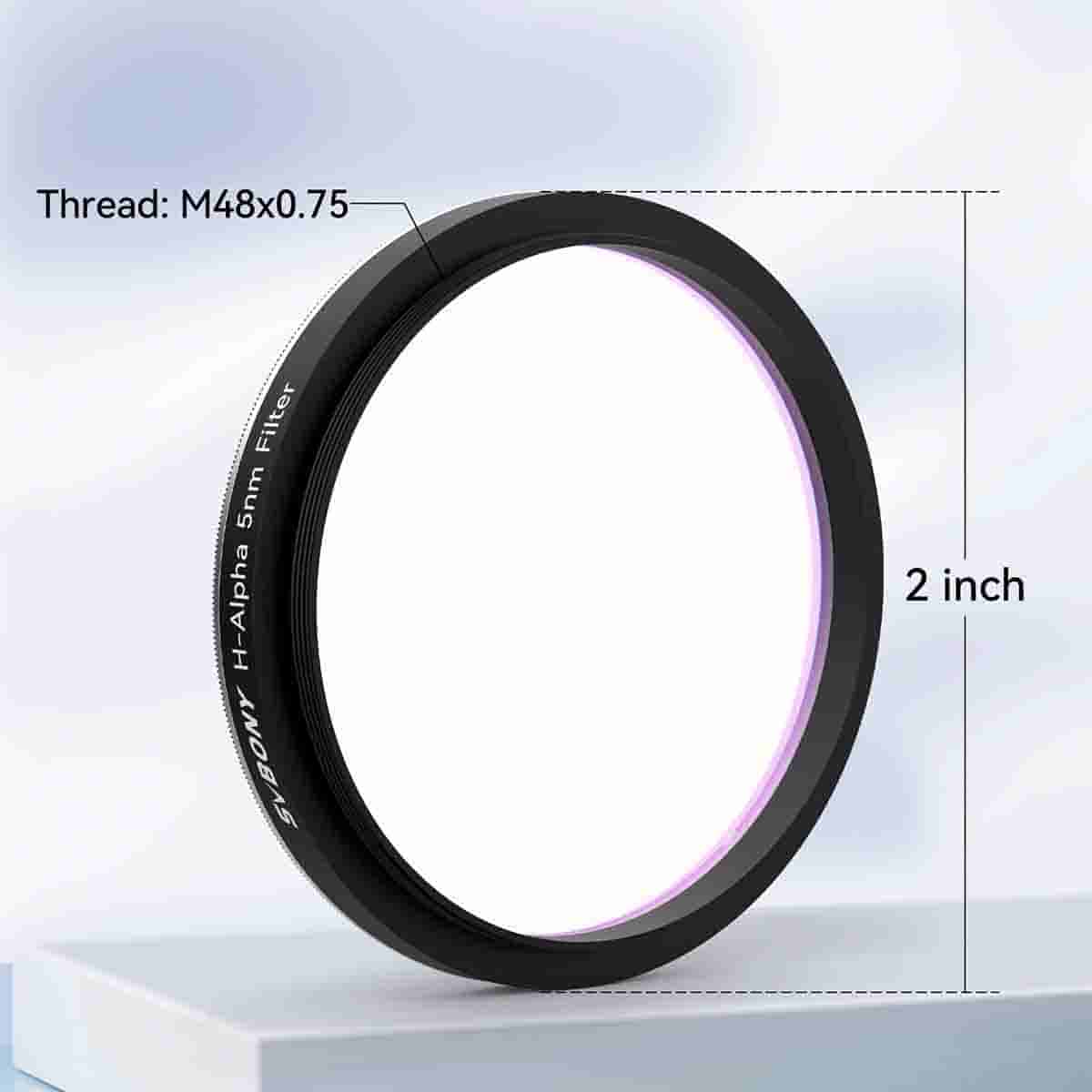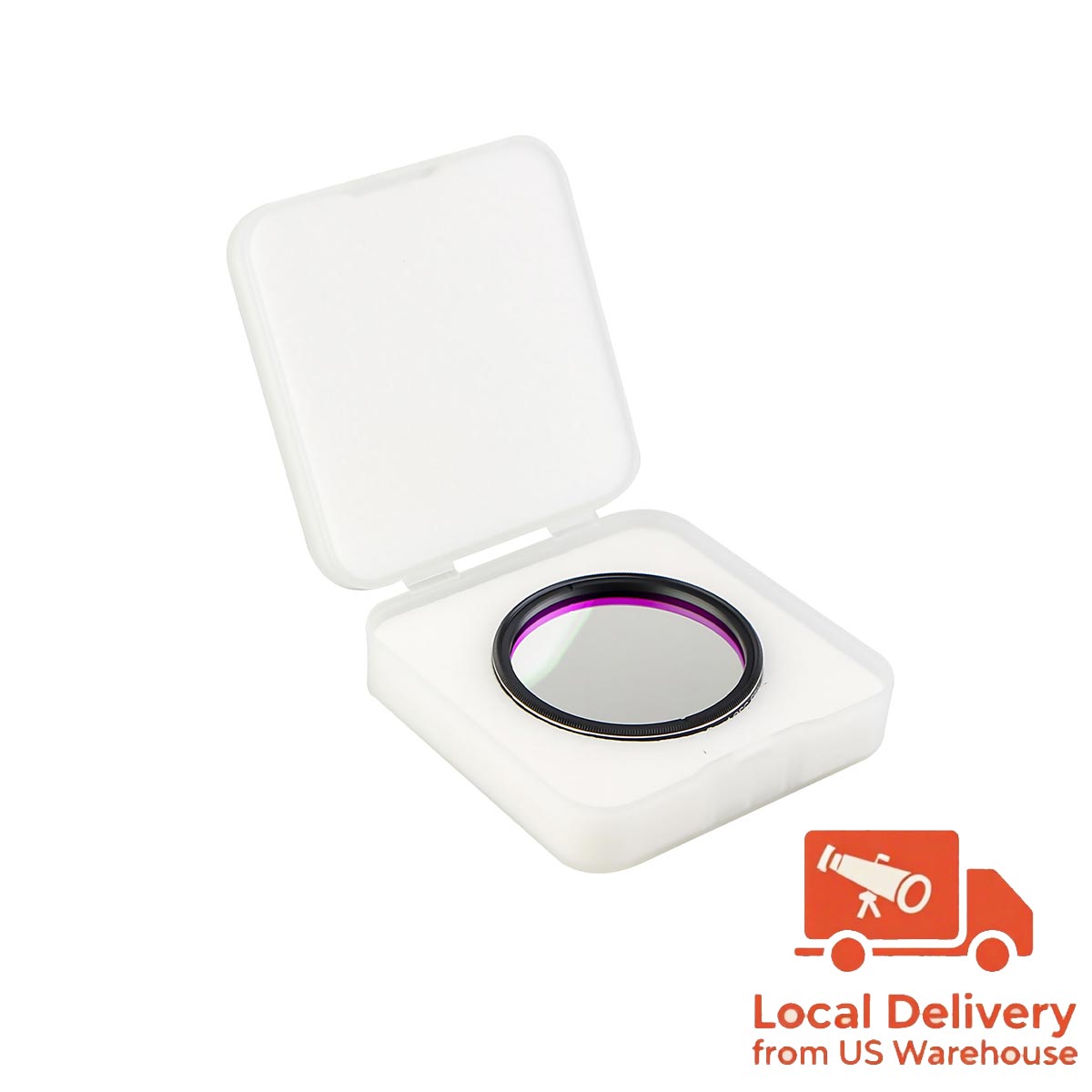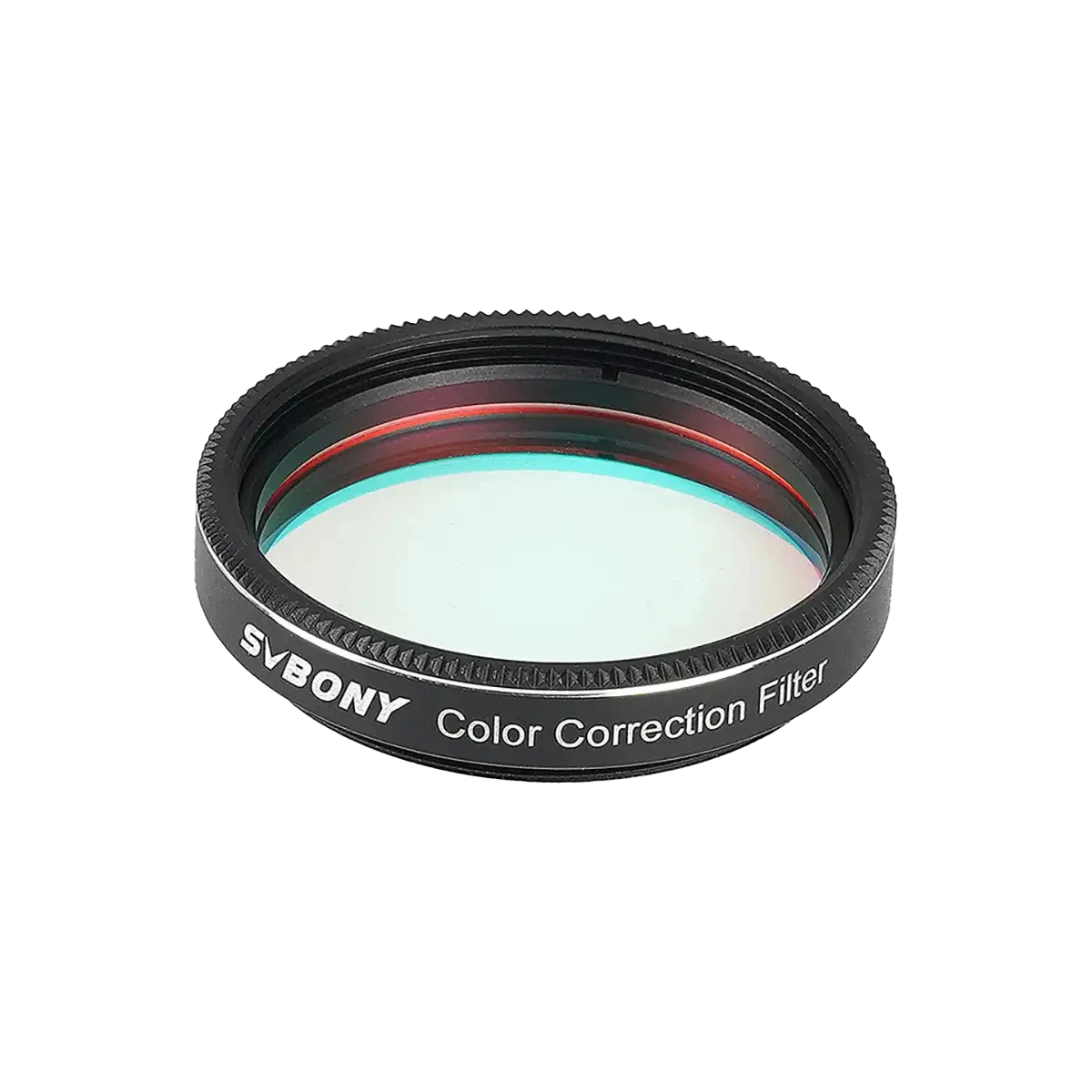
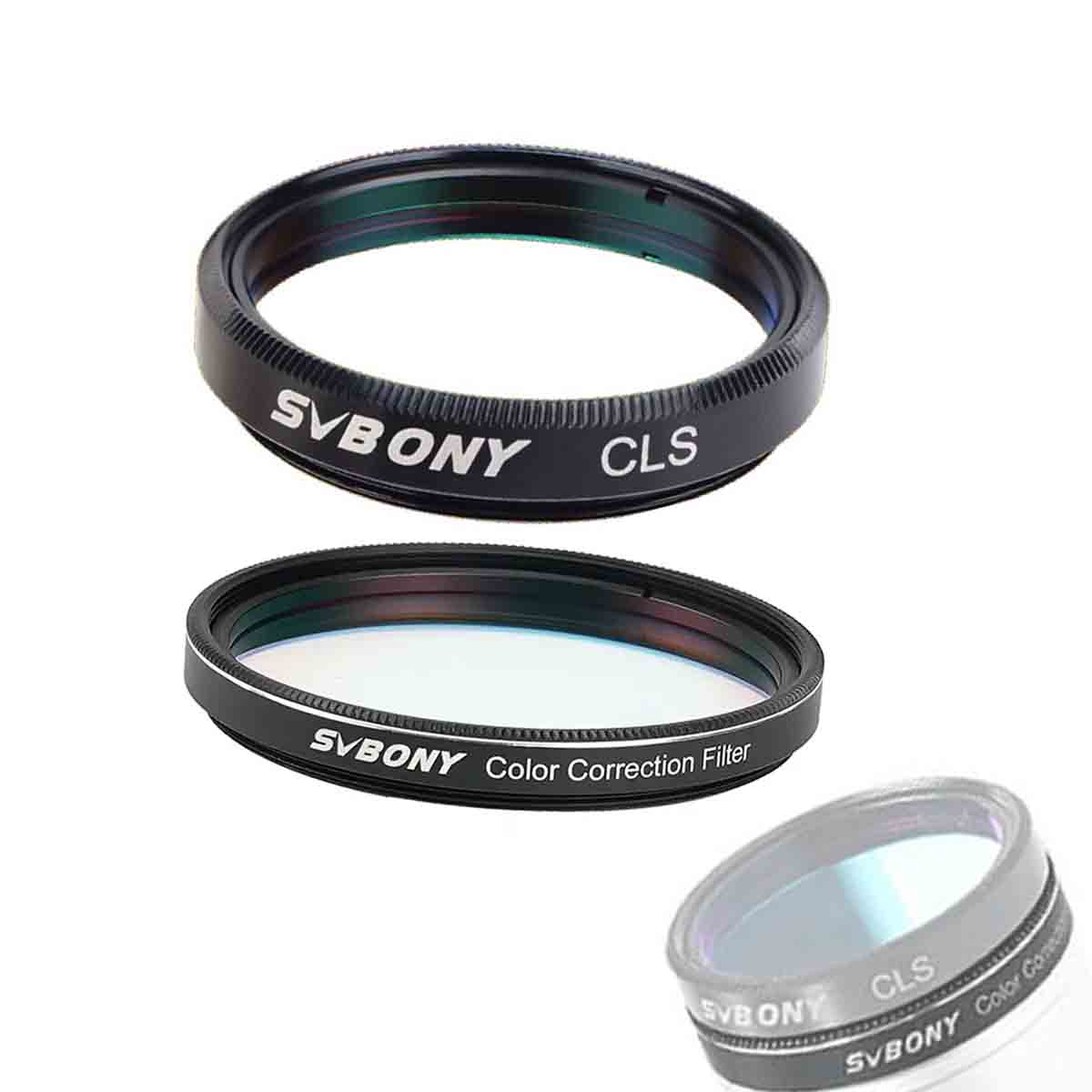
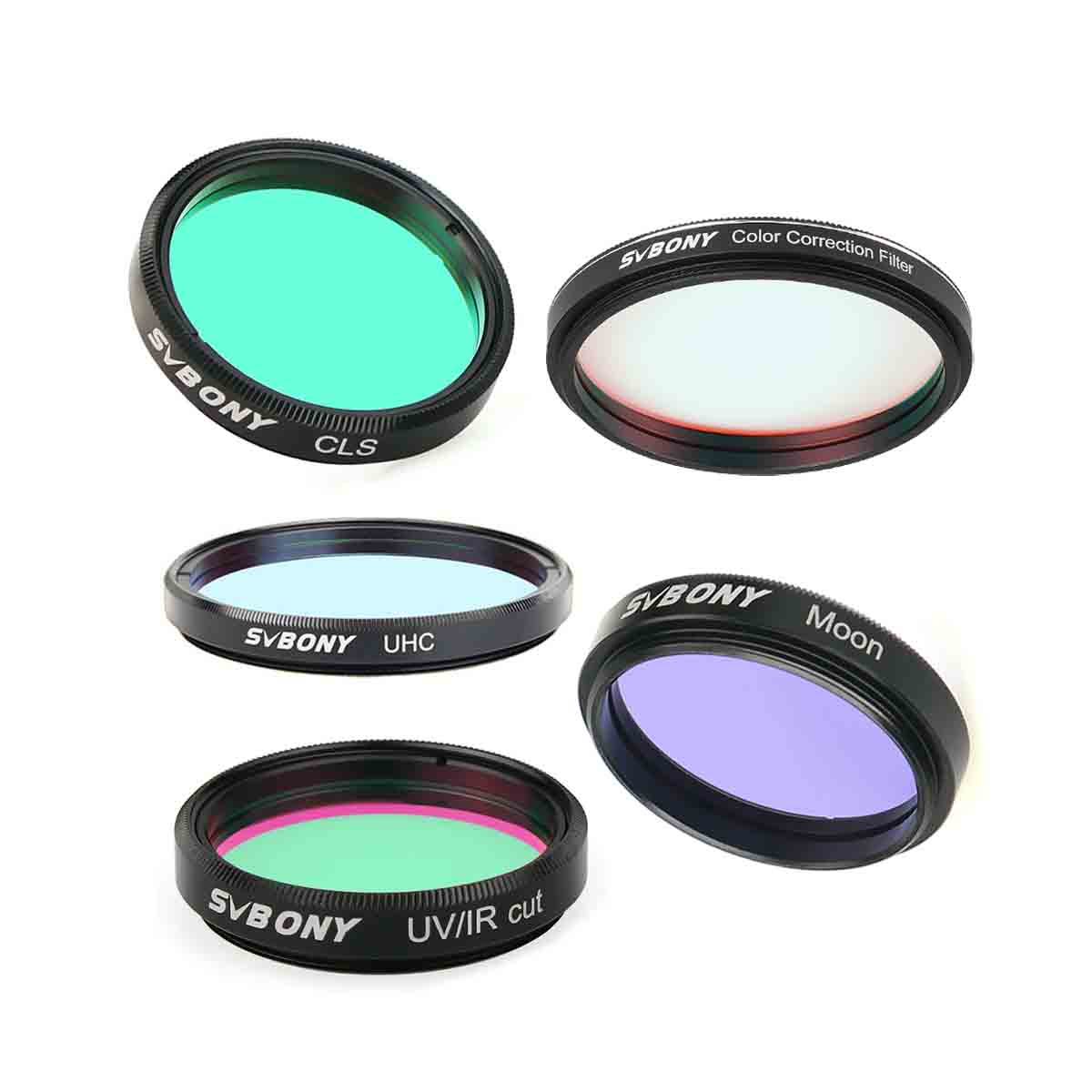
SV231 Fringe Killer Color Correction Filter 1.25/2inch for Lunar and Planetary Surfaces
3 | ReviewsKey Features

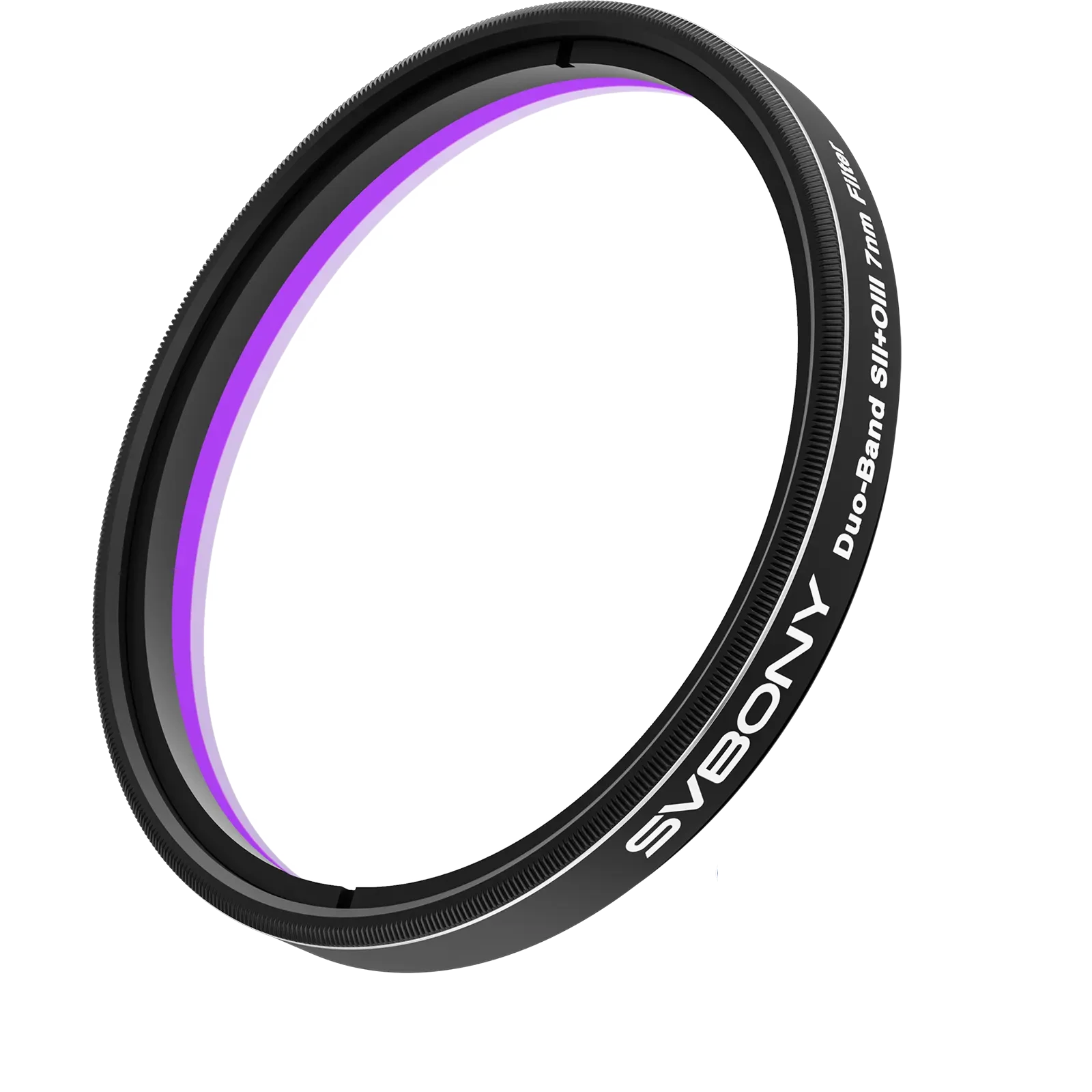
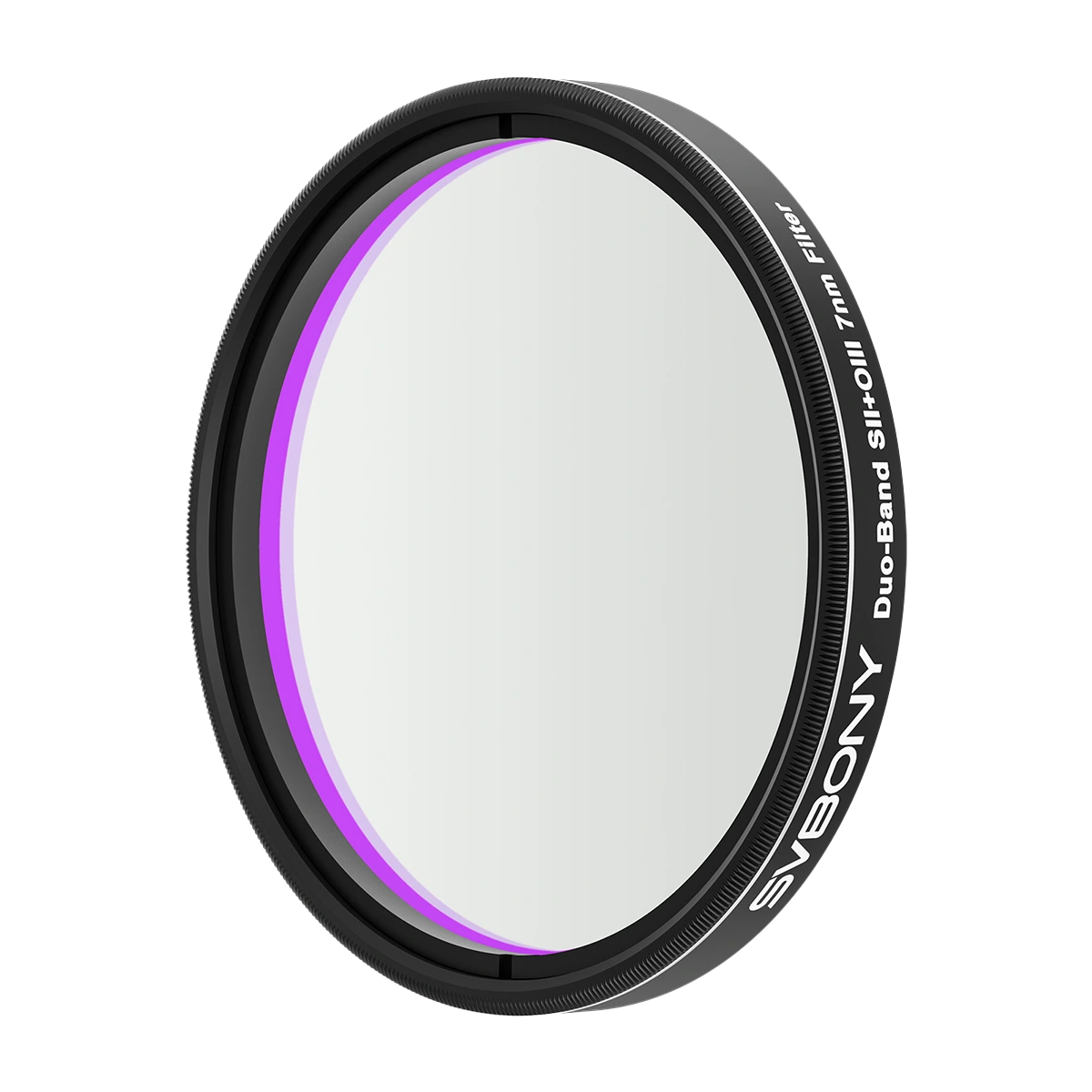
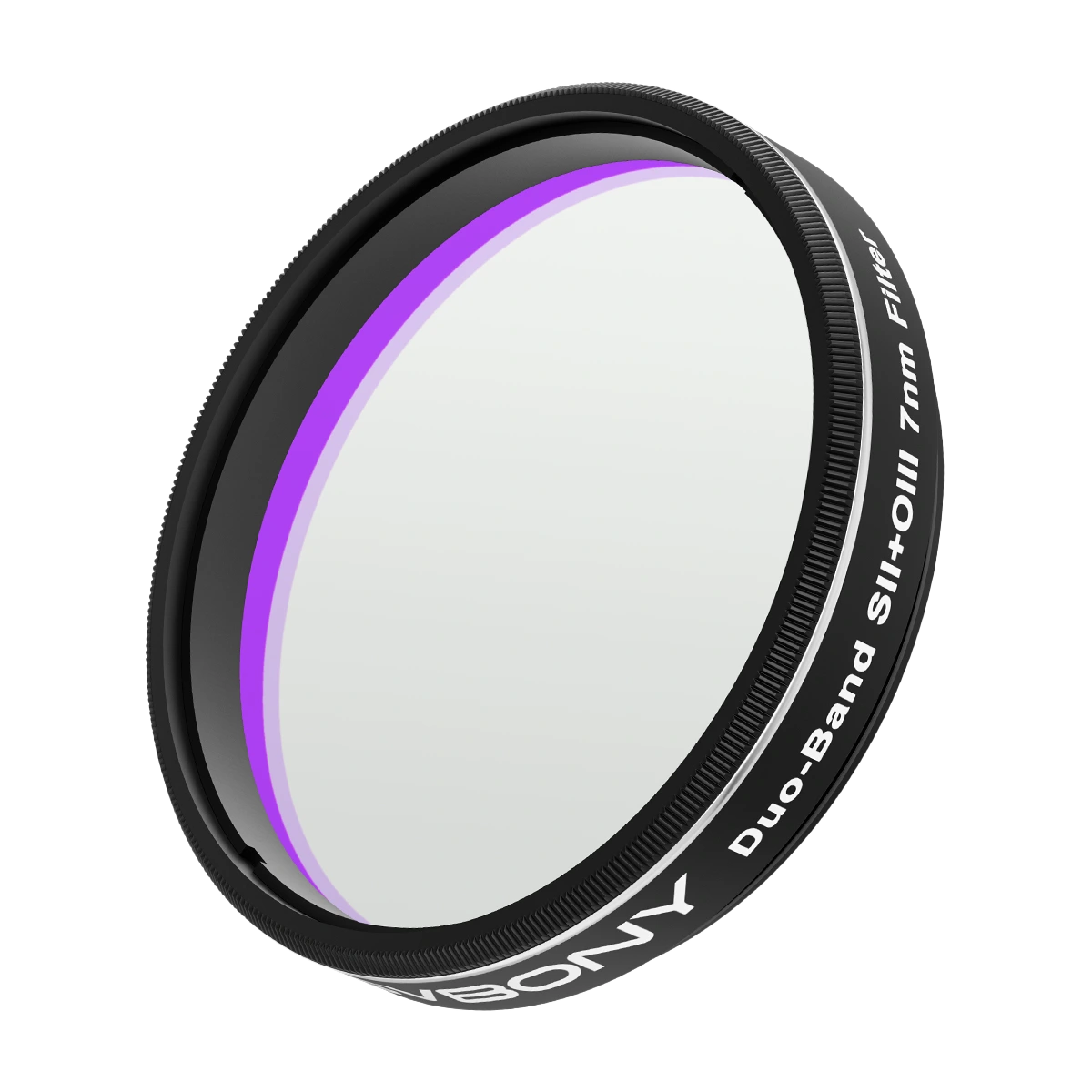
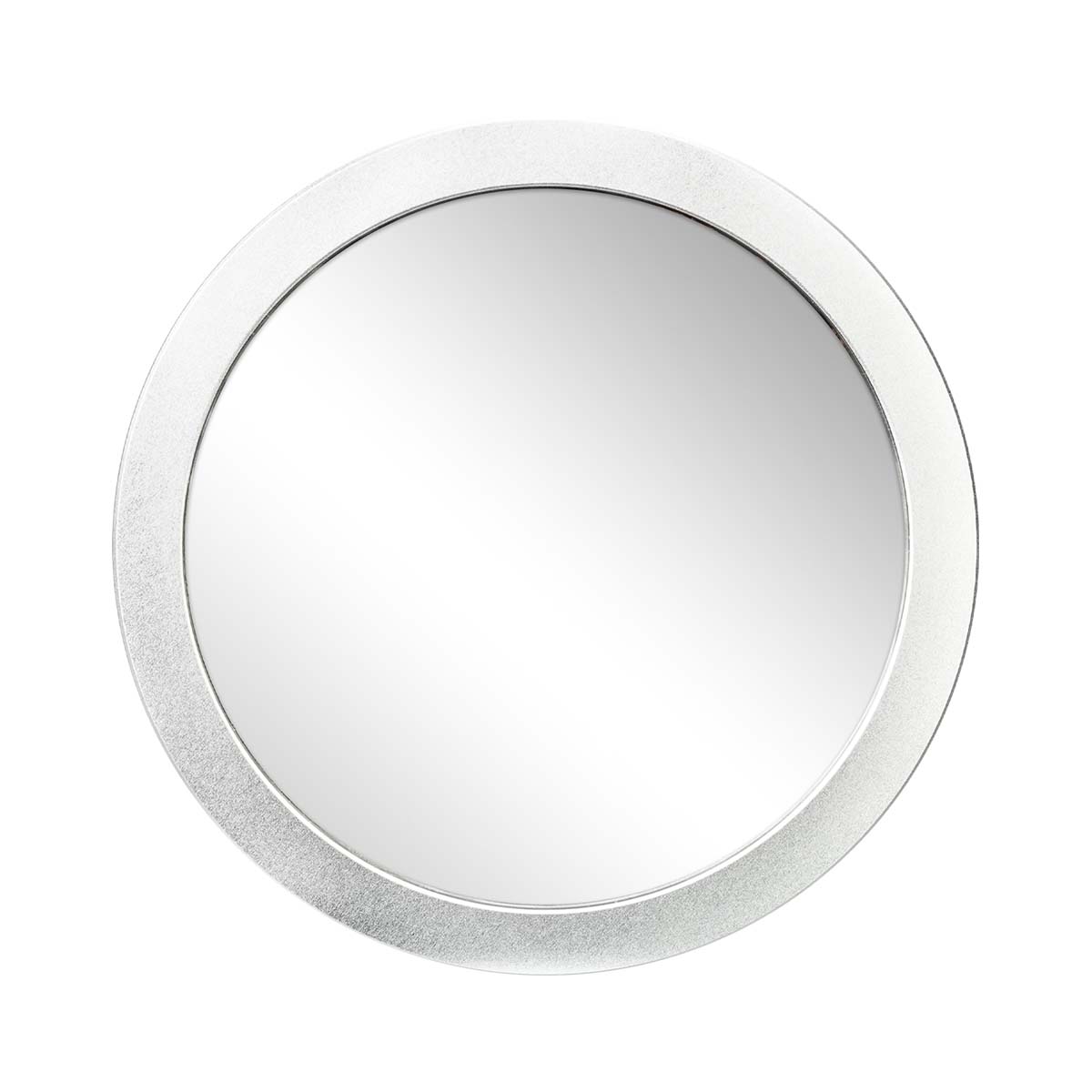
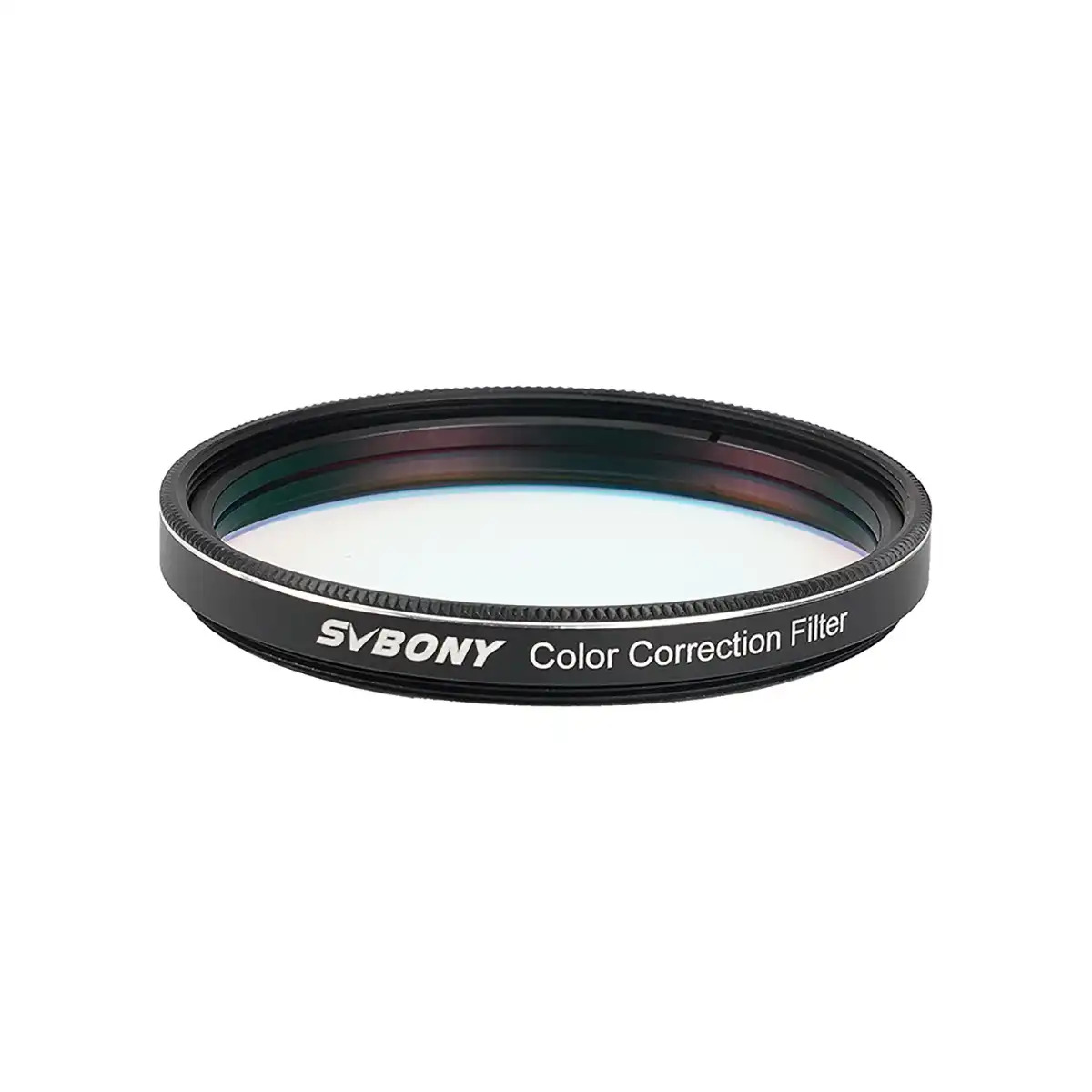
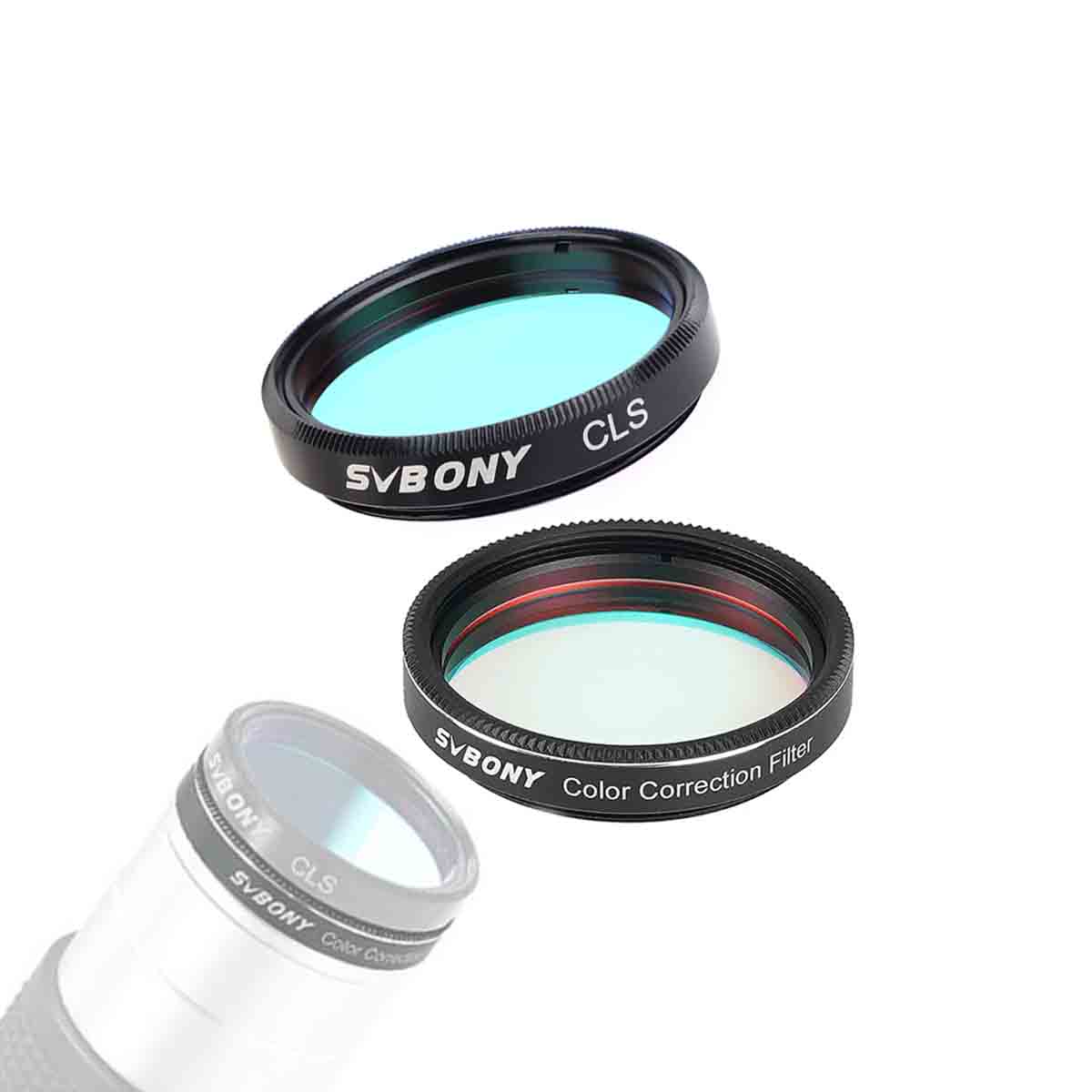
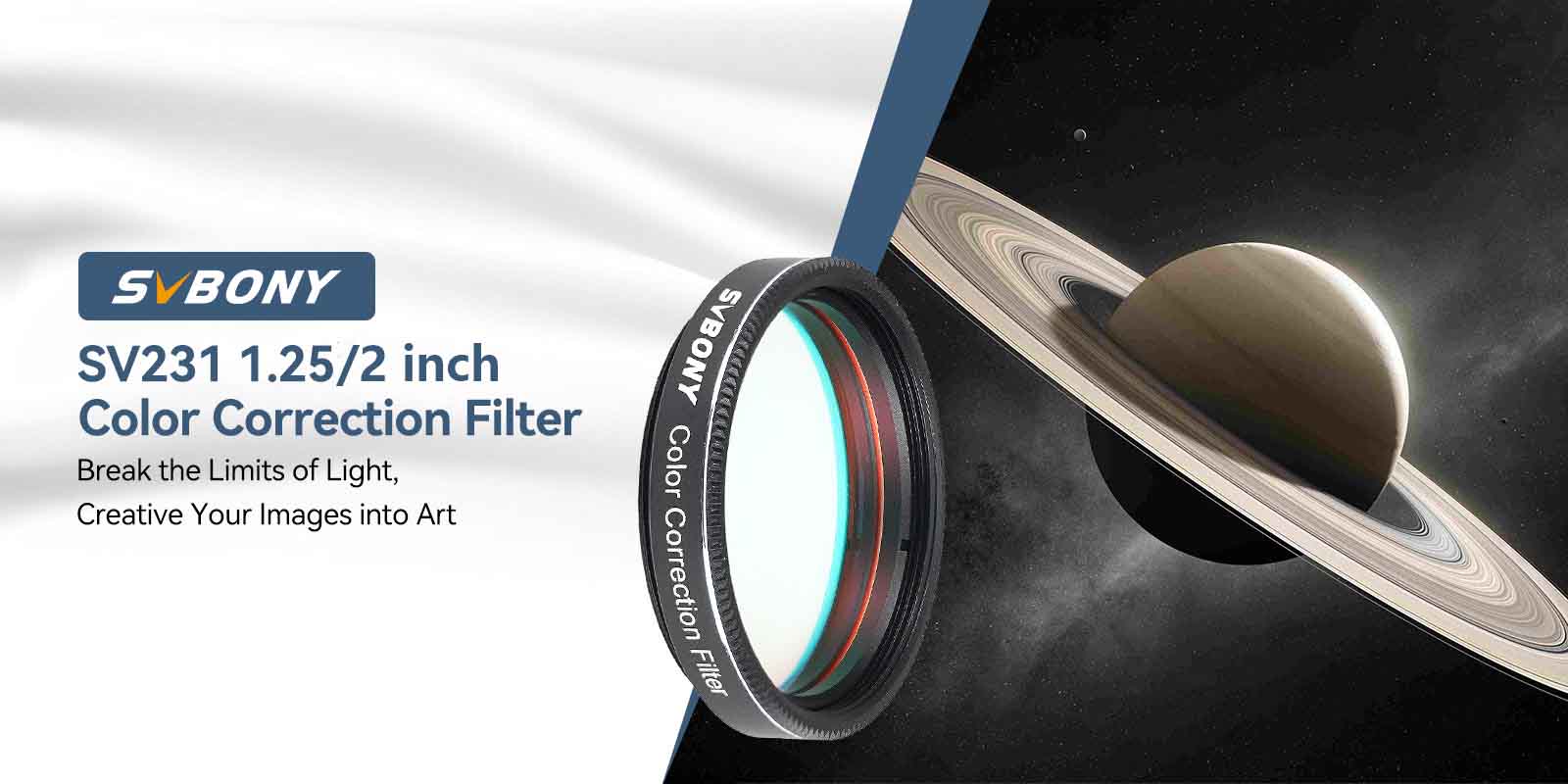
SV231 1.25/2 inch Color Correction Filter
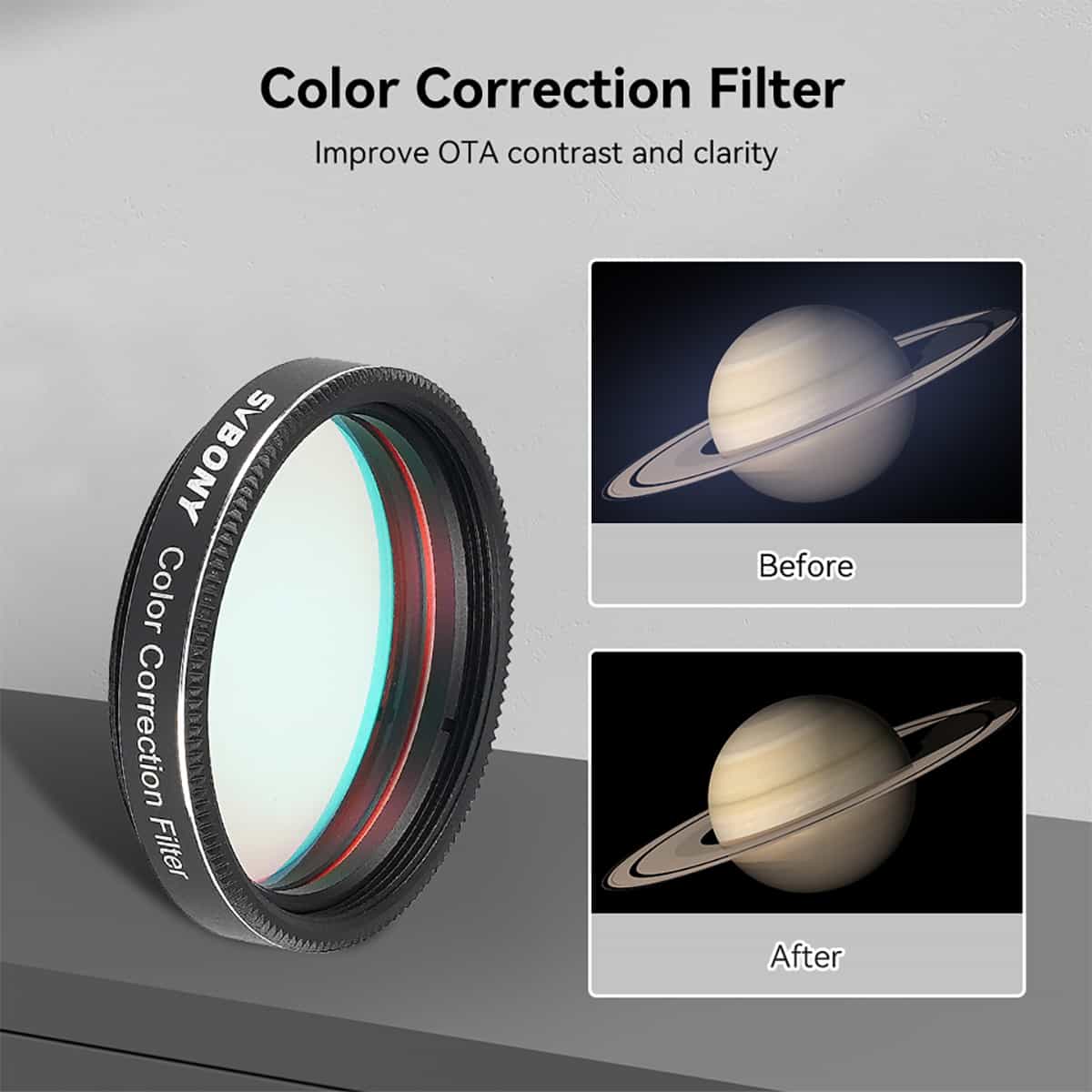
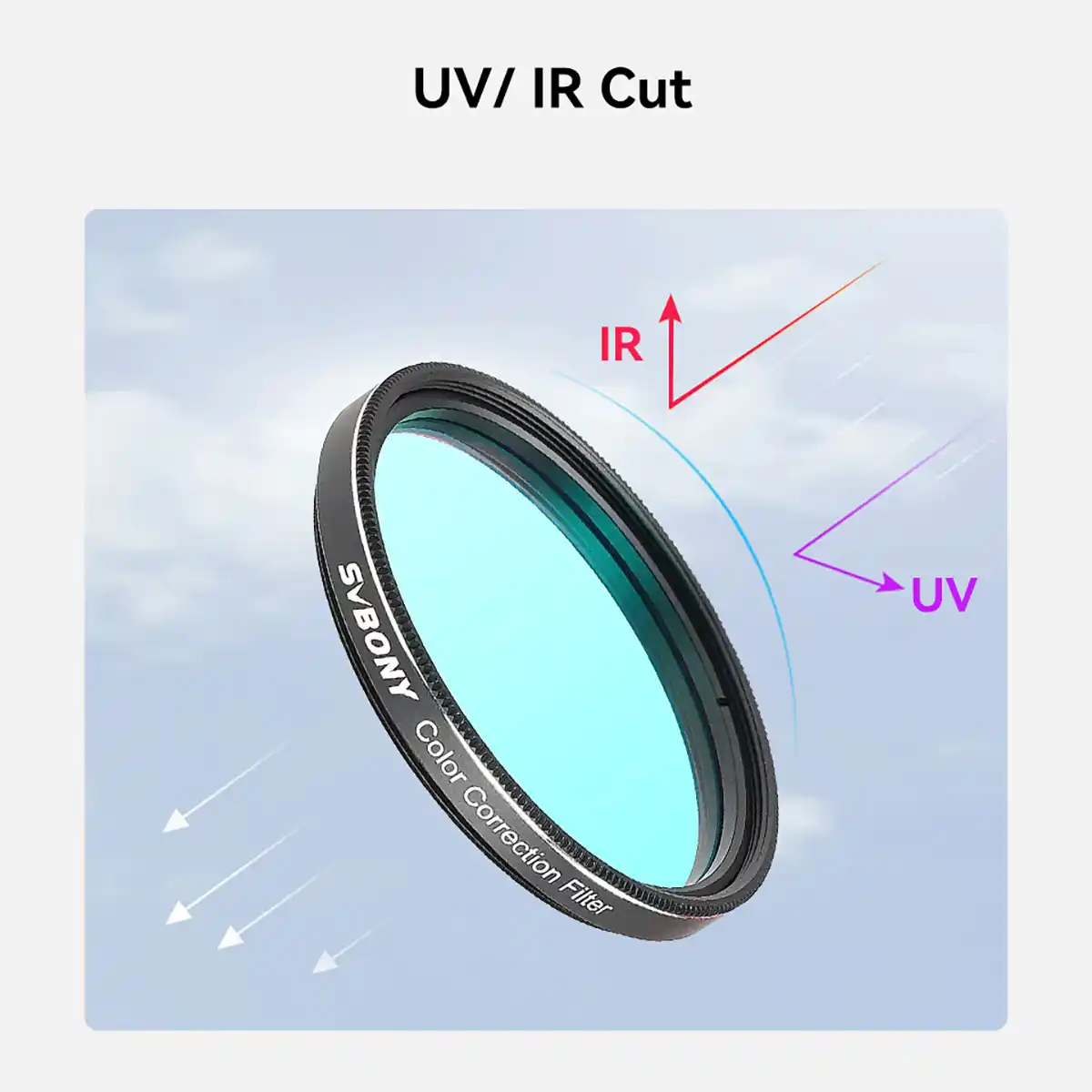
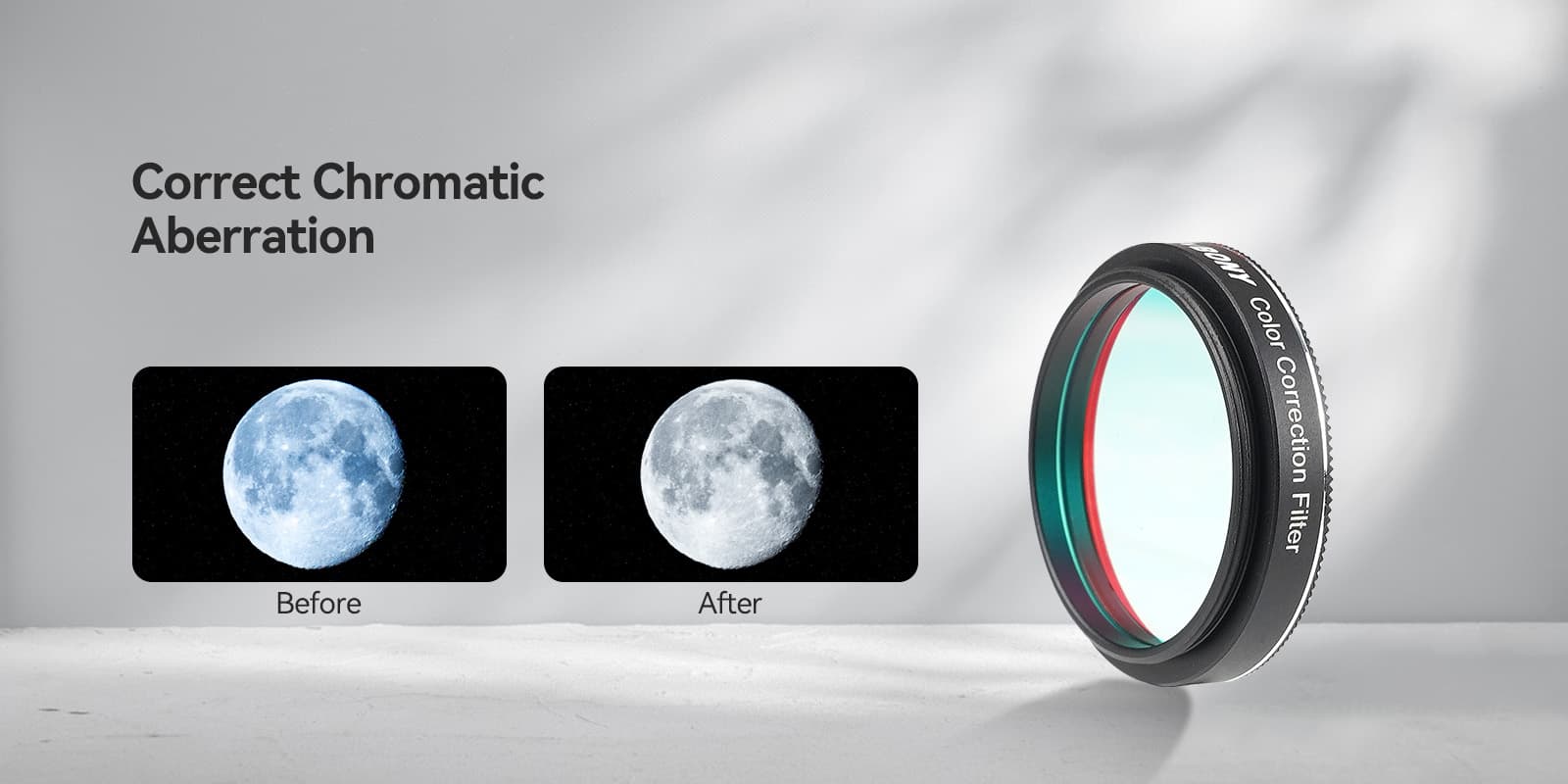
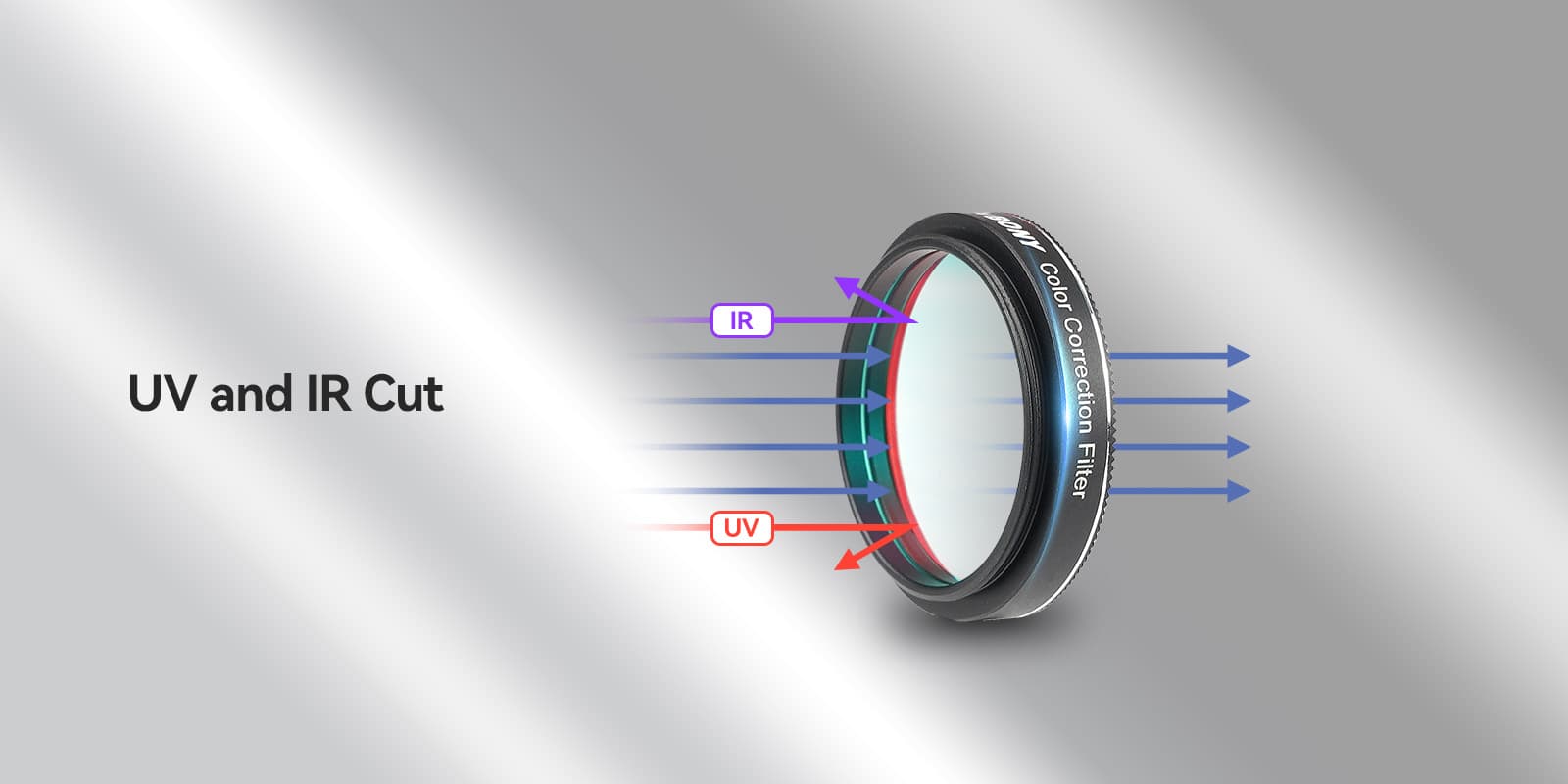
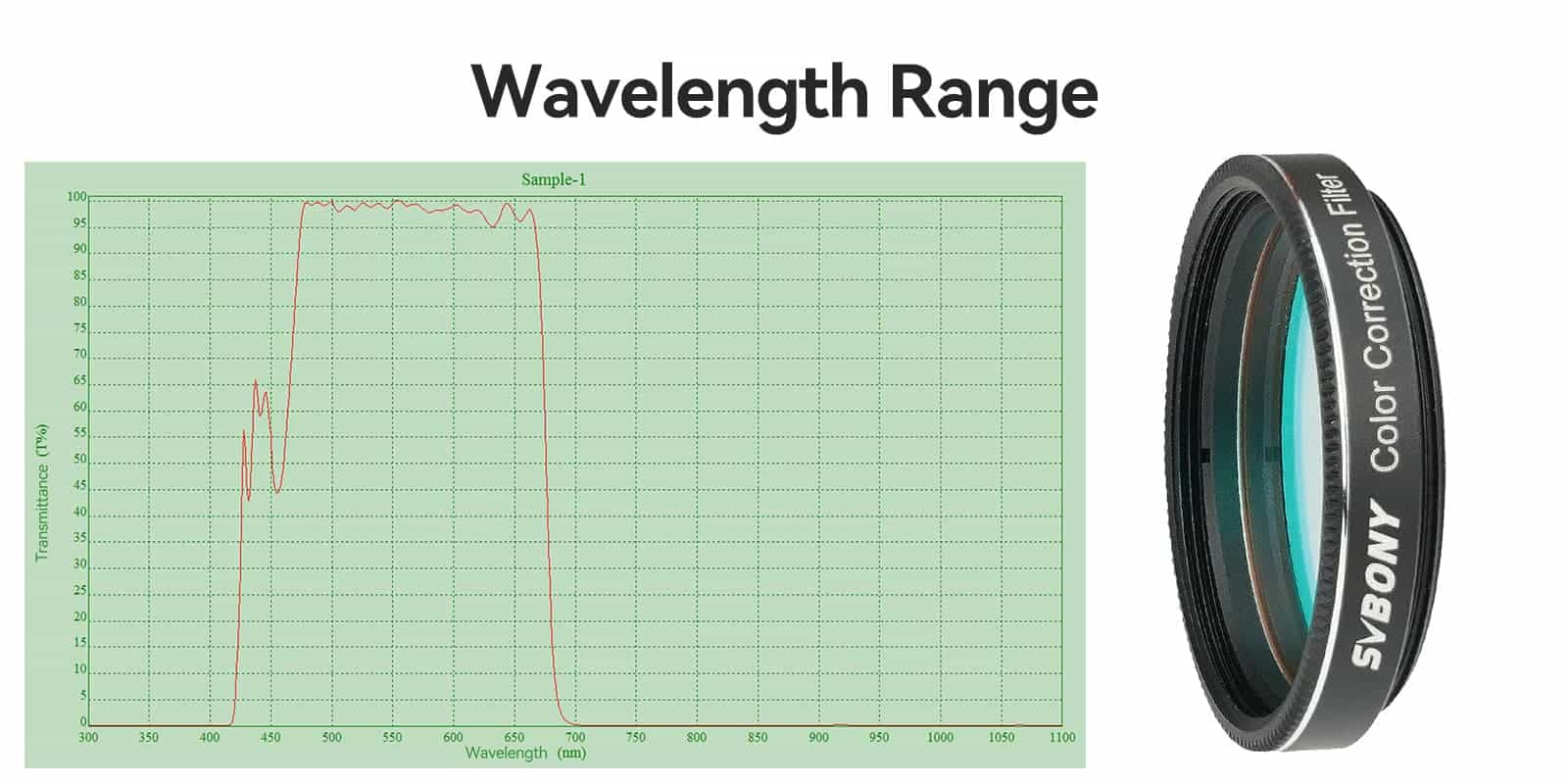
The color correction filter blocks defocused light in the blue spectrum, as well as in the red part of the spectrum (IR) above 700nm, usually seen in small achromat telescopes.
Correct Chromatic Aberration
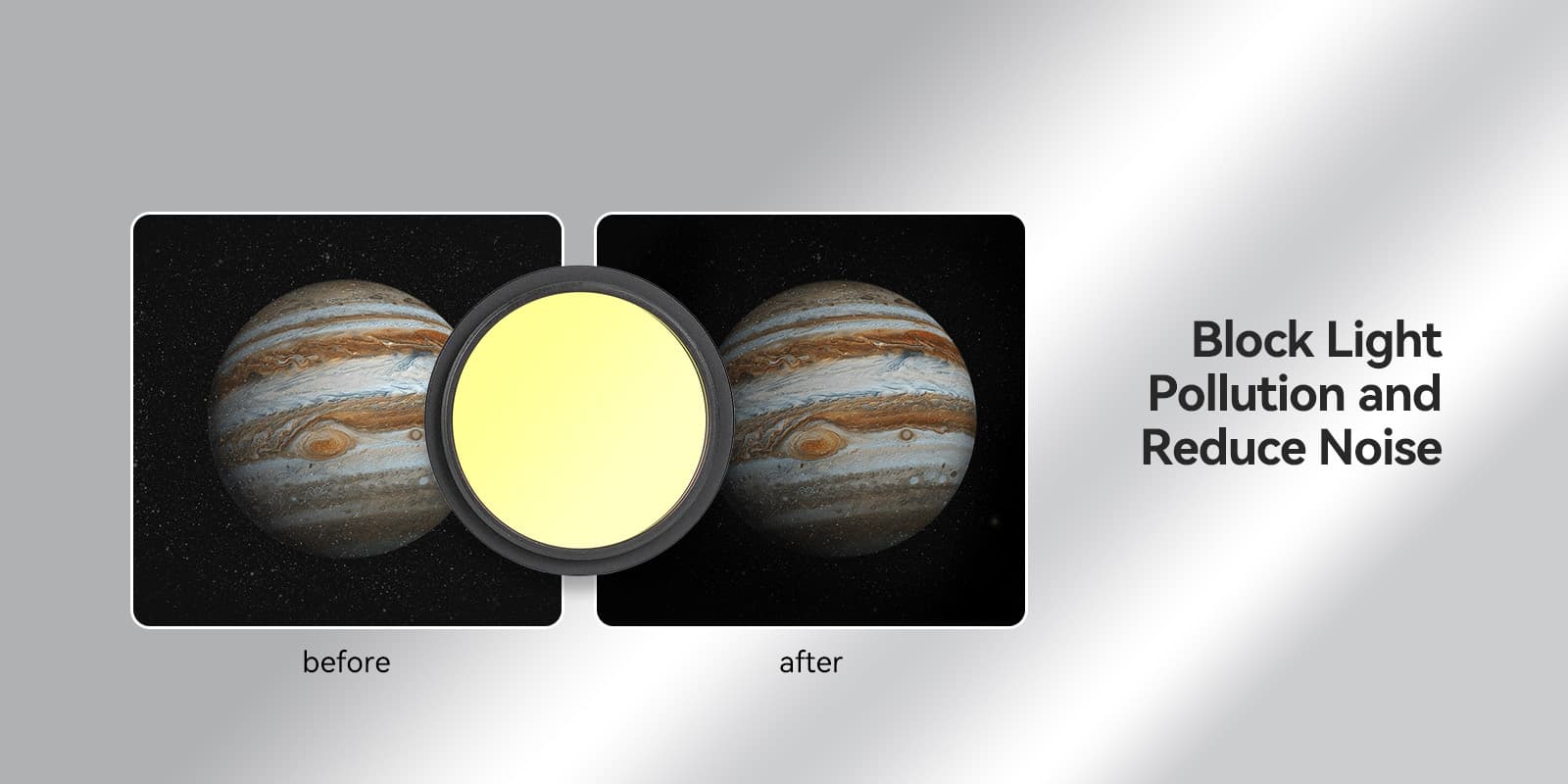
Block Light Pollution and Reduce Noise
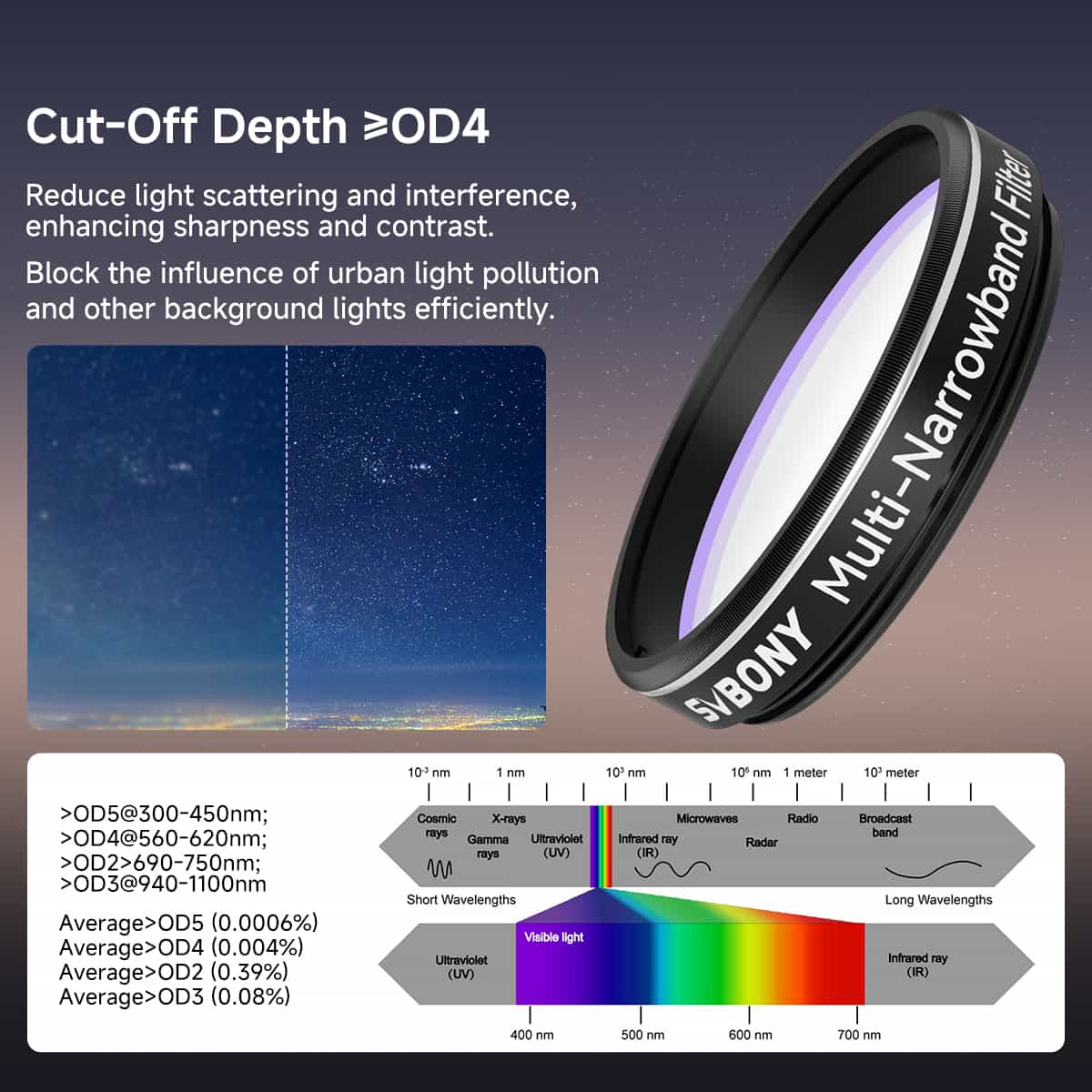
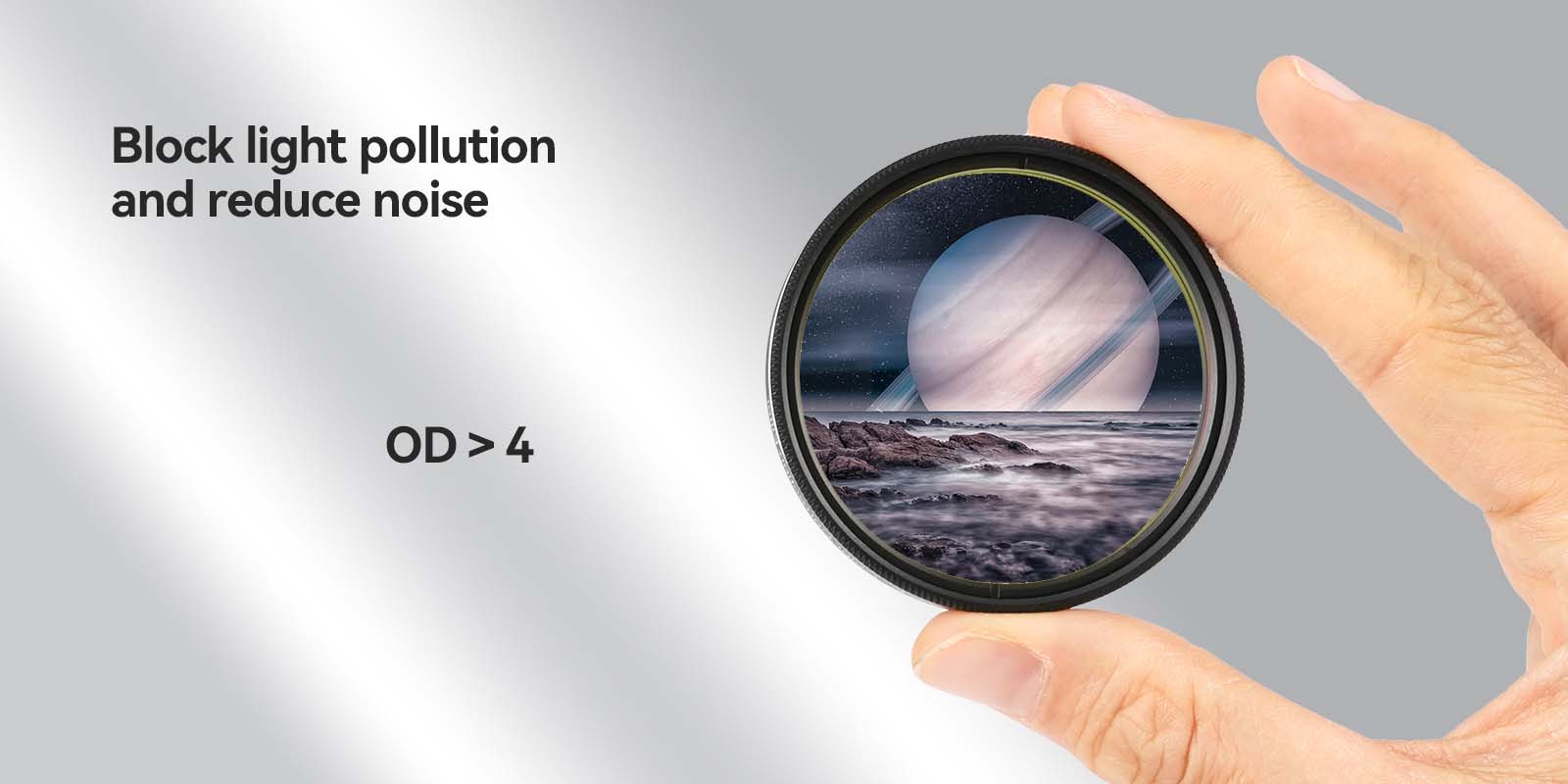
OD Optical Density > 4
UV and IR Cut
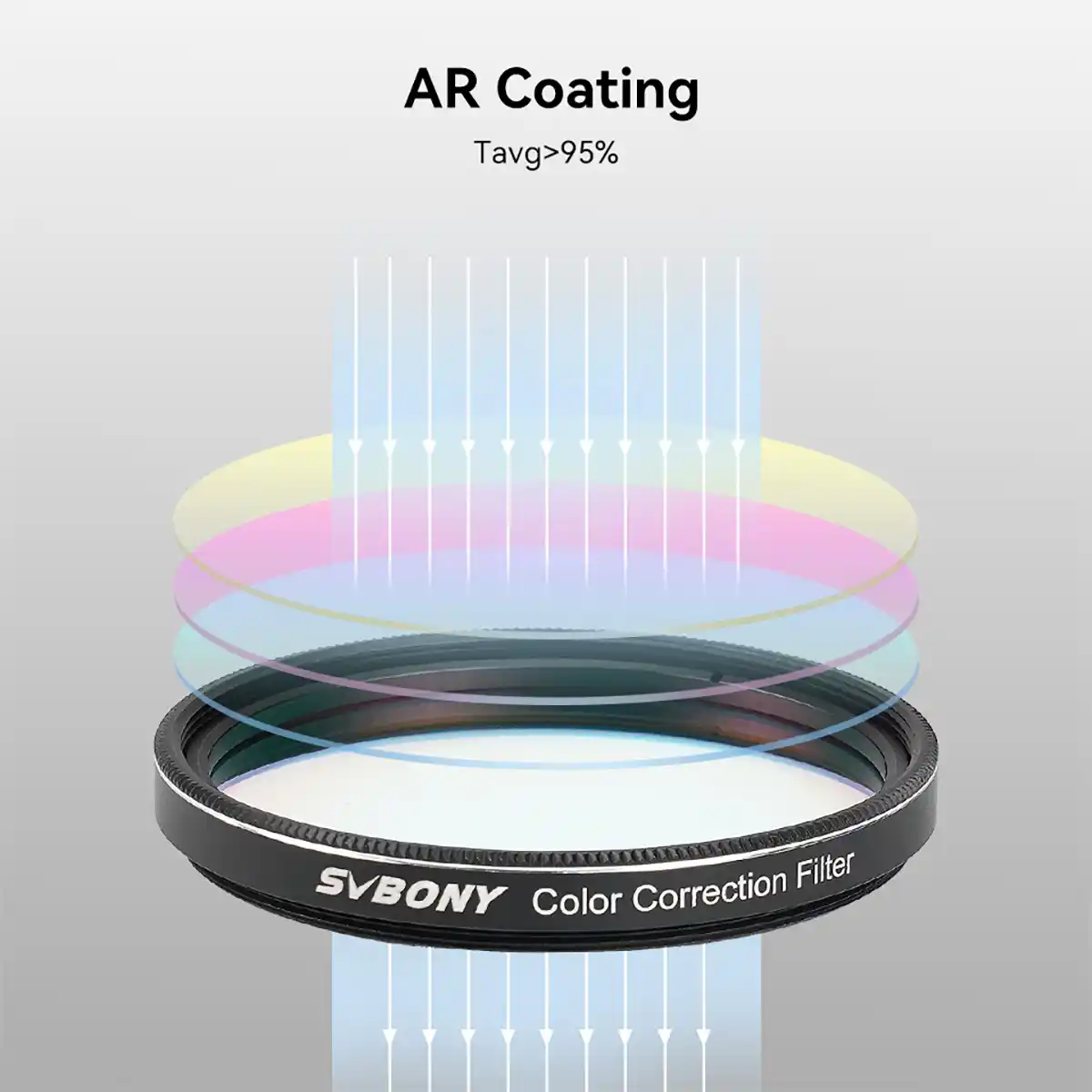
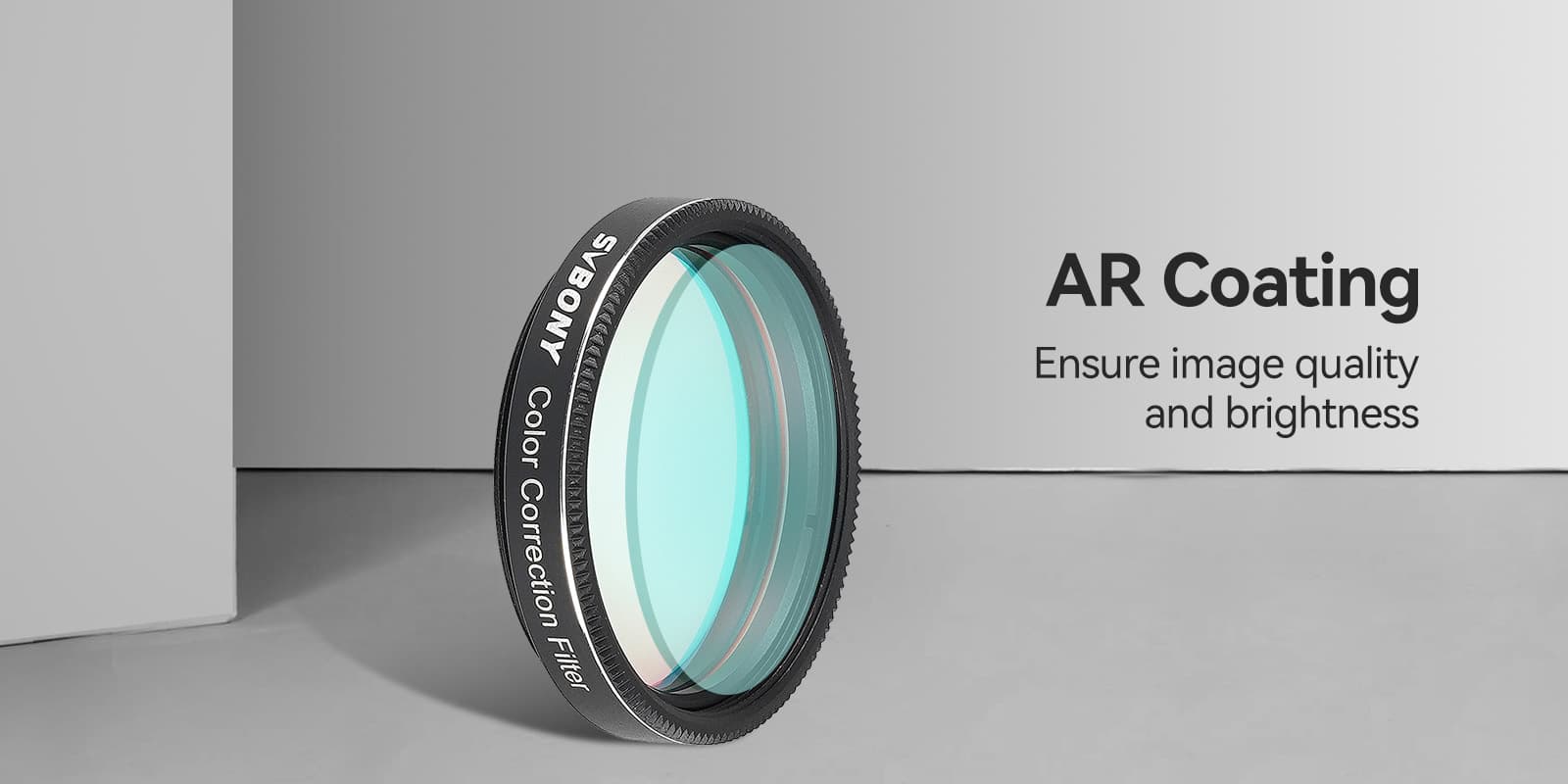
AR Coating
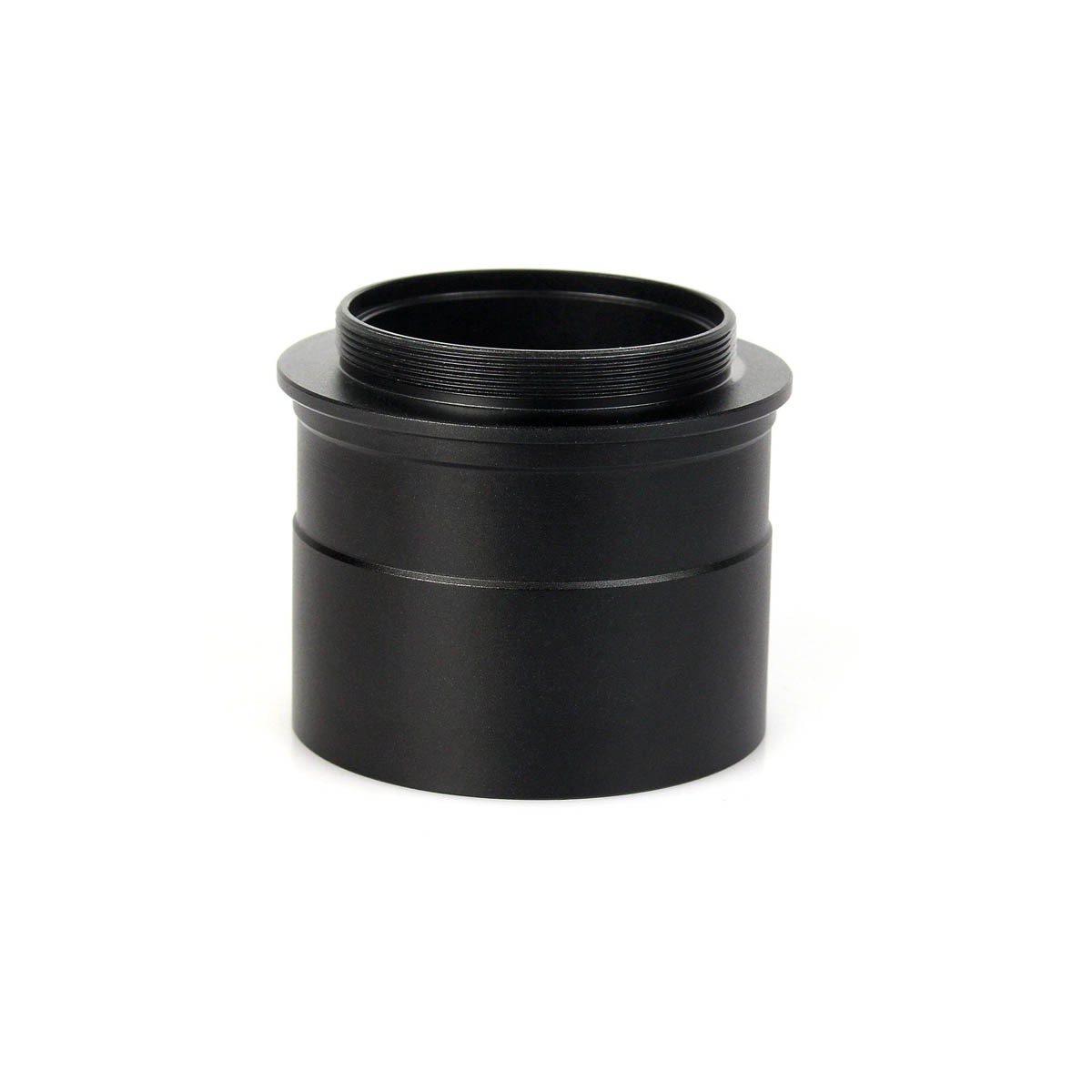
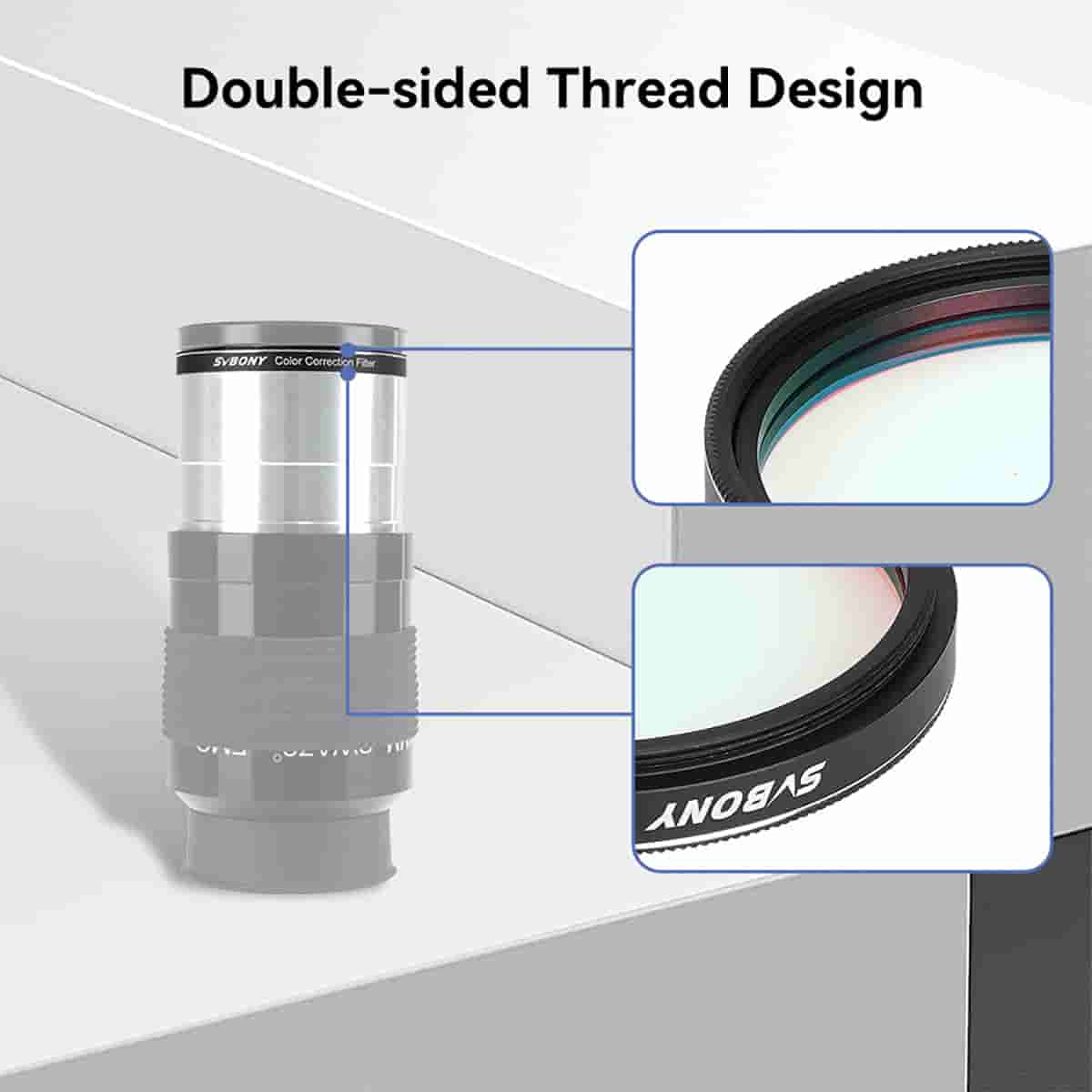
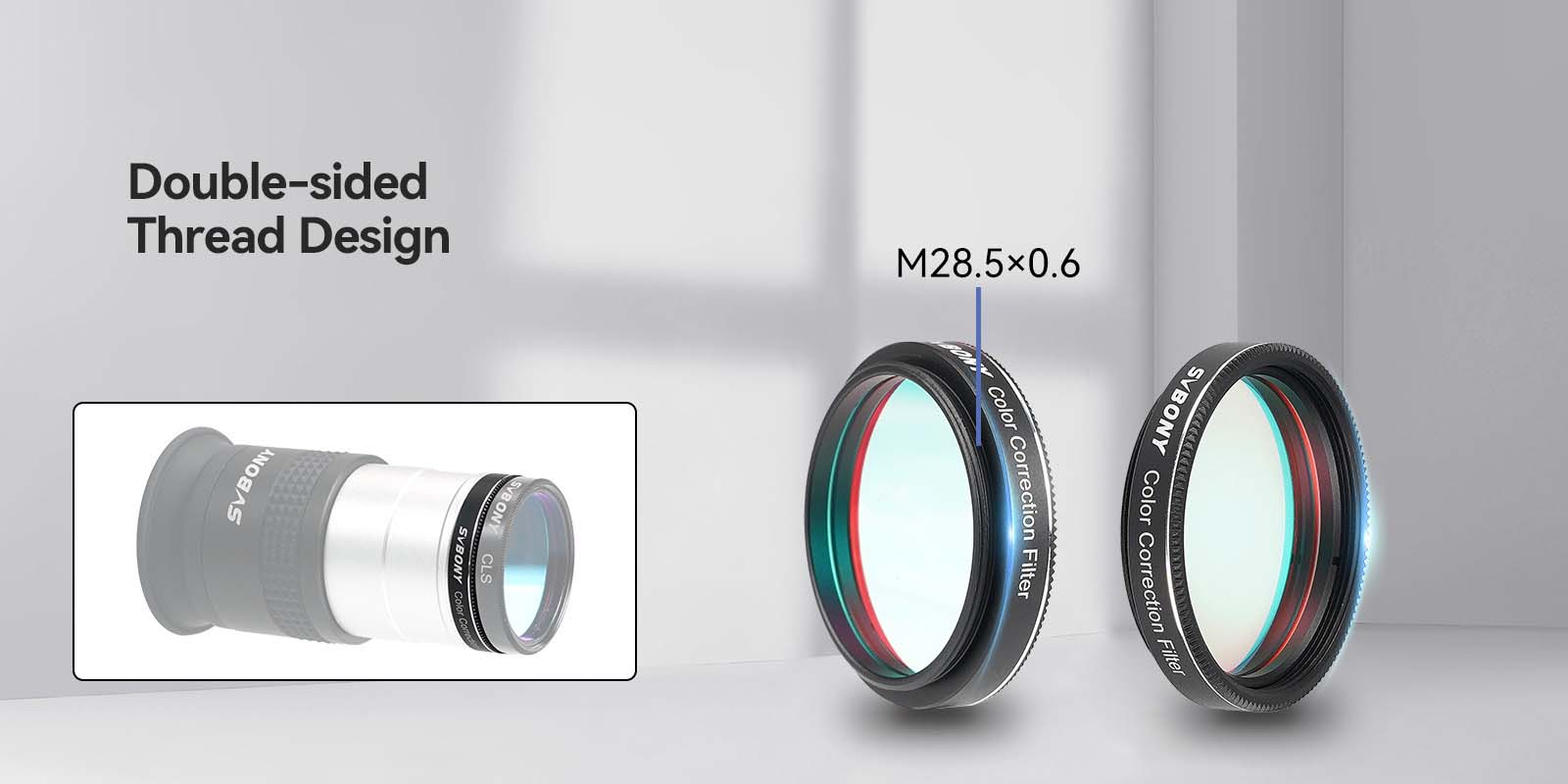
Double-sided Thread Design
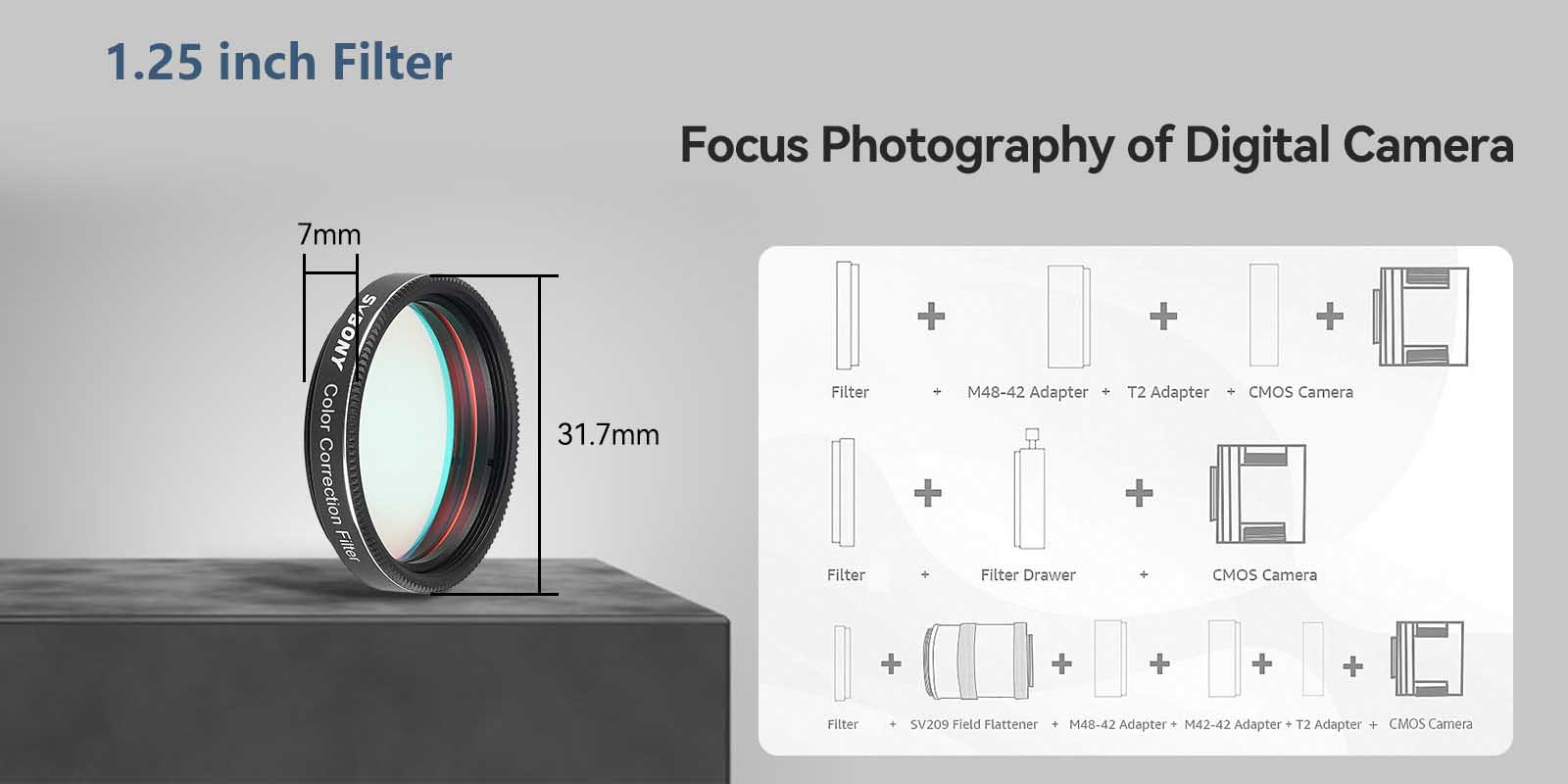
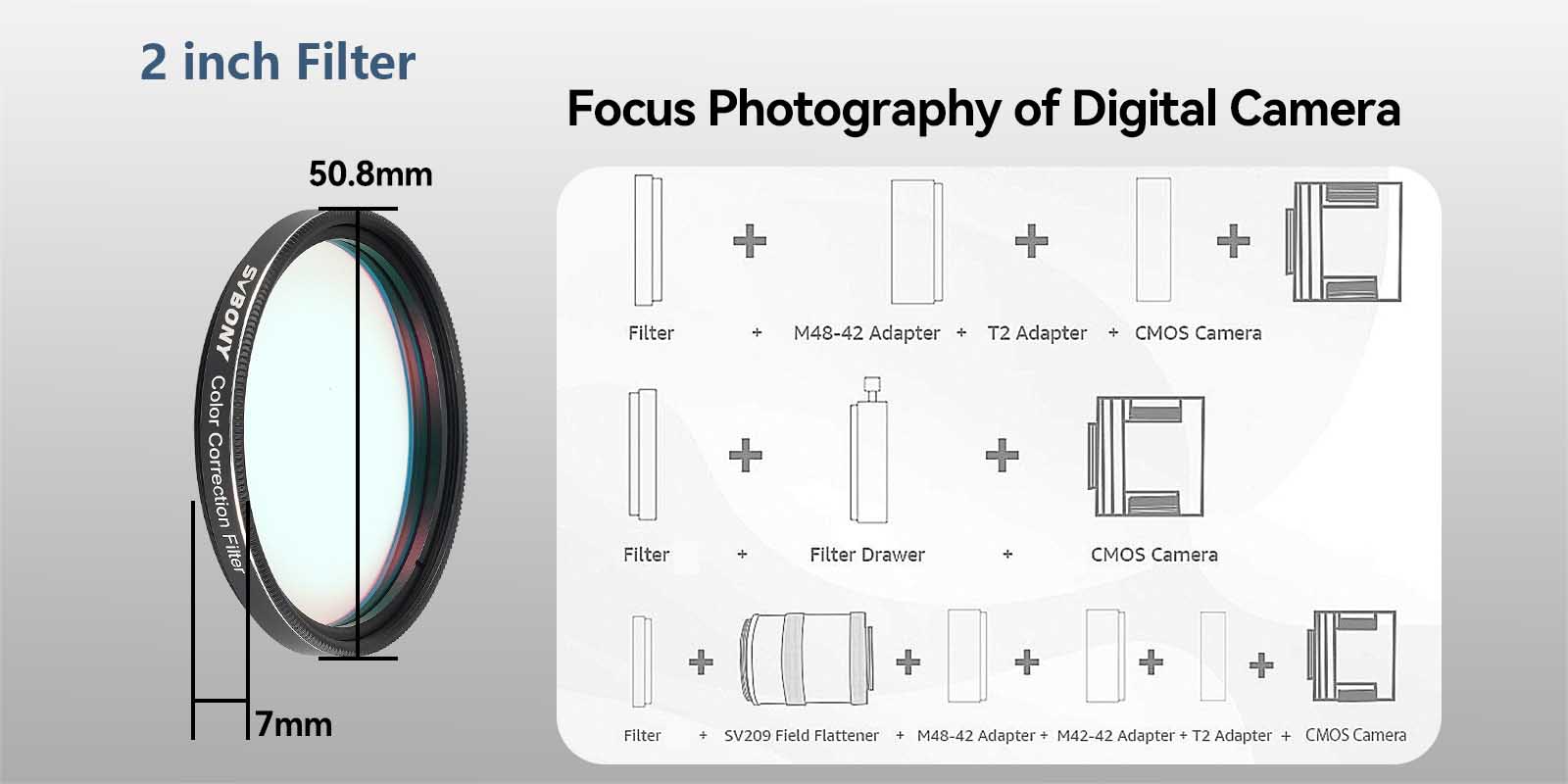
Focus Photography of Digital Camera
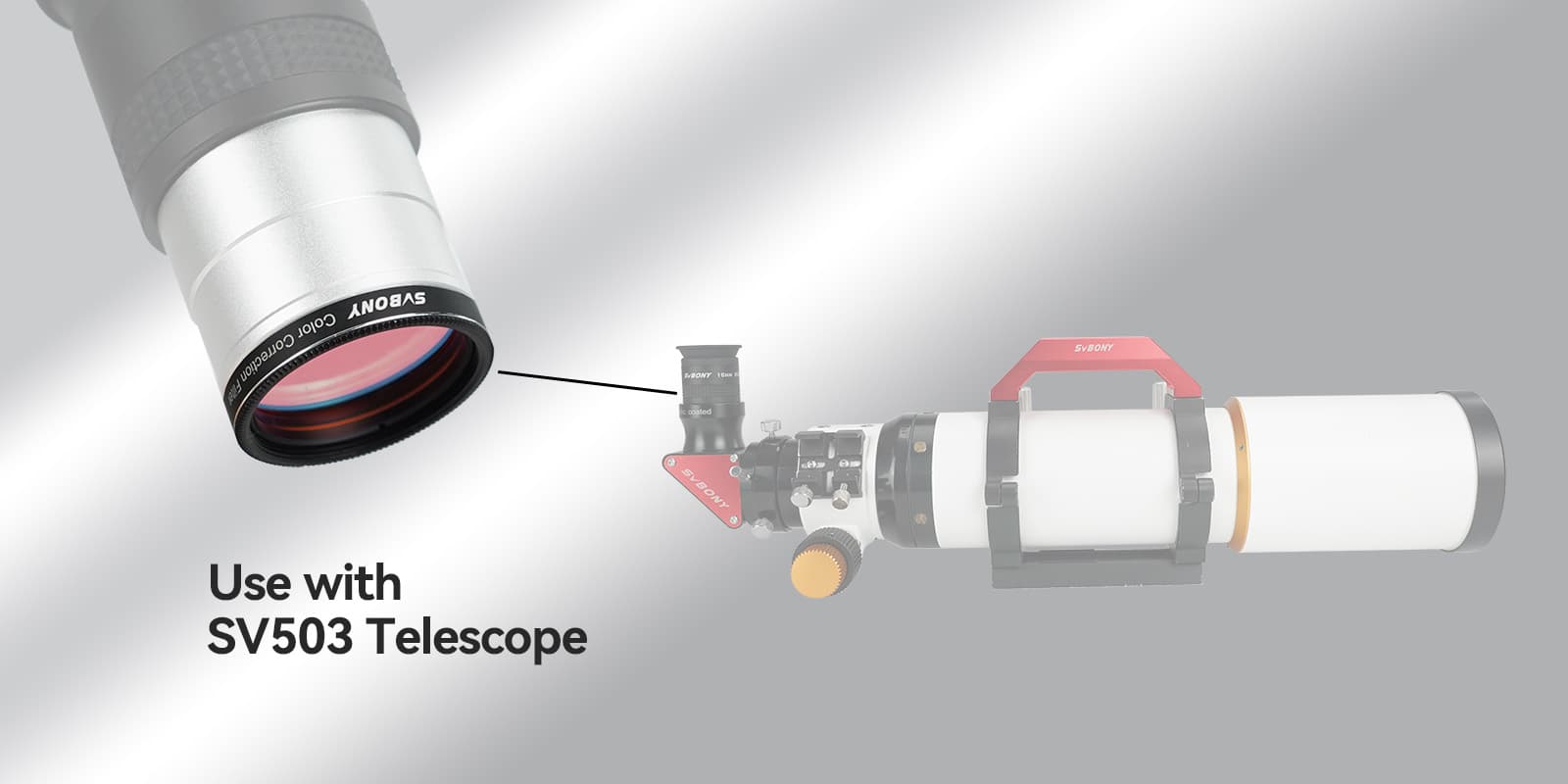
Use With SV503 ED Telescope
It can be used well before the focal point of the optical system, without any loss of sharpness, as a single filter in front of a binocular for a focal projection with digital cameras.
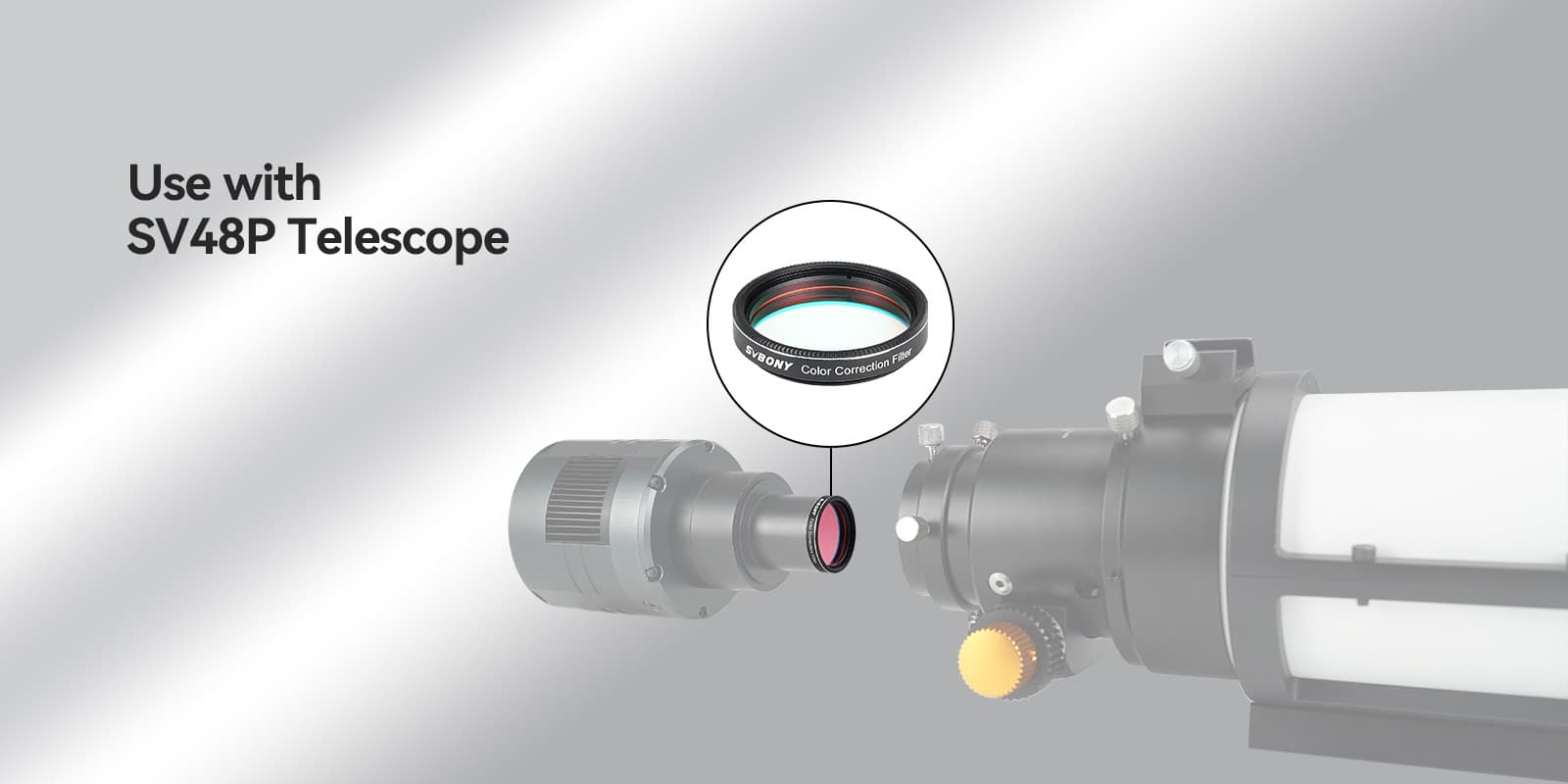
Use With SV48P Telescope
Various Application Scenarios
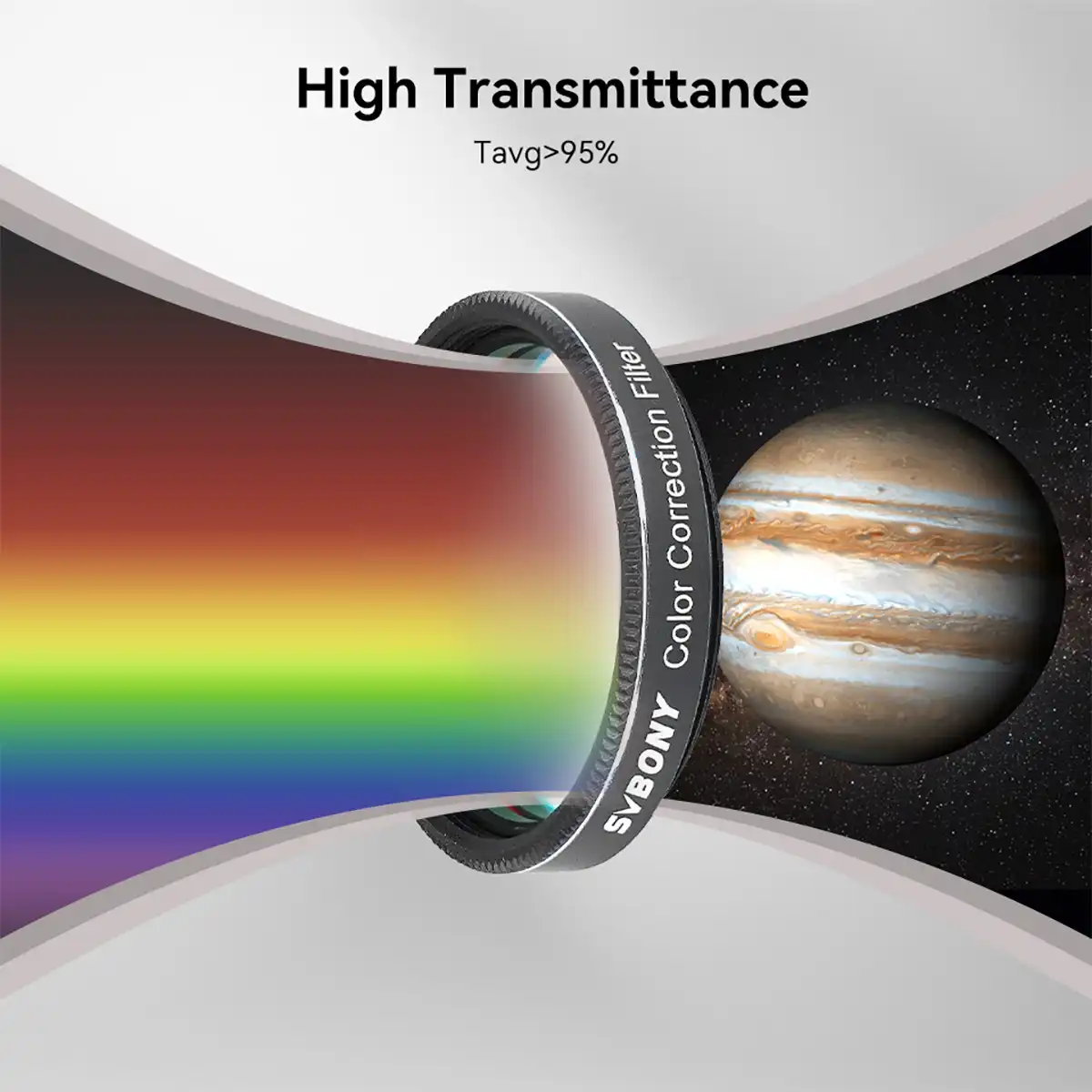
The smaller details on craters of the Moon and planetary surfaces are so much more visible. The NIR is fully blocked up to 1150nm. Details on planets are shown much clearer when using CCD/CMOS-cameras.
Customer Reviews
All Reviews
Loading...
Specifications
| Brand | SVBONY | SVBONY |
| Model | SV231 | SV231 |
| Filter Usage | Color Correction Filter | Color Correction Filter |
| Type of Filter | Bandpass | Bandpass |
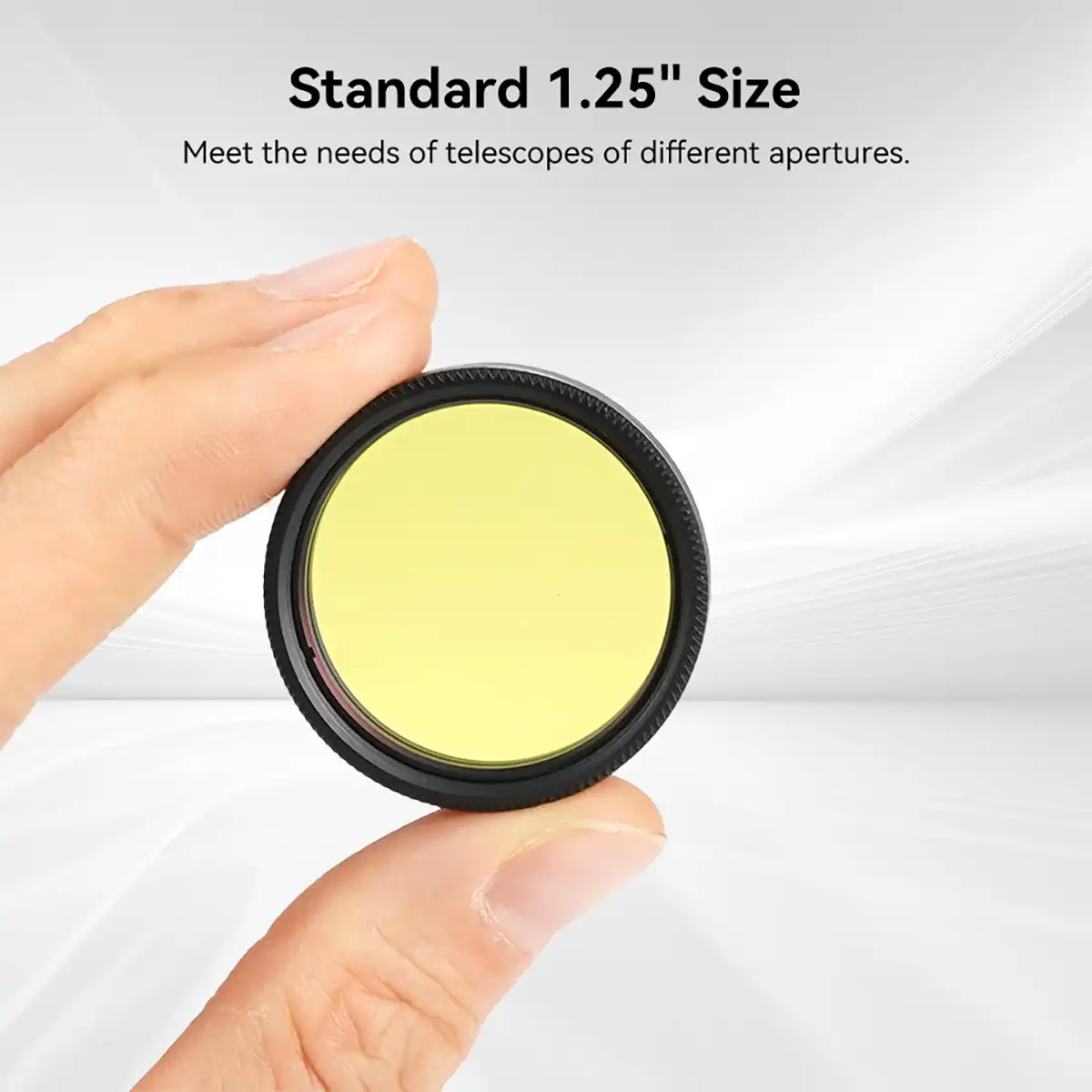
| Size | 1.25" | 2" |
| Substrate Thickness | 1mm | 1mm |
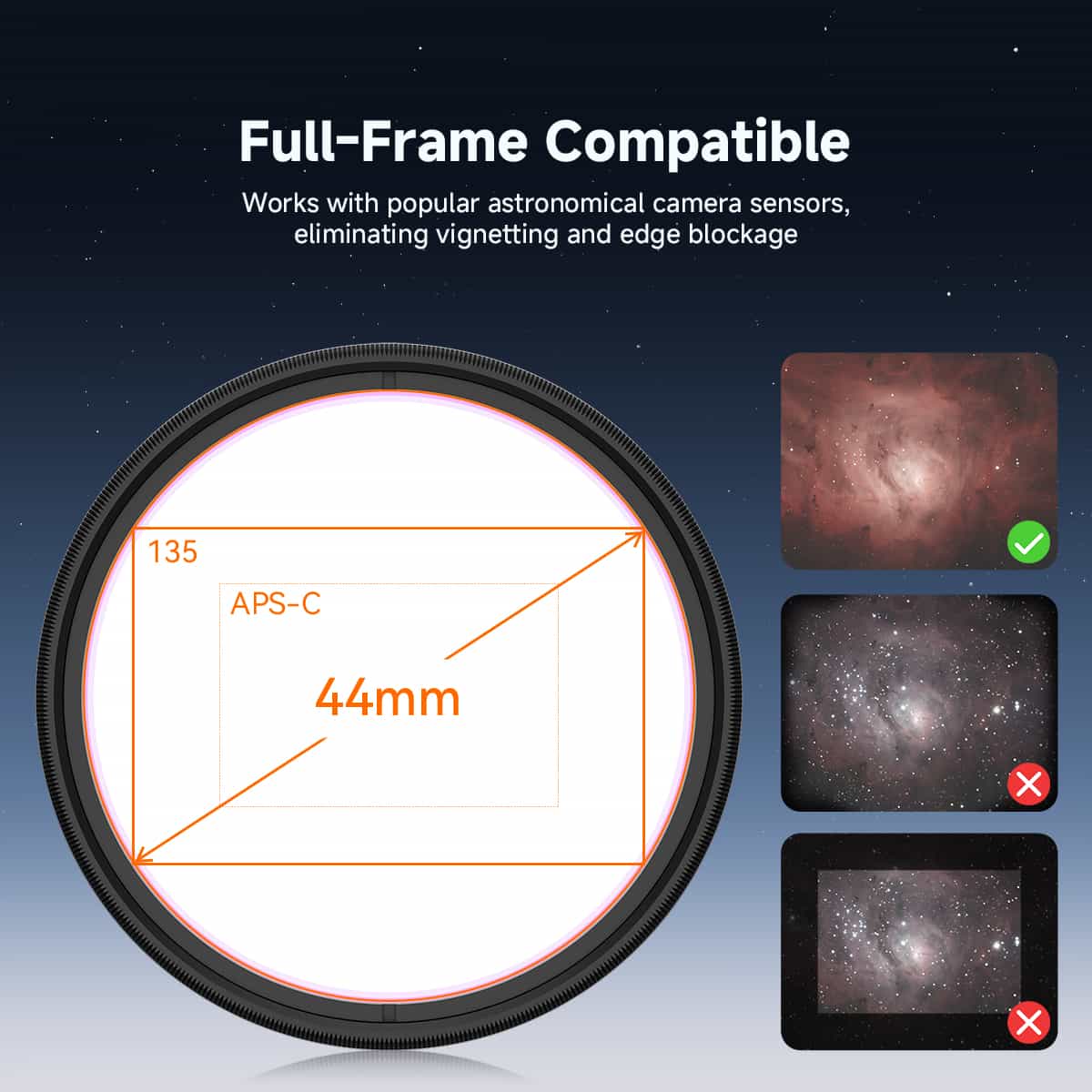
| Clear Aperture | 26mm | 44mm |
| Wavelength Range | 300-1200nm | 300-1200nm |
| Blocking | >OD2 | >OD2 |
| Peak transmittance | >95% | >95% |
| Surface Quality | 60/40 | 60/40 |
| Surface parallelism | 1/2λ | 1/2λ |
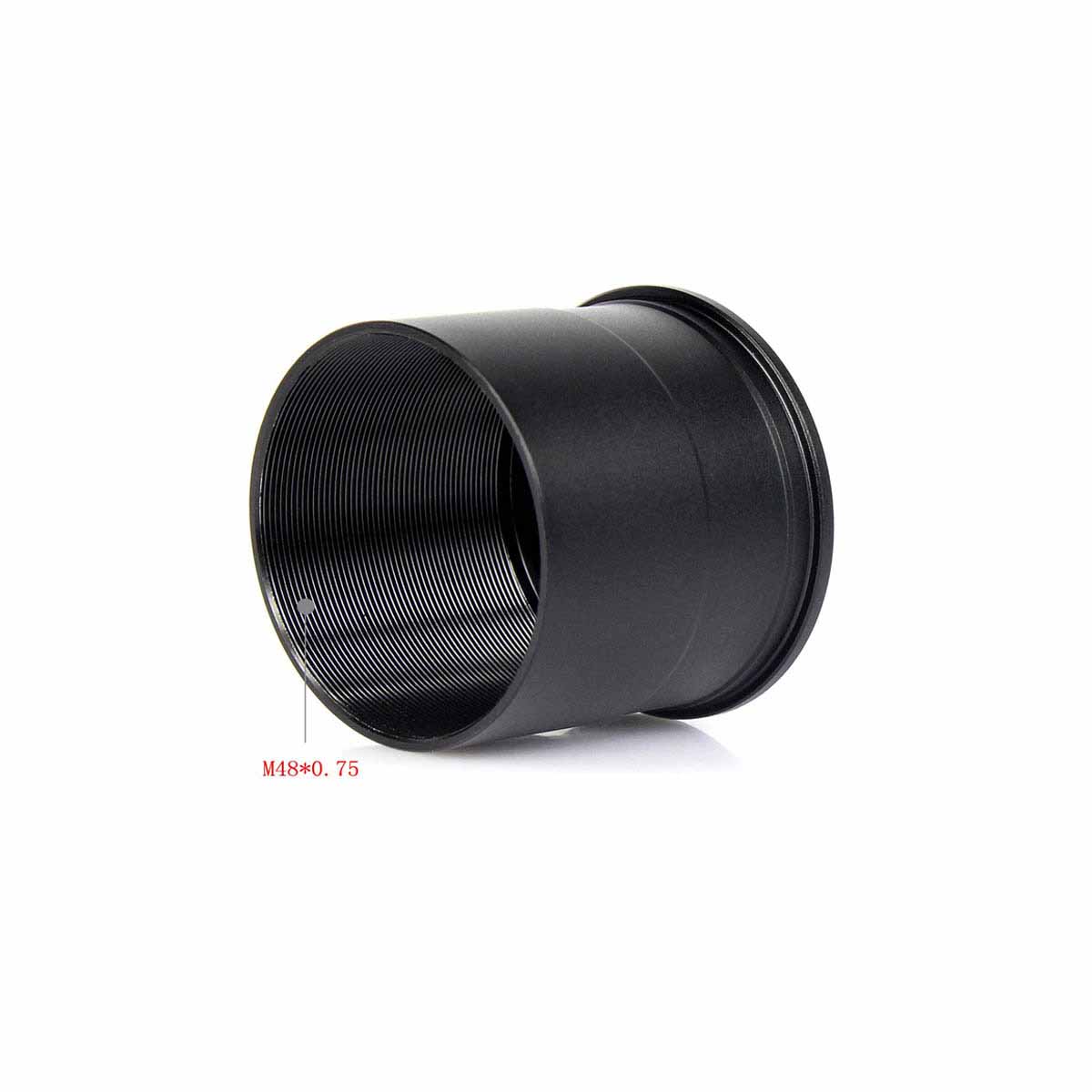
| Thread | M28.5x0.6 | M48x0.75 |
| Single Thread | Yes | Yes |
| Net Weight | 4.2g /0.15oz | 9.9g /0.35oz |
Features
1.Hight Quality Coating: Plasma-enhanced dielectric coatings result in hard, scratch-resistant and waterproof filters.
2.The color correction filter blocks defocused light in the blue spectrum, as well as in the red part of the spectrum (IR) above 700nm, usually seen in small achromat telescopes.
3.The smaller details on craters of the Moon and planetary surfaces are so much more visible.
4.Can be used well before the focal point of the optical system, without any loss of sharpness, as a single filter in front of a binocular for a focal projection with digital cameras.
5.The NIR is fully blocked up to 1150nm. Details on planets are shown much clearer when using CCD/CMOS-cameras.