


Table of Contents
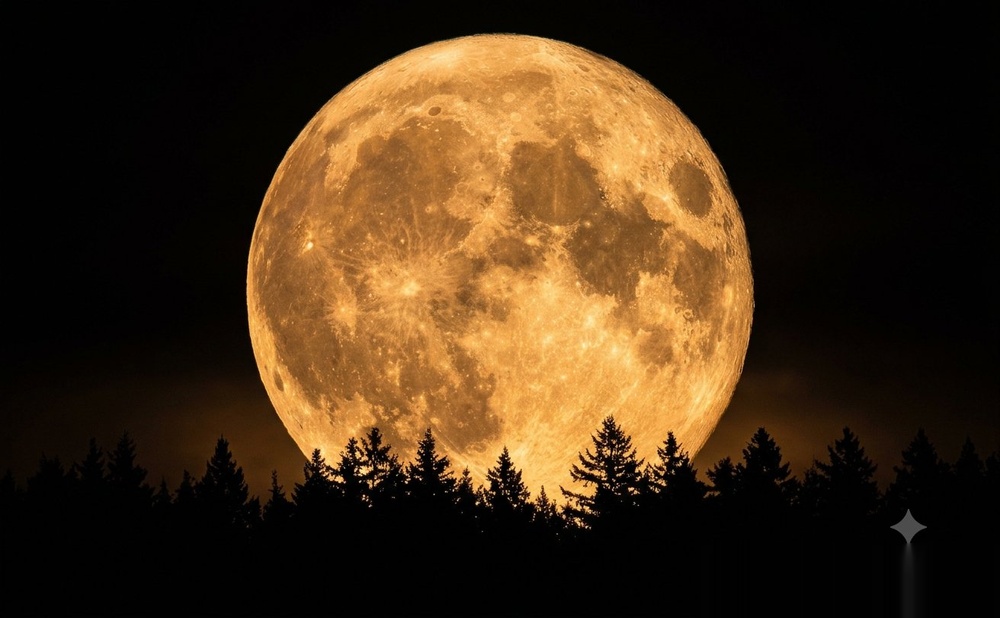
Hunter’s Moon 2026: When and How to See It
The Hunter’s Moon 2026 is October’s full Moon, bringing a bright lunar display to the night sky. Whether you enjoy watching the Moon rise above the horizon with the naked eye or exploring lunar details through binoculars and a telescope, this seasonal full Moon offers a great reason to head outdoors.
In this guide, you'll learn when the Hunter’s Moon occurs in 2026, why it has this name, where and when to see it, and how to observe it with different types of equipment.
What Is a Hunter’s Moon?
The Hunter’s Moon is the traditional name commonly given to the full Moon following the Harvest Moon. It usually occurs in October, although the exact date changes each year.
Full Moon names developed from different cultural traditions and were used to track seasonal changes throughout the year. The Hunter’s Moon name is associated with autumn in the Northern Hemisphere, when fields had been harvested and people traditionally prepared food and supplies for the coming winter.
Like other full Moons, the Hunter’s Moon occurs when the Moon appears fully illuminated from Earth. It isn't a different type of Moon or a special astronomical event beyond the regular full Moon phase. However, its seasonal timing and traditional name make it a popular subject for skywatchers.
Why Is October’s Full Moon Called the Hunter’s Moon?
The name Hunter’s Moon is linked to traditional autumn hunting practices in the Northern Hemisphere. After the harvest, cleared fields could make animals easier to spot, while moonlight provided additional illumination for nighttime activities.
Different cultures have also used other names for the October full Moon, reflecting local seasons, agricultural activities, and wildlife behavior. These names vary by tradition, so there isn't one universal name used by every culture.
The Hunter’s Moon is sometimes associated with the Blood Moon or Sanguine Moon in historical naming traditions. However, the name Hunter’s Moon does not mean that a lunar eclipse will occur or that the Moon will necessarily appear red.
When Is the Hunter’s Moon in 2026?
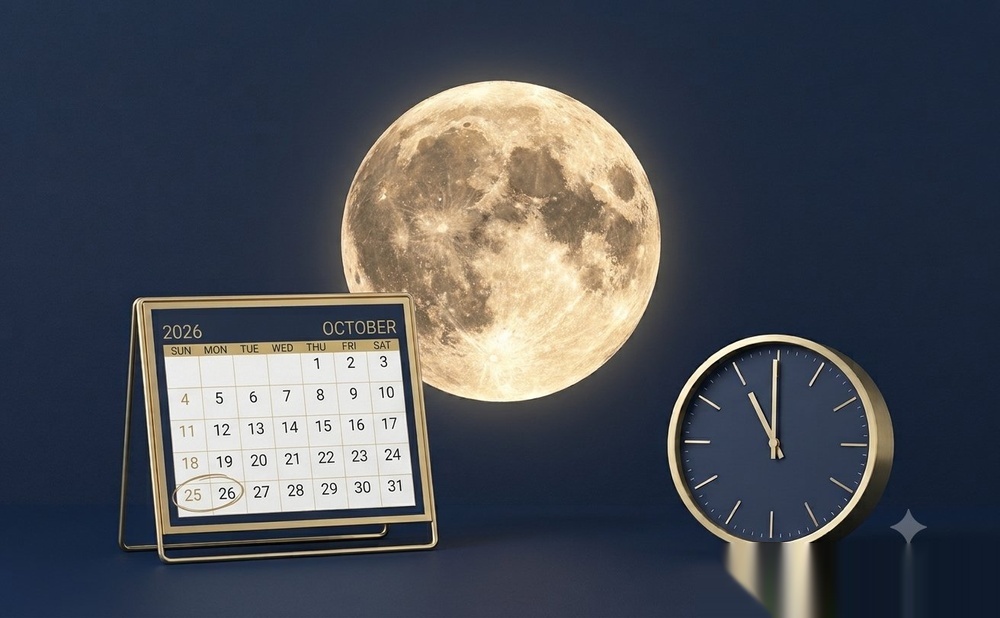
The Hunter’s Moon 2026 reaches its full phase on October 26 at approximately 04:12 UTC. The local calendar date may be October 25 in parts of the Americas because the exact moment of the full Moon is the same worldwide, but clocks and calendars differ by time zone.
For example, the full Moon occurs just after midnight on October 26 in the Eastern Daylight Time zone and during the evening of October 25 in the Pacific Daylight Time zone. Check a reliable lunar calendar for the exact time in your location.
You don't have to observe the Moon at the precise moment it becomes full. It will look nearly full to the naked eye on the surrounding evenings, too. For a memorable view, plan to watch it rise around local sunset.
Quick facts:
Full Moon date: October 26, 2026, in UTC
Traditional name: Hunter’s Moon
Best viewing opportunity: Around moonrise on the evening of October 25 or 26, depending on your location
Where to look: Toward the eastern horizon as the Moon rises
Equipment needed: None for naked-eye viewing; binoculars or a telescope can reveal additional lunar detail
When Can You See the Hunter’s Moon?
The best time to see the Hunter’s Moon often comes around moonrise, close to sunset. At this time, the Moon appears low on the horizon, where it may look golden or orange. As it climbs higher, it typically appears brighter and whiter.
The Moon can look unusually large near the horizon because of the Moon illusion, a visual effect that makes it seem larger when viewed alongside familiar objects such as buildings, trees, or hills. Its apparent size doesn't suddenly increase as it rises.
To plan your observation:
Check your local moonrise time using a lunar calendar or an astronomy website such as Timeanddate.
Choose a location with a clear view of the eastern horizon.
Check the local weather forecast for cloud cover.
Arrive a little early so you can watch the Moon emerge above the horizon.
If clouds block the Moon on the exact date, try the evening before or after. The Moon will still appear nearly full, giving you another opportunity to enjoy the view.
Where to See the Hunter’s Moon
The Hunter’s Moon can be observed from locations around the world, weather permitting. You don't need to travel to a special viewing site or be in a remote area to see it.
In the Northern Hemisphere, observers in the United States, Canada, the United Kingdom, and much of Europe and Asia can look toward the eastern horizon around moonrise. Local landscapes and the time of moonrise will determine the best viewing spot.
In the Southern Hemisphere, observers in Australia, New Zealand, South Africa, and parts of South America can also enjoy the October full Moon. Keep in mind that the traditional name Hunter’s Moon comes from seasonal traditions in the Northern Hemisphere; October falls during spring in much of the Southern Hemisphere.
For the clearest view, choose an open area away from buildings and trees that block the horizon. Dark skies can improve the overall stargazing experience, although the bright full Moon itself remains visible from many suburban and urban locations.
How to Observe the Hunter’s Moon: Naked Eye, Binoculars, and Telescopes
The Hunter’s Moon is easy to enjoy without special equipment, but binoculars and telescopes can offer a closer look at the lunar surface. The best option depends on whether you want to enjoy the Moon's appearance, explore its features, or photograph it.
Watch the Hunter’s Moon with the Naked Eye
You don't need any equipment to appreciate the October full Moon. Find a spot with a clear view of the horizon and watch as the Moon rises into the evening sky.
Pay attention to its changing color and brightness. Near the horizon, it may appear orange or golden before becoming brighter and whiter as it rises. This is a simple way to enjoy the Hunter’s Moon, especially if you're observing with family or friends.
Get a Closer Look with Binoculars
Viewing the Moon with binoculars is an easy way to see more than you can with the naked eye. Binoculars can reveal contrasting lunar regions and larger surface features while offering a relatively wide field of view.
For a more comfortable view, keep your hands steady or use a tripod if your binoculars support one. Start with the Moon centered in the field of view, then take time to examine the brighter and darker areas across its surface.
Explore Lunar Details Through a Telescope
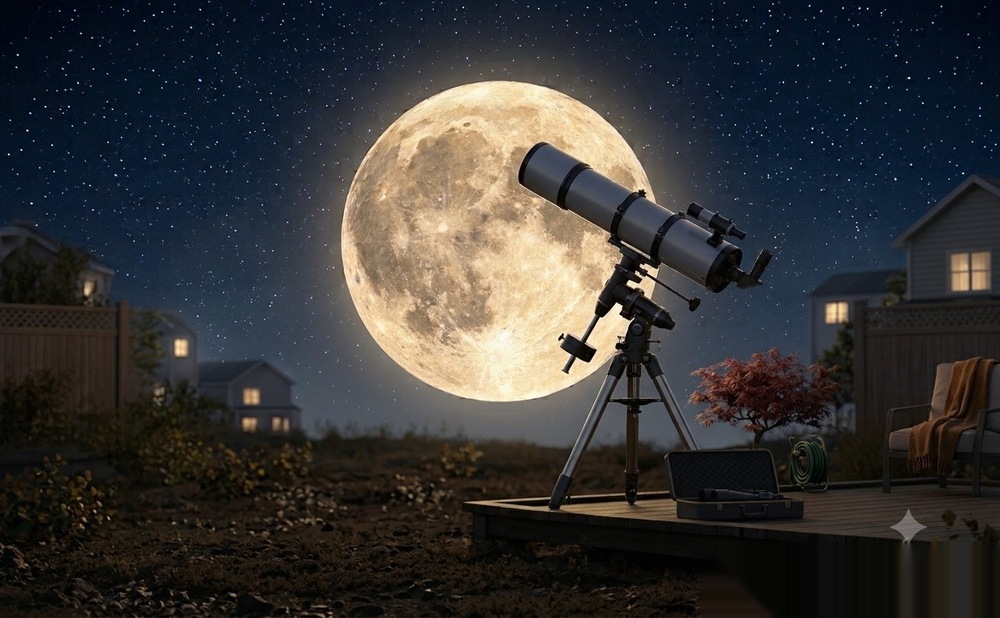
Looking at the Moon through a telescope can reveal more detail, including craters, mountain ranges, and the boundaries between illuminated and shadowed regions. A telescope with suitable magnification and good focus can make these features easier to examine. Choosing the best telescope for viewing the Moon depends on your budget, portability needs, and how much lunar detail you want to see.
The full Moon is bright and impressive, but it isn't always the best phase for seeing lunar relief. When the Sun's light strikes the Moon at a lower angle near the terminator—the boundary between lunar day and night—craters and mountains cast longer shadows that make their shapes easier to distinguish. If you enjoy lunar observing, try viewing the Moon at different phases, too.
Tips for Astronomy Enthusiasts
If you're interested in photographing the Moon through a telescope, use a compatible camera or smartphone adapter to capture the lunar surface. Start with a wider field of view to frame the Moon, focus carefully, and use a short exposure to avoid washing out bright details. A stable mount can help reduce blur and keep the image sharp.
You can also experiment with different magnifications to balance visible detail and image stability. Atmospheric turbulence and cloud cover can affect image quality, so check local sky conditions before observing. Whether you're viewing the Hunter’s Moon or photographing lunar craters, patience and careful adjustments can help you get more out of your setup.
Enjoy the Hunter’s Moon in October 2026
The Hunter’s Moon 2026 reaches its full phase on October 26 UTC, offering skywatchers around the world a chance to enjoy October’s full Moon. Whether you watch it rise with the naked eye, explore the lunar surface through binoculars, or examine craters with a telescope, you can make the most of the event with a little planning.
Check your local moonrise time, find a spot with an open view of the horizon, and choose the observing method that suits you. Clear skies and a good view are all you need to get started.
Comments (0 )
Leave a Reply
 Google
 Amazon

There are no customer reviews yet . Leave a Reply !