Astronomy Cameras for Deep-Sky & Planetary Imaging
Svbony astronomy cameras provide advanced sensitivity, low-noise sensors, and rapid frame rates ideal for deep-sky imaging and planetary capture. These telescope cameras support high-resolution astrophotography with stable imaging performance, efficient cooling options, and broad compatibility with astro imaging telescopes and accessories.
NEW
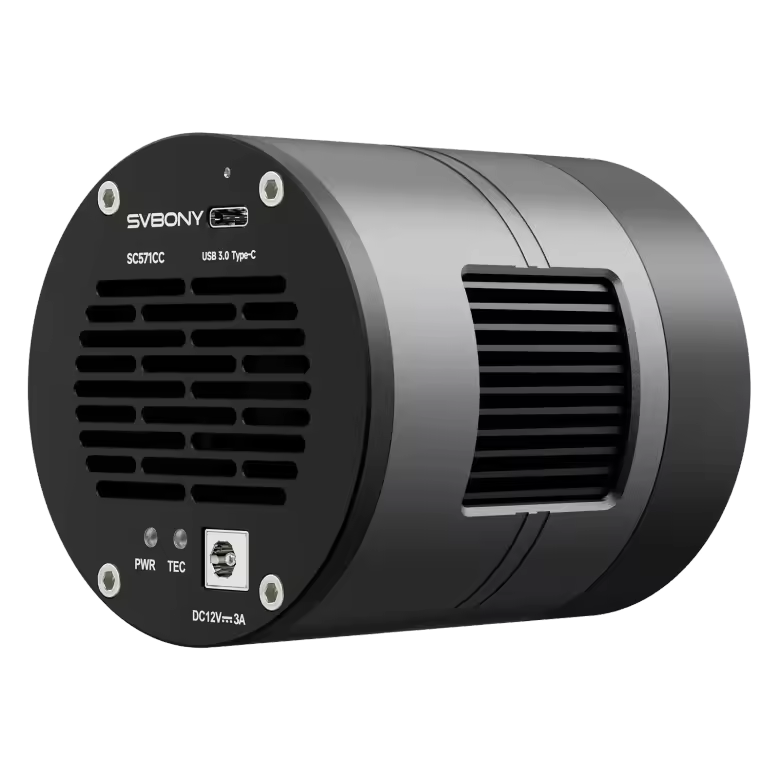
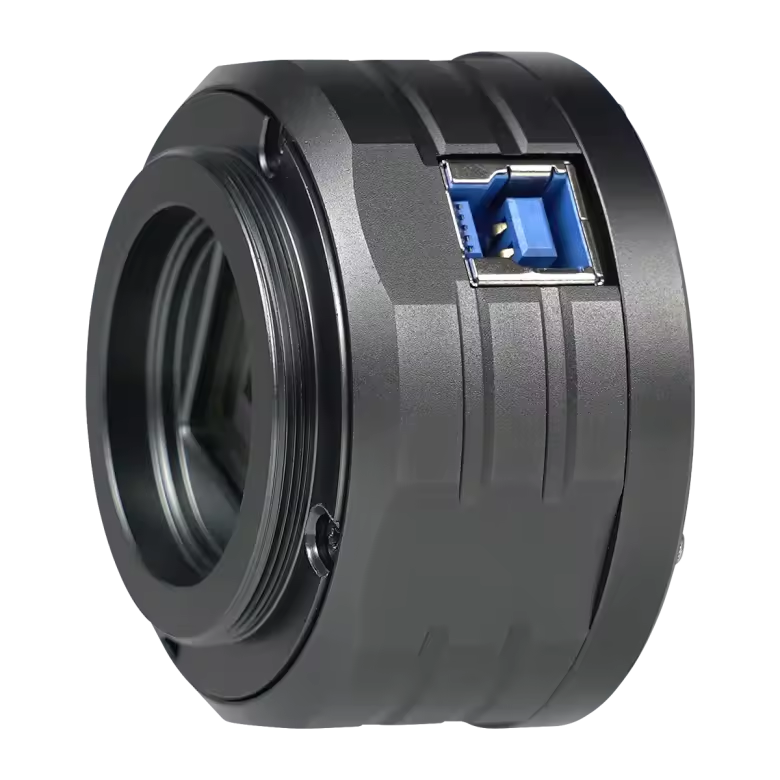
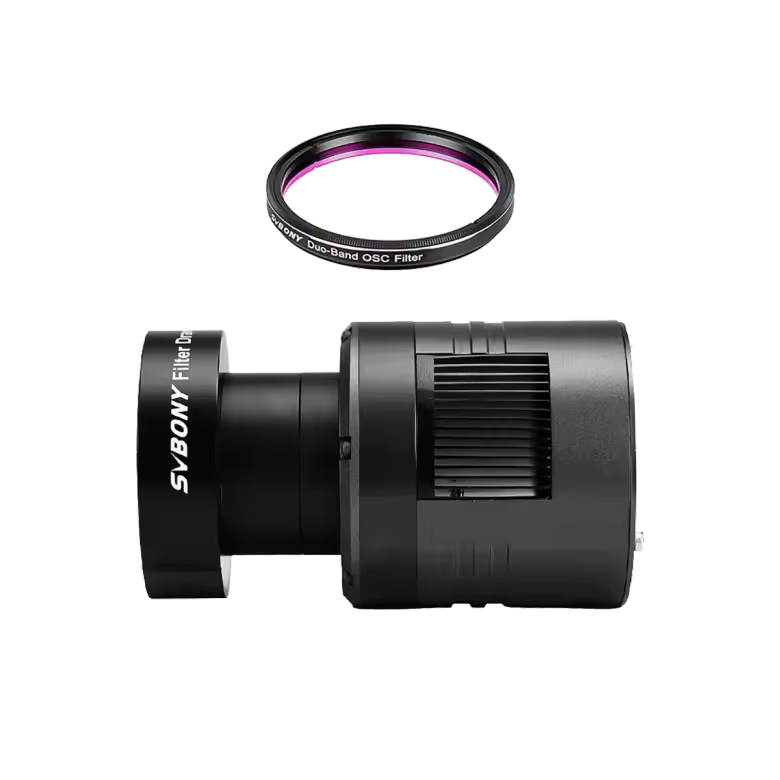
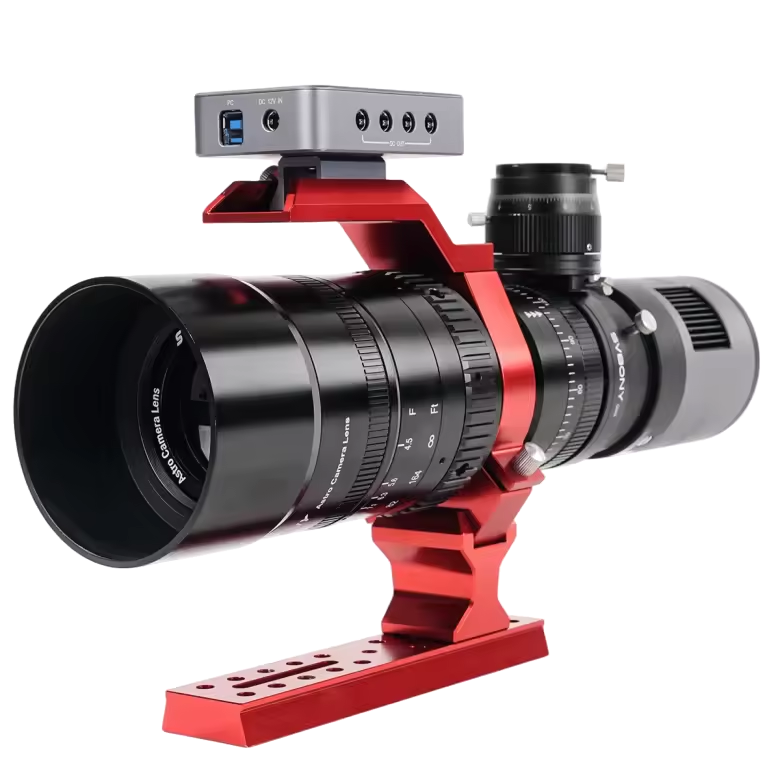
SC571CC & SV535 Wide-Field Astrograph Combo
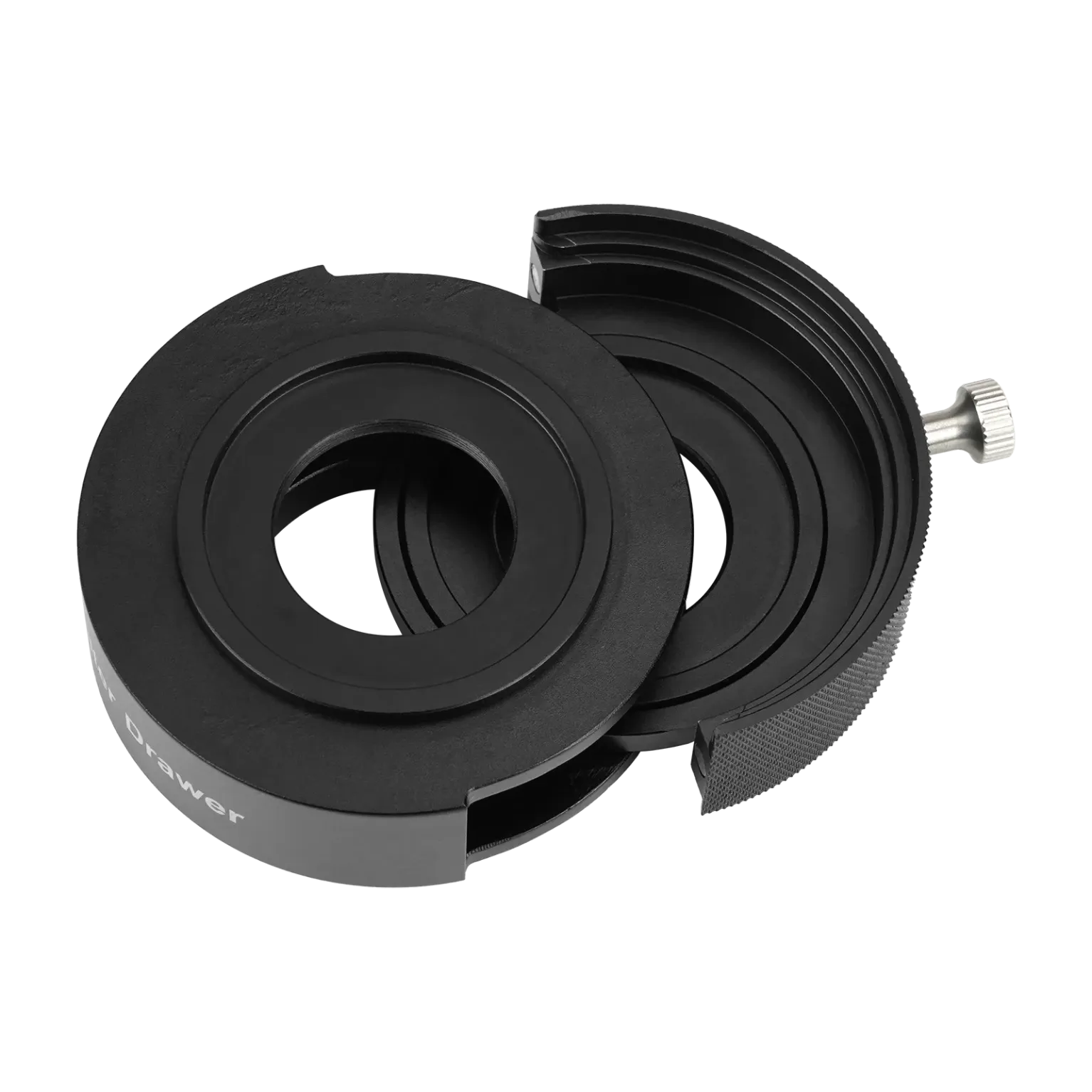
[{"Title":"Deep Sky Imaging Solution","Content":"This kit integrates a cooled camera, off-axis guider, filter drawer, and power hub."},{"Title":"Low-Noise Imaging with Precise Guiding","Content":"The cooled camera significantly reduces sensor noise, while the OAG ensures accurate tracking during long exposures, resulting in sharp deep-sky images."},{"Title":"Efficient Filter Switching","Content":"Easily switch between filters with the quick-access filter drawer."},{"Title":"Stable Power Hub","Content":"The dedicated power hub delivers clean and reliable power to all devices, keeping your setup tidy and safe."},{"Title":"User-Friendly for Beginners \u0026 Advanced Users","Content":"With industry-standard connections, this kit is compatible with most telescopes and imaging setups. Both beginners and advanced users can easily get started."}]
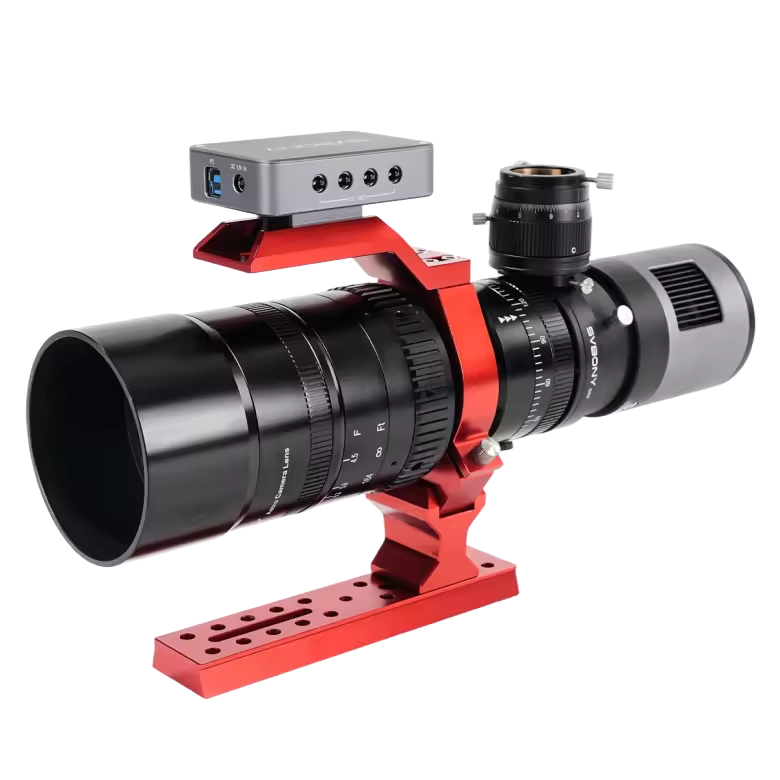
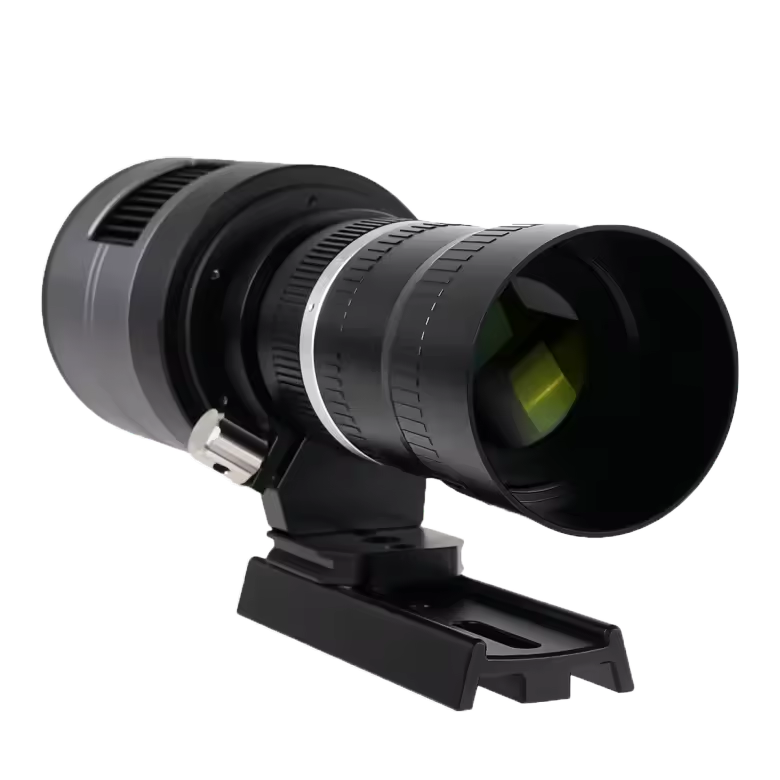
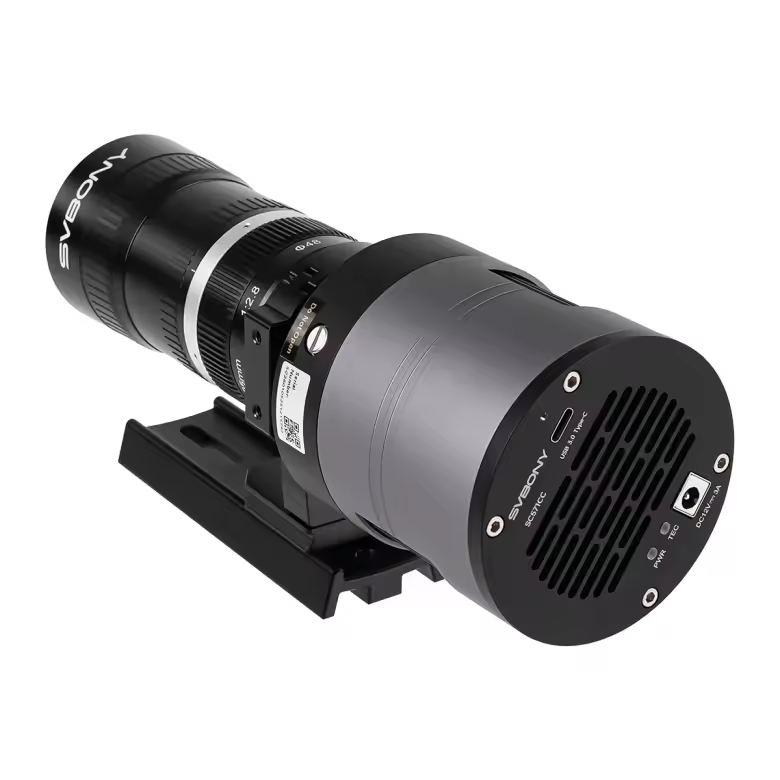
SC571CC & SV555 Professional Deep-Space Imaging System
[{"Title":"Deep Sky Imaging Solution","Content":"This kit integrates a cooled camera, off-axis guider, filter drawer, and power hub."},{"Title":"Low-Noise Imaging with Precise Guiding","Content":"The cooled camera significantly reduces sensor noise, while the OAG ensures accurate tracking during long exposures, resulting in sharp deep-sky images."},{"Title":"Efficient Filter Switching","Content":"Easily switch between filters with the quick-access filter drawer."},{"Title":"Stable Power Hub","Content":"The dedicated power hub delivers clean and reliable power to all devices, keeping your setup tidy and safe."},{"Title":"User-Friendly for Beginners \u0026 Advanced Users","Content":"With industry-standard connections, this kit is compatible with most telescopes and imaging setups. Both beginners and advanced users can easily get started."}]
NEW
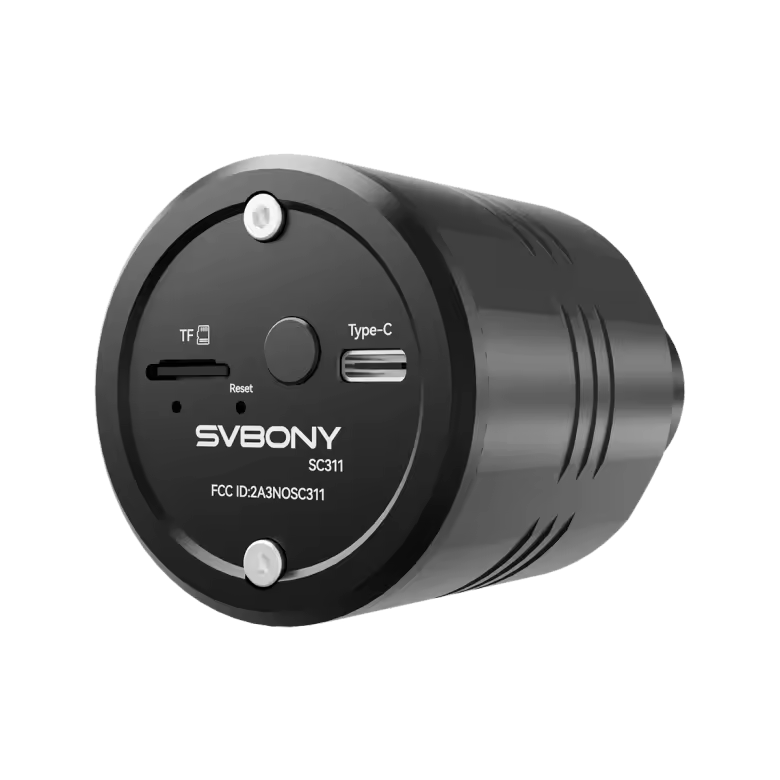
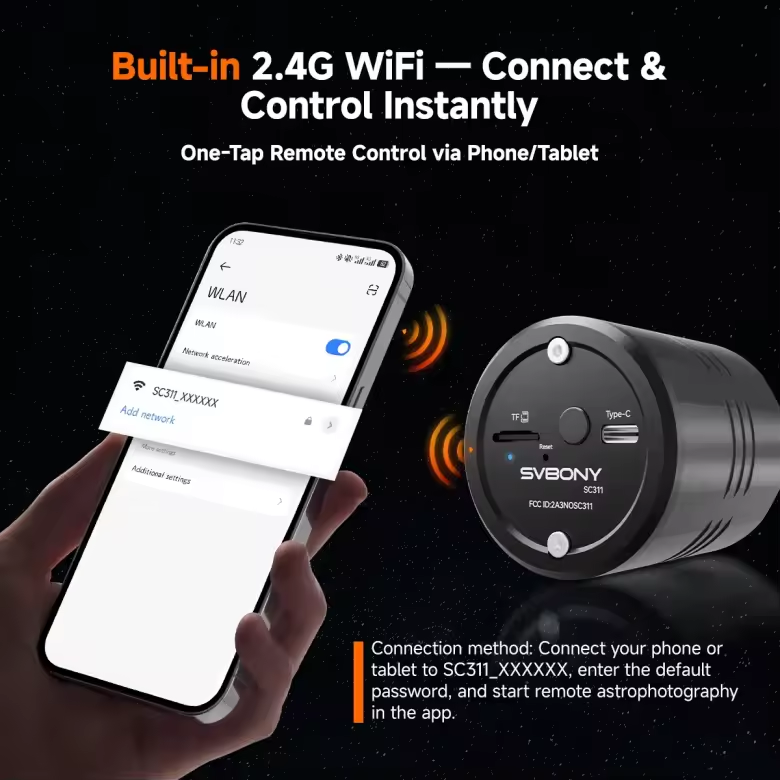
WiFi Astronomy Camera | SVBONY SC311 Pro
[{"Title":"IMX662 CMOS Sensor","Content":"SC311 uses the Sony IMX662 sensor, providing low noise, no amp glow, and enhanced red/NIR sensitivity for astronomy observation and beginner deep-sky imaging."},{"Title":"Wireless Control","Content":"The camera uses an internal 2.4G WiFi antenna. When powered on, it creates a hotspot for direct connection to a phone or tablet. Select SC311_XXXXXX, enter the default password, and operate through the APP."},{"Title":"Mobile Control Interface","Content":"The operation interface allows adjustment of exposure time and gain, and supports photo shooting, video recording, RAW/FITS saving, and scheduled shooting. Captured images and videos are stored on the TF card and can also be downloaded to the mobile device for viewing and sharing."},{"Title":"Built-in Large-Capacity Battery \u0026 TF Card Support","Content":"The camera includes a 2500mAh lithium battery providing around 4 hours of operation. It comes with a 32GB TF card and supports expansion up to 256GB."},{"Title":"Extended Exposure Upgrade, Ideal for EAA","Content":"The new version supports long exposures up to 30 seconds to capture brighter, clearer celestial images of deep-sky objects like nebulae, perfect for EAA observing."}]
HOT
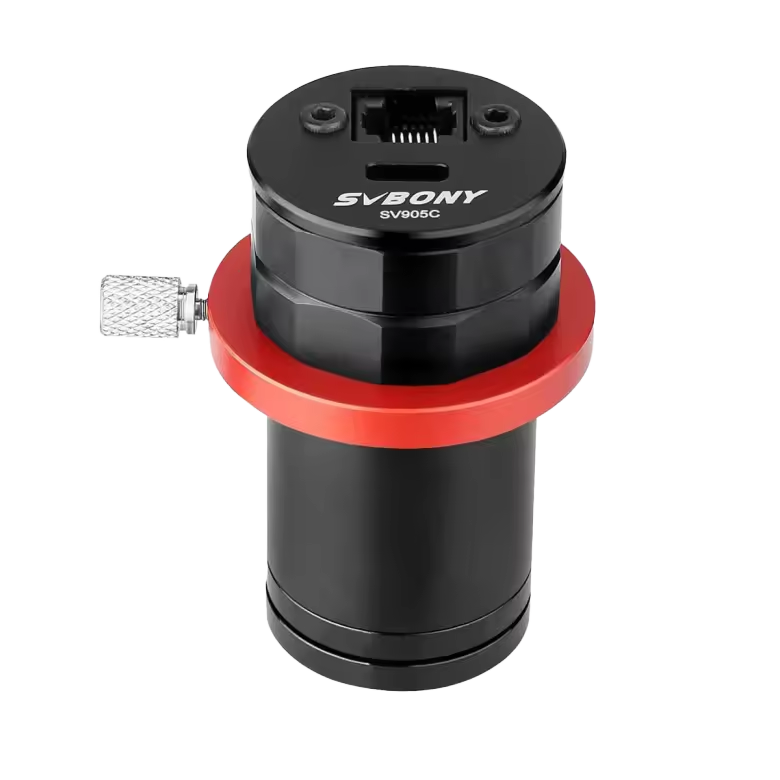
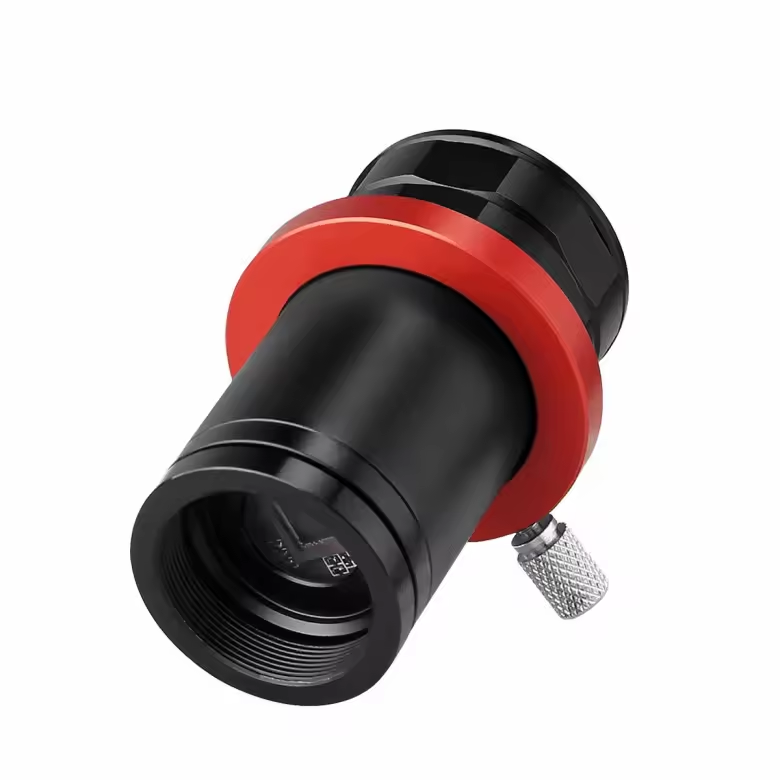
Guide Camera | SVBONY SV905C
[{"Title":"High-Sensitivity Autoguiding Camera","Content":"Telescope camera; compact and highly sensitive 1.23-megapixel color camera with 1/3\u201D CMOS 1280x960 sensor perfect for autoguiding; small 3.75-micron pixels; high peak QE of 80% and low read noise allows tight tracking of faint guide stars;"},{"Title":"Interface and Software Compatibility","Content":"Astronomy guiding camera has USB 2.0 interface output; ST4 guide star interface; can compatible with PHD2; MDL; NINA; SKY-X and other software guide star;"},{"Title":"CS and C-Mount Lens Compatibility","Content":"The front of the eyepiece camera is equipped with a CS interface and a CS-C adapter ring; which can be matched with a CS lens or a C-mount lens;"},{"Title":"1.25-Inch Diameter Design","Content":"The shape of the guide camera adopts a diameter of 1.25 inches; which can adapt to different focal length guide lenses and OAG guide stars;"},{"Title":"Snap Ring and Scale Mark","Content":"The guide camera is designed with snap ring and scale mark to facilitate the use of the same guide lens for focusing and positioning."}]
HOT
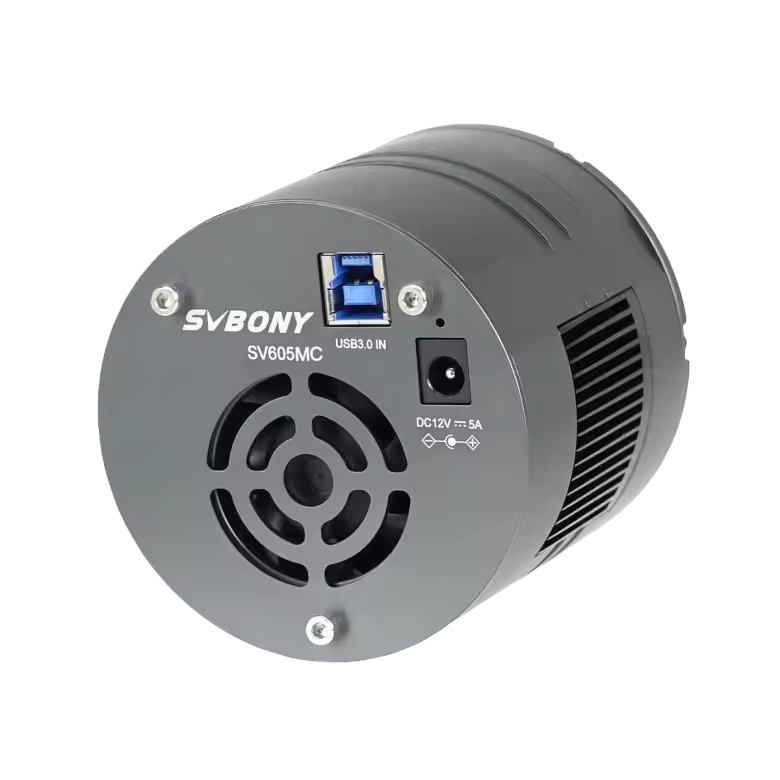
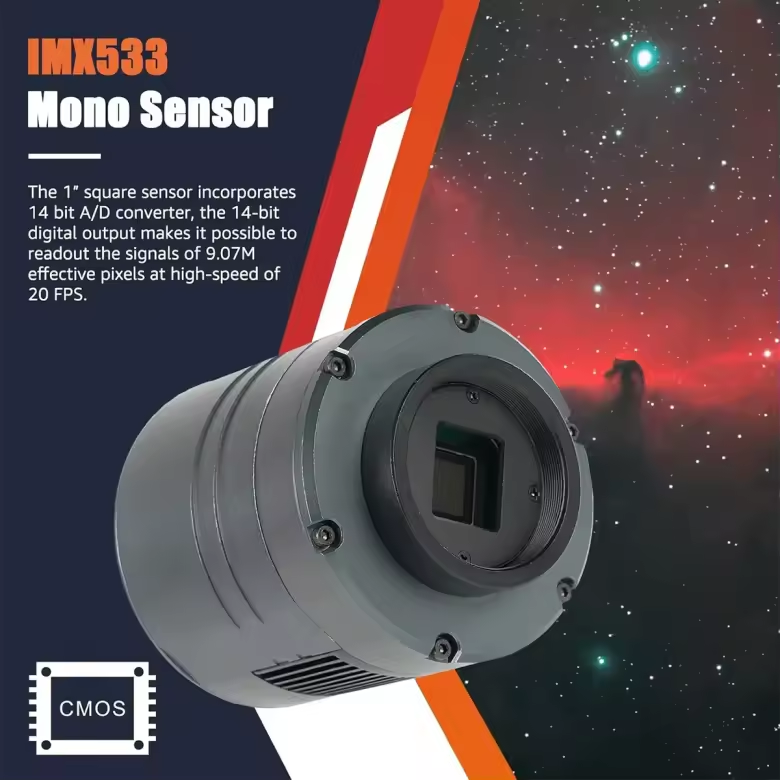
Mono Cooled Camera | SVBONY SV605MC
[{"Title":"Enhanced Noise Reduction","Content":"Utilizing HCG digital noise reduction technology, the SV605MC reduces readout noise while maintaining a high dynamic range, ensuring clearer, more detailed images of deep-sky objects."},{"Title":"Improved Amp Glow Suppression","Content":"The SV605MC camera incorporates an amp glow suppression design, ensuring high-quality dark images with minimal noise, perfect for long-exposure astrophotography."},{"Title":"Fast Data Transmission with USB 3.0","Content":"The SV605MC features a USB 3.0 interface and 256MB DDR3 high-speed memory, enabling fast data transfer and efficient deep-sky imaging, while buffering data for stable transmission."},{"Title":"Portable and Foldable Design","Content":"This camera is foldable and portable, making it easy to carry and store in your backpack or pocket, perfect for on-the-go astrophotography."},{"Title":"High-Speed Imaging with 14-Bit A/D Conversion","Content":"The SV605MC incorporates a 14-bit A/D converter for 9.07 million effective pixels, delivering fast readouts at 20 FPS with low read-out noise (1.0e), ideal for deep-sky astrophotography."}]
HOT
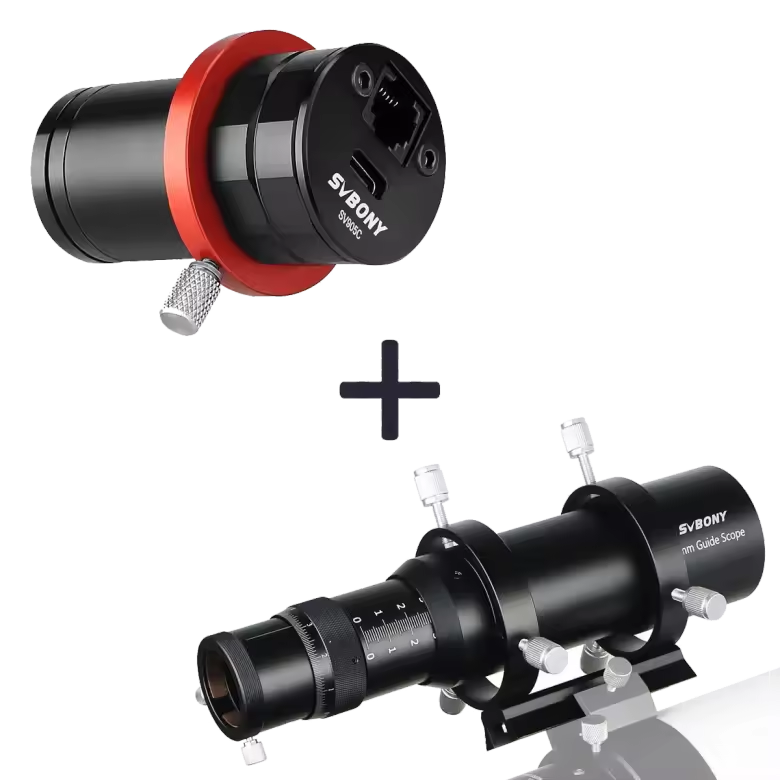
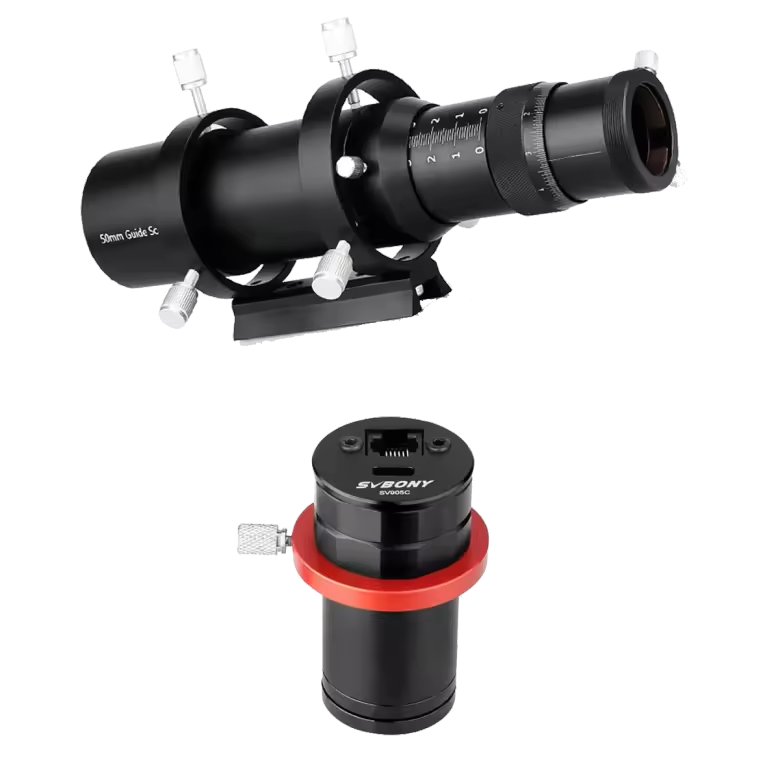
Auto-Guiding System | SV106/SV905C
[{"Title":"Easy Fine Focusing","Content":"Equipped with a machined knurled ring, the guide scope makes fine focus adjustments smooth and easy, allowing precise focus for better results."},{"Title":"Secure Focus Locking","Content":"The guide scope features a thumbscrew that locks the focuser in place, ensuring the focus remains stable during long-exposure imaging sessions."},{"Title":"Sturdy \u0026 Reliable Performance","Content":"Built to last, the SV905C and SV106 provide reliable, high-performance guiding for astrophotographers seeking to capture deep-sky objects with precision"},{"Title":"High-Quality Astrophotography","Content":"The 50mm guide scope ensures precise guiding, helping you capture higher-quality astrophotos with sharper details and more accurate tracking."},{"Title":"Ideal for Deep-Sky Photography","Content":"The SV905C guiding camera paired with the SV106 50mm guide scope forms a popular and sturdy autoguiding system ideal for deep-sky-object astrophotography."}]
HOT
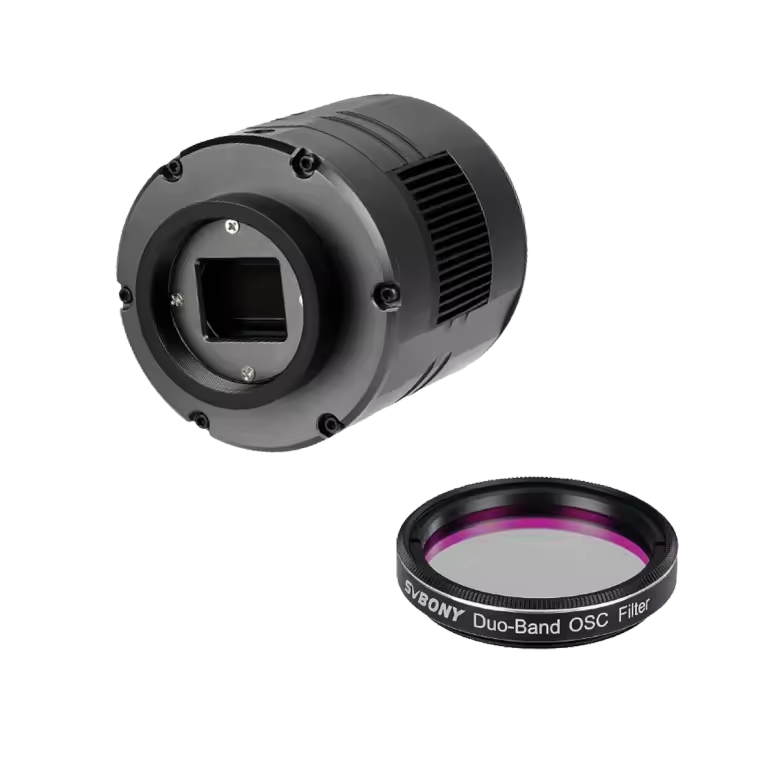
Cooled Camera & Filter Bundle | SVBONY SV405CC
[{"Title":"High-Quality Imaging at a Great Value","Content":"Buy the SV405CC Cooled Color Camera and get the SV220 7nm Dual-Band Filter for free, providing an excellent setup for deep-sky astrophotography at a fantastic price."},{"Title":"Superior Performance for Deep-Sky Photography","Content":"The SV405CC features a cooled sensor for reduced thermal noise, delivering crisp, high-resolution images of nebulae and galaxies. The free SV220 filter enhances your deep-sky shots with H\u03B1 and OIII emission line clarity."},{"Title":"Perfect for Narrowband Imaging","Content":"The SV220 7nm Dual-Band Filter allows you to capture stunning details in emission nebulae by filtering out unwanted light, improving contrast and clarity, all with the free gift with your purchase."},{"Title":"Easy Setup for Astrophotographers","Content":"This offer makes it easy to upgrade your astrophotography kit. The SV405CC camera and SV220 filter work together seamlessly to enhance your deep-sky imaging, giving you more detail in your photos."},{"Title":"Limited-Time Offer","Content":"Don\u2019t miss out on this limited-time deal: Get the SV220 7nm Dual-Band Filter for free when you purchase the SV405CC Cooled Color Camera\u2014the perfect combination for advanced astrophotography."}]
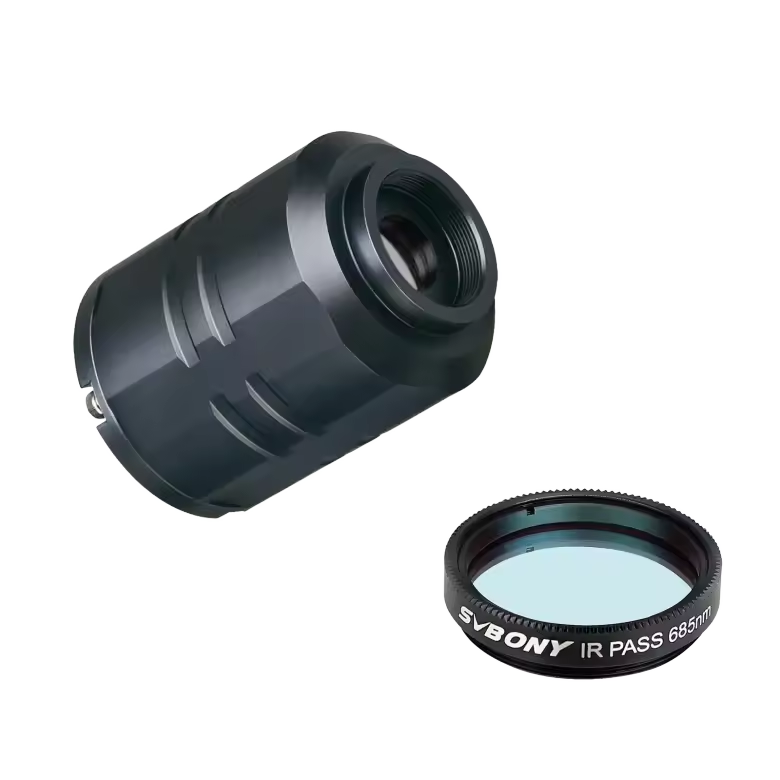
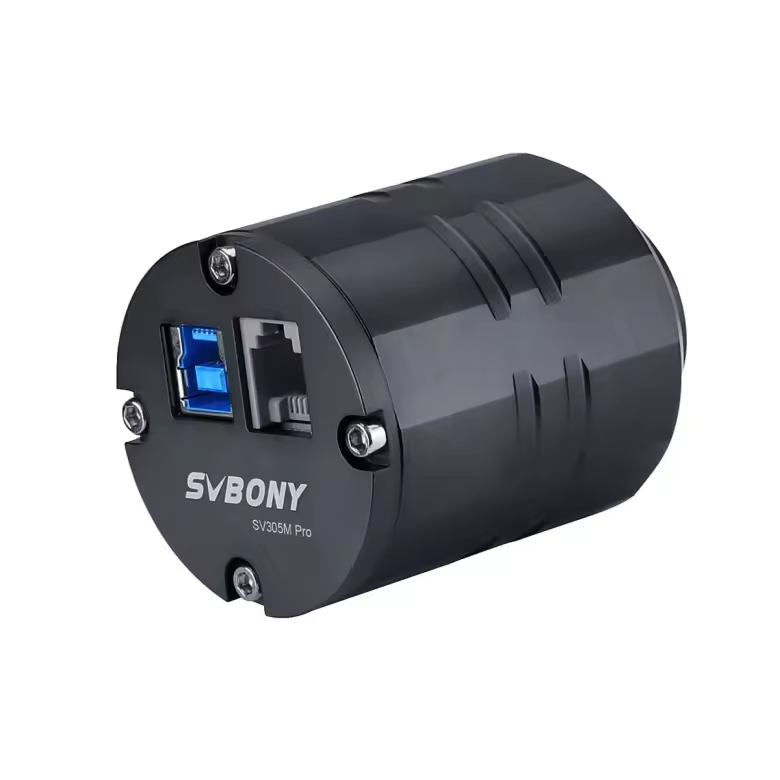
Monochrome Astronomy Camera | SVBONY SV305M
[{"Title":"High Sensitivity for Sharp Imaging","Content":"Equipped with the IMX290LLR-C CMOS monochrome sensor, the camera boasts 80% QE, low readout noise (1.0-3.2e), and 2.9\u00B5m pixels, delivering sharp, detailed images even in low-light conditions."},{"Title":"Stable Image Transmission","Content":"Featuring a 128MB DDRII image buffer, the camera ensures stable image transmission, even with slower computers, by caching images and transferring them smoothly via the USB 3.0 interface."},{"Title":"ROI \u0026 BIN Functions for Improved Sensitivity","Content":"With ROI (Region of Interest) and BIN2\u00D72 pixel functions, the camera can capture smaller areas with higher frame rates while merging adjacent pixels to improve sensitivity for more efficient imaging."},{"Title":"Auto-Guiding Capability","Content":"The camera includes an ST4 auto-guiding port, compatible with PHD2 and the ASCOM platform, allowing for precise telescope control and auto-guiding to ensure accurate planetary imaging."},{"Title":"High-Speed Data Transmission","Content":"With USB 3.0 high-speed data transfer, the camera ensures quick, efficient planetary imaging, minimizing data lag and providing seamless captures of fast-moving celestial objects."}]
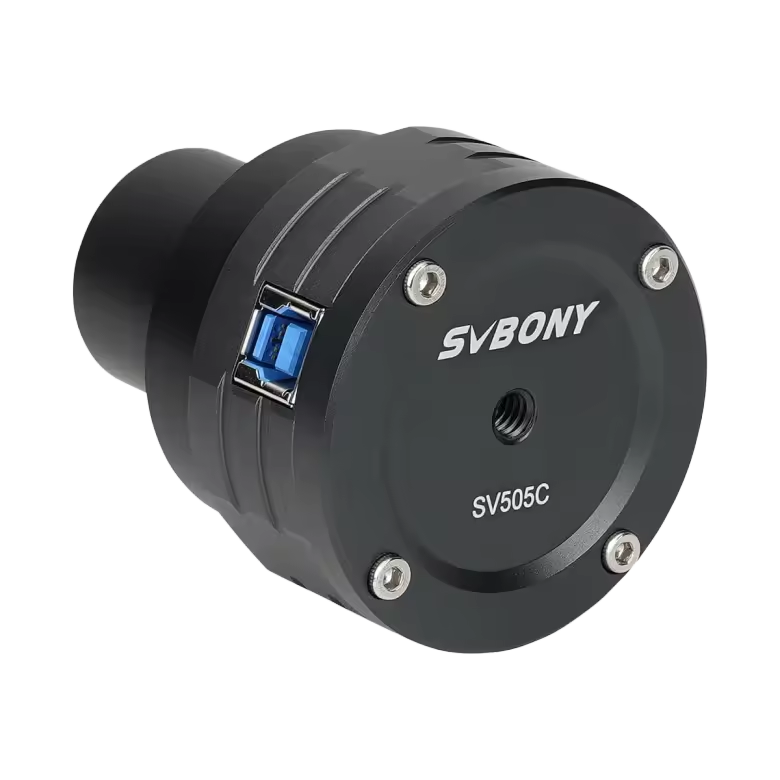
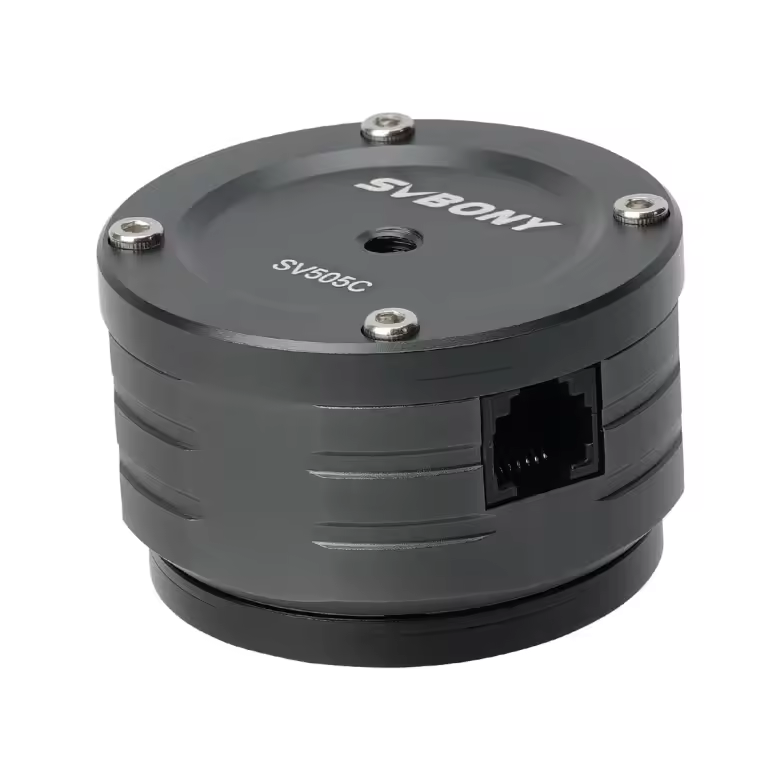
Color Planetary Camera | SVBONY SV505C
[{"Title":"Superior Signal-to-Noise Ratio","Content":"The camera\u2019s high signal-to-noise ratio ensures clear, detailed images with minimal interference, making it ideal for dark environment imaging and planetary surface photography."},{"Title":"Larger Photosensitive Area","Content":"With a 1/1.8\u0022 sensor (7.9mm x 4.5mm), the SV505C offers nearly twice the photosensitive area compared to the SV305 Pro, allowing you to capture a larger field of view with the same telescope."},{"Title":"Ideal for Solar System Imaging","Content":"The SV505C is perfect for detailed imaging of solar system planets and lunar features, thanks to its extraordinary infrared sensitivity and high resolution."},{"Title":"High Frame Rate for Quick Captures","Content":"The SV505C can achieve up to 93fps at full resolution, allowing for faster image captures, perfect for quick shooting during weather gaps or high-speed planetary imaging."},{"Title":"Excellent Near-Infrared Sensitivity","Content":"With a QE of 80% and high sensitivity in the near-infrared region, the SV505C excels at capturing surface details on Mars, Jupiter, Saturn, and the Moon, even in low-light conditions"}]
HOT
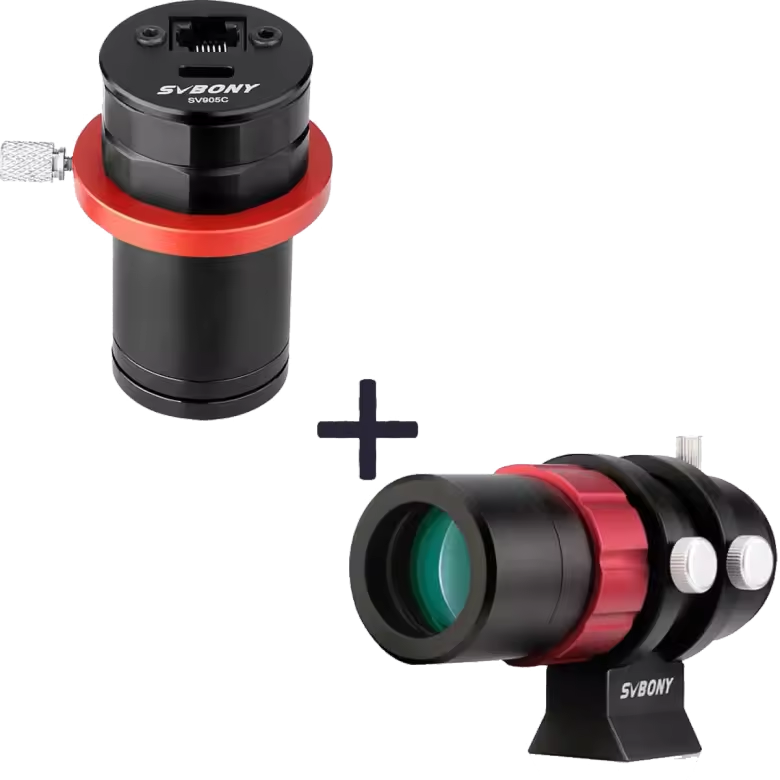
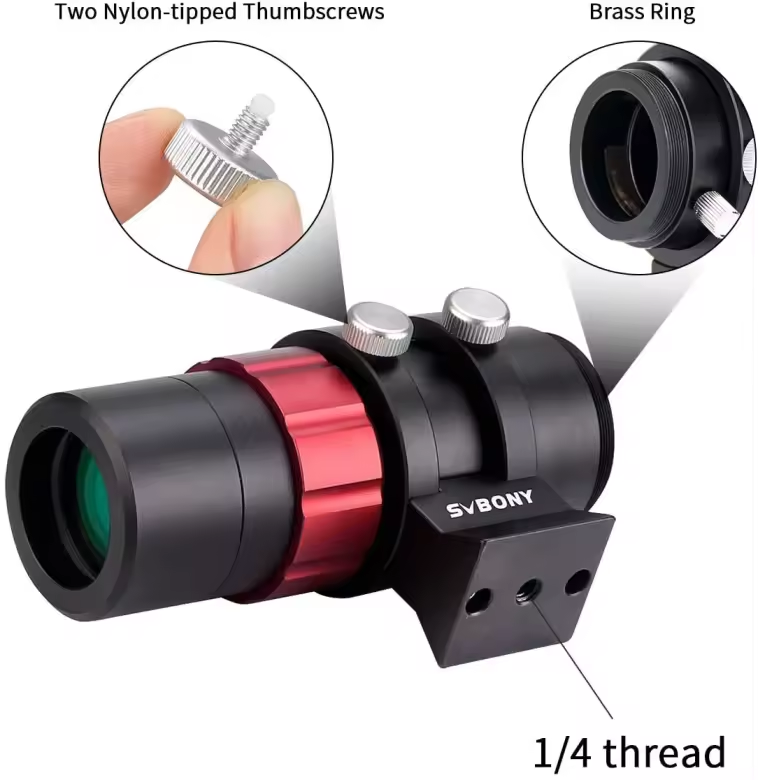
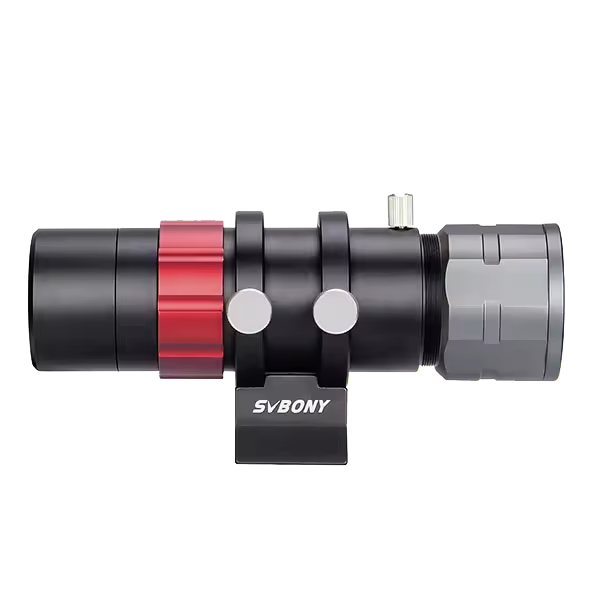
Guide Camera&Scope | SV905C/SV165
[{"Title":"Ultra-High Peak Quantum Efficiency","Content":"With 80% peak quantum efficiency and low read noise, the camera delivers exceptional guide star tracking accuracy, even in challenging conditions"},{"Title":"Achromatic Optics for Sharp Imaging","Content":"The SV165 guide scope uses 30mm achromatic optics and a fully multilayer coated lens, ensuring bright, sharp images without reflections."},{"Title":"High-Sensitivity CMOS Sensor","Content":"The SV905C features a 1.23-megapixel color camera with a 1/3\u201D CMOS sensor (1280x960), providing high sensitivity for tight tracking of faint guide stars."},{"Title":"Compact \u0026 Portable","Content":"The compact 30mm/120mm F4 design of the SV165 guide scope makes this system highly portable, ideal for astrophotographers who need a lightweight guiding solution on the go."},{"Title":"Cost-Effective Guiding System","Content":"The SV905C guiding camera paired with the SV165 mini guide scope offers an affordable, practical solution for precise autoguiding and planetary imaging."}]
HOT
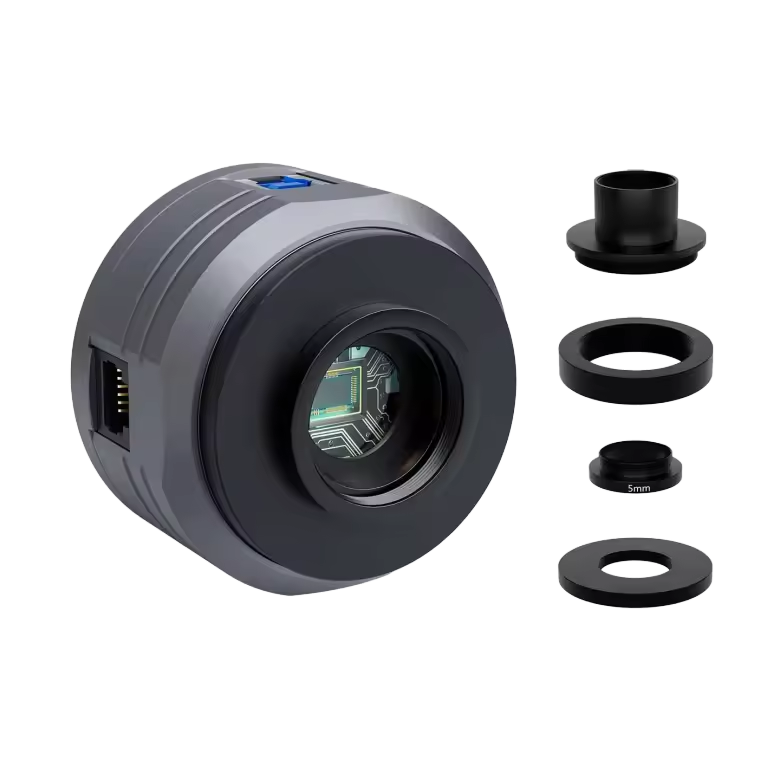
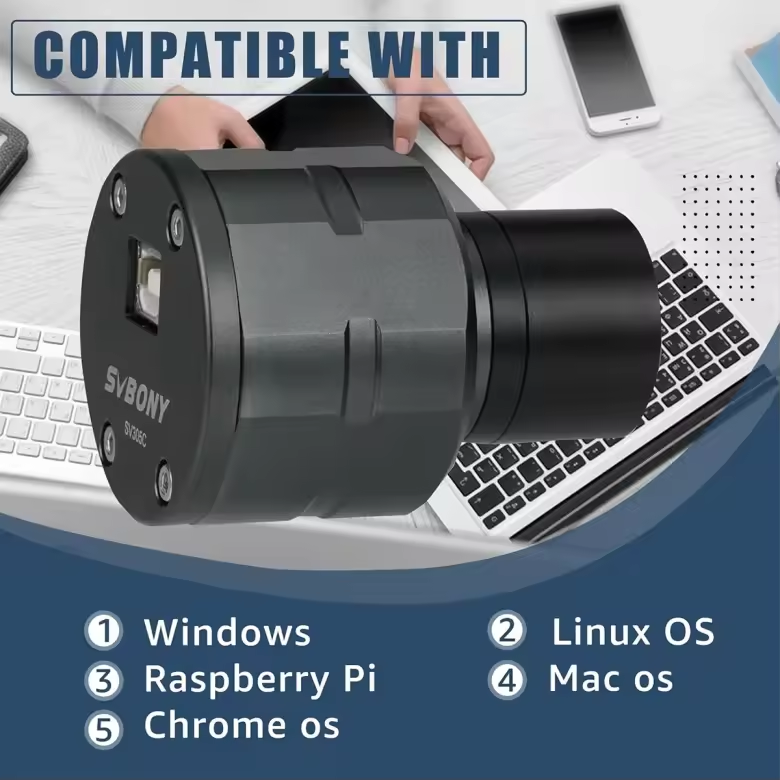
Camera & Guide Scope Set | SVBONY SV305C
[{"Title":"All-in-One Astrophotography Solution","Content":"The SV305C 2MP astronomy camera combined with the SV165 60mm finder scope offers an easy, high-performance setup for capturing stunning astronomical images."},{"Title":"High-Resolution Imaging","Content":"The SV305C features a 2MP sensor for sharp, detailed views, perfect for planetary imaging and deep-sky observation."},{"Title":"Accurate Guiding with SV165","Content":"The SV165 60mm guide scope ensures precise alignment, making it ideal for autoguiding and helping you capture longer, more detailed exposures."},{"Title":"Compact and Portable Setup","Content":"This combination is lightweight and portable, making it a great choice for on-the-go astrophotography and easy setup at home or in the field."},{"Title":"Easy Compatibility","Content":"Both the SV305C camera and SV165 guide scope are compatible with a wide range of telescopes and mounts, providing flexibility for different observation and imaging needs."}]
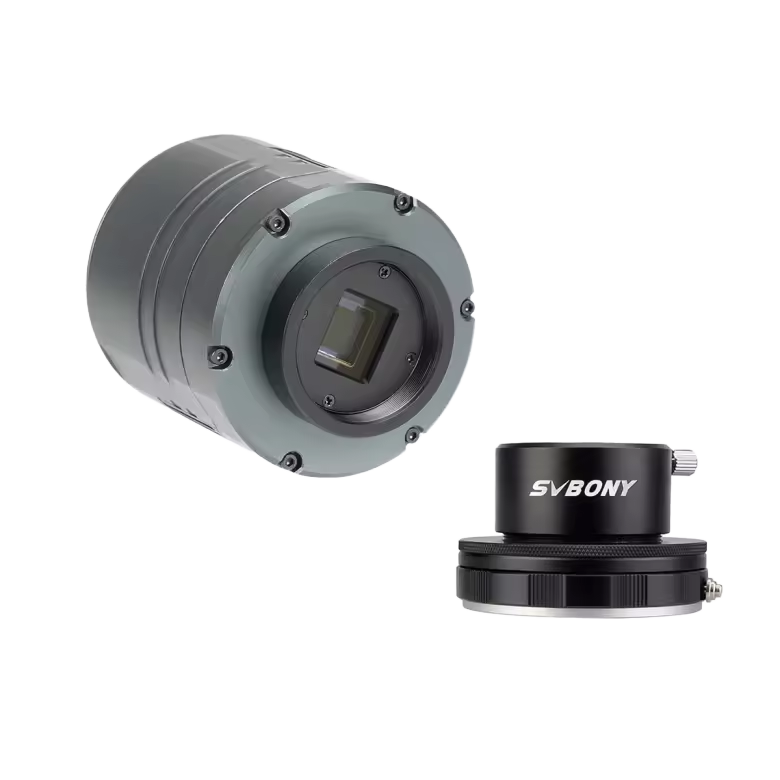
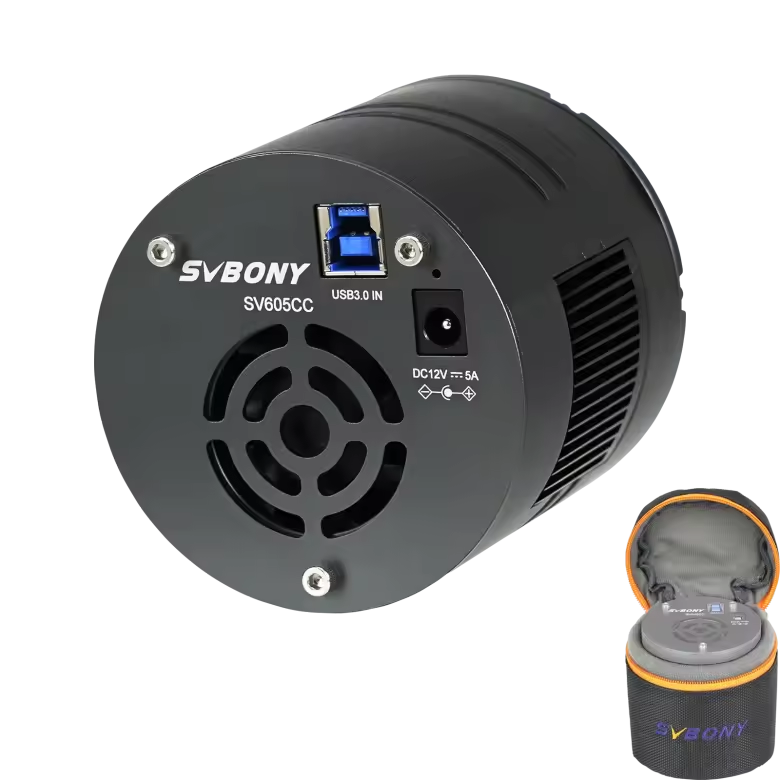
Cooled Camera & Adapter Set | SVBONY SV605CC
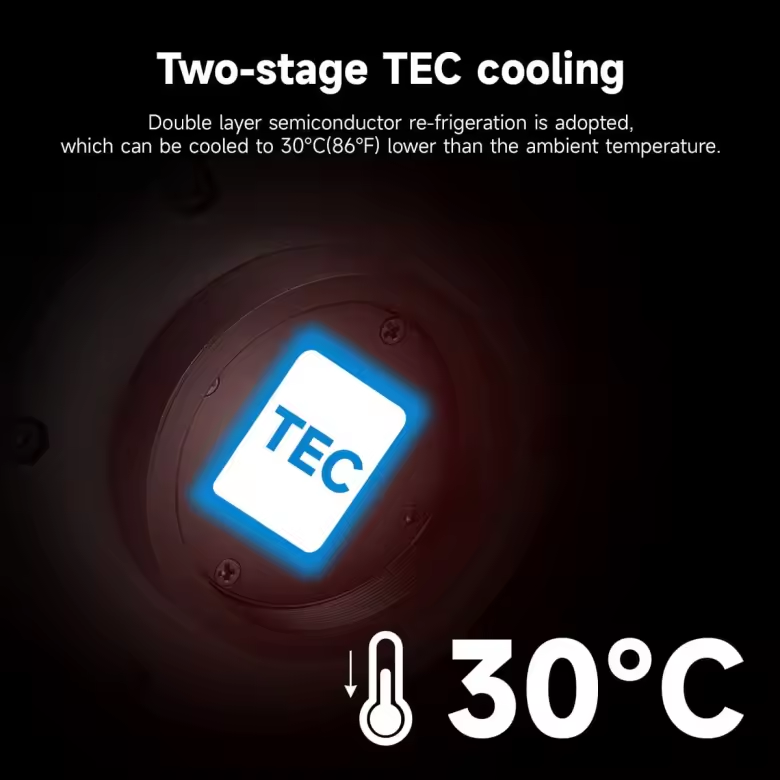
[{"Title":"High-Sensitivity Imaging","Content":"The SV605CC Cooled Camera features a high-sensitivity IMX533 sensor, delivering exceptional detail for wide-field, high-resolution astrophotography."},{"Title":"Cooled Sensor for Noise Reduction","Content":"Equipped with a cooled sensor, the SV605CC reduces thermal noise during long exposures, ensuring clearer and more accurate images for deep-sky imaging."},{"Title":"Fast Lens Compatibility","Content":"The SV605CC camera is designed for use with fast lenses (lens not included), providing improved light-gathering capabilities for brighter, sharper images."},{"Title":"Versatile T-Ring and Adapter Compatibility","Content":"The SV149 adapter is Canon/Nikon compatible, allowing easy connection of DSLR lenses to the SV605CC for seamless lens-coupled imaging in astronomy."},{"Title":"Ideal for Astrophotography","Content":"With its cooled sensor and lens-coupled imaging capability, the SV605CC is perfect for wide-field astrophotography, offering high resolution and precise tracking for stunning celestial captures."}]
Astronomy Camera Buying Guide
The SC715C with its Sony IMX715 sensor and the SV705C with its Sony IMX585 sensor are options for high-resolution planetary and lunar imaging. The SV705C also supports deep-sky imaging and electronically assisted astronomy (EAA).
For autoguiding, the SV905C guide camera pairs with a compatible guide scope and mount to help track celestial objects during astrophotography.
Cooled Cameras for Deep-Sky Imaging
For nebulae, galaxies, and other faint deep-sky objects, a cooled camera for astrophotography helps manage sensor temperature and reduce thermal noise during long exposures. The SC571CC features a 26MP Sony IMX571 APS-C color sensor, while the SV605CC uses a 9MP Sony IMX533 color sensor.
The SV405CC uses a Sony IMX294 sensor, and the SV605MC offers a monochrome IMX533 sensor for imaging with separate filters. When choosing a deep-sky astrophotography camera, compare sensor size, pixel size, resolution, cooling performance, and compatibility with your telescope's corrected image circle.
Telescope Compatibility and Complete Imaging Systems
When choosing a telescope camera, consider focal length, back-focus distance, mounting threads, adapters, and sensor coverage. A compatible camera and telescope combination can simplify the process of building a complete astrophotography setup.
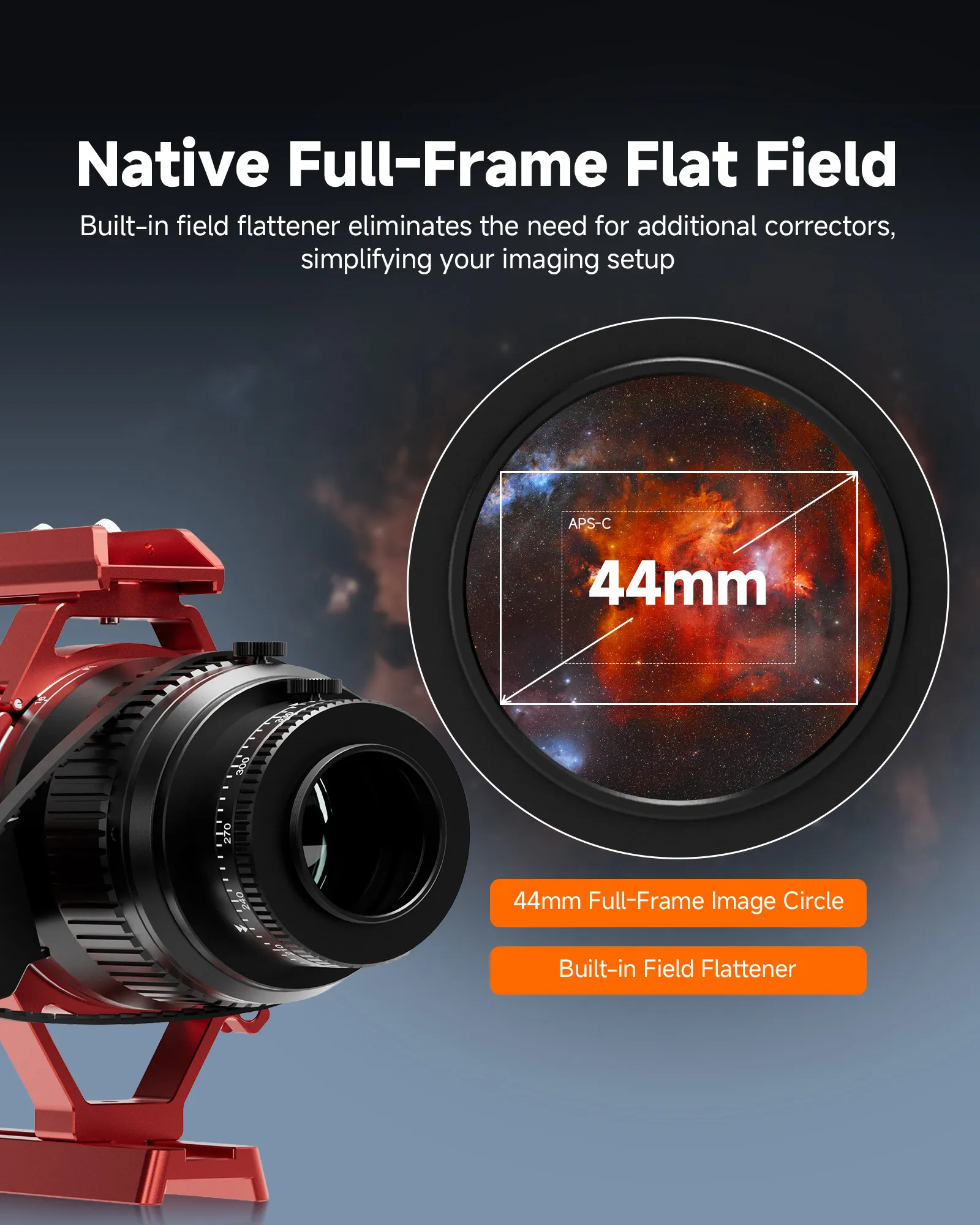
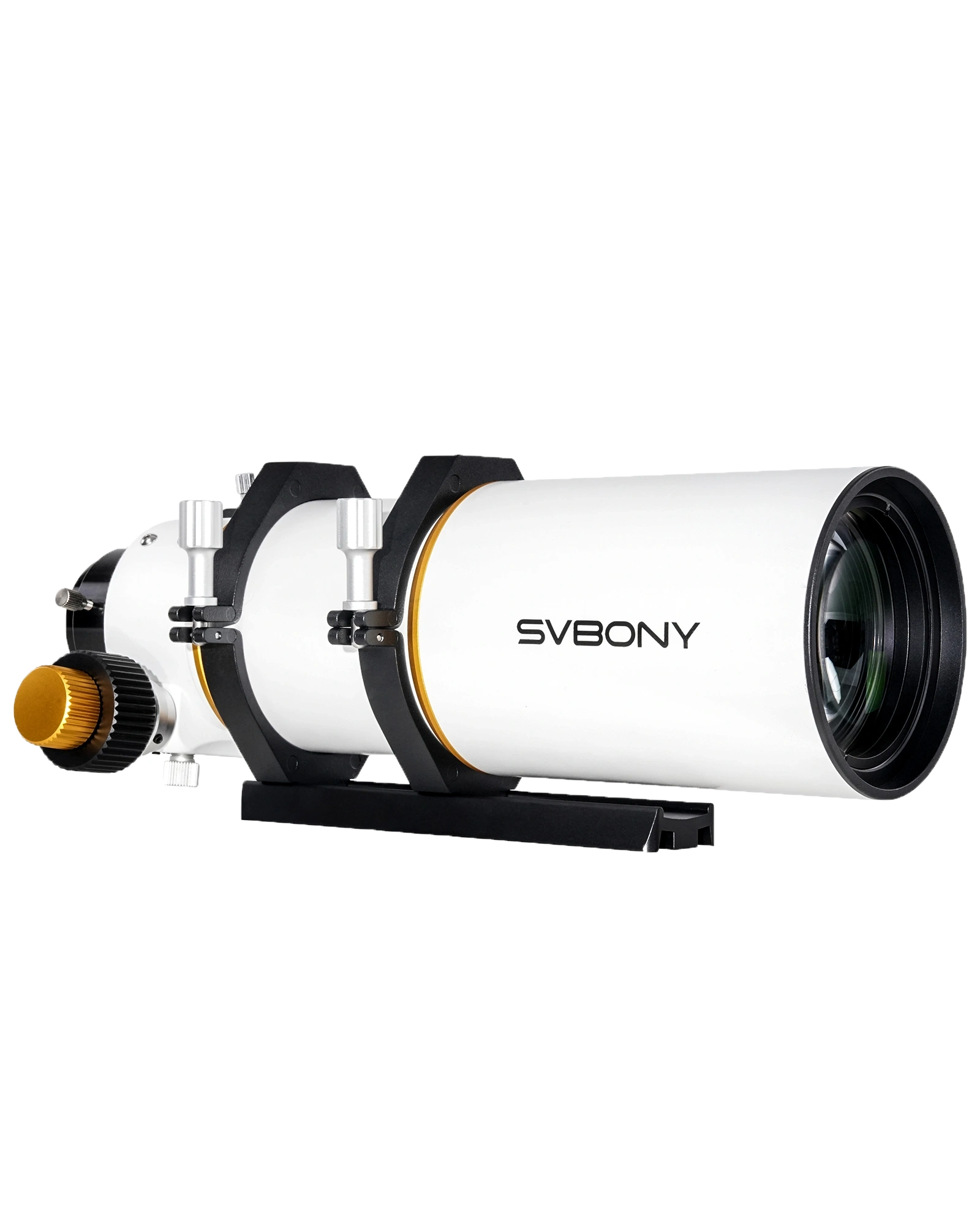
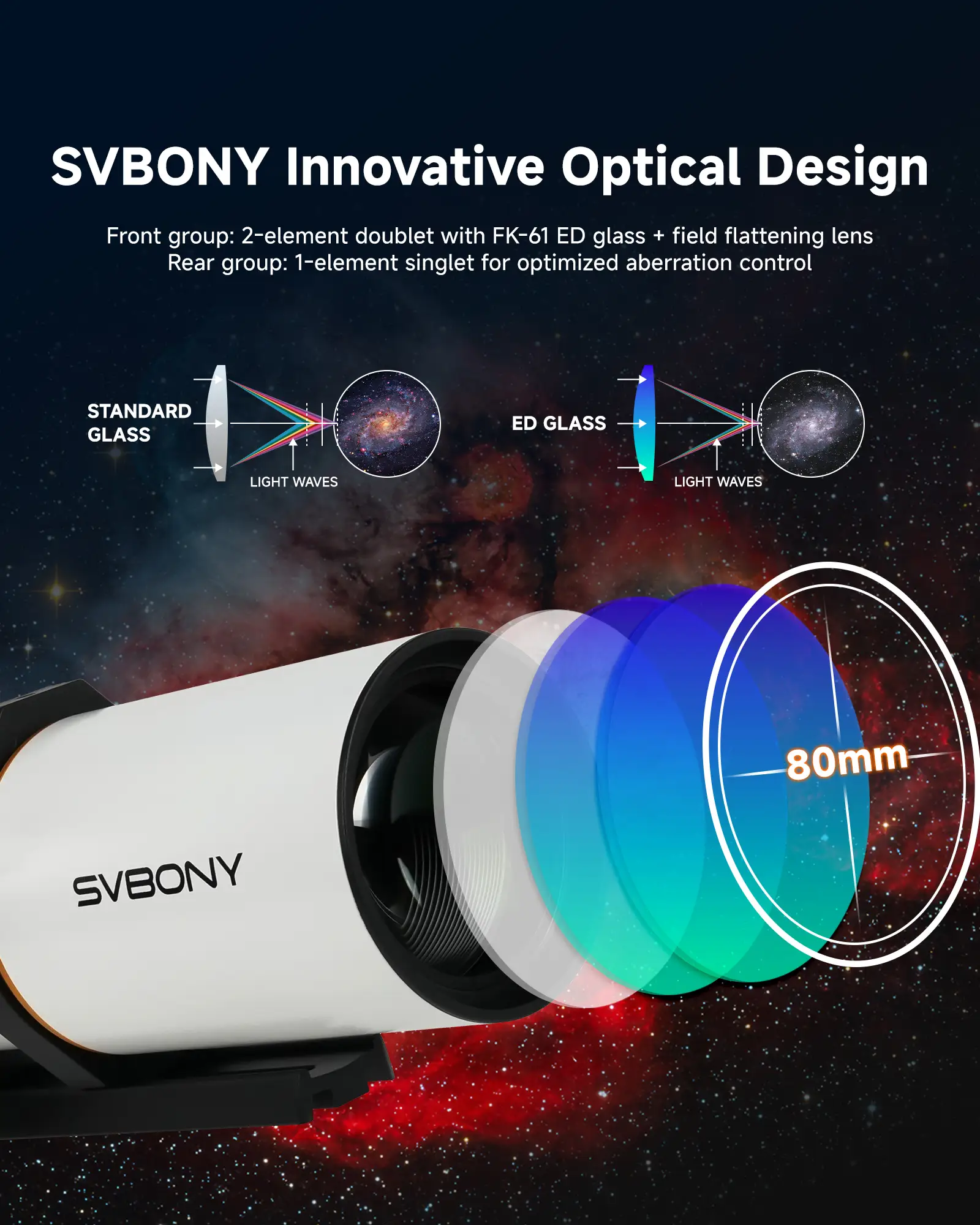
Pairing the SC571CC with a compatible SV535 wide-field astrograph is an option for wide-field deep-sky imaging, while a suitable camera and SV555 setup can support other deep-sky photography needs. Match your camera to your telescope's optical specifications and imaging goals for a well-integrated system.
Faqs About Astronomy Camera
For example, the SVBONY SC715C planetary camera features a Sony IMX715 color sensor, while the SC571CC cooled astronomy camera uses a 26MP Sony IMX571 APS-C color sensor for deep-sky astrophotography. The best choice depends on your imaging targets and telescope setup.
Most modern dedicated astronomy cameras use CMOS sensors, which can offer low read noise, high frame rates, and efficient power consumption. When choosing a CMOS astronomy camera, consider sensor size, pixel size, resolution, and cooling performance.
The SVBONY SV705C uses a Sony IMX585 color sensor for planetary and other imaging applications, while the SV605CC features a cooled Sony IMX533 color sensor for deep-sky photography. Matching the sensor to your imaging goals is more important than choosing a camera based on resolution alone.
To use an astronomy camera, connect it to a compatible telescope using the appropriate adapters, then connect it to a computer or supported imaging device. Use compatible capture software to focus on your target and adjust exposure time and gain.
For example, the SVBONY SC715C supports high-frame-rate capture for detailed lunar and planetary images, while the cooled SV605CC can be used for long-exposure deep-sky imaging. For faint nebulae and galaxies, combining multiple exposures through image stacking can reveal more detail.
The best camera for astronomy photography depends on your target and imaging method. For the Moon and planets, consider a planetary camera such as the SV705C or SC715C. For long-exposure deep-sky imaging, cooled color models such as the SC571CC, SV605CC, and SV405CC provide options with different sensor formats and specifications.
If you prefer narrowband or other filter-based workflows, the SV605MC monochrome astronomy camera uses a monochrome Sony IMX533 sensor. For autoguiding, the SV905C guide camera can be paired with a compatible guide scope and mount. Compare sensor size, pixel size, cooling, and telescope compatibility before choosing.
The ideal astronomy guide camera exposure time depends on star brightness, mount performance, guide scope focal length, and atmospheric conditions. Exposures of around 1–3 seconds are a useful starting point for many telescope autoguiding setups, but shorter or longer exposures may work better depending on the conditions.
The SVBONY SV905C guide camera is designed for astronomy guiding and can be connected to a compatible mount through its guiding interface. Adjust the exposure time to maintain reliable guide-star detection and consistent tracking rather than simply maximizing frame rate.



 Google
 Amazon