


Table of Contents
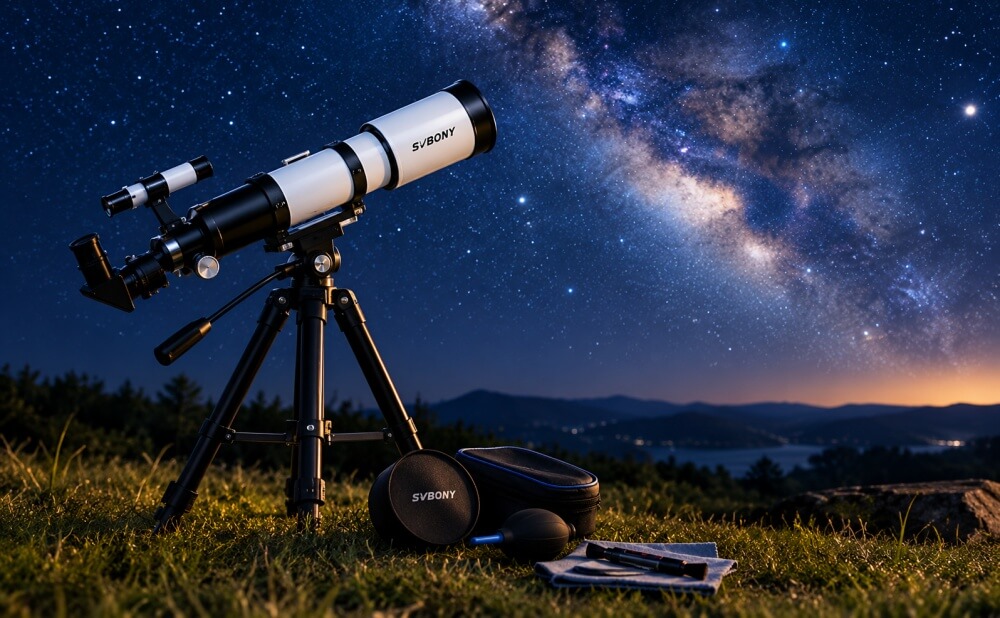
How Long Do Telescopes Last? Telescope Lifespan and Maintenance Guide
A telescope can be a long-term investment, but how long do telescopes last? Unlike many electronic devices, a telescope does not have a fixed expiration date.
With proper care, a well-built telescope can remain useful for decades.
So, what is the lifespan of a telescope?
There is no single answer.
A telescope includes optical, mechanical, and sometimes electronic components, each with a different service life.
How it is used, maintained, transported, and stored also affects its long-term performance.
Understanding telescope lifespan can help you know what to expect from your equipment and how to care for it over time.
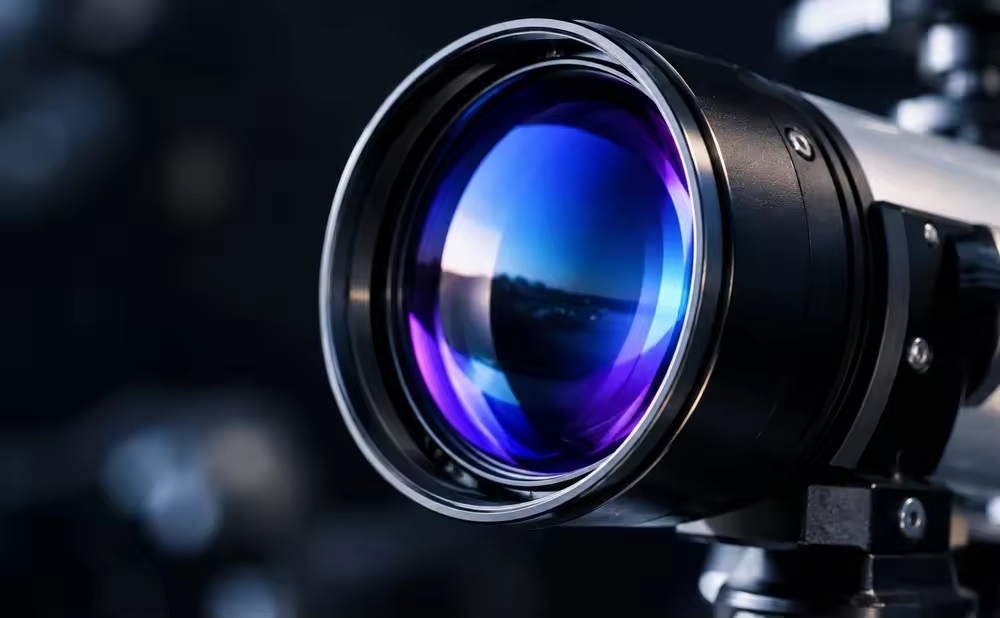
How Long Do Telescopes Last?
How Long Do Telescopes Usually Last?
A well-maintained telescope can provide reliable use for many years, with its main optical components potentially lasting for decades. However, its useful life depends more on its condition than its age.
Different components naturally have different service lives:
| Telescope Component | General Service Life |
|---|---|
| Optical lenses and mirrors | 20–30+ years |
| Optical coatings | 10–20 years |
| Mechanical components | 10–15 years |
| Electronic components | 5–10 years |
These are general reference ranges, not fixed replacement dates. Actual service life varies with telescope design, component quality, storage environment, frequency of use, and maintenance.
For example, an older telescope may still have excellent optics while its focuser, mount, or electronic components need servicing. In many cases, maintaining or replacing an individual component can keep the rest of the telescope in use.
This is why how long does a telescope last is better answered by looking at the condition of its individual components rather than assigning one fixed lifespan to the entire telescope.
How to Maintain a Telescope
Good telescope maintenance is mainly about prevention. If you're wondering how to maintain a telescope, regular inspection and careful handling can help protect the optics and reduce unnecessary wear on mechanical components.
How Long Do Telescope Mirrors Last?
So, how long do telescope mirrors last?
The mirror substrate can remain usable for decades when properly protected, while its reflective coating typically has a shorter service life.
Humidity, moisture, dust, and poor storage can accelerate coating deterioration. If you notice discoloration, unusual spots, uneven areas, or reduced reflectivity, the coating may need inspection.
Depending on its condition, professional recoating may be possible. This is why telescope mirror lifespan can differ from the lifespan of the telescope itself.
Inspect the Optical System
Periodically check lenses, mirrors, and visible coatings for signs of damage, fungus, unusual spots, or deterioration.
Avoid touching optical surfaces unnecessarily. Not every small amount of dust requires immediate cleaning, and unnecessary handling can increase the risk of scratches or other damage.
Detailed optical cleaning is best treated as a separate task because different lenses, mirrors, filters, and coatings may require different cleaning methods.
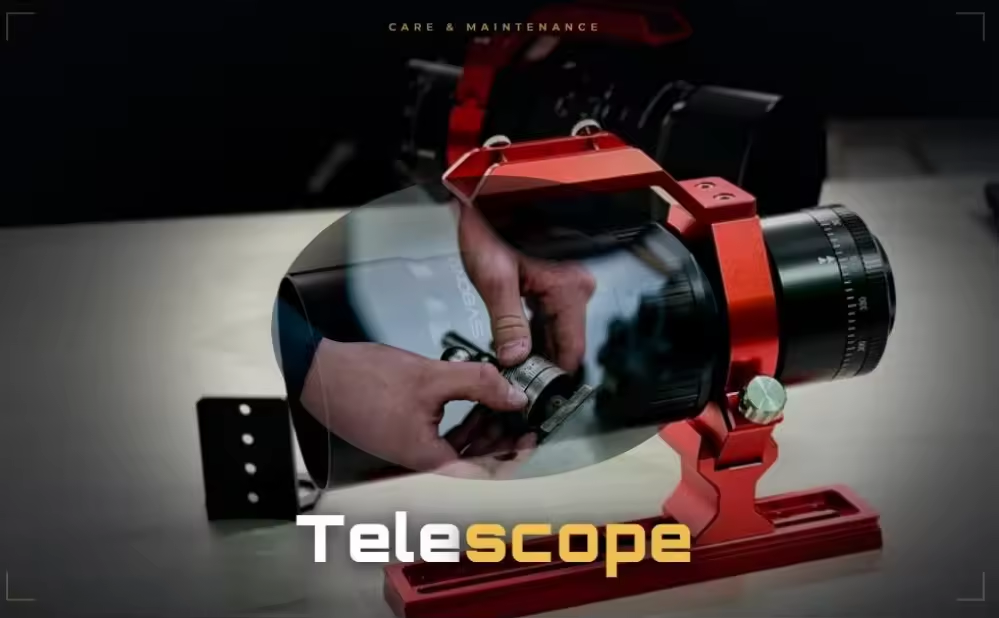
Check the Focuser and Mount
The focuser should move smoothly without excessive play, grinding, or unusual resistance. If it becomes difficult to operate, avoid forcing it.
The mount, gears, adjustment knobs, and other moving components should also be checked periodically. Unusual stiffness, looseness, or noise may indicate that a component needs adjustment or service.
Prevent Rust and Corrosion
Moisture is one of the main long-term concerns for metal telescope components. Check the mount, tripod, screws, gears, and other exposed metal parts for early signs of rust or corrosion.
If a mechanism requires lubrication, use a lubricant suitable for that specific component and follow the manufacturer's recommendations.
Avoid applying generic oil or grease to every moving part, and keep lubricants away from optical and electronic components.
Check Screws and Connections
After transportation or extended use, check mounting hardware, screws, knobs, tripod connections, and other fittings.
Make sure everything is secure without overtightening. Excessive force can damage threads and other mechanical components.
Handle the Telescope Carefully
Frequent use does not automatically shorten a telescope's lifespan. How the equipment is handled matters more than how often it is used.
When transporting the telescope, protect the optical tube, mount, tripod, and accessories from unnecessary vibration and impact. Careful handling helps reduce the risk of damage that could shorten its useful life.
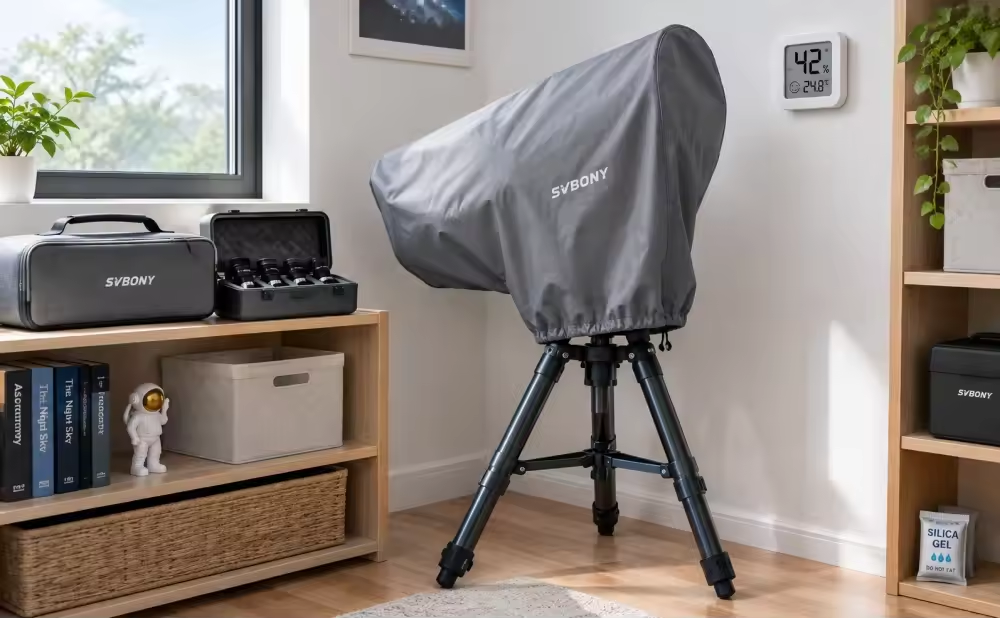
How to Store a Telescope Properly
Proper storage is one of the simplest ways to protect a telescope over the long term. If you are wondering how to store a telescope, focus on controlling moisture, dust, temperature changes, and physical damage.
Whenever possible, store the telescope in a location that is:
- Dry and well ventilated
- Protected from excessive humidity
- Away from direct sunlight and extreme heat
- Protected from dust
- Free from unnecessary vibration and impact
Use appropriate dust caps and protective covers when the telescope is not in use. This is especially important for the optical tube, where exposed optical surfaces can gradually collect dust and moisture.
For SVBONY telescopes, storage also depends on how the system is configured. A compact refractor telescope used for visual observation may be relatively simple to store, while an astrophotography setup can include a telescope, mount, camera, guide scope, and other accessories.
Keeping these components covered and organized can help prevent accidental knocks and unnecessary exposure to moisture.
For computerized mounts and cooled astronomy cameras, keep cables and electronics dry and protected, avoid excessive cable strain, and store the telescope covered and secure when not in use.
Consistent care helps protect the optics and mechanical components for years.
Conclusion
So, how long do telescopes last?
There is no universal expiration date. A well-maintained telescope can remain useful for decades, while individual components may need maintenance, repair, or replacement at different stages.
Optics, coatings, mechanical parts, and electronics all have different service lives.
By checking the equipment regularly, preventing moisture and corrosion, handling it carefully, and storing it properly, you can help keep your telescope performing reliably for many years.
 Google
 Amazon
There are no customer reviews yet . Leave a Reply !