NEW
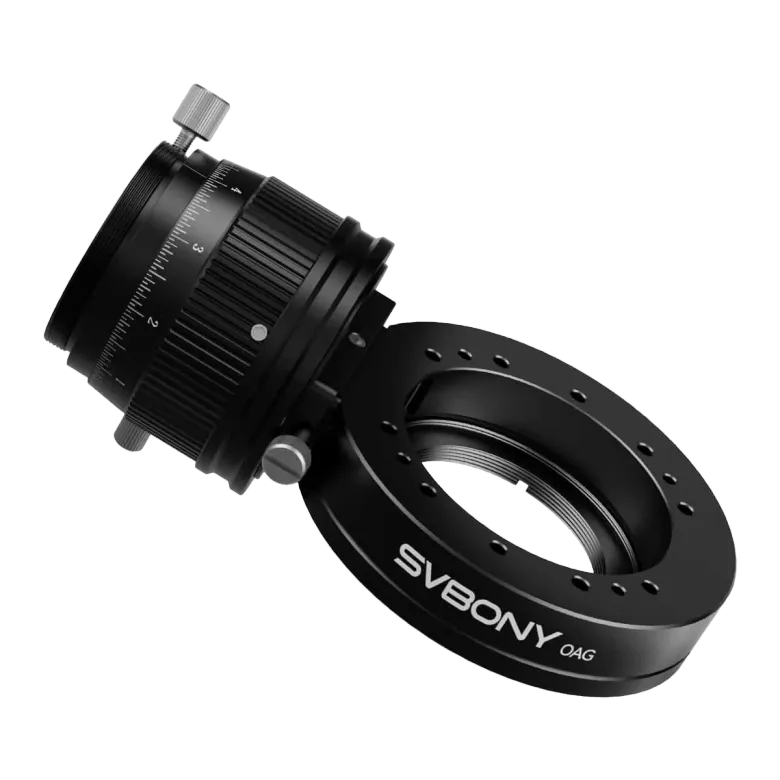
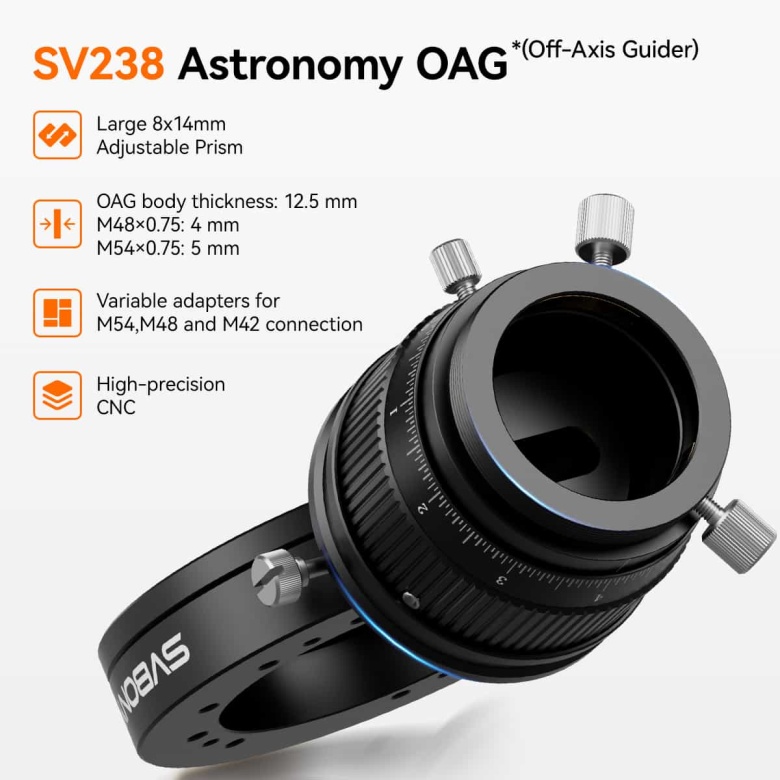
Off-Axis Guider OAG | Svbony SV238
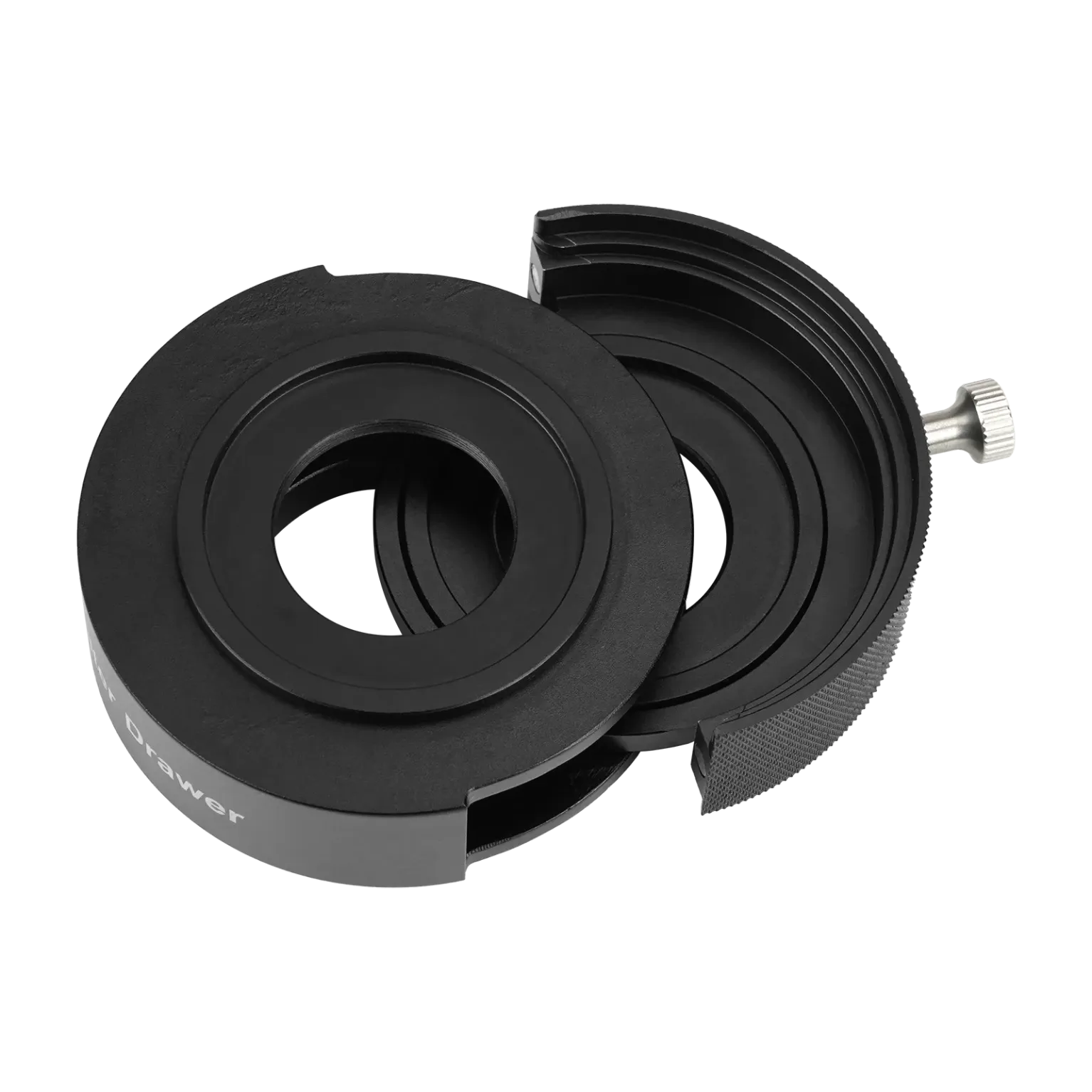
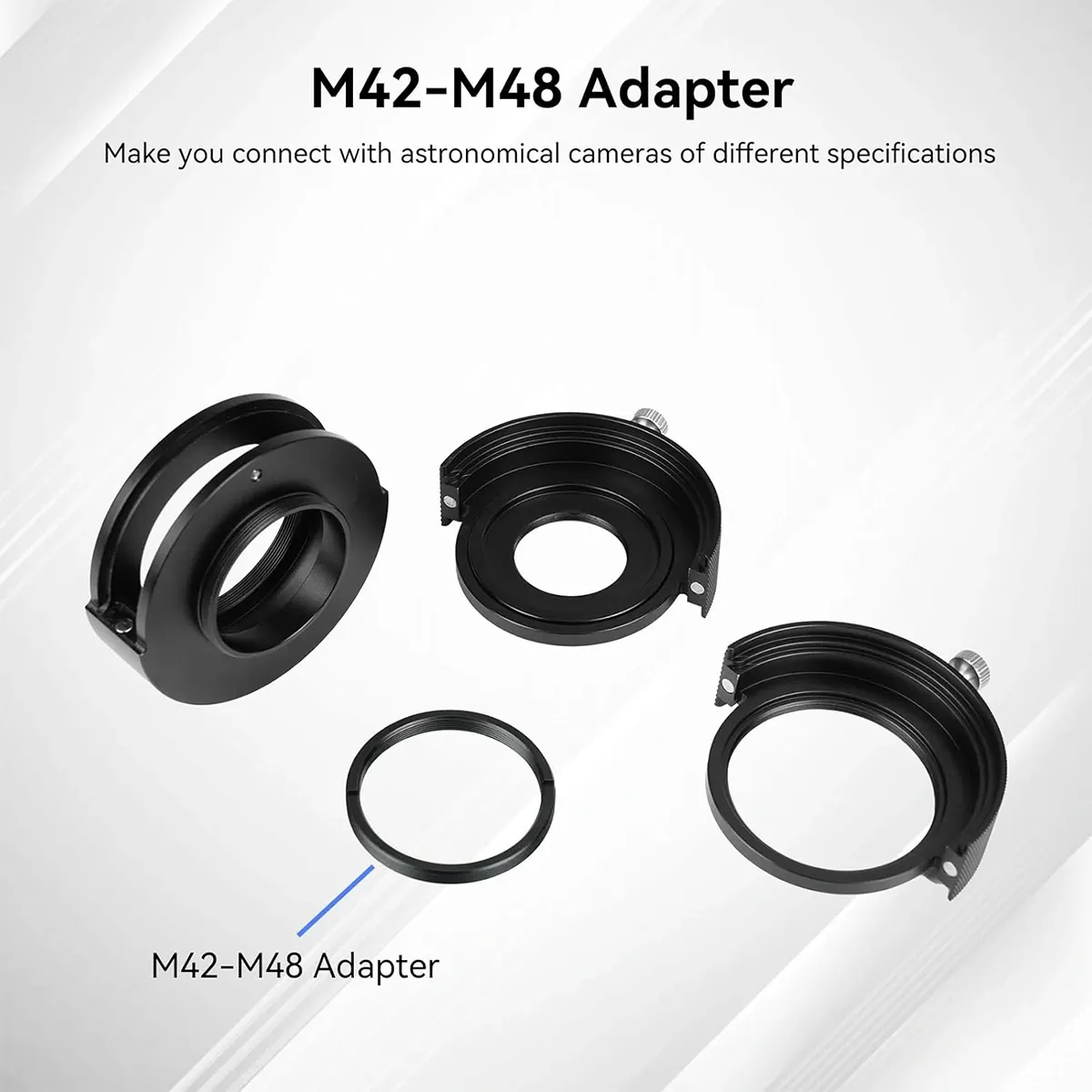
[{"Title":"Large 8\u00D714mm Adjustable Prism","Content":"Enjoy a wider guiding field of view for deep sky imaging and more efficient guiding;"},{"Title":"Dual Helical Focuser for Stable Focus","Content":"Equipped with a dual helical focuser, the SV238 allows for fast and stable locking of focus, preventing star blur and maintaining sharp guiding;"},{"Title":"Durable CNC-Machined Construction","Content":"Made from CNC-machined aluminum, the SV238 offers exceptional durability, resistant to temperature fluctuations and deformation, ensuring reliable performance in outdoor conditions."},{"Title":"Compact, Flexible, and Sensor-Compatible","Content":"The compact design of the SV238 makes it compatible with APS-C and smaller sensors, offering fine-tunable guide camera height adjustments to fit a variety of setups and telescopes."},{"Title":"Versatile Thread Compatibility","Content":"Supporting M54, M48, and M42 filter threads, the SV238 ensures seamless connection with most telescope systems and guide cameras, providing ultimate flexibility for your astrophotography setup."}]
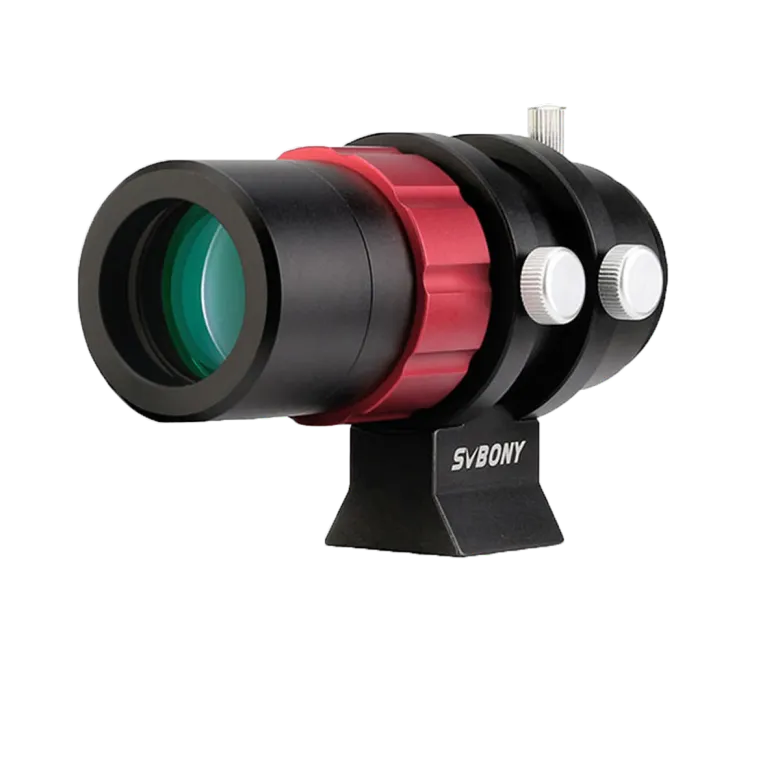
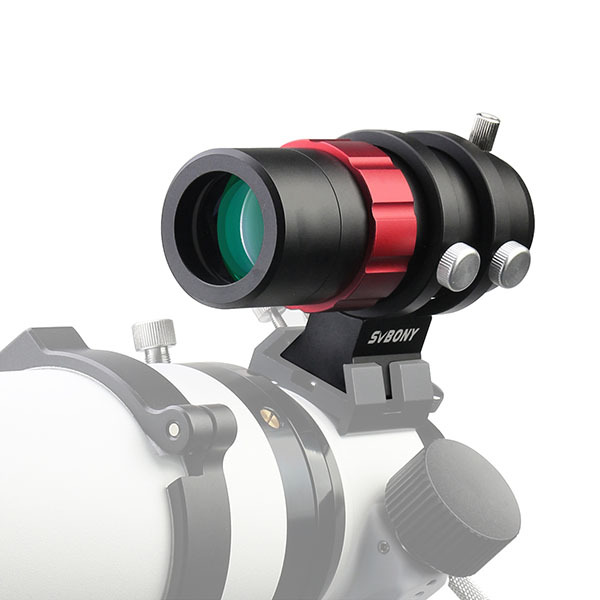
30mm Guide Scope | SVBONY SV165
[{"Title":"Compact Guide Scope","Content":"Lightweight and compact, the SV165 provides precise guiding for astrophotography without added bulk."},{"Title":"High-Quality Optics","Content":"Fully multi-coated lenses ensure clear, bright images, helping to track celestial objects accurately."},{"Title":"Versatile Compatibility","Content":"Fits most telescopes and mounts, making it a flexible addition to your astrophotography setup."},{"Title":"Accurate Tracking","Content":"Essential for precise star tracking during long-exposure astrophotography, improving image quality."},{"Title":"Durable Construction","Content":"Built with high-quality aluminum for durability while remaining portable for outdoor use."}]
HOT
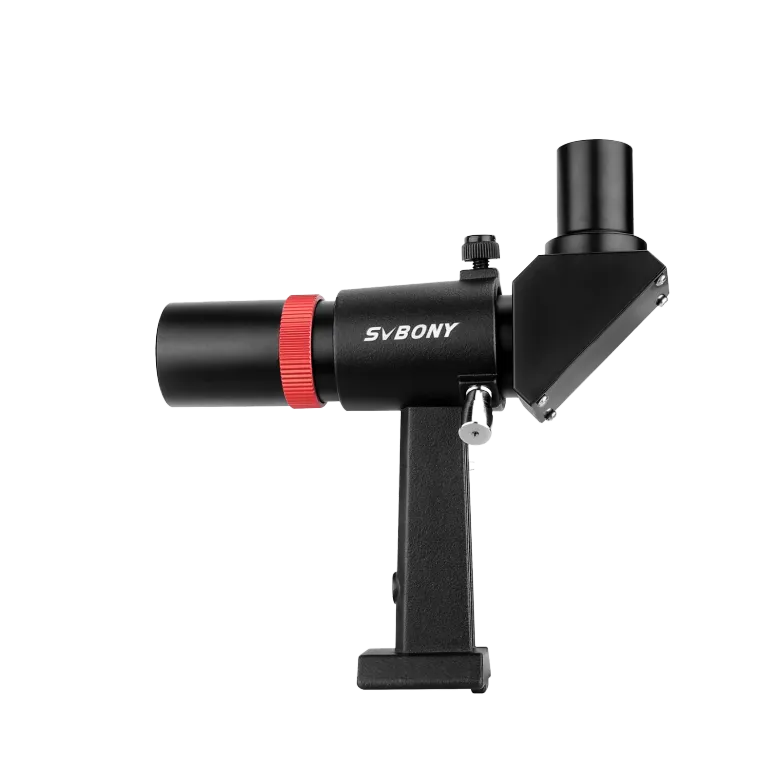
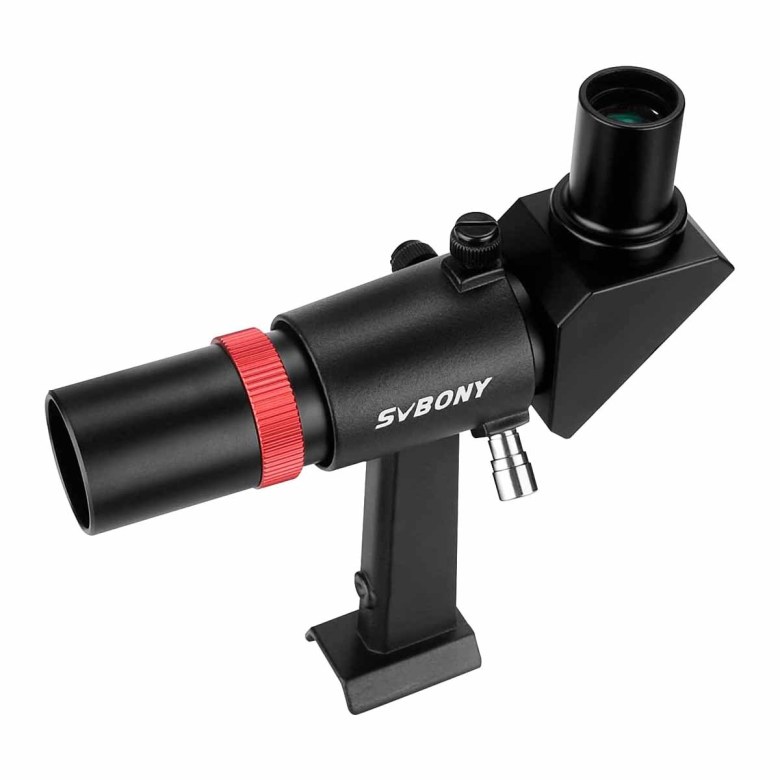
Right-Angle Finder Scope | SVBONY SV182
[{"Title":"Right Angle Viewing","Content":"The right-angle design allows for comfortable and ergonomic viewing, reducing neck strain during extended observation sessions."},{"Title":"Correct Image Orientation","Content":"Provides an upright, non-reversed image, making it easier to locate and track celestial objects or terrestrial targets."},{"Title":"Clear, Bright Optics","Content":"Features fully multi-coated lenses for bright, high-contrast views, ensuring clear image quality even in low-light conditions."},{"Title":"Durable and Lightweight","Content":"Made from high-quality materials, this finder scope is both sturdy and lightweight, ideal for portable and long-lasting use."},{"Title":"Easy to Mount and Align","Content":"Simple to attach to most telescopes with quick alignment for smooth integration into your observational setup."}]
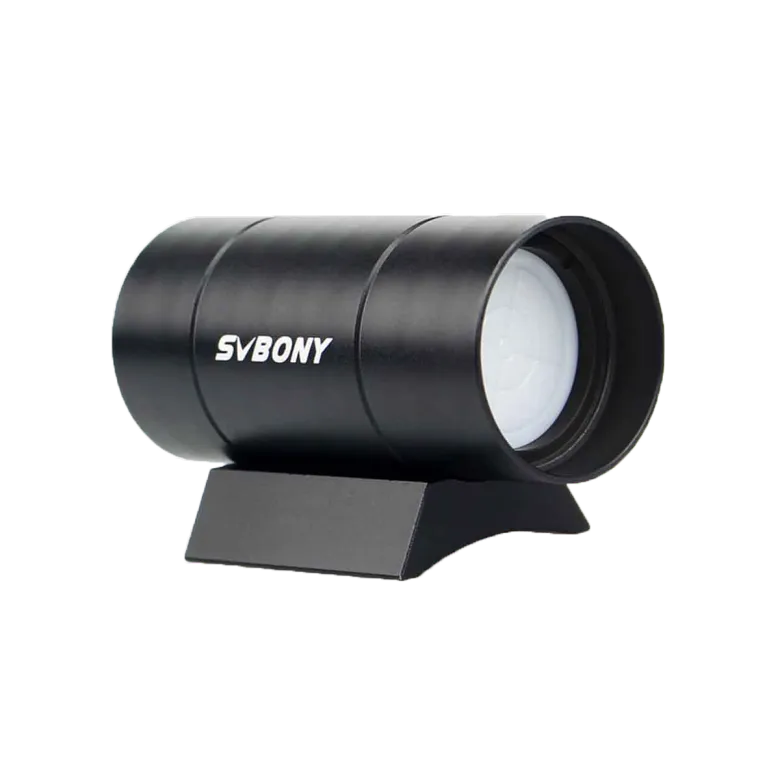
Solar Finder Scope | SVBONY
[{"Title":"Accurate Solar Positioning","Content":"The SVBONY Solar Finder Scope is designed for precise sun positioning, helping you easily locate the Sun\u2019s location during solar observations or astrophotography."},{"Title":"Durable Metal Construction","Content":"Built from high-quality metal, this solar finder scope is both sturdy and long-lasting, ensuring reliable performance for all your solar viewing sessions."},{"Title":"Easy to Use for Solar Observing","Content":"With its simple design, the SVBONY Solar Finder Scope provides a hassle-free way to align your telescope with the Sun, allowing for safe and accurate solar viewing."},{"Title":"Ideal for Solar Photography","Content":"Perfect for solar imaging, this finder scope helps track and center the Sun in your field of view, making it easier to capture stunning solar photographs."},{"Title":"Essential Solar Observation Tool","Content":"Whether you\u2019re a beginner or an experienced solar observer, the SVBONY Solar Finder Scope is an essential accessory for safe, efficient solar tracking."}]
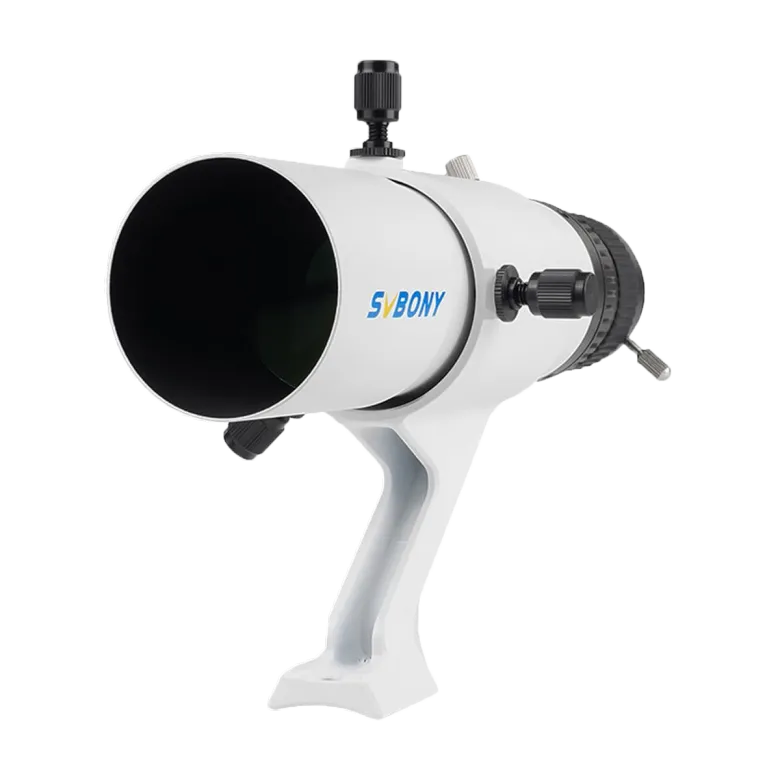
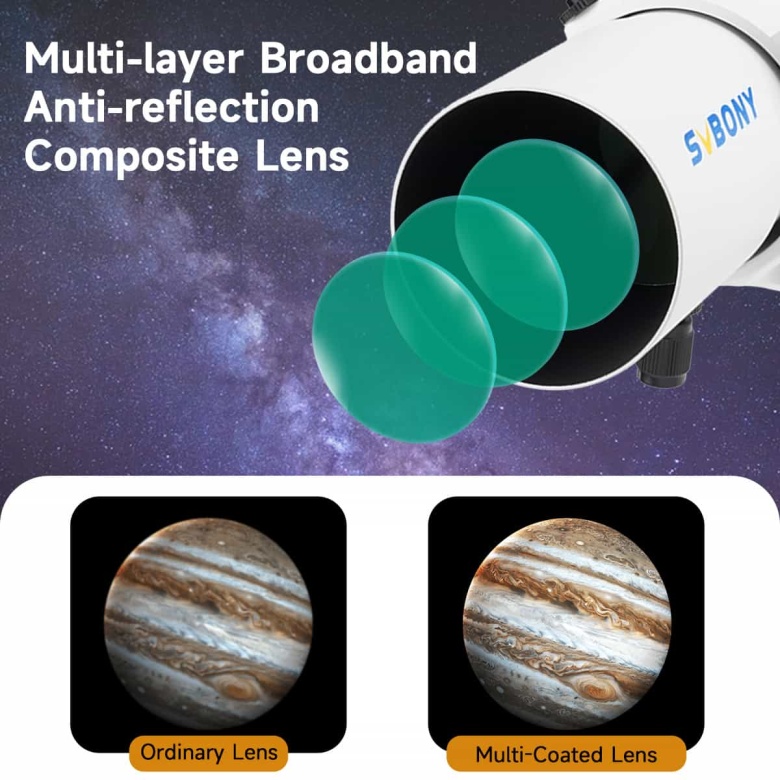
50mm Guide Scope | SVBONY SV198
[{"Title":"Compact and Portable","Content":"The lightweight, compact design makes the SV198 a portable and convenient option for accurate star tracking during astrophotography."},{"Title":"50mm Aperture for Clear Views","Content":"Features a 50mm aperture that delivers clear, bright images for precise guiding, even in low-light conditions."},{"Title":"Precision Guiding","Content":"Ideal for long-exposure astrophotography, the guide scope ensures accurate star tracking to enhance image quality and reduce star trails."},{"Title":"Durable and Reliable","Content":"Built with high-quality materials to ensure long-lasting performance and reliability, even in outdoor, rugged environments."},{"Title":"Easy to Mount and Align","Content":"Simple to install on most telescopes, with quick alignment adjustments for a seamless integration into your astrophotography setup."}]
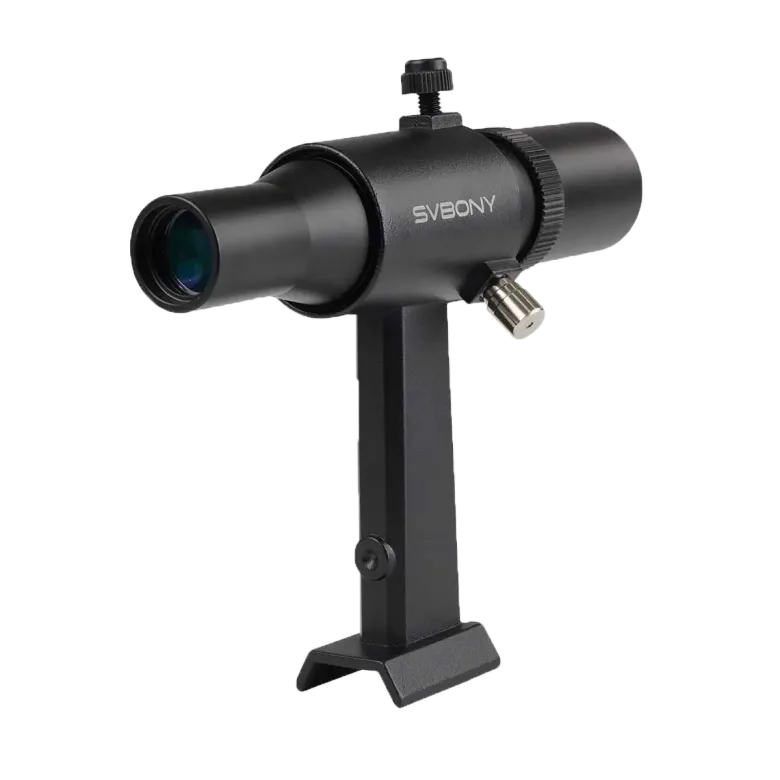
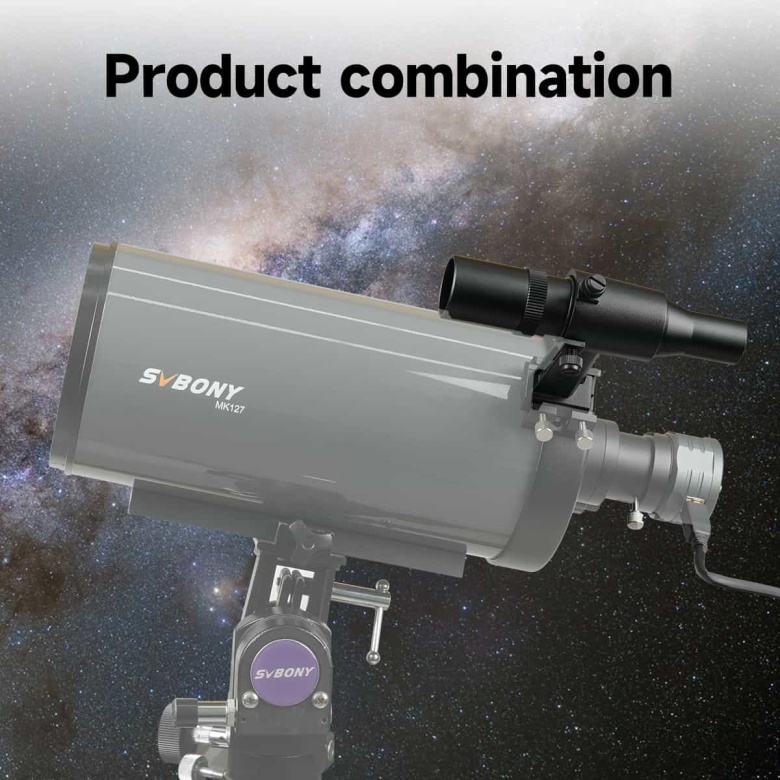
6x30 Finder Scope | SVBONY SV182
[{"Title":"Wide Field of View","Content":"The SV182 finder scope offers a wide field of view, making it easy to locate and track celestial objects."},{"Title":"Clear, Bright Optics","Content":"Features fully multi-coated lenses that provide sharp, high-contrast images for clear and accurate targeting."},{"Title":"Durable Construction","Content":"Built with robust materials for long-lasting durability, ensuring reliable performance in various outdoor conditions."},{"Title":"Easy to Mount and Align","Content":"Simple to install and align with most telescopes, making it a convenient addition to your setup for quick object acquisition."},{"Title":"Lightweight and Portable","Content":"Compact and lightweight, this finder scope is ideal for travel and outdoor use, providing easy portability for stargazing sessions."}]
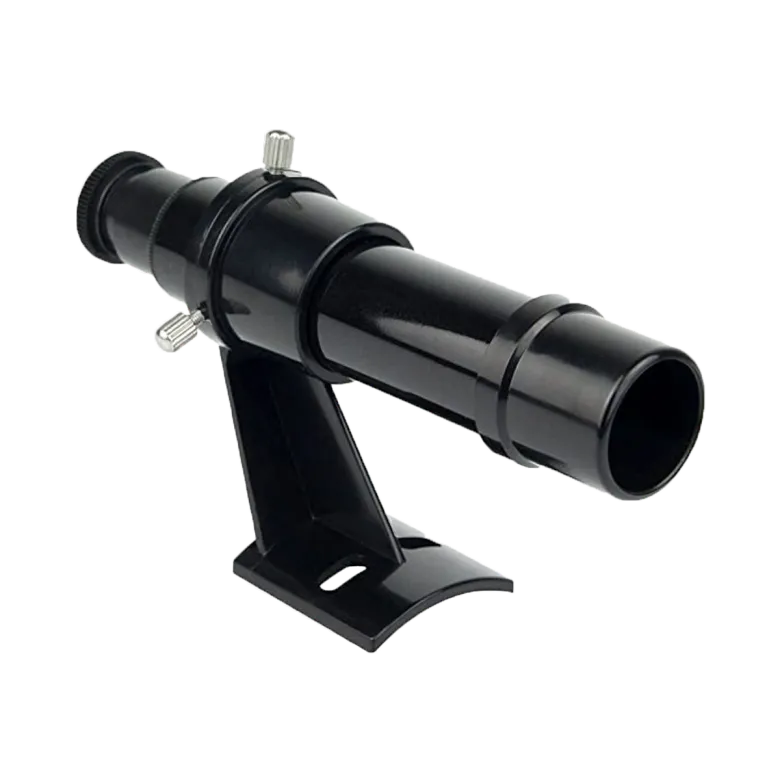
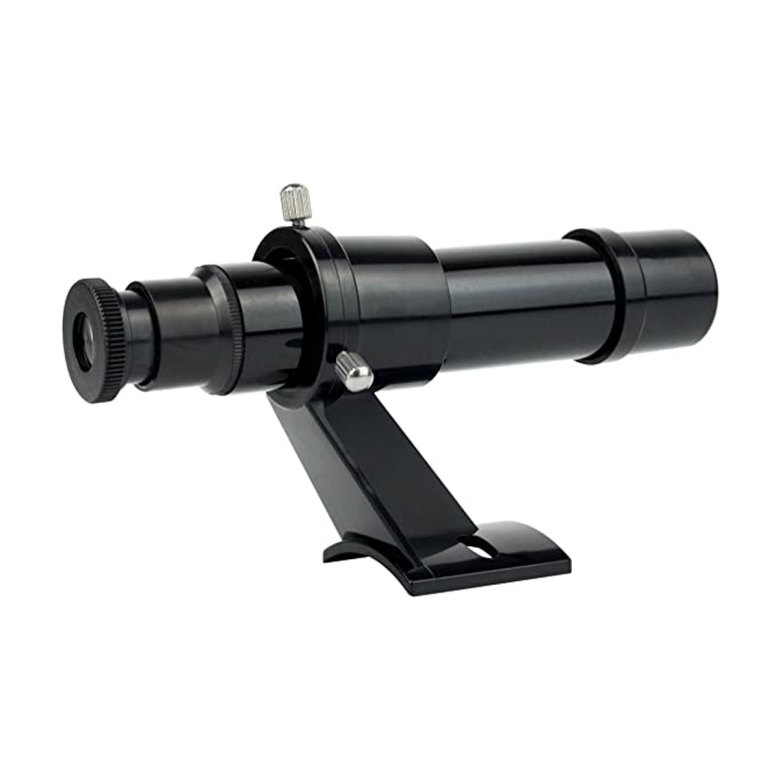
5x24 Finder Scope | SVBONY
[{"Title":"Quick Celestial Targeting","Content":"Resolves star-hunting difficulties, aiding main telescope aiming."},{"Title":"HD Finder Scope","Content":"Crosshair reticle with durable metallic tube and prot"},{"Title":"Astronomical Observation Use","Content":"Ideal for telescopes, enhancing stargazing efficiency."},{"Title":"SVBONY Universal Fit Warranty","Content":"2-year warranty with compatibility for various telescopes."},{"Title":"Official Astronomical Accessory","Content":"Standard auxiliary tool for telescope"}]
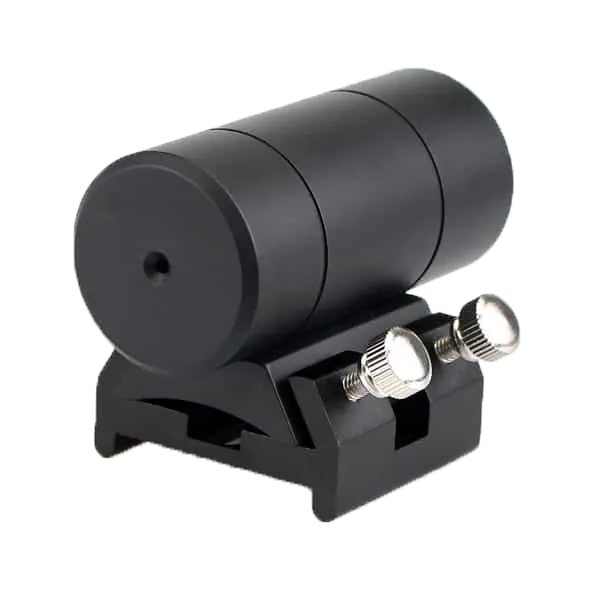
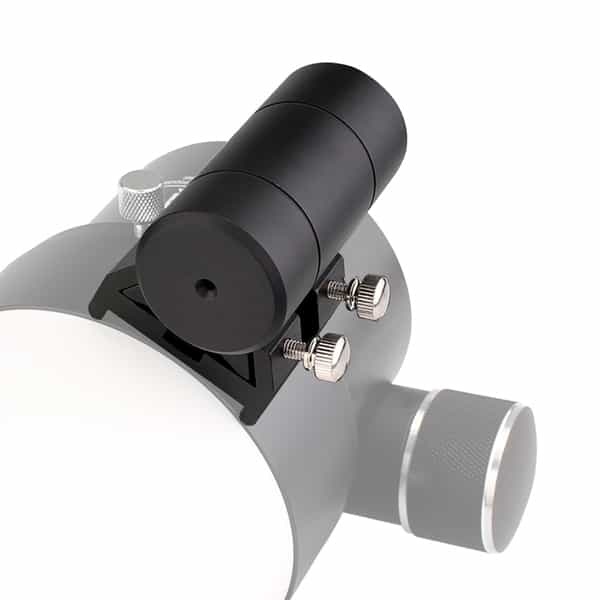
Solar Finder Scope | SVBONY
[{"Title":"Ideal for Solar and Eclipse Viewing","Content":"The Svbony Solar Finder Scope with dovetail slot makes it easy to quickly locate the Sun, especially during total or partial solar eclipses, reducing search time."},{"Title":"Accurate Sun Positioning","Content":"This fully metal solar finder scope allows for precise tracking of the Sun\u0027s location, ensuring you can observe and capture solar phenomena in real-time, even as the Sun moves."},{"Title":"Built for Durability and Longevity","Content":"Crafted from high-quality metal, the Svbony Solar Finder Scope is durable and designed for long-term use, making it the perfect tool for both solar observing and imaging."},{"Title":"Fast Alignment for Solar Eclipses","Content":"During solar eclipses, this finder scope significantly shortens setup time, allowing you to quickly align your telescope and begin observing or photographing the event."},{"Title":"Dovetail Slot for Easy Mounting","Content":"With its dovetail slot, the Svbony Solar Finder Scope easily attaches to your telescope, offering a secure, stable connection for efficient solar tracking."}]
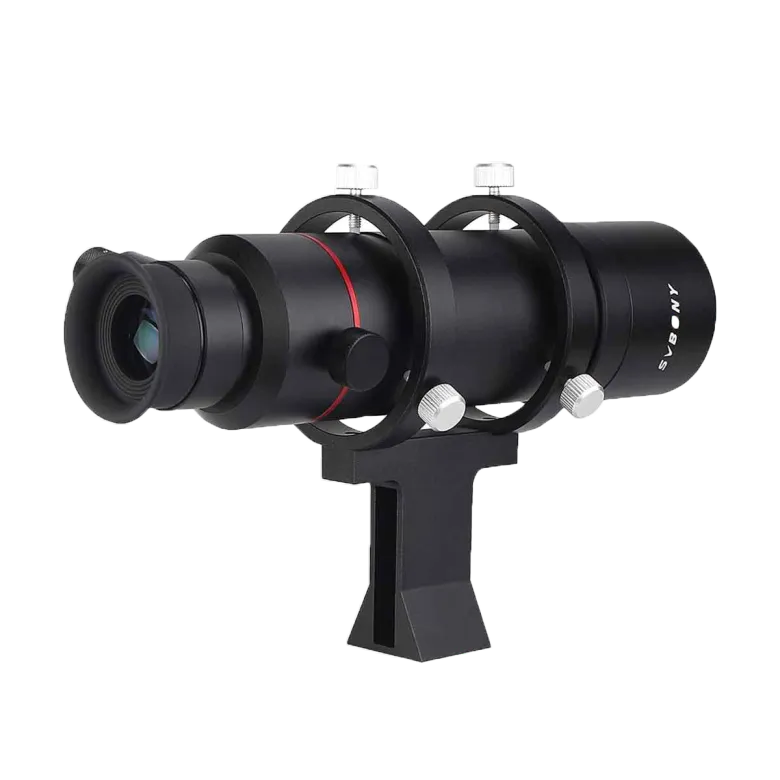
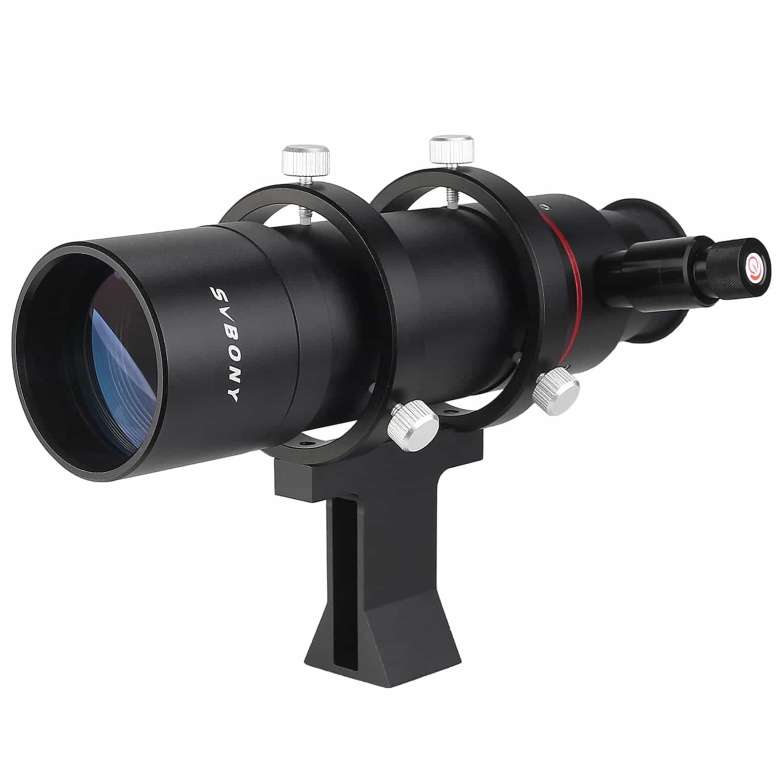
Illuminated Finder Scope | SVBONY SV208
[{"Title":"8x Magnification for Clear Targeting","Content":"Provides 8x magnification for easy and accurate targeting of celestial or terrestrial objects, ensuring precise alignment."},{"Title":"Illuminated Reticle","Content":"Features an illuminated crosshair for enhanced visibility in low-light conditions, making it easier to locate and track objects at night."},{"Title":"Large 50mm Aperture","Content":"The 50mm aperture gathers more light, providing bright, clear views and improving the finder scope\u2019s effectiveness in low-light environments."},{"Title":"Durable and Lightweight","Content":"Constructed with high-quality materials, the finder scope is both lightweight for portability and durable enough for long-lasting use."},{"Title":"Easy to Mount and Align","Content":"Compatible with most telescopes, the SV208 is easy to install and align, making it an ideal choice for both novice and experienced astronomers."}]
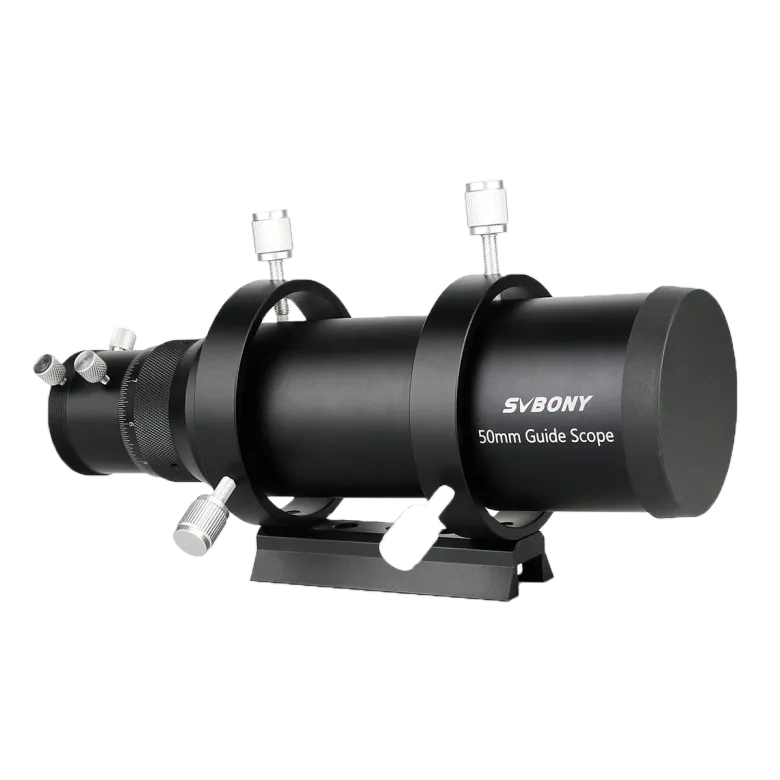
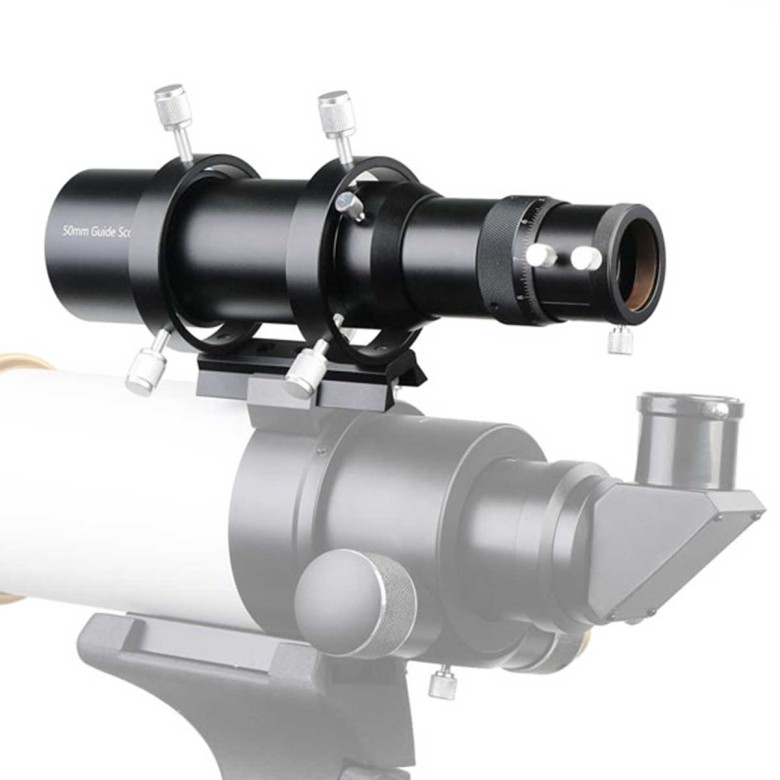
50mm Guide Scope | SVBONY SV106
[{"Title":"Ideal for High-Quality Astrophotography","Content":"The 50mm guide scope with helical focuser is perfect for astrophotographers, providing precise focus adjustments and ensuring clear, sharp views of potential guide stars for higher-quality astrophotos."},{"Title":"Built-in Helical Focuser for Zero Flexure","Content":"Featuring a built-in helical focuser, this guide scope allows for zero flexure during focusing, providing a rigid, stable performance while enabling quick and easy focusing for guide stars."},{"Title":"Easy Fine Focus Adjustments","Content":"The guide scope is equipped with a knurled ring for smooth fine focus adjustments. The thumbscrew allows for secure lock-down, while the 8mm of focus travel and 30mm telescoping drawtube offer flexibility for various autoguider devices."},{"Title":"Complete Setup with Mounting Accessories","Content":"This guide scope comes with two heavy-duty guide scope rings and a 3.5-inch dovetail mounting bar, making it easy to attach to dovetail finder scope bases for quick and secure setup. The metal thumbscrews allow for precise aiming."},{"Title":"Compatible with Guide Cameras and Eyepieces","Content":"The male T-threads on the focuser collar allow for easy and secure attachment of guide cameras with female T-threads, providing seamless integration with your autoguider system for astrophotography."}]
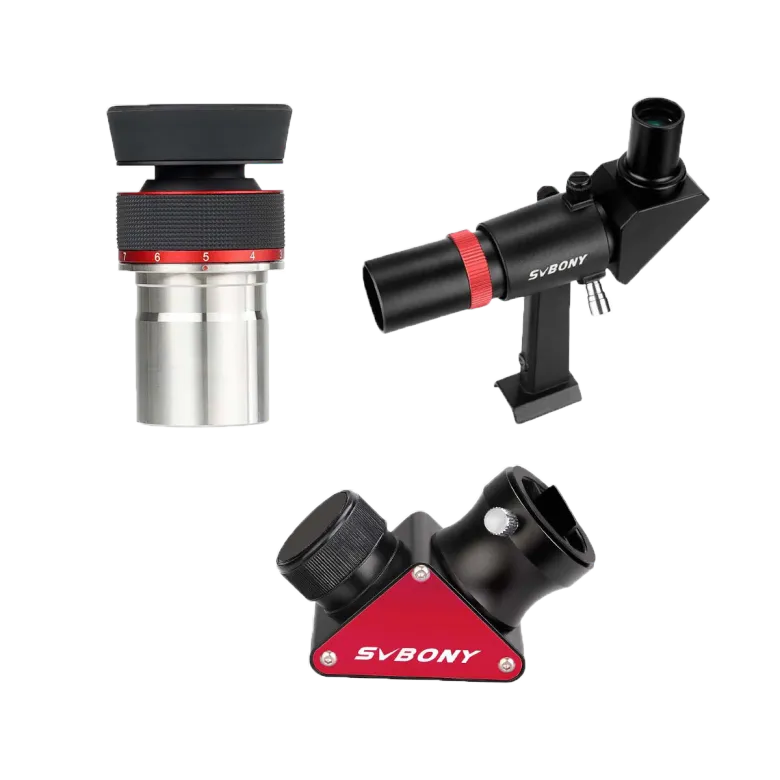
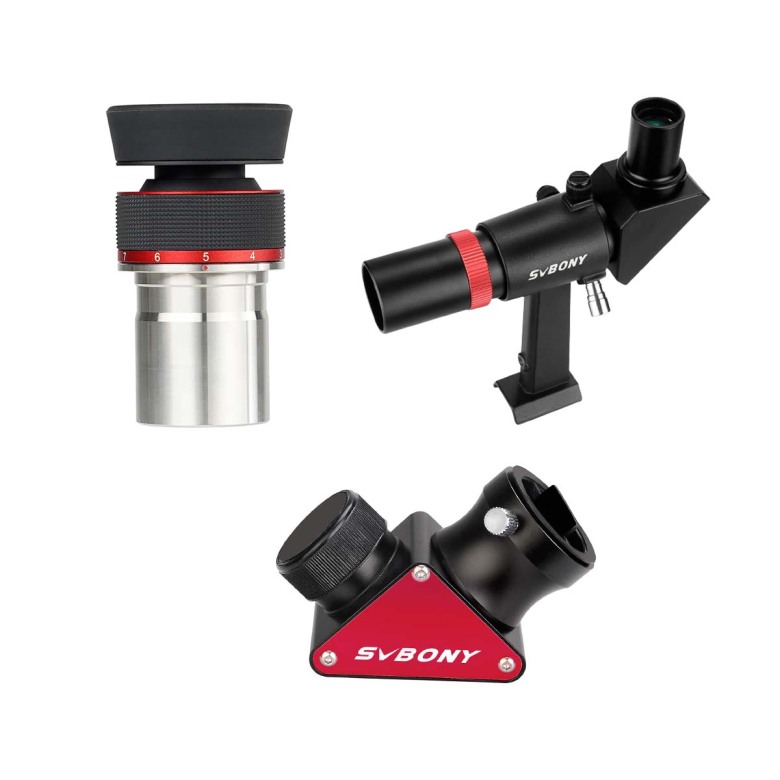
Eyepiece-Diagonal-Finder Kit | SVBONY
[{"Title":"Ergonomic Right-Angle Viewing","Content":"The right-angle design allows for comfortable, strain-free viewing, especially during long observation sessions."},{"Title":"Clear and Bright Optics","Content":"Equipped with fully multi-coated lenses for enhanced light transmission, providing bright and clear images of celestial objects."},{"Title":"Precise Alignment","Content":"The finder scope aids in accurate alignment, making it easier to locate and track objects across the sky with precision."},{"Title":"Durable and Compact Design","Content":"Built with durable materials, this diagonal finder scope is both lightweight and sturdy, offering reliable performance for both beginners and seasoned astronomers."},{"Title":"Versatile Compatibility","Content":"The eyepiece and finder scope system is compatible with most telescopes, ensuring a versatile addition to your observation setup."}]
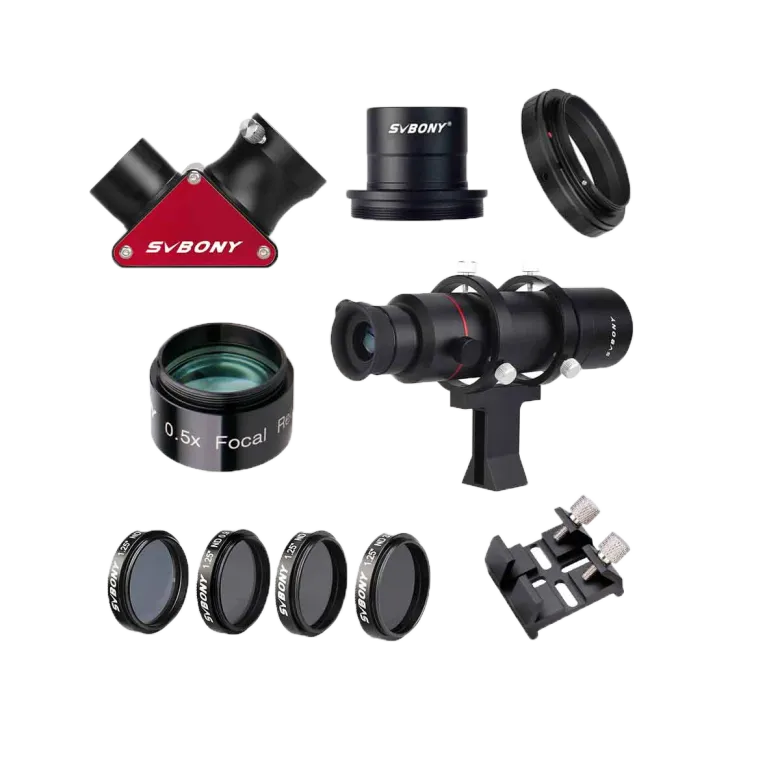
Moon Viewing & Photography Kit | SVBONY
[{"Title":"Complete Photography Kit","Content":"The SVBONY Astronomy Kit includes all necessary components to capture stunning lunar images, perfect for beginner and advanced astrophotographers."},{"Title":"High-Quality Camera Mount","Content":"Features a durable, adjustable camera mount that securely attaches to your telescope for stable, vibration-free lunar photography."},{"Title":"Precision Focusing","Content":"Equipped with tools that allow precise focusing, ensuring sharp, high-resolution images of the moon\u0027s surface details."},{"Title":"Universal Compatibility","Content":"Designed to fit most telescopes and cameras, providing versatile options for various equipment setups and ensuring easy integration into your system."},{"Title":"Portable and Easy to Use","Content":"Lightweight and easy to set up, this kit is ideal for outdoor stargazing and moon photography sessions, with minimal equipment required."}]
Finder Scopes & Guide Scopes for Telescopes
A finder scope for a telescope helps you quickly locate and center celestial objects before viewing them through the main telescope. Its wider field of view makes alignment and star-hopping easier for both beginners and experienced observers.
SVBONY offers finder scopes for astronomy in compact, right-angle, correct-image, illuminated reticle, and solar designs. The collection also includes guide scopes for telescope setups and accessories for astrophotography.
Finder Scopes for Telescope Alignment
Finder scopes make it easier to locate and center targets before observing through the main telescope. Right-angle correct-image models such as the SV182 6×30 provide a comfortable viewing position and upright image, while the SV208 8×50 features an illuminated reticle for precise target centering. Compact models are convenient for portable setups.
Guide Scopes for Astrophotography
A guiding scope for a telescope works with a guide camera and guiding software to monitor a reference star and help correct tracking errors during long-exposure astrophotography.
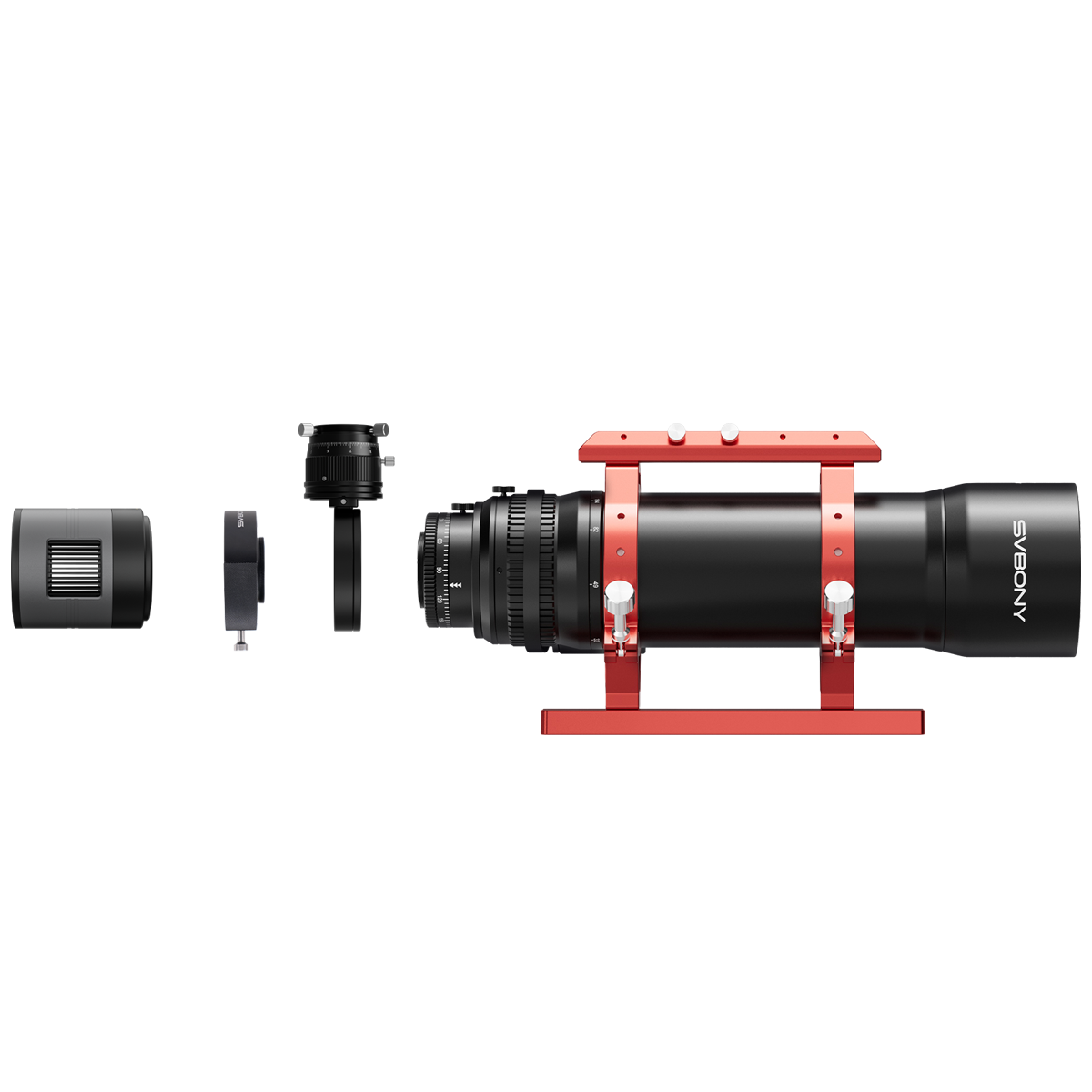
SVBONY offers guide scopes in different sizes, including the compact SV165 30mm, SV106 60mm f/4, and SV198 50mm. When choosing a guiding scope, consider the guide scope focal length, guide camera, main telescope, and mounting stability as a complete system.
For advanced guiding, the SV238 Off-Axis Guider uses the main telescope's optical path to provide guide-star information without a separate guiding scope.
Explore SVBONY Finder and Guide Scopes
Explore SVBONY finder scopes, guide scopes, solar finders, and off-axis guiding solutions for visual astronomy and astrophotography. Choose a setup suited to easier target finding, telescope alignment, and accurate guiding.
Faqs About Finder Scopes & Guide Scopes
A finder scope for a telescope is a small auxiliary telescope mounted alongside the main telescope. It usually provides a wider field of view, making it easier to locate and center celestial objects before viewing them through the main telescope. A finder scope is especially useful for star-hopping and manual alignment. Depending on the design, finders may offer straight-through, right-angle, correct-image, or illuminated reticle views.
Before observing, align the finder scope with the main telescope so both are pointing at the same target. Start with a bright, easy-to-find object and adjust the finder until the target is centered in both views. Once aligned, use the finder scope to locate stars or other celestial objects, then switch to the main telescope for a closer view.
Yes, you can use a telescope without a finder scope, especially with a wide-field telescope, a computerized mount, or another alignment method. However, a finder scope can make manual target acquisition much easier. It is particularly useful when observing at higher magnification, where the main telescope has a narrower field of view and locating objects can take more time.
An upside-down or reversed image can be normal for a straight-through finder scope, depending on its optical design. Straight-through finders may show an inverted or reversed view because they do not use an image-erecting prism. If you prefer an upright and correctly oriented image, a right-angle correct-image finder scope can make it easier to compare the view with star charts or astronomy apps.
A finder scope is mainly used to locate and center objects for visual observation, while a guide scope is designed to support astrophotography. A guide scope for a telescope works with a guide camera and guiding software to monitor a reference star and help correct small tracking errors. A finder helps you point the telescope, whereas a guide scope helps the mount maintain accurate tracking during long-exposure imaging. For secure installation, choose a suitable finder scope bracket for a finder or a guide scope mount for an astrophotography setup.
The appropriate guide scope focal length and size depend on your main telescope, guide camera, pixel size, field of view, and imaging conditions. A shorter focal length generally provides a wider field of view, while a larger guide scope aperture can collect more light and provide a different image scale. For guiding scope astrophotography, consider the guide scope and camera as part of the complete guiding system rather than choosing based on focal length or size alone.
 Google
 Amazon