Starter Collection
Your Window to the Cosmos.
No jargon, no complicated polar alignment—just pure, instant wonder. These are "first-light" instruments designed for spontaneous curiosity. They prioritize fun and immediate gratification over technical perfection.
HOT
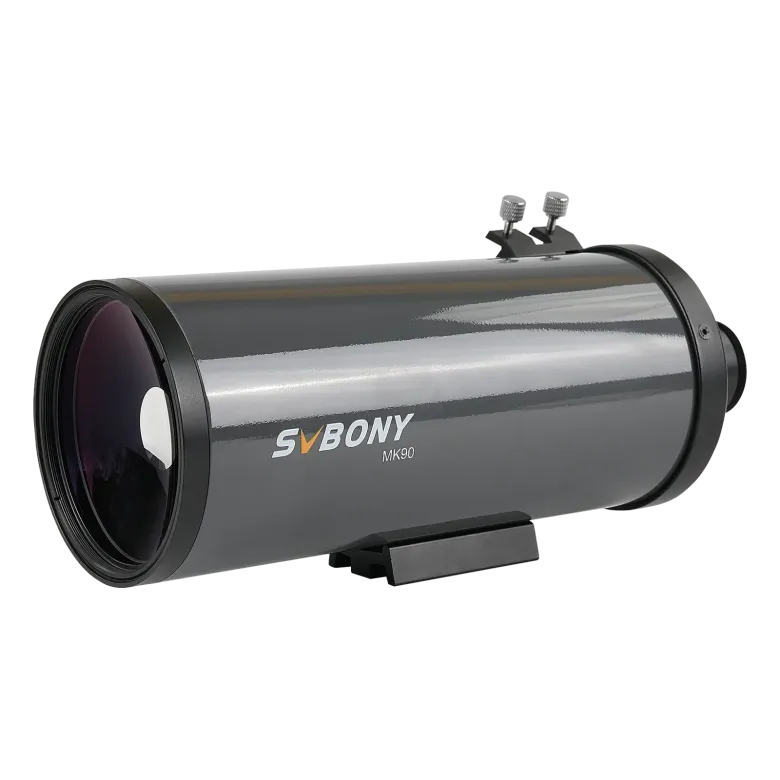
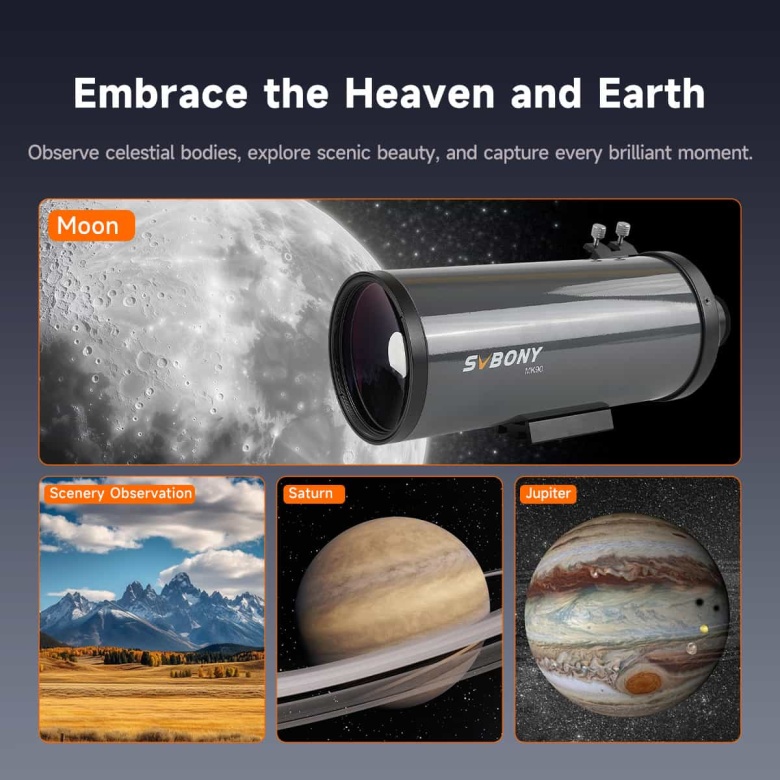
Maksutov-Cassegrain Telescope | SVBONY MK90
[{"Title":"No Periodic Collimation","Content":"Convex meniscus lens replaces Schmidt plate, boosts contrast \u0026 skips calibration"},{"Title":"High-Performance Optics","Content":"90mm aperture \u002B 1250mm focal length, delivers crisp celestial/terrestrial views."},{"Title":"Versatile Observation","Content":"Ideal for lunar/planetary viewing \u0026 nature observation, fits astronomers/enthusiasts."},{"Title":"Durable \u0026 Portable","Content":"Sturdy metal construction withstands travel, 2-year warranty assured."},{"Title":"Practical Design \u0026 Accessories","Content":"Vixen dovetail mount \u002B conical extinction tube \u002B complete accessory set."}]
HOT
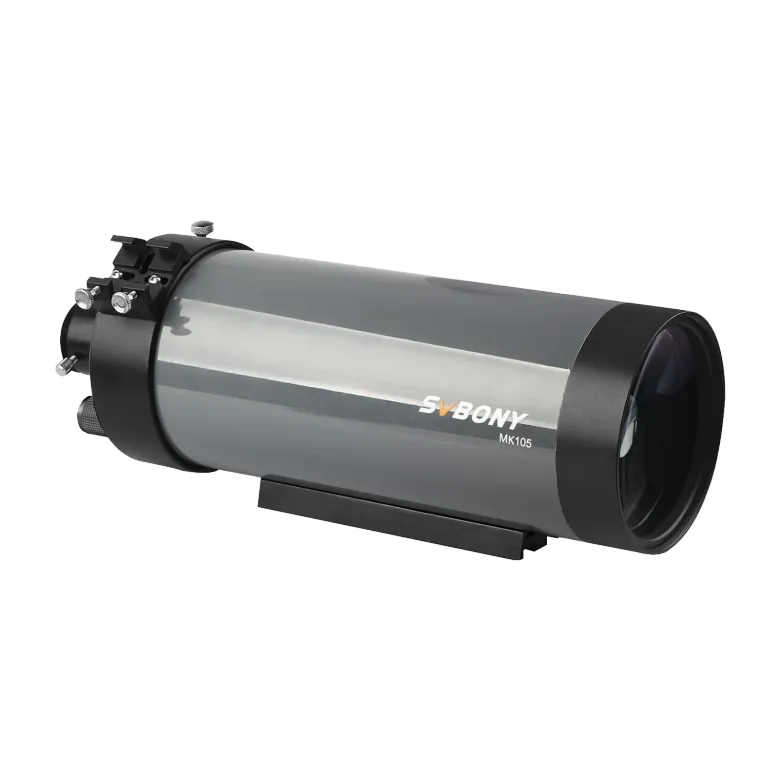
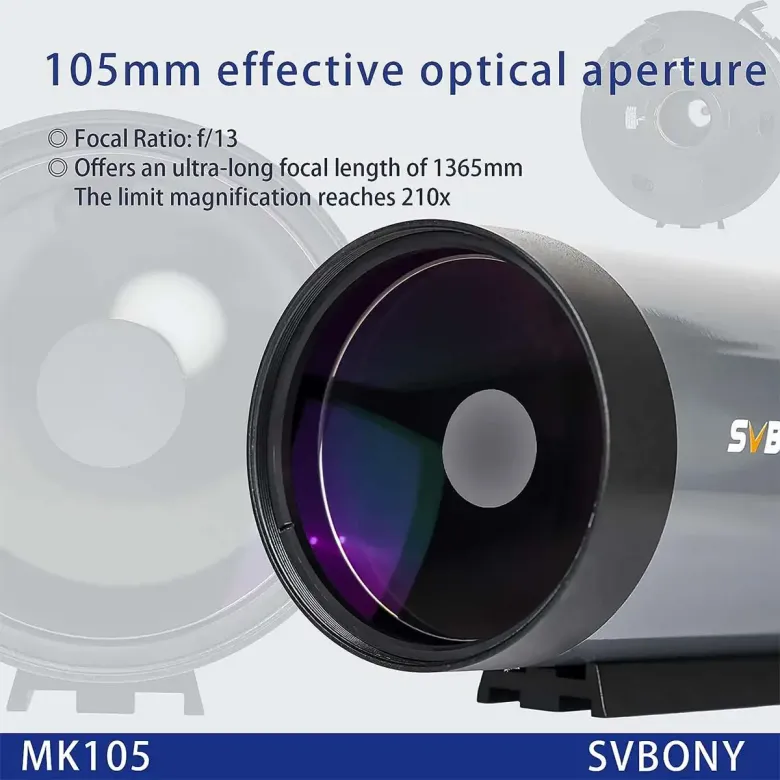
Maksutov-Cassegrain OTA | SVBONY MK105
[{"Title":"Compact Portable Design","Content":"Solves bulkiness, 14.84inch length \u0026 4.83lb weight (half refractor size)."},{"Title":"No Periodic Collimation","Content":"Convex meniscus lens design, reduces obstruction \u0026 boosts contrast."},{"Title":"Travel \u0026 Home Observation","Content":"Ideal for outdoor trips and backyard use, stable in transportation."},{"Title":"SVBONY Durable Quality","Content":"Metal mirror body \u002B electrolyte coating, 2-year warranty assured."},{"Title":"Dual Star-Seeking Bases","Content":"Built-in \u002B leaky bases, supports connection of more astronomical accessories."}]
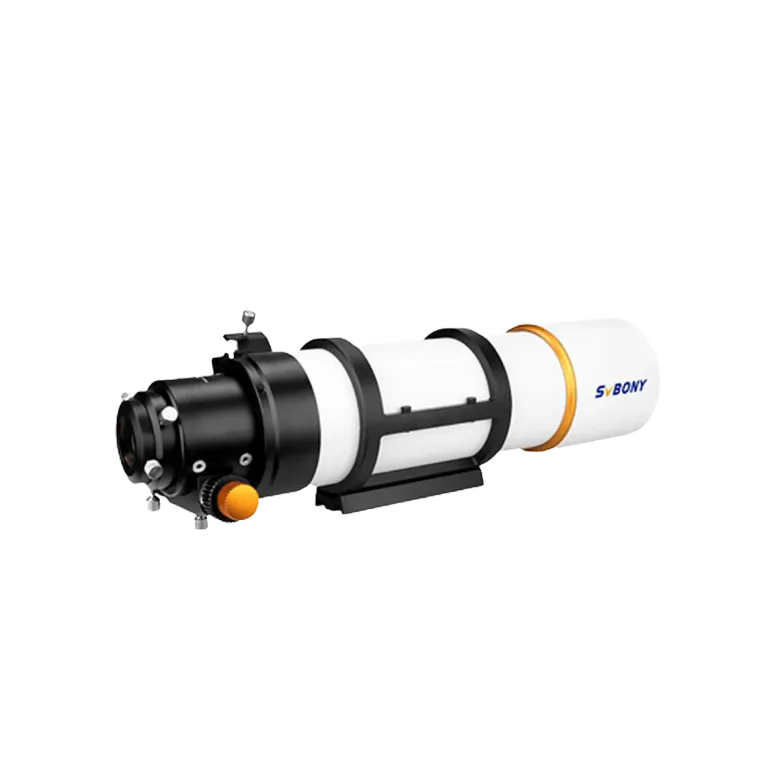
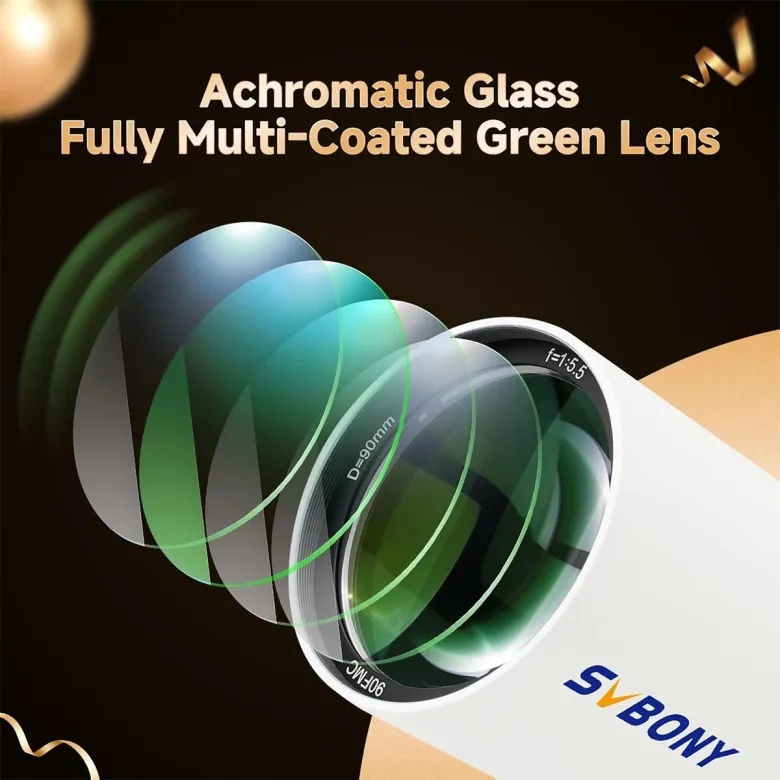
Achromatic Refractor | SVBONY SV48P 90
[{"Title":"90mm f/5.5 Achromatic Refractor","Content":"Delivers a wide field of view and bright images ideal for deep-sky astrophotography."},{"Title":"1:10 Dual-Speed Focuser","Content":"Provides precise, smooth focusing for both visual observation and camera imaging."},{"Title":"Multi-Green Coated Optics","Content":"Maximizes light transmission and reduces false color for clear, sharp astronomical views."},{"Title":"360\u00B0 Rotatable Focuser","Content":"Enables flexible framing and composition for both visual use and photography."},{"Title":"Includes Dovetail Plate","Content":"Simplifies mounting on various tripods and equatorial mounts for quick setup."}]
HOT
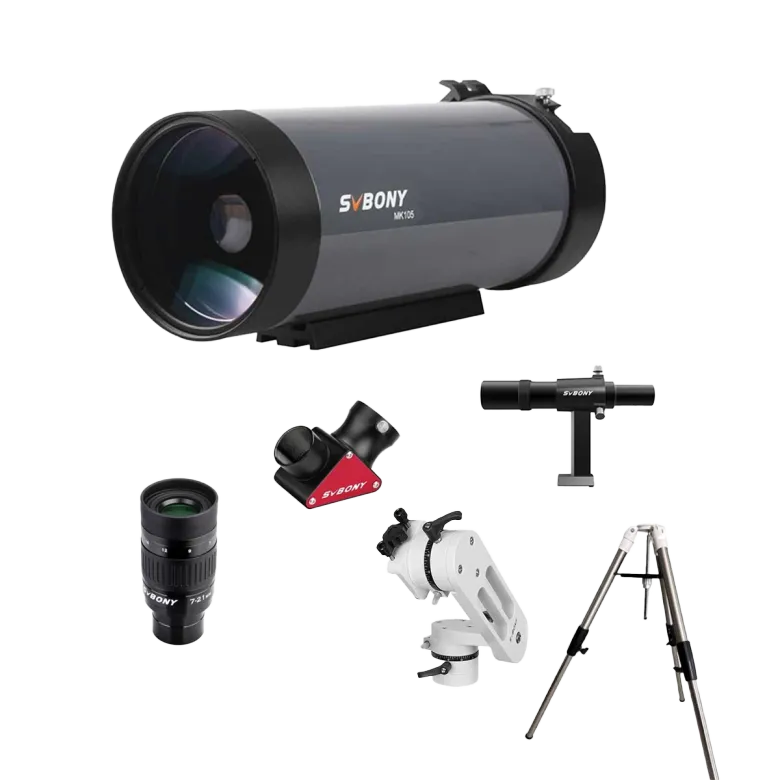
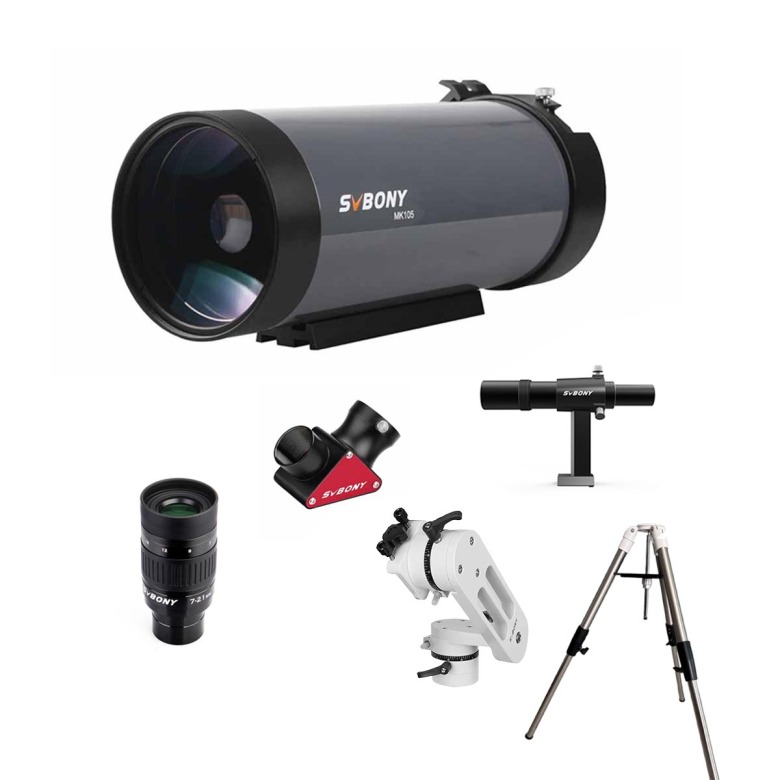
Planetary Telescope Set | SVBONY MK105
[{"Title":"Lightweight Portability","Content":"Eliminates heavy gear constraints, enabling easy transport for on-the-go use."},{"Title":"Compact yet Powerful","Content":"Portable design integrates high magnification without performance loss."},{"Title":"Mobile Observation","Content":"Ideal for travel and camping, ensuring celestial moments are not missed."},{"Title":"SVBONY Durability Assurance","Content":"2-year warranty with rugged construction for outdoor environments."},{"Title":"Official Package Inclusions","Content":"Standard accessories support immediate use out of the box."}]
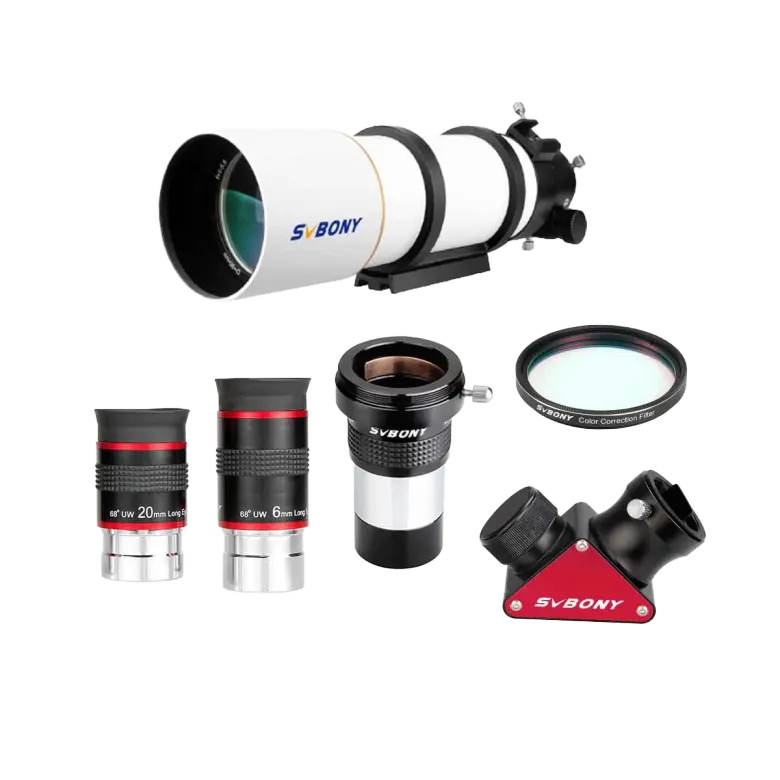
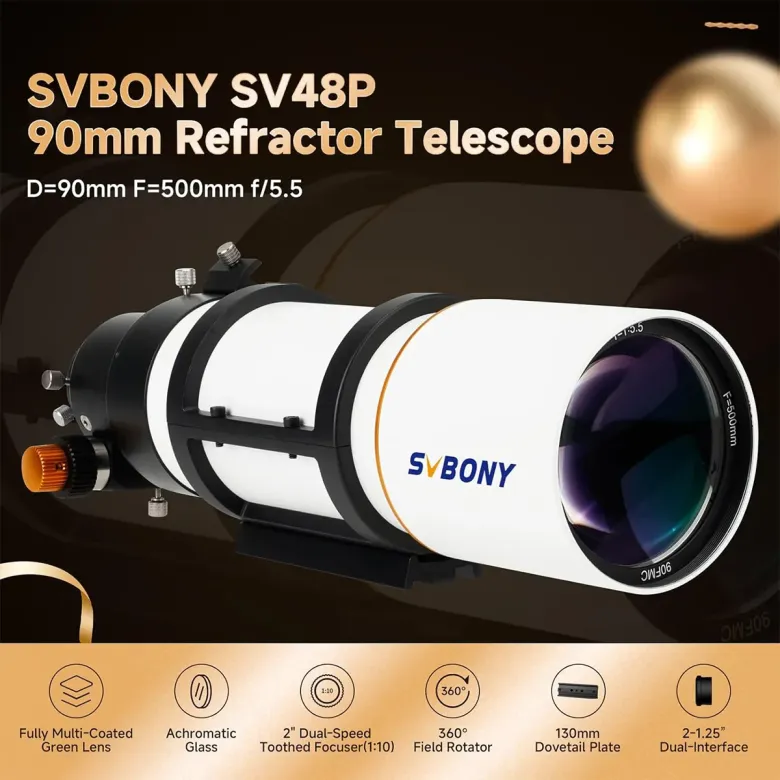
Achromatic Refractor Bundle | SVBONY SV48P
[{"Title":"Visual Astronomy Bundle","Content":"Includes OTA, diagonal, barlow Len,eyepieces, and color correction filter for immediate setup and use."},{"Title":"F5.5 Achromatic Refractor","Content":"Provides a fast focal ratio and wide field for both deep-sky and planetary observation."},{"Title":"Dual-Speed 2\u0022 Focuser","Content":"Enables precise focusing with a 1:10 gear ratio for sharp, clear astronomical views."},{"Title":"Enhanced Light Gathering","Content":"The 90mm objective lens collects ample light for bright, detailed views of celestial objects."},{"Title":"Beginner-Friendly Telescope Set","Content":"Ideal for newcomers to astronomy and stargazing."}]
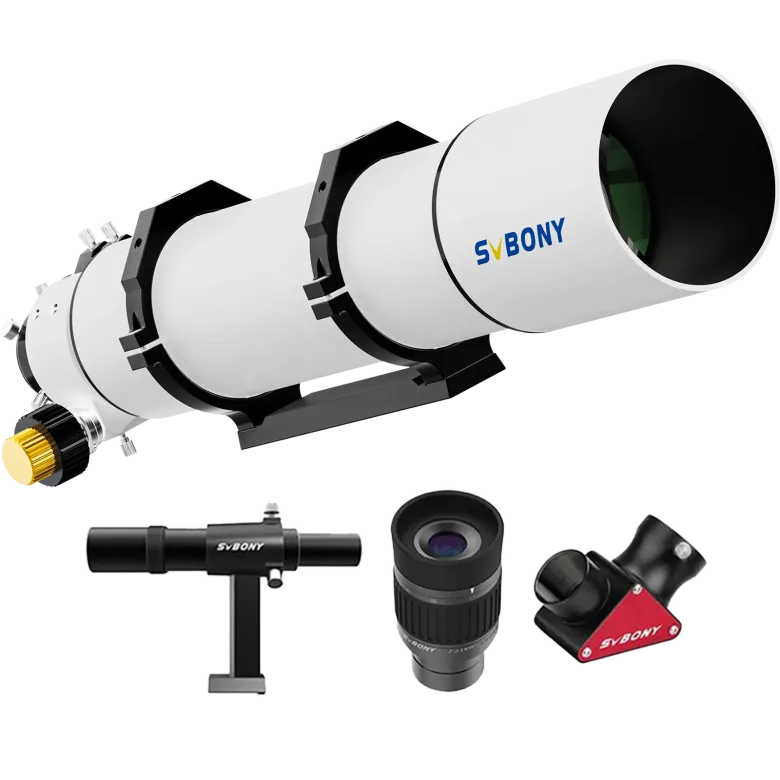
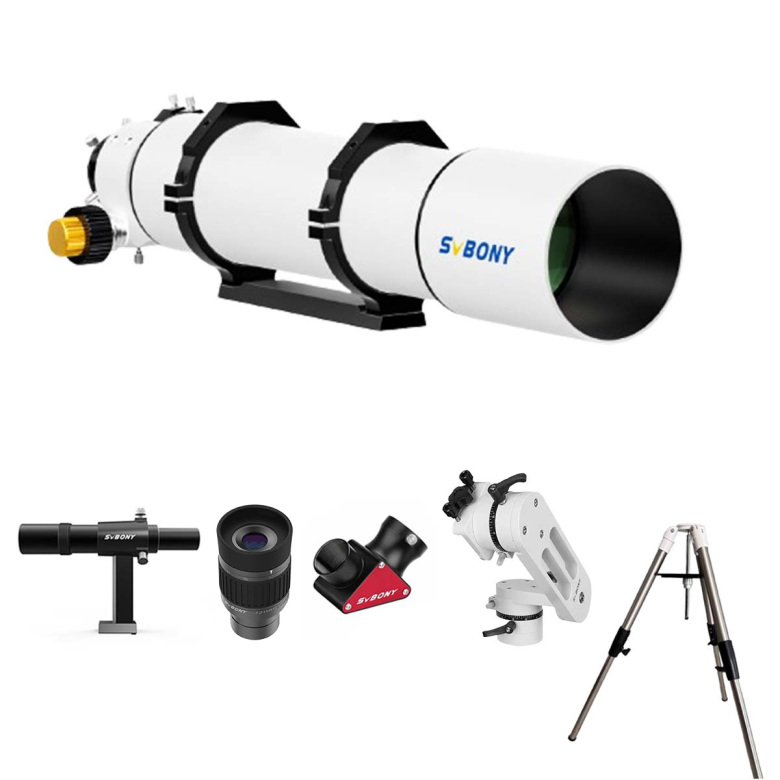
Refractor Visual Set | SVBONY SV48P
[{"Title":"Complete Visual Telescope Set","Content":"Includes OTA, mount, tripod, finder scope, diagonal, and zoom eyepiece for immediate observing."},{"Title":"102mm Achromatic Refractor OTA","Content":"Features a large aperture for bright, high-resolution views of planets and deep-sky objects."},{"Title":"7-21mm Zoom Eyepiece Included","Content":"Provides versatile magnification options without needing to swap eyepieces."},{"Title":"6x30 Correct-Image Finder Scope","Content":"Makes locating celestial targets quick and intuitive with an upright view."},{"Title":"Stable AZ Mount \u0026 Tripod","Content":"Offers smooth, vibration-free tracking for comfortable extended observation sessions."}]
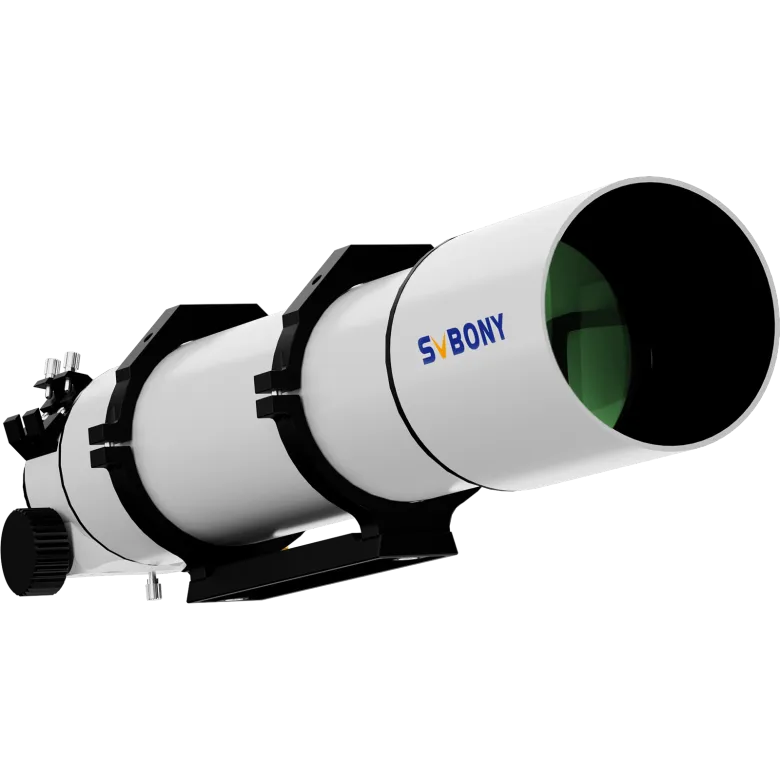
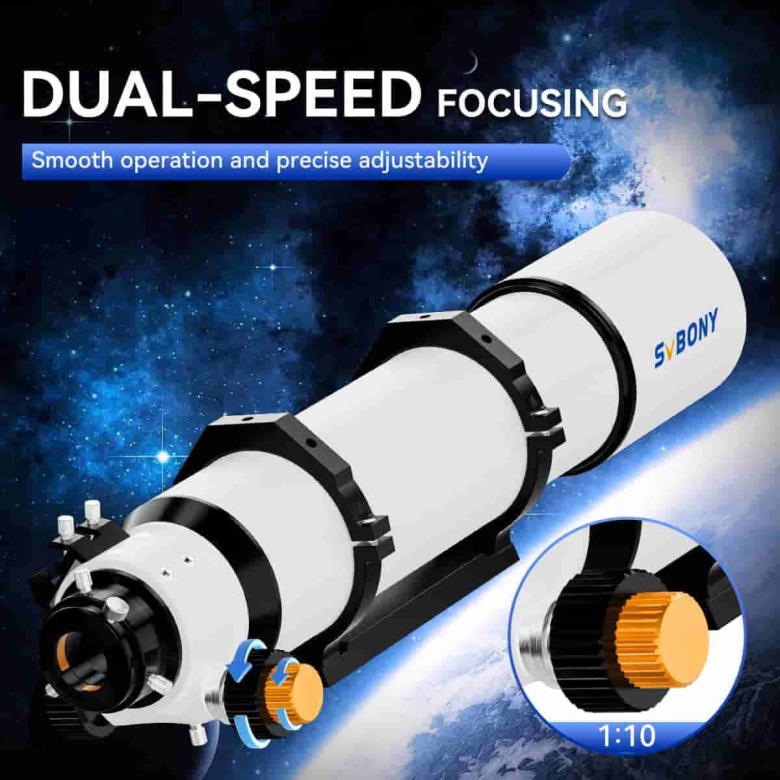
Achromatic Telescope | SVBONY SV48P 102
[{"Title":"102mm Large Aperture Refractor","Content":"Provides superior light gathering and high resolution for bright, detailed astronomical views."},{"Title":"2.5\u0022 RAP Dual-Speed Focuser","Content":"Enables rapid coarse focusing and fine precision adjustment for optimal image clarity."},{"Title":"f/6.5 Fast Focal Ratio","Content":"Delivers a wide field of view ideal for observing galaxies, nebulae, and star clusters."},{"Title":"Fully Multi-Coated Achromatic Optics","Content":"Minimizes chromatic aberration and enhances contrast for sharp, color-accurate viewing."},{"Title":"Integrated Dovetail Mounting Plate","Content":"Ensures secure, stable attachment to equatorial mounts for vibration-free observation."}]
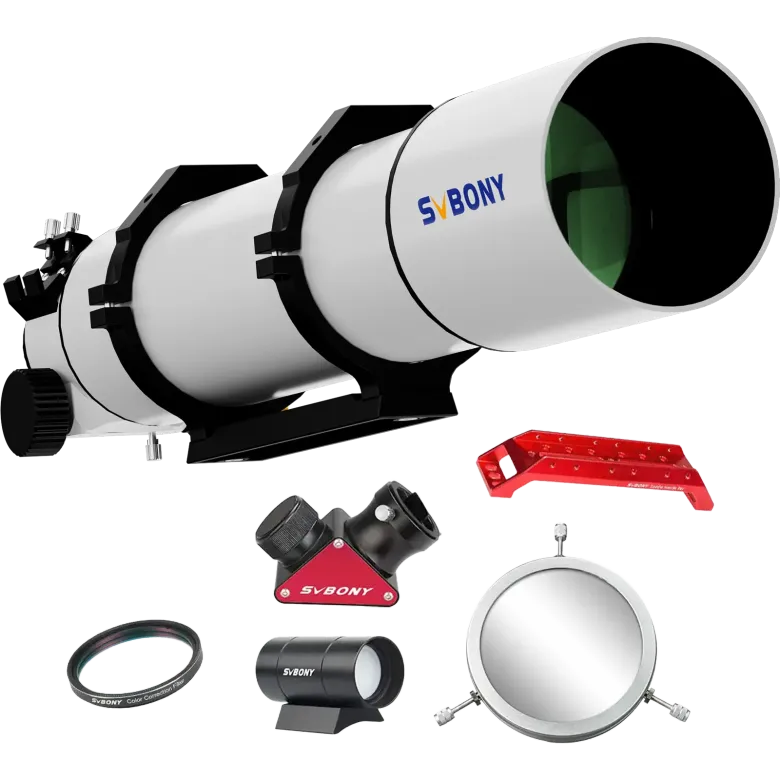
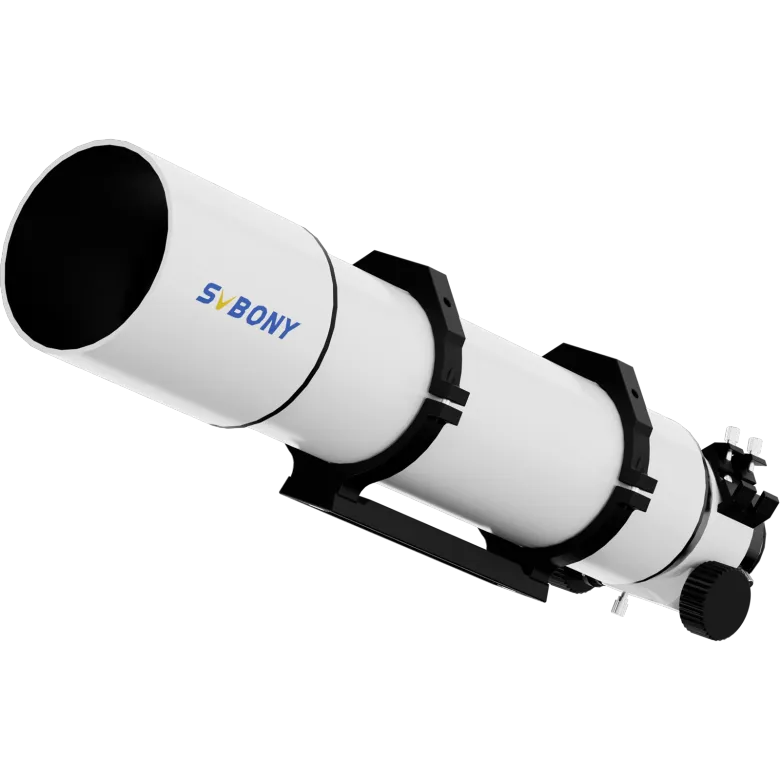
Solar Observation Kit | SVBONY SV48P
[{"Title":"102mm f/6.5 Achromatic Refractor","Content":"Combines a large aperture with a fast focal ratio for bright, wide-field celestial observation."},{"Title":"Complete Visual Observation Set","Content":"Includes telescope and accessories for immediate, ready-to-use astronomical viewing."},{"Title":"2.5\u0022 RAP Dual-Speed Focuser","Content":"Enables precise focusing with both fast rough adjustment and fine-tuning capabilities."},{"Title":"Fully Multi-Coated Achromatic Optics","Content":"Minimizes chromatic aberration and enhances contrast for sharp, color-accurate viewing."},{"Title":"User-Friendly \u0026 Stable Assembly","Content":"Features integrated tube rings and tool-free setup for quick, stable, and enjoyable observing sessions."}]
HOT
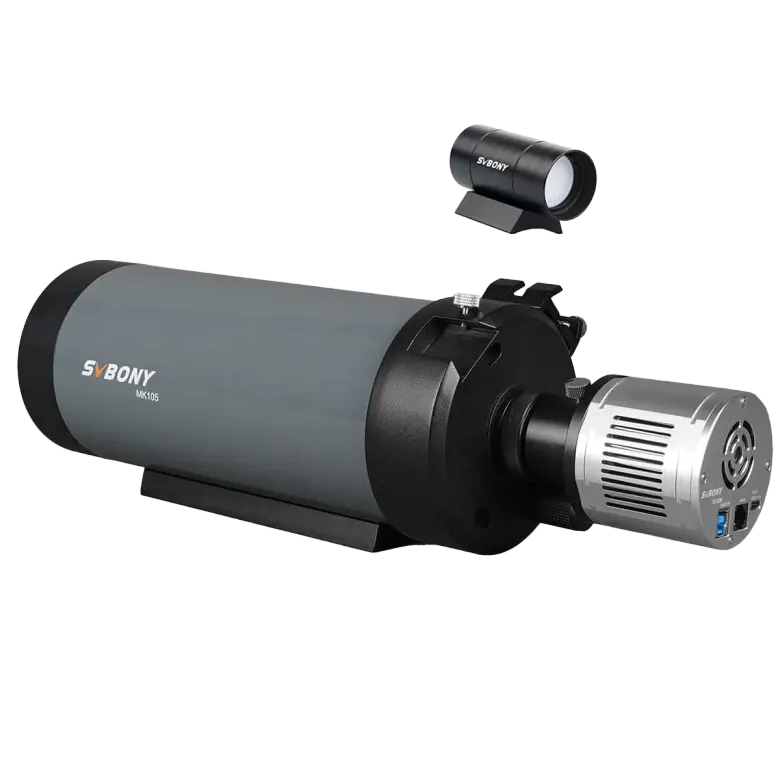
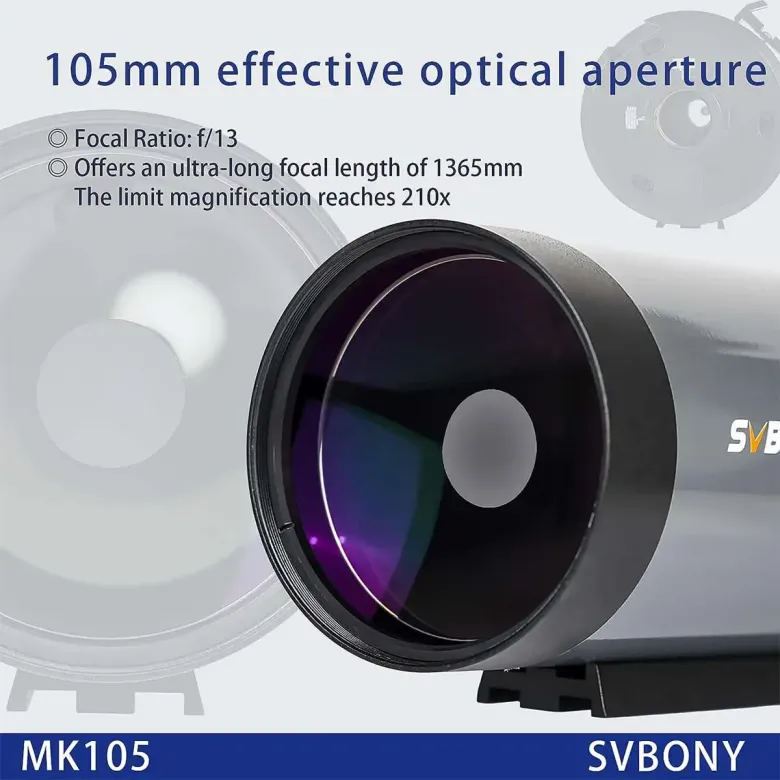
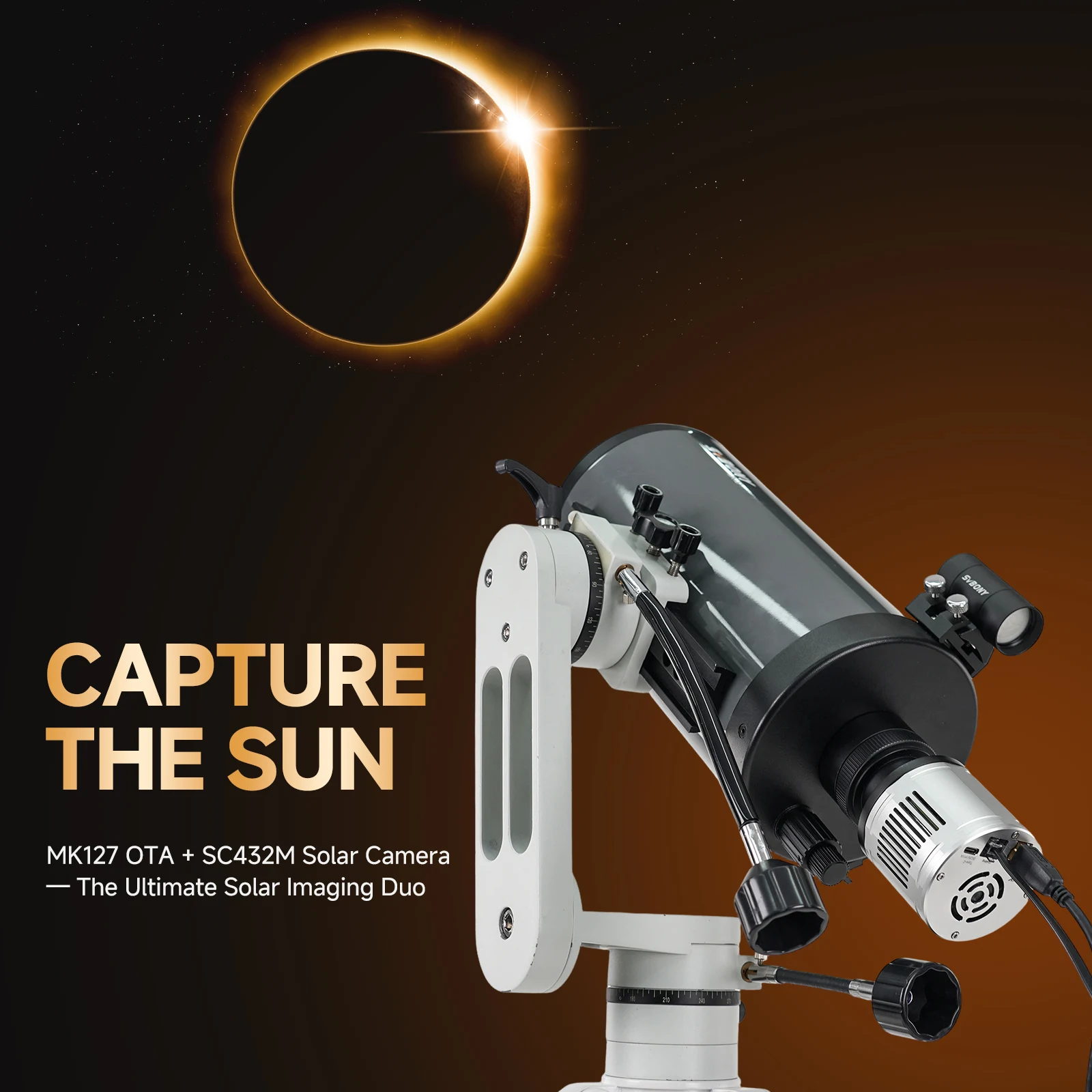
Eclipse Photography Set | SVBONY MK105
[{"Title":"Crystal-Clear Sunspot Viewing","Content":"Resolves solar observation blur, capturing fine sunspot details accurately."},{"Title":"Solar-Specific Sensor","Content":"Specialized sensor optimized for safe, high-precision solar imaging."},{"Title":"Indoor \u0026 Outdoor Use","Content":"Operates seamlessly on balconies or field sites, simplifying solar photography."},{"Title":"SVBONY Reliability Commitment","Content":"2-year warranty with professional technical support."},{"Title":"Official Standard Bundle","Content":"Includes essential components for solar observation."}]
Visual Observation Set | SVBONY SV48P 90
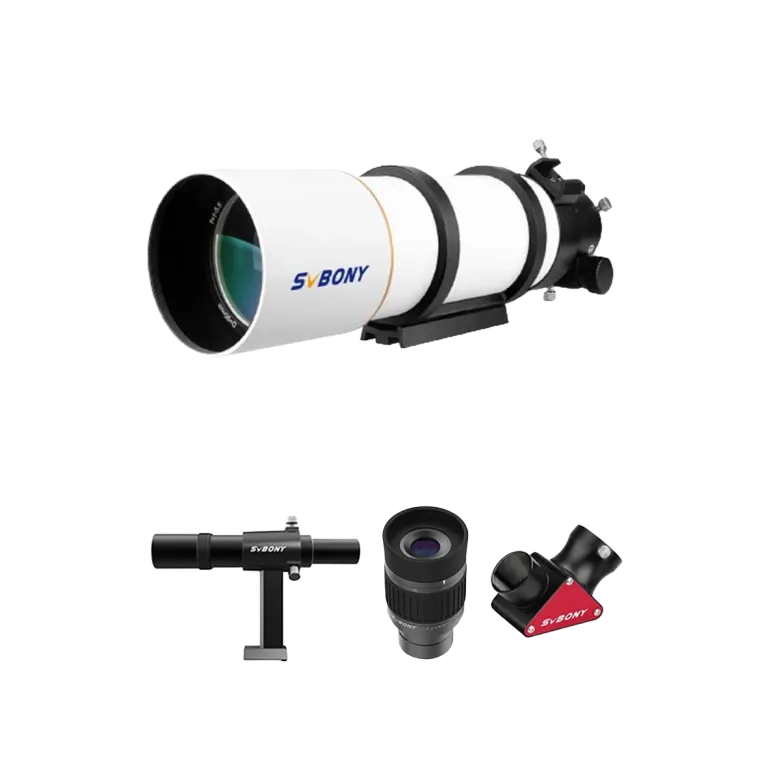
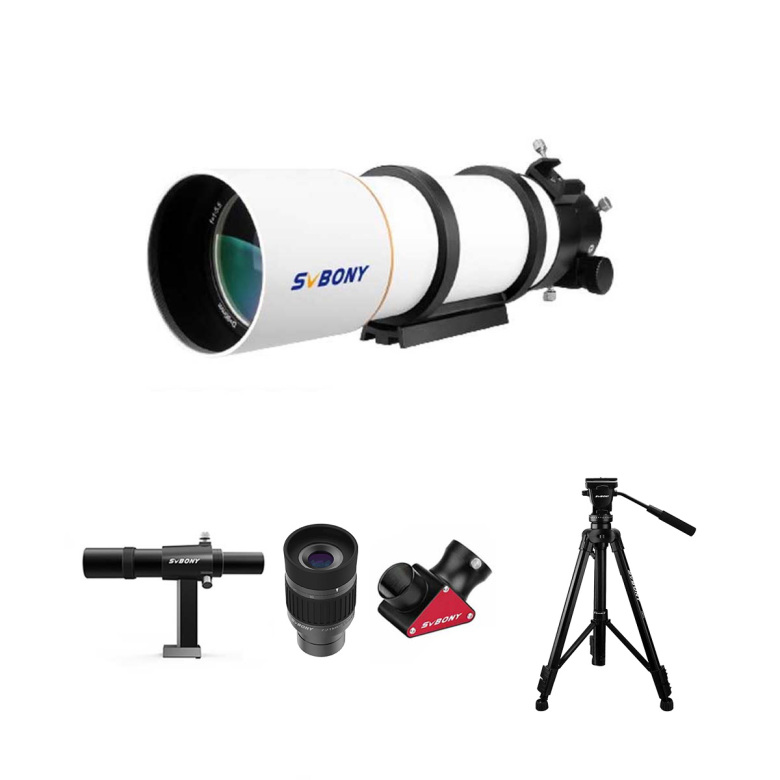
[{"Title":"Complete Beginner Telescope Set","Content":"Includes all essential components for immediate, hassle-free astronomical observation."},{"Title":"90mm Aperture for Bright Views","Content":"Gathers ample light to deliver clear, detailed views of the Moon, planets, and deep-sky objects."},{"Title":"Visual Observation Ready Bundle","Content":"Comes with eyepiece, finder scope, and diagonal for a fully functional out-of-the-box experience."},{"Title":"Fast f/5.5 Focal Ratio","Content":"Provides a wide field of view ideal for observing star clusters, galaxies, and nebulae."},{"Title":"Flexible Mounting Options","Content":"Compatible with various tripods and mounts to suit your preferred observation setup."}]
NEW
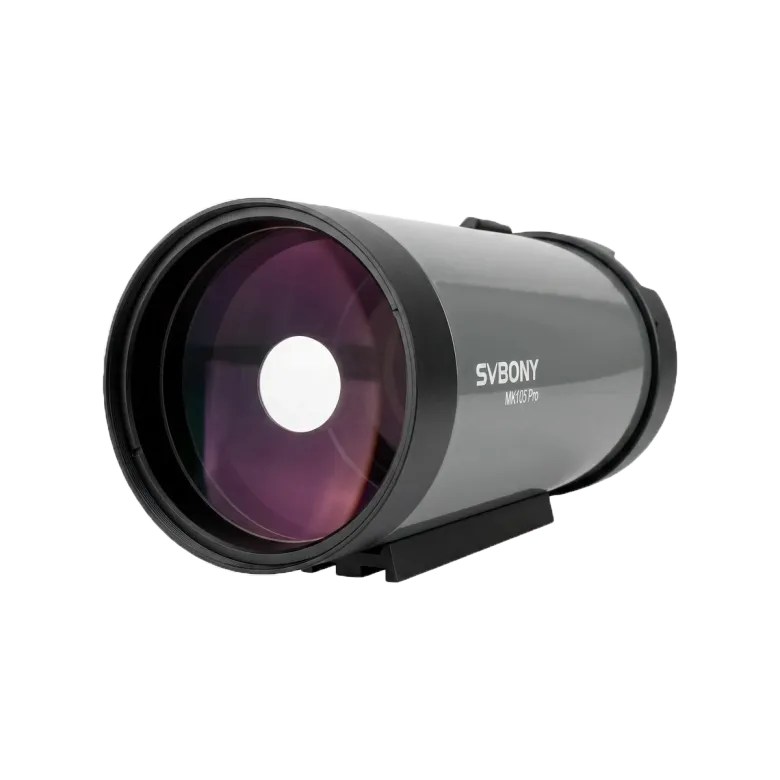
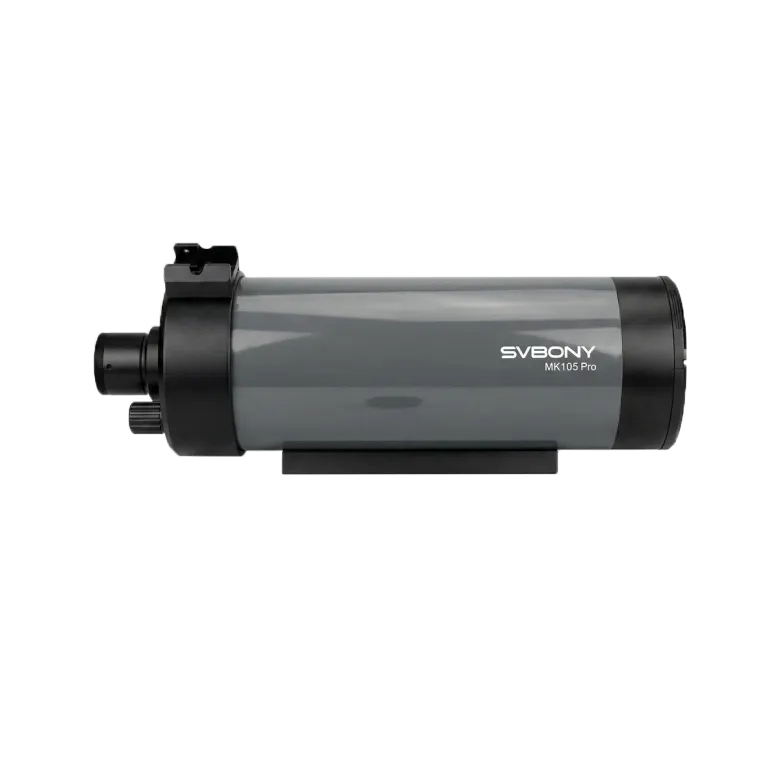
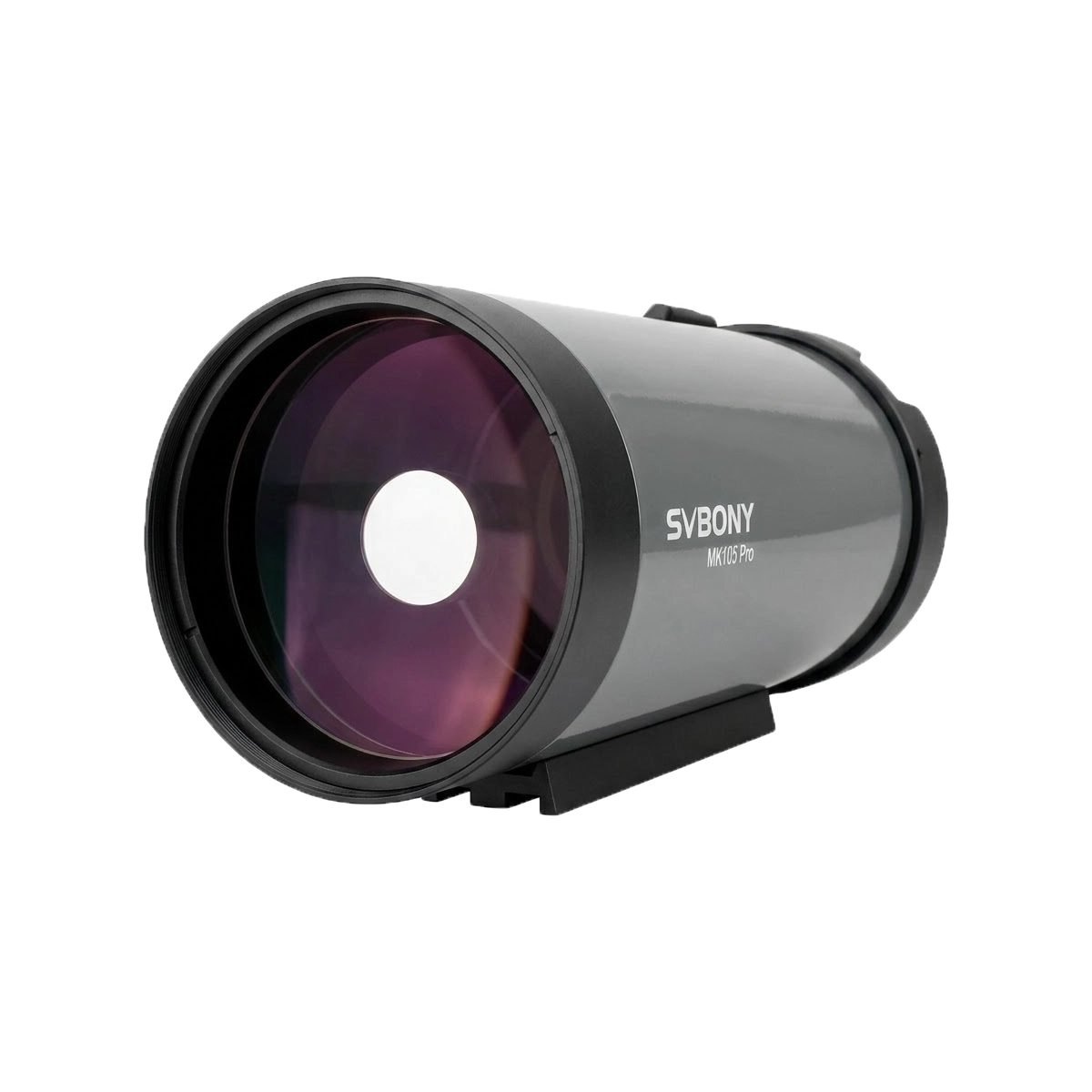
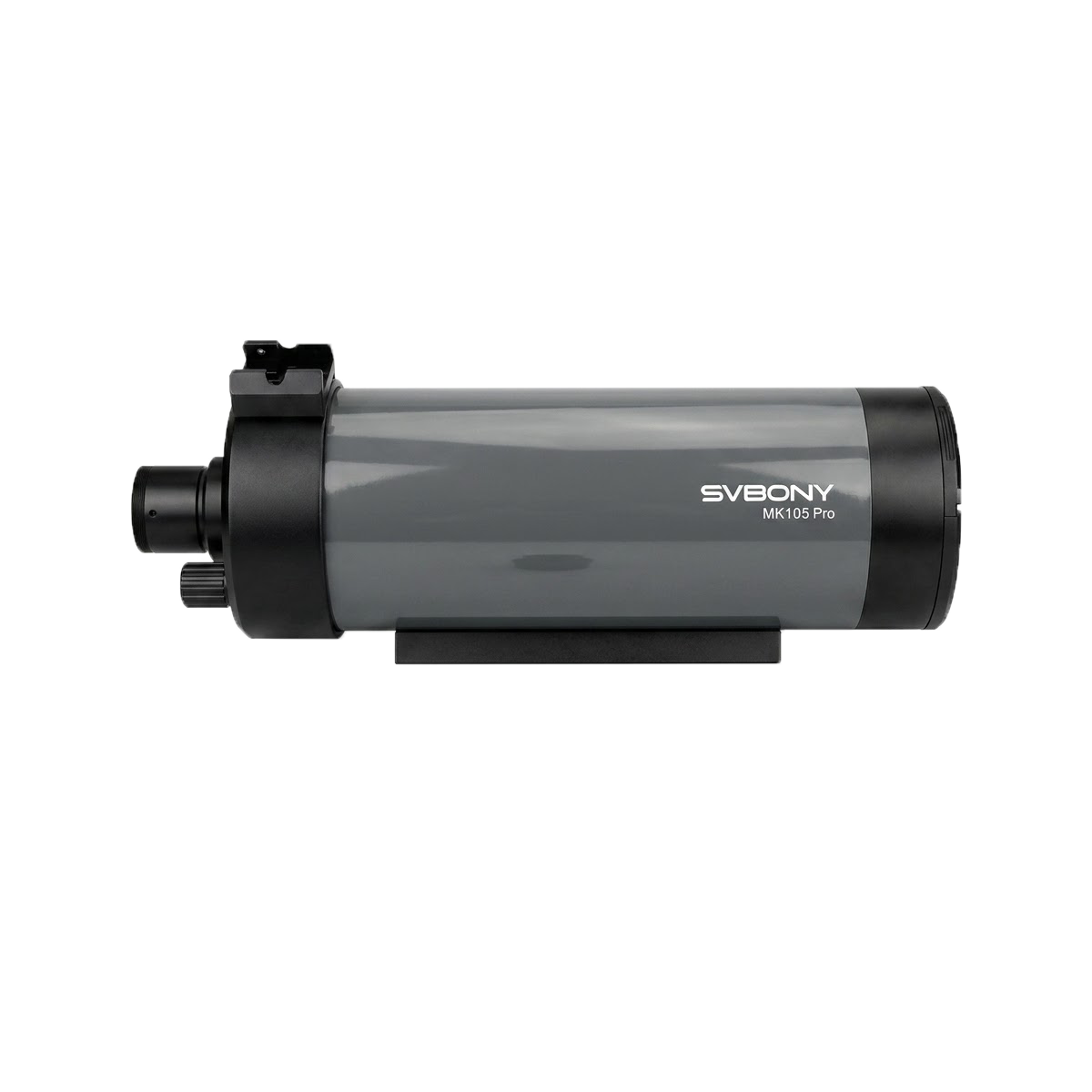
MK105 Pro 105mm Astro Telescope
[{"Title":"High-Mag Clarity","Content":"105mm aperture and 1400mm focal length deliver crisp, 210x magnified views, eliminating blurry images."},{"Title":"Bright \u0026 Vivid Views","Content":"Advanced FMC \u0026 \u003E99% reflective coatings maximize light intake, solving the pain point of dim night-sky views."},{"Title":"Rock-Solid Build","Content":"Made of heavy-duty 6061T aluminum alloy, eliminating the shaky, cheap plastic feel of budget scopes."},{"Title":"Razor-Sharp Details","Content":"Features a precise 1.1-arcsec resolution to easily capture fine planetary structures without distortion."},{"Title":"Compact Powerhouse","Content":"At just 385mm long and 2200g, it offers professional deep-sky performance in a highly portable size."}]
NEW HOT
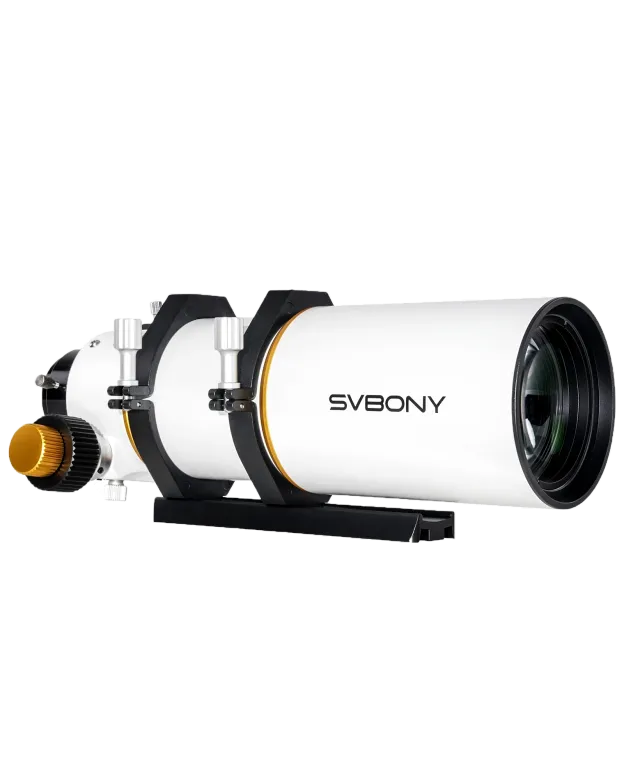
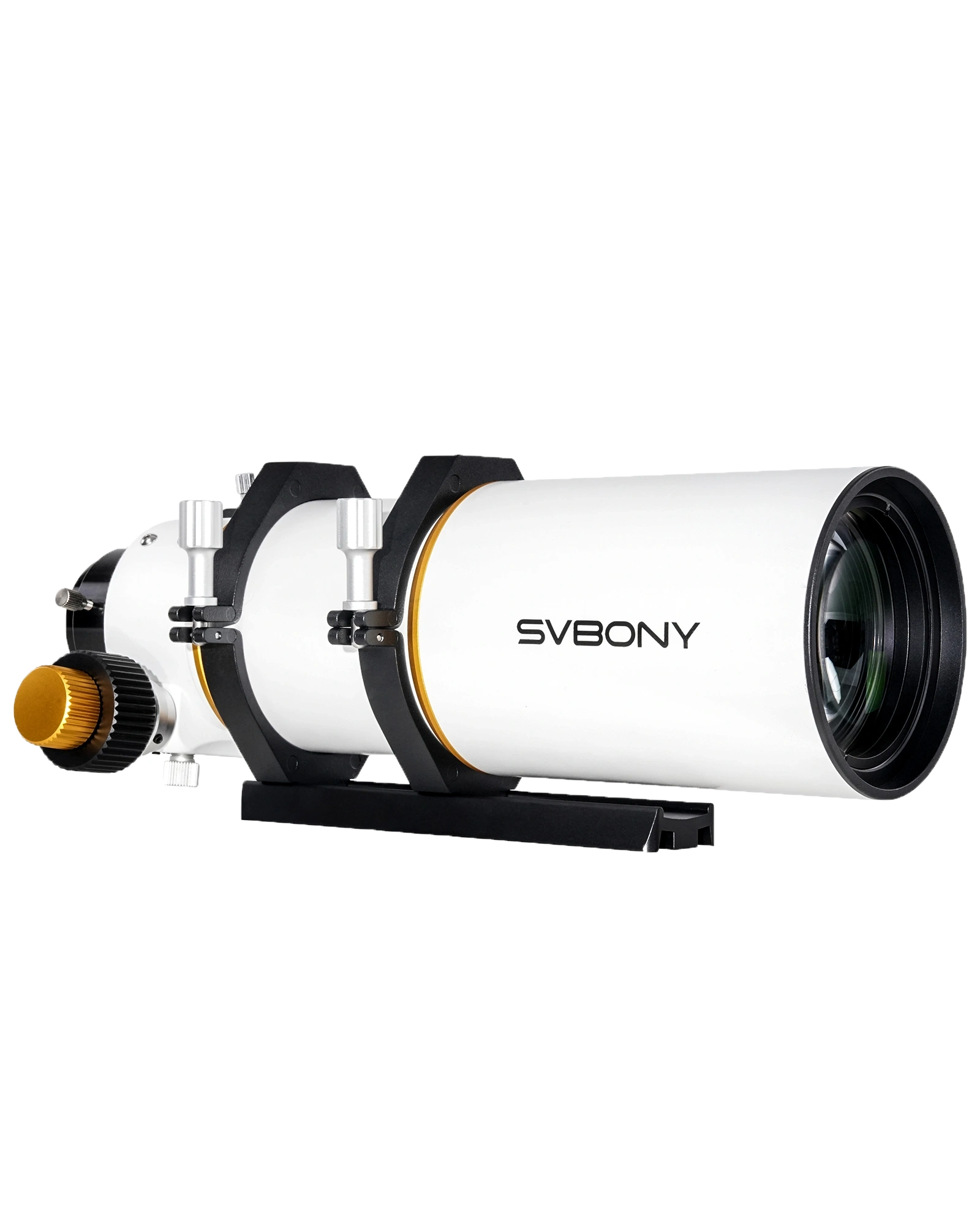
ED Refractor SV530 80mm Astrophotography
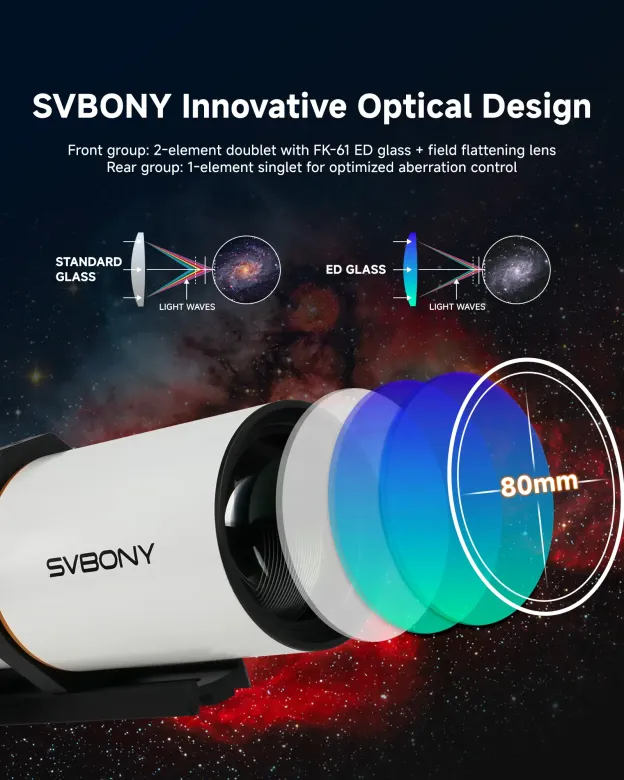
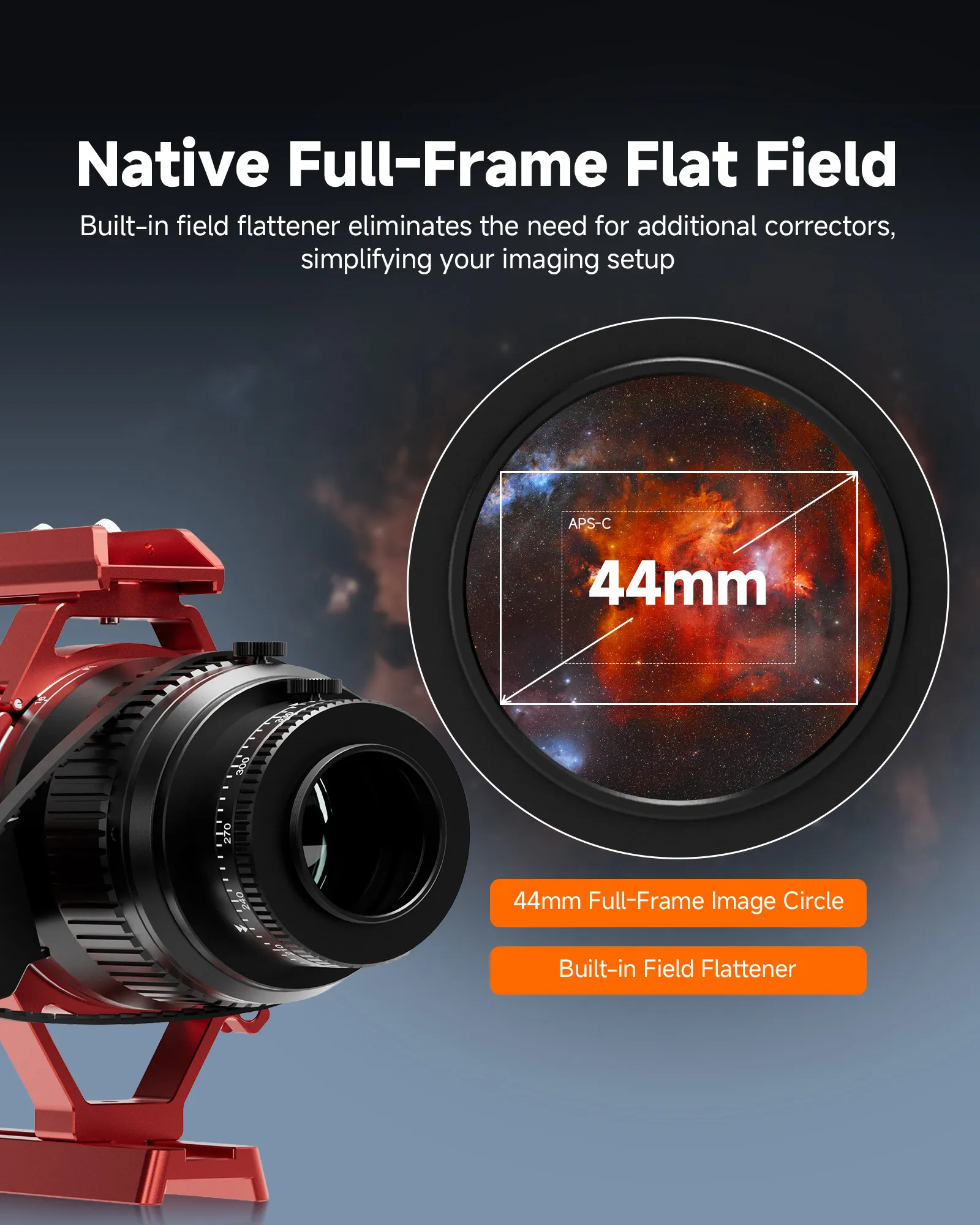
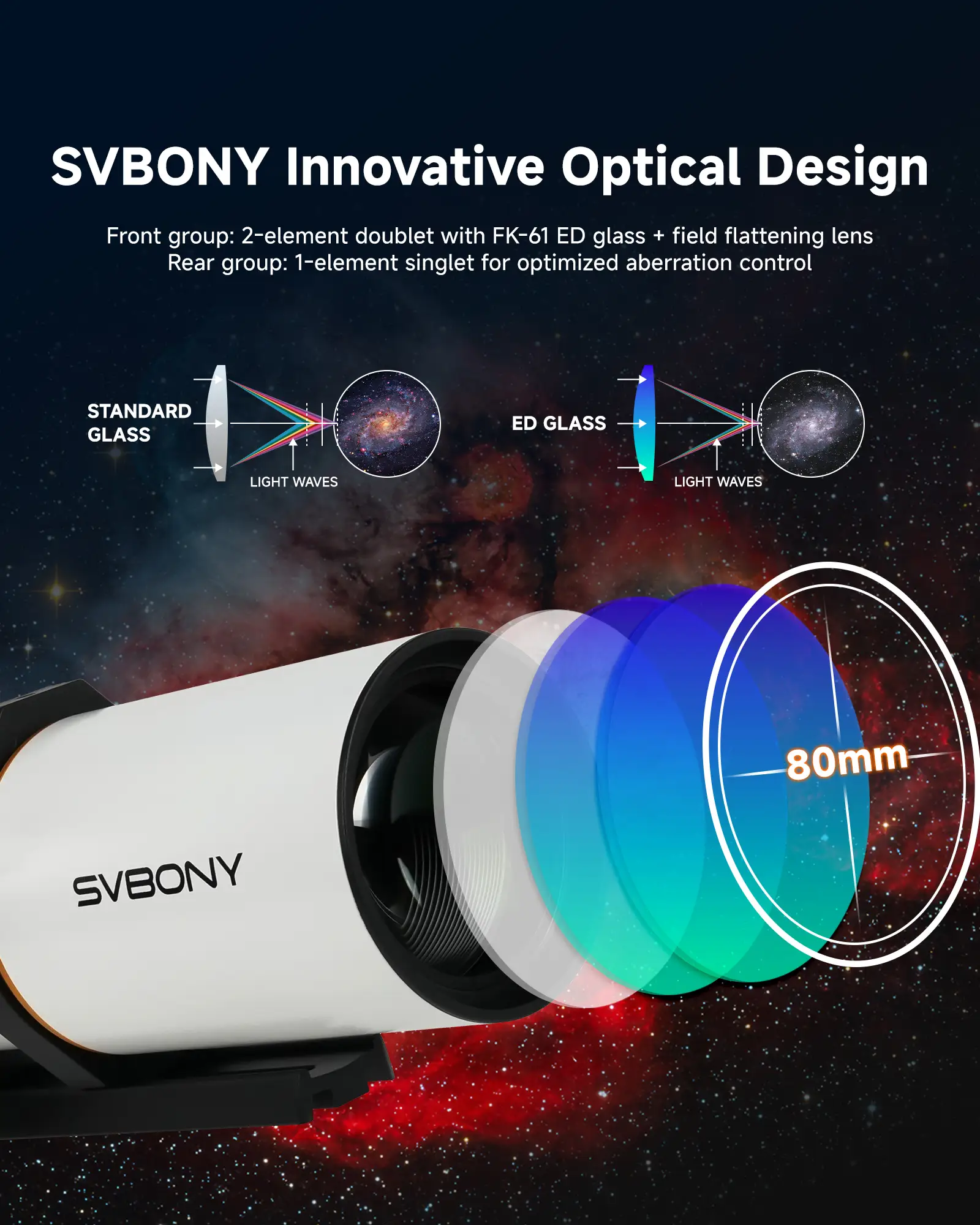
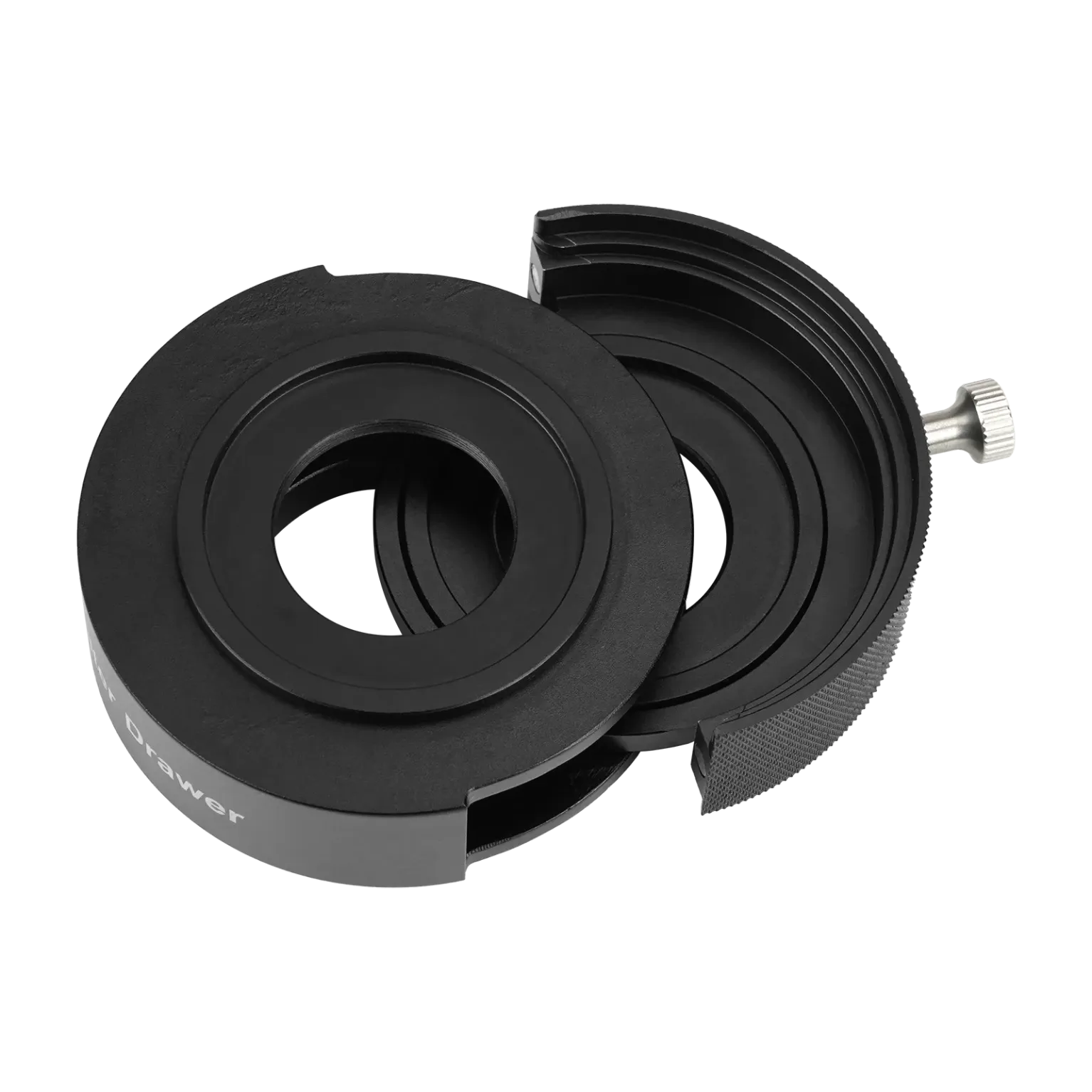
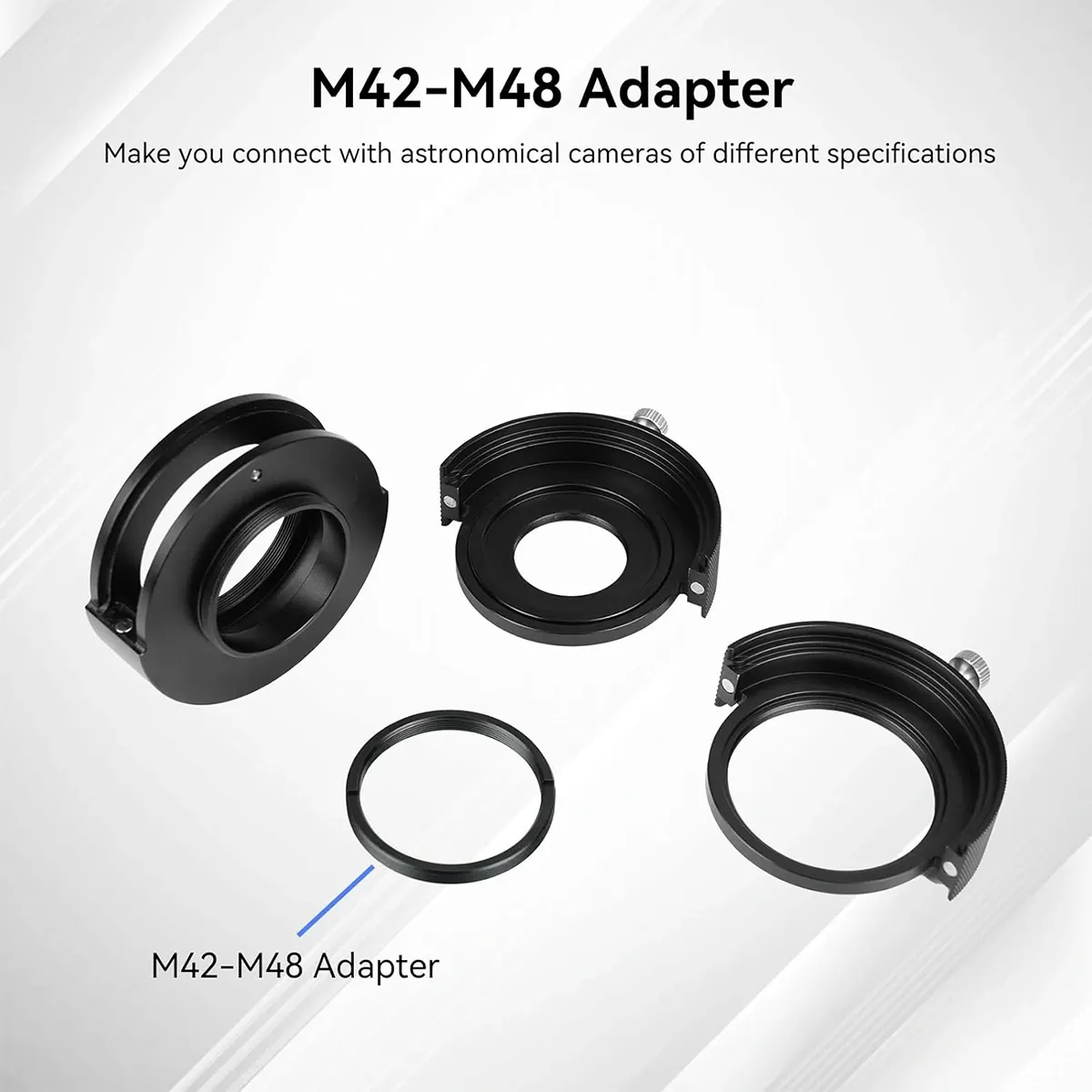
[{"Title":"80mm ED Optics for Edge-to-Edge Sharpness","Content":"ED doublet objective with a built-in field flattener reduces chromatic aberration and field curvature, delivering crisp, high-contrast images from center to edge \u2014 keeping stars sharp across the entire field of view."},{"Title":"480mm f/6 Wide-Field Optics for Deep Sky \u0026 Lunar Viewing","Content":"Enjoy bright, detailed views of nebulae, star clusters, and the Moon with a versatile focal length designed for wide-field observation and astrophotography."},{"Title":"AR Coating \u002B Internal Light Control for Brighter, Clearer Views","Content":"Multi-layer anti-reflective coating, lens-edge blackening, and internal light-absorbing paint work together to improve light transmission and suppress stray light \u2014 delivering brighter, higher-contrast images even under light-polluted skies."},{"Title":"10:1 Dual-Speed Focuser for Precise Focus Control","Content":"The 2.5-inch rack-and-pinion focuser with a 10:1 fine-focus ratio and 60mm travel range allows smooth, accurate adjustments for planets, deep-sky targets, and astrophotography setups."},{"Title":"Astrophotography-Ready Compatibility for Easy Camera Setup","Content":"Includes an M63-to-M48 adapter for connecting DSLR cameras, CMOS/CCD astronomy cameras, and imaging accessories with a flexible astrophotography-ready design."}]
Starter Telescopes for Different Observing Goals
Choosing your first telescope depends on what you want to observe and how you plan to use it. The SVBONY Starter Collection brings together a range of starter telescopes for beginners with different optical designs, focal lengths, and capabilities, offering practical options for stargazing, lunar and planetary observation, and astrophotography.
For beginners interested in stargazing, an easy-to-use can make it easier to explore the Moon, planets, star clusters, and brighter deep-sky objects. The SV48P achromatic refractor provides wide-field views, while the compact MK90 is a practical choice for observers who value portability.
For detailed lunar and planetary observation, the MK105 and MK90 Maksutov-Cassegrain telescopes feature long focal lengths and require no periodic collimation under normal use. Their optical designs make them well suited to observing the Moon and planets.
For those interested in astrophotography, the SV530 ED refractor offers sharp, color-accurate imaging and can be paired with an astronomy camera and suitable accessories. When comparing different models, consider aperture, focal length, optical design, portability, and your intended targets.
There is no single best telescope for beginners—the right choice depends on your observing goals and experience level. This beginner telescope buying guide can help you identify the features that matter most for your setup.
Explore the SVBONY Starter Collection to find a telescope for beginners suited to birdwatching, stargazing, lunar and planetary observation, or astrophotography.
Faqs About Starter Collection
Choosing a beginner telescope depends on what you want to observe, where you plan to use it, and how easy it is to set up and carry. A beginner telescope guide should cover key factors such as aperture, focal length, optical design, portability, and ease of use.
If you are looking for a beginner telescope buying guide, start by considering your observing goals and experience level. There is no single best telescope for beginners—a good choice should offer a practical balance of performance, portability, and ease of use.
A good beginner telescope should be easy to set up, comfortable to use, and suitable for the objects you want to observe. A recommended beginner telescope should offer a practical balance of aperture, optical performance, portability, and ease of use rather than simply having the largest aperture.
For beginners, a beginner astronomy telescope should make it easy to explore the Moon, planets, star clusters, and brighter deep-sky objects while helping you build your observing skills.
A good starter telescope can reveal much more than you can see with the naked eye. Depending on the telescope's aperture and observing conditions, beginners can explore the Moon's craters, planetary details, double stars, star clusters, and some brighter nebulae and galaxies.
A beginner stargazing telescope can be a great way to learn the night sky. Your location and light pollution also affect what you can see, so choosing suitable targets is an important part of the beginner astronomy experience.
Yes. Some telescopes can be suitable for astrophotography for beginners, particularly when paired with a suitable astronomy camera and accessories. When choosing a telescope for astrophotography, consider factors such as focal length, optical performance, camera compatibility, and the type of targets you want to photograph.
The SV530 ED refractor in the SVBONY Starter Collection offers sharp, color-accurate imaging and can be paired with an astronomy camera, making it a practical option for beginners exploring astrophotography.
For beginners interested in lunar and planetary observation, a telescope with a longer focal length can be useful for viewing detailed features on the Moon and planets. A telescope for beginners to see planets should also offer sufficient aperture and stable focusing for comfortable observation.
The MK105 and MK90 Maksutov-Cassegrain telescopes feature long focal lengths and require no periodic collimation under normal use, making them practical choices for beginners who want to observe planets.





 Google
 Amazon