


Table of Contents
Halloween Telescope Gift Guide: Stargazing Ideas for Kids
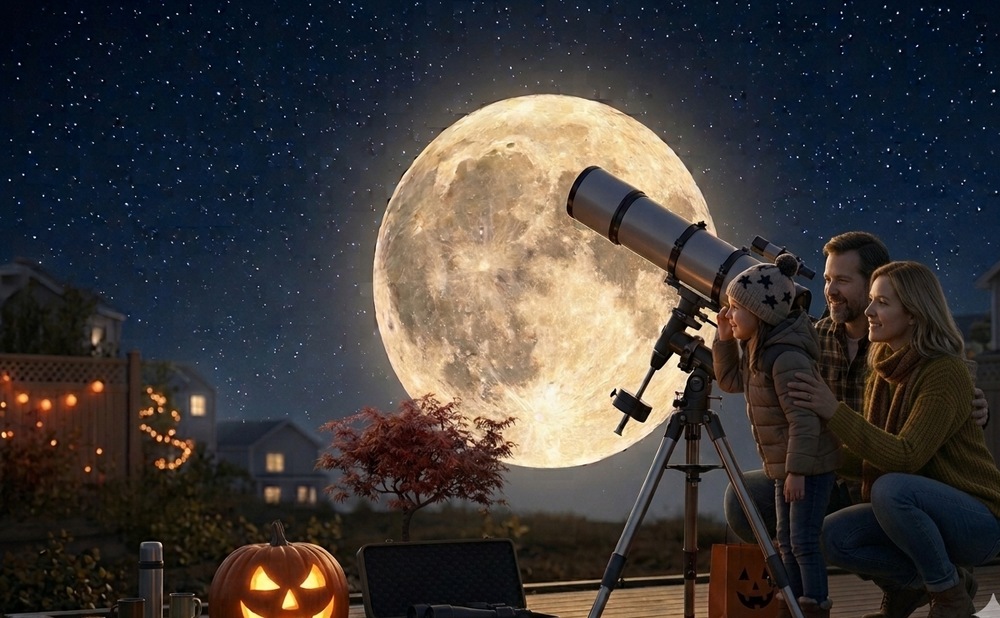
Looking for a unique telescope gift for kids this Halloween? A telescope can turn an ordinary autumn evening into a fun family stargazing adventure, helping children explore the Moon, discover planets, and learn about the night sky.
Whether you're choosing a first telescope for a young child or a more advanced option for an older stargazer, this guide shares practical telescope gift ideas, tips for choosing the best telescope for kids, and spooky celestial targets to explore together.
Why a Telescope Makes a Great Halloween Gift for Kids
Halloween is often associated with costumes, candy, and trick-or-treating, but it can also be a chance for kids to discover something new. A telescope offers a hands-on way to explore the universe, spark curiosity, and share memorable experiences with family.
Here are a few reasons to consider a telescope among your astronomy gifts for kids:
1.Encourages curiosity: Exploring the Moon and planets can inspire children to ask questions about space and the universe.
2.Makes learning interactive: Kids can observe celestial objects firsthand instead of just reading about them in books.
3.Brings families together: Parents and children can explore the night sky, identify celestial objects, and share discoveries.
4.Inspires a lasting hobby: As their skills grow, kids can progress from observing the Moon to exploring planets, star clusters, and other deep-sky objects.
A telescope is more than a gift to unwrap. It's an opportunity for kids to discover the night sky and keep exploring long after Halloween is over.
How to Choose the Best Telescope for Kids
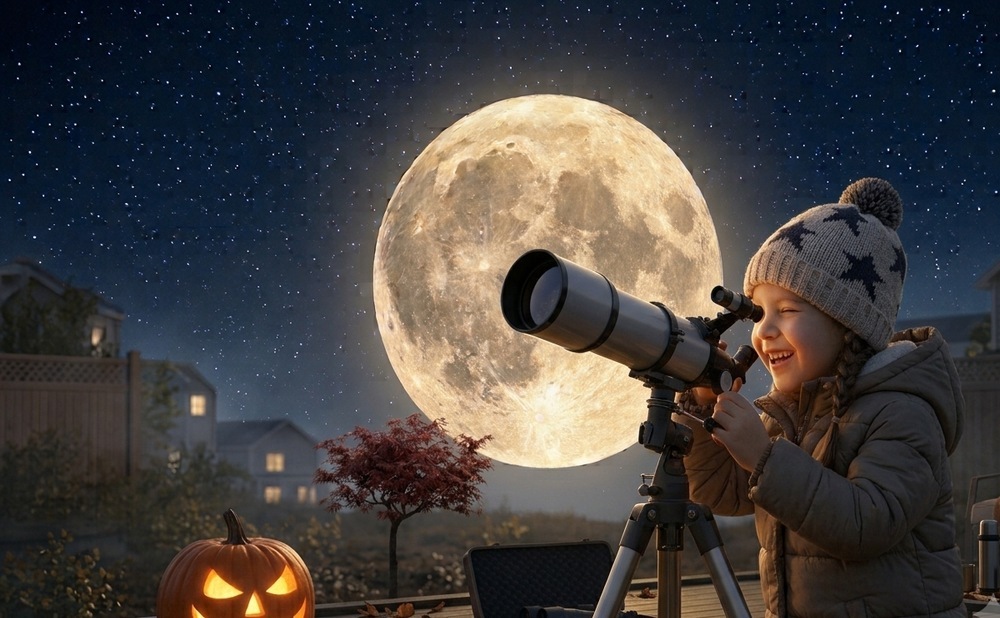
The right telescope depends on a child's age, interests, and readiness to use the equipment. Consider the following guidelines as a starting point rather than strict age limits.
Choosing a Telescope for Kids by Age
1.Ages 4–5: Look for a lightweight, simple refractor telescope with a stable mount. At this age, children will usually need adult help with setup, aiming, and focusing. Start with the Moon and other easy-to-find bright objects.
2.Ages 6–7: A beginner refractor or compact tabletop reflector can be a good option. Choose a manageable setup with straightforward controls so children can gradually learn to focus and aim at the Moon and bright planets with adult guidance.
3.Ages 8–12: Children ready for more hands-on exploration may enjoy a refractor or a larger-aperture tabletop reflector. Depending on the telescope and observing conditions, they may be able to explore more lunar detail, planetary features, and brighter star clusters.
Age is only a starting point. A child's patience, coordination, and interest in learning how to operate the equipment also matter.
What Is a Good Starter Telescope for a Child?
A good starter telescope should be easy to use and suited to the child's main observing interests.
For children who want to see the Moon and planets, a refractor with a stable mount is a practical starting point. If they are more interested in exploring a wider range of objects, a telescope with a larger aperture may offer more opportunities as their skills develop.
When choosing a telescope for kids, prioritize good optical quality, a stable mount, simple setup, and manageable size. Aperture affects how much light a telescope collects and how much detail it can reveal, while higher magnification alone does not guarantee a better view.
The best starter telescope is one that children can enjoy using with appropriate adult support, without making each observing session feel like a complicated task.
Best Things for Kids to See Through a Telescope on Halloween
A Halloween telescope adventure is even more exciting when kids have celestial targets to look for. Start with the Moon and visible planets, then introduce a spooky-named nebula for an extra Halloween challenge.
What you can see depends on your location, the date and time, weather, light pollution, and your telescope. Check a current sky chart to find out which objects will be visible on Halloween night.
The Moon — An Easy First Target
The Moon is an excellent starting point for young stargazers. Even a beginner telescope can reveal craters, bright highlands, and darker lunar plains that are difficult to distinguish with the naked eye.
The lunar phase affects the view. A full Moon is bright and impressive, while the shadows near the boundary between lunar day and night, known as the terminator, can make craters and mountains stand out more clearly.
Start with low magnification and let children take turns observing.
Planets — A Treat Beyond Trick-or-Treating
Planets add another exciting target to stargazing on Halloween with telescopes. Which planets are visible depends on the date, time, and location, so check a current astronomy app or sky chart before heading outside.
Through a suitable telescope, Jupiter may reveal its major cloud bands and four largest moons. Saturn's rings can also be rewarding to observe when the planet is visible and the rings are favorably presented.
Not every planet will be visible during convenient evening hours on Halloween. Check in advance rather than promising children a view of a specific planet.
Spooky Nebulae for a Halloween Stargazing Night
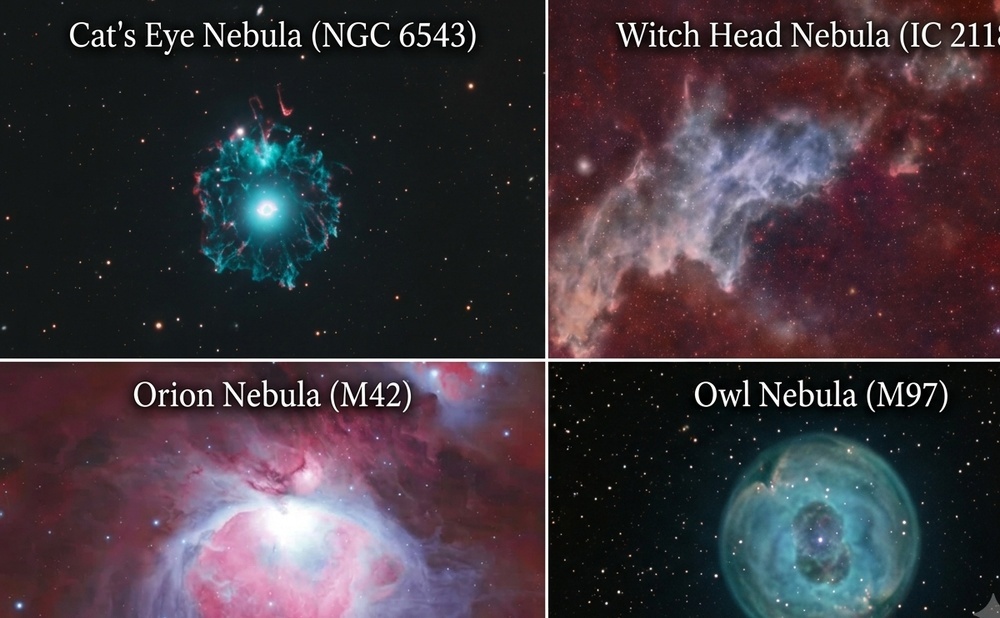
For an extra Halloween twist, introduce kids to nebulae with unusual names. Keep in mind that many are faint and difficult to observe visually, especially through beginner telescopes. Their appearance through an eyepiece is also much less colorful than astrophotography images.
1.Owl Nebula (M97): Located in Ursa Major, this planetary nebula is named for the owl-like appearance of its dark regions in images. It can be a challenging target for visual observers.
2.Cat's Eye Nebula (NGC 6543): This compact planetary nebula in Draco has a fitting Halloween name, but its small apparent size can make it difficult for beginners to locate and observe in detail.
3.Witch Head Nebula (IC 2118): Associated with Rigel in Orion, this faint reflection nebula is spread over a large area of sky and is better suited to astrophotography than to visual observing with a typical children's telescope.
4.Orion Nebula (M42): A more practical deep-sky target under suitable conditions, the Orion Nebula may appear as a misty patch of light with some visible structure. Check whether it has risen high enough at your location before planning to observe it.
For a first family observing session, prioritize the Moon and visible planets. Treat faint nebulae as optional challenges rather than guaranteed sights.
Tips for Stargazing with Kids on Halloween
A little preparation can help turn these Halloween astronomy ideas into a fun, family-friendly observing session.
Step 1: Check the Weather and Night Sky
Before Halloween night, check the weather forecast, Moon phase, and which planets will be visible at your location. Choose a few targets in advance and have a backup plan in case clouds or poor visibility interfere.
Step 2: Choose a Safe, Comfortable Spot
Find an open area with a clear view of the sky, away from traffic and other hazards. A backyard or suitable local observing spot may be all you need. Bring warm clothing, snacks, and a red-light flashlight to help preserve night vision.
Step 3: Start with Easy Targets
Begin with the Moon if it is visible, then look for planets that are well placed in the sky. Once children are comfortable using the telescope, try a brighter star cluster or nebula if conditions allow. Start with low magnification and adjust the focus before trying higher magnification.
Step 4: Let Kids Take Part
Give children simple tasks, such as locating the Moon on a sky chart, taking turns at the eyepiece, or drawing what they see. Keep the session short and flexible, especially for younger children. The goal is to make observing enjoyable, not to find every object on the list.
Quick Tips for a Better Halloween Stargazing Experience
1.Keep expectations realistic: Objects viewed through an eyepiece often look less colorful than astrophotography images.
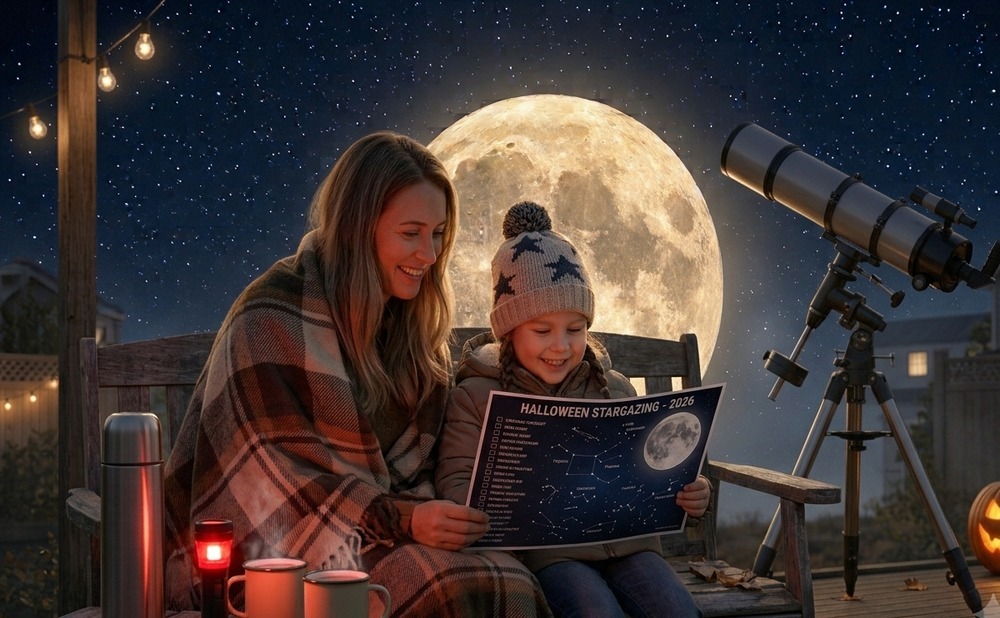
2.Make it playful: Create a simple observing checklist or give celestial objects spooky nicknames to keep younger children engaged.
3.Follow solar safety rules: Never look at the Sun through a telescope or finder without a properly installed, compatible front-aperture solar filter designed for solar viewing. Ordinary sunglasses and eyepiece solar filters are unsafe.
A successful Halloween stargazing night doesn't require advanced equipment or a long list of targets. Even a short session exploring the Moon together can become a memorable family experience.
Make this Halloween extra special with a telescope gift that inspires a love of stargazing. Don't miss SVBONY's Black Friday deals to find great savings on telescopes and astronomy gear for the young stargazer in your life.
Comments (0 )
Leave a Reply
 Google
 Amazon

There are no customer reviews yet . Leave a Reply !