NEW
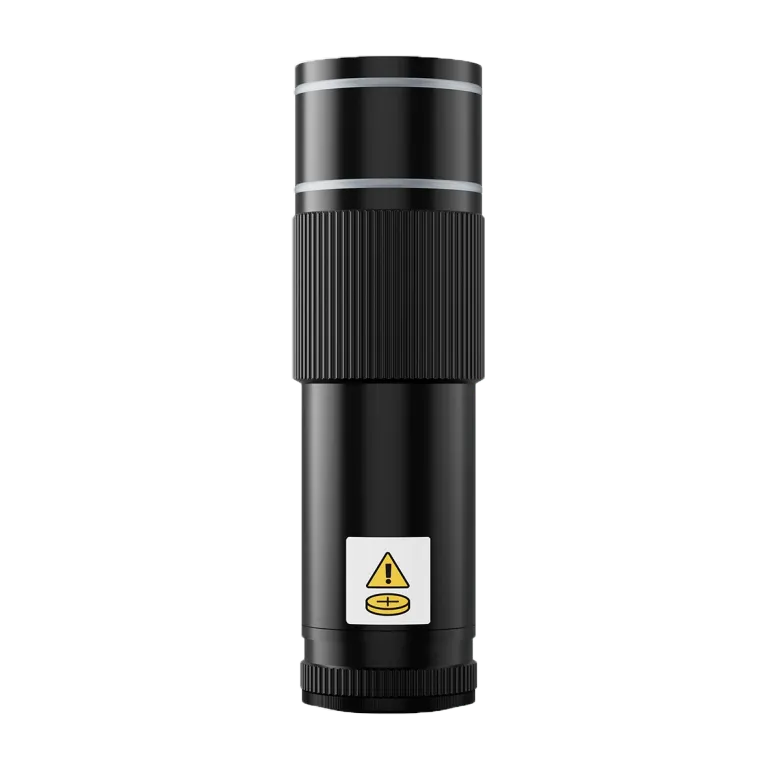
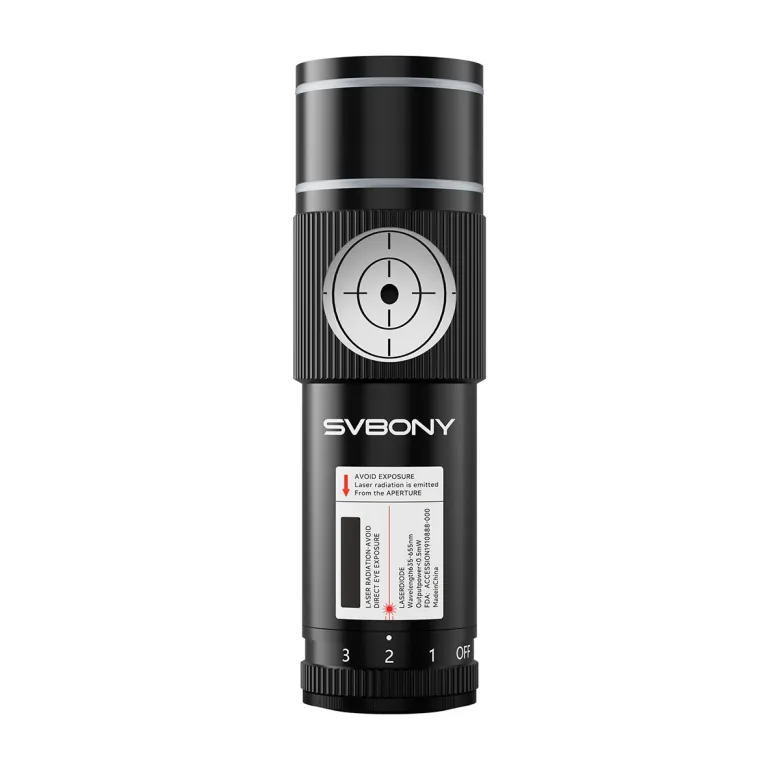
Svbony sv121 laser collimator
[{"Title":"Precision Calibration Solution","Content":"Solves the problem of inaccurate telescope alignment with upgraded triangular screw structure that firmly locks the optical path, ensuring precise coaxial laser alignment and consistent, reliable calibration accuracy every time."},{"Title":"Enhanced Alignment Accuracy","Content":"Features a 45\u00B0 aluminum scale plate with laser reflection for exact mirror alignment, delivering rounder, clearer laser spots (Class I laser, 0.1\u20130.5 mW output) and faster, more efficient telescope collimation, saving time on tedious adjustments."},{"Title":"Universal Compatibility \u0026 Easy Operation","Content":"Fits both refractor and reflector telescopes (especially Newtonian and SCT models) with a 1.25\u0022 interface, and comes with 3-level brightness adjustment to adapt to any lighting condition, enabling convenient alignment in both daylight and darkness."},{"Title":"Stable Connection \u0026 Durable Build","Content":"1.25\u0022 standard interface with dual 1.5mm rubber rings and micro-angle end compensates for manufacturing tolerances, eliminates gaps and wobble; all-metal body with sandblasted and anodized finish offers anti-corrosion, wear-resistant durability for long-term use."},{"Title":"User-Friendly Professional Design","Content":"Combines precision triangular screw light path locking, 45\u00B0 scale plate alignment, and simplified brightness adjustment, plus wide compatibility with 1.25\u0022 telescopes (with optional 2\u0022 adapter) to meet the needs of both beginners and seasoned astronomers."}]
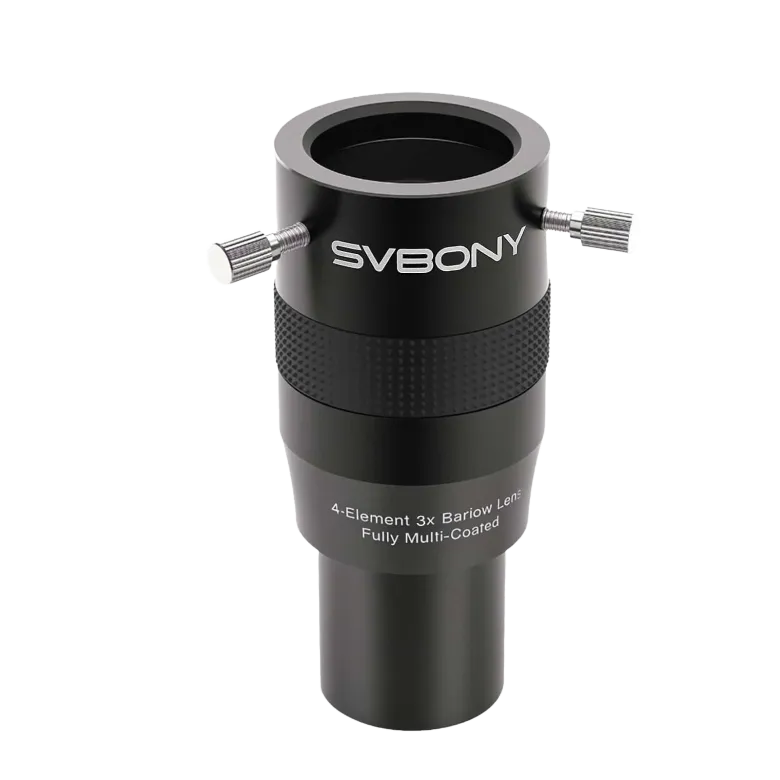
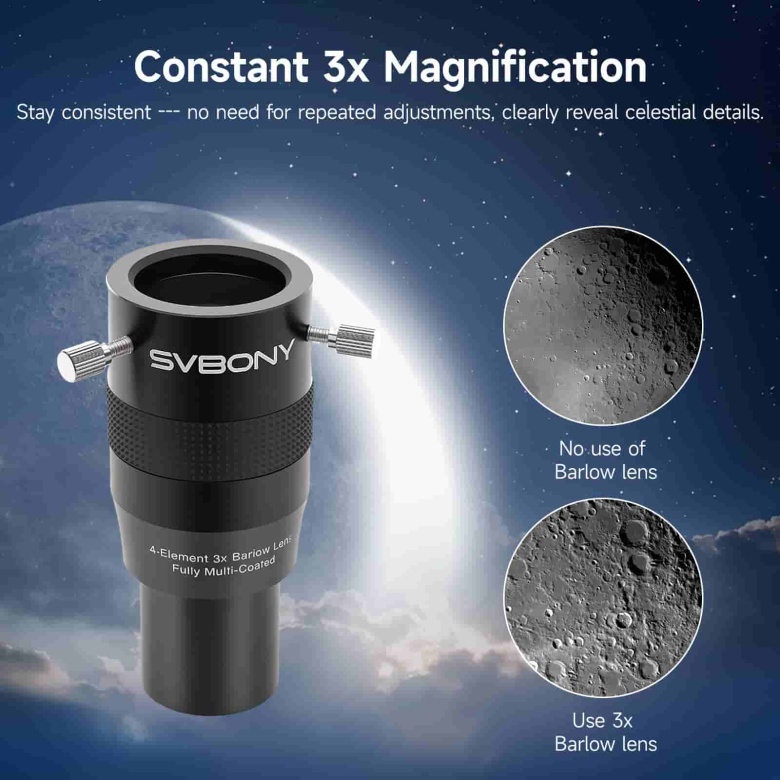
3X Barlow Lens | SVBONY SV216
[{"Title":"3\u00D7 High Magnification","Content":"Triples telescope focal length for closer planetary and lunar views with improved detail."},{"Title":"4-Element Optical System","Content":"Four fully multi-coated lens elements deliver bright, sharp images with enhanced contrast."},{"Title":"Reduced Aberration \u0026 Scatter","Content":"Edge-blackened optics minimize internal scatter and control chromatic/spherical aberrations."},{"Title":"Wide Compatibility","Content":"Standard 1.25\u0022 barrel fits most eyepieces and accessories for versatile astronomy use."},{"Title":"Eye Relief Preservation","Content":"Maintains generous eye relief even at higher magnification for comfortable viewing."}]
HOT
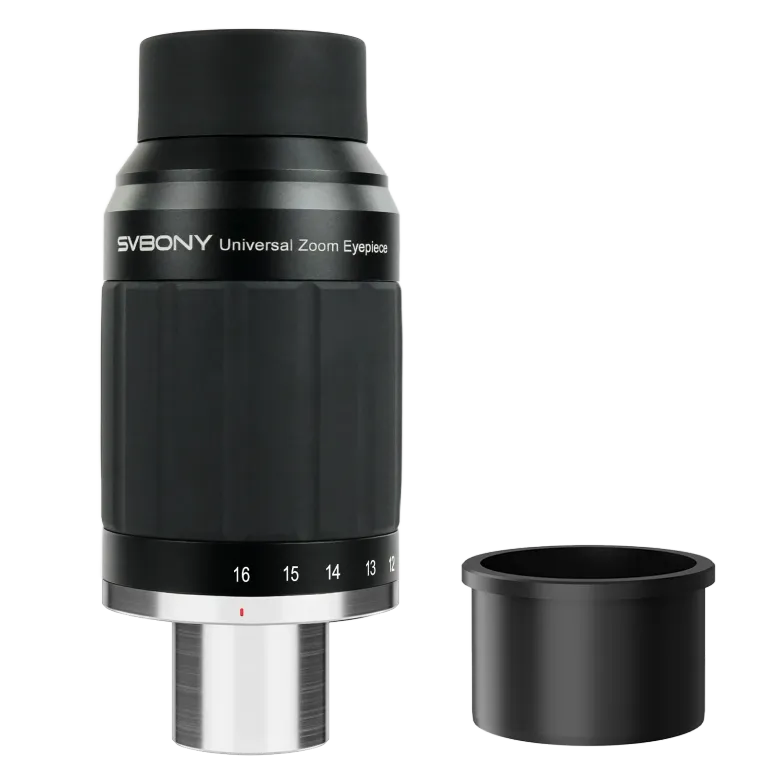
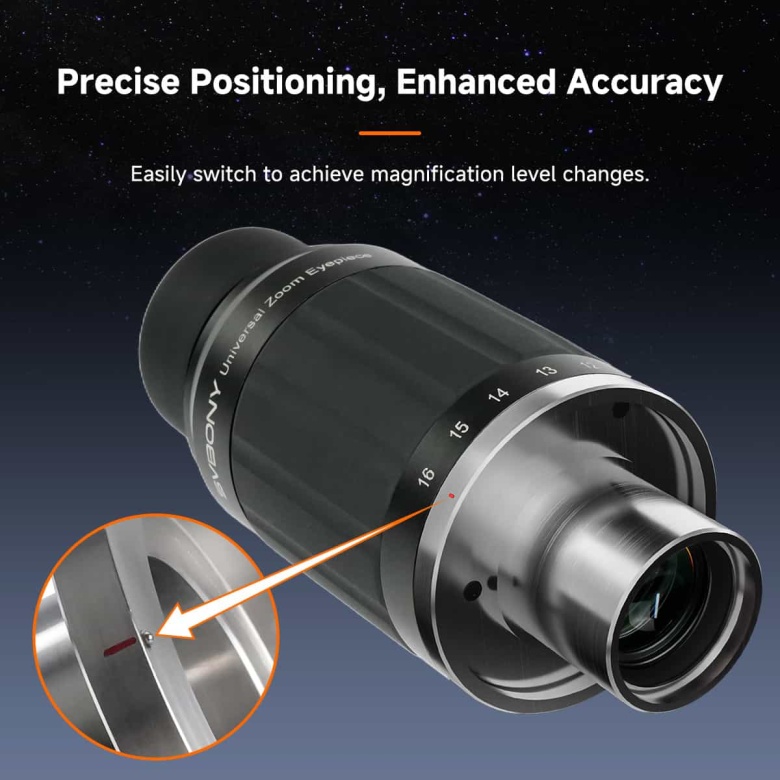
8-16mm Zoom Eyepiece SV245 | Svbony
[{"Title":"Advanced Optics","Content":"Features 8 high-quality elements, including aspherical lenses and multi-coated optics;"},{"Title":"High-definition 2X zoom","Content":"This zoom astronomical telescope eyepiece comes equipped with high-quality 2X zoom capabilities; allowing you to effortlessly achieve double magnification during observation;"},{"Title":"Parfocal Design","Content":"Parfocal across the entire zoom range. There is almost no need to refocus when changing magnification."},{"Title":"Click Stop knob \u0026 Dual-lens interface","Content":"Each focal length from 8mm to 16mm is equipped with a precise detent. Provides convenience for stargazing in the dark night;Features a 1.25\u0022 and 2\u0022 dual-lens design;"},{"Title":"Compatibility for Astigmatism Corrector Installation","Content":"Compatible with all mainstream astigmatism correctors on the market, solving vision focusing problems caused by astigmatism."}]
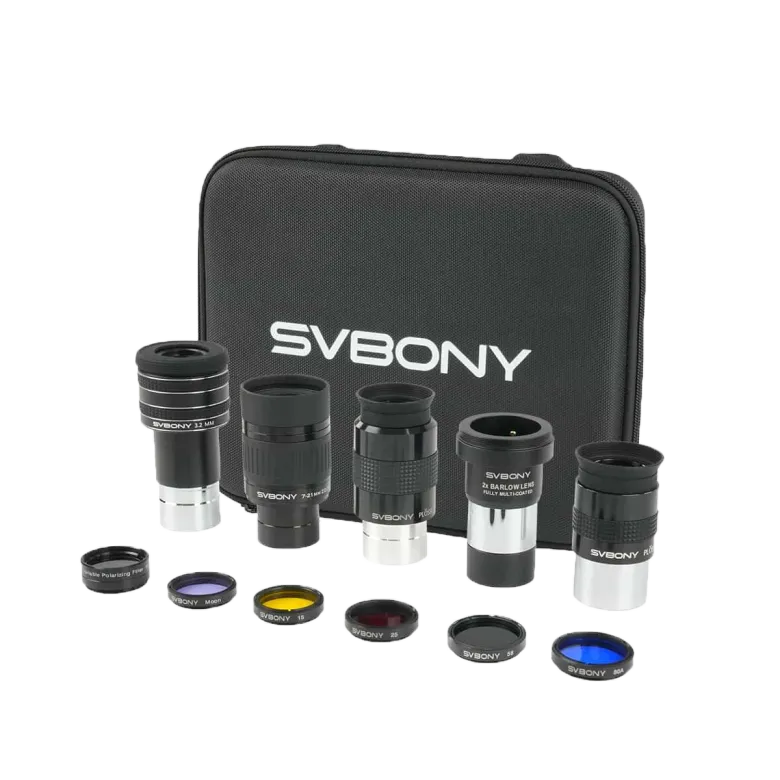
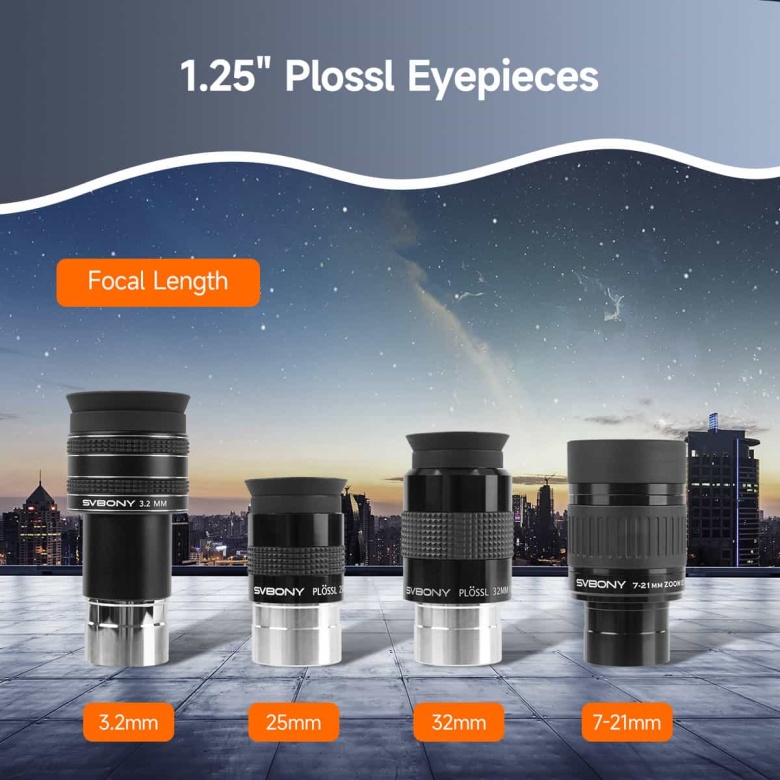
Telescope Accessory Kit | SVBONY SV233
[{"Title":"Premium Plossl Eyepieces","Content":"The Pl\u00F6ssl eyepiece set offers exceptional sharpness and clarity, ensuring high-resolution views for both planetary and deep-sky observations with minimal distortion."},{"Title":"Multi-Coated Optics for Clarity","Content":"Featuring multi-layer coatings, these eyepieces provide excellent light transmission, enhancing contrast and reducing reflections for clearer, more vivid images."},{"Title":"Versatile Focal Lengths","Content":"This set includes a variety of focal lengths, giving you the flexibility to adjust magnification and tailor your viewing experience for different types of astronomical targets."},{"Title":"Comfortable Eye Relief","Content":"Designed for long observing sessions, these eyepieces offer generous eye relief, allowing you to observe comfortably for extended periods without straining your eyes."},{"Title":"Durable and Reliable Design","Content":"Built from high-quality materials, the Pl\u00F6ssl eyepiece set is durable and designed for long-lasting use, making it an excellent choice for amateur and experienced astronomers alike."}]
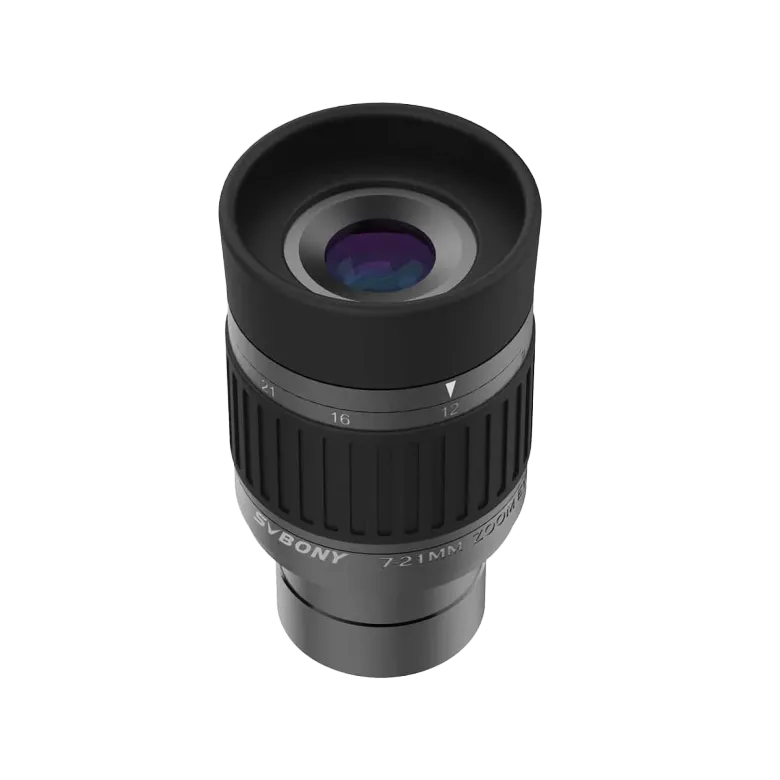
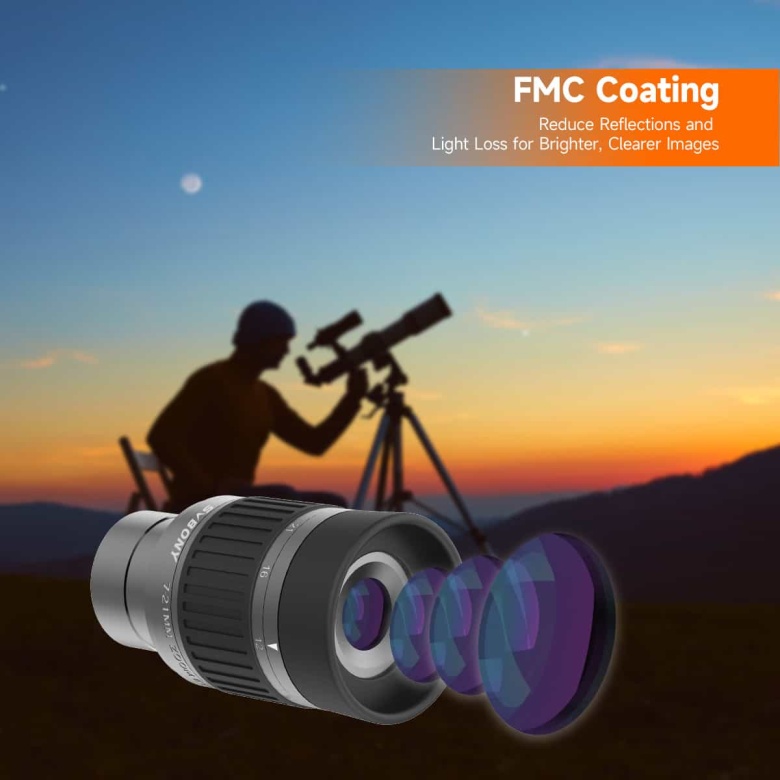
7-21mm 52°-36° Zoom Eyepiece | SVBONY SV135
[{"Title":"7-21mm zoom eyepiece","Content":"Allows you to change magnification power without swapping out eyepieces; suitable for viewing the lunar surface; planets; nebulae; star clusters."},{"Title":"5-elements 3-groups lens structure","Content":"5-elements 3-groups made of high index glass deliver sharp; high contrast vistas; get bright and true image colors."},{"Title":"52\u00B0-36\u00B0 field of view","Content":"SV135 zoom eyepiece allows you to see different wide field of view under the same viewing conditions."},{"Title":"13mm-14mm eye relief","Content":"With rubber eyecup; provides comfortable long term viewing for people with or without glasses."},{"Title":"Standard 1.25-inch interface","Content":"Compatible with 1.25-inch telescopes and filter accessories; groove anti-drop design; effectively prevents accidental falling during use."}]
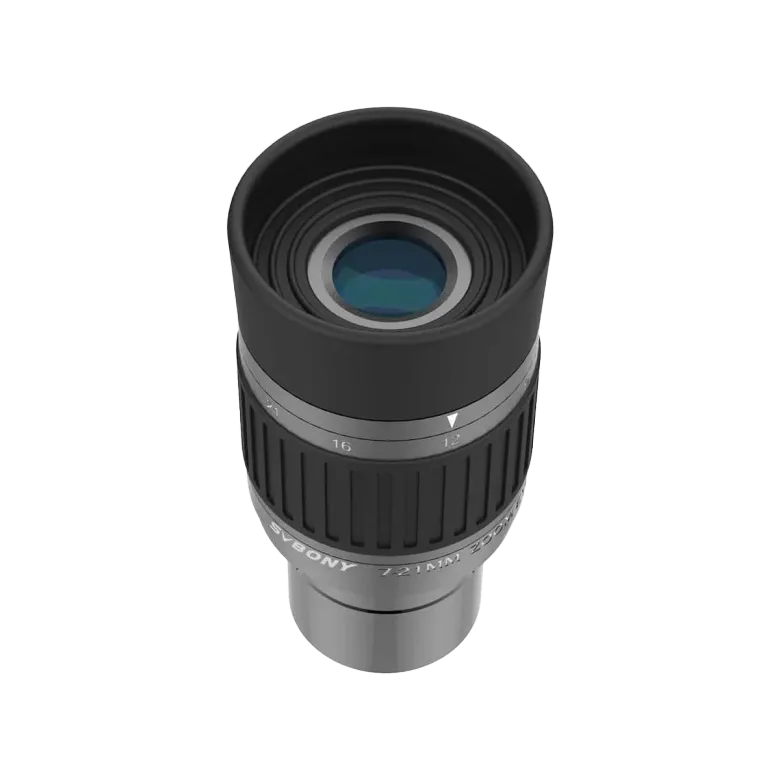
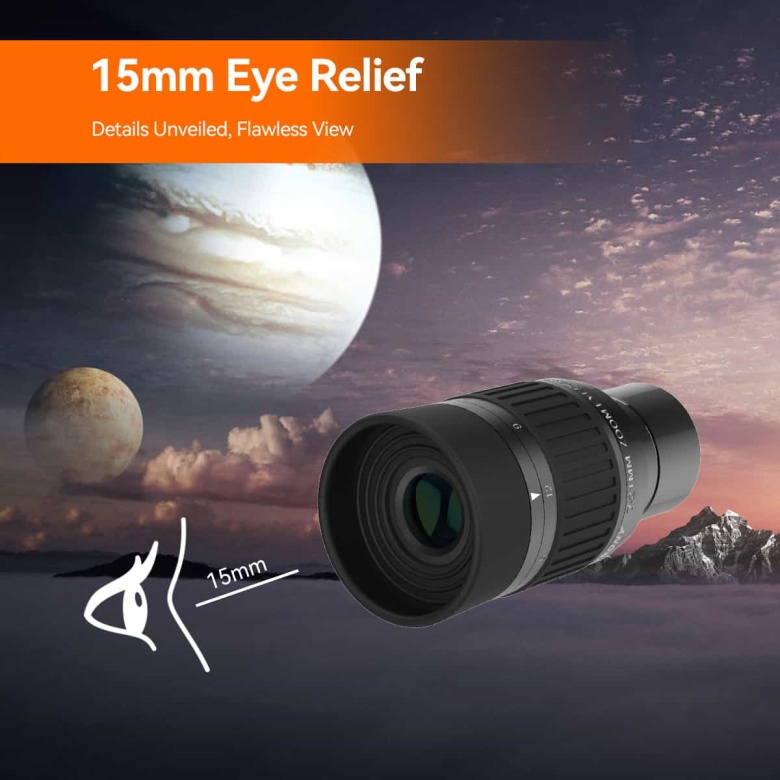
7-21mm 60°- 40° Zoom Eyepiece | SVBONY SV135
[{"Title":"7-21 zoom eyepiece","Content":"Allows you to change magnification power without swapping out eyepieces; bring you a better observation experience in a comfortable situation with high-contrast imaging; designed primarily for viewing lunar surfaces; jupiter and saturn; nebulae; clusters; and diffuse nebulae."},{"Title":"7-Elements/4-groups structure","Content":"Made of high index glass deliver sharp, high contrast vistas."},{"Title":"15mm long eye relief","Content":"Ensure relaxing observation and keep your eyes comfortable, especially for users who wear glasses; the rubber eye guard provides comfort and blocks unwanted stray light."},{"Title":"M28.5*0.6 standard thread","Content":"Convenient for connecting filter; compatible with 1.25-inch telescopes and accessories; works great for photography."},{"Title":"Direct \u0026 Descriptive","Content":"A simple twist of the zoom eyepiece housing changes the focal length from 7mm to 21mm, providing a variety of viewing magnification powers."}]
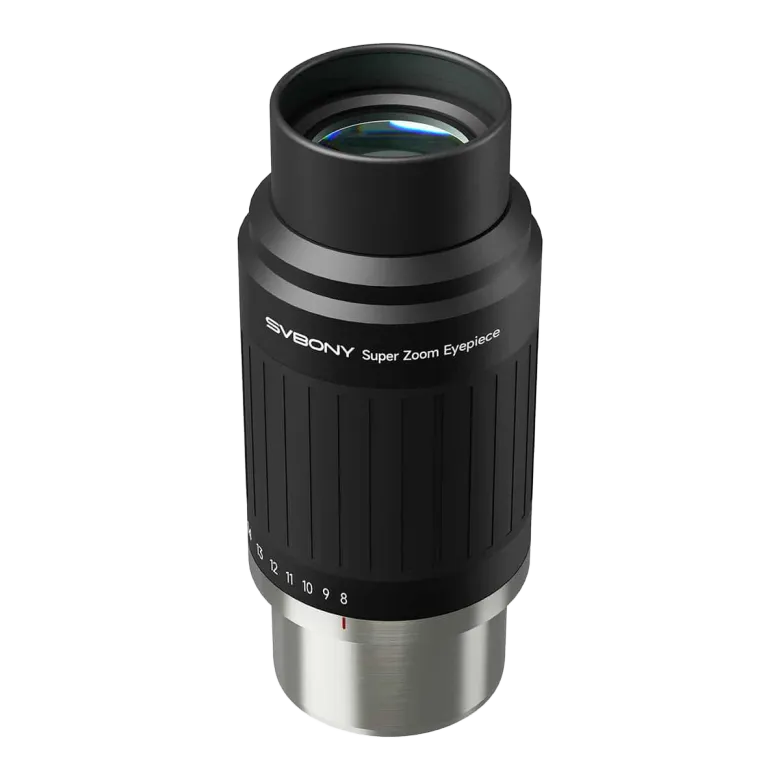
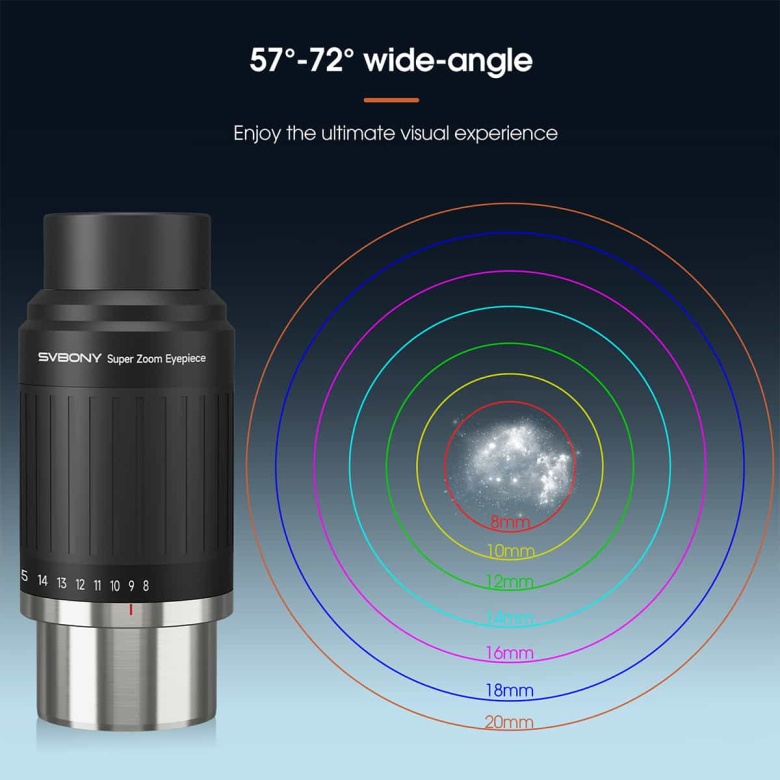
8-20mm Zoom Eyepiece | SVBONY SV230
[{"Title":"High-Quality Zoom Eyepiece","Content":"The SV230 zoom aspheric eyepiece offers exceptional clarity and sharpness, providing a wide range of magnification options for enhanced viewing experiences."},{"Title":"Aspheric Lens Technology","Content":"Featuring advanced aspheric lens elements, this eyepiece reduces distortion and aberrations, delivering crisp, clear views with superior image quality."},{"Title":"Wide Magnification Range","Content":"With adjustable magnification, the SV230 allows you to zoom effortlessly between multiple focal lengths, providing versatility for different observation needs."},{"Title":"Durable and Lightweight","Content":"Built with a durable yet lightweight design, this eyepiece is easy to handle and transport, making it perfect for both amateur and professional astronomers."},{"Title":"User-Friendly Design","Content":"The ergonomic design of the SV230 eyepiece ensures comfortable use during extended viewing sessions, while the rubber eye guard adds extra convenience for eyeglass wearers."}]
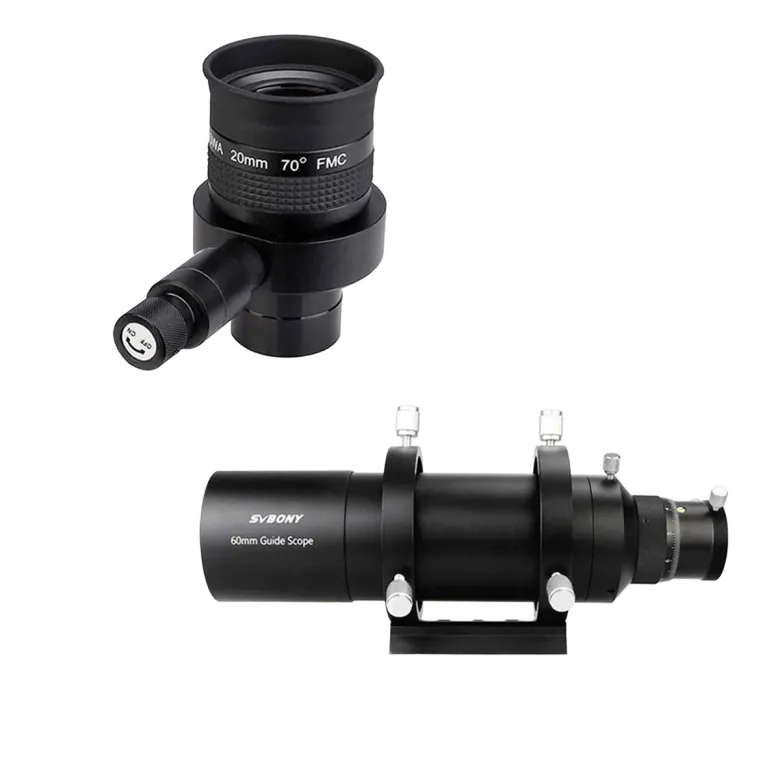
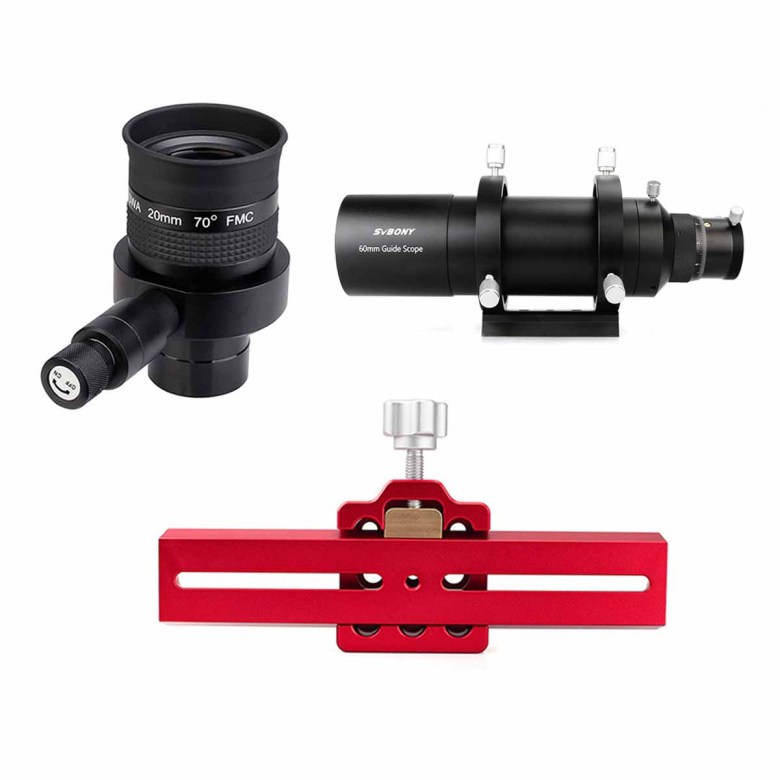
Illuminated Eyepiece Bundle | SVBONY SV152
[{"Title":"Complete Astrophotography Kit","Content":"Includes the SV152 LED illuminated eyepiece and SV106 guide scope for a full setup ideal for precise stargazing"},{"Title":"High-Quality Optical Glass","Content":"Both the eyepiece and guide scope feature multi-coated optics for clear, bright, and sharp views."},{"Title":"LED Illumination for Low-Light Viewing","Content":"The SV152 eyepiece comes with adjustable LED illumination for detailed observations in dark environments."},{"Title":"Accurate Guiding","Content":"The SV106 guide scope ensures precise tracking for astrophotography and guiding, enhancing image clarity."},{"Title":"Durable \u0026 Lightweight","Content":"Both components are constructed with CNC-machined aluminum for durability while remaining lightweight and portable."}]
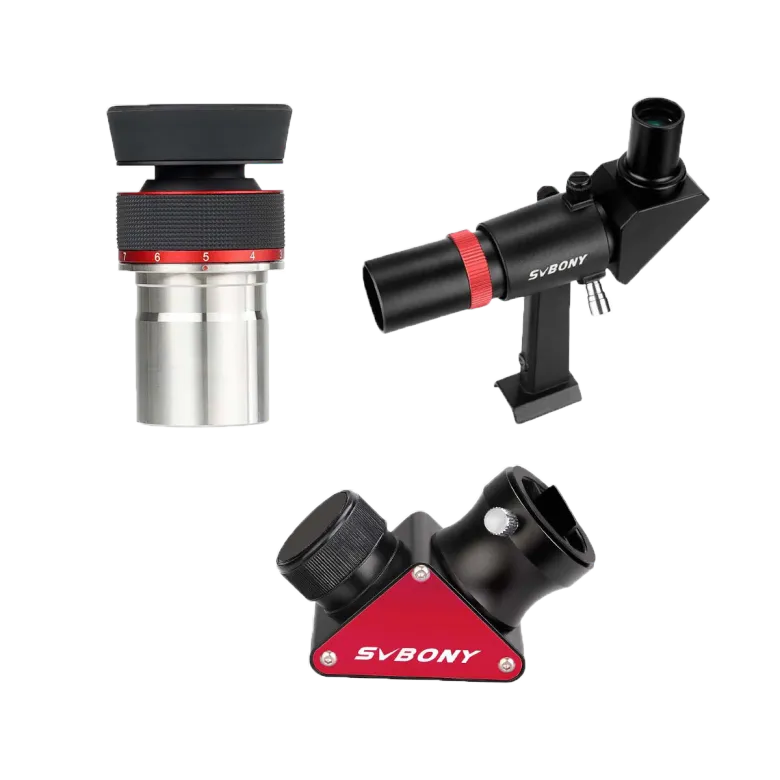
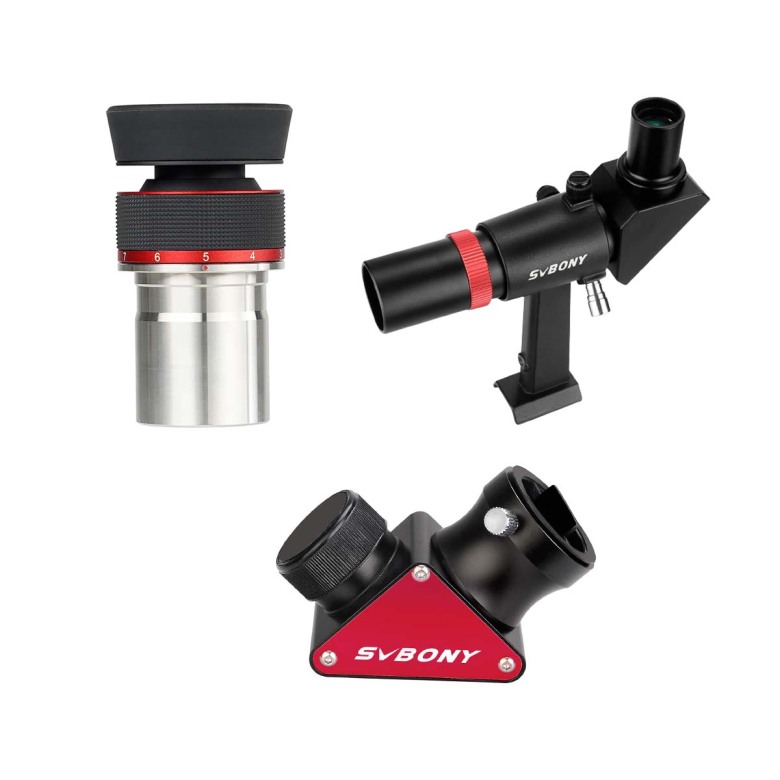
Eyepiece-Diagonal-Finder Kit | SVBONY
[{"Title":"Ergonomic Right-Angle Viewing","Content":"The right-angle design allows for comfortable, strain-free viewing, especially during long observation sessions."},{"Title":"Clear and Bright Optics","Content":"Equipped with fully multi-coated lenses for enhanced light transmission, providing bright and clear images of celestial objects."},{"Title":"Precise Alignment","Content":"The finder scope aids in accurate alignment, making it easier to locate and track objects across the sky with precision."},{"Title":"Durable and Compact Design","Content":"Built with durable materials, this diagonal finder scope is both lightweight and sturdy, offering reliable performance for both beginners and seasoned astronomers."},{"Title":"Versatile Compatibility","Content":"The eyepiece and finder scope system is compatible with most telescopes, ensuring a versatile addition to your observation setup."}]
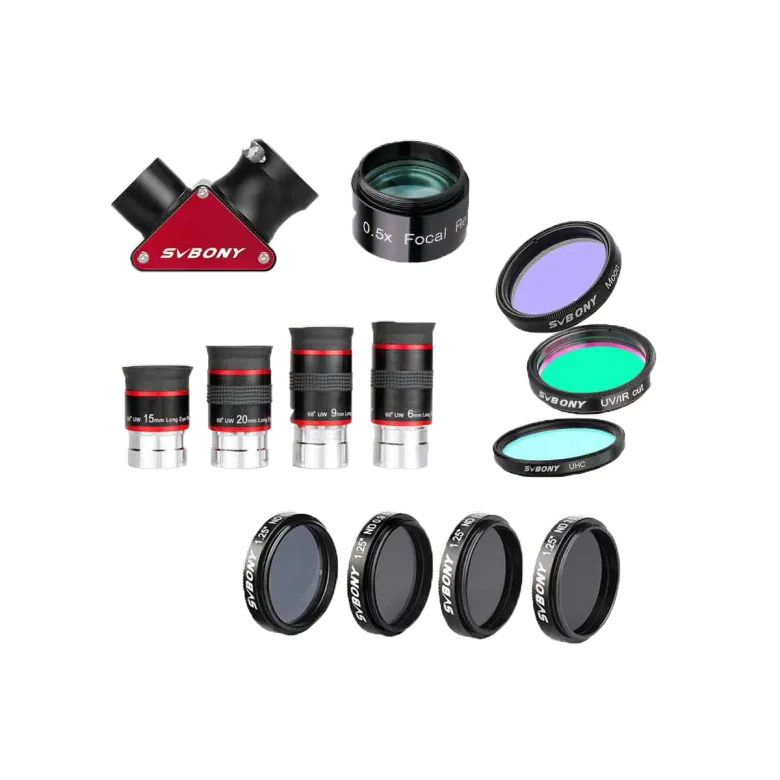
Moon & Planetary Accessory Kit | SVBONY
[{"Title":"Enhanced Viewing with 68-Degree Eyepieces","Content":"The SV188P Diagonal comes with a 68-degree eyepiece set, offering a wide field of view for moon observation and planetary photography, providing sharp and immersive images."},{"Title":"High-Quality Filter Kits for Precision","Content":"Included with the set are filter kits designed to enhance your view of the Moon and planets, improving contrast, revealing more details, and offering crisp, clear imagery."},{"Title":"Perfect for Planetary Imaging","Content":"This combination of diagonal, eyepiece set, and filters is ideal for planetary photography, allowing for high-resolution captures of celestial objects like Jupiter, Saturn, and the Moon."},{"Title":"Comfortable 68-Degree Field of View","Content":"The 68-degree eyepieces provide a wider, more immersive view, allowing you to observe more of the sky with less need for adjustments, perfect for long-duration lunar observations."},{"Title":"Comprehensive Kit for Lunar \u0026 Planetary Viewing","Content":"This SV188P Diagonal Kit offers everything you need for moon and planetary photography, including a high-quality diagonal, wide-angle eyepieces, and specialized filters for optimal performance."}]
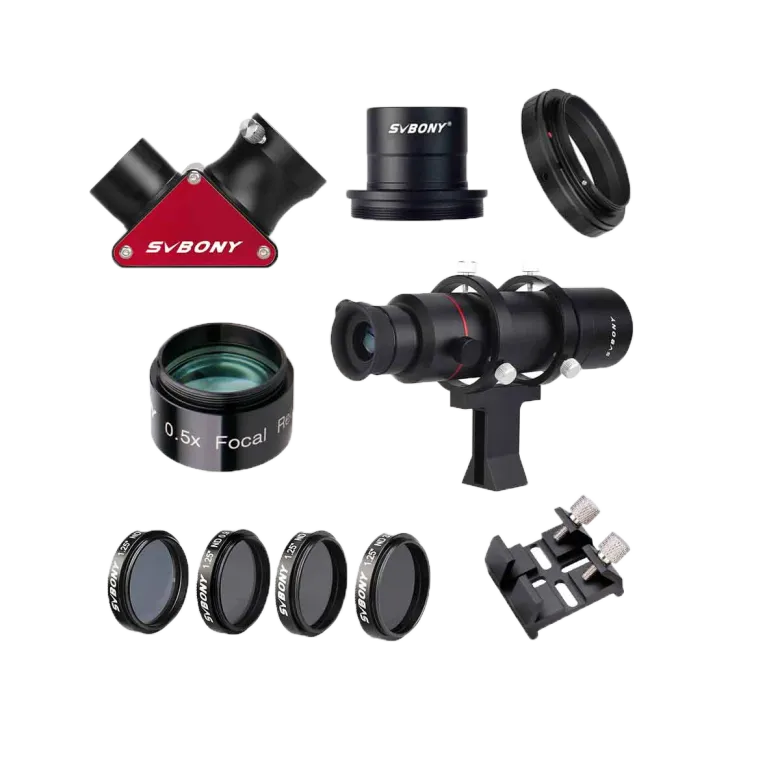
Moon Viewing & Photography Kit | SVBONY
[{"Title":"Complete Photography Kit","Content":"The SVBONY Astronomy Kit includes all necessary components to capture stunning lunar images, perfect for beginner and advanced astrophotographers."},{"Title":"High-Quality Camera Mount","Content":"Features a durable, adjustable camera mount that securely attaches to your telescope for stable, vibration-free lunar photography."},{"Title":"Precision Focusing","Content":"Equipped with tools that allow precise focusing, ensuring sharp, high-resolution images of the moon\u0027s surface details."},{"Title":"Universal Compatibility","Content":"Designed to fit most telescopes and cameras, providing versatile options for various equipment setups and ensuring easy integration into your system."},{"Title":"Portable and Easy to Use","Content":"Lightweight and easy to set up, this kit is ideal for outdoor stargazing and moon photography sessions, with minimal equipment required."}]
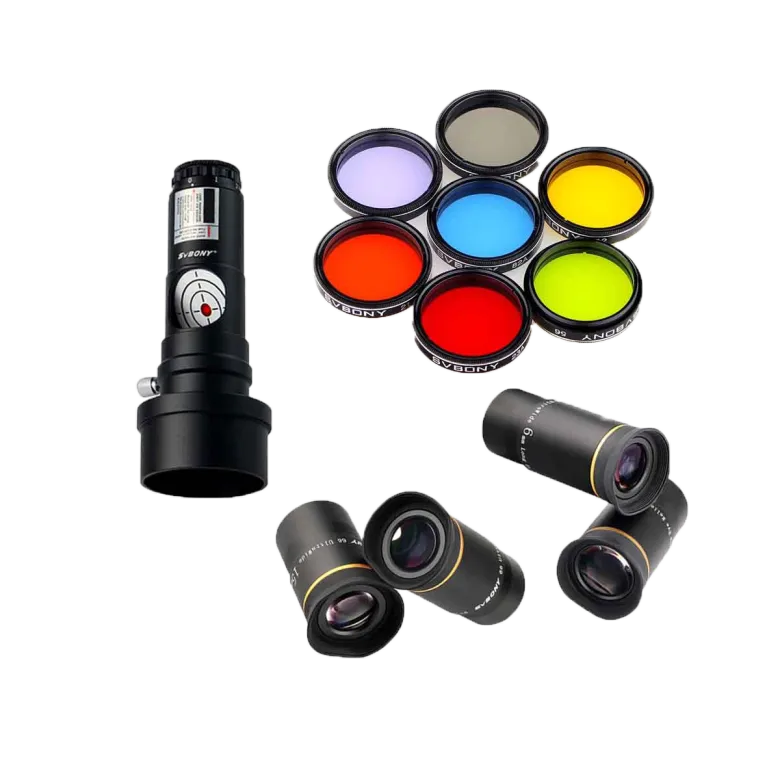
Planetary Observation Kit | SVBONY
[{"Title":"Complete Kit for Planetary Viewing","Content":"The Visual Kit for Planetary Observation is designed to provide everything you need to start observing planets with greater detail and clarity, perfect for both beginners and experienced astronomers."},{"Title":"High-Quality Eyepieces for Sharp Views","Content":"The kit includes high-quality eyepieces that deliver crisp, clear views of planets, providing you with sharp planetary details such as cloud bands on Jupiter and rings around Saturn."},{"Title":"Filters for Enhanced Contrast","Content":"The included color filters help enhance contrast and bring out finer details in the planetary atmospheres and surface features. These filters are especially useful for observing Mars, Jupiter, and Saturn."},{"Title":"Durable, Easy-to-Use Components","Content":"All components of the kit are designed for ease of use and durability, ensuring you get the best performance during your observing sessions, whether you\u0027re at home or on the go."},{"Title":"Ideal for Beginners and Enthusiasts","Content":"This kit is perfect for newcomers to astronomy, providing the essential tools to explore and observe planets in our solar system. It\u2019s a great way to start your journey into planetary astronomy with everything you need in one convenient package."}]
Telescope Eyepieces & Diagonals for Astronomy
The right eyepieces for a telescope can enhance your view of the Moon, planets, star clusters, and deep-sky objects. Different focal lengths, fields of view, and optical designs let you choose the magnification and viewing experience that best suits your observing needs.
SVBONY offers 2x, 3x, and 5x Barlow lenses for different observing and imaging needs. A 2x Barlow lens is a versatile choice for lunar and planetary observation, while a 3x Barlow lens provides a higher image scale for detailed planetary viewing. The 5x option is designed for very high magnification and is best suited to planetary imaging when conditions support it.
Telescope Eyepiece Types and Sizes
When choosing between different telescope eyepiece types, consider your telescope's focal length, observing targets, desired magnification, and viewing preferences.
sizes include 1.25-inch and 2-inch formats, while eyepiece focal length determines magnification. Shorter focal lengths generally provide higher magnification, while longer focal lengths offer a wider view.
Telescope Diagonals for Comfortable Viewing
A telescope diagonal mirror or telescope prism diagonal redirects the light path for a more comfortable viewing position, especially with refracting telescopes.
SVBONY offers star diagonals and other diagonal options for visual astronomy, along with eyepiece and diagonal kits for different observing setups.
FAQs About Eyepieces & Diagonals
A good eyepiece for a telescope depends on your telescope's focal length, what you want to observe, and the type of view you prefer. Longer-focal-length eyepieces generally provide lower magnification and a wider field of view, making them useful for star clusters and deep-sky objects. .
Shorter-focal-length eyepieces provide higher magnification and are often preferred for the Moon and planets. When choosing between different telescope eyepiece types, consider focal length, apparent field of view, eye relief, and barrel size. A telescope eyepiece kit can also be useful if you want several focal lengths for different observing targets
For planetary observation, shorter-focal-length telescope eyepieces are generally used to achieve higher magnification. Eyepieces around 6mm to 12mm are common choices, but the appropriate telescope eyepiece size depends on your telescope's focal length, optical performance, and atmospheric conditions.
For example, with the same telescope, a 10mm eyepiece provides higher magnification than a 20mm eyepiece. Telescope magnification is calculated by dividing the telescope's focal length by the eyepiece focal length.
Instead of simply choosing the highest magnification, choose an eyepiece that provides a sharp and stable view under the current observing conditions.
Yes. Telescope zoom eyepieces can be a convenient option when you want to adjust magnification without changing eyepieces. A zoom eyepiece covers a range of focal lengths, allowing you to move from a wider view to a more detailed view as you observe.
They can be useful for lunar and planetary observation as well as general stargazing. When choosing eyepieces for a telescope, consider the optical design, apparent field of view, eye relief, and the telescope itself. Zoom eyepieces offer flexibility, while fixed-focal-length eyepieces may provide a wider field of view or a more specialized viewing experience at particular focal lengths.
A telescope diagonal is an optical accessory placed between the telescope and eyepiece to redirect the light path, usually by about 90°, for a more comfortable viewing position. It is especially common with refracting telescopes, where viewing through the rear of the telescope can otherwise require an awkward position.
A star diagonal typically uses a mirror or prism to redirect light toward the eyepiece. The diagonal does not increase the telescope's magnification; instead, it changes the direction of the light path and can affect image orientation and optical performance.
There is no single best diagonal for a telescope for every observer. The right choice depends on the telescope design, eyepiece format, observing purpose, and the optical performance you need. A mirror star diagonal is commonly used for general visual astronomy, while a prism diagonal can be well suited to certain refracting telescope setups.
When comparing best telescope diagonals,consider barrel size, optical quality, mechanical fit, and how securely the eyepiece is held. For regular visual observing, a well-matched star diagonal can provide a comfortable and convenient viewing position.
A telescope diagonal mirror uses a reflective mirror to redirect light toward the eyepiece, while a telescope prism diagonal uses a prism to change the direction of the light path. Both provide a more comfortable viewing angle, but their optical characteristics differ.
Mirror diagonals are widely used for general visual astronomy and are available with different reflective coatings, while prism diagonals can work particularly well in certain refracting telescope configurations. When comparing the types of telescope diagonals, consider your telescope's optical design, focal ratio, intended use, and the image orientation you prefer.



 Google
 Amazon