Astronomy Telescopes Designed for Stargazing
Whether you’re a beginner to astronomy or upgrading your stargazing equipment, our astronomical telescopes are engineered to deliver clarity, stability, and precision. Each astronomy telescope features high-quality optics, durable construction, and user-friendly controls that make it easier to locate stars, planets, nebulae, and deep-sky objects. Lightweight models are available for those seeking the best travel telescope, while advanced designs provide high-resolution viewing for experienced observers.
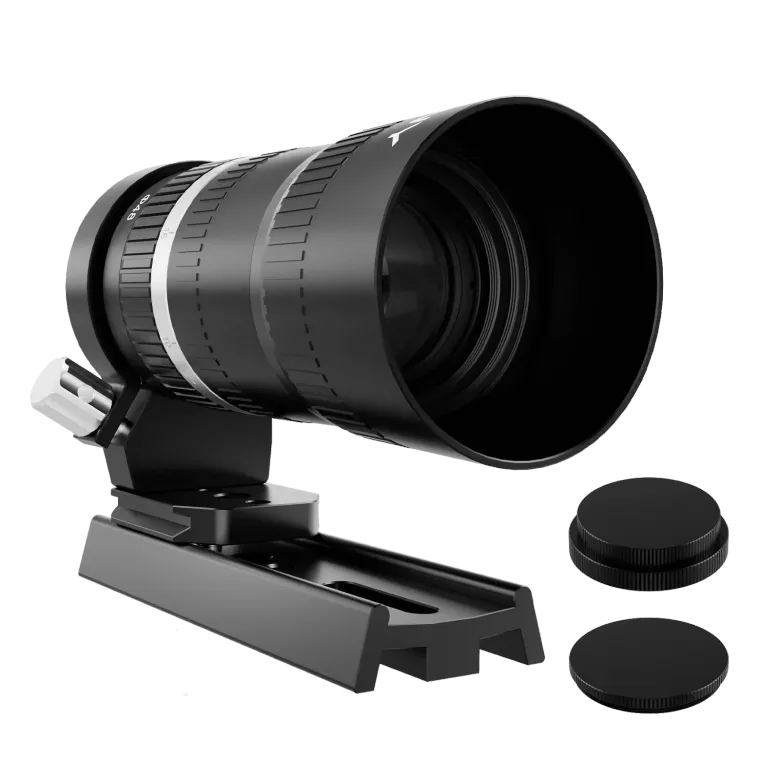
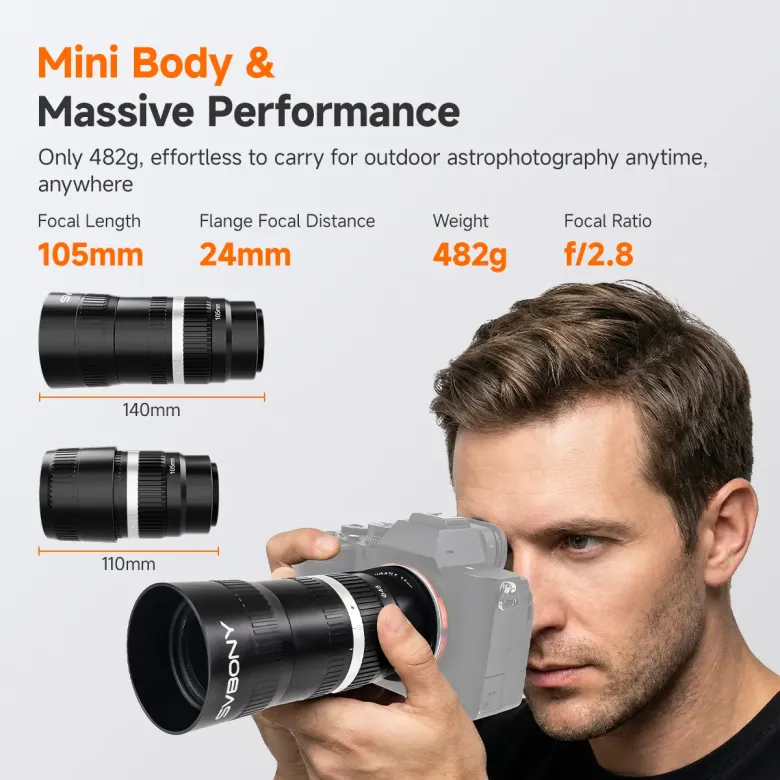
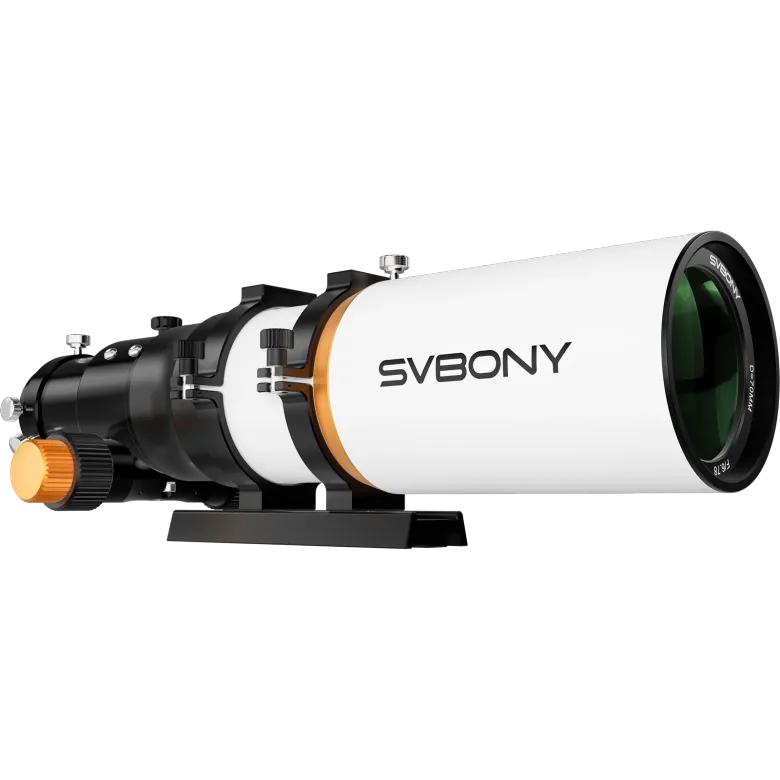
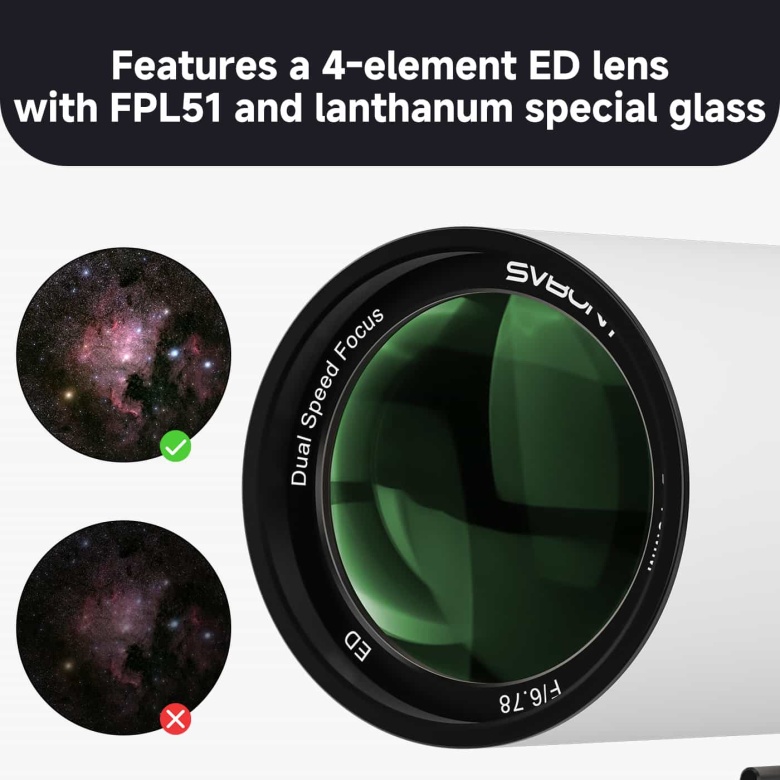
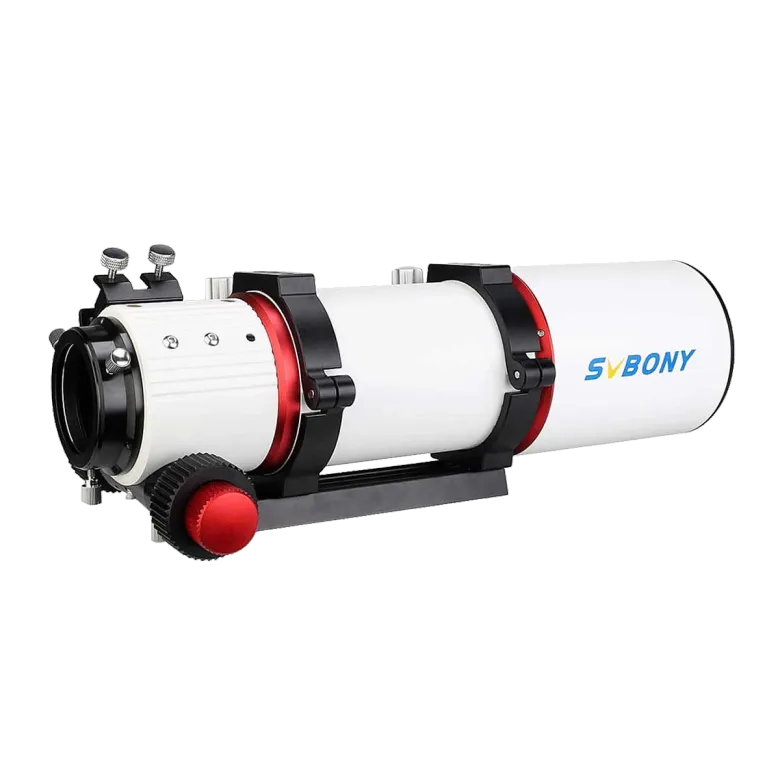
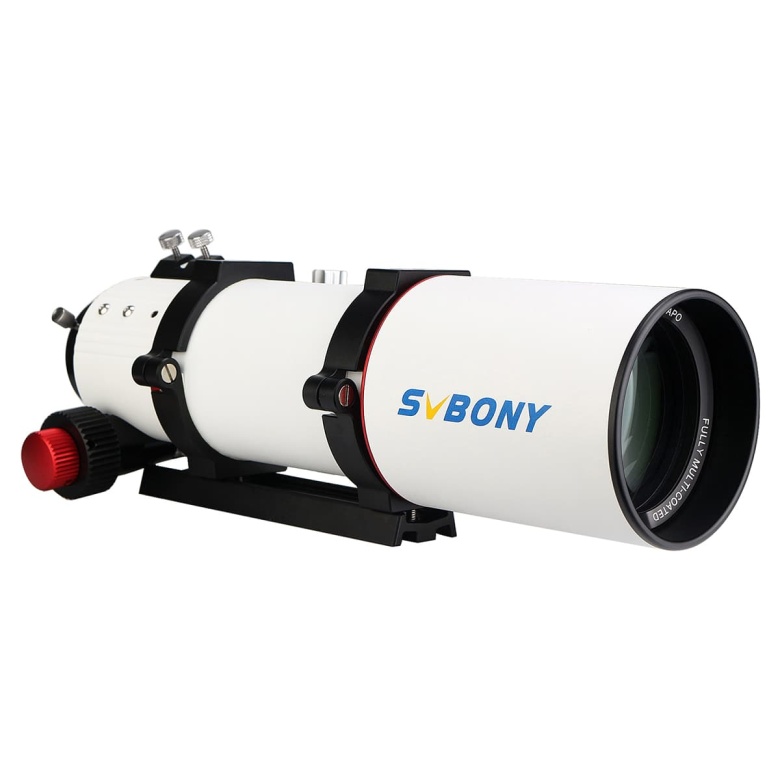
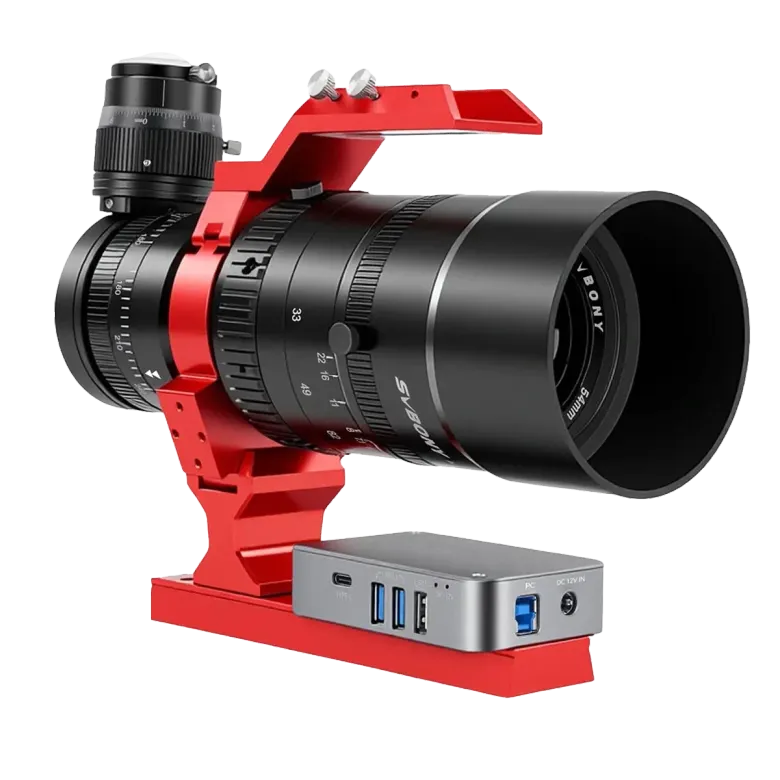
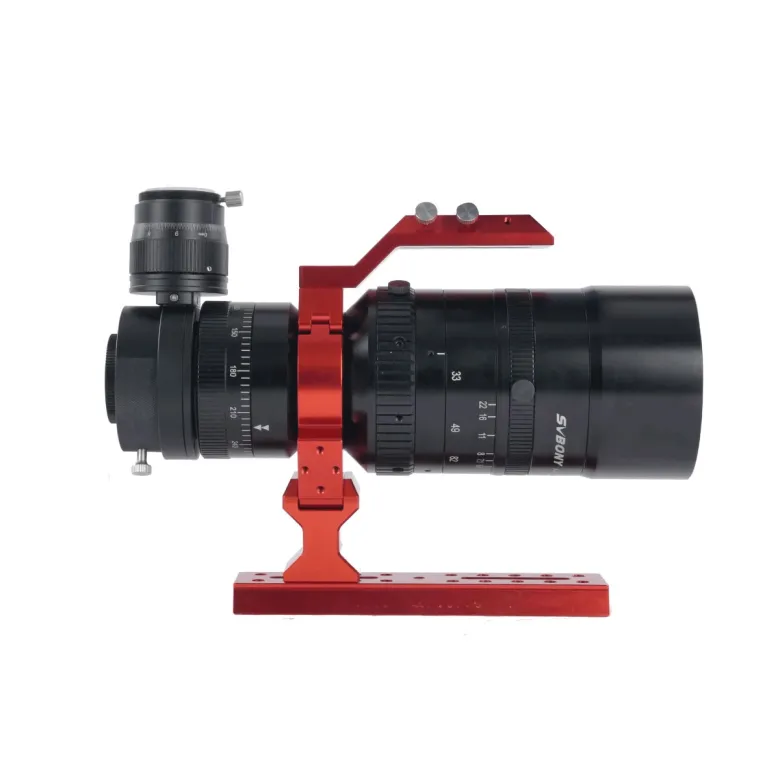
Deep-Sky Imaging Kit | SVBONY SV555
[{"Title":"Easy Start","Content":"Includes four core pieces of deep-sky photography equipment;"},{"Title":"Precise Tracking","Content":"The SV238 off-axis guider ensures no trailing lines even during long exposures;"},{"Title":"High-Definition Imaging","Content":"The SV555 \u00A0Astrograph delivers a flat, sharp image field, while the UV/IR Cut filter precisely corrects colors to guarantee image quality;"},{"Title":"Power Management","Content":"The SV241 power hub centralizes power supply, eliminating cable clutter;"},{"Title":"Seamless Compatibility","Content":"Components feature perfectly matched interfaces."}]
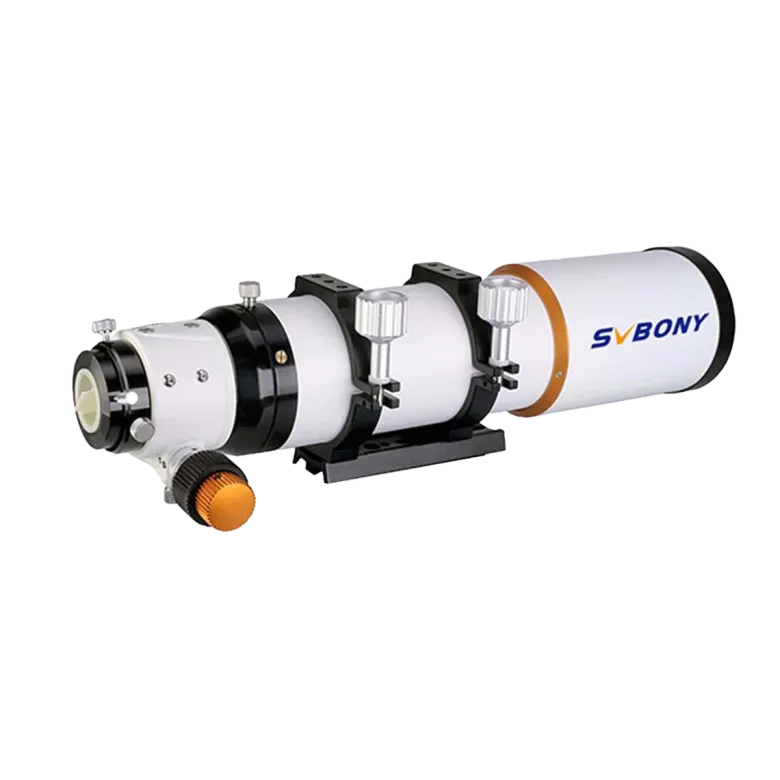
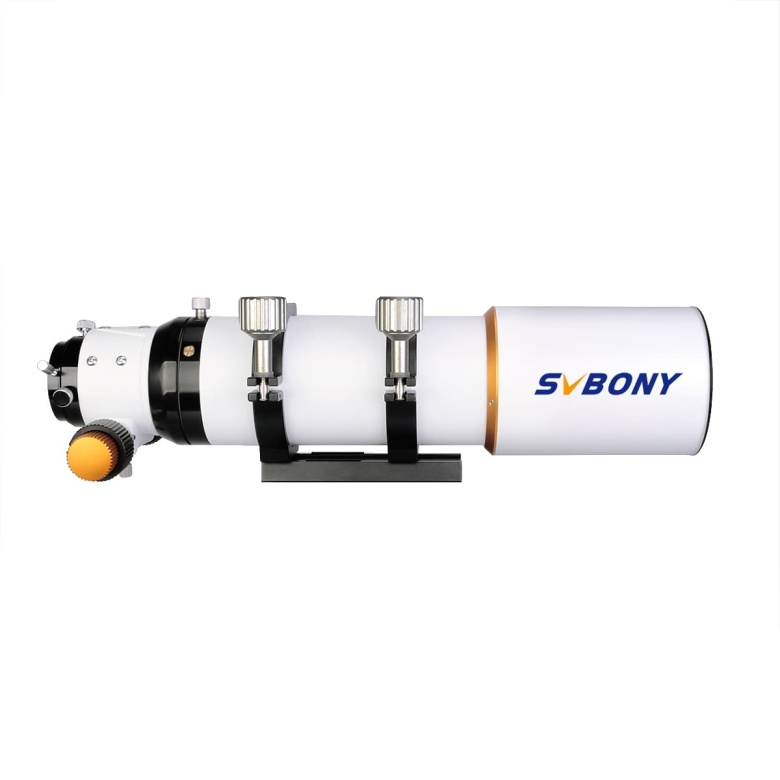
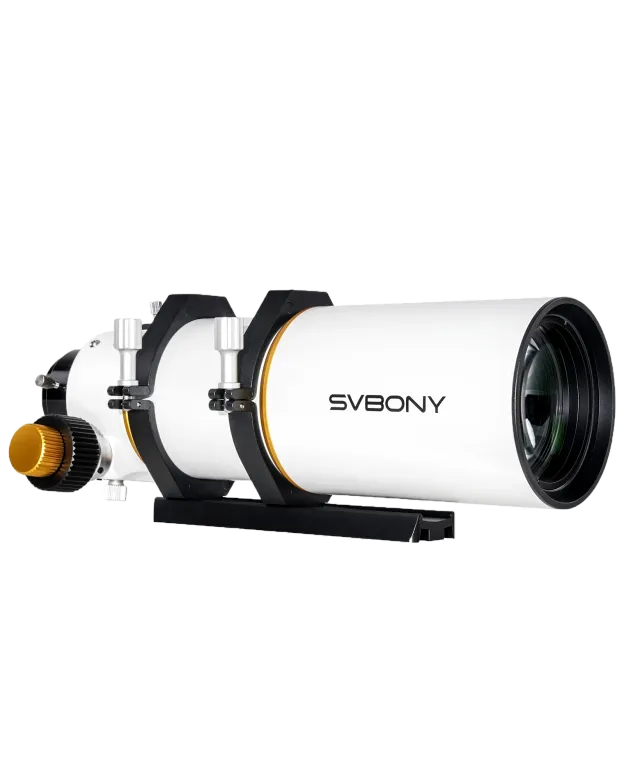
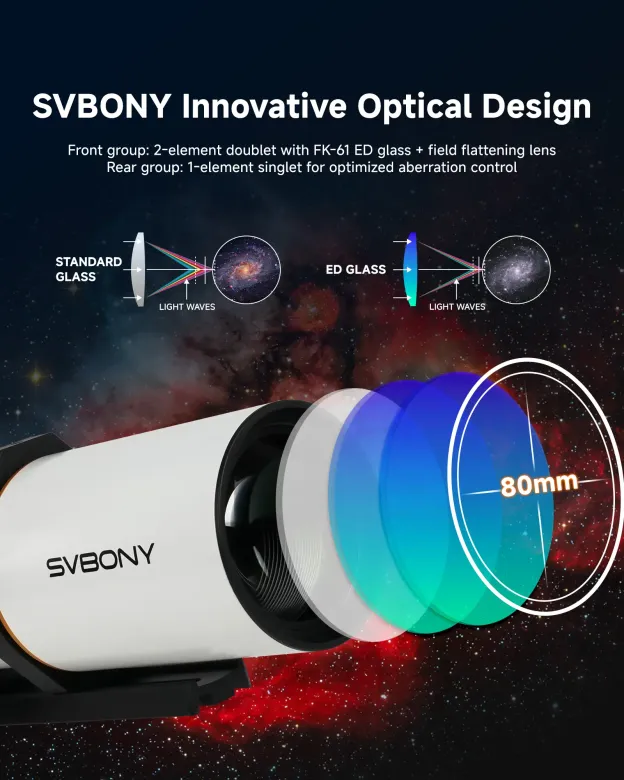
80mm Refractor Telescope | SVBONY SV503
[{"Title":"Extra-Low Dispersion Glass","Content":"Delivers high-contrast, sharp, and color-accurate images."},{"Title":"Fully Multi-Coated Optics","Content":"The entire optical lens utilizes ultra-wideband multi-layer coating technology, providing exceptional performance."},{"Title":"Dual-Speed Focuser","Content":"It is equipped with a 1:10 dual-speed rack-and-pinion focuser, which ensures smooth and precise focusing adjustments."},{"Title":"CNC Craftsmanship","Content":"Precision\u2011machined from high\u2011grade materials, with a finely textured painted exterior."},{"Title":"360\u00B0 Rotating","Content":"Features a rotatable focuser for flexible framing."}]
NEW HOT
ED Refractor SV530 80mm Astrophotography
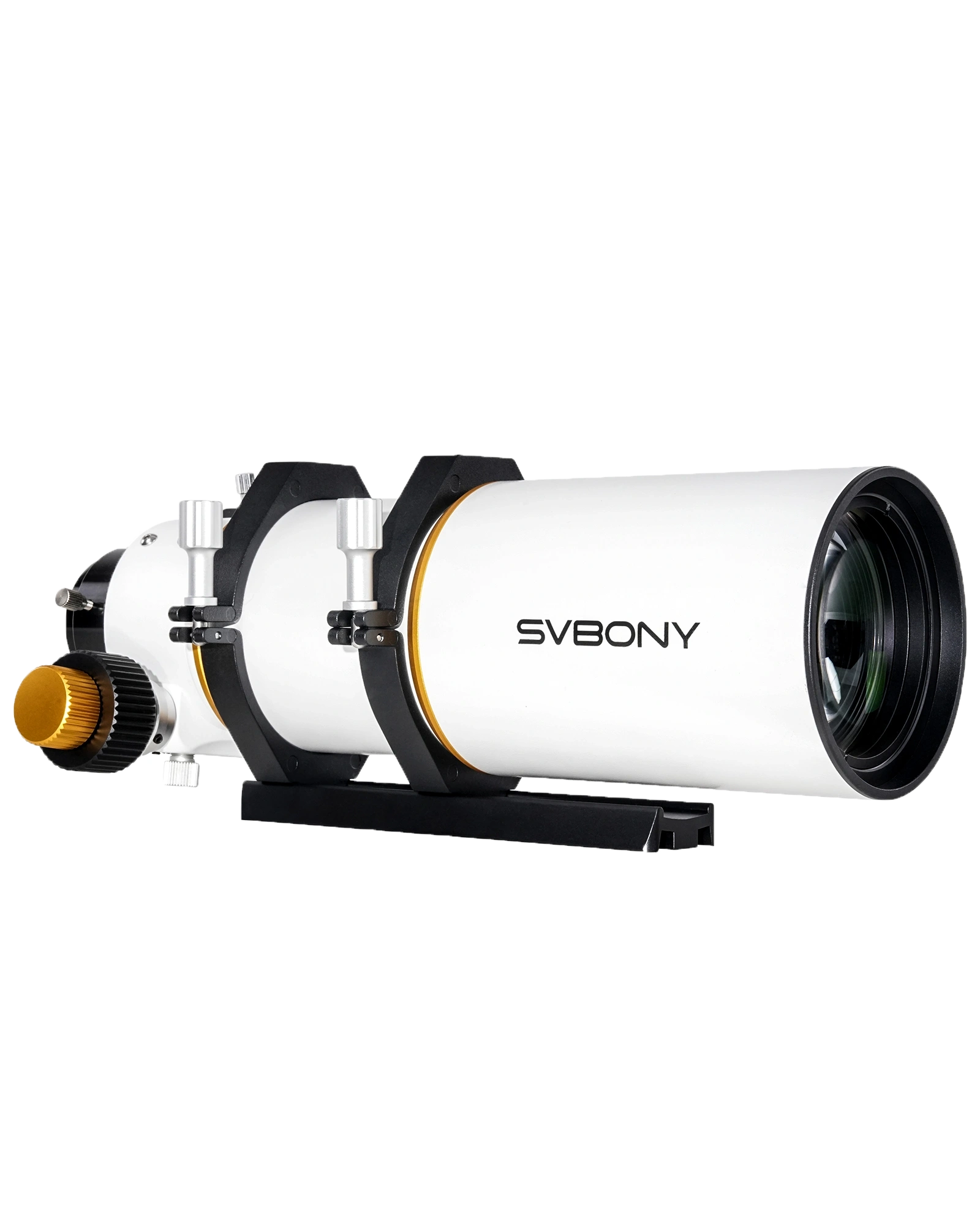
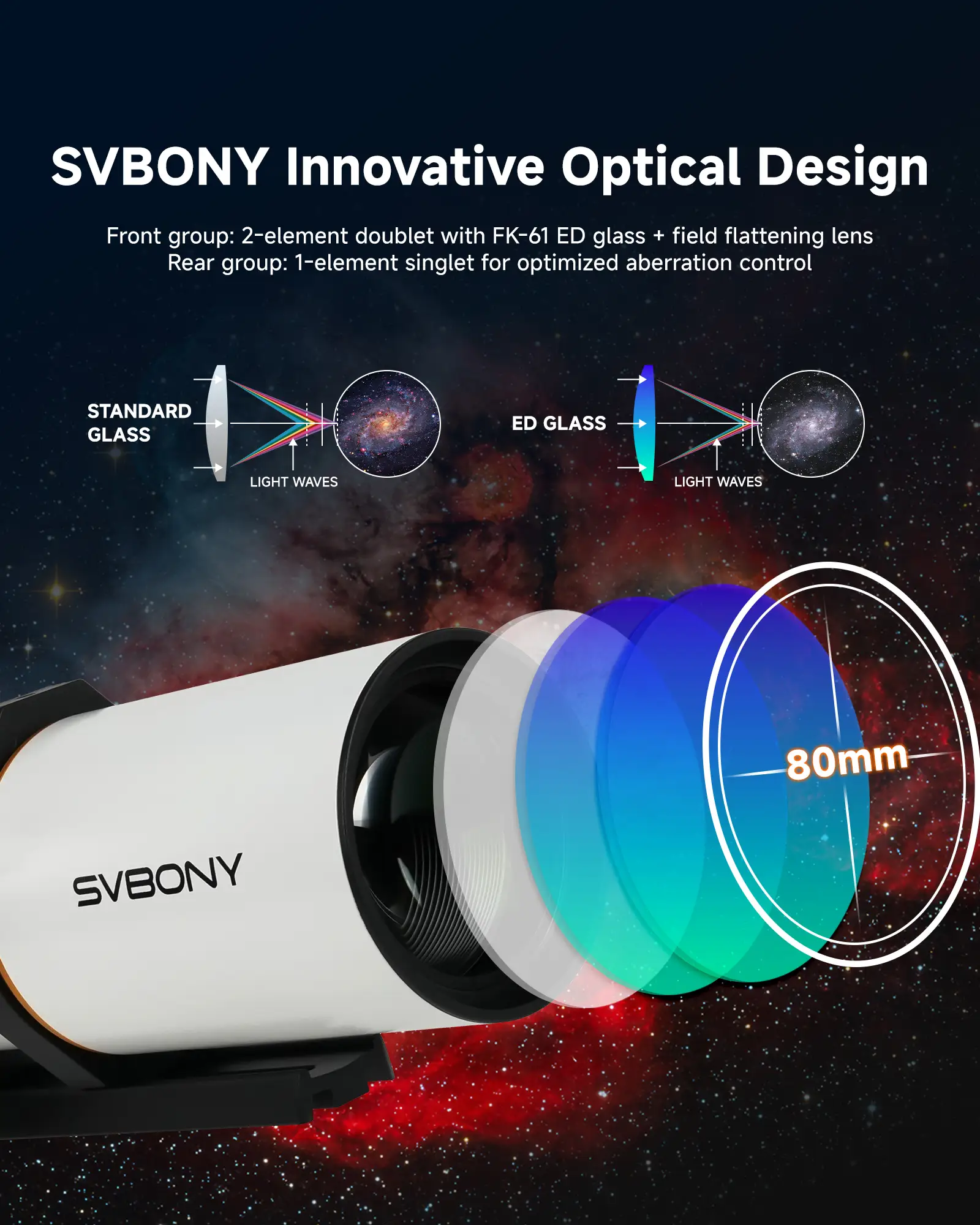
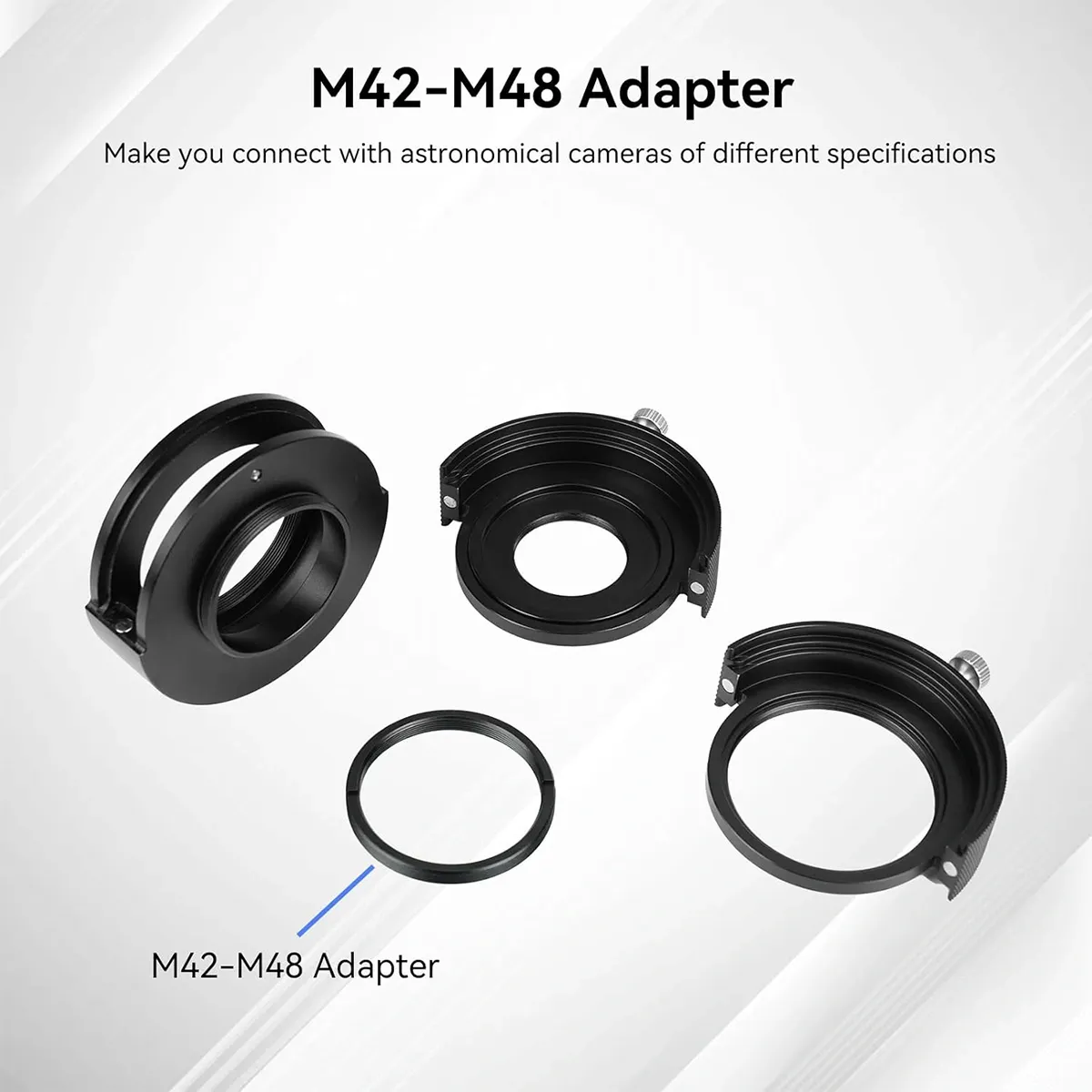
[{"Title":"80mm ED Optics for Edge-to-Edge Sharpness","Content":"ED doublet objective with a built-in field flattener reduces chromatic aberration and field curvature, delivering crisp, high-contrast images from center to edge \u2014 keeping stars sharp across the entire field of view."},{"Title":"480mm f/6 Wide-Field Optics for Deep Sky \u0026 Lunar Viewing","Content":"Enjoy bright, detailed views of nebulae, star clusters, and the Moon with a versatile focal length designed for wide-field observation and astrophotography."},{"Title":"AR Coating \u002B Internal Light Control for Brighter, Clearer Views","Content":"Multi-layer anti-reflective coating, lens-edge blackening, and internal light-absorbing paint work together to improve light transmission and suppress stray light \u2014 delivering brighter, higher-contrast images even under light-polluted skies."},{"Title":"10:1 Dual-Speed Focuser for Precise Focus Control","Content":"The 2.5-inch rack-and-pinion focuser with a 10:1 fine-focus ratio and 60mm travel range allows smooth, accurate adjustments for planets, deep-sky targets, and astrophotography setups."},{"Title":"Astrophotography-Ready Compatibility for Easy Camera Setup","Content":"Includes an M63-to-M48 adapter for connecting DSLR cameras, CMOS/CCD astronomy cameras, and imaging accessories with a flexible astrophotography-ready design."}]
NEW HOT
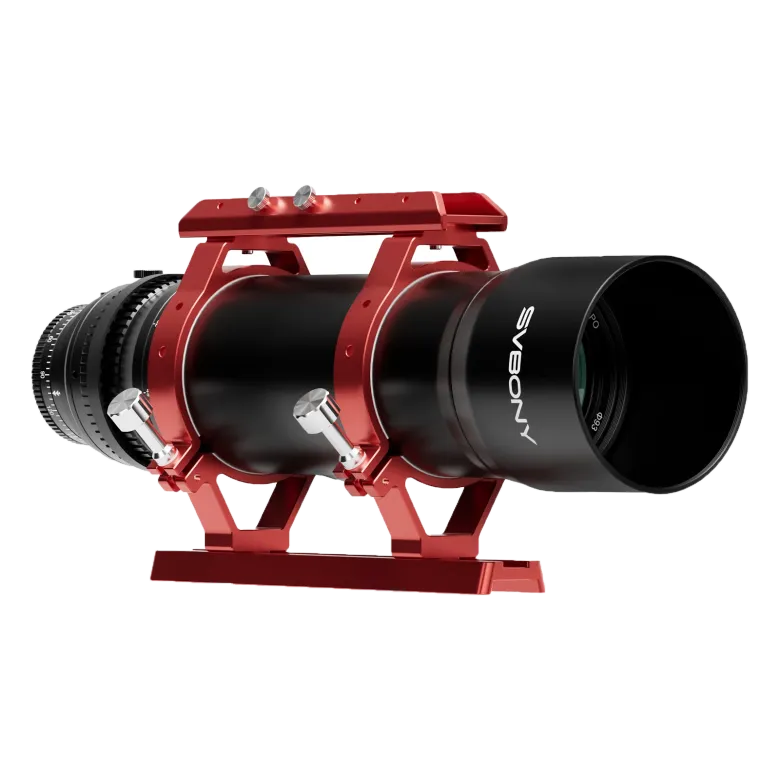
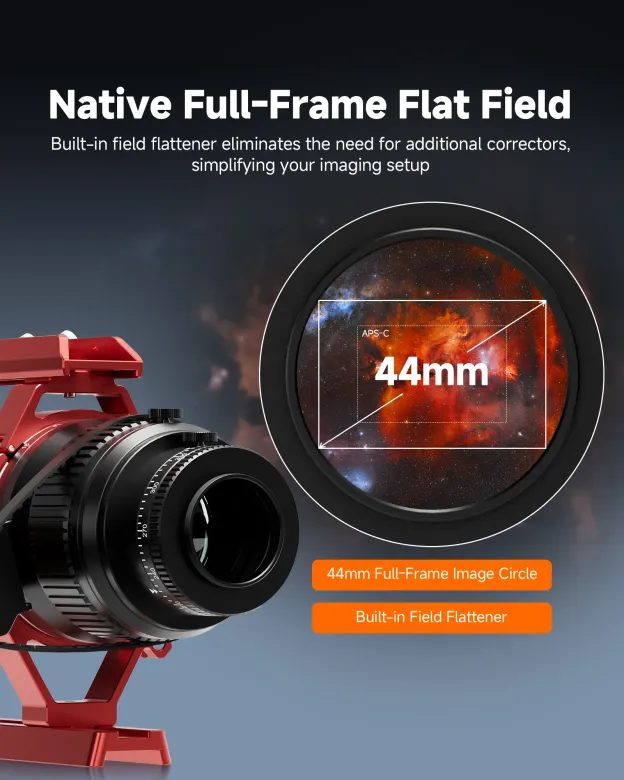
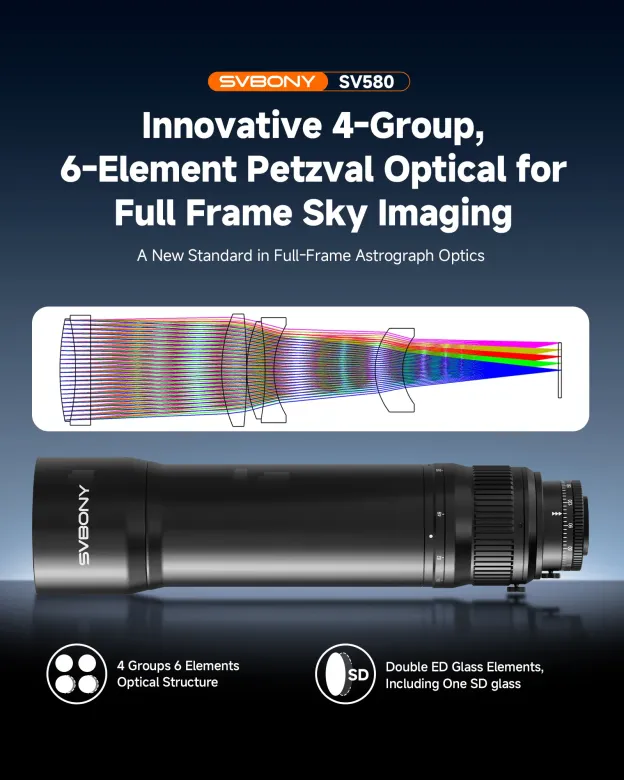
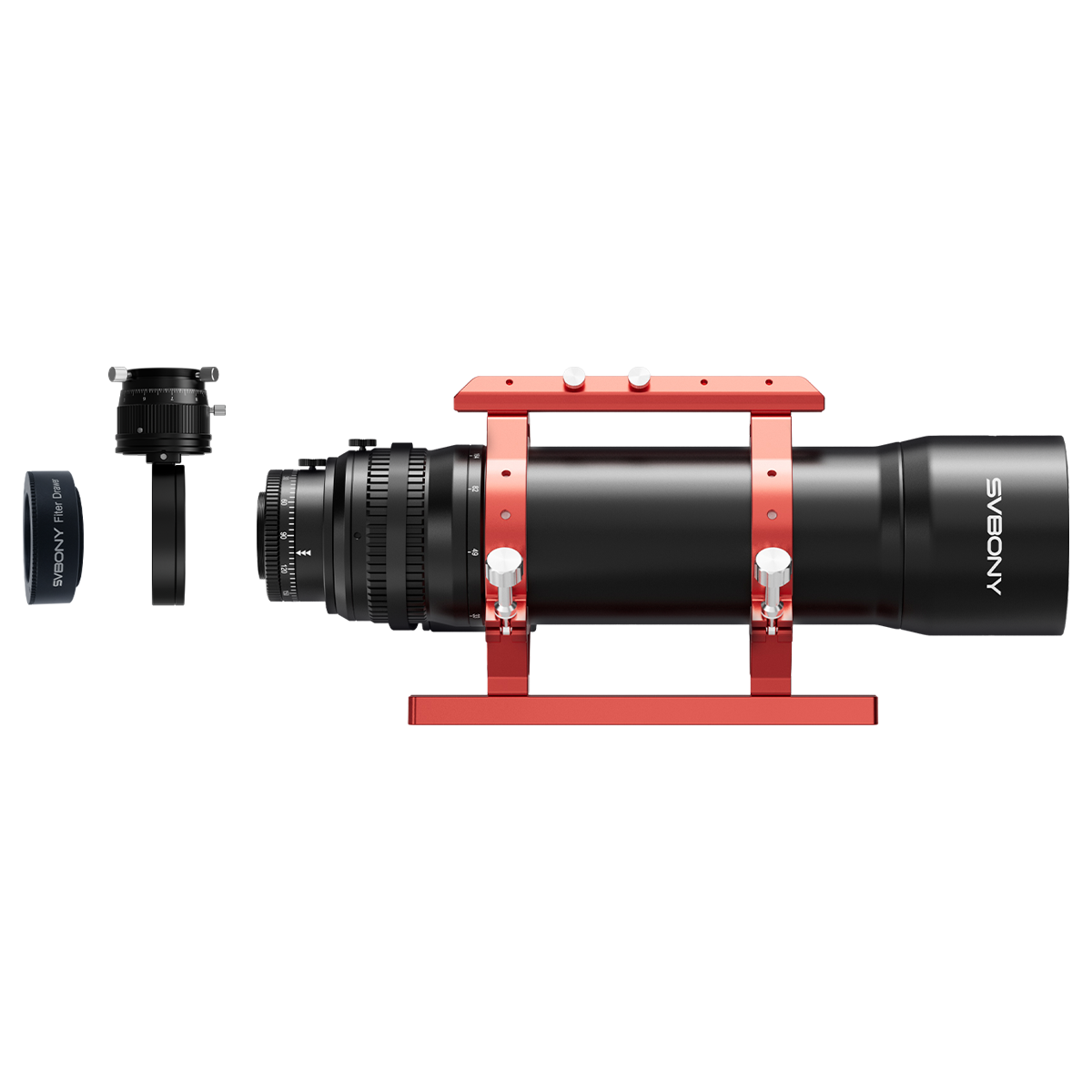
SVBONY SV580 80mm f/4.5 APO Astrograph Telescope
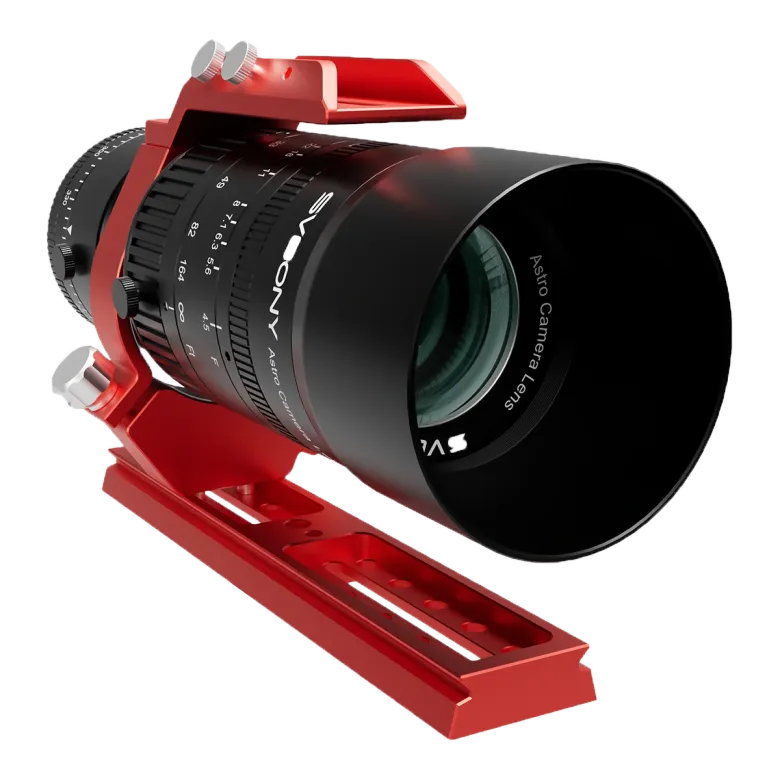
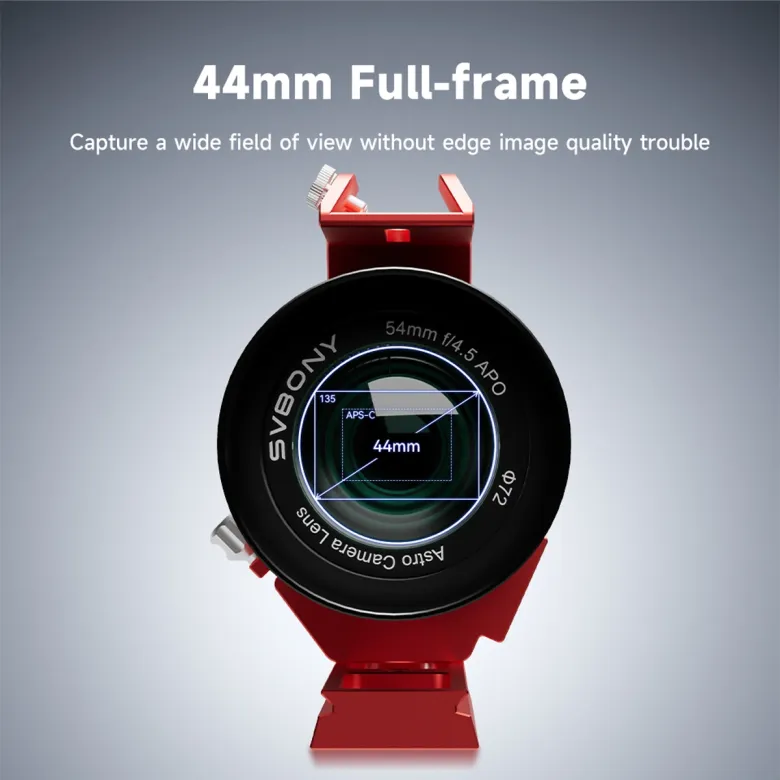
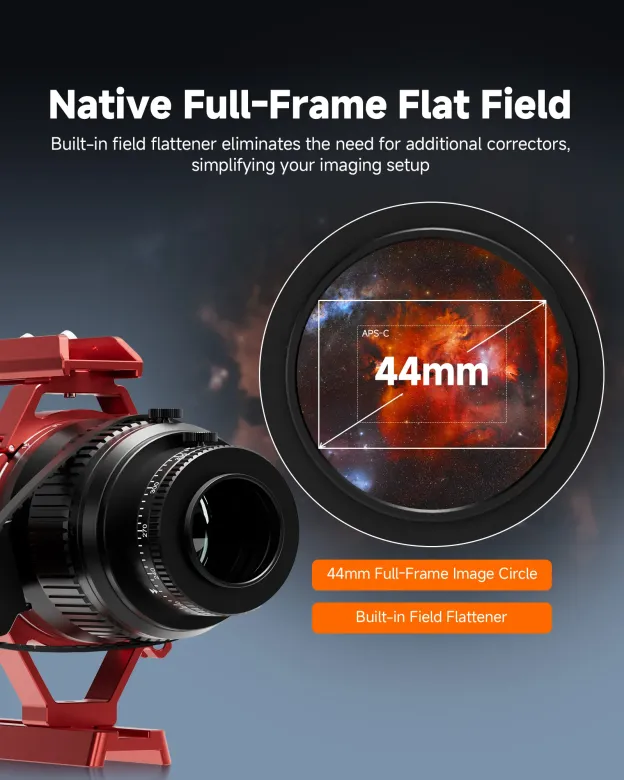
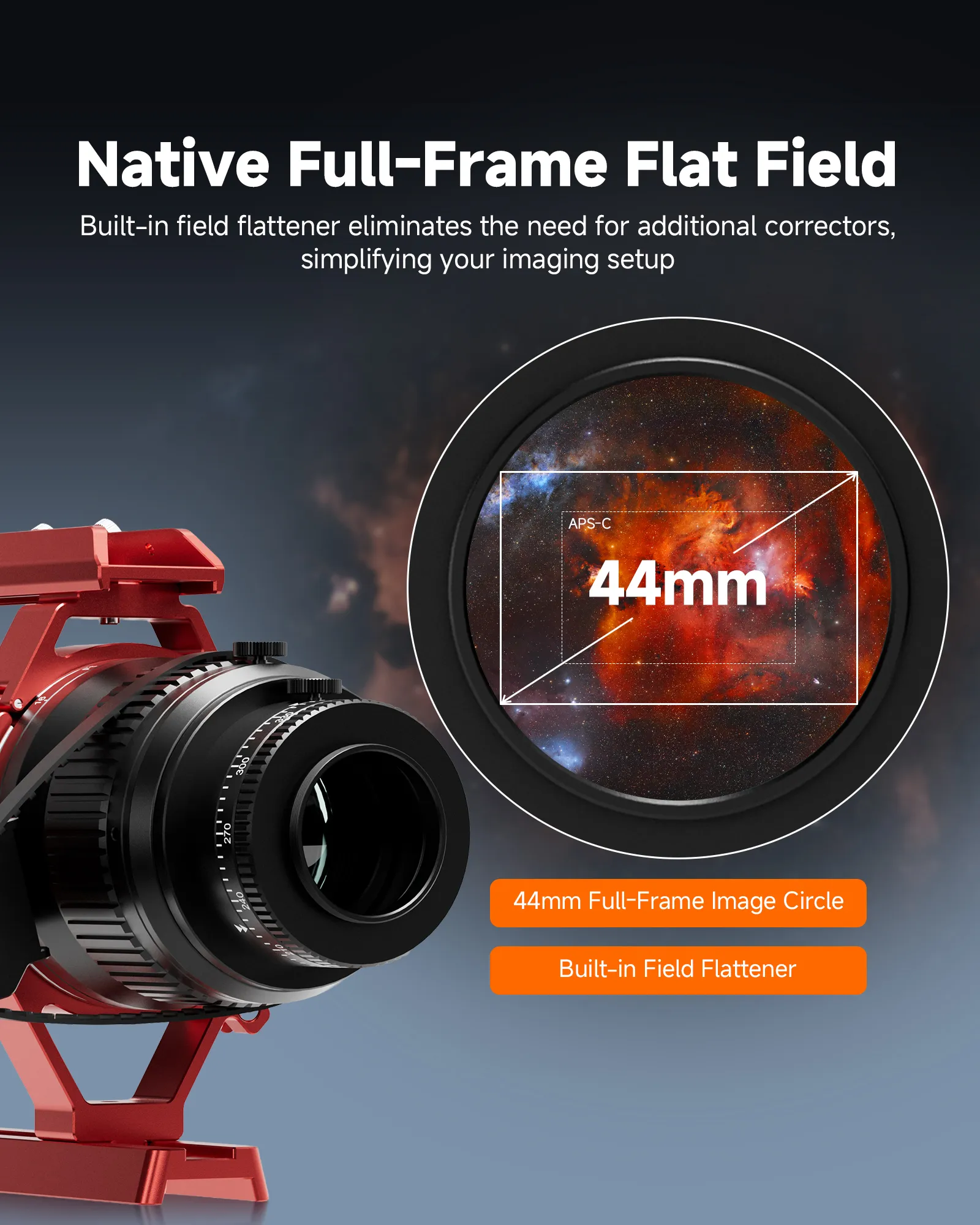
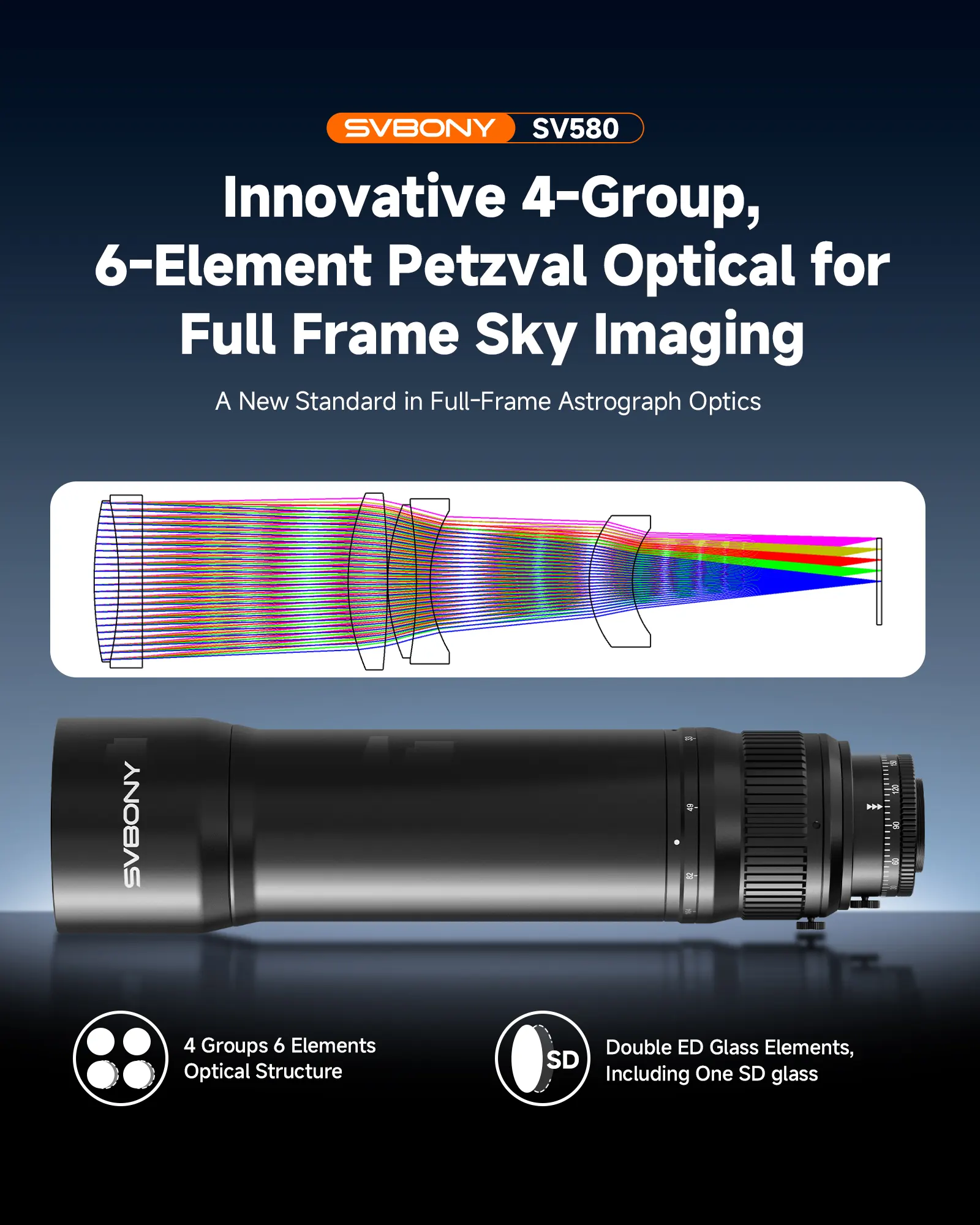
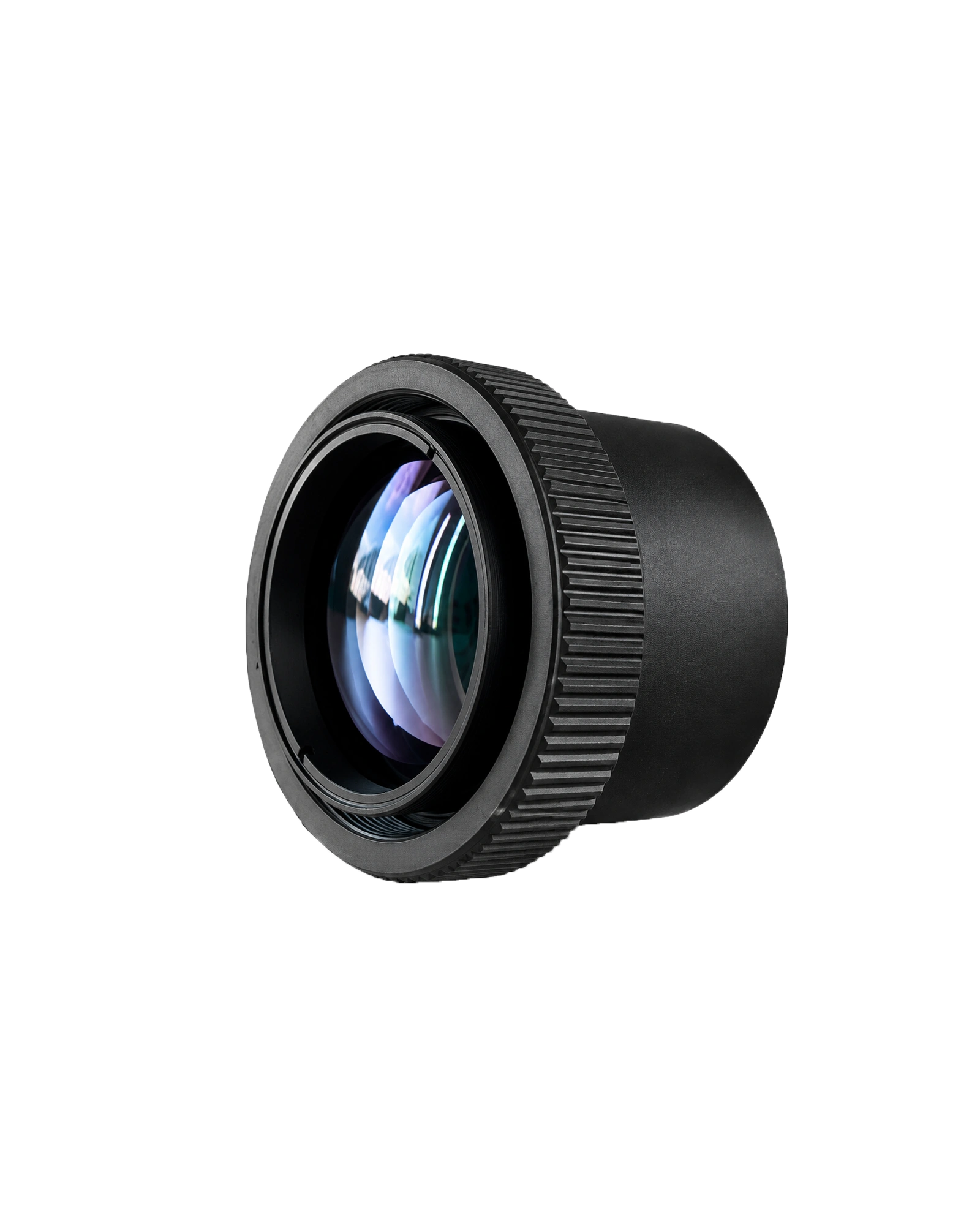
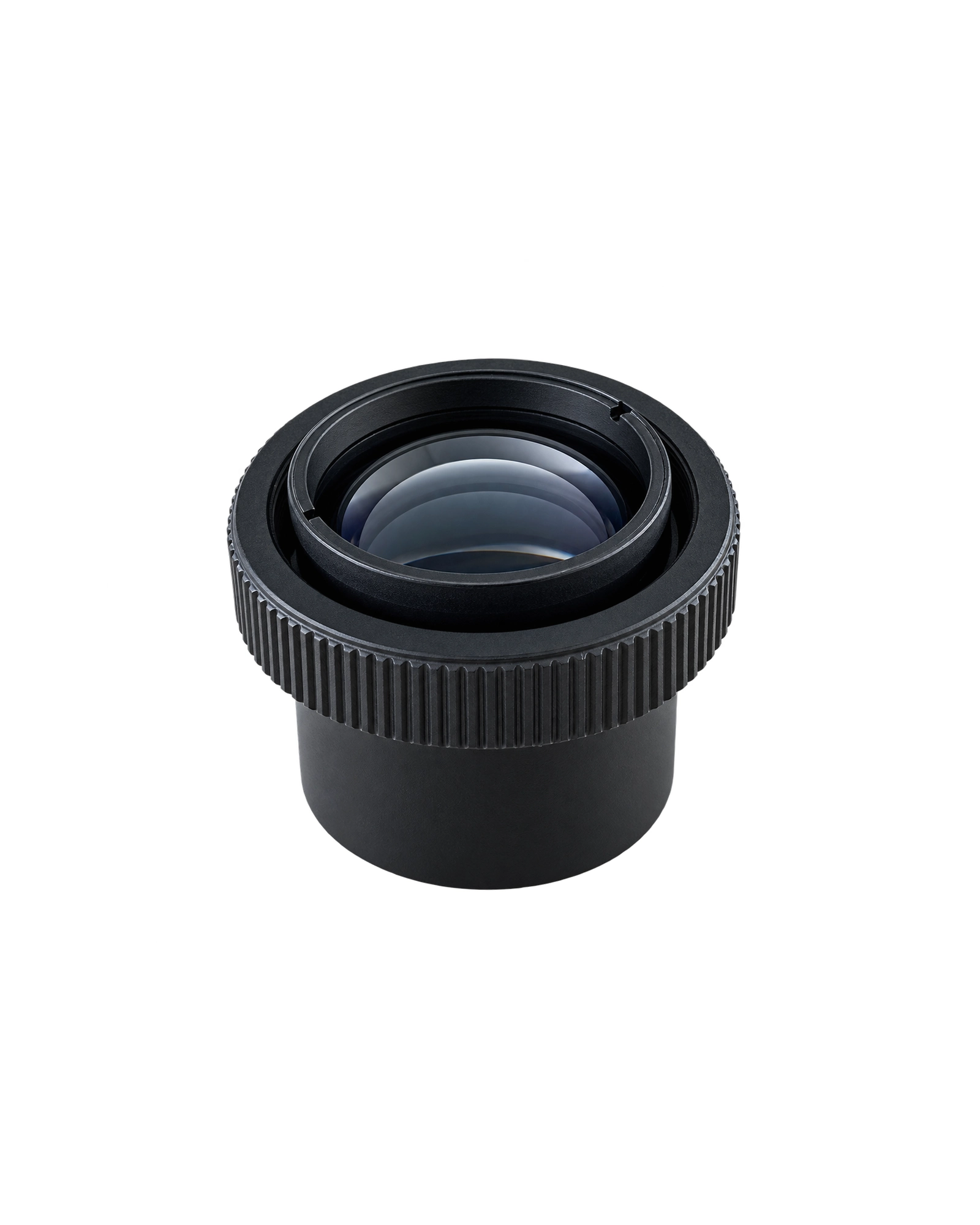
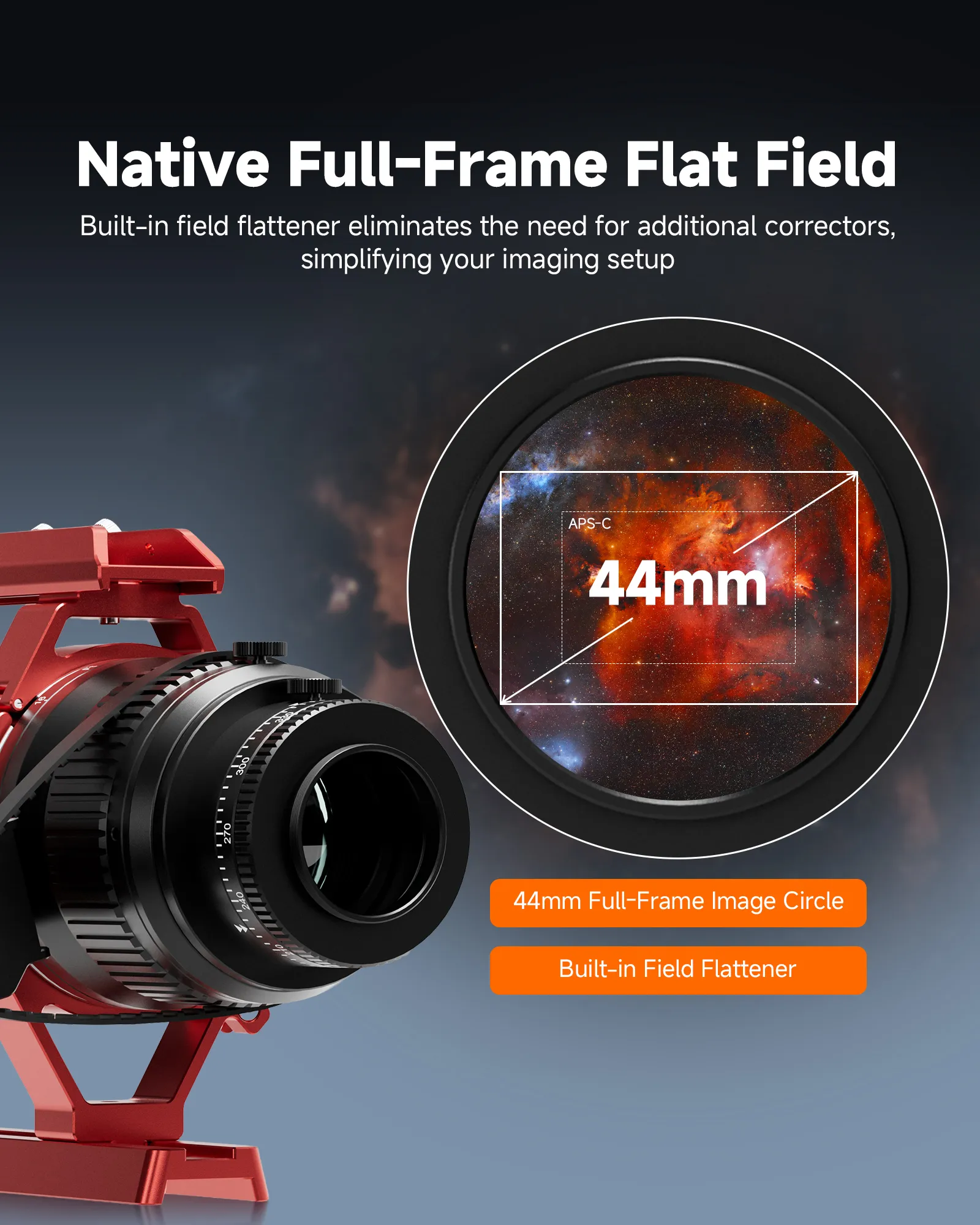
[{"Title":"Professional Petzval APO Imaging Performance","Content":"The 4-group 6-element Petzval APO design combines dual ED elements, including a Super ED glass element, to significantly reduce residual chromatic aberration and enhance image contrast, producing sharp stars and highly detailed astrophotography results."},{"Title":"Simplified Full-Frame Astrophotography Setup","Content":"The built-in field flattener supports a 44mm image circle, eliminating the need for an additional flattening accessory and reducing setup complexity."},{"Title":"Faster Capture with f/4.5 Optical Speed","Content":"A fast focal ratio improves light-gathering efficiency, helping astrophotographers capture faint deep-sky details more effectively."},{"Title":"Wide Field View for Large Celestial Targets","Content":"With a 360mm focal length, SV580 is optimized for capturing expansive nebulae, galaxies, and large deep-sky structures."},{"Title":"Designed for Modern Astrophotography Systems","Content":"Compatible with full-frame cameras, APS-C cameras, EAF focusing systems, filters, and guiding accessories for flexible imaging configurations."}]
NEW
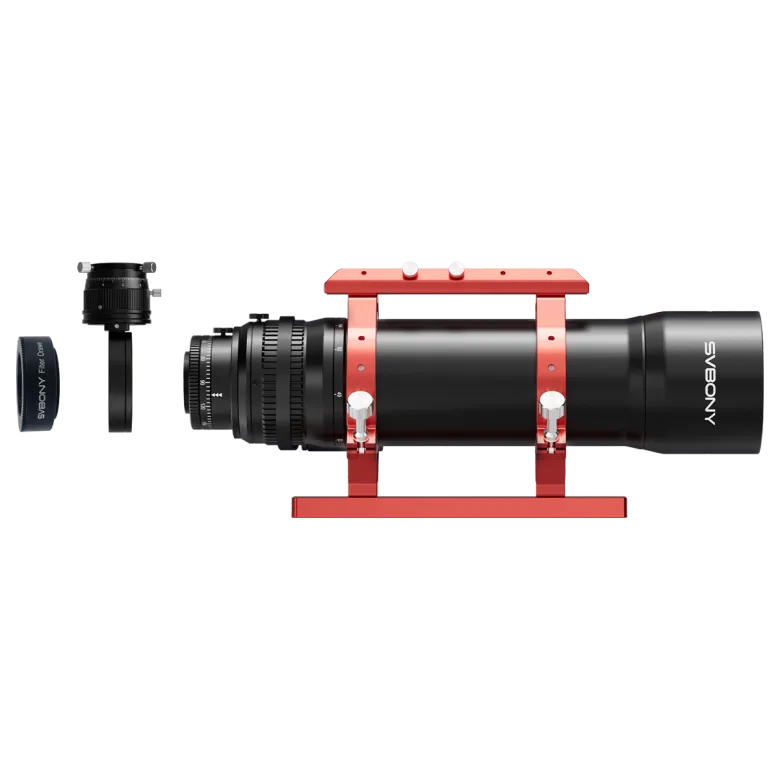
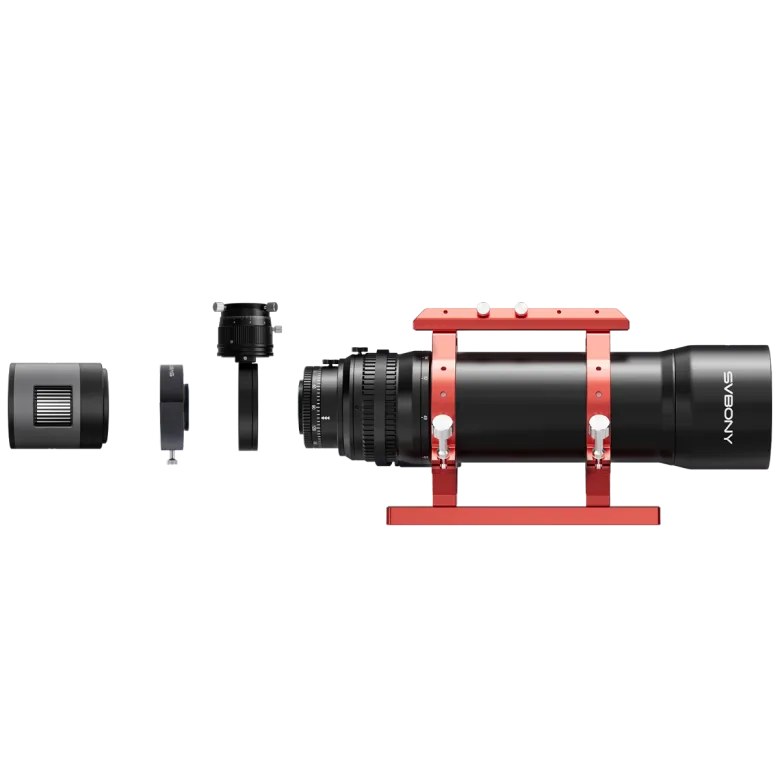
SV580 Full Frame Astrophotography Kit
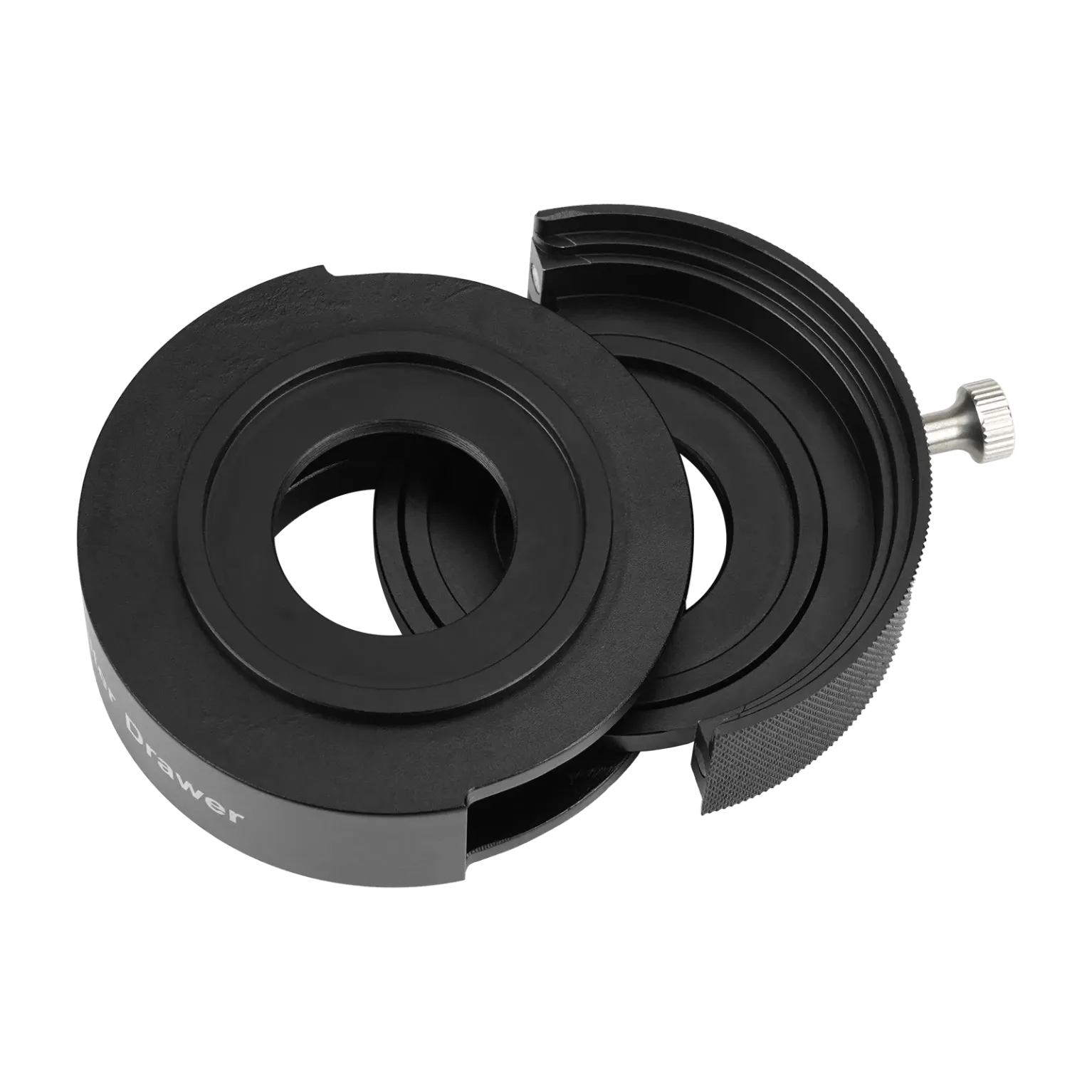
[{"Title":"Complete Full-Frame Astrophotography Solution","Content":"Build a professional deep-sky imaging system with the SV580 Petzval APO astrograph, SV238 off-axis guider, and SV226 filter drawer. This integrated kit simplifies your imaging setup while providing the essential tools for high-quality astrophotography."},{"Title":"Professional Petzval APO Optical Performance","Content":"The SV580 features a 4-group 6-element Petzval APO design with dual ED elements, including FCD100 Super ED glass, delivering excellent color correction, high contrast, and clean star points for detailed deep-sky images."},{"Title":"Precise Guiding with Off-Axis Guider","Content":"The SV238 Off-Axis Guider provides accurate guiding by using light from the telescope\u0027s optical path, helping improve tracking precision and reducing flexure issues compared with traditional guide scope setups."},{"Title":"Efficient Filter Switching with M54 Filter Drawer","Content":"The SV226 M54 filter drawer allows quick filter changes without rebuilding your imaging train. Easily switch filters while maintaining a stable and efficient astrophotography workflow."},{"Title":"Wide-Field Full-Frame Deep-Sky Imaging","Content":"With a 44mm image circle and fast F/4.5 optical design, SV580 is optimized for large deep-sky targets, capturing expansive nebulae, galaxy regions, and wide celestial structures with impressive detail."}]
NEW
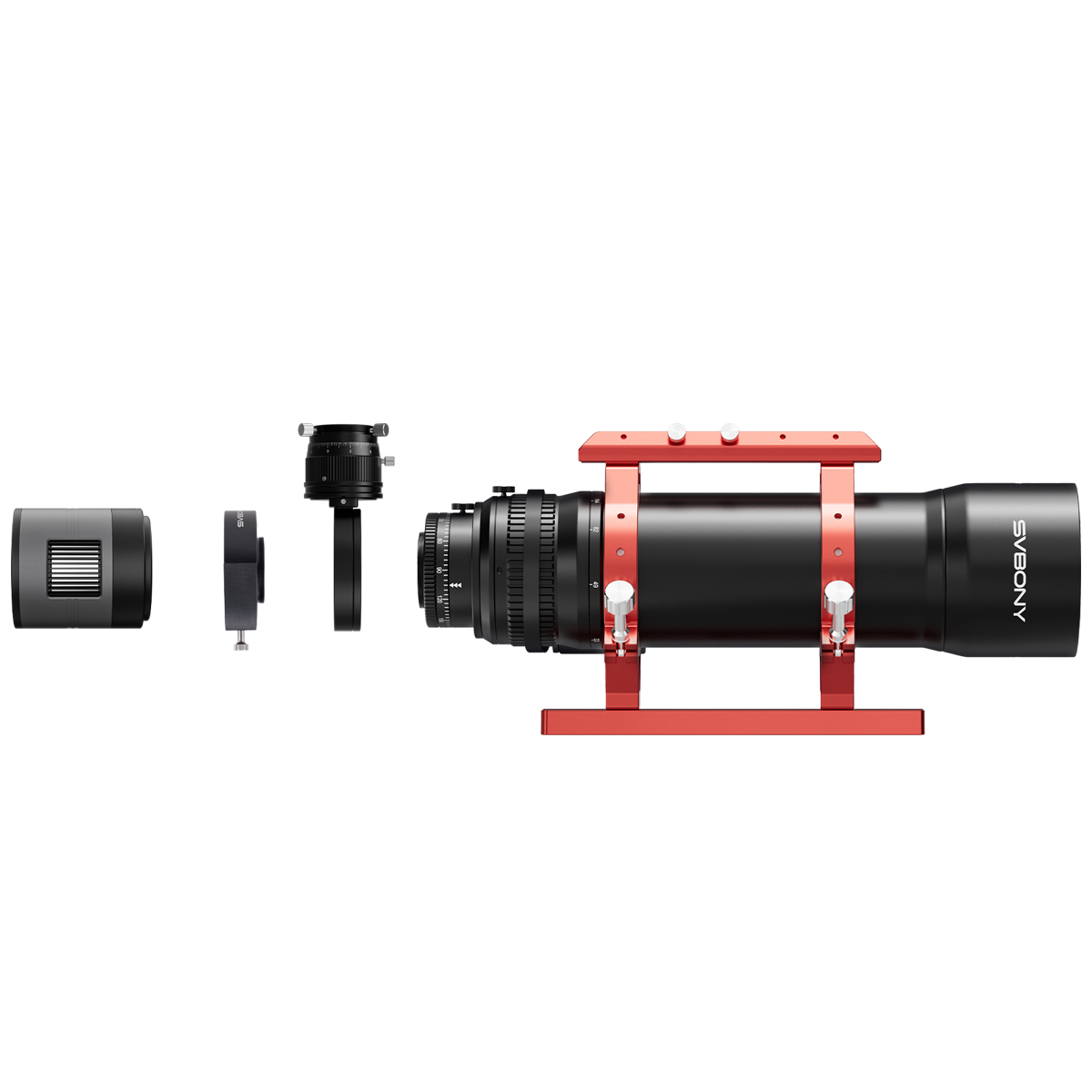
SV580 APS-C Astrophotography Kit
[{"Title":"Complete APS-C Deep-Sky Imaging System","Content":"Build a complete astrophotography workflow with the SV580 Petzval APO astrograph, SC571CC cooled astronomy camera, SV238 off-axis guider, and SV226P filter drawer. This integrated kit provides the essential tools for efficient deep-sky imaging."},{"Title":"Professional Petzval APO Optical Performance","Content":"The SV580 features a 4-group 6-element Petzval APO optical design with dual ED elements, including FCD100 Super ED glass, delivering excellent color correction, high contrast, and clean star points for detailed astrophotography."},{"Title":"High-Sensitivity Cooling Camera for Deep-Sky Capture","Content":"The SC571CC cooled astronomy camera provides efficient heat management and high-quality imaging performance, helping capture cleaner details with reduced noise during long-exposure astrophotography."},{"Title":"Precise Guiding for Stable Long Exposures","Content":"The SV238 Off-Axis Guider uses the telescope\u2019s optical path for guiding, improving tracking accuracy and reducing flexure issues compared with traditional guide scope setups. Capture sharper stars and more consistent deep-sky images."},{"Title":"Efficient Filter Management for Flexible Imaging","Content":"The SV226P Filter Drawer allows quick filter changes without rebuilding your imaging setup, helping maintain a stable workflow and improving efficiency during multi-filter astrophotography sessions."}]
Choose an Astronomy Telescope by Observing Goal
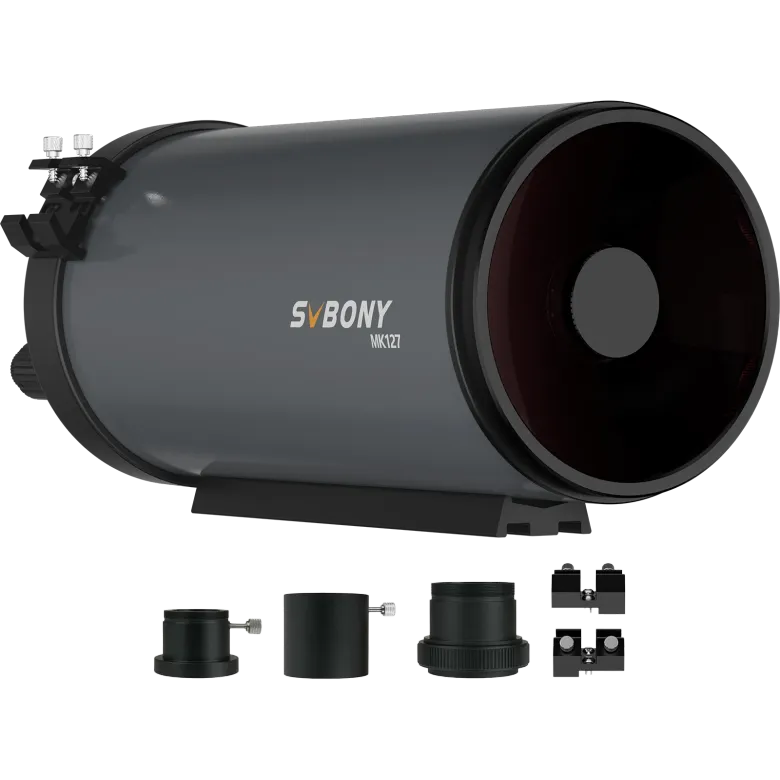
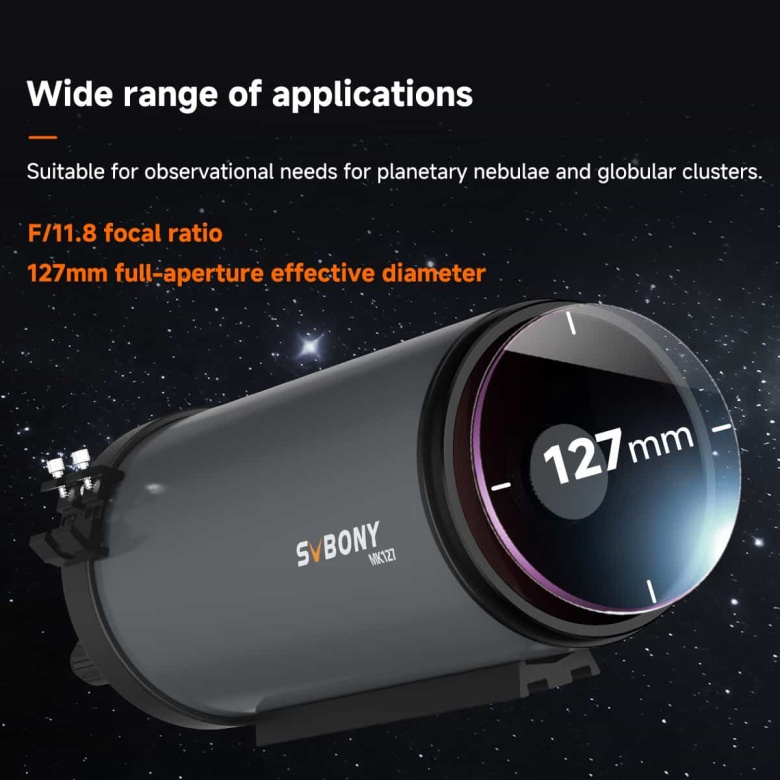
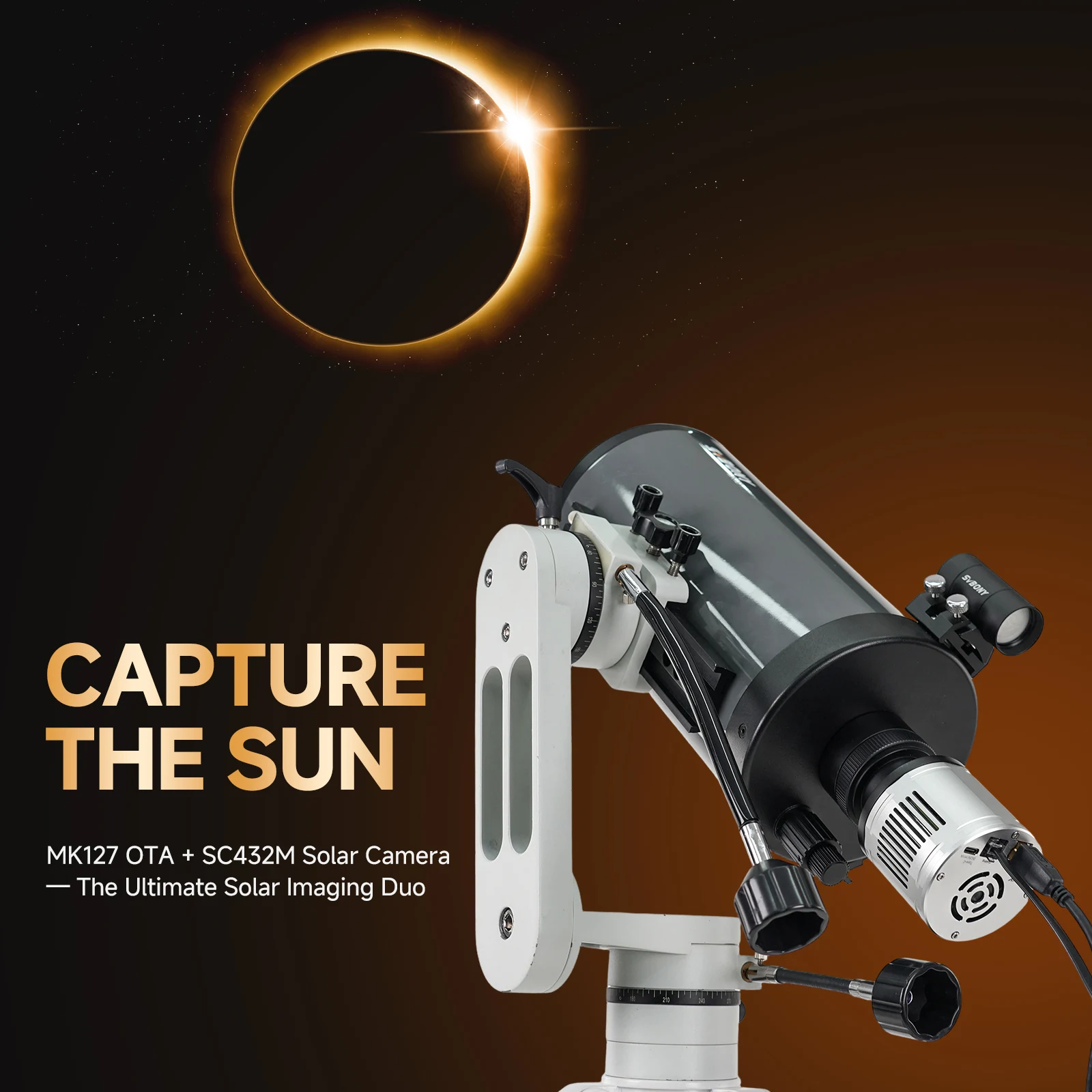
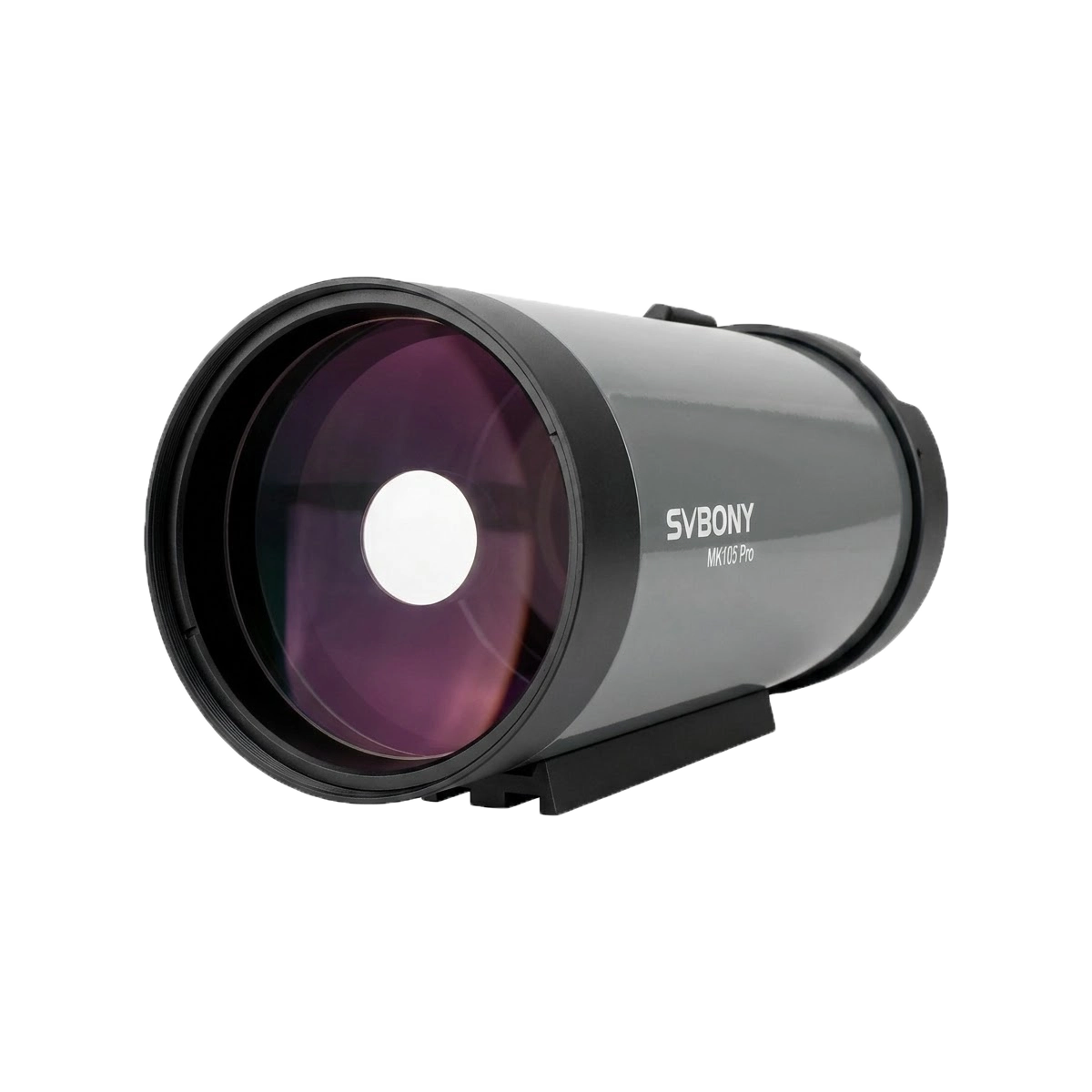
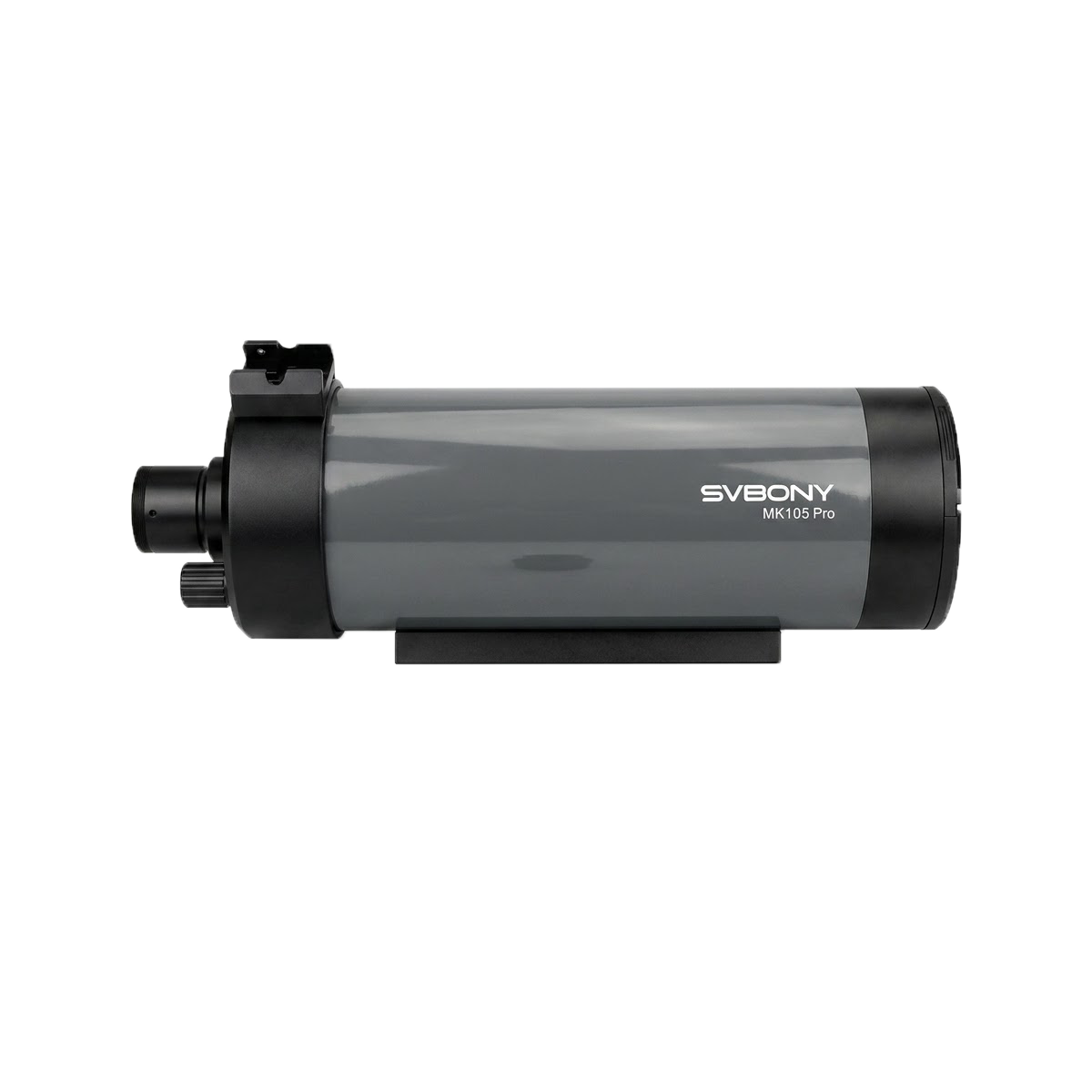
For lunar and planetary observation, a telescope with strong resolution and a longer focal length can help reveal lunar craters, planetary features, and other bright targets in greater detail. Maksutov-Cassegrain telescopes, such as the MK90, MK105, and MK127, offer compact optical designs well suited to observing the Moon and planets.
Refractor telescopes also provide a versatile option for clear views of bright celestial objects and everyday stargazing.
For deep-sky observation and astrophotography, wider-field optical designs can help capture star fields, nebulae, galaxies, and star clusters. ED and APO refractors, including the SV530 80mm ED refractor, SV503 flat-field refractors, and SV550 APO refractors, provide options for detailed observation and imaging. <
Their optical designs make them suitable for users who want to move beyond basic stargazing and explore more demanding deep-sky targets.
For advanced astrophotography, specialized astrographs are designed around the needs of imaging rather than visual observation alone. The SV580 80mm f/4.5 Petzval APO astrograph combines a fast optical design with a wide field for deep-sky imaging, while compact models such as the SV555 and SV535 offer flexible options for astro imaging and wide-field photography.
Whether you are observing planets, exploring deep-sky objects, or building a dedicated imaging setup, SVBONY offers astronomy telescopes for different observing and imaging needs.
Faqs About Astronomy Telescope
A good astronomy telescope depends on your observing goals. Aperture, focal length, optical design, mount, portability, and budget can all affect the viewing experience.
Refractor telescopes are versatile for general stargazing and lunar observation, while Maksutov-Cassegrain telescopes are commonly used for lunar and planetary observation.
For planetary observation, aperture, focal length, and optical resolution are important factors. The MK90, MK105, and MK127 Maksutov-Cassegrain telescopes are designed for lunar and planetary observation.
The MK105 features a 105mm aperture and 1365mm focal length, while the MK127 has a 127mm aperture and 1500mm focal length. A stable mount can also help when observing at higher magnifications.
For deep-sky astrophotography, a wider field of view and well-corrected optics are important. The SV530 80mm ED refractor features an 80mm aperture and 480mm focal length.
For wider-field imaging, the SV580 80mm f/4.5 Petzval APO astrograph combines an 80mm aperture with a 360mm focal length and built-in field flattener for full-frame imaging. A tracking mount is important for keeping targets centered during longer exposures.
Not necessarily. For deep-sky astrophotography, aperture is only one factor to consider. Focal ratio, optical correction, field of view, and the mount can also affect imaging performance. .
Many 80mm ED and APO refractors are used for astrophotography because they offer a practical balance of aperture, focal length, and portability. For long exposures, mount performance is also an important consideration alongside aperture.
There is no single best telescope size for stargazing. Smaller apertures around 70–90mm are generally easier to transport, while larger apertures can collect more light for fainter targets but may require a heavier setup. The right size depends on the objects you want to observe, where you observe, and whether the telescope will also be used for astrophotography.



 Google
 Amazon