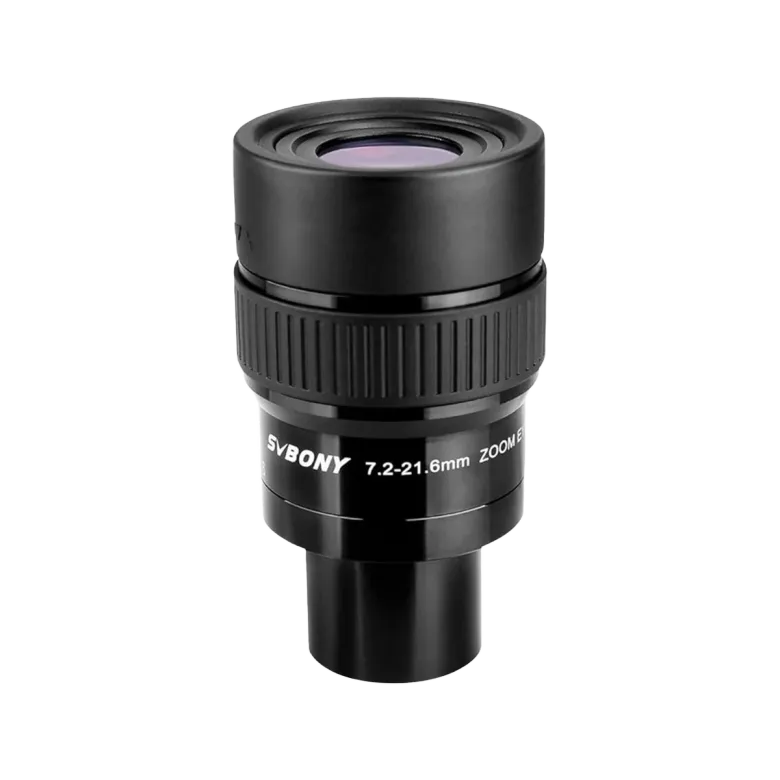
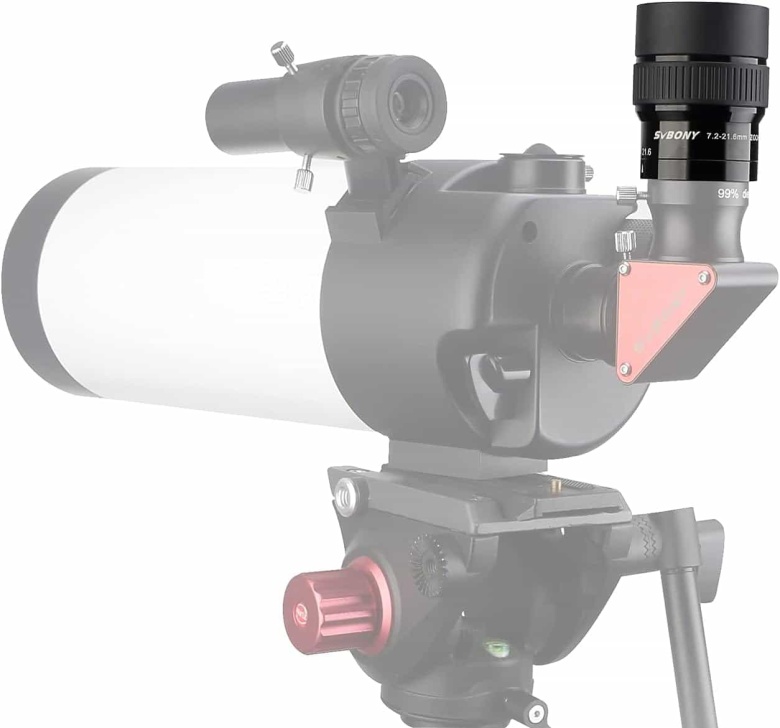
7.2-21.6mm Zoom Eyepiece | SVBONY SV191
[{"Title":"Variable Magnification Range","Content":"Offers a versatile zoom range from 7mm to 21mm, allowing for quick adjustments in magnification during observation."},{"Title":"High-Quality Optics","Content":"Features fully multi-coated lenses for enhanced light transmission, delivering bright, sharp, and high-contrast images."},{"Title":"Wide Field of View","Content":"Provides a wide field of view, making it easier to locate and track objects across the sky, even at higher magnifications."},{"Title":"Durable, Lightweight Construction","Content":"Built with sturdy yet lightweight materials, this eyepiece is designed for reliable, long-lasting performance in various outdoor conditions."},{"Title":"Comfortable Viewing","Content":"Long eye relief ensures comfortable use, even for eyeglass wearers, making it ideal for extended observation sessions."}]
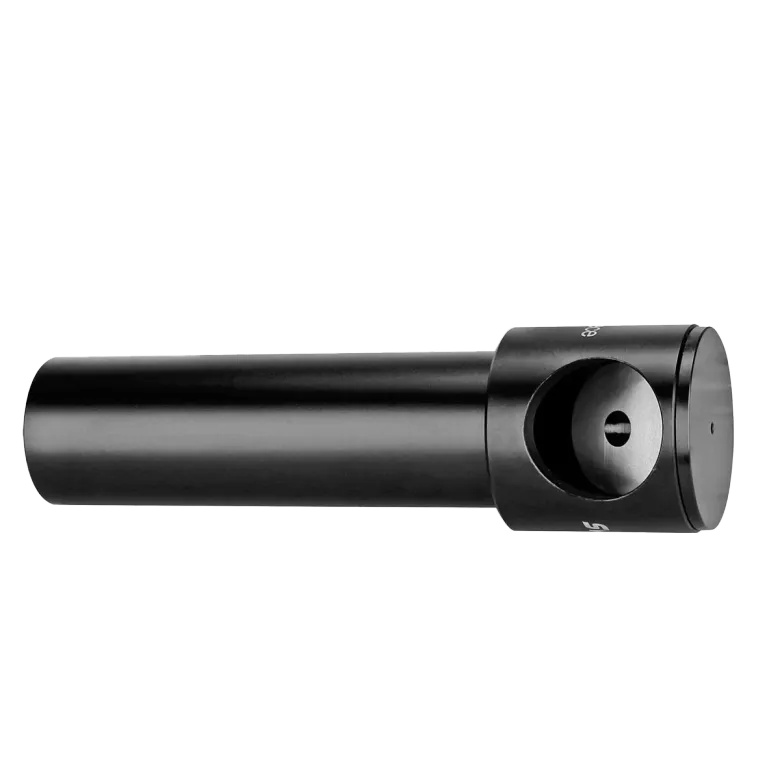
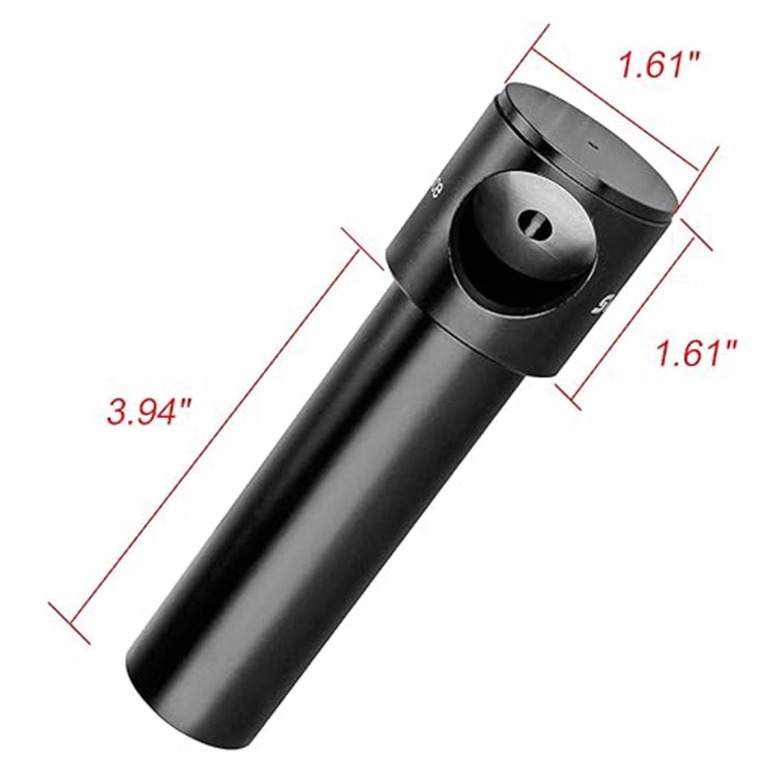
Cheshire Collimating Eyepiece | SVBONY SV197
[{"Title":"Accurate Collimation Tool","Content":"The Cheshire collimating eyepiece helps you achieve precise optical alignment, ensuring optimal performance for your telescope."},{"Title":"Simple and Easy to Use","Content":"Easy to operate, it allows for quick and accurate collimation, even for beginners, improving your telescope\u0027s alignment with minimal effort."},{"Title":"High-Quality Construction","Content":"Made from durable materials, the eyepiece features a well-built design that withstands regular use while providing reliable results."},{"Title":"Clear and Bright View","Content":"Offers sharp, clear views for easy alignment, ensuring your telescope is correctly set up for clear, high-quality observations."},{"Title":"Universal Compatibility","Content":"Designed to fit most 1.25-inch focusers, making it a versatile tool that can be used with a variety of telescopes."}]
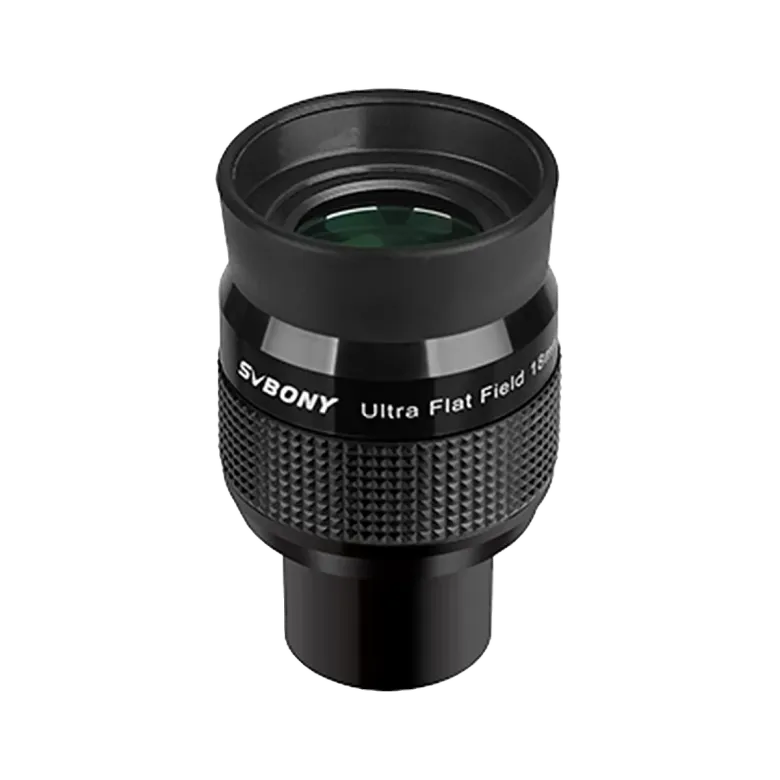
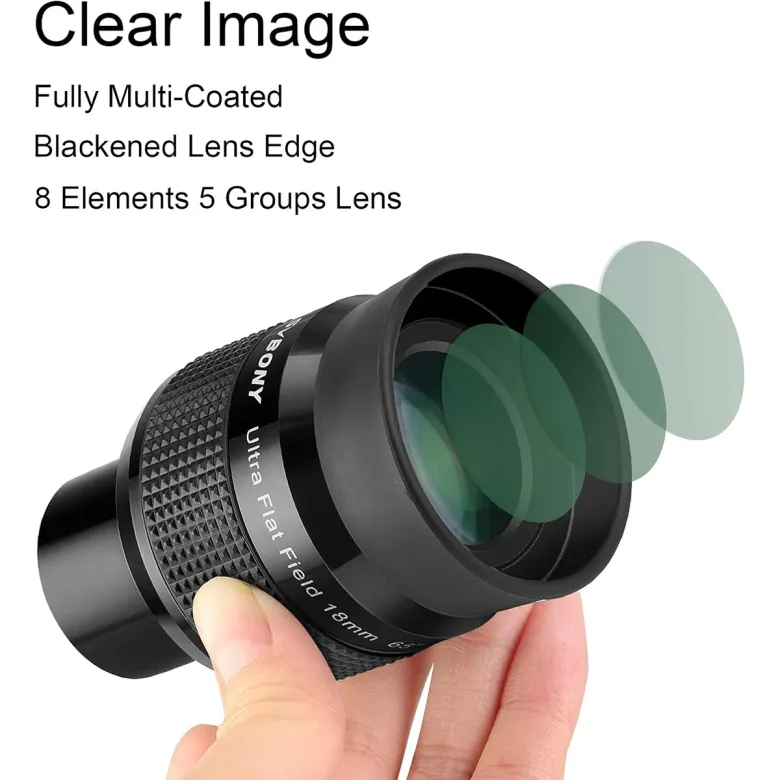
18mm Flat Field Eyepiece | SVBONY SV190
[{"Title":"Ultra Flat Field Design","Content":"Provides an exceptionally flat field of view, reducing distortion and delivering sharp, clear images across the entire lens."},{"Title":"High-Quality Multi-Coated Optics","Content":"Fully multi-coated lenses enhance light transmission, offering bright, high-contrast views with minimal glare."},{"Title":"18mm Focal Length","Content":"The 18mm focal length provides a comfortable balance of magnification and field of view, making it ideal for both deep-sky and planetary observations."},{"Title":"Long Eye Relief","Content":"Offers generous eye relief, making it suitable for users who wear glasses and ensuring comfortable extended viewing."},{"Title":"Durable and Lightweight Construction","Content":"Built with high-quality materials and a lightweight design, the eyepiece is durable and easy to handle during observation sessions."}]
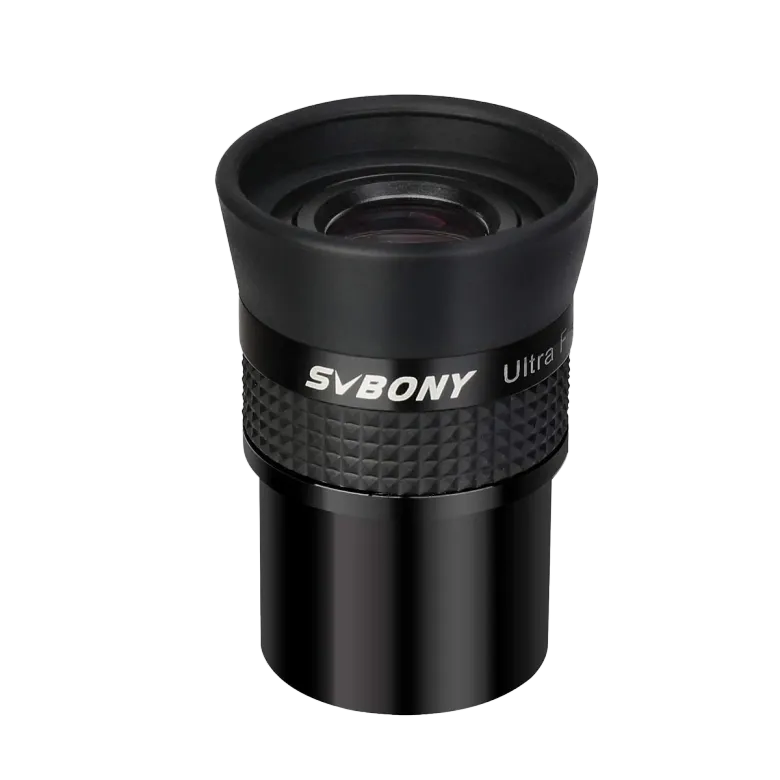
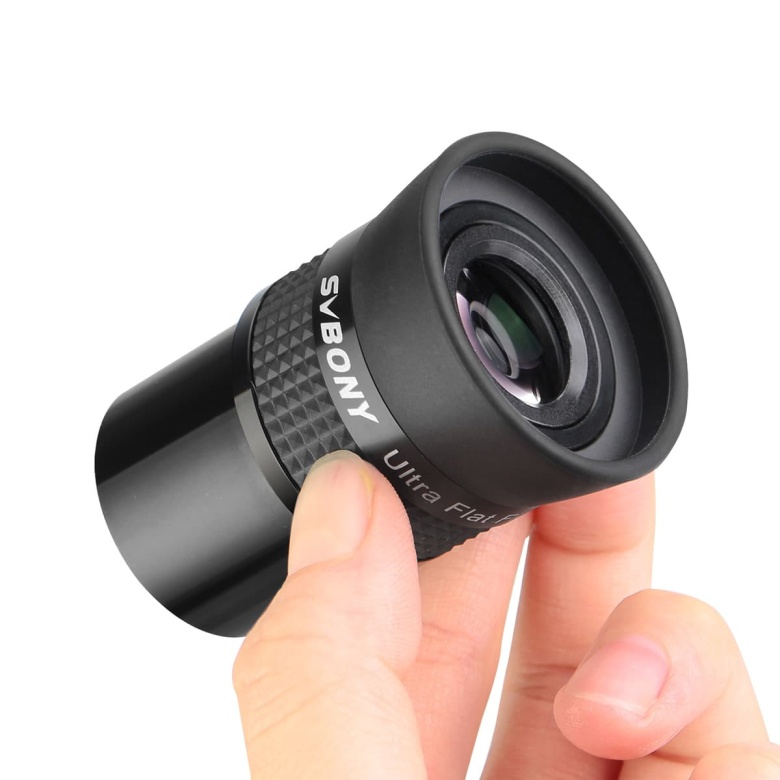
10mm Flat Field Eyepiece | SVBONY SV190
[{"Title":"Ultra Flat Field for Clear Views","Content":"Designed with an ultra-flat field of view to minimize distortion and deliver sharp, clear images across the entire visual field."},{"Title":"High-Quality Optical Glass","Content":"Fully multi-coated lenses provide optimal light transmission for brighter, clearer, and more contrast-rich images."},{"Title":"Wide 60\u00B0 Field of View","Content":"The 60\u00B0 apparent field of view ensures a wide, immersive viewing experience, making it easier to track objects across the sky."},{"Title":"Comfortable Viewing","Content":"Offers long eye relief, making it suitable for eyeglass wearers and ensuring comfortable extended viewing sessions."},{"Title":"Durable Construction","Content":"Made from high-quality aluminum for durability, this eyepiece is designed to withstand outdoor use and ensure reliable performance."}]
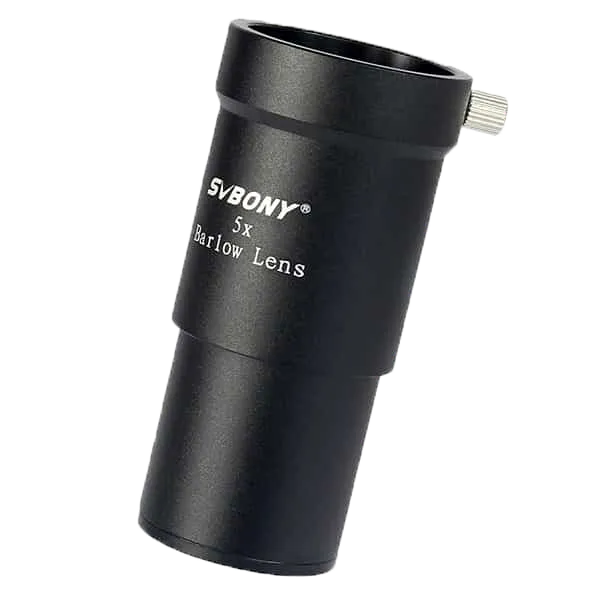
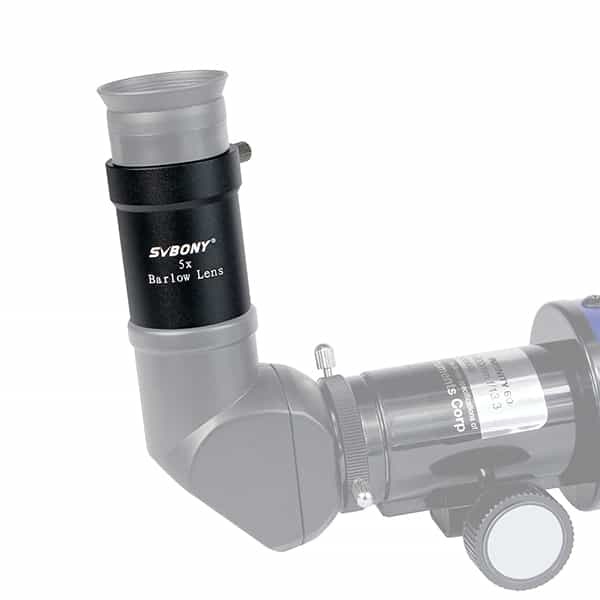
5X Barlow Lens | SVBONY
[{"Title":"High Magnification Power","Content":"The SVBONY 5x Barlow lens increases your telescope\u2019s magnification by five times, providing enhanced detail and clarity for planetary and lunar observations."},{"Title":"Improved Image Resolution","Content":"With high-quality optical glass, the 5x Barlow lens helps to deliver sharp, high-resolution images, minimizing optical distortion for clearer views of distant objects."},{"Title":"Multi-Coated Optics for Better Light Transmission","Content":"The lens features multi-layer coatings that reduce light loss, providing bright and clear images even in lower-light conditions for superior viewing experiences."},{"Title":"Durable and Compact Design","Content":"Made with durable aluminum housing, the 5x Barlow lens is designed to withstand outdoor conditions while being compact and easy to transport, making it ideal for portable setups."},{"Title":"Easy to Use and Compatible","Content":"The SVBONY 5x Barlow lens has a standard 1.25-inch barrel size, making it compatible with most telescopes and eyepieces, ensuring quick and easy integration into your existing setup."}]
HOT
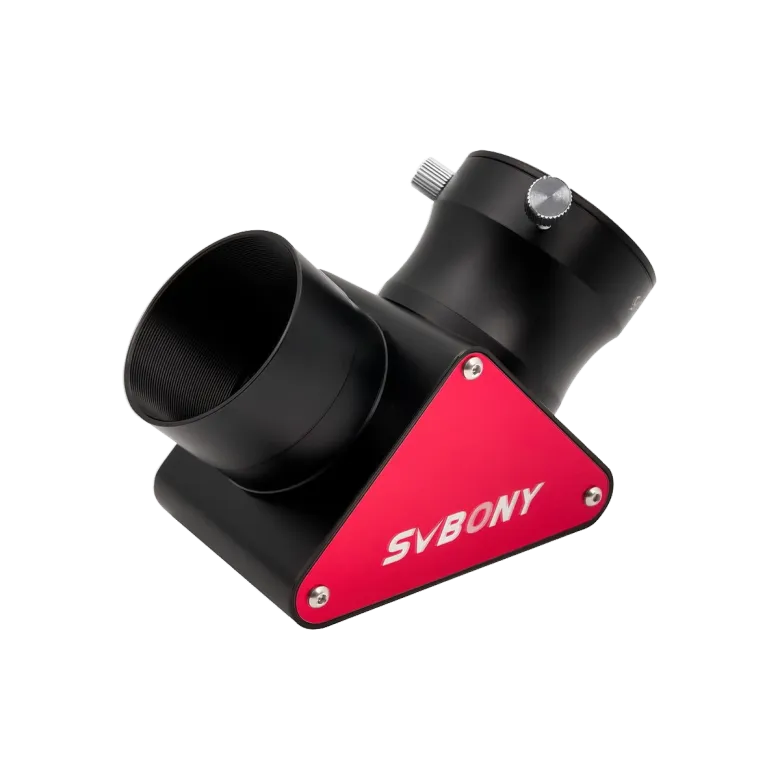
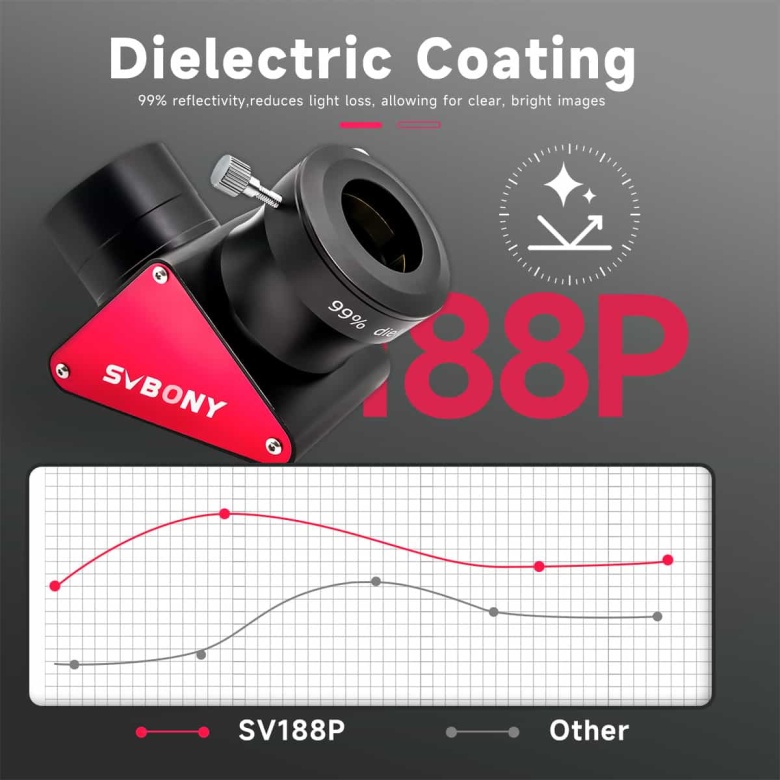
90° Mirror Diagonal | SVBONY SV188P
[{"Title":"Dielectric Coatings for Optimal Light Transmission","Content":"The dielectric coatings on the mirror surface ensure over 99% reflectivity, reducing light loss and providing bright, sharp images for enhanced astronomical viewing."},{"Title":"Versatile Nosepiece Compatibility","Content":"The 1.25-inch nosepiece fits 1.25-inch telescopes and accepts standard accessories such as filters, eyepieces, and Barlow lenses, while the 2-inch nosepiece works with 2-inch telescopes for larger accessories."},{"Title":"90-Degree Viewing Angle","Content":"With a 90-degree angle, this mirror diagonal provides a comfortable, ergonomic viewing position, making it perfect for observing objects overhead during stargazing."},{"Title":"Upright Image with Left/Right Reversal","Content":"The diagonal corrects the upside-down image but reverses left and right, offering a natural view for most astronomical observations, perfect for planetary and lunar photography."},{"Title":"Brass Compression Ring for Secure Fit","Content":"Equipped with a brass compression ring and thumbscrew, the adapter ensures secure, scratch-free adjustments, preventing eyepiece rotation and protecting your gear during use."}]
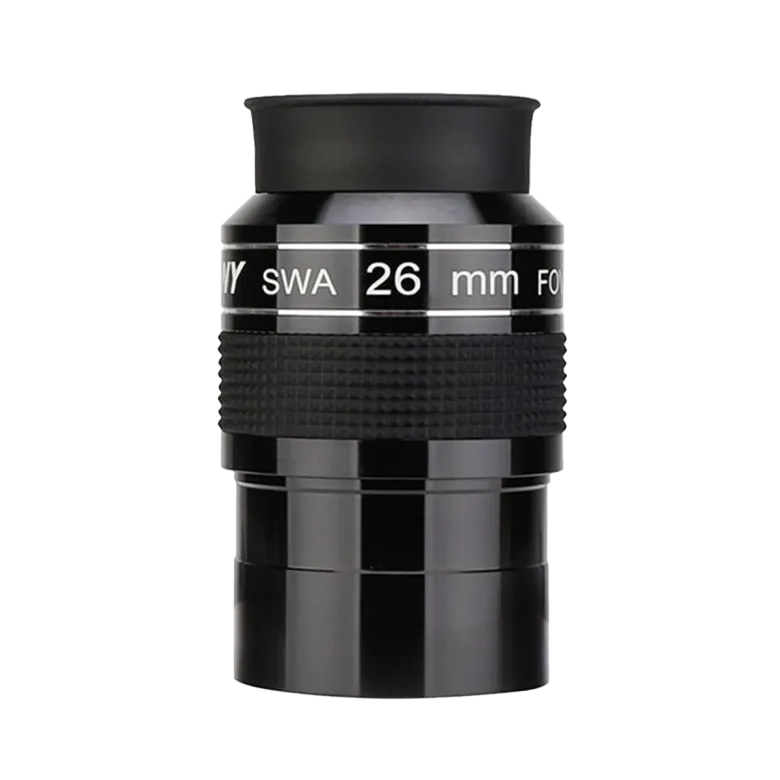
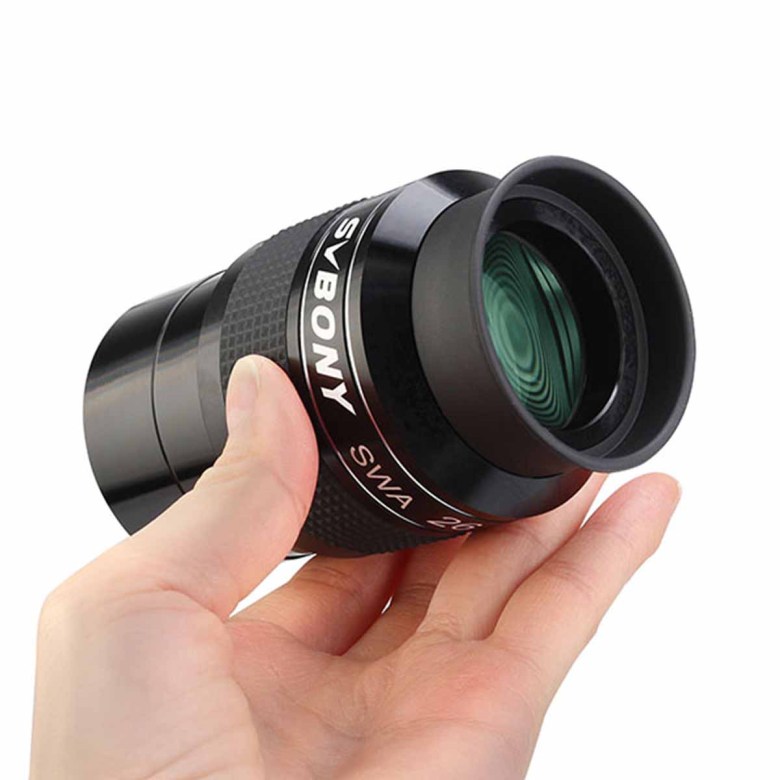
26mm 70 Degree Eyepiece | SVBONY SV154
[{"Title":"Wide 70\u00B0 Field of View","Content":"The 70\u00B0 apparent field of view provides expansive, high-resolution views of celestial objects for detailed observations."},{"Title":"High-Quality Optics","Content":"Fully multi-coated lenses enhance light transmission for bright, clear, and sharp images with minimal distortion."},{"Title":"Long Eye Relief","Content":"The 26mm focal length and long eye relief ensure comfortable viewing, even for users with eyeglasses."},{"Title":"Premium Construction","Content":"Made from durable, CNC-machined aluminum, this eyepiece is built to withstand extended use while maintaining performance."},{"Title":"Universal Compatibility","Content":"Designed to fit 2-inch focusers, offering versatile compatibility with a wide range of telescopes and other optical devices."}]
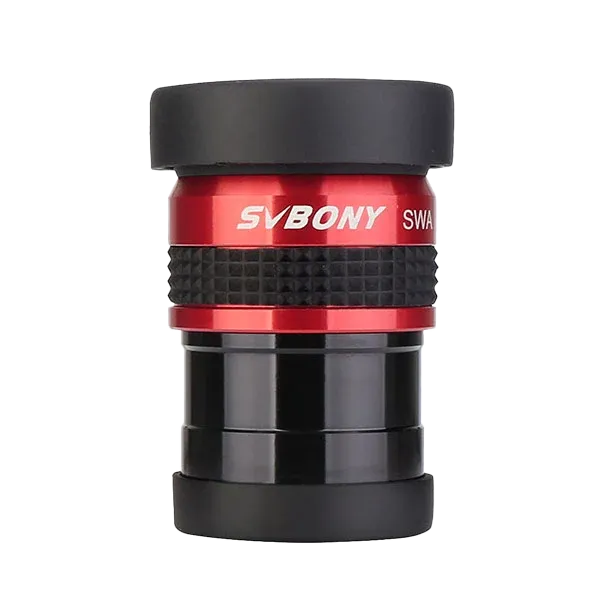
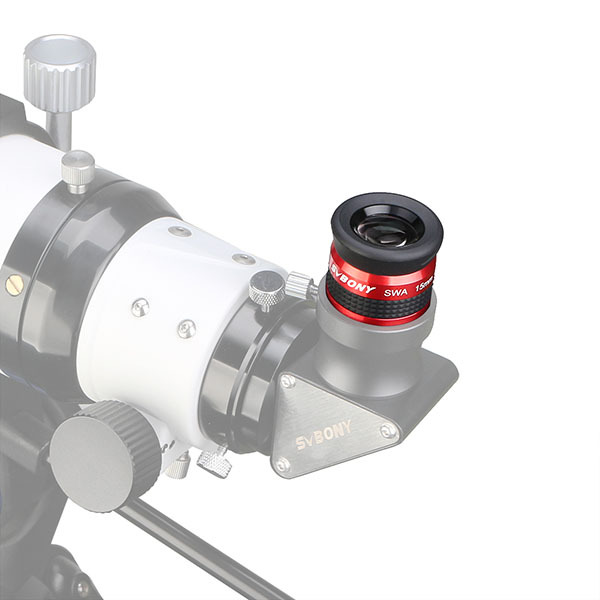
15mm 70 Degree Eyepiece | SVBONY SV154
[{"Title":"Wide Angle for Enhanced Viewing","Content":"The 70\u00B0 field of view provides expansive, immersive views of celestial objects for a more detailed experience."},{"Title":"High-Quality Optical Glass","Content":"Fully multi-coated lenses ensure excellent light transmission and crisp, clear images with minimal distortion."},{"Title":"Durable Construction","Content":"Built with a rugged aluminum housing, the eyepiece is designed for longevity and reliable performance in all conditions."},{"Title":"Comfortable Viewing","Content":"The long eye relief of 15mm makes this eyepiece ideal for comfortable extended viewing, even for eyeglass wearers."},{"Title":"Versatile Compatibility","Content":"Fits all standard 1.25-inch focusers, making it suitable for use with a wide range of telescopes and optical devices."}]
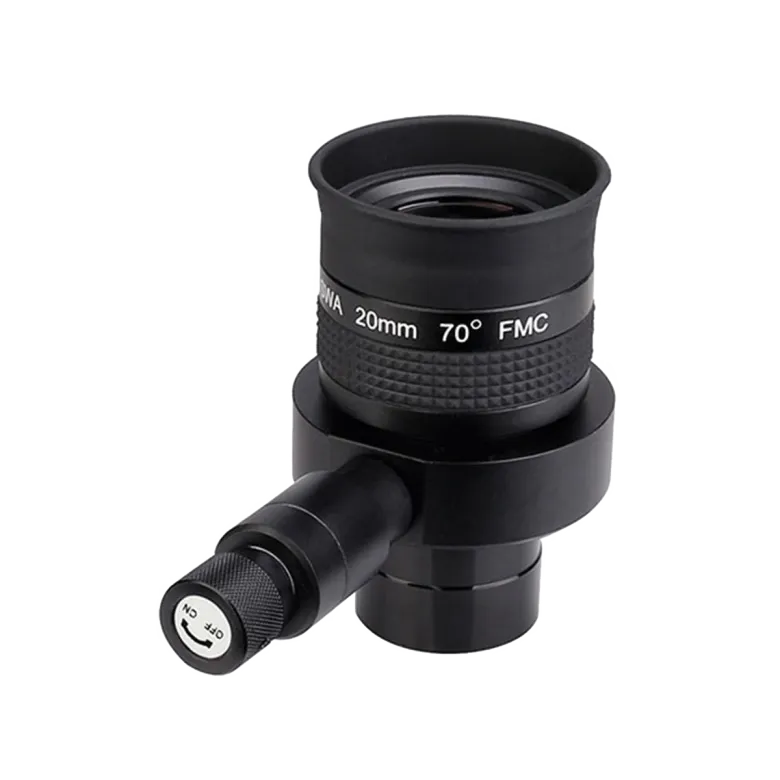
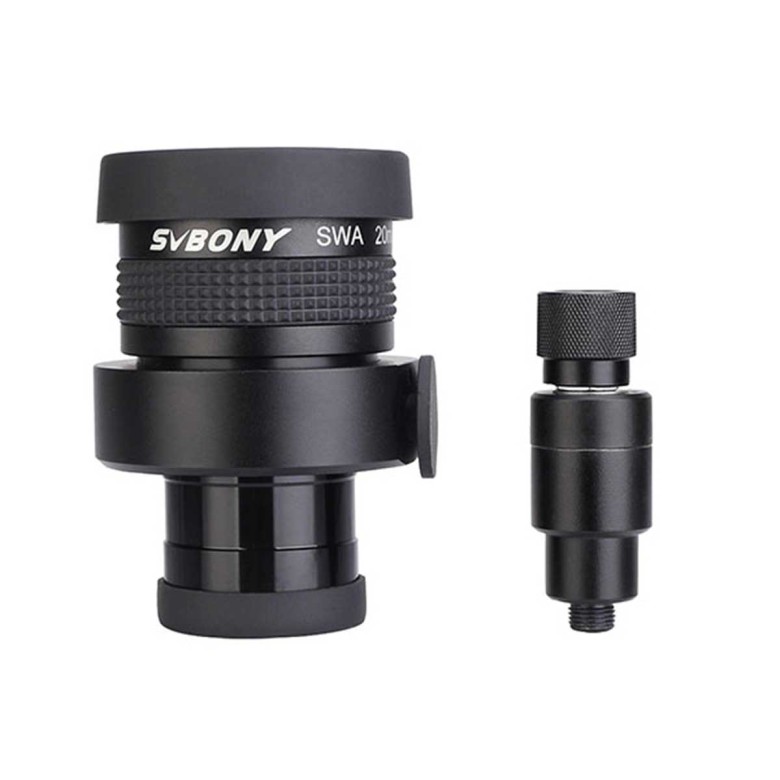
20mm Illuminated Eyepiece | SVBONY SV152
[{"Title":"LED Illumination for Clear Viewing","Content":"Built-in LED illumination provides consistent, adjustable brightness for clear views in low-light conditions."},{"Title":"High-Quality Optical Glass","Content":"Fully multi-coated lenses enhance light transmission, offering bright, sharp, and detailed images."},{"Title":"Durable, Sturdy Construction","Content":"CNC-machined aluminum housing ensures durability while maintaining a lightweight design for portability."},{"Title":"Adjustable Brightness Control","Content":"Allows users to fine-tune illumination levels for optimal viewing and to reduce eye strain."},{"Title":"Wide Compatibility","Content":"Fits standard 1.25-inch eyepieces and is ideal for use with telescopes, microscopes, and other optical devices."}]
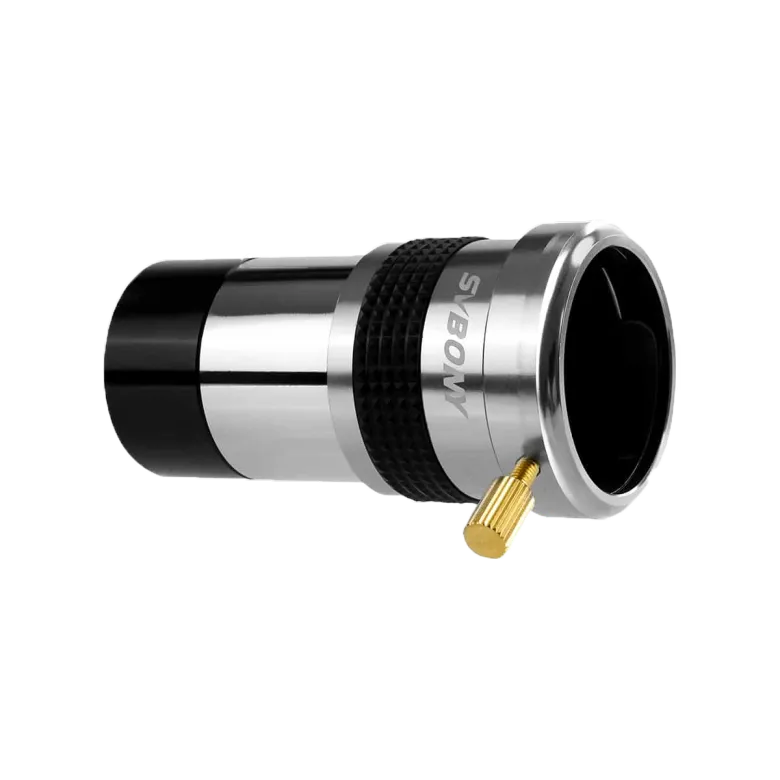
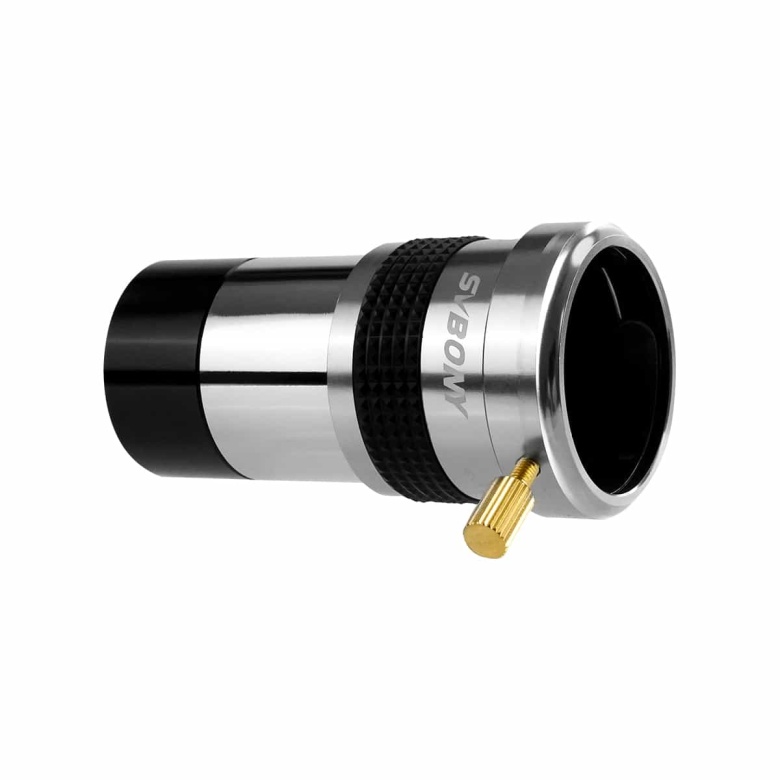
2x/3x Barlow Lens | SVBONY SV137
[{"Title":"2x Magnification Power","Content":"Doubles the magnification of any compatible eyepiece for a closer, more detailed view."},{"Title":"High-Quality Optics","Content":"Fully multi-coated glass lenses provide maximum light transmission and sharp, clear images."},{"Title":"Durable Construction","Content":"CNC-machined aluminum body ensures long-lasting durability for outdoor use."},{"Title":"Compatible with 1.25-Inch Eyepieces","Content":"Designed to fit 1.25-inch eyepieces, offering flexibility for various telescopes and setups."},{"Title":"Compact and Portable","Content":"Lightweight and compact design for easy storage and portability during stargazing trips."}]
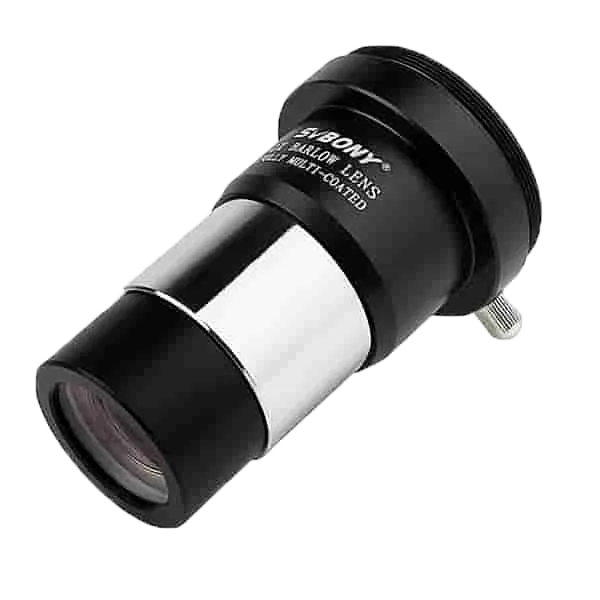
2x Barlow with M42 Threads | SVBONY
[{"Title":"Double Your Magnification","Content":"The HD-MC 2x Barlow lens doubles the magnification of your existing eyepieces, making it ideal for planetary and lunar observation, bringing distant objects closer with clarity."},{"Title":"High-Definition Multi-Coating","Content":"The lens is equipped with HD-MC (High-Definition Multi-Coating), ensuring minimal light loss, better light transmission, and high-contrast images even in low-light conditions."},{"Title":"All-Metal Construction","Content":"Built with robust all-metal housing, this Barlow lens is designed for durability and long-term use, providing a solid and reliable addition to your telescope setup."},{"Title":"Compatible with 1.25-Inch Eyepieces","Content":"Featuring a standard 1.25-inch size, this Barlow lens is compatible with most telescopes and eyepieces, offering versatile use for amateur astronomers and astrophotographers."},{"Title":"Portable and Easy to Use","Content":"The compact design ensures ease of transport and quick setup, allowing you to enhance your viewing experience without the hassle of complex adjustments or additional gear."}]
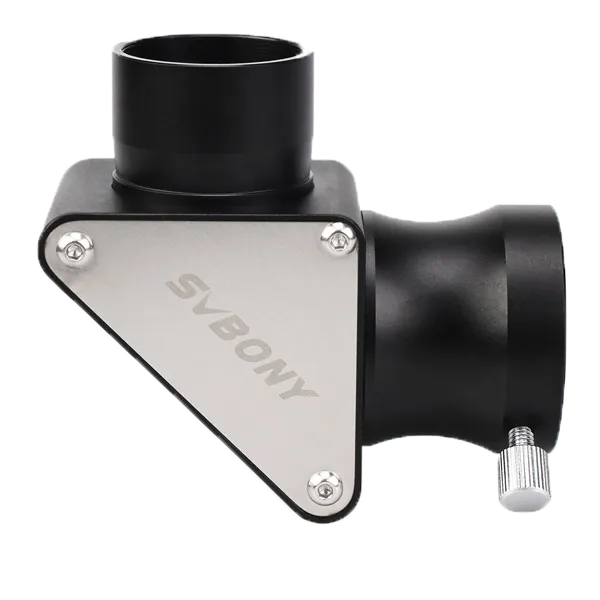
90° Mirror Diagonal | SVBONY SV188
[{"Title":"Perfect for Refractor Telescopes","Content":"The SV188 Zenith Mirror Diagonal is designed for use with refractor telescopes, including Celestron EQ, Meade Infinity, and similar models, providing enhanced viewing comfort."},{"Title":"90-Degree Viewing Angle","Content":"This 90-degree mirror diagonal allows for a natural, upright image while observing, providing a more comfortable and ergonomic viewing position through your telescope."},{"Title":"High-Quality Mirror Design","Content":"The mirror diagonal ensures bright, clear views by reflecting light without significant distortion, improving image quality compared to traditional prisms."},{"Title":"Easy to Use and Install","Content":"With a 1.25-inch fitting, the SV188 diagonal easily attaches to most refractor telescopes, making it an excellent accessory for beginner and advanced astronomers alike."},{"Title":"Not Compatible with Reflector Telescopes","Content":"Please note that the SV188 Zenith Mirror Diagonal is not suitable for Newtonian reflectors due to its length; it is specifically designed for refractors."}]
Telescope Eyepieces & Diagonals for Astronomy
The right eyepieces for a telescope can enhance your view of the Moon, planets, star clusters, and deep-sky objects. Different focal lengths, fields of view, and optical designs let you choose the magnification and viewing experience that best suits your observing needs.
SVBONY offers 2x, 3x, and 5x Barlow lenses for different observing and imaging needs. A 2x Barlow lens is a versatile choice for lunar and planetary observation, while a 3x Barlow lens provides a higher image scale for detailed planetary viewing. The 5x option is designed for very high magnification and is best suited to planetary imaging when conditions support it.
Telescope Eyepiece Types and Sizes
When choosing between different telescope eyepiece types, consider your telescope's focal length, observing targets, desired magnification, and viewing preferences.
sizes include 1.25-inch and 2-inch formats, while eyepiece focal length determines magnification. Shorter focal lengths generally provide higher magnification, while longer focal lengths offer a wider view.
Telescope Diagonals for Comfortable Viewing
A telescope diagonal mirror or telescope prism diagonal redirects the light path for a more comfortable viewing position, especially with refracting telescopes.
SVBONY offers star diagonals and other diagonal options for visual astronomy, along with eyepiece and diagonal kits for different observing setups.
FAQs About Eyepieces & Diagonals
A good eyepiece for a telescope depends on your telescope's focal length, what you want to observe, and the type of view you prefer. Longer-focal-length eyepieces generally provide lower magnification and a wider field of view, making them useful for star clusters and deep-sky objects. .
Shorter-focal-length eyepieces provide higher magnification and are often preferred for the Moon and planets. When choosing between different telescope eyepiece types, consider focal length, apparent field of view, eye relief, and barrel size. A telescope eyepiece kit can also be useful if you want several focal lengths for different observing targets
For planetary observation, shorter-focal-length telescope eyepieces are generally used to achieve higher magnification. Eyepieces around 6mm to 12mm are common choices, but the appropriate telescope eyepiece size depends on your telescope's focal length, optical performance, and atmospheric conditions.
For example, with the same telescope, a 10mm eyepiece provides higher magnification than a 20mm eyepiece. Telescope magnification is calculated by dividing the telescope's focal length by the eyepiece focal length.
Instead of simply choosing the highest magnification, choose an eyepiece that provides a sharp and stable view under the current observing conditions.
Yes. Telescope zoom eyepieces can be a convenient option when you want to adjust magnification without changing eyepieces. A zoom eyepiece covers a range of focal lengths, allowing you to move from a wider view to a more detailed view as you observe.
They can be useful for lunar and planetary observation as well as general stargazing. When choosing eyepieces for a telescope, consider the optical design, apparent field of view, eye relief, and the telescope itself. Zoom eyepieces offer flexibility, while fixed-focal-length eyepieces may provide a wider field of view or a more specialized viewing experience at particular focal lengths.
A telescope diagonal is an optical accessory placed between the telescope and eyepiece to redirect the light path, usually by about 90°, for a more comfortable viewing position. It is especially common with refracting telescopes, where viewing through the rear of the telescope can otherwise require an awkward position.
A star diagonal typically uses a mirror or prism to redirect light toward the eyepiece. The diagonal does not increase the telescope's magnification; instead, it changes the direction of the light path and can affect image orientation and optical performance.
There is no single best diagonal for a telescope for every observer. The right choice depends on the telescope design, eyepiece format, observing purpose, and the optical performance you need. A mirror star diagonal is commonly used for general visual astronomy, while a prism diagonal can be well suited to certain refracting telescope setups.
When comparing best telescope diagonals,consider barrel size, optical quality, mechanical fit, and how securely the eyepiece is held. For regular visual observing, a well-matched star diagonal can provide a comfortable and convenient viewing position.
A telescope diagonal mirror uses a reflective mirror to redirect light toward the eyepiece, while a telescope prism diagonal uses a prism to change the direction of the light path. Both provide a more comfortable viewing angle, but their optical characteristics differ.
Mirror diagonals are widely used for general visual astronomy and are available with different reflective coatings, while prism diagonals can work particularly well in certain refracting telescope configurations. When comparing the types of telescope diagonals, consider your telescope's optical design, focal ratio, intended use, and the image orientation you prefer.



 Google
 Amazon