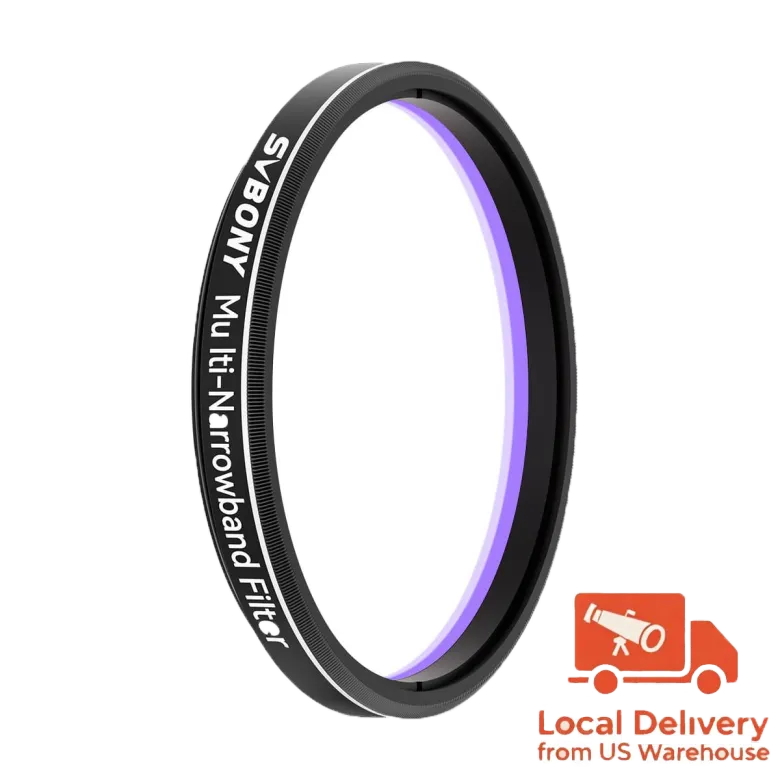
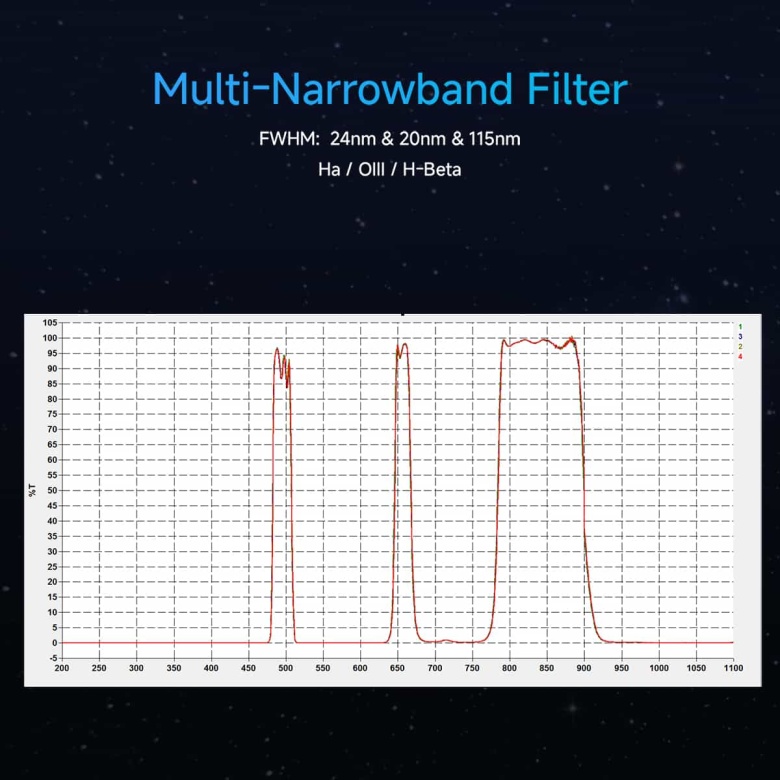
Multi-Narrowband Filter | SVBONY SV240
[{"Title":"Multi-Narrowband Filter for Astrophotography","Content":"The SV240 multi-narrowband filter is designed to enhance your astrophotography, capturing multiple emission lines for detailed, high-contrast images of nebulae and deep-sky objects."},{"Title":"High-Quality Optical Performance","Content":"Featuring premium optical coatings, this filter offers exceptional light transmission, ensuring clear, crisp images with accurate color rendition for deep-sky imaging."},{"Title":"Versatile Imaging","Content":"Ideal for capturing a wide range of nebulae and other emission objects, the SV240 filter is perfect for astrophotographers looking to optimize their narrowband imaging setups."},{"Title":"Durable and Long-Lasting","Content":"Made with durable materials, the SV240 filter ensures long-lasting performance, withstanding extended exposure times and harsh astrophotography conditions."},{"Title":"Compatible with 1.25-Inch Eyepieces","Content":"The SV240 multi-narrowband filter is compatible with 1.25-inch telescope eyepieces, offering versatility and ease of use for amateur and professional astrophotographers alike."}]
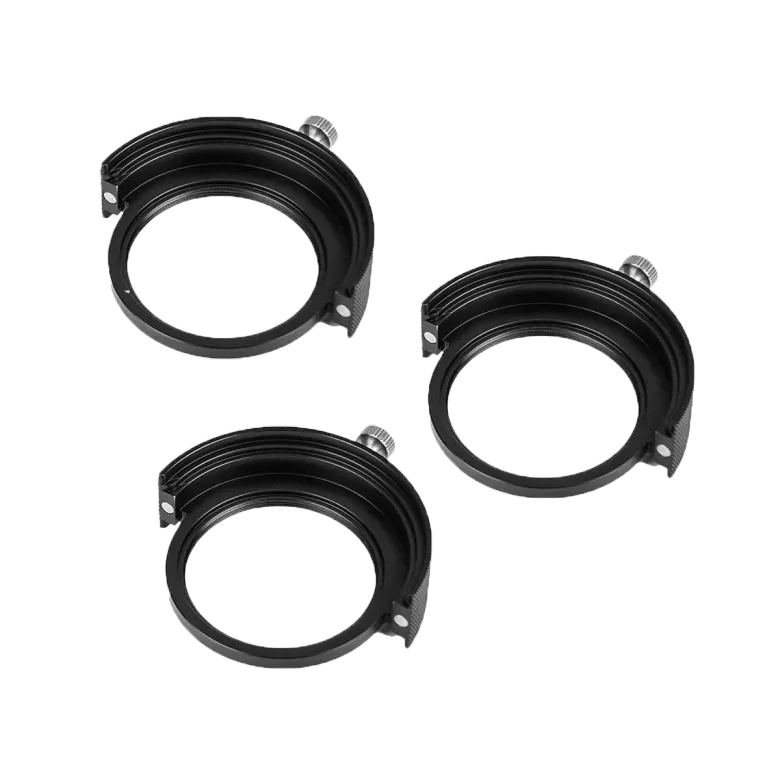
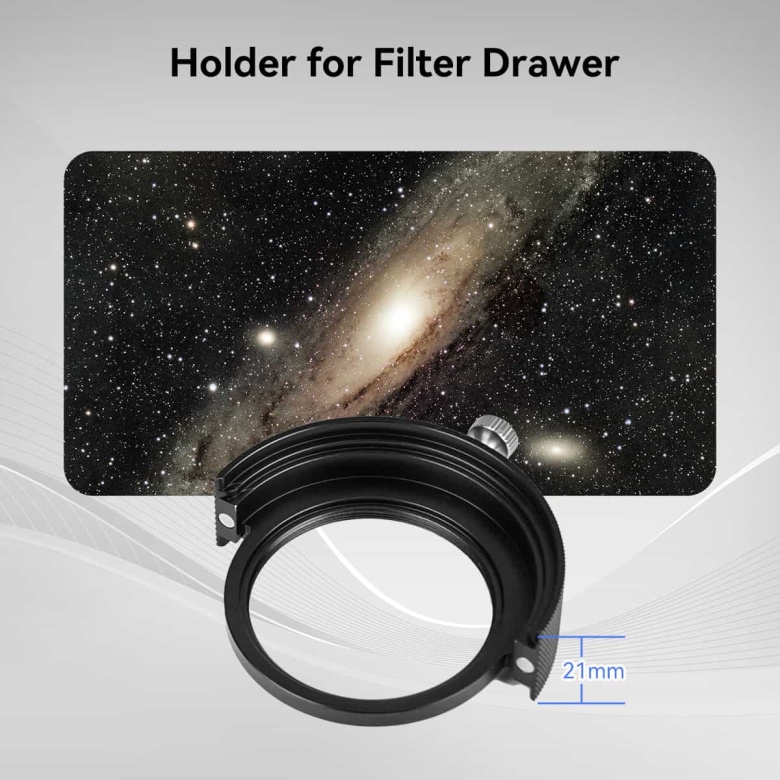
2″ Filter Drawer Holder | SVBONY SV226
[{"Title":"Mounted Filter Storage","Content":"The SV226 mounted filter drawer offers secure, organized storage for astrophotography filters, keeping them easily accessible during long observation sessions."},{"Title":"Heavy-Duty Construction","Content":"Made with durable materials, this mounted filter drawer is designed for astrophotography enthusiasts, ensuring reliable, long-lasting use even in demanding conditions."},{"Title":"Seamless Filter Swapping","Content":"This drawer allows for quick and easy filter changes, enabling smooth transitions between different filters to optimize your astrophotography setups."},{"Title":"Space-Saving Design","Content":"The compact, mounted design of the SV226 filter drawer helps save space on your telescope setup, providing convenient storage without adding bulk."},{"Title":"Universal Compatibility","Content":"Designed to fit a variety of filter sizes, this mounted filter drawer is compatible with most astrophotography setups, offering versatility and convenience for a wide range of users."}]
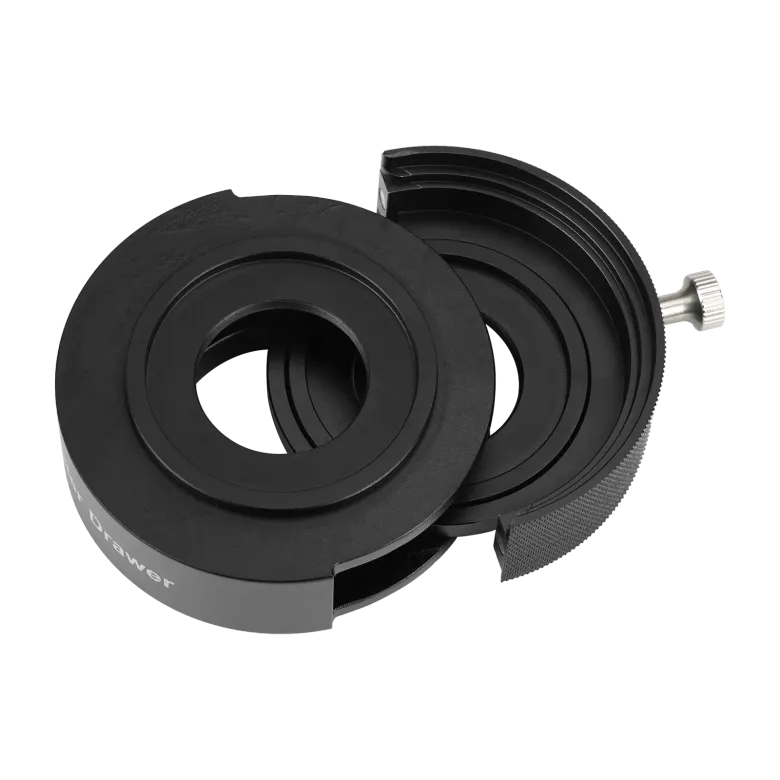
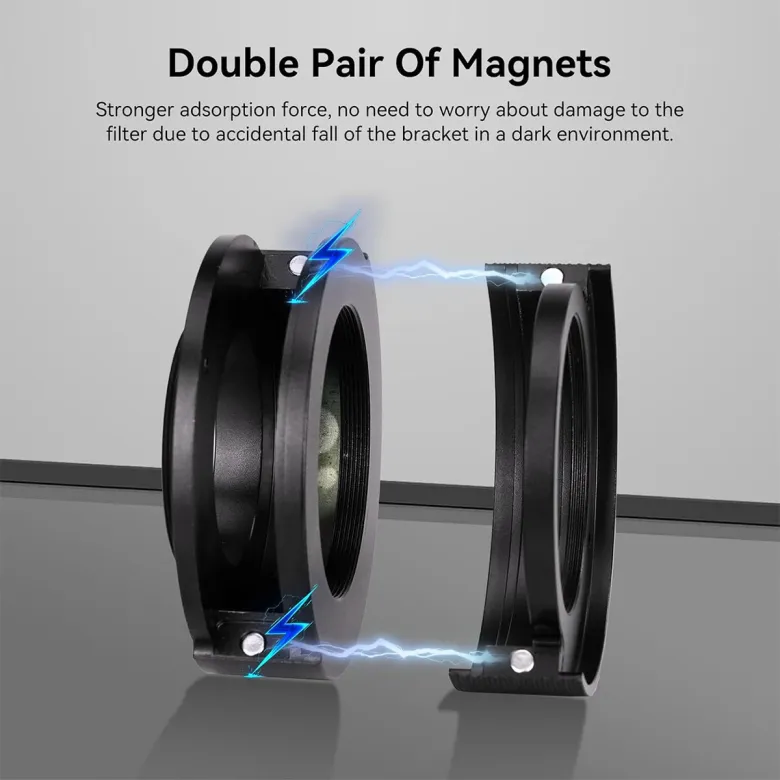
M42 Filter Drawer | SVBONY SV226
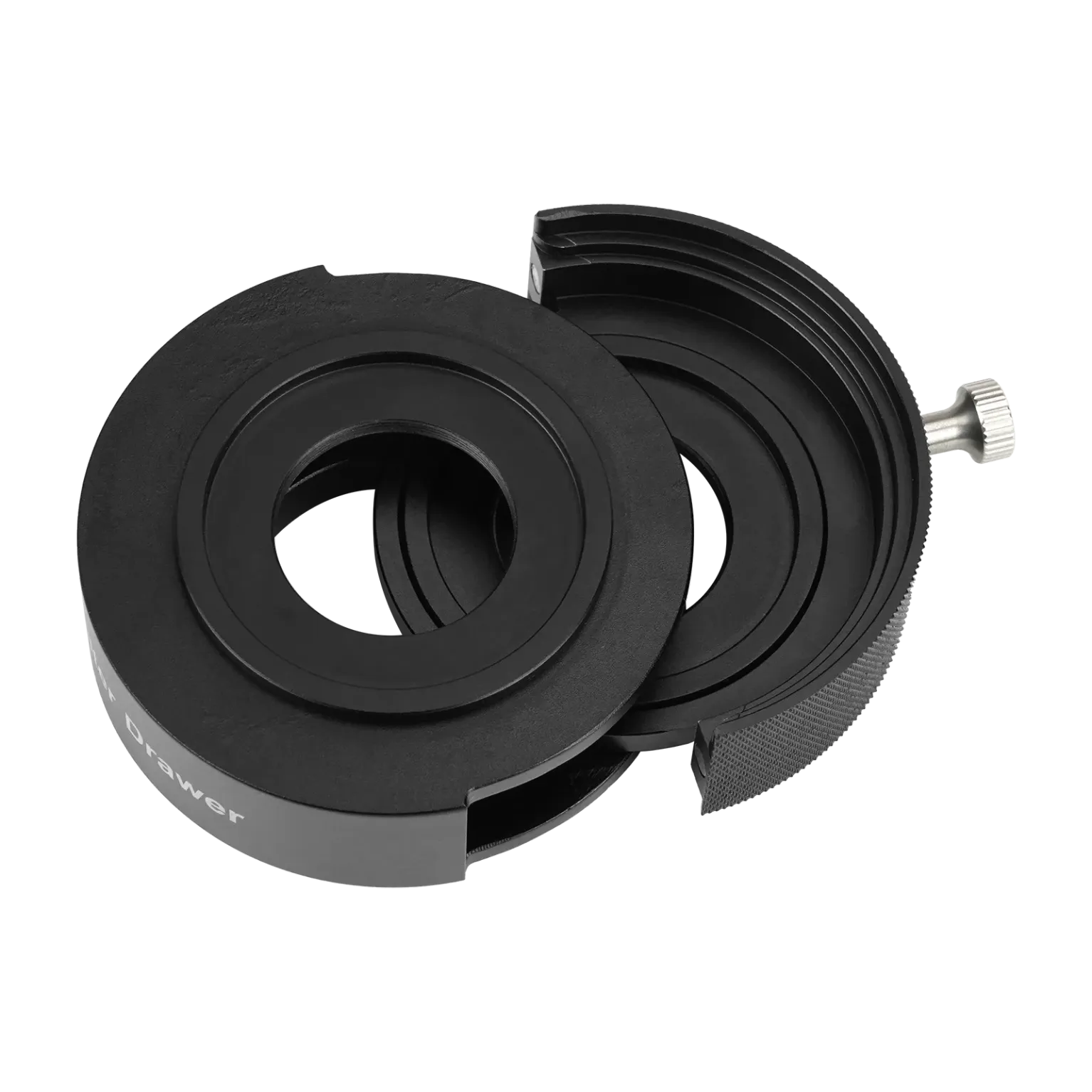
[{"Title":"Efficient Filter Storage","Content":"The SV226 filter drawer provides organized, convenient storage for astrophotography filters, ensuring easy access and protection during long observation sessions."},{"Title":"Durable and Reliable","Content":"Built with high-quality materials, this filter drawer is designed for long-lasting durability, ensuring secure storage for your valuable astrophotography filters."},{"Title":"Quick Filter Changes","Content":"With a smooth, user-friendly design, this filter drawer allows for fast and seamless filter swaps, enhancing your workflow during astrophotography sessions."},{"Title":"Compact and Space-Saving","Content":"The compact design of the SV226 filter drawer makes it an ideal addition to your astrophotography setup, saving valuable space while keeping everything organized."},{"Title":"Wide Compatibility","Content":"Compatible with a range of telescope filter sizes, the SV226 filter drawer provides versatile storage options, making it perfect for various astrophotography configurations."}]
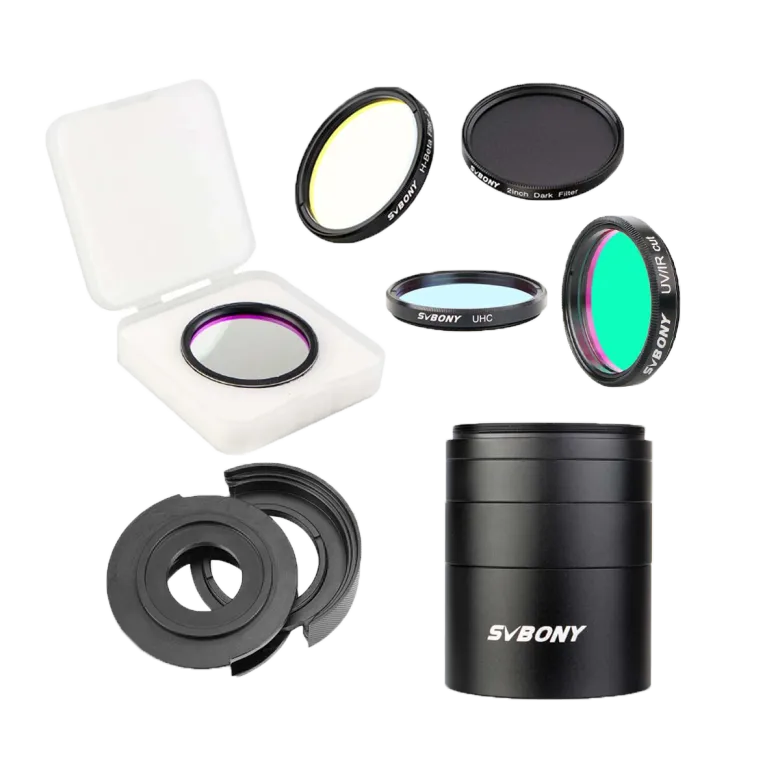
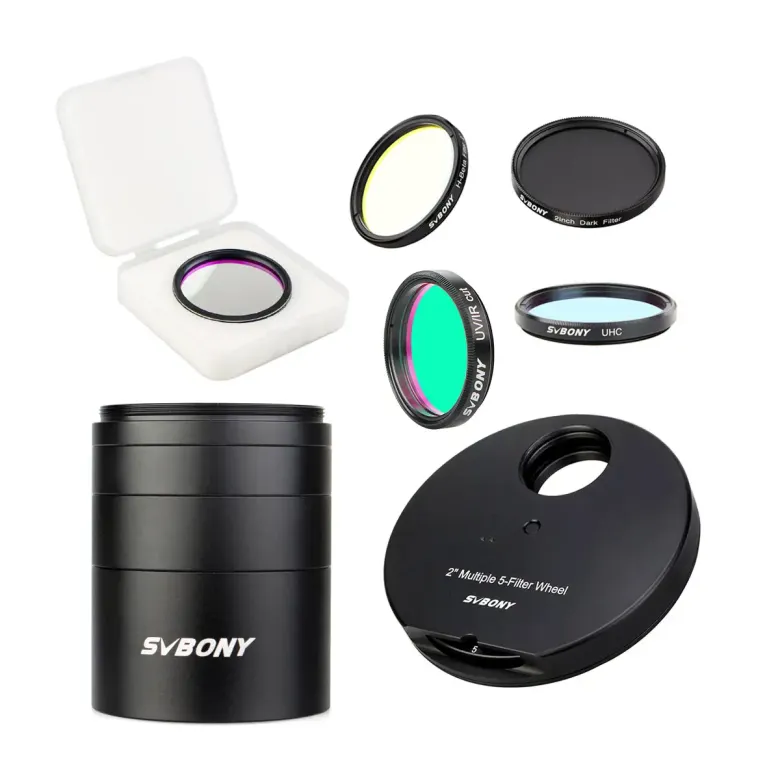
Astronomical Filter Sets | SVBONY SV220
[{"Title":"Comprehensive Filter Bundle","Content":"Includes dual\u2011band, H\u2011Beta, UHC, UV\u2011IR cut, dark and extension tubes for diverse astrophotography."},{"Title":"Dual Narrowband Performance","Content":"7\u202Fnm H\u2011Alpha/O\u2011III filter isolates nebula emissions and boosts contrast in polluted skies."},{"Title":"Optimized Light Control","Content":"Reduces artificial light pollution and sky glow for clearer deep\u2011sky captures."},{"Title":"Modular Filter Workflow","Content":"2\u2033 filter wheel and extension tubes simplify stacking and system setup."},{"Title":"Enhanced Nebula Imaging","Content":"Designed to capture emission, planetary nebulae and supernova remnants with precision."}]
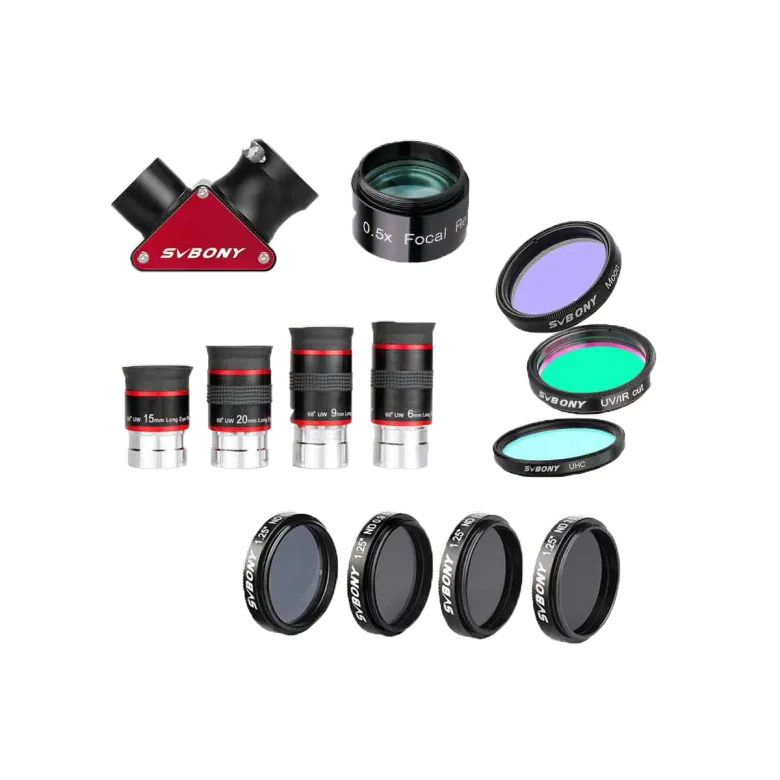
Moon & Planetary Accessory Kit | SVBONY
[{"Title":"Enhanced Viewing with 68-Degree Eyepieces","Content":"The SV188P Diagonal comes with a 68-degree eyepiece set, offering a wide field of view for moon observation and planetary photography, providing sharp and immersive images."},{"Title":"High-Quality Filter Kits for Precision","Content":"Included with the set are filter kits designed to enhance your view of the Moon and planets, improving contrast, revealing more details, and offering crisp, clear imagery."},{"Title":"Perfect for Planetary Imaging","Content":"This combination of diagonal, eyepiece set, and filters is ideal for planetary photography, allowing for high-resolution captures of celestial objects like Jupiter, Saturn, and the Moon."},{"Title":"Comfortable 68-Degree Field of View","Content":"The 68-degree eyepieces provide a wider, more immersive view, allowing you to observe more of the sky with less need for adjustments, perfect for long-duration lunar observations."},{"Title":"Comprehensive Kit for Lunar \u0026 Planetary Viewing","Content":"This SV188P Diagonal Kit offers everything you need for moon and planetary photography, including a high-quality diagonal, wide-angle eyepieces, and specialized filters for optimal performance."}]
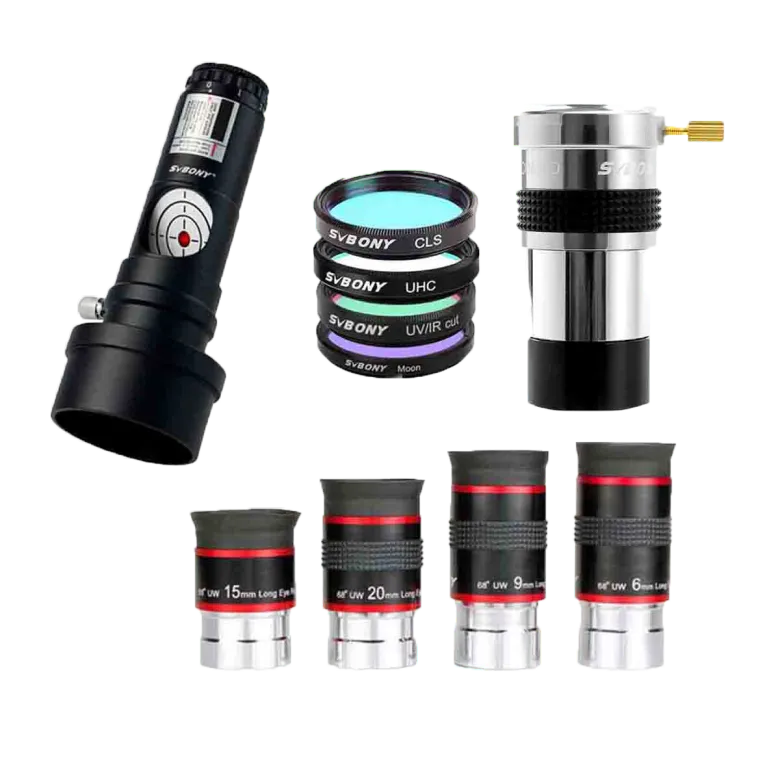
Astronomy Visual Kit | SVBONY
[{"Title":"Complete Set for Astronomy Observations","Content":"The SVBONY Essential Visual Kit provides everything you need for stellar observation and planetary viewing, making it an ideal starter kit for beginner astronomers or those looking to upgrade their gear."},{"Title":"High-Quality Eyepieces for Crisp Views","Content":"The kit includes a selection of high-quality eyepieces, ensuring sharp and clear views of celestial objects like the Moon, planets, and star clusters, enhancing your viewing experience with minimal distortion."},{"Title":"Versatile Filters for Enhanced Detail","Content":"Featuring color filters and a moon filter, this kit helps improve contrast, highlight surface features, and reduce glare, allowing you to see more details on the Moon and planets in vivid color."},{"Title":"Durable and Easy-to-Use Components","Content":"With sturdy, user-friendly components, the kit is designed for easy setup and handling. It\u2019s perfect for both night-time observations and daytime planetary viewing, offering versatility for different viewing conditions."},{"Title":"Compatible with Standard Telescopes","Content":"The kit includes accessories with standard 1.25-inch fittings, making it compatible with most telescopes and accessories, offering seamless integration into your existing astronomy setup for enhanced performance."}]
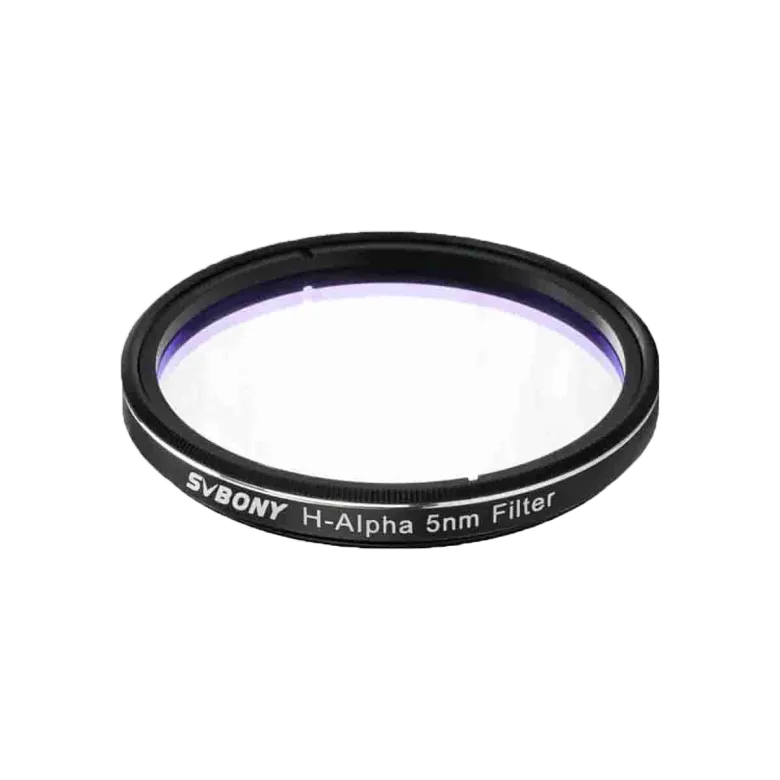
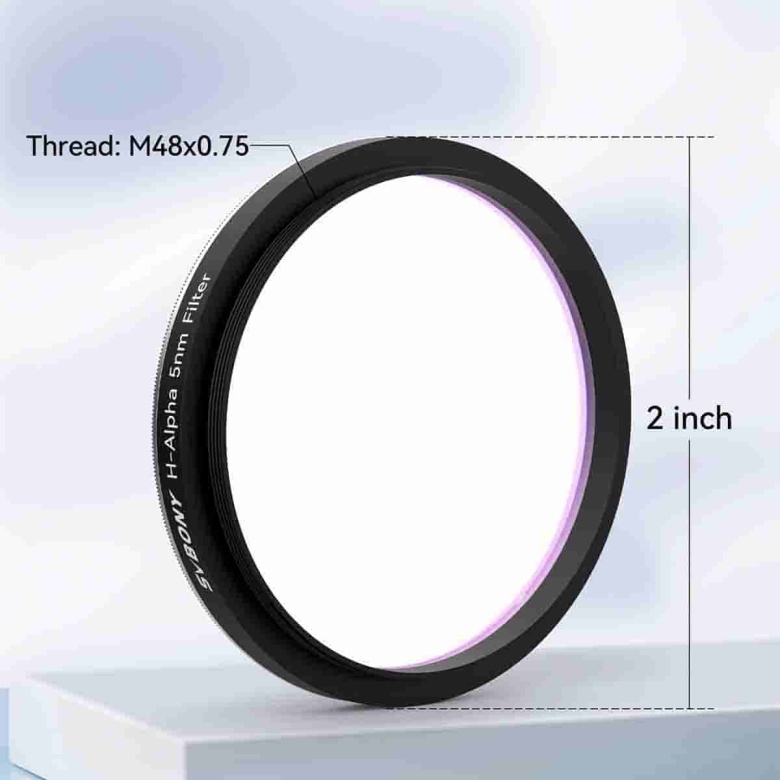
5nm H-Alpha Filter | SVBONY SV227
[{"Title":"High-Quality H-Alpha Filter","Content":"The SV227 H-Alpha 5nm filter captures the hydrogen-alpha wavelength with exceptional clarity, ideal for imaging emission nebulae and other deep-sky objects."},{"Title":"5nm Narrowband Precision","Content":"Featuring a 5nm bandwidth, this filter provides high contrast and sharp images, ensuring accurate and vivid results in narrowband astrophotography."},{"Title":"Premium Optical Glass","Content":"Made with high-quality optical glass, the filter ensures maximum light transmission and minimal light loss, delivering clear, detailed astrophotography images"},{"Title":"Durable and Long-Lasting","Content":"Built to withstand long exposure times, the SV227 H-Alpha filter is designed for consistent, reliable performance, even under demanding astrophotography conditions."},{"Title":"Compatible with 2-Inch Eyepieces","Content":"This filter fits most 2-inch telescope eyepieces, providing versatile and easy-to-use compatibility for both amateur and professional astrophotographers."}]
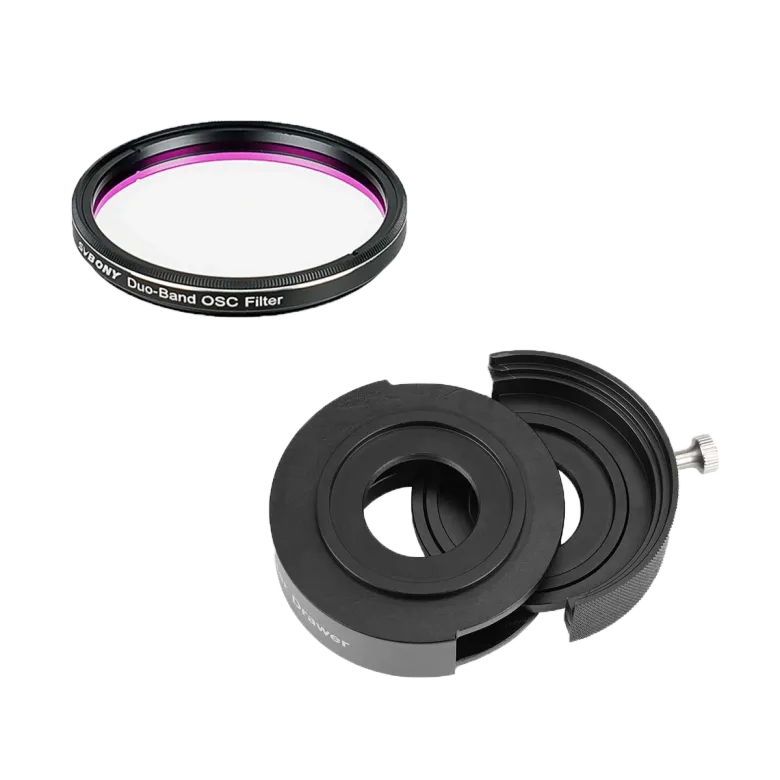
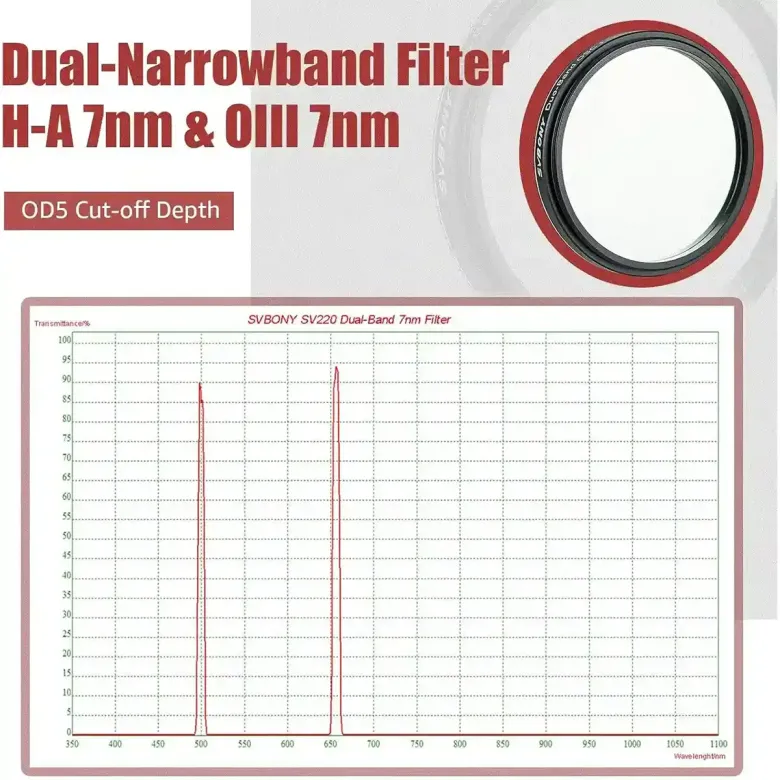
Filter & Drawer Combo | SVBONY SV226
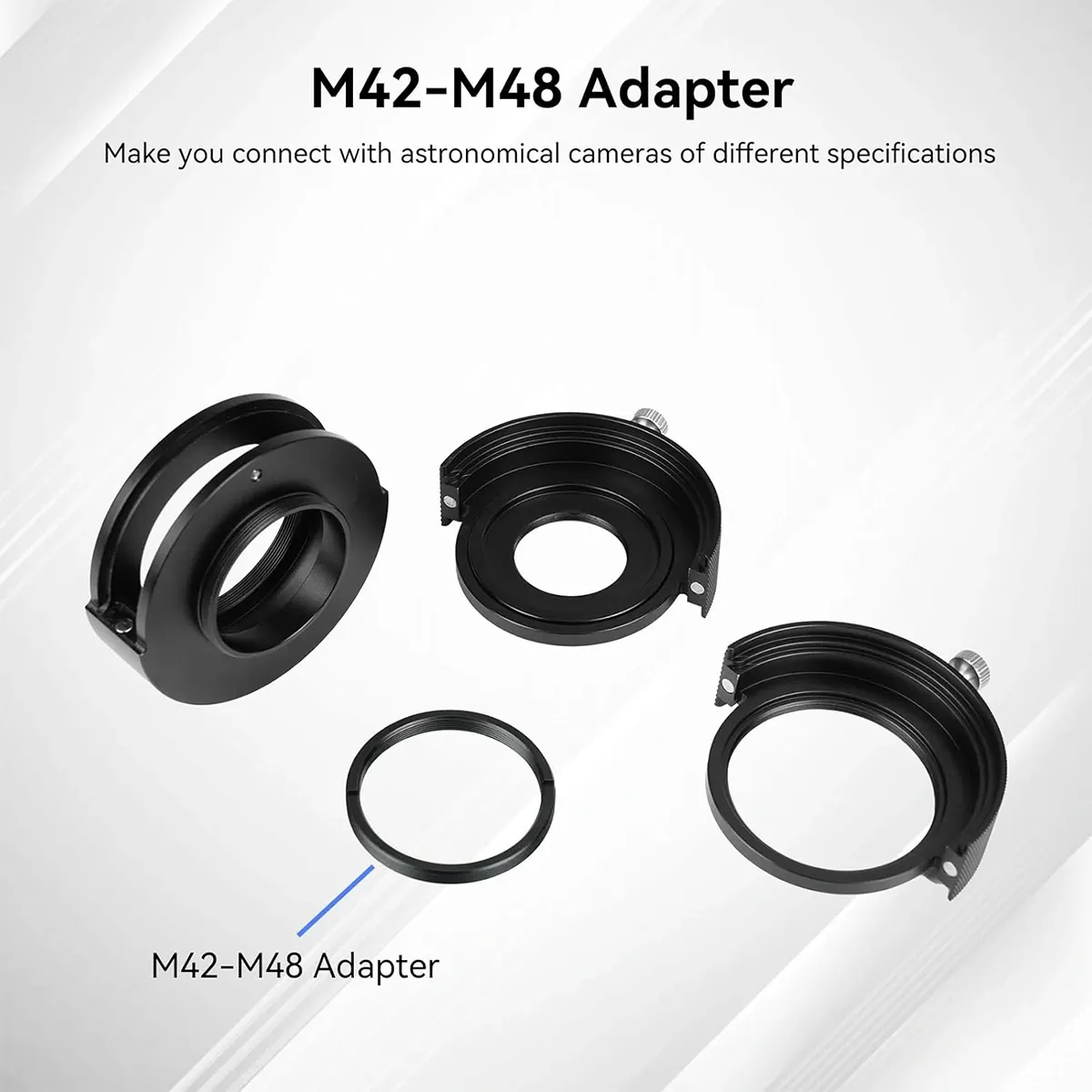
[{"Title":"Dual\u2011Band Nebula Filter","Content":"7\u202Fnm H\u2011Alpha \u0026 O\u2011III narrowband filter enhances deep\u2011sky contrast by isolating key emission lines."},{"Title":"Integrated Filter Drawer","Content":"Magnetic SV226 drawer enables quick, tool\u2011free swapping of 1.25\u2033 and 2\u2033 filters during sessions."},{"Title":"Anti\u2011Light\u2011Leak Design","Content":"CNC\u2011machined filter drawer with locking tension prevents stray light intrusion on long exposures."},{"Title":"Broad Astrophotography Use","Content":"Ideal for emission nebulae, planetary nebulae, and deep\u2011sky targets under light\u2011polluted skies."},{"Title":"Versatile Compatibility","Content":"Includes M42\u2011M48 adapter; works with many cameras, telescopes, and existing filters."}]
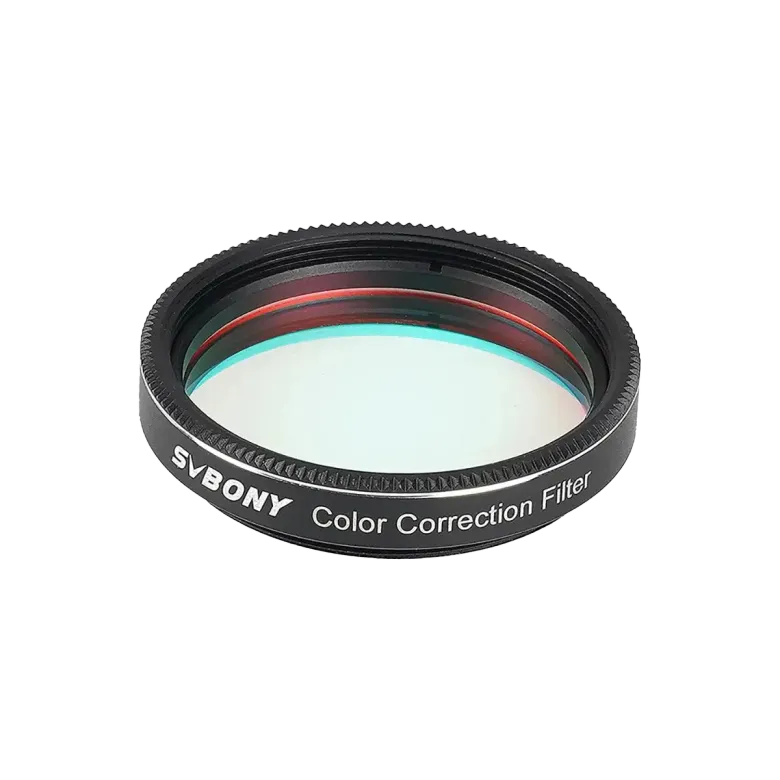
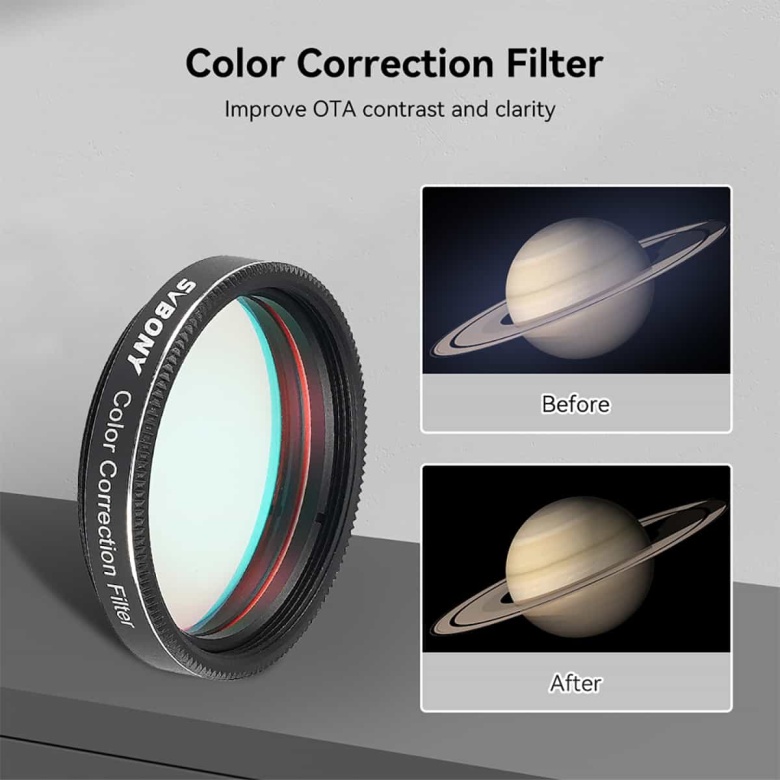
Color Correction Filter | SVBONY SV231
[{"Title":"Enhanced Color Correction","Content":"The SV231 color correction filter improves color accuracy during observations, enhancing contrast and helping to bring out the true details of celestial objects."},{"Title":"Optimized for Visual Clarity","Content":"Designed to reduce color distortions, this filter ensures clearer, sharper views, ideal for both planetary and lunar observations."},{"Title":"AR anti-reflection coating design","Content":"transmittance exceeds 95%; improves the contrast and clarity of fast achromatic telescopes, ensures image quality and brightness; obtains more observable light"},{"Title":"Full thread design","Content":"M48x0.75 specification; male thread; thread is not easy to wear; you can overlay other filter to use"},{"Title":"300-1200/NM wavelength","Content":"blocking light damage and eliminating blue and purple streaks"}]
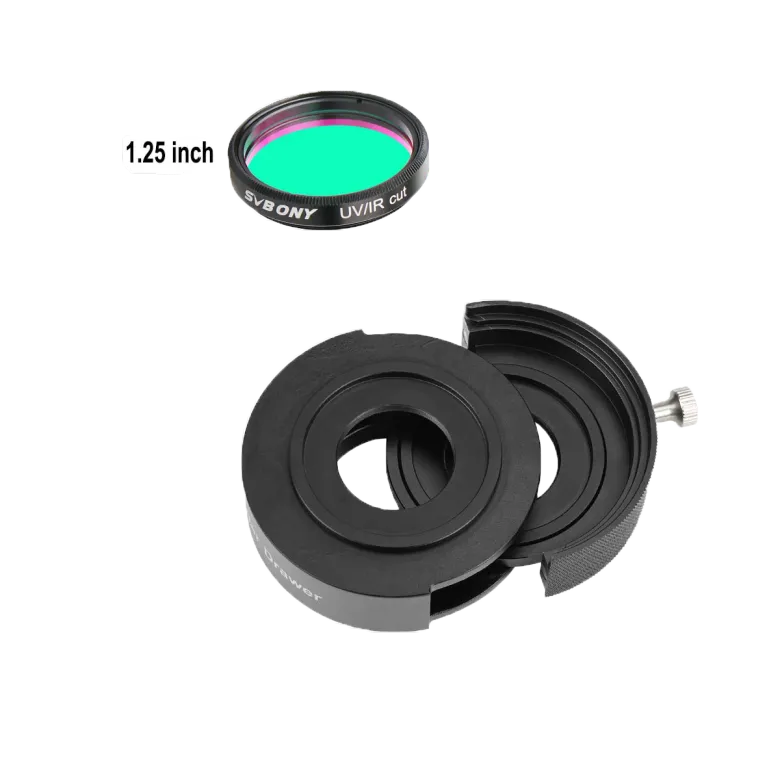
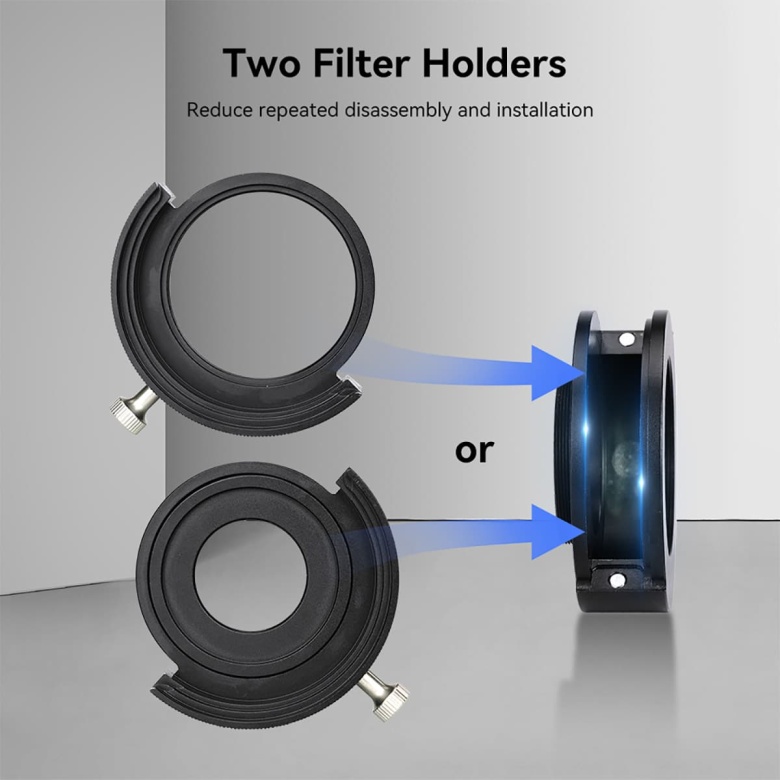
Filter Drawer & Filter Kit | SVBONY SV226
[{"Title":"Organized Filter Storage","Content":"The SV226 filter drawer offers a neat and efficient storage solution for your telescope filters, ensuring easy access and protection from dust and damage."},{"Title":"Durable Construction","Content":"Crafted from high-quality materials, this filter drawer is built to last, providing reliable storage for your filters for years of safe use."},{"Title":"Smooth Filter Swapping","Content":"With its easy-to-use mechanism, the drawer allows quick and hassle-free filter changes, helping you seamlessly adjust your setup during observations."},{"Title":"Space-Saving Design","Content":"Its compact and space-efficient design makes it a perfect addition to your telescope kit without taking up excessive space, keeping everything organized."},{"Title":"Wide Compatibility","Content":"The SV226 filter drawer is compatible with a variety of telescope filter sizes, making it a versatile storage solution for different setups."}]
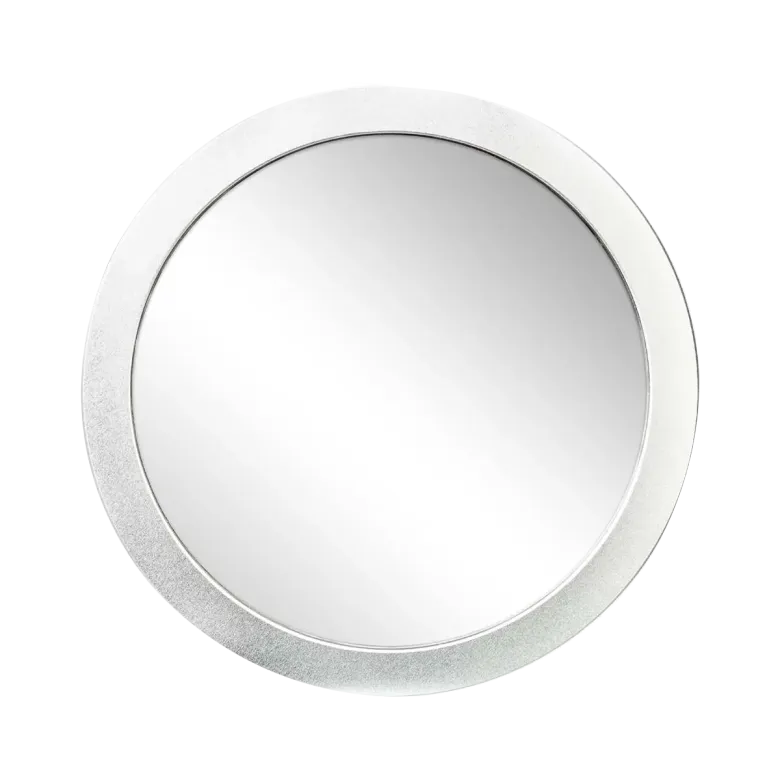
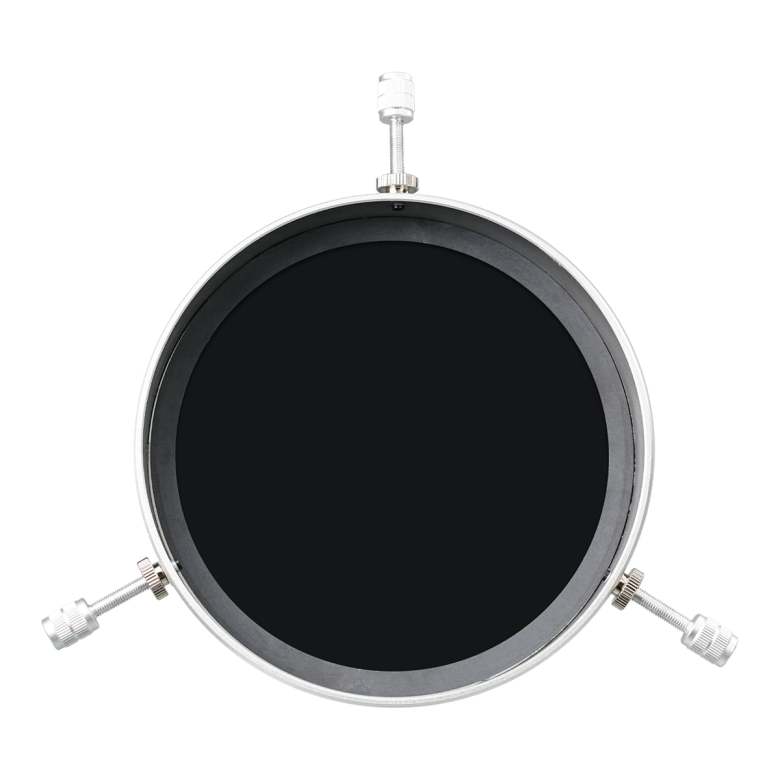
Solar Eclipse Filter Cap | SVBONY SV229
[{"Title":"140mm Solar Eclipse Filter","Content":"This 140mm solar eclipse filter is designed for larger telescopes, providing optimal protection while observing solar events safely."},{"Title":"Superior Optical Quality","Content":"With a high-quality optical coating, the filter ensures clear, high-contrast views of the sun, enhancing solar observation without distortion."},{"Title":"Robust and Safe Design","Content":"Constructed from durable materials, this filter provides maximum safety and durability, safeguarding both the observer\u2019s eyes and the telescope."},{"Title":"Easy Attachment","Content":"The filter\u2019s 140mm diameter is compatible with a variety of telescopes, offering hassle-free installation and secure fitting for your observations."},{"Title":"Portable and Convenient","Content":"Lightweight and compact, this filter is easy to carry and store, making it ideal for eclipse events and solar observations on the go."}]
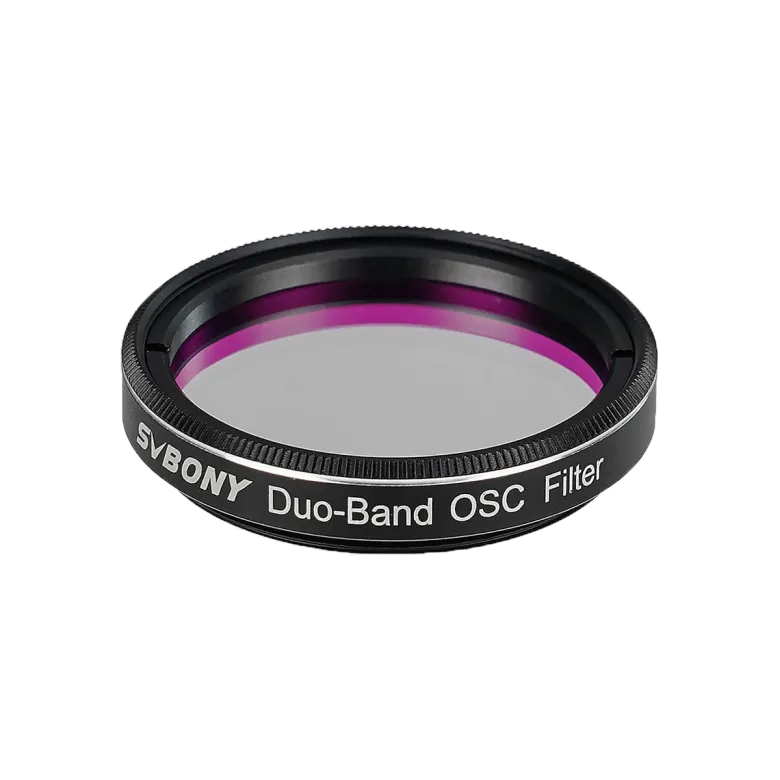
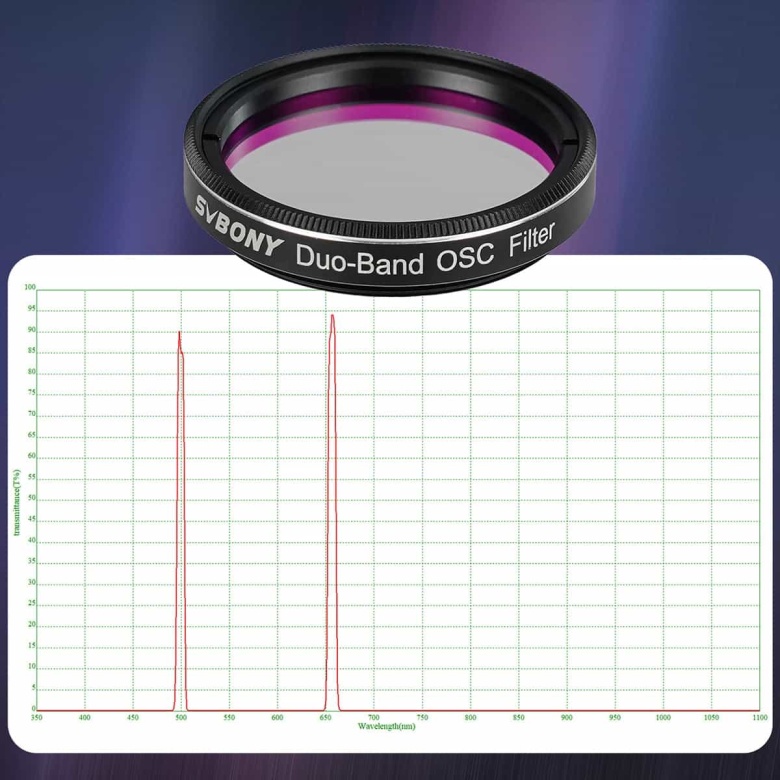
7nm H-Alpha & OIII Filter | SVBONY SV220
[{"Title":"Dual\u2011Band Narrowband Filter","Content":"Captures both H\u2011Alpha and OIII emission lines for optimized nebula imaging in OSC setups."},{"Title":"Boosts Nebula Contrast","Content":"Enhances nebula details by isolating key wavelengths and reducing sky background noise."},{"Title":"Reduces Light Pollution","Content":"Minimizes interference from artificial and natural light for clearer astrophotography."},{"Title":"Standard 1.25\u2033 Format","Content":"Fits most telescopes and filter wheels for versatile astrophotography use."},{"Title":"Simplifies Color Imaging","Content":"Enables one\u2011shot color nebula captures without combining multiple filters."}]
Astrophotography Filters for Telescopes and Cameras
SVBONY astrophotography filters are designed to improve contrast, control unwanted wavelengths, and bring out more detail in lunar and deep-sky images. The collection includes light pollution filters, UV/IR cut filters, broadband filters, narrowband filters, and multi-narrowband options for different cameras, telescopes, and observing conditions.
Whether you're imaging under dark skies or dealing with light pollution the right astrophotography filter can help produce cleaner and more balanced results.
Choosing a filter depends on your imaging target and setup. Broadband filters can be useful for galaxies, star clusters, and Milky Way photography, while narrowband and dual-band filters are better suited to emission nebulae and other deep-sky targets.
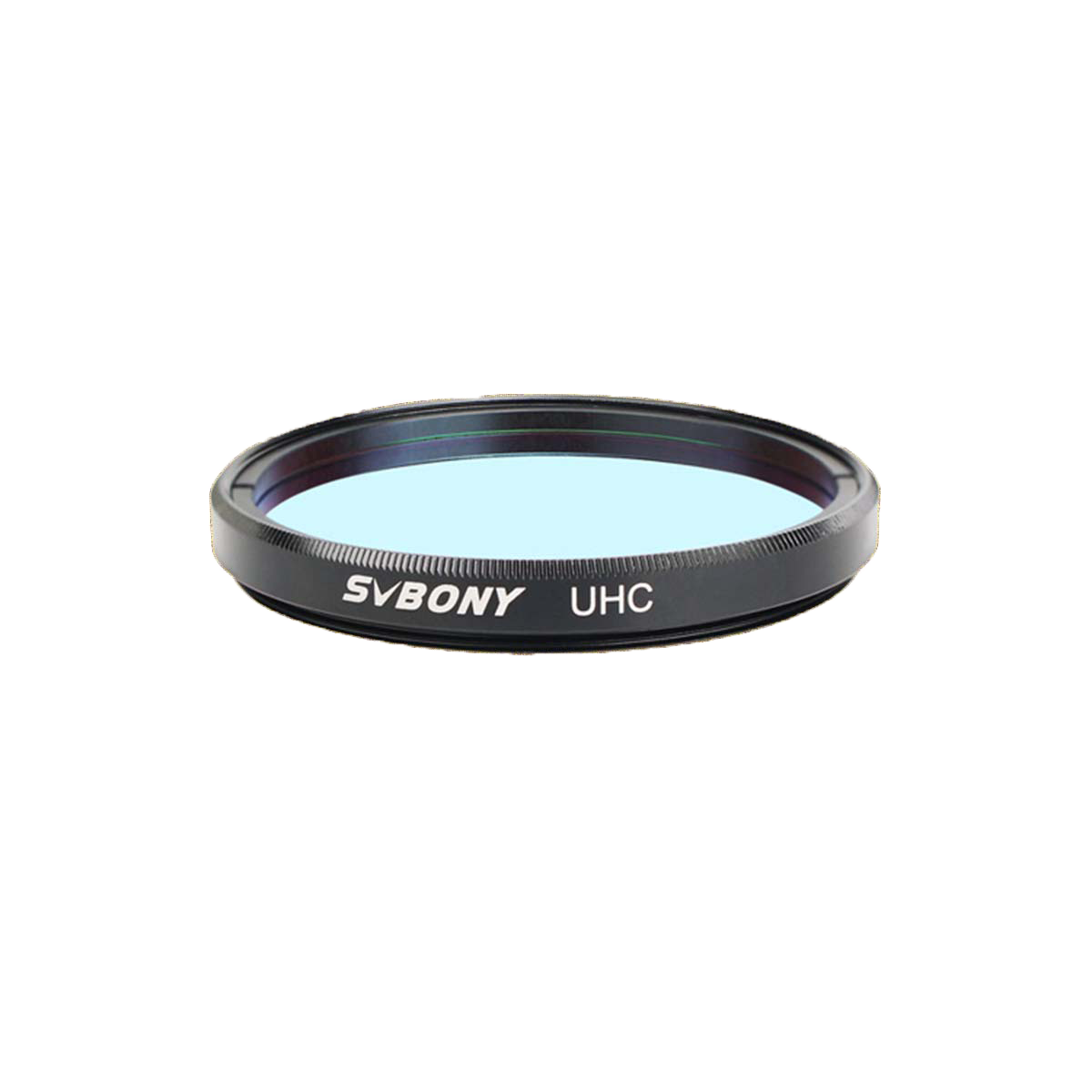
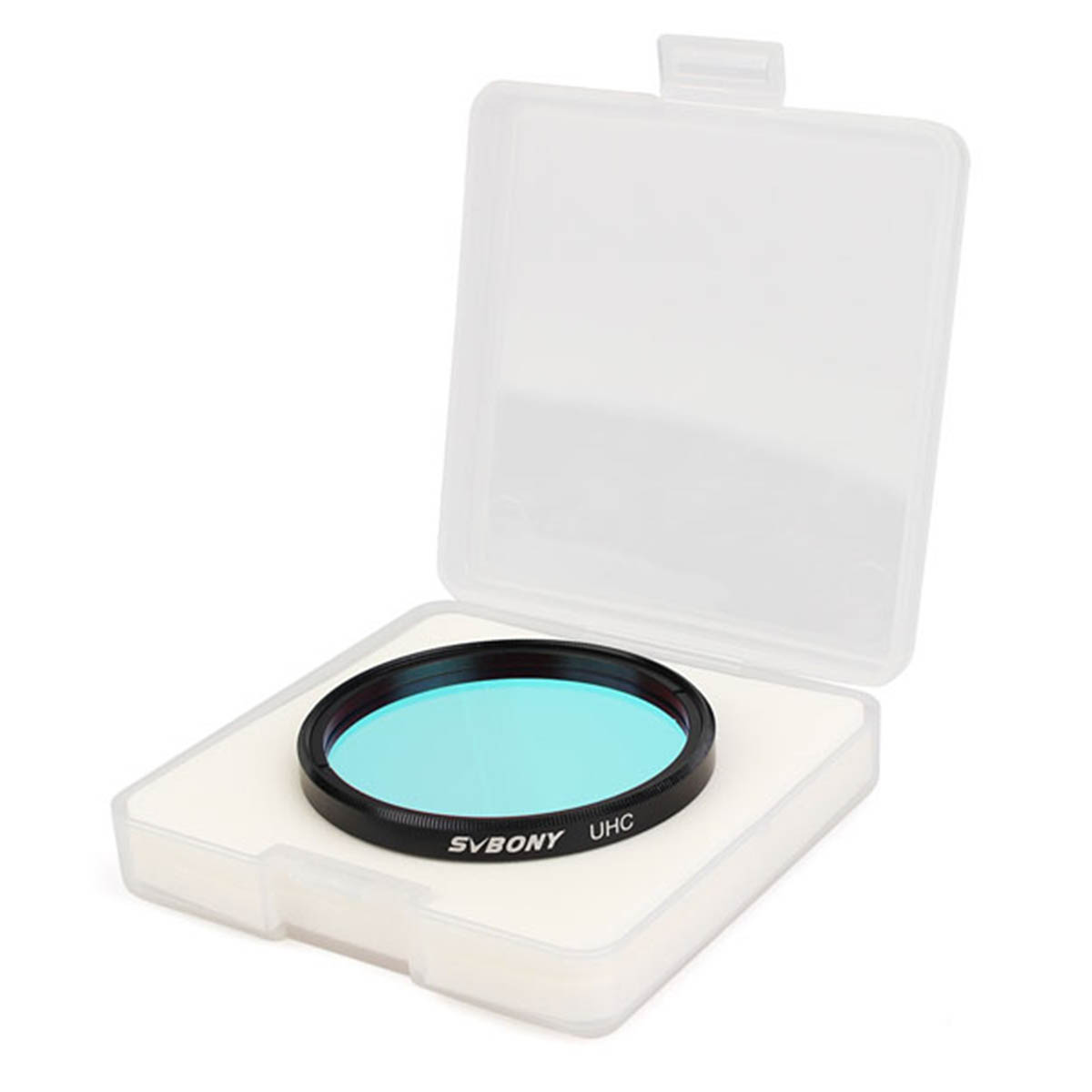
SVBONY multi-narrowband filters help isolate selected wavelengths while reducing background light, making them useful for astrophotography from light-polluted locations.
Filter size and compatibility are also important. When choosing an astrophotography filter for DSLR or a dedicated astronomy camera, check the sensor size, filter thread, and optical configuration to ensure proper coverage and help minimize vignetting. SVBONY offers different filter sizes and formats for a range of imaging systems.
For convenient filter changes, an astrophotography filter holder or Telescope Filter Drawer can simplify your imaging workflow. From broadband options for galaxies to narrowband filters for nebulae, SVBONY offers filter solutions for a variety of astrophotography setups.
FAQs About Astrophotography Filters
The best astrophotography filter depends on your target, camera, telescope, and sky conditions. Broadband filters can be useful for galaxies and star clusters, while narrowband and dual-band filters are better suited to emission nebulae. A UV/IR cut filter can also help control unwanted wavelengths in compatible imaging systems.
The right filter size depends on your camera sensor, telescope, adapter, and imaging train. Common options include 1.25-inch and 2-inch filters. To choose the appropriate size, check your sensor dimensions, filter thread, and filter-to-sensor distance.
For larger sensors or certain optical configurations, a larger filter may help provide sufficient coverage and reduce vignetting. There is no universal astrophotography filter size calculator that works for every setup.
Yes. An astrophotography filter for DSLR can be used when the filter size, mounting method, and optical configuration are compatible with your camera and lens or telescope. Before choosing a filter, check the filter thread or holder system and make sure the filter provides adequate coverage for your camera sensor.
For Milky Way photography, a broadband or light pollution filter can help improve contrast when shooting under moderately light-polluted skies. The best choice depends on your camera, lens or telescope, and local sky conditions. Because artificial lighting varies by location, filter performance can differ between observing environments.
Broadband filters are generally a practical choice for galaxies, star clusters, and other broadband deep-sky targets because they preserve a wider range of wavelengths. For emission nebulae, narrowband or multi-narrowband filters can provide stronger contrast by isolating specific emission wavelengths and reducing background light.



 Google
 Amazon