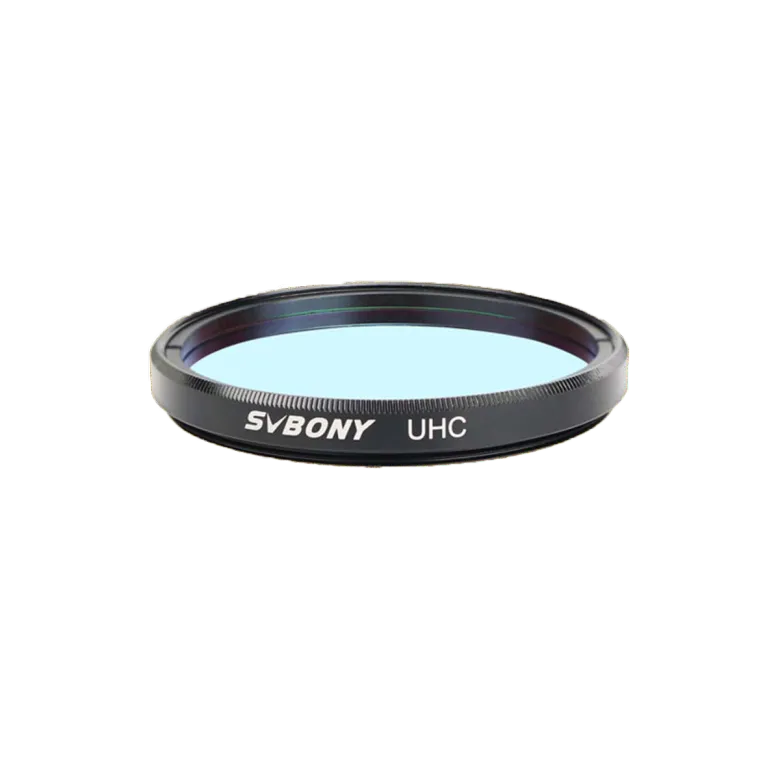
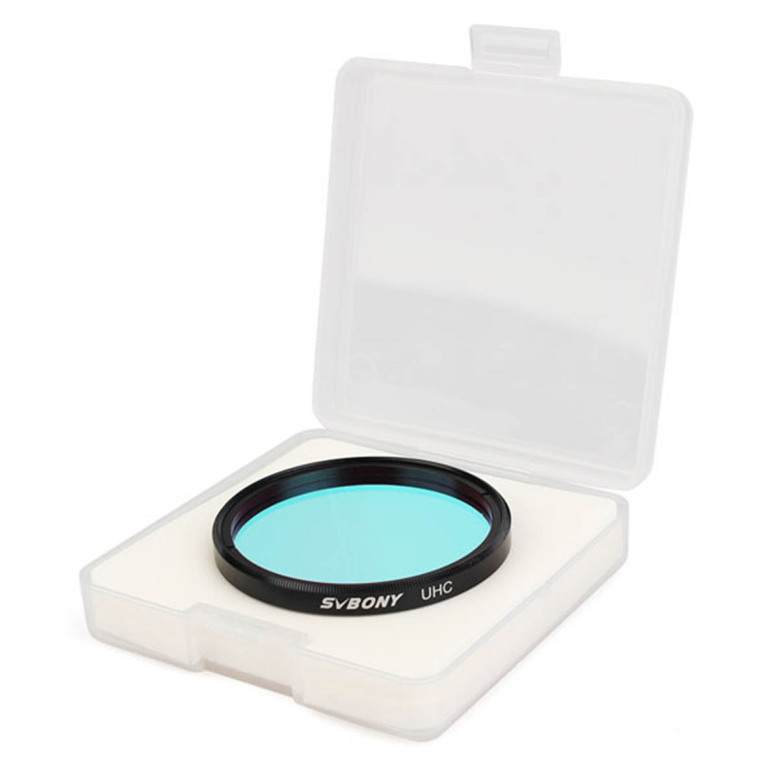
UHC Light Pollution Filter | SVBONY
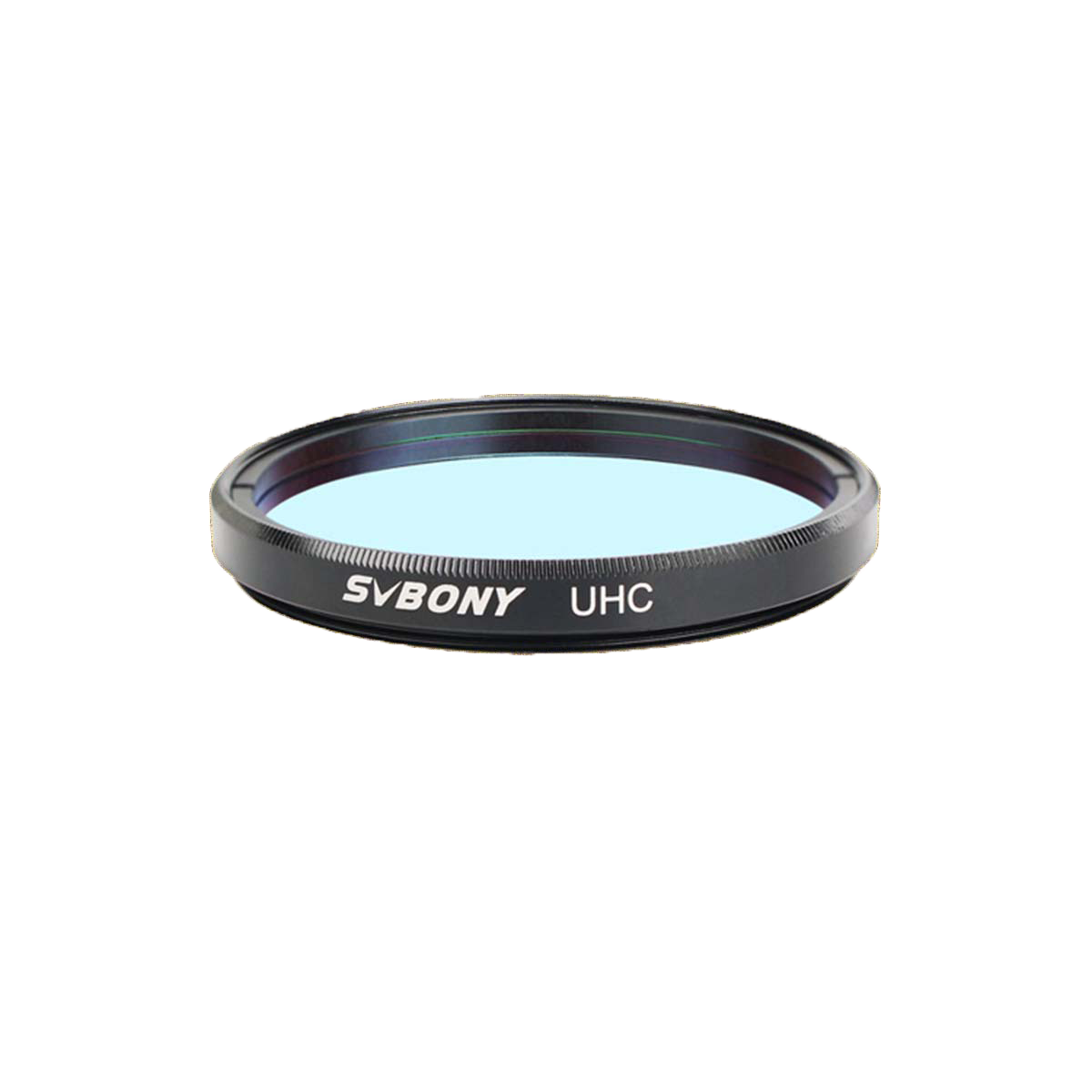
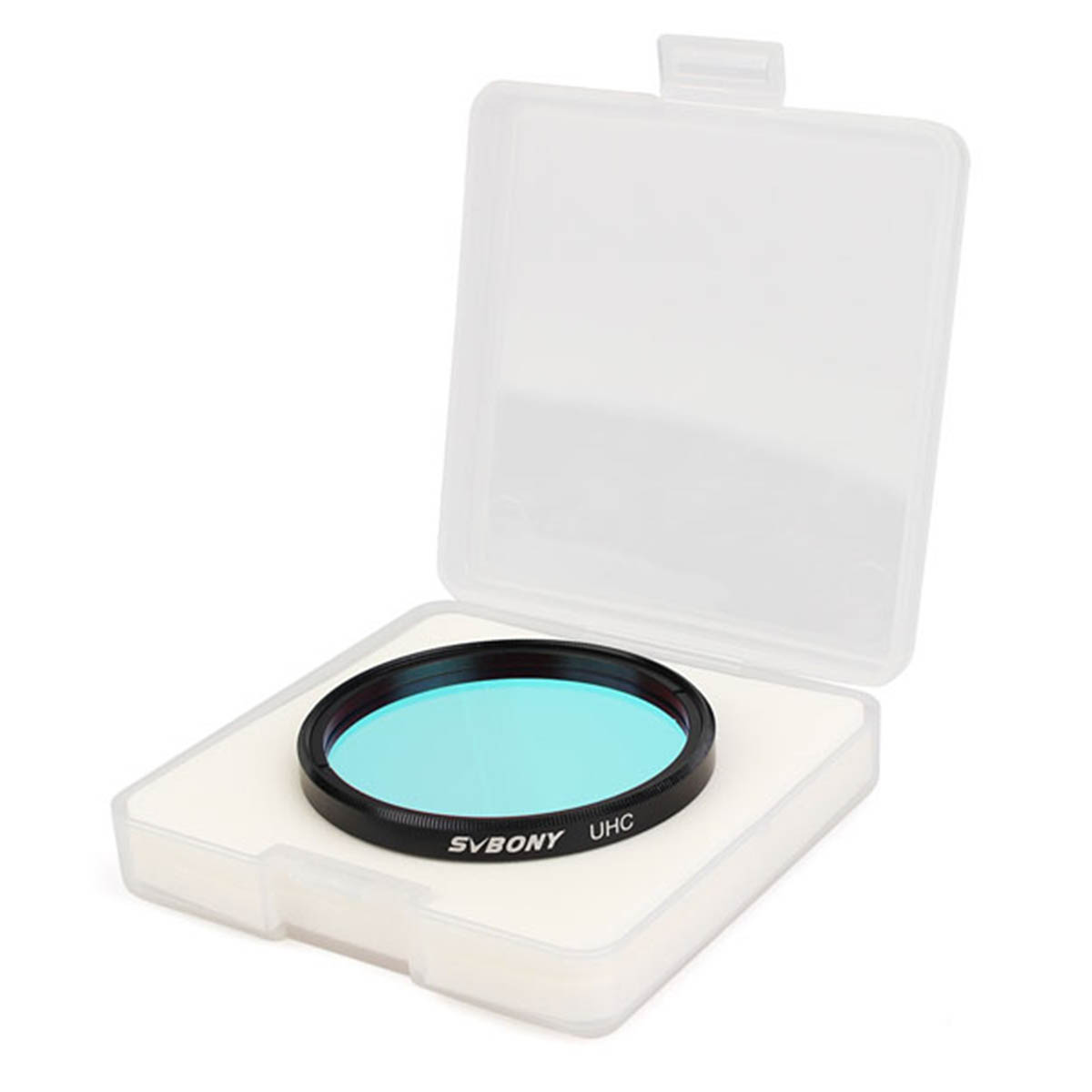
[{"Title":"Enhanced Contrast for Nebulae Viewing","Content":"The UHC filter selectively reduces specific wavelengths of light, especially from artificial sources, enhancing the contrast of emission nebulae and making them more visible even in light-polluted skies."},{"Title":"Ideal for Light-Polluted Skies","Content":"Perfect for observing nebulae from urban or suburban environments, this filter darkens the sky background and increases the visibility of deep-sky objects, providing better contrast against light pollution."},{"Title":"Sharp, Clear Imaging","Content":"Known for its ability to produce exceptionally sharp and clear images, the UHC filter is one of the most popular accessories for astronomers, enhancing both visual observations and astrophotography."},{"Title":"Simple to Use and Compatible","Content":"With a 1.25-inch barrel diameter, the filter easily attaches to most 1.25\u0022 eyepieces and accessories, making it a versatile addition to your setup. It\u2019s packaged in a sturdy, transparent case for easy storage."},{"Title":"Durable Construction for Long-Term Use","Content":"Featuring a high-quality optical glass lens and a durable aluminum frame, the filter is built to withstand frequent use, significantly reducing light pollution for clearer views during both city and suburban observations."}]
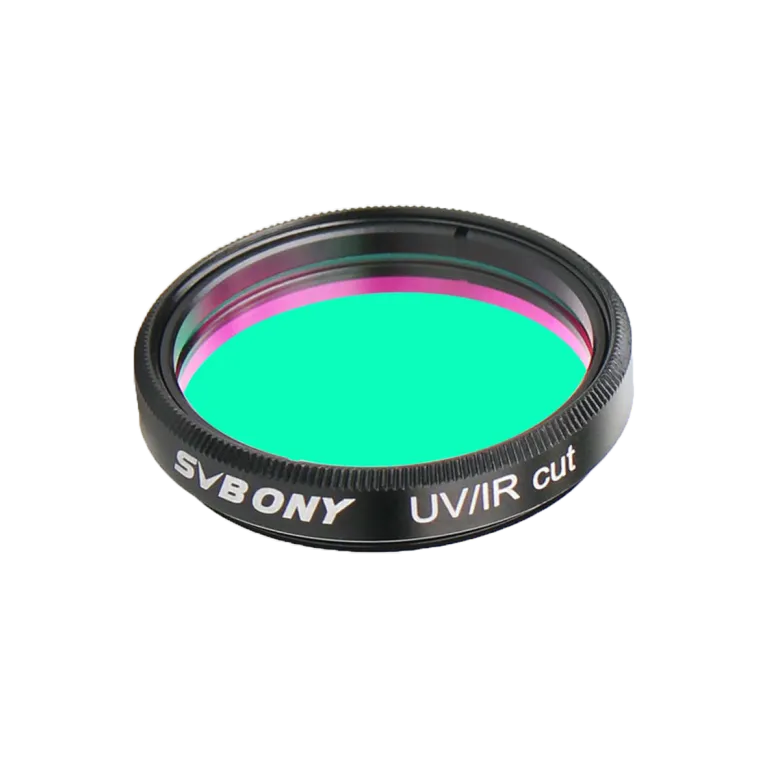
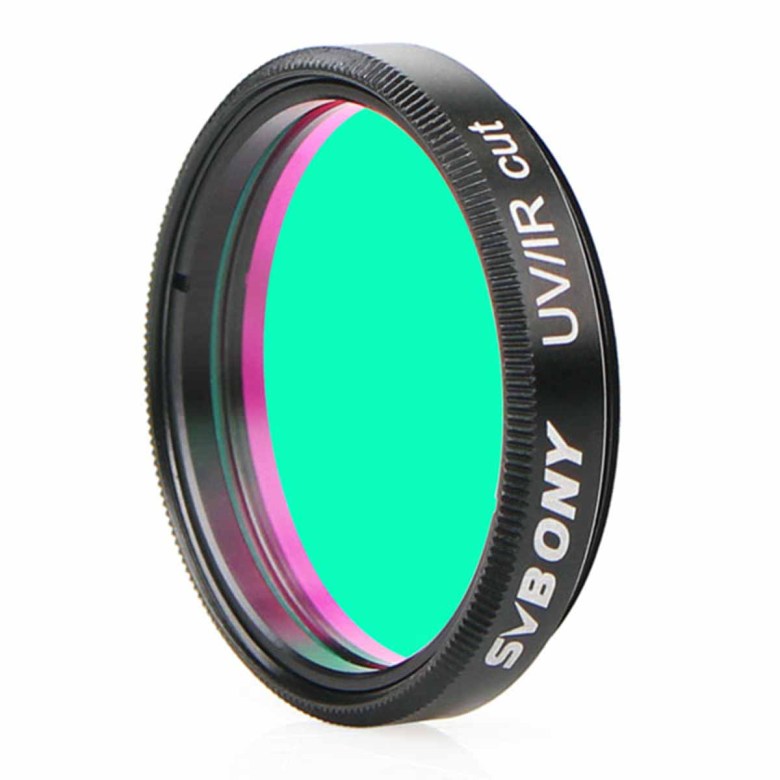
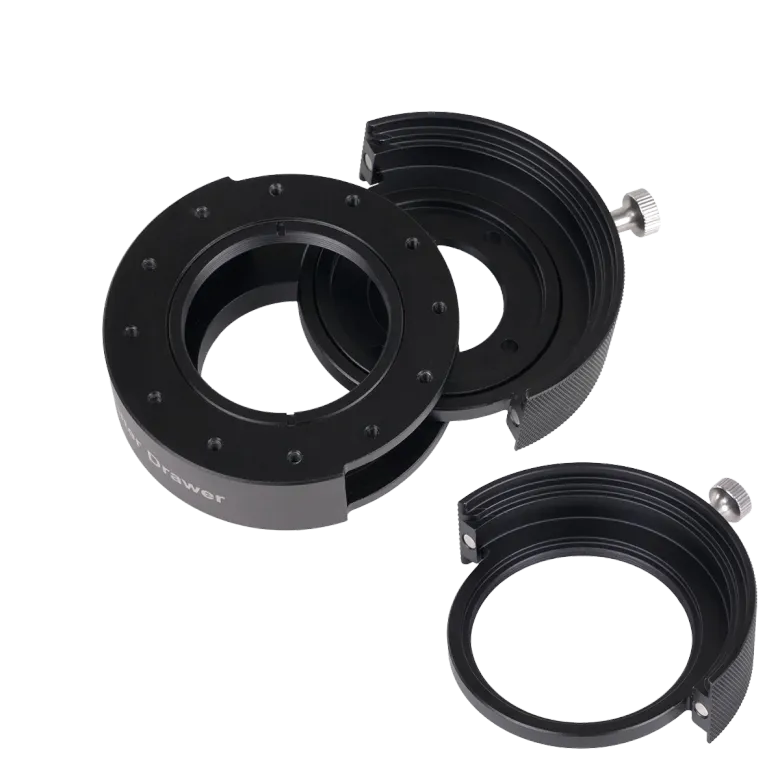
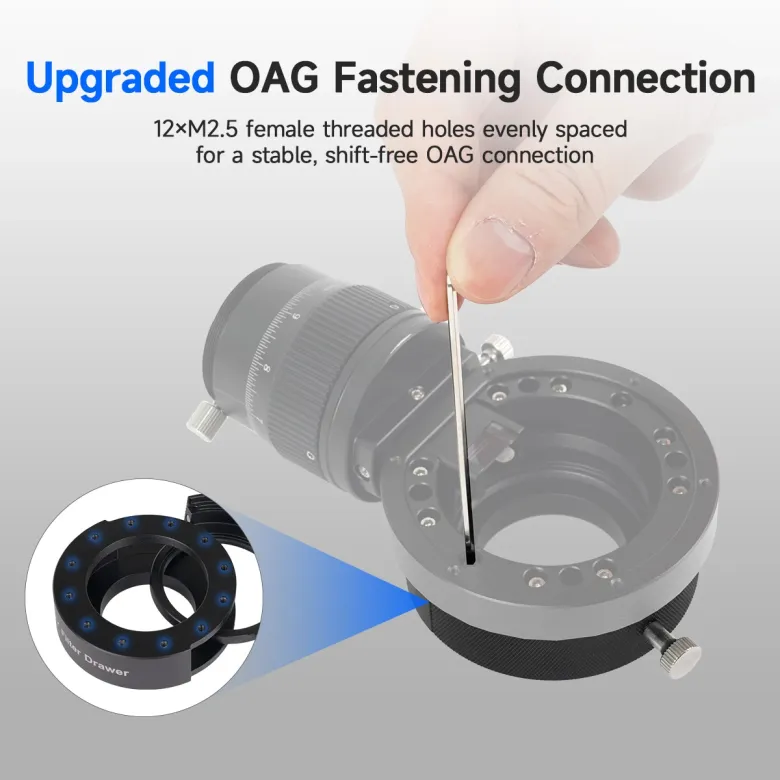
Filter Drawer for OAG | SVBONY SV226P
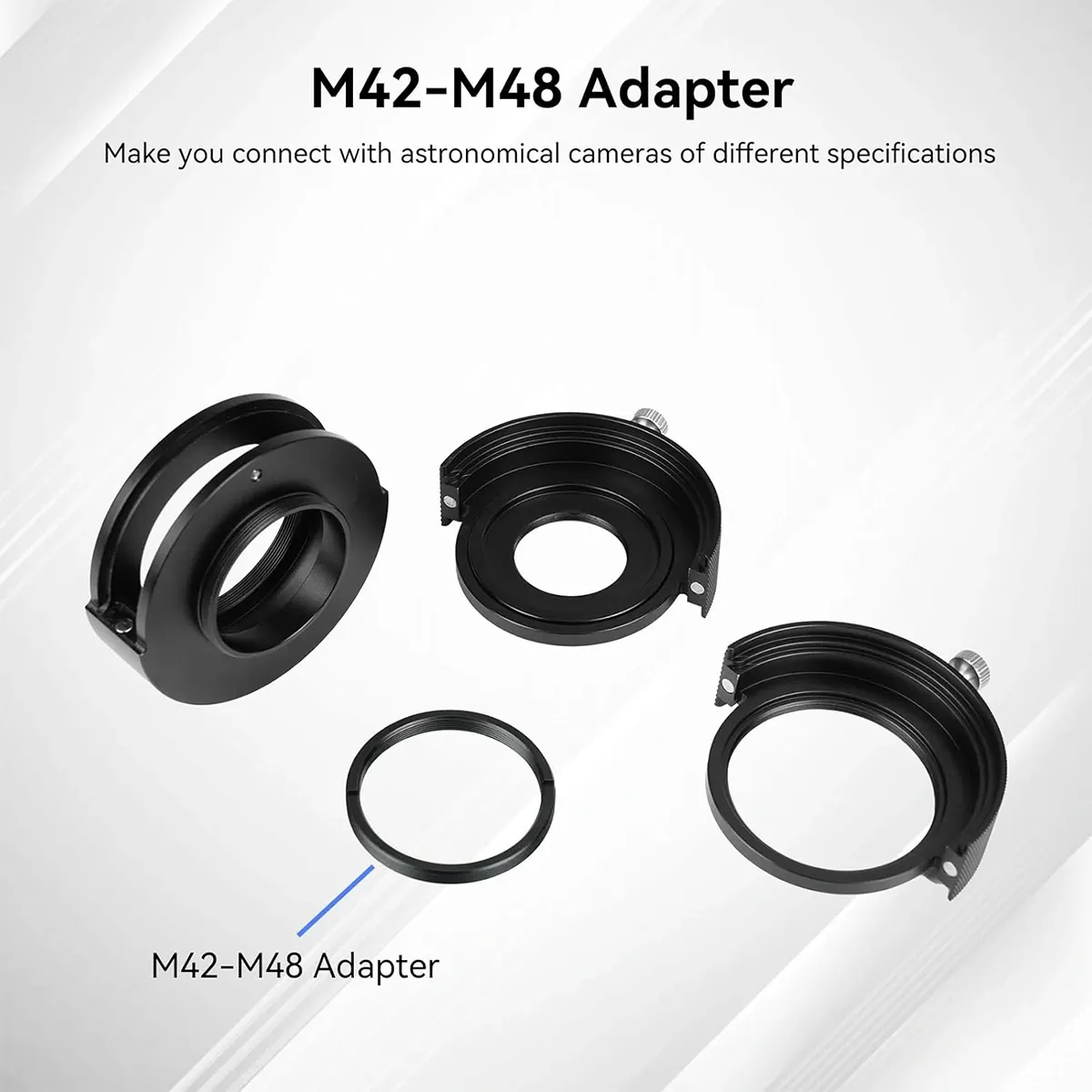
[{"Title":"Dual-Size Compatibility","Content":"Supports both 1.25\u0022 and 2\u0022 filters in one drawer-no accessory changes needed."},{"Title":"Sturdy OAG Connection","Content":"12 M2.5 threaded points ensure stable and aligned guiding camera mounting."},{"Title":"Magnetic \u0026 Side-Lock Dual Security","Content":"H-type strong magnets with a side-lock screw keep filters firmly in place."},{"Title":"Wide Thread Compatibility","Content":"Includes M42/M48/M28.5 threads and an adapter for easy integration with various equipment."},{"Title":"Precision CNC Machining","Content":"Made from solid aerospace aluminum with one-piece construction for high rigidity and zero light leaks."}]
7nm Hubble Palette Filter Set | SVBONY SV220
[{"Title":"Dual Narrowband SHO Set","Content":"Combines Ha, OIII and SII filters for Hubble\u2011palette deep\u2011sky imaging with color balance control."},{"Title":"7nm Ultra\u2011Narrow Bandpass","Content":"7\u202Fnm bandwidth sharply isolates key emission lines to significantly reduce sky glow and light pollution."},{"Title":"Urban\u2011Friendly Deep\u2011Sky Capture","Content":"Designed to darken sky background and boost nebula contrast even in city and moonlit conditions."},{"Title":"Compatible with OSC Cameras","Content":"Works with one\u2011shot color cameras without complex setup\u2014simplifies astrophotography workflow."},{"Title":"Beginner to Advanced Use","Content":"Flexible set supports simple dual\u2011filter shooting and advanced compositing for detailed results."}]
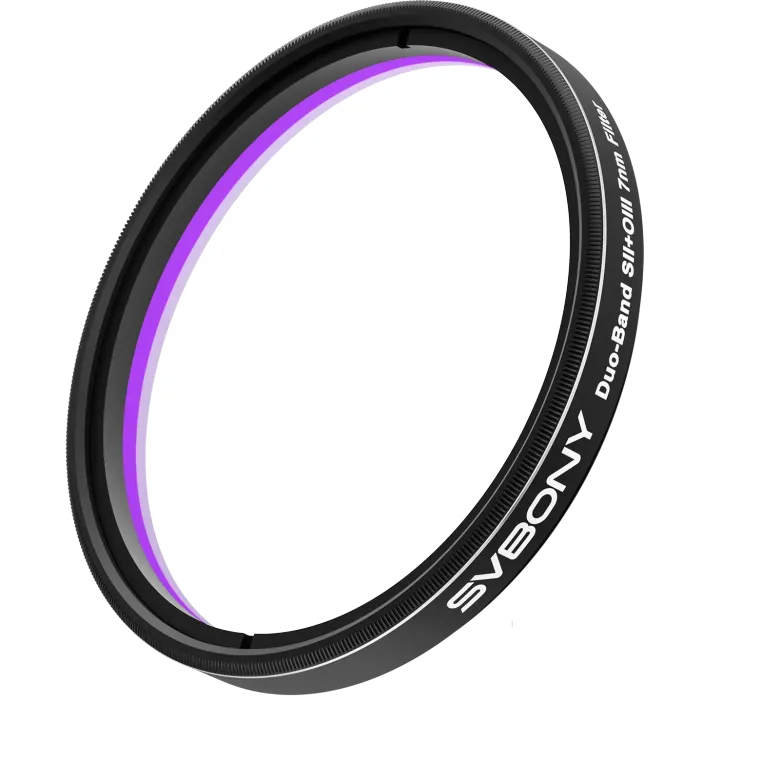
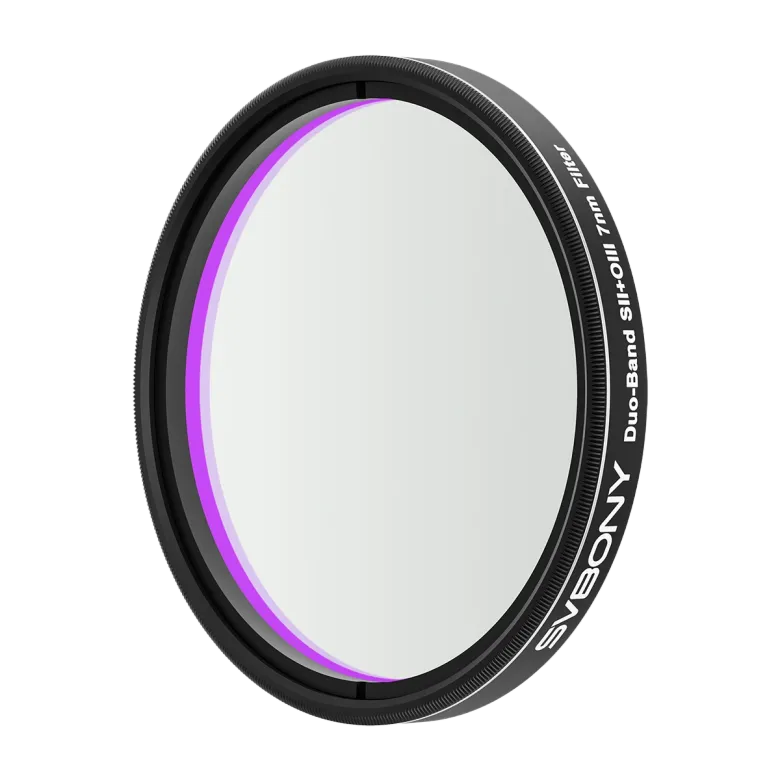
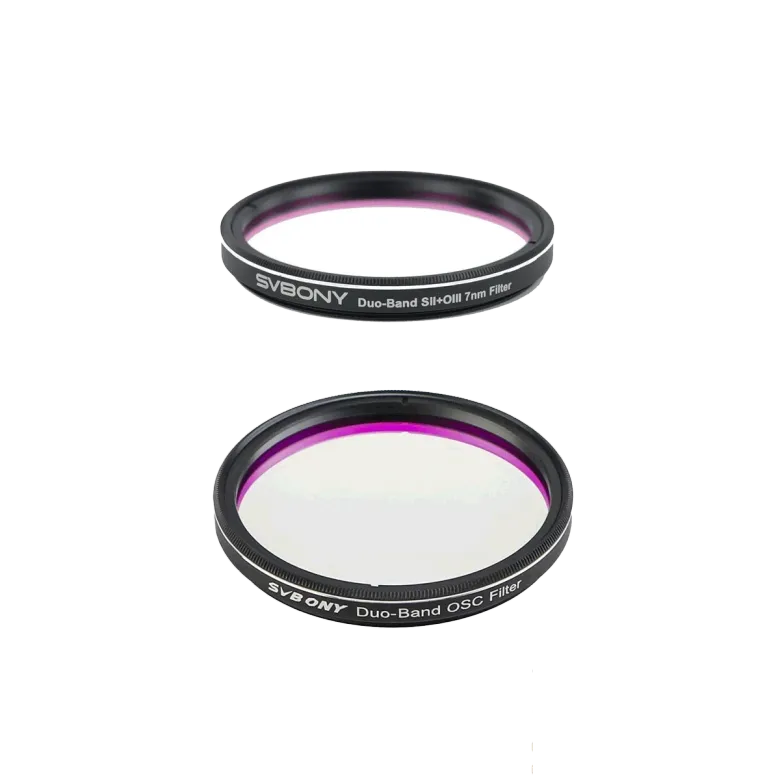
2" 7nm SII & OIII Filter | SVBONY SV220
[{"Title":"Dual Narrowband Precision","Content":"Passes both SII and OIII emission lines with 7nm bandpass for rich nebula data."},{"Title":"Enhanced Deep\u2011Sky Contrast","Content":"Darkens sky background while boosting nebula structure contrast in images."},{"Title":"Efficient OSC Camera Use","Content":"Optimized for one\u2011shot color astrophotography without complex filter swaps."},{"Title":"Light Pollution Suppression","Content":"Blocks unwanted wavelengths to cut light pollution interference."},{"Title":"Ideal for Nebula Targets","Content":"Designed for emission, planetary nebulae, and supernova remnants imaging."}]
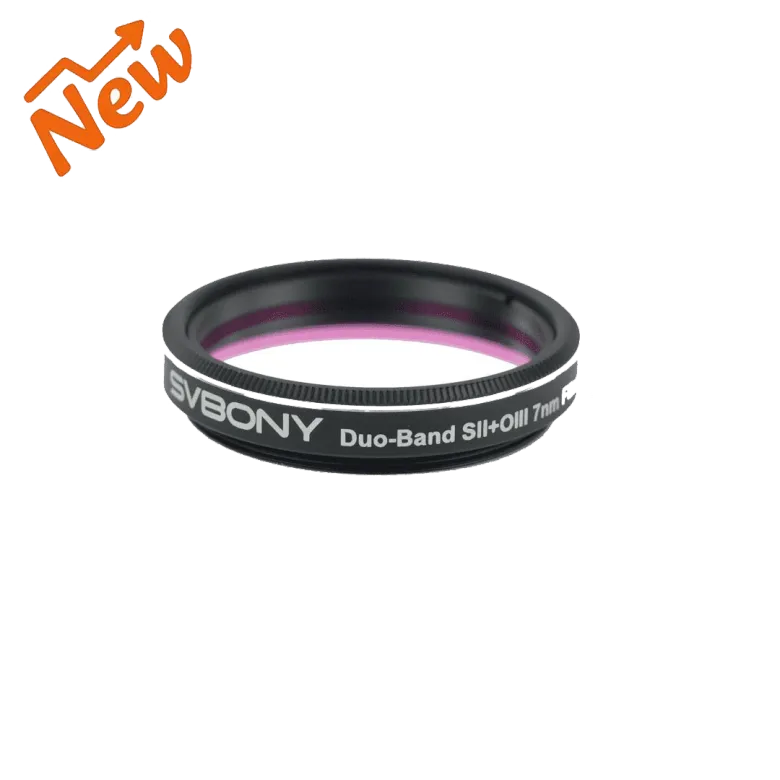
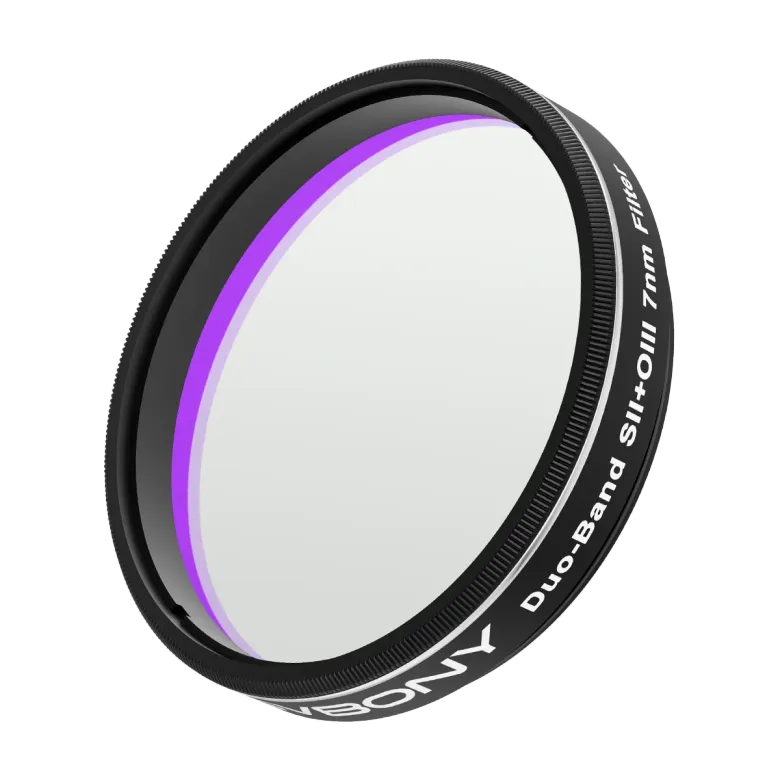
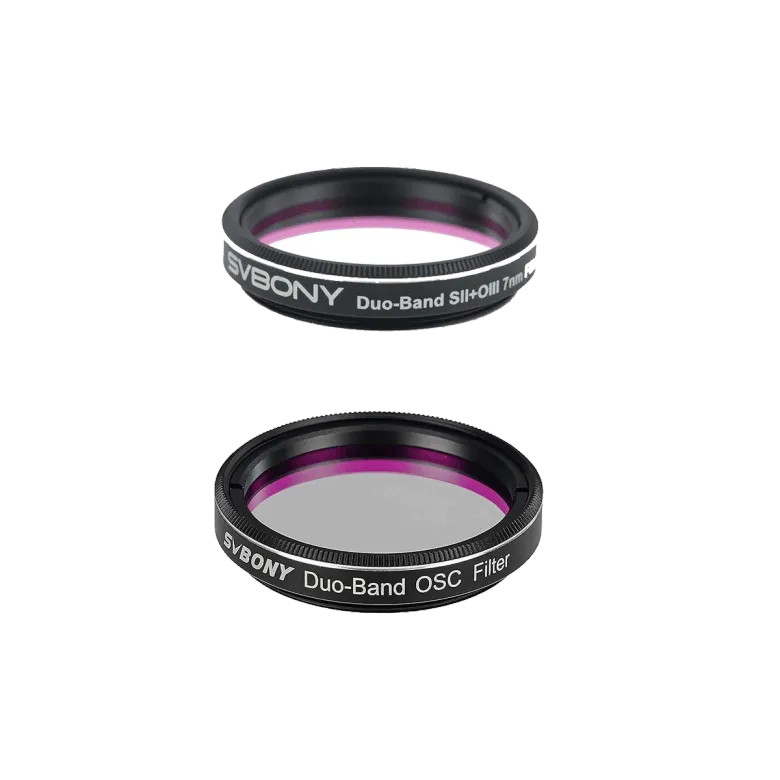
1.25" 7nm SII & OIII Filter | SVBONY SV220
[{"Title":"Dual\u2011Band SII \u0026 OIII Capture","Content":"Passes both SII and OIII emission lines to reveal detailed nebula structures with clarity."},{"Title":"7\u202Fnm Narrowband Precision","Content":"Ultra\u2011narrow 7nm bandpass boosts signal from key wavelengths while suppressing unwanted light."},{"Title":"Enhanced Contrast Imaging","Content":"Darkens sky background and maximizes contrast for emission nebula and deep\u2011sky photography."},{"Title":"Ideal for OSC Cameras","Content":"Designed for one\u2011shot\u2011color astrophotography without complex multi\u2011filter stacking"},{"Title":"Light Pollution Suppression","Content":"Reduces interference from artificial lights and sky glow for clearer urban captures."}]
NEW HOT
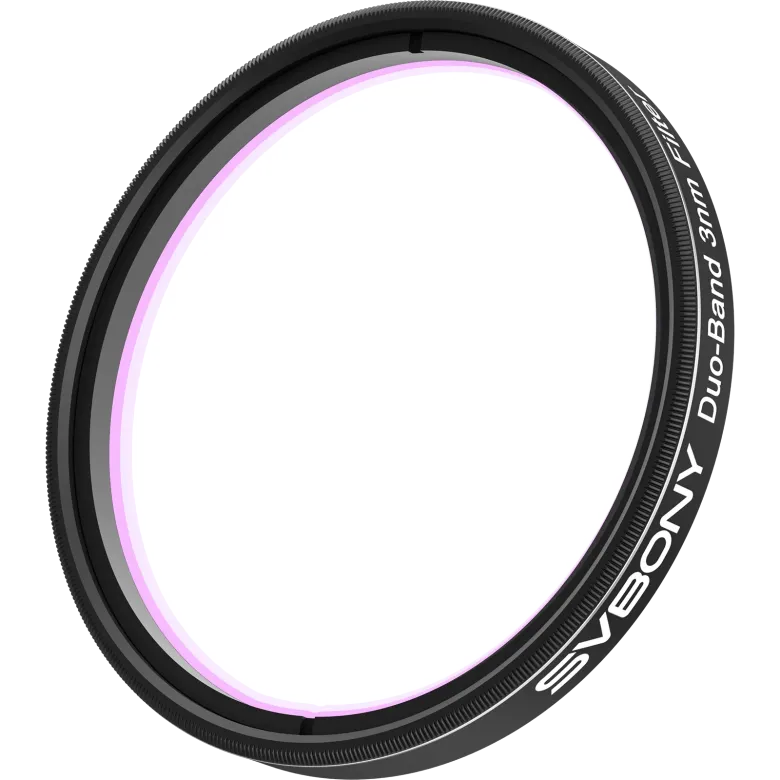
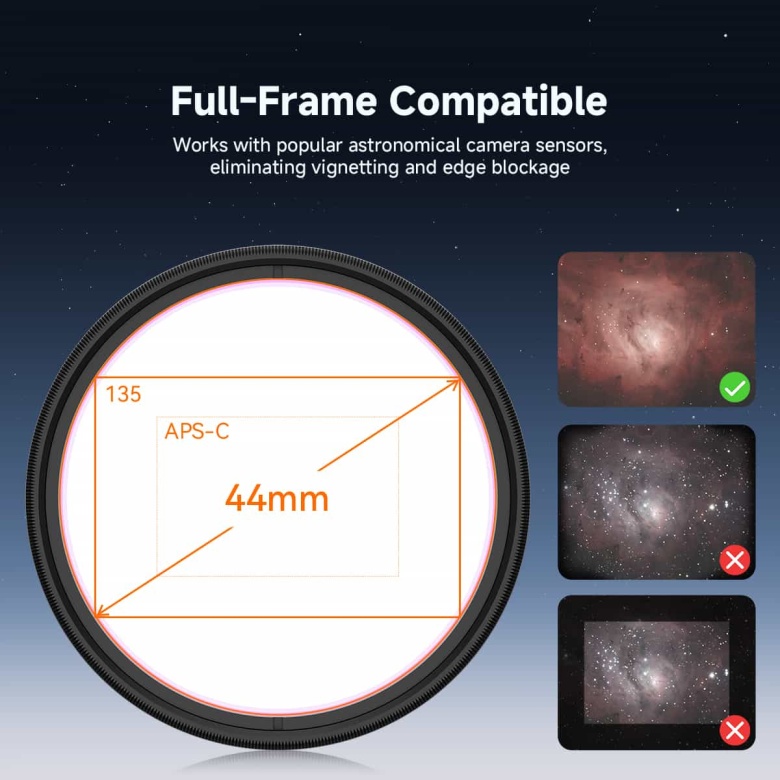
2" 3nm H-Alpha & OIII Filter | SVBONY SV220
[{"Title":"Precision Narrowband Imaging","Content":"The SV220 2-inch 3nm filter is ideal for capturing emission lines like H\u03B1, OIII, and SII, offering narrowband transmission for high-contrast, detailed deep-sky images."},{"Title":"High Transmission Rate","Content":"With its 3nm bandwidth, the filter ensures superior light transmission while blocking unwanted wavelengths, improving image quality and enhancing the signal-to-noise ratio."},{"Title":"Compatible with Various Telescopes","Content":"The 2-inch size and M48x0.75 thread make the SV220 filter compatible with a wide range of telescopes and imaging setups, offering flexibility for astrophotography."},{"Title":"Durable and Reliable Construction","Content":"Built from high-quality optical glass with durable coatings, the SV220 filter ensures long-lasting performance in astrophotography, even under demanding conditions."},{"Title":"Perfect for Deep-Sky Astrophotography","Content":"The SV220 2-inch 3nm filter is specifically designed for deep-sky imaging, providing clarity and contrast for capturing nebulae and galaxies in stunning detail."}]
NEW
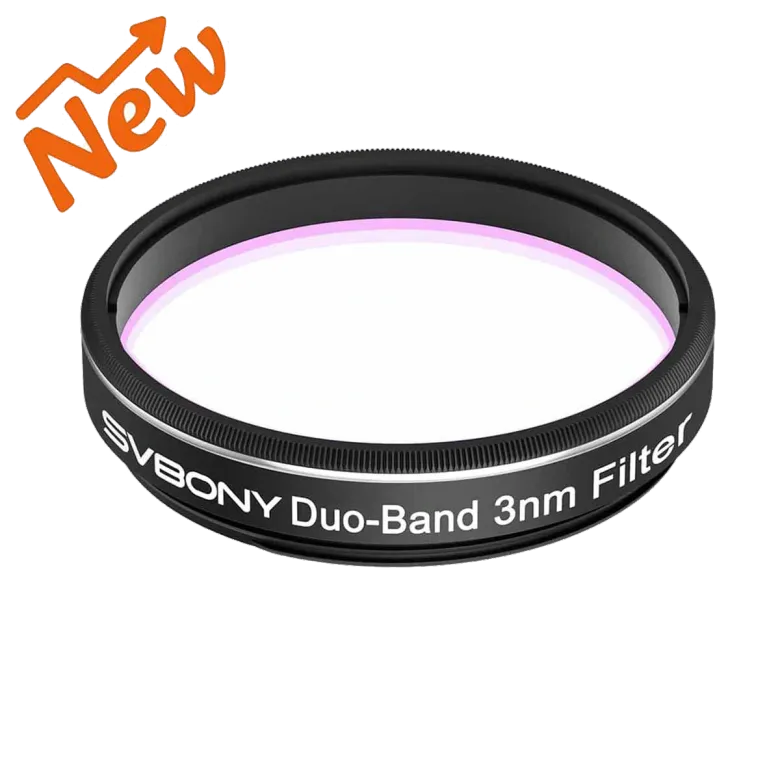
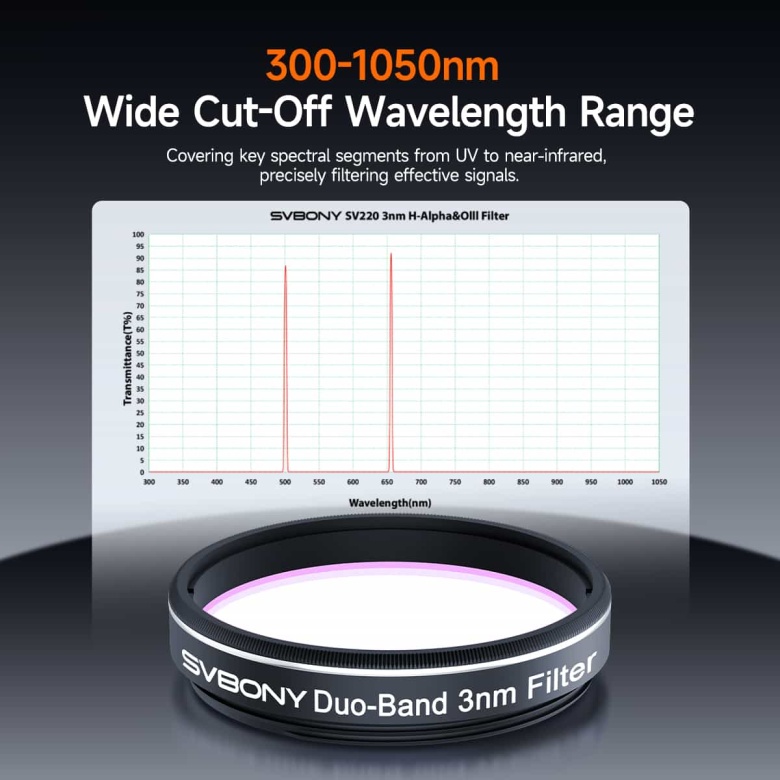
1.25" 3nm H-Alpha & OIII Filter | SVBONY SV220
[{"Title":"Ultra\u2011Narrow 3nm Dual Band","Content":"Targets both H\u2011Alpha and OIII emission lines with a 3nm bandwidth, capturing fine nebula detail and enhancing contrast in deep\u2011sky astrophotography."},{"Title":"Superior Light Pollution Suppression","Content":"Filters out stray light and urban skyglow with high OD5 blocking while maintaining strong signal transmission for sharper imaging."},{"Title":"Minimal Halo Coating","Content":"Multi\u2011layer minimal halo optical coating reduces glare and halos, improving image purity and color accuracy."},{"Title":"High Transmission Efficiency","Content":"Delivers over 85% transmittance at key wavelengths, reducing required exposure times and boosting signal\u2011to\u2011noise performance."},{"Title":"Compact \u0026 Telescope\u2011Ready","Content":"Available in 1.25\u0022 threaded format, compatible with mainstream astrophotography gear for easy integration into your setup."}]
NEW
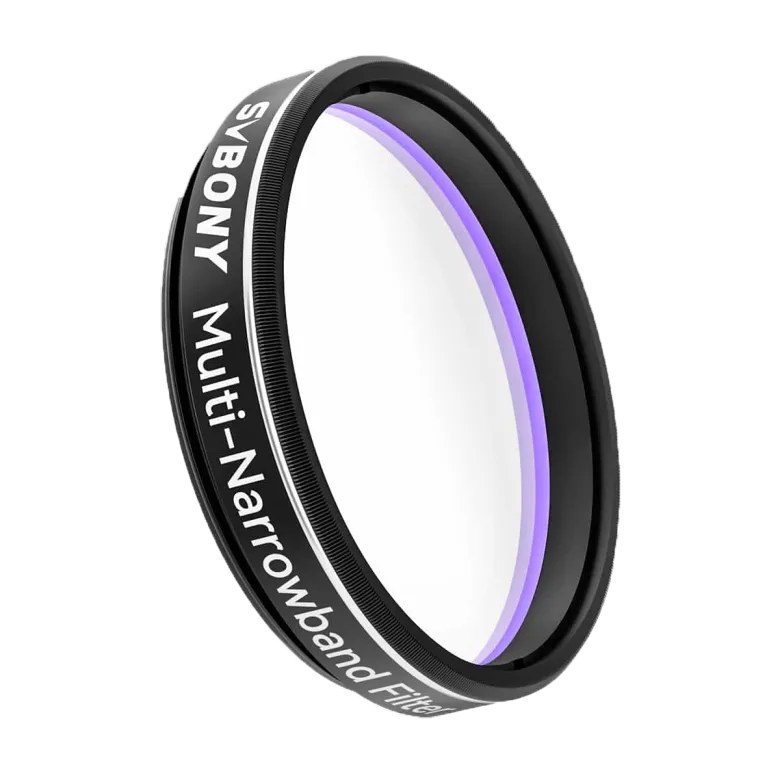
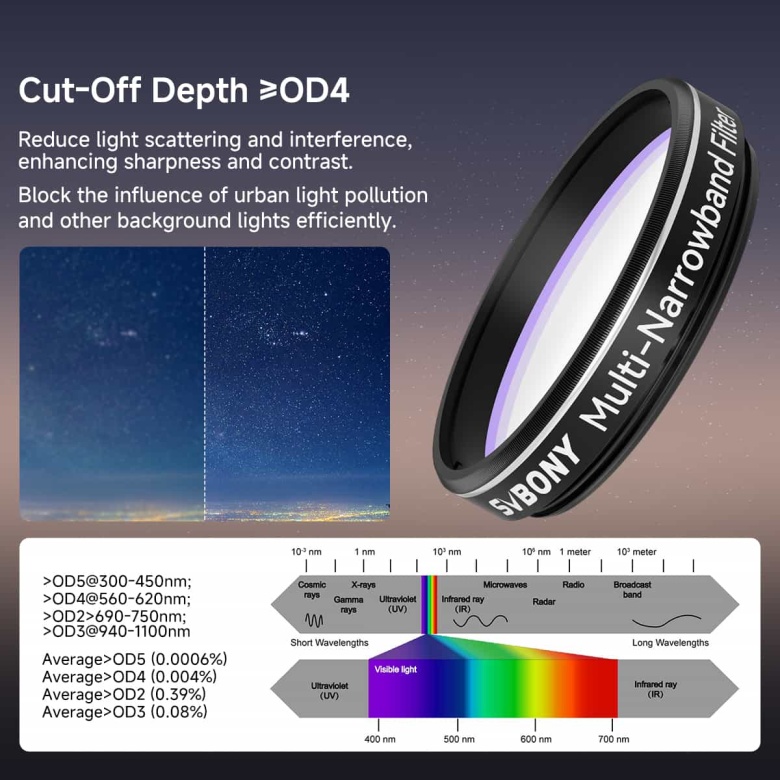
Multi-Narrowband Filter | SVBONY SV240
[{"Title":"Cut-off depth \u2265OD4","Content":"Highly efficient in blocking urban light pollution or other background light;"},{"Title":"Photoing more kinds of targets","Content":"SV240 multi-narrowband filter select Ha,OIII,H-Beta wavelength effectively can cover almost photoing needs;"},{"Title":"High transmittance","Content":"The \u003E90% transmittance in core wavelength of Ha,OIII, H-Beta, more objects for your astrophotography by using this multi-bandpass filter;"},{"Title":"Multi-bandpass filters","Content":"Without multiple filters\u0027 combination for colorful images;"},{"Title":"Resistant of BORTLE 8","Content":"the multi-narrowband filters can be resistant from Bortle 1 to Bortle 8 cities, suitable for almost all urban."}]
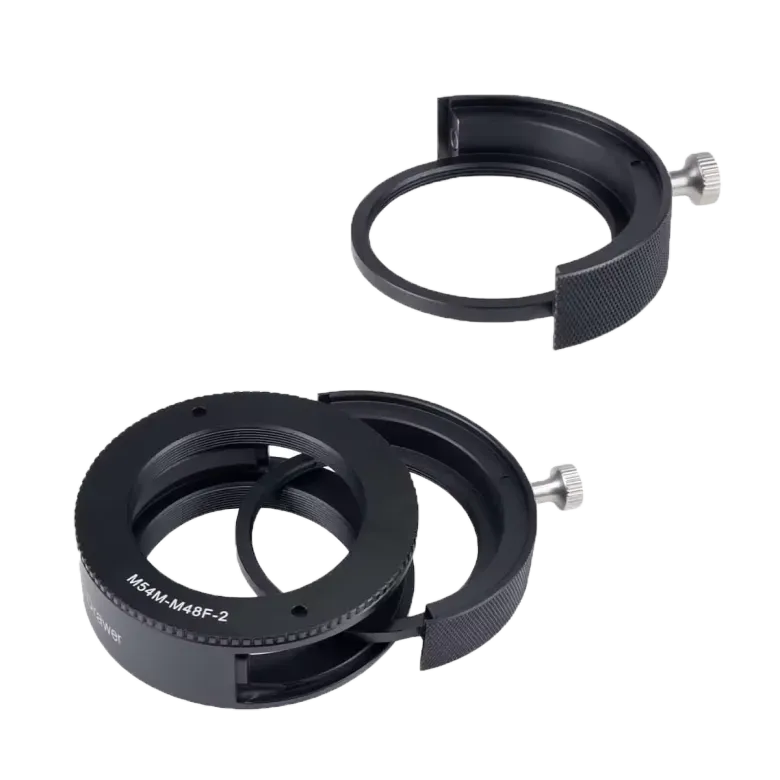
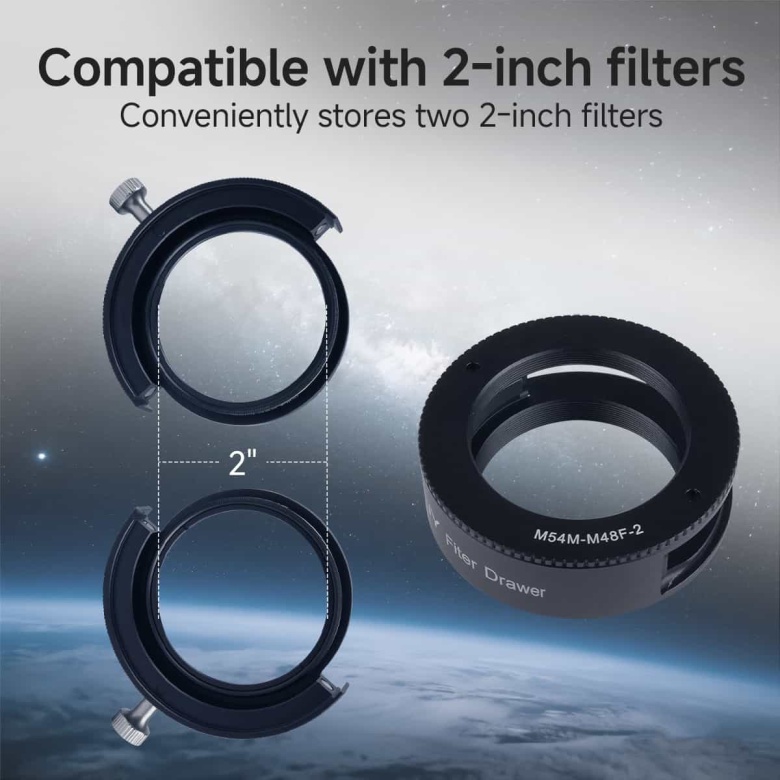
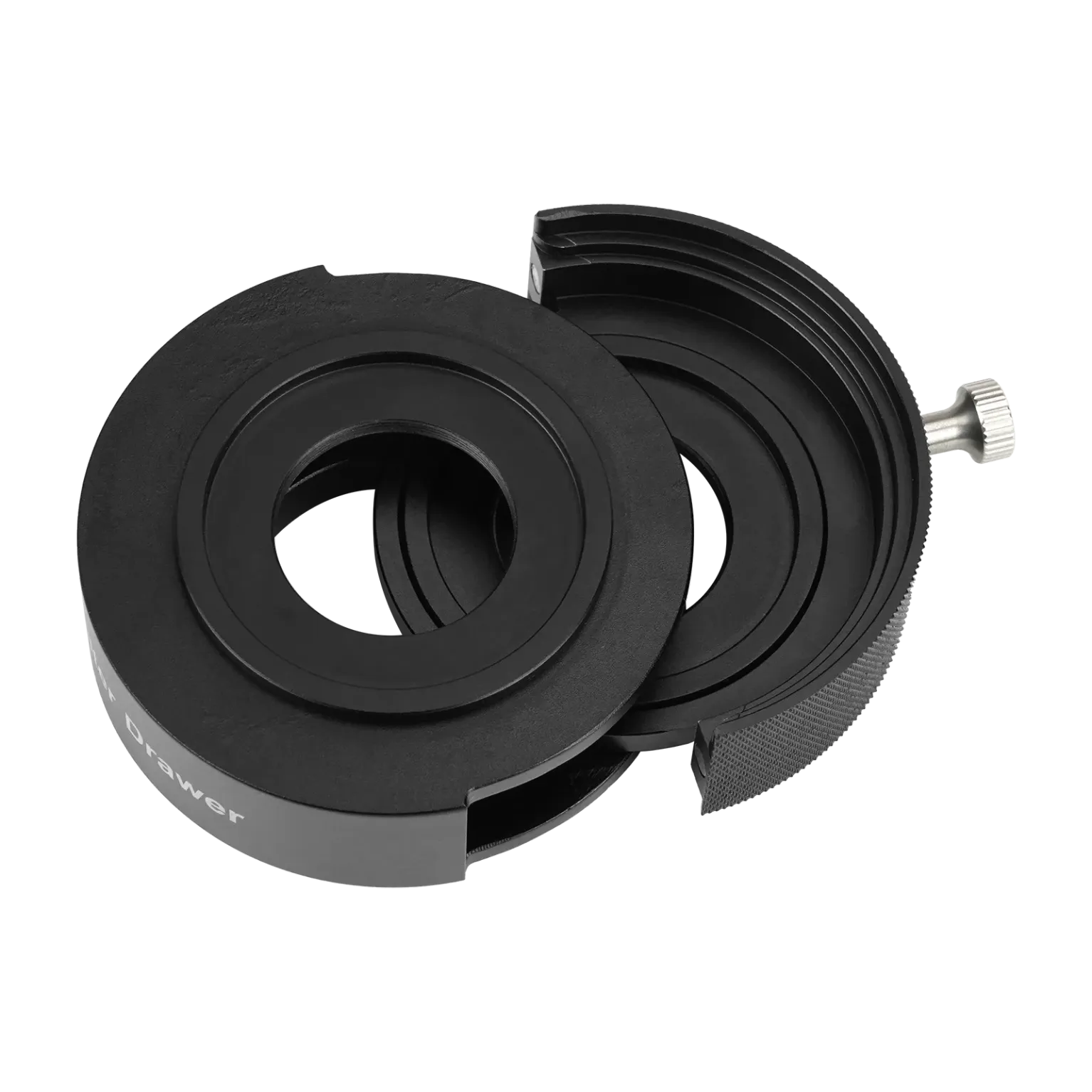
M54 Filter Drawer | SVBONY SV226
[{"Title":"Dual Magnet","Content":"The SV226 utilizes a dual magnet design that provides dual stability to ensure your filter stays securely in place. And it helps prevent accidental dropping"},{"Title":"CNC Crafting","Content":"This filter drawer is crafted using advanced CNC one-piece molding technology, ensuring exceptional strength and durability"},{"Title":"Locking Mechanism","Content":"SV226 M54 Filter Drawer features a locking screw design that eliminates gaps. It also prevents light leakage during long exposures"},{"Title":"Dual filter holders","Content":"Plug-and-play, reduce re-installation in dark environments"},{"Title":"20mm Thickness","Content":"SV226 is designed with a 20mm thickness to ensure that your wide-angle field of view remains unobstructed"}]
2" to 1.25" Adapter | SVBONY SV226
[{"Title":"Efficient Filter Switching","Content":"Eliminates tedious filter changes with drawer-style design."},{"Title":"Precision Filter Drawer Adapter","Content":"Accurate fitting ensures smooth, quick filter replacement."},{"Title":"Astrophotography Application","Content":"Ideal for telescopes, enhancing professional astrophotography."},{"Title":"SVBONY Optical Accessory Quality","Content":"2-year warranty with durable construction for optical equipment.\nExclusive Advantage"},{"Title":"Official Optical Adapter","Content":"Standard precision-engineered accessory for optics."}]
NEW
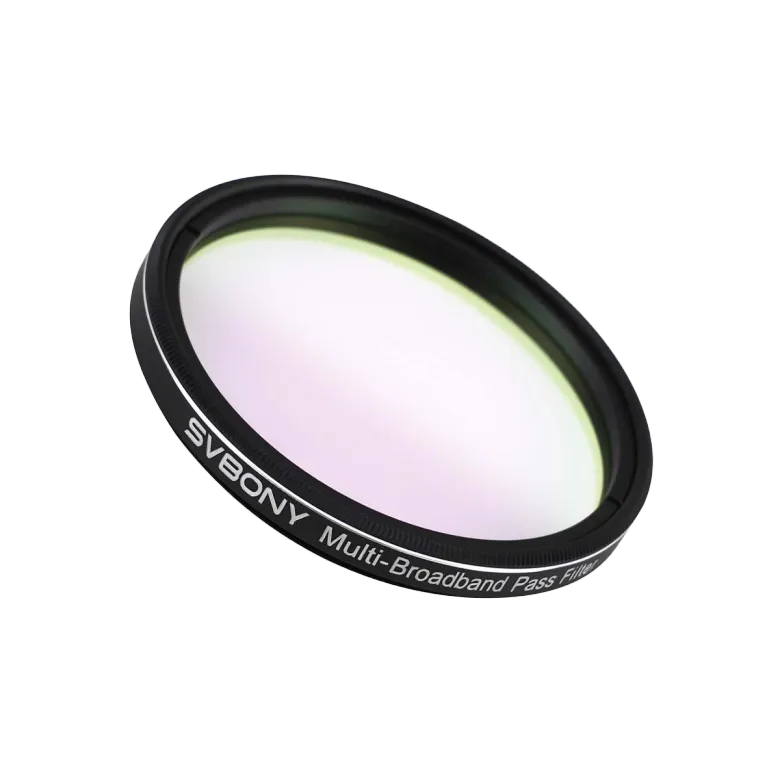
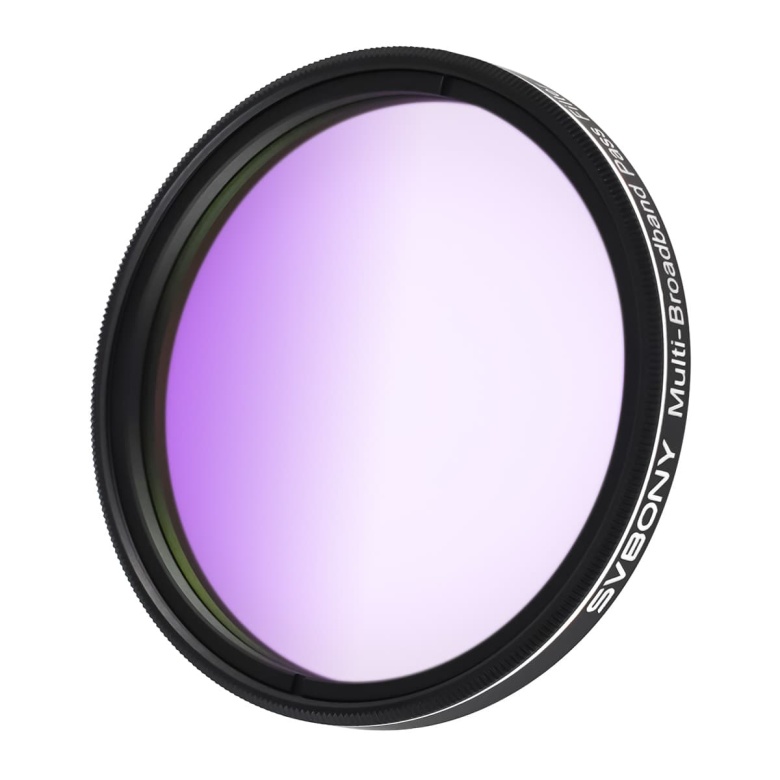
5-bandpass Broadband Filter | SVBONY SV260
[{"Title":"5\u2011Bandpass Broadband Filter","Content":"Multi\u2011bandpass design captures a wide spectrum for enhanced deep\u2011sky and starfield imaging with richer color reproduction."},{"Title":"Superior Light Transmission","Content":"Delivers over 90% peak transmittance, minimizing light loss and maximizing signal for clear, detailed astrophotography results."},{"Title":"Effective Light Pollution Suppression","Content":"OD4 cut\u2011off and broad wavelength coverage (300\u20131000\u202Fnm) help reduce urban skyglow and improve target contrast."},{"Title":"Broad Compatibility","Content":"Standard 2\u2033 (M48x0.75) threaded design fits most astrophotography telescopes and filter wheels easily."},{"Title":"Enhanced Deep\u2011Sky Detail","Content":"Designed to emphasize nebulae, galaxies, reflection nebulae, and star clusters with improved clarity and color fidelity."}]
Astrophotography Filters for Telescopes and Cameras
SVBONY astrophotography filters are designed to improve contrast, control unwanted wavelengths, and bring out more detail in lunar and deep-sky images. The collection includes light pollution filters, UV/IR cut filters, broadband filters, narrowband filters, and multi-narrowband options for different cameras, telescopes, and observing conditions.
Whether you're imaging under dark skies or dealing with light pollution the right astrophotography filter can help produce cleaner and more balanced results.
Choosing a filter depends on your imaging target and setup. Broadband filters can be useful for galaxies, star clusters, and Milky Way photography, while narrowband and dual-band filters are better suited to emission nebulae and other deep-sky targets.
SVBONY multi-narrowband filters help isolate selected wavelengths while reducing background light, making them useful for astrophotography from light-polluted locations.
Filter size and compatibility are also important. When choosing an astrophotography filter for DSLR or a dedicated astronomy camera, check the sensor size, filter thread, and optical configuration to ensure proper coverage and help minimize vignetting. SVBONY offers different filter sizes and formats for a range of imaging systems.
For convenient filter changes, an astrophotography filter holder or Telescope Filter Drawer can simplify your imaging workflow. From broadband options for galaxies to narrowband filters for nebulae, SVBONY offers filter solutions for a variety of astrophotography setups.
FAQs About Astrophotography Filters
The best astrophotography filter depends on your target, camera, telescope, and sky conditions. Broadband filters can be useful for galaxies and star clusters, while narrowband and dual-band filters are better suited to emission nebulae. A UV/IR cut filter can also help control unwanted wavelengths in compatible imaging systems.
The right filter size depends on your camera sensor, telescope, adapter, and imaging train. Common options include 1.25-inch and 2-inch filters. To choose the appropriate size, check your sensor dimensions, filter thread, and filter-to-sensor distance.
For larger sensors or certain optical configurations, a larger filter may help provide sufficient coverage and reduce vignetting. There is no universal astrophotography filter size calculator that works for every setup.
Yes. An astrophotography filter for DSLR can be used when the filter size, mounting method, and optical configuration are compatible with your camera and lens or telescope. Before choosing a filter, check the filter thread or holder system and make sure the filter provides adequate coverage for your camera sensor.
For Milky Way photography, a broadband or light pollution filter can help improve contrast when shooting under moderately light-polluted skies. The best choice depends on your camera, lens or telescope, and local sky conditions. Because artificial lighting varies by location, filter performance can differ between observing environments.
Broadband filters are generally a practical choice for galaxies, star clusters, and other broadband deep-sky targets because they preserve a wider range of wavelengths. For emission nebulae, narrowband or multi-narrowband filters can provide stronger contrast by isolating specific emission wavelengths and reducing background light.




 Google
 Amazon